As some of our regular readers undoubtedly know, I am involved in hosting a few weekly live tweets on twitter and occasion ally Mastodon. I host #FridayNightFlix every Friday, I co-host #ScarySocial on Saturday, and I am one of the five hosts of Mastodon’s #MondayActionMovie! Every week, we get together. We watch a movie. We snark our way through it.
It should make for a night of fun viewing and I invite all of you to join in. If you want to join the live tweets, just hop onto Mastodon, pull up Mission of Justice on YouTube, start the movie at 8 pm et, and use the #MondayActionMovie hashtag! Then switch over to twitter, pull King of New York up on Prime, and use the #MondayMuggers hashtag!
Welcome to Retro Television Reviews, a feature where we review some of our favorite and least favorite shows of the past! On Mondays, I will be reviewing Miami Vice, which ran on NBC from 1984 to 1989. The entire show can be purchased on Prime!
Things get weird this week.
Episode 2.13 “Definitely Miami”
(Dir by Rob Cohen, originally aired on January 10th, 1986)
This week’s episode of Miami Vice is all about heat.
Seriously, it literally starts with a shot of a solar flares erupting off the surface of the sun. The camera then pulls away, letting us see what the sun looks like a cloudless blue sky. Finally, we find ourselves in Miami, where the sky is clear and a heat wave is raging. The camera focuses on the beads of sweat forming on skin. Every pastel shirt is stained with sweat and everyone is wearing sunglasses. When a drug dealer drives out to a quarry to meet connection, the heat seems to radiate out of the screen. When he’s shot and killed by Charlie Basset (Ted Nugent — yes, the musician and gun enthusiast), the dust that rises up looks like smoke rising from a burning planet.
Sonny and Rico are working undercover as Burnett and Cooper, hanging out at a hotel pool and complaining about the heat. Their target is Sergio Clemente (Roger Pretto) but Sonny is actually more interested in Callie (Arielle Dombasle), a beautiful blonde who he spots laying by the pool. Callie sees Sonny watching her and brings him a drink. Sonny introduces himself as Sonny Burnett.
Clemente is willing to turn himself in but only if he can see his sister, Maria (Kamala Lopez), and know that she’s still alive. Maria testified against her brother at a trial and is currently in the witness protecting program. Joe Dalva (Albert Hall), an arrogant Department of Justice official, is willing to bring Maria to Clemente, despite the fact that Maria indicates that Clemente used to sexually abuse her. Castillo thinks that it’s a terrible idea and tries to use a decoy. In the end, the government orders Castillo to do what Dalva wants. Castillo stands in a corner and stares down at the ground, which viewers of the show know is something Castillo does whenever he knows just how badly things are going to turn out. When the meeting finally happens, Tubbs, Castillo, and Davla can only watch as Maria pulls a knife and stabs her brother to death.
Sonny is not there to see Clemente die. Callie has told him that her husband is physically abusive and she wants Sonny — as Burnett — to meet him in a quarry, make a drug deal with him, and then kill him. Sonny suspects that he’s being set up and he’s right. Callie’s husband is Charlie and he only hits her when she tells him to. Callie seduces drug dealers and then Charlie kills them. Sonny, however, is smart enough to bring Zito with him to the quarry. During a shoot out, Charlie ends up dead. While the police dig up the quarry and find body after body, Sonny goes to the beach so that he can arrest Callie. When Sonny approaches Callie, she’s making a sand castle that looks exactly like the quarry. At first, Callie thinks that Sonny is Charlie but then she forces herself to smile when she sees that Charlie is dead. She assumes Sonny will be her new partner. Instead, Sonny calls in a police helicopter and Callie is taken into custody by two cops. Callie flirts with one of the cops while she’s being led to the helicopter.
And the sun continues to burn in the sky….
This was an odd episode, one that put far more emphasis on vivid and sometimes surreal imagery than it did on telling a coherent story. That’s not a complaint, of course. This episode had a dream-like intensity to it that I really appreciated. It was weird but entertaining, with the grinning Ted Nugent popping up like a gleefully evil goblin. Sonny is targeted because Callie thinks that he’s a drug dealer when he’s actually a cop. The idea of Sonny being able to maintain his undercover identity despite having personally arrested or killed a countless number of Miami drug dealers has always been one of the stranger elements of Miami Vice. This episode, though, it makes a strange sense that Sonny could be mistaken for a drug dealer despite always acting like a cop. That’s definitely Miami.
As some of our regular readers undoubtedly know, I am involved in hosting a few weekly live tweets on twitter and occasionally Mastodon. I host #FridayNightFlix every Friday, I co-host #ScarySocial on Saturday, and I am one of the five hosts of Mastodon’s #MondayActionMovie! Every week, we get together. We watch a movie. We snark our way through it.
Tonight, for #MondayActionMovie, the film will be 1992’s Mission of Justice, selected and hosted by Sweet Emmy Cat!
It should make for a night of fun viewing and I invite all of you to join in. If you want to join the live tweets, just hop onto Mastodon, pull up Mission of Justice on YouTube, start the movie at 8 pm et, and use the #MondayActionMovie hashtag! The live tweet community is a friendly group and welcoming of newcomers so don’t be shy.
Orson Welles was fond of telling the story of how Franklin D. Roosevelt, shortly before his death, encouraged Welles to enter politics and run for Wisconsin’s U.S. Senate seat in 1946. Welles gave it some consideration but ultimately, he decided not to run. He was, after all, a movie star and, in the mid-40s, he had yet to be exiled from Hollywood.
Welles later said that a part of him regretted not running because, if he had, his opponent would have been Joseph McCarthy. Welles assumed that he would have easily beaten McCarthy and therefore, the McCarthy era never would have happened. Of course, the truth of the matter is that there’s no guarantee that Welles, as someone who had spent most of his life in New York and California, would have even won the Democratic primary, that Welles would have defeated McCarthy in the general, or that some other Senator wouldn’t have launched an anti-communist crusade in McCarthy’s place. But Orson Welles was never one for false modesty. That’s one thing that made him such an important and exciting filmmaker.
Welles also said that, despite his regrets, he was ultimately happy that he didn’t run because he would have felt the need to then run for President. President Welles! Imagine that. (Actually, it probably would have been a disaster but still …. President Orson Welles! If nothing else, a Welles presidential campaign would have spared America from having to look at Adlai Stevenson for two straight elections.)
Today’s scene that I love provides a glimpse of what an Orson Welles political campaign might have been like. In this scene, from 1941’s Citizen Kane, Charles Foster Kane runs for governor and gives the political speech of his life. Sadly, as we all know, Kane would never be governor and he would never again be as beloved by the masses as he was in this scene. Instead, he would die isolated, alone, and wishing for his childhood.
4 Or More Shots From 4 Or More Films is just what it says it is, 4 shots from 4 of our favorite films. As opposed to the reviews and recaps that we usually post, 4 Shots From 4 Films lets the visuals do the talking!
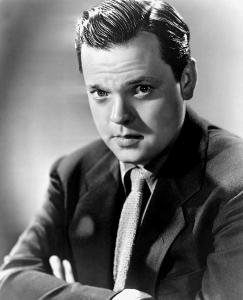
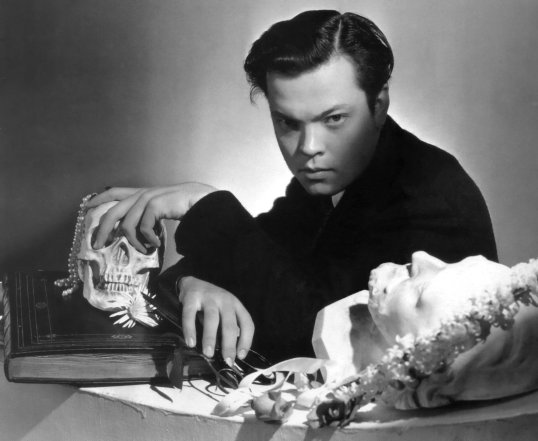
Today we celebrate what would have been the 109th birthday of the great Orson Welles! It’s time for….
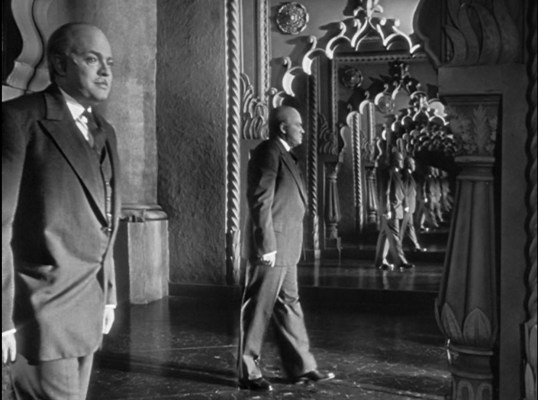
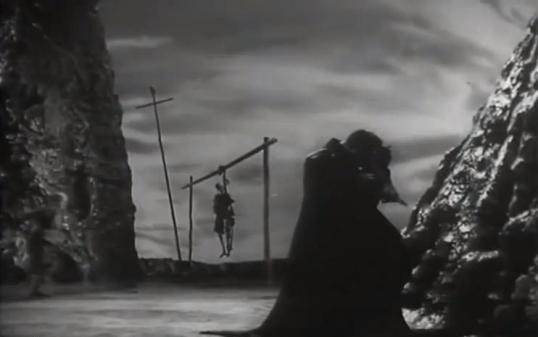
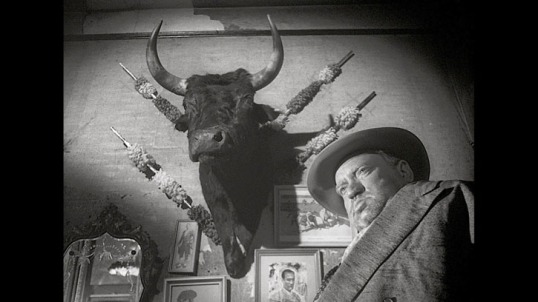
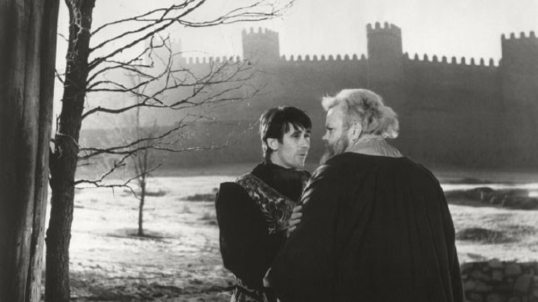
4 Shots from 4 Orson Welles Films
Citizen Kane (1941, dir by Orson Welles, DP: Gregg Toland)
MacBeth (1948, dir by Orson Welles, DP: John L. Russell)
Touch of Evil (1958, dir by Orson Welles, DP: Russell Metty)
Chimes at Midnight (1965, dir by Orson Welles, DP: Edmond Richard)
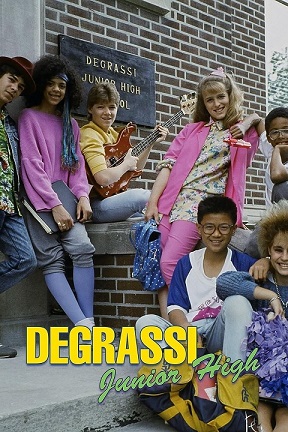
Welcome to Late Night Retro Television Reviews, a feature where we review some of our favorite and least favorite shows of the past! On Sunday, I will be reviewing the Canadian series, Degrassi Junior High, which aired on CBC and PBS from 1987 to 1989! The series can be streamed on YouTube!
This week, Lucy learns that she has the worst friends in the world.
Episode 3.3 “A Big Girl Now”
(Dir by Kit Hood, originally aired on December 5th, 1988)
Lucy is totally in love with Paul, her older boyfriend from the high school. At first, all of her friends are excited for her but then Lucy stops spending time with them and they start to get jealous. When Lucy misses L.D.’s big soccer game because she already has plans with Paul, Lucy promises to make it up to L.D. and everyone else by letting them have a party at her house.
But then Paul and his high school friends discover that Lucy’s parents are out of town and they decide that they should throw a party of their own. And when they announce that they don’t want any “niners” other than Lucy at the party, Lucy agrees to lie to her friends. She tells them that the party’s been cancelled because of a family crisis.
Needless to say, both L.D. and the Farrell twins discover that Lucy lied to them. (It doesn’t help that Paul and his friends chant, “Party! Party!” when they pull up in front of Degrassi.) Lucy loses their friendship and, because she doesn’t want to have sex and risk getting pregnant like Spike did, Lucy also loses her boyfriend. What she does get is a “reputation” because everyone assumes she had sex with Paul even though she didn’t.
Poor Lucy! Listen, Lucy should not have lied about the party. And Paul really was a jerk. But her friends need to cut Lucy some slack. Lucy’s parents are never home, she’s still dealing with the trauma of being groomed by that creepy substitute last season, and she’s not even allowed to shoplift anymore. So, Lucy made some mistakes. Everyone makes mistakes!
Why can’t Lucy’s friends be as forgiving as Wheels? During this episode, Snake finally approaches Wheels and apologizes for not talking to him since the funeral for Wheels’s parents. Snake admits that he didn’t know what to say and Wheels admits that he’s struggling with depression. Wheels explains that he no longer wants to go to school and he certainly doesn’t want to be a part of the Zit Remedy. Still, Wheels is clearly touched by Snake’s apology. Both Neil Hope and Stefan Brogren did a good job of portraying the combination of awkwardness and sincerity that lies at the heart of their friendship.
.Finally, the results of the student election are announced. To the surprise of no one, Nancy Kramer defeats Kathleen for student council president. Kathleen becomes Vice President. Melanie begs Kathleen to nominate her for the dance committee. Kathleen, however, tells Nancy that only niners (and Melanie is not a niner) should be allowed to serve on a committee. Melanie overhears and proceeds to pour a carton of milk in Kathleen’s hair. Poor Kathleen! Seriously, ladies, be more like Snake and Wheels and support each other!
This episode felt like it was setting up a lot of future storylines. Will Lucy get her friends back? Will Wheels ever regain his love of life? Will Kathleen be able to get all the milk out of her hair? We’ll find out next week!
I felt pretty bleh for most of this week but I did enjoy the rain and I’m looking forward to more of it. Hopefully, this upcoming week will feature a bit less malaise.
Unfrosted is a thoroughly amiable and goofy comedy about the invention of the Pop Tart.
Taking place in an imaginary 1963, Unfrosted tells the story of the Cereal Wars. Kellog’s and Post are competing for dominance in the kids breakfast food market, dominating the scene while the dour folks at Quaker can only shake their heads in holier-than-thou shame. Bob Cabana (played by the film’s director, Jerry Seinfeld) is a Kellog’s exec who spends his day dealing with pompous cereal mascots (led by a hilarious Hugh Grant) and the somewhat random whims of his boss, Edsel Kellog III (Jim Gaffigan). He dreams of someday having a lawn made out of sod and also having enough money to send his kids to a good college. “Those colleges can cost $200 a year!” he says, at one point.
Life is good until he discovers that Post — headed up by Marjorie Post (Amy Schumer) — is developing a type of new breakfast food that could revolutionize the industry and dethrone Kellog’s as America’s top cereal company. Bob gets Edsel’s permission to try to create something that will beat Post’s new product to the shelves. But first, Bob has to go to NASA and convince brilliant engineer Donna “Stan” Stankowski (Melissa McCarthy) to abandon the moon project and return to Kellog’s. “You know we’re never going to land on the moon,” Bob tells her.
Soon, the entire nation is riveted by the competition between Post and Kellog’s. Walter Cronkite (Kyle Dunnigan) reports on every development, in between complaining about his wife and playing with silly putty. The Russians decide to help Post, leading the world to the brink of nuclear war while President Kennedy (Bill Burr) spends his time with the Doublemint Twins. Harry Friendly (Peter Dinklage), head of the milk syndicate, warns that kids better not stop eating cereal while Bob finds himself being menaced by a sinister milkman (Christian Slater). A German scientist (Thomas Lennon) and Chef Boyardee (Bobby Moynihan) combine a sea monkey with a square of ravioli, leading to a new life form that lives in the Kellog’s ventilation system. Steve Schwinn (Jack McBrayer), the bicycle guy, risks his life to test a prototype while a super computer is shipped to Vietnam and turns into Colonel Kurtz and….
Okay, you’re getting the idea. This is a silly, joke-a-minute film that is in no way meant to be taken seriously. It’s obvious that Seinfeld and his co-writers greatly amused themselves while writing the script and your amusement will depend on whether or not you’re on the same wavelength. I enjoyed the film, because I love history and I love pop culture and I like random homages to other films. Not all of the jokes landed. There’s a lengthy Mad Men parody that, while funny, still feels several years too late. But, for the most part, I enjoyed the amiable goofiness of it all.
Unfrosted is currently getting some savagely negative reviews but that has more to do with Seinfeld’s recent comment that the “extreme left” was ruining comedy. Though most people would probably consider Seinfeld’s comment to be common sense (and would also realize that Seinfeld was condemning the “extreme” as opposed to liberalism in general), the online folks, many of whom were already angry over Seinfeld’s outspoken support of Israel, were scandalized and most mainstream film reviewers today never want to get on the bad side of an online mob, regardless of how annoying that mob may be. (Even a positive review in TheHollywood Reporter contained an odd passage in which the reviewer seemed to beg forgiveness for giving a non-condemnatory review to a film made by someone on the other side.) Of course, there are also some reviewers who are currently overpraising this film as a way to “own the libs.” The fact that a film as silly and inoffensive as this one could suddenly find itself at the center of the culture war tends to prove Seinfeld’s point.
The important thing is that Unfrosted is amusing and, in the end, rather likable. I enjoyed it.
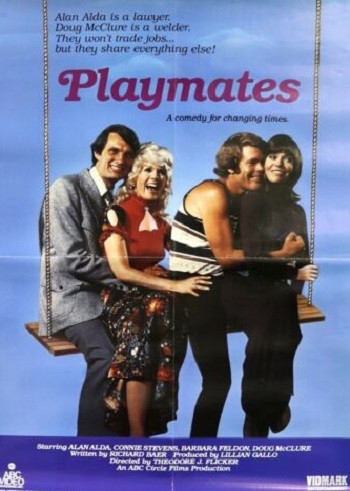
Welcome to Retro Television Reviews, a feature where we review some of our favorite and least favorite shows of the past! On Sundays, I will be reviewing the made-for-television movies that used to be a primetime mainstay. Today’s film is 1972’s Playmates! It can be viewed on YouTube.
Playmates tells the story of two divorces.
Marshall Barnett (Alan Alda) is an attorney. He went to Yale and Harvard. He has a successful career. He has rich and educated friends. He has a nice bachelor pad. He also pays hundreds of dollars in alimony. He and Lois (Barbara Feldon) got divorced 3 years ago and Marshall is still bitter. He’s bitter that he has to pay her so much money. He’s bitter that he only gets to see his son on the weekends. He’s bitter that he can’t seem to start a new, meaningful relationship with anyone. He’s bitter that his wife still asks him to critique her modernist paintings.
Kermit Holvey (Doug McClure) is a blue collar welder. He has only been divorced for a few months and his relationship with ex-wife Patti (Connie Stevens) is nowhere near as contentious as Marshall’s relationship with Lois. Still, Kermit is struggling to adjust to being single and to only seeing his son on the weekends.
Marshall and Kermit meet one weekend while they are both taking their sons to the Kiddieland Amusement Park. Marshall is so overjoyed to meet someone else who is dealing with divorce that he comes on a bit strong in trying to get to know Kermit. Kermit, however, does eventually get over his initial weariness and soon, he and Marshall are best friends. It doesn’t matter that Marshall has a tendency to be a little bit condescending and that Kermit often can’t follow what Marshall is talking about. They spend most of their time talking about their ex-wives.
But then Kermit meets Lois and he discovers that her paintings really aren’t as bad as Marshall made them out to be. And Marshall meets Patti and he discovers that she’s not as dumb as Kermit made her out to be. Soon, Kermit is secretly dating Lois and Marshall is secretly dating Patti and anyone who has ever watched a comedy before knows that there is a big mess waiting in the future.
Playmates was one of those films that pretended to be a lot naughtier than it actually was. For all the winking and the occasional sly smiles, all that happens is that Kermit and Marshall both end up going out with women with whom they really don’t have much in common. And while it’s tempting to read a lot into how quickly Kermit and Marshall become friends and how they both end up dating the other’s female equivalent, I think that might be giving this film too much credit. (If it were made today, things might be different.) In the end, the film really has more to say about class than it does marriage, as both Marshall and Lois obviously view spending time with Kermit and Patti as being a way of slumming and building up some working class bona fides without actually having to be working class. Patti, to her credit, calls Marshall out on this. Marshall admits that she has a point but he still come across as if he’s talking down to her, largely because he’s played by Alan Alda, an actor who is a master at being somehow both likable and condescending at the same time.
Playmates is a well-acted film and there are some funny lines. The four main characters are all ultimately likable, even if they all have their moments where you can tell why they would be difficult to live with. It deserves some credit for following its story through to its natural conclusion, with one couple realizing that they still love each other while the other realize that they are better off divorced. The film may not be as radical as it pretends to be but it still doesn’t cop out on the ending. In the end, Playmates is probably best watched as a time capsule. It’s here if you ever want to experience 1972 firsthand.
What’s an Insomnia File? You know how some times you just can’t get any sleep and, at about three in the morning, you’ll find yourself watching whatever you can find on cable or streaming? This feature is all about those insomnia-inspired discoveries!
If you were having trouble getting to sleep last night, you could have jumped over to Tubi or Prime and watched 2016’s Girl Lost.
Girl Lost tells the story of Shara (Jessica Taylor Haid), who we first see being abused by her mother’s boyfriend and then retreating outside to a pool so that she can run a razor blade over her thigh in peace. Shara is only 15 but she’s had to deal with things that no one should ever have to experience in a lifetime. Her mother, Kim (played by Robin Bain, who also directed the film), is a sex worker who expects her daughter to follow in her footsteps and who encourages Shara to pose for risqué photos that Kim then posts online.
Shara spends almost the entire film fleeing. At first, she and Kim flee Kim’s boyfriend. Eventually, Shara and her boyfriend, the well-meaning but not particularly bright Jamie (Felix Ryan), end up running away from Kim. They live on the streets and discover just how difficult it can be to survive on your own. In the end, no one can survive without money and Shara, just like her mother before her, comes to realize that there’s one guaranteed way to make that money, whether it’s waiting for a creepy guy in a back alley or getting a job talking on the phone to some pervy loser living in his mother’s basement. Eventually, Shara runs away from even Jamie and ends up working at a Russian-owned brothel. Throughout it all, her life continues to unravel. It’s a harsh world that Shara has been born into and it’s one where you either do what you have to do to survive or you end up imprisoned or worse. The film’s ends on a dark note. At first, I thought the ending was perhaps a bit too dark. After all that had happened, I wondered, what it have killed the film to end on a note of hope? But, the more I thought about it, the more I realized that the film ended in the the only way that the story could have ended. From the minute she was born, poor Shara never really had a chance.
It’s a deeply unsettling film. In fact, if you are trying to find something to help lull you into sleep, this is probably not the best film to go with unless you’re prepared to have some fairly upsetting dreams. Though shot on a low budget, the film captures the harshness of life on the fringes of society and both Jessica Taylor Haid and Robin Bain deserve a lot of credit for their performances as two characters who are not always likable but who are very recognizable. It’s a sad film that also serves as a tribute to every lost and forgotten soul out there.



 Through the Shattered Lens