Film Review: Isle of the Dead (dir by Nick Lyon)


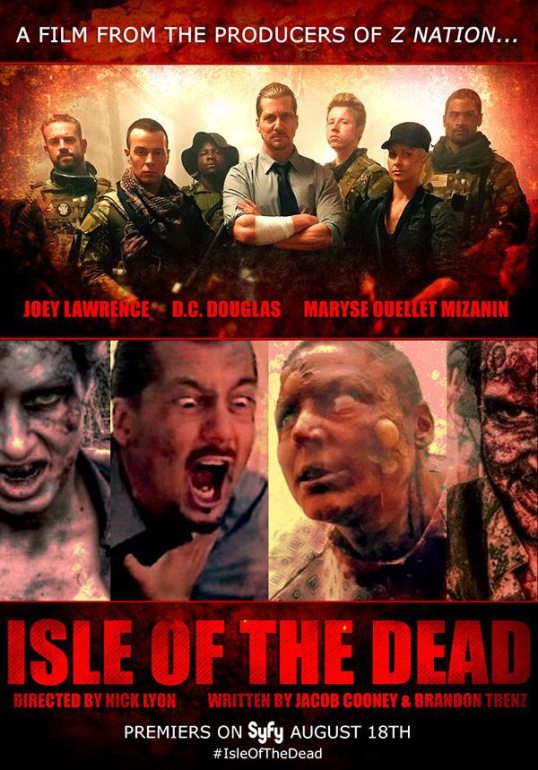
isle-of-the-dead-poster

I just finished watching the premiere of the latest Asylum-produced SyFy film, Isle of the Dead!

Oddly, this film premiered on a Thursday night at 10:00 pm and, especially when compared to Sharknado 4 or 2 Lava 2 Lantula, it did so with relatively little fanfare.  Fortunately, I just happened to see the premiere mentioned on Facebook.  Otherwise, I probably would have missed it all together.

And that would have been a shame because, for a low-budget zombie film that was reportedly filmed in just 12 days, Isle of the Dead was actually a pretty effective little film.

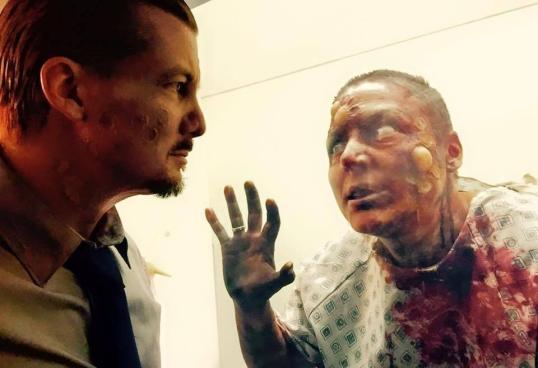
The film’s plot will probably sound familiar but there’s a reason for that.  The action starts at a secret Army research post that is located on an isolated tropic island.  While Dr. Wexler (D.C. Douglas) watches, a virus spreads through the lab, turning doctors and soldiers into ravenous zombies and leaving death and terror in its wake.  Jump forward ten years later.  A team of Navy Seals has disappeared on the island and a strike force has been sent to find out what happened to them.  Leading the strike force is the tough Lt. Gibson (Joey Lawrence).  Accompanying them is a CIA agent named Mikaela Usylvich (Maryse Mizanin).  Early on, Mikaela establishes a simple run: If you’re bitten by a zombie, you’re as good as dead.  A zombie bite means a bullet to the brain.

Eventually, the strike force makes their way to the old research post, where they discover a lot of zombies and one rather crazed Dr. Wexler.  Wexler, who turns out to have a personal connection to Mikaela, has spent the last ten years experimenting on zombies.  As a result, we now have zombies who can shoot guns as well as zombies who can talk and who can plot and plan…

If all of this is sounding familiar, it’s because Isle of the Dead is an homage to the Resident Evil games.  (Douglas may play Dr. Wexler here but he’s best known for voicing Albert Wesker in the games.)  As such, the film follows a pretty standard formula: we watch as the members of the strike force try to move from one area to another without getting ripped to pieces by zombies.  Admittedly, I’m not a huge expert on the Resident Evil games but I’ve been told by people who are that Isle of the Dead was full of references that were both subtle and occasionally obvious.

What I can tell you is that, taken on its own terms, Isle of the Dead was an effective, no-nonsense zombie film.  The zombies were relentless (and I personally like the idea of talking zombies), the gore was both credible and copious, and the entire film maintained a proper atmosphere of impending doom.  Douglas did a good job as crazy Dr. Wexler and Maryse Mizanin got to kick a lot of ass as Mikaela Usylvich.  If you’re into zombie films or you just enjoy the unique Asylum aesthetic, I suggest keeping an eye out for Isle of the Dead.
d.c.-douglas-and-taylor-jean-in-isle-of-the-dead-(2016)

Here’s The Latest Image of It’s Pennywise The Clown!


So, as you may know, there’s a new version Stephen King’s It coming out.  It’s scheduled to be released next year and it’ll star Bill Skarsgard as everyone’s favorite killer clown, Pennywise!

A new image of Pennywise’s costume appeared earlier today in Entertainment Weekly and here it is:

pennywise-ew-00054120

I have to admit that I’m not a huge fan of this look.  According to the EW article, the film’s costume designer decided to incorporate ideas from all eras of clowning, in order to show that Pennywise has been around for centuries.

But, to me, that kind of misses the point.  In the book, It appeared in many different forms, depending on who it was dealing with and it’s goal was at the time.  It used the form of Pennywise the Clown to both get the attention of and to scare the Hell out of children.  In the book, Pennywise kills Georgie Denbrough in 1957.  In the upcoming film, the timeline has been updated so that Georgie dies in 1989.  But, in both cases, why would Pennywise use the form of a Victorian-era clown to attack children in the 20th Century?  Wouldn’t Pennywise appear as a contemporary clown?

I may be overthinking this but, honestly, it’s difficult for me to look at this Pennywise without thinking about the time that Bobby Hill performed as Tartuffe the Spry Wonder Dog on King of the Hill.


Am I right?  Am I wrong?  What do you think of this new Pennywise?

Here’s The Full Trailer For Arrival!


Amy Adams and Jeremy Renner in a movie directed by  Denis Villeneuve?  Could Arrival be this year’s sci fi best picture nominee?  Or will it turn out to be more like Interstellar?

I’m hoping for the former!

(But then again, who isn’t?)

Check out the full trailer below!

The Original Godzilla is BACK! Check out this trailer for Godzilla Resurgence (a.k.a. Shin Godzilla)!


The first, the best, the original Godzilla — HE’S BACK!

Check out this trailer for Shin Godzilla (a.k.a. Godzilla Resurgence).  Eventually, it’ll make its way over the States.  Until it does, why not reread my review of my favorite Godzilla film, Godzilla vs. Destoroyah?


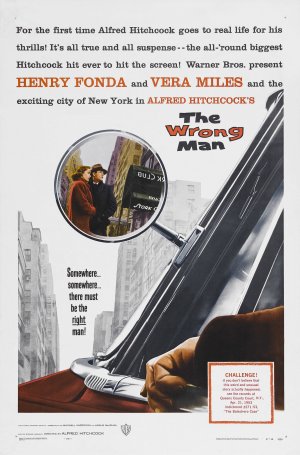
Lisa Marie Does The Wrong Man (dir by Alfred Hitchcock)


Since today is Alfred Hitchcock’s birthday, I figured why not take a few minutes to recommend one of his films that you may not have seen.  First released in 1956 but still painfully relevant today, The Wrong Man is one of Hitchcock’s best but it’s also one of his most underrated.

The Wrong Man deals with a common Hitchcock theme — i.e., an innocent man has been accused of a crime and, despite all of his efforts, cannot seem to convince anyone of his innocence.  The difference between The Wrong Man and something like Saboteur or Frenzy is that The Wrong Man is based on a true story.

Manny Ballestro (Henry Fonda) is a struggling musician.  He makes $85 a week, playing in a small jazz club.  But even though he may not be rich, he’s happy.  He loves his job.  He loves making music.  Even more importantly, he loves his wife, Rose (Vera Miles).  But Rose needs to have her wisdom teeth removed and it’s going to cost $300.  (As a sign of how much things have changed, I would have been relieved if it had only cost me $300 to get my wisdom teeth taken out.)  Desperate for money, Manny tries to borrow money on his wife’s life insurance plan.  What Manny doesn’t know is that the insurance office has been held up twice by a man who bears a vague resemblance to him.  A clerk calls the police and Manny soon finds himself being taken down to the police station.

Two detectives say that they need Manny’s help but they don’t tell him why.  But Manny knows he’s innocent of any crime and he believes that the police are on his side and he agrees to help.  When they tell him to walk into a liquor store, he does so.  When they take him to a deli, he goes in there as well.  When they demand to know why he was trying to borrow money on his wife’s life insurance, he tells them.  When they ask him about his financial difficulties, he tells them about that as well.  Why shouldn’t he?  He’s innocent and the police are just doing their job, right?  And when the cops finally ask him to copy down a few words that were used in the note that the robber slipped the clerk at the insurance company, Manny does so.  And when they then ask him to take part in a line-up, he does that as well…

And when Manny is arrested and charged with a crime … well, that’s when he finally understands that the system is not on his side.  His wife manages to hire a reputable attorney, Frank O’Connor (Anthony Quayle), to defend him but it quickly becomes obvious that the world has already decided that Manny is guilty.  When Manny and his wife try to track down some people who could provide Manny with an alibi, they discover that two of them are dead and one of them cannot be found.  For once, in a Hitchcock film, it’s not a case of conspiracy.  Instead, it’s just bad luck.

And, through it all, Rose continues to blame herself.  In fact, she is so wracked with guilt that she has a nervous breakdown.

It all leads to an amazingly disheartening courtroom scene.  As quickly becomes obvious, the judge has little interest in what’s happening in his court.  Even worse, the jury is unconcerned with the evidence.  Most of them are just annoyed at the inconvenience and punishing Manny seems like the perfect way to release their own frustrations…

It’s a bleak picture of the American justice system.  Watching The Wrong Man today, it’s tempting to say that the film is just a reflection of society in the 1950s and that things have changed today.  But really, have they?  True, the police may now be required to read someone their rights when they’re arrested.  A suspect can now ask for a lawyer.  We’ve got laws against entrapment and all the rest.  But that doesn’t matter.  We still live in a society where people are still widely presumed to be guilty, even after they’ve been found innocent in a court of law.  We still live in a society where the wrong man can have his life ruined because of one mistake.

The Wrong Man doesn’t get as much attention as some of Hitchcock’s other films.  In many ways, it’s an atypical example of his work.  Hitchcock was notorious for his dark sense of humor and his habit of waving away most plot points as just being mere “macguffins.”  With the exception of two scenes, both of which are meant to depict Manny’s mental state, The Wrong Man is filmed in a documentary style, one that occasionally seems more like Sidney Lumet than Alfred Hitchcock.  There’s next to no humor, nor are there any big or flamboyant twists.  In short, The Wrong Man finds the director of Psycho, Vertigo, and Rear Window at his most sincere.  It takes some getting used to.

But, once you do get used to it, The Wrong Man emerges as a powerful and bleak portrait of two innocent people at the mercy of a soulless system.  It’s a must see so be sure to see it!

The-Wrong-Man-poster

4 Shots From 4 Films: The Lodger, Notorious, The Wrong Man, Frenzy


4 Shots From 4 Films is just what it says it is, 4 shots from 4 of our favorite films. As opposed to the reviews and recaps we usually post, 4 Shots From 4 Films is all about letting the visuals do the talking!

And again, we say, “Happy Birthday, Alfred Hitchcock!”

4 Shots From 4 Films

The Lodger (1927, dir by Alfred Hitchcock)

The Lodger (1927, dir by Alfred Hitchcock)

Notorious (1946, dir by Alfred Hitchcock)

Notorious (1946, dir by Alfred Hitchcock)

The Wrong Man (1956, dir  by Alfred Hitchcock)

The Wrong Man (1956, dir by Alfred Hitchcock)

Frenzy (1972, dir by Alfred Hitchcock)

Frenzy (1972, dir by Alfred Hitchcock)

Happy Birthday, Alfred Hitchcock!


Hi, everyone!

Today is the birthday of one of the most influential directors of all time — the one and only Alfred Hitchcock!

In honor of this day, here’s a video that I found on YouTube.  This video, which was put together by Will Erickson so please give all credit to him, claims to feature every single cameo appearance that Hitchcock ever made!

Watch it below:

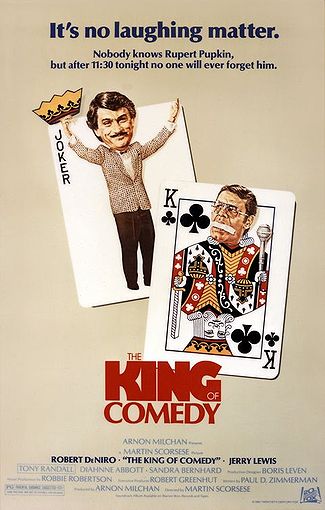
Film Review: The King of Comedy (dir by Martin Scorsese)


Kingofcomedy

Oh my God, do y’all want to see a really great film?

Then you need to do what I did earlier tonight.  You need to sit down and watch Martin Scorsese’s 1983 media satire, The King of Comedy.

Want to know more about The King of Comedy?  Then read on!  But be aware that there are spoilers in the review below!

The King of Comedy tells the story of … well, it actually tells the story of several people.  On the one hand, it’s the story of Jerry Langford (played by Jerry Lewis, who gives a performance that is so good that you might even forget that he directed The Day The Clown Cried), a comedian who has his own late night talk show.  Jerry is a celebrity, the type who is mostly famous for being himself.  He makes his living by interviewing people at night but, in his daily life, he struggles to interact with the world at large.  Whenever Jerry steps outside, people start yelling at him.  When he walks away from one elderly fan, she responds by screaming insults at him.  If Jerry seems to be paranoid, it’s because he has good reason to be.

For instance, Masha (a chillingly unhinged performance from Sandra Bernhard) is obsessed with him.  When we first see Masha, she is jumping inside of Jerry’s limousine and refusing to leave.  When she finally gets a chance to be alone with her idol, her manner alternates between desire and hostility.  She may love Jerry but she could just as easily kill him.

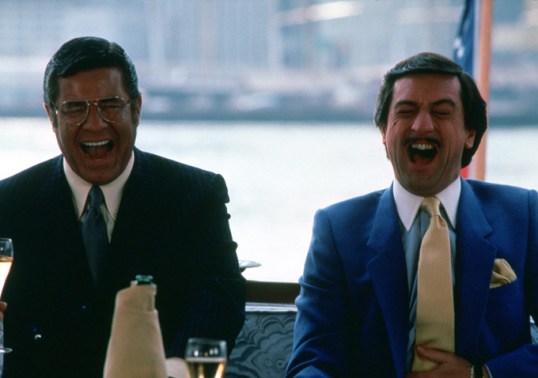
And then there’s Rupert Pupkin (Robert De Niro).  Rupert is the character who brings Jerry and Masha together.  He’s a stand-up comedian, the self-described “king of comedy.”  He’s convinced that he can be a star if he can just get on Jerry’s show.  Rupert spends his time imagining the great friendship that he and Jerry could have, if only Jerry would let him on TV.  In his mind, he plays out the scene in which Jerry begs Rupert to take over the show.  Of course, in reality, Rupert lives in his mother’s basement and is surrounded by card-board cutouts of celebs that he will never meet.  When we first see Rupert, his only real skill seems to be the ability to get on everyone’s last nerve.

It’s a little hard to believe now but, when De Niro started his career, he almost exclusively played fuck-ups.  True, he may have won an Oscar for playing Vito Corleone in The Godfather, Part II.  But even while he was playing Vito, he was also playing the erratic and perpetually in debt Johnny Boy in Mean Streets.  In Taxi Driver, he was the delusional Travis Bickle and, in Raging Bull, he was a boxer who managed to alienate just about everyone in the world before finally ending up as an obese self-parody.  But, out of all the fuck-ups that the young(ish) Robert De Niro played, perhaps none was a bigger fuck-up than Rupert Pupkin.

Rupert Pupkin is a character whose sole purpose in life seems to be to make other people cringe with embarrassment.  He is the type of guy who will always come on too strong and say the wrong thing.  Even when Rupert manages to meet Jerry, he is so annoying that Jerry can barely wait to get away from him.  He is the type who asks if you want to see a picture of his “pride and joy” and then shows you a picture of two bottles of dishwashing liquid.  It undoubtedly took some courage to so fully commit to such an off-putting character but that’s exactly what De Niro did.  Rupert is perhaps one of the most annoying characters in cinematic history and yet, perhaps because he’s played by Robert De Niro, you can’t help but feel sorry for him.  You never exactly like him.  But you can’t help but feel a little bit sorry for him.  He is just so clueless!

Of course, what Rupert lacks in common sense, he makes up for in ambition.  He truly believes that he’s destined to be the king of comedy and if he and Masha have to kidnap Jerry Langford for that to happen, so be it.  It is perhaps not surprising that Rupert and Masha would kidnap Jerry and threaten to kill him unless Rupert is invited to appear on the show.  What is surprising is the fact, once we finally see Rupert’s act, we discover that it’s not as bad as we were expecting:

Apparently, when the film was first released, there was some controversy over whether or not Rupert actually appeared on TV and became a star or if it was just another of his delusions.  What’s funny is that there wouldn’t be any controversy today.  In 1983, the idea of someone going to such extremes to be famous may have seemed over-the-top.  In 2016, however, we all know Rupert would eventually end up with his own reality show.  In its way, The King of Comedy is one of the most prophetic films ever made.

The King of Comedy is a great film that, even after all these years, still deserves to be seen.  In fact, it’s probably even more relevant today than when it was first released.

the-king-of-comedy-deniro