Lisa’s Week In Television: 7/11/21 — 7/17/21


Twonky

Another week, another collection of television shows!  Here’s what I watched this week.  As you may notice, there’s not a lot.  This week turned out to be an unexpectedly busy one.  Perhaps next week I’ll finally be able to get caught up with everything.  Here’s hoping!

allo-allo

Alllo Allo (Sunday Night, PBS)

At this point, I’m not even sure that I remember why Herr Flick was chained up in that dungeon but the Resistance and a reluctant Rene got him out of there on this week’s episode.  Meanwhile, Officer Crabtree was still incapable of mastering the French language and the English airmen were still hiding in barrels and responding to everything by saying, “Jolly good show, old boy.”

Upon doing some research, I discovered this week’s episode was actually the first episode of the show’s 5th season.  Because there was apparently some interest from American broadcasters about perhaps bringing the show to the U.S. or doing an American version of it, the 5h season had 26 episodes and were designed so that commercial breaks could be inserted, just in case the show ever did appear on an American network.  As such, much of this week’s episode was designed to fill potentially new viewers in on who everyone was and how they were related to each other.  Needles to say, it was all a bit frantic but still funny.

bachelorette 2021

The Bachelorette (Monday Night, ABC)

This week, Katie challenged the men to see who could go the longest without masturbating.  I’m not sure how that’s supposed to help her find a husband or how that goes along with the whole idea that Katie is supposed to be the sex positive bachelorette who is going to help this franchise get with the modern era.  It was all pretty dumb.

Anyway, this week, Katie declared for the 100th time that she doesn’t have any interest in any drama and then she dramatically sent Hunter home.
Big Brotehr 23

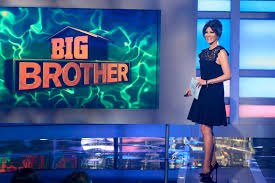
Big Brother 23 (Sunday, Wednesday, and Thursday, CBS)

I’ve watched every season of this show and I’ve achieved every writer’s dream of getting paid to write about and yet, it’s something that I rarely brag about.  You can read my current thoughts about the show and the live feeds over at Big Brother Blog.
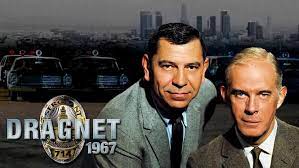
Dragnet

Dragnet (Weekday Mornings, MeTV)

I forgot to see the DVR to record the two episodes that aired on Monday morning.  It happens and since Dragnet wasn’t a serialized show, missing two episodes doesn’t make it any more or any less difficult to follow the rest of the series.

I did remember to set the DVR for the rest of the week, however.  Tuesday got started with an episode in which Friday and Gannon dealt with a teenage genius who had a rebellious and homicidal streak.  Despite getting a warning after throwing a beaker of acid at a jock, he later decided to hold an entire party hostage with a grenade!  Friday and Gannon agreed that it was all the fault of parents who don’t teach their kids to respect authority.  While it was easy to roll my eyes at some of the more didactic parts of the episode, it was interesting to see how this 1968 show foreshadowed many of the subsequent school shootings that would follow.  As well, the episode ended with a Spaghetti western-style stand-off between Gannon, Friday, and Grenade Boy, which was actually pretty well executed.  This was followed by an episode in which Friday shot and killed a man robbing a store and was subsequently subjected to an investigation by the police’s “shooting board.”  As with many early episodes of Dragnet, the emphasis was on the process.  As someone who has seen her share of cop shows, it’s weird to see something Dragnet where everyone brags about how they go “by the book.”  There’s no room for any renegades on this show!

Wednesday featured Friday and Gannon going undercover to catch a couple of hotel con artists who were pretending to be cops.  I love episodes where Friday and Gannon go undercover because it’s not like either one of them ever makes much of an effort to change their behavior or appearance.  They don’t take off or even loosen their ties.  They still sound, look like, talk like, and act like cops,  But, because all of the criminals in L.A. in 1968 were apparently really stupid, no one ever notices.  This was followed by an episode about a bank robber whose M.O. was to abduct innocent women and force them to help him carry out his crimes.  At the end of the episode, he attempted to abduct a karate instructor and Friday and Gannon pulled up just in time to see her kicking his ass.  Yay!

The first of Thursday’s episodes opened with Gannon telling Friday that “there’s a football game on the old tube,” and that Friday was welcome to come over and watch it.  Friday agreed but, once they arrived at Gannon’s place, it turned out that Gannon’s neighbors were just as annoying as any everyday criminal.  The main lesson here seemed to be that Friday and Gannon acted exactly the same off-duty as they did on-duty and that Friday was just as stiff and formal at home as in the office.  This was followed by an episode in which Friday and Gannon attempted to track down a sergeant who, as a result of burn-out and general depression, had developed a drinking problem.  Friday and Gannon help him see the errors of his way, largely by telling him to drop the self-pity act.

Finally, Friday started out with an episode in which Joe and Gannon arrested a veteran burglar named Charles Smith.  Charles Smith was a courtly senior citizen but he still had to go to jail.  He didn’t seem to mind, however.  It was all a part of the job.  The second episode featured Joe and Gannon fighting the evils of …. you guessed it …. MARIJUANA!  These are the type of episodes that Dragnet is known for, the episodes where a grim-faced Joe debated long-haired draft dodgers who thought smoking marijuana and otherwise breaking the law was no big deal.  And it’s true that this episode — called The Big High — had its share of campy moments.  Just hearing Joe explain that “dealers say smoking marijuana is like heaven but the users discover its Hell,” was enough to make me laugh out loud.  It was also hard not to laugh at the scene where a clueless, pot-loving suburbanite told Joe and Gannon that, “Once the young people cut their hair, put on a suit, and start voting, marijuana will be legal!,” just for Gannon to confidently reply, “I don’t think so.”  The show ended with that suburbanite’s toddler drowning in a bathtub because her stoned parents forgot about her, a scene that perhaps would have been more effective if not for the total overacting of the actor playing the stoned father.  It was all pretty melodramatic but, to be fair, it was also rather sincere.  As opposed to something like Reefer Madness, you got the feeling that Dragnet actually did believe in what it was saying, even if the show was totally clueless about the effects of drugs or the lifestyle of anyone under the age of 50.  The final shot, of Jack Webb’s Joe Friday crushing a baggie of weed in his hands was handled well, even if the show’s insistence on solely blaming marijuana seemed to kind of let the dumbass parents off the hook.

Hell's Kitchen

Hell’s Kitchen (Monday Night, Fox)

Poor Kevin!  As hard as he tried, he just couldn’t get it together during service and Chef Ramsay kicked him out of the kitchen and off the show before the final order was even served.  I imagine the same thing would happen to me if I was ever on Hell’s Kitchen.  I’d probably survive a few nights based on my charm but eventually, I’d get kicked out during the middle of an episode.  I would cry and cry, too.  It’s probably a good thing that I’ve never been on the show.

intervention

Intervention (Monday Night, A&E)

Elann had a drinking problem but then she faced an intervention and got help.  As the show came to an end, she talked about how much better she was feeling about life.  Then a title card appeared that informed us that, after getting sober, Elann still struggled with depressing and took her own life in 2019.  It was heart-breaking and a reminder that getting sober is important but it’s not a magic cure-all.

Elann’s episode was followed by one featuring Caitlin, who was addicted to crack cocaine. “Crack is my boyfriend,” she said.  This episode was hard for me to watch because I’ve known many people like Caitlin, who was obviously very intelligent but also very defensive and angry.  Unfortunately, Caitlin relapsed after getting treatment and, at the show’s end, was described as “living on the streets.”

moone_boy_title

Moone Boy (Sunday Night, PBS)

On a special Halloween episode of Moone Boy, Martin and Padraic built a raft, which they planned to sail into town so that they could “freak everyone out.”  Needless to say, the river did not cooperate and they instead ended up on an island with a castle and an eccentric caretaker.  Meanwhile, Martin’s mother defended the right of her daughter to be a reader at Mass despite being pregnant and unmarried.  She also impressed the priest with her knowledge of Simon and Garfunkel trivia.  It was a good episode.

The Office

The Office (All The Time, Comedy Central)

On Tuesday night, I watched several episodes from season 6.  Admittedly, season 6 is not my favorite season, as it featured the terrible storyline where Jim was co-manager and a lot of nonsense about Sabre.  Season 6 was when The Office started to get noticeably cartoonish.  That said, a cartoonish Office is still better than a lot of other sitcoms out there and it was nice to rewatch Jim and Pam’s wedding.

open-all-hours

Open All Hours (PBS, Sunday Night)

This week, I decided to pay attention the plot as opposed to just focusing on Granville’s quickly decaying sanity.  Apparently, Arkwright — a man in his 60s — had never seen his girlfriend’s bedroom and he decided that the best way to fix that would be to fake a burglary.  Granville went along with the plan, presumably because it was either do that or continue to fantasize about murdering the entire town.

1-seinfeld

Seinfeld (Weeknights, Channel 33)

I watched two episodes on Tuesday night, one of which featured Jerry indirectly getting Babu deported and the second of which was the classic Festivus episode.  I preferred the second episode.

1-upstart-crow

Upstart Crow (Sunday Night, PBS)

Ever since I first started watching Upstart Crow, I wondered how this comedy would deal with the tragic death of Christopher Marlowe, who is portrayed on the show as being Shakespeare’s free-loading, hedonistic best friend.  This week, I discovered that handled it by having Marlowe fake his own death.  Yay!  Marlowe lives!  As well, as Kate pointed out, with Marlowe believed dead, that meant no one would ever try to promote any weird theories about Marlowe secretly writing all of Shakespeare’s plays.  If only Kate were right!

(Seriously, the Shakespeare-Didn’t-Write-His-Plays people are the worst.  And no, I don’t care what Derek Jacobi has to say on the matter.)

The other major development this week was that Shakespeare wrote out the outline for a play to be called Hamlet.  However, when he tried to explain the plot to his colleagues, they all assumed it was a comedy.  When they heard about Ophelia drowning in the duck pond, they asked Shakespeare if they could have a duck on stage.  Will was not amused.  And yet, as silly as this show is, it’s hard not to think that it probably does get more right than it gets wrong.  Shakespeare is such a mythic name that it’s easy to forget that he was once just a playwright trying to make a living off of his writing.  Every classic work of art started as a rough draft and was probably dismissed, out-of-hand, by people who should have known better.  Upstart Crow is a good reminder of that fact.

Twonky

Here Are The Winners of the 2021 Cannes Film Festival


2021_Cannes_Film_Festival

When it comes to Cannes, it’s often a fool’s errand to try to predict what will win.  The critics and the viewers will definitely have their opinions of the films that they see but, in the end, it all comes down to the members of the Jury and the Jury almost always seems to go their own way.  Probably the easiest way to sabotage a film’s chances at Cannes is to announce, early-on, that the film is a lock for Palme.

For all of the acclaim that greeted The French Dispatch, Red Rocket, Flag Day. and a few others, the 2021 Cannes Jury, led by Spike Lee, gave the Palme d’Or to Julia Docournau’s Titane.  I can’t wait to see Titane as I absolutely loved Ducournau’s previous film, Raw.  Annette, which was kind of the love it or hate it film of the festival picked up the award for Best Director.  As much fun as some of us had imagining a world where Simon Rex was named Best Actor for Red Rocket, the jury went with Caleb Landry Jones for Nitram.  

What does this mean for the Oscars?  Probably not much.  Of course, winning at Cannes can help a film’s Oscar chances.  Most recently, it probably helped out both Tree of Life and Parasite.  I could imagine Caleb Landry Jones maybe getting a boost as far as a possible Best Actor nomination is concerned, depending on how Nitram is received in the States.  But, in the end, Cannes is usually viewed as being a bit too quirky and unpredictable for it to be a dependable precursor.  When it comes to film festival acclaim, the Oscars tend to pay more attention to Telluride and Venice.  In the end, it’ll probably be films like The French Dispatch and Red Rocket that benefit the most from being acclaimed (if not awarded) at Cannes.

With all that in mind, here are the winners!

Official awards

In Competition

The following awards were presented for films shown In Competition:

  • Palme d’Or: Titane by Julia Ducournau
  • Grand Prix:
    • A Hero by Asghar Farhadi
    • Compartment No. 6 by Juho Kuosmanen
  • Jury Prize:
    • Ahed’s Knee by Nadav Lapid
    • Memoria by Apichatpong Weerasethakul
  • Best Director: Leos Carax for Annette
  • Best Actress: Renate Reinsve for The Worst Person in the World
  • Best Actor: Caleb Landry Jones for Nitram
  • Best Screenplay: Ryusuke Hamaguchi & Takamasa Oe for Drive My Car

Un Certain Regard

  • Un Certain Regard Award: Unclenching the Fists by Kira Kovalenko
  • Un Certain Regard Jury Prize: Great Freedom by Sebastian Meise
  • Un Certain Regard Ensemble Prize: Bonne mère by Hafsia Herzi
  • Un Certain Regard Prize of Courage: La Civil by Teodora Mihai
  • Un Certain Regard Prize of Originality: Lamb by Valdimar Jóhannsson
  • Un Certain Regard Special Mention: Prayers for the Stolen by Tatiana Huezo

Golden Camera

  • Caméra d’Or: Murina by Antoneta Alamat Kusijanović

Short Films

  • Short Film Palme d’Or: All the Crows in the World by Tang Yi
  • Special Mention: August Sky by Jasmin Tenucci

Cinéfondation

  • First Prize: The Salamander Child by Théo Degen
  • Second Prize: Cicada by Yoon Daewoen
  • Third Prize:
    • Love Stories on the Move by Carina-Gabriela Daşoveanu
    • Cantareira by Rodrigo Ribeyro

Honorary Palme d’Or

  • Honorary Palme d’Or: Jodie Foster and Marco Bellocchio

Independent awards

FIPRESCI Prizes

  • In Competition: Drive My Car by Ryusuke Hamaguchi
  • Un Certain Regard: Playground by Laura Wandel
  • Parallel section: Feathers by Omar El Zohairy (International Critics’ Week)

Ecumenical Prize

  • Prize of the Ecumenical Jury: Drive My Car by Ryusuke Hamaguchi
  • Special Mention: Compartment No. 6 by Juho Kuosmanen

International Critics’ Week

  • Nespresso Grand Prize: Feathers by Omar El Zohairy
  • Leitz Cine Discovery Prize for Short Film: Lili Alone by Zou Jing
  • Louis Roederer Foundation Rising Star Award: Sandra Melissa Torres for Amparo

Directors’ Fortnight

  • Europa Cinemas Label Award for Best European Film: A Chiara by Jonas Carpignano
  • SACD Award for Best French-language Film: Magnetic Beats by Vincent Maël Cardona
  • Carrosse d’Or: Frederick Wiseman

L’Œil d’or

  • L’Œil d’or: A Night of Knowing Nothing by Payal Kapadia

Queer Palm

  • Queer Palm Award: The Divide by Catherine Corsini

Prix François Chalais

  • François Chalais Prize: A Hero by Asghar Farhadi
  • Special Mention: Freda by Gessica Généus

Cannes Soundtrack Award

  • Cannes Soundtrack Award:
    • Ron Mael & Russell Mael for Annette
    • Rone for Paris, 13th District

Palm Dog

  • Palm Dog Award: Rosie, Dora and Snowbear for The Souvenir Part II

Trophée Chopard

  • Chopard Trophy: Jessie Buckley and Kingsley Ben-Adir

Here’s The Trailer for Blue Bayou!


Earlier this week, Blue Bayou made quite a splash at the Cannes Film Festival, with many critics predicting that it might not only be a contender for the Palme d’Or but also an Oscar contender as well.

We’ll find out about the Palme d’Or tomorrow. For now, though, check out the trailer!

Music Video of the Day: Arthur Miller by GLÜME (2021, dir by Ryan McBride)


For your consideration, this dream of the past.

For the record, from what I understand, Arthur Miller did not treat Marilyn Monroe very well when they were married. And, while The Crucible and Death of a Salesman are both very good plays, a lot of his work was too didactic and heavy-handed to survive the test of time. (Even Death of a Salesman occasionally feels like it’s on the verge of turning into a parody of Clifford Odets.) Marilyn always felt like she had to struggle to live up to Miller’s intellectual reputation. Joe DiMaggio loves Marilyn though, in the end, he may have been too conventional in his outlook and lifestyle for her.

I don’t think Marilyn Monroe was murdered, though there are definitely some unanswered questions surrounding her death. I think she did kill herself and I think that the the way she was treated by the Kennedys was a contributing factor. I imagine that was can all agree that Marilyn deserved to live a happier life than she did.

Enjoy!

Music Video of the Day: So May We Start, performed by Sparks, Adam Driver, Marion Cotillard, and Simon Helberg (2021, dir by Leos Carax)


This is from Annette, which made quite a splash at Cannes last week and which will be released on Prime later this year. As for Cannes, it’s got a few more days to go!

Enjoy!

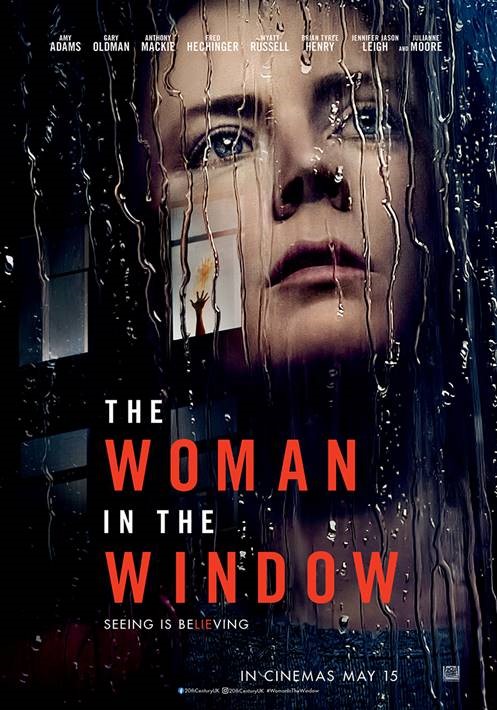
Film Review: The Woman In The Window (dir by Joe Wright)


Joe Wright’s The Woman In The Window is a film that was kicked around a bit before it was eventually released.

Based on the best-selling novel by A.J. Finn, The Woman In The Window was filmed in 2018 and was originally set to be released in October of 2019.  At the time, there were many who predicted that this would be the film for which Amy Adams would finally win an Oscar.  However, after a few poor test screenings, the release of Woman In The Window was pushed back.  The film’s producer, the now-infamous Scott Rudin, reportedly brought in Tony Gilory to re-shoot a few scenes.  The film was finally set to be released in May of 2020 and, needless to say, it was no longer expected to be an Oscar contender.  Then, the pandemic hit and, like so many movies, The Woman In The Window was left in limbo.  With its theatrical release canceled, the film was eventually purchased by Netflix.  Netflix finally released it in May of this year.  With all of the delays and the bad buzz, the critics had plenty of time to sharpen their knives and I don’t think anyone was surprised when the film got scathing reviews.

Though the film was completed long before the lockdowns, The Woman In The Window does feel like a COVID thriller.  Anna Fox (played by Amy Adams) is a child psychologist who is afraid to leave her Manhattan brownstone.  She has agoraphobia, the result of a personal trauma.  She’s not only scared to leave the safety of her apartment but she’s also terrified of anyone else getting inside.  She spends her days spying on the neighbors, drinking wine, and watching old movies.  Of course, that’s also what many people in the real world spent most of the past year doing.  As I watched Anna freak out over some trick or treaters throwing eggs at her door, I was reminded of my neighbor who, a few months ago, nearly had a panic attack because she saw someone walking past her house without a mask.  One could argue that the world itself has become agoraphobic.

Despite her housebound status, Anna does still have a few contacts with the outside world.  For instance, a psychiatrist (played by Tracy Letts, who also wrote the script) comes by every weekend.  She has a tenant named David (Wyatt Russell) who lives in her basement.  She regularly has conversations with her husband and her daughter, who she says are both living in another state.  And eventually, she meets Ethan (Fred Hechinger), the 15 year-old who has just moved in across the street.  When Anna thinks that she’s witnessed Ethan’s father (Gary Oldman) murdering his mother (Julianne Moore), Anna calls the cops.  However, when a totally different woman (Jennifer Jason Leigh) shows up and claims to be Ethan’s mother, Anna is forced to try to solve the mystery herself.

The Woman In The Window is a disjointed and rather messy film but I’d be lying if I said that I didn’t enjoy it.  The novel (which I also greatly enjoyed) was told entirely from Anna’s point of view, which means that we saw everything through the eyes of a sometimes unreliable narrator.  The novel did such a good job of putting us inside of Anna’s head that it didn’t matter that the story itself was full of improbable coincidences.  Director Joe Wright tries to recreate the novel’s uneasiness through garish lighting, crooked camera angles, and abrupt jump cuts.  Sometimes, it’s effective (as when Anna tries to leave her apartment in the rain, just to pass out after having a panic attack) and other times, the technique feels a bit too obvious.  And then there’s other scenes — like when Anna suddenly sees an overturned car in the middle of her living room — where it becomes brilliantly bizarre.  It’s in those scenes, in which the film carefully balances on the line between the surreal and the silly, that Wright seems to be most comfortable as a director.  Much as he did with Anna Karenina, Wright fills The Woman In The Window with scenes that suggest that, on some level, the characters are aware that they’re just characters in a B-melodrama.

Indeed, despite being directed by a great filmmaker and featuring a cast of award-winning actors, The Woman In The Window is a B-movie and, when taken on those terms, it’s an entertaining melodrama.  Interestingly enough, it actually helps that almost everyone in the film has either been miscast or is too obvious a choice for their role.  Gary Oldman is such an on-the-nose choice to play a tyrannical authority figure that it actually makes sense that a film buff like Anna would automatically assume the worst about him.  Julianne Moore has even less screen time than Oldman but she makes the most of it, playing yet another one of her talkative characters who doesn’t appear to have the ability to filter her thoughts.  It’s the type of role that Moore specializes in and one that she could probably play in her sleep but she and Adams establish a good rapport and the scene that they share is one of the best in the film.  Speaking of which, Amy Adams is so incredibly miscast as Anna that you actually find yourself rooting for her to somehow bring the character to life.  Amy Adams is one of the few performers who can make being cheerful compelling so it seems like a bit of a waste to cast her as a self-destructive agoraphobe who can’t leave her apartment  And yet, much as in Hillbilly Elegy where she was similarly miscast, Adams seems to be trying so hard to make her casting work that you appreciate the effort, even if she doesn’t quite succeed.  She’s just so likable that you sympathize with her, even if she isn’t quite right for the role.

(Myself, I pictured Naomi Watts in the role when I read the book.)

As a film, The Woman In The Window shares the book’s flaws.  The plot is a bit too heavy on coincidences and we’re asked to believe that Anna, who can’t leave her house without having a panic attack and who is terrified of someone getting into her house without her knowledge, would also invite Ethan to visit her and allow David to live in her basement.  As well, it’s hard to watch the movie without wondering which scenes were reshot by Tony Gilroy.  (The final scene especially feels out-of-place with what came before it, leading me to suspect that it may have been added in response to those negative test screenings.)  But, while the film’s defects are obvious, I still enjoyed it.  It may be flawed but it’s hardly the disaster that some have made it out to be.

The Woman in the Window

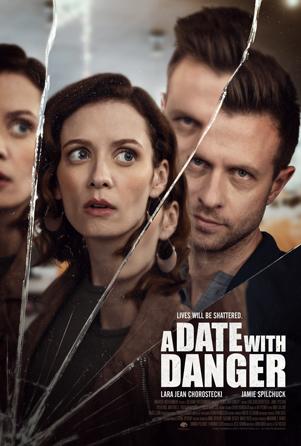
Lifetime Film Review: A Date With Danger (dir by Cat Hostick)


After a messy divorce, Nikki (Lara Jean Chorostecki) is ready for a new beginning! She does what every recently divorced woman in a Lifetime film does ….. she moves to a small town, gets a job in a trendy boutique, and starts dating a handsome man.

At first, it seems like everything’s perfect. The boutique’s owner, Liz (Ispita Paul), is not only Nikki’s boss but soon becomes her best friend and mentor as well. Nikki’s teenager daughter, Brooke (Jaida Grace), befriends Liz’s daughter, Anna (Kayla Hutton). While it is true that Liz’s relationship with her ex-husband, Dan (Matt Wells), is a volatile one, that just gives Liz and Nikki something to bond over. Finally, there’s Gavin (Jamie Spilchuk). Nikki thinks that Gavin is just the perfect man, even though Liz has her doubtts.

Then, one day, Liz vanishes. The police suspect that Dan could be involved but, when they discover that Liz has rewritten her will to leave the boutique to Nikki, they start to suspect that Nikki could somehow be involved as well. Dan seems like the obvious culprit but as Nikki starts to investigate the disappearance on her own, she discovers that everything is not how it seems….

A Date With Danger is a pretty typical Lifetime film. If you’ve ever seen a Lifetime film before, you know who kidnapped Liz and you can probably guess why. Ordinarily, the fact that Lifetime films are kind of predictable is actually one of their strengths. These are movies that you watch so you can yell back at the TV and wonder in amazement whether or not any of the characters have actually watched a movie before. That said, it was hard not to feel that A Date With Danger would have benefitted from a few more characters. When there’s only three suspects and one of them is eliminated by virtue of being the film’s main character, it’s fairly easy to guess who is going to turn out to be the guilty party. A Date With Danger even acknowledges this fact by revealing the identity of Liz’s kidnapper rather early on.

The title’s a bit misleading, as Nikki does go on a date but it’s hardly the center of the film and one never really gets the feeling that she’s in any danger during the date. That said, the title is a good example of Lifetime showmanship. Danger is a word that will always catch your attention. As well, it brings to mind the classic Mother, May I Sleep With Danger? Date With Danger, unfortunately, never reaches the heights of that classic exercise in over the top melodrama and that’s a shame. Indeed, Date With Danger is surprisingly subdued for a Lifetime film. It’s possible, of course, that I’ve been spoiled by all of the recent “Wrong” films as I spent most of Date With Danger wondering when Vivica A. Fox was going to show up and say, “Looks like you went on the wrong date with danger.”

A Date With Danger is a bit too low-key for its own good, never quite embracing the melodrama with the enthusiasm that people like me have come to expect from a Lifetime film. That said, the small town setting looked really nice and Jamie Spilchuk was well-cast as the enigmatic Gavin. Even if it wasn’t particularly memorable by Lifetime standards, A Date With Danger did its job efficiently.

Music Video of the Day: Blue Monday, perforemd by Orkestra Obsolete (2016, dir by ????)


This is a cover of the famous New Order song, performed on 1930s instruments by Orkestra Obsolete. It’s mysterious and haunting, as these things should be. One almost gets the feeling that this could have been lifted from a new before seen sequel to Eyes Wide Shut.

Enjoy the mystery!

Film Review: Romeo & Juliet (dir by Simon Godwin)


It’s a shame, really.

Romeo & Juliet, which as you can probably guess is a cinematic adaptation of Shakespeare’s classic play about the doomed lovers and the warring families, is one of the best films that I’ve seen this year.  Under normal circumstances, I would probably have it listed as the 2nd best film of the year so far, right underneath The Father.  Unfortunately, Romeo & Juliet did not receive a theatrical release.  Instead, in the United States, it was aired on PBS.  Though it was submitted for Emmy consideration, it was unforgivably snubbed when the nominations were announced earlier today.

And that’s a shame because this film adaptation of Romeo & Juliet is one of the best that I’ve seen, one that celebrates the story’s theatrical origins while also working as a wonderful display of cinematic artistry.

The production was filmed over 17 days at London’s Royal National Theater.  Because it was filmed at the height of the Coronavirus pandemic, there’s no audience.  Instead, the film opens with a small company of actors, all dressed in modern clothing, walking through the theater.  Director Simon Godwin emphasizes the emptiness of the theater and the almost eerie silence as the actors take their seats around a table and start to recite their lines.  We immediately recognize some members of the cast.  Jessie Buckley plays Juliet while Josh O’Connor plays the role of Romeo.  Adrian Lester is cast as the Prince while Tasmin Grieg plays Lady Capulet.  As the actors recite their lines, they stand up and start to move around the theater and, before our eyes, they transform from being actors to being the characters from Shakespeare’s play.  Suddenly, we’re no longer watching Jessie Buckley and Josh O’Connor.  Instead, we’re watching Romeo Montague and Juliet Capulet.

As the action moves to the stage, Simon Godwin continues to emphasize the eerie emptiness of the theater and the desolate look of the play’s ornate but still rather simple sets.  Even with the presence of the actors, the streets of Verona still seem as deserted as the streets of London and every other major city were during the worst days of the pandemic.  Watching the story unfold, it’s hard not to feel that Romeo and Juliet aren’t just rebelling against their warring families but they’re also rebelling against the sense of hopelessness that afflicted so many people in 2020.  Romeo and Juliet’s refusal to surrender their love takes on an extra poignancy when filmed against the backdrop of the pandemic.  At a time when many people were saying that civilization was collapsing and the world was on the verge of ending, Romeo and Juliet refuse to surrender their love.  If their world is going to end, it’s going to end on their terms.

As opposed to other cinematic adaptations of Shakespeare’s plays, this version of Romeo and Juliet does not attempt to hide its theatrical origins.  Instead, it embraces them, right down to the obviously fake moon that is lowered from the rafters whenever a scene takes place at night.  And yet, the actors give such good performances and Simon Godwin directs with such confidence and skill that the viewer still gets wrapped up in the story.  Like all good works of theater, Romeo & Juliet succeeded in convincing the viewer of two contradictory things, that they’re both watching a production in a London theater and that they’re watching the Capulets and the Montagues as they walk through the deserted streets of Verona.  This production of Romeo & Juliet is one that celebrate both the power of the stage and the power of cinema.  Perhaps most importantly, it celebrates the power of Shakespeare’s classic tale, with the mix of the actor’s modern costuming and Shakespeare’s Elizabethan language reminding us that great art is universal and timeless.

Jessie Buckley and Josh O’Connor both give compelling performances as the film’s doomed lovers, with Buckley bringing a good deal of inner strength to the role of Juliet while O’Connor wisely underplays the scenes that would tempt a lesser Romeo to go overboard.  As opposed to what we often see in lesser productions of this play, Buckley’s Juliet is never foolishly naïve and O’Connor’s Romeo never surrenders to shrill self-pity.  Instead, they’re two lovers who know what they’re getting into but who are still willing to take the risk, even at the most bleak of times.  When Buckley and O’Connor first show up in the film, walking through that empty theater, they look like themselves, two talented performers in their early 30s.  But, as they perform their roles, they transform before our eyes into Romeo and Juliet and it’s thrilling to watch.

One has to applaud the National Theatre for filming this production.  One also has to applaud PBS for airing it in the States.  But still, how I wish Romeo & Juliet had been given a theatrical release or, at the very least, a Netflix or Prime release!  This is a production that I wish more people had seen, a great work of theater, film, and art.

Romeo-and-Juliet-First-look-26.01.21-1-copy-1618268389