October Positivity: Me Again (dir by David A.R. White)


In 2011’s Me Again, David A.R. White stars as Rich.

Rich is a typical David A.R. White character.  He’s a preacher with a young family and he has lost his ability to excite his congregation.  His sermons are dry and boring and show little connection with the concerns or lives of those listening.  Rich is burned out and his wife, April (Ali Landry), is tired of listening to him complain.  When they were children, April promised Rich that they were meant to be together.  Now that they are adults and married, April and Rich are separated and April wants to make the divorce final.

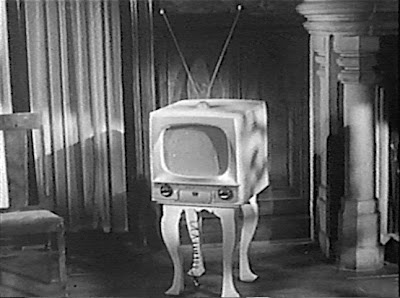
Poor Rich!  No one respects him and he’s about to lose his family.  His one friend, Tony (Tommy Blaze), tries to offer some good advice but Rich doesn’t want to hear it.  Rich just wants to feel sorry for himself and watch an odd infomercial hosted by Big Earl (Bruce McGill).  Big Earl says that if you call his number, he can change your life.  Rich doesn’t call the number but his life gets changed anyways.

Rich finds himself being transported from one body to another.  When he wakes up, he’s a wealthy man who has no friends and who has a heart condition.  Just as quickly, he finds himself in the body of Chloe (Andrea White Logan), an insecure super model with an eating disorder.  Then, suddenly, he’s in the body of a fish floating in a fish tank in Tony’s restaurant.  Then he’s his daughter’s teen boyfriend, who is pressuring her to start taking birth control.  (AGCK!)  Then he’s in his wife’s body.  Briefly, he takes control of Della Reese.  He even spends some time in jail, talking to Big Earl.

And I guess the idea is that, from going to body to body, Rich learns why he needs to stop feeling sorry for himself and actually make the effort to make his marriage work.  He also comes to understand the problems of a few other people.  The rich man needs to go to church.  The model needs to do something about all the disparaging post-it notes that she has hanging around her house.  Her daughter’s boyfriend needs to be handcuffed with a sock in his mouth.  The fish need as new home.  You get the idea.

This movie …. well, let’s give credit where credit is due.  David A.R. White is not a bad actor and his comedic timing is adequate.  There were a few moments when he did make me smile.  I laughed out loud when he suddenly became a fish.  As a director, though, White goes a bit overboard.  The whole thing with Rich becoming a model starts out as relatively humorous but then it just goes on and on.  As well, I appreciated the message of taking care of other people but I’m not sure that the best way to communicate that message was for the very white Rich to briefly inhabit the body of a black housekeeper.  The intentions may have been good but the execution often left me cringing.

Me Again is like a lot of faith-based comedies.  There are a few humorous moments but, in the end, it’s just too uneven to really work.
Late Night Retro Television Review: Highway to Heaven 4.19 “The Correspondent”


Welcome to Late Night Retro Television Reviews, a feature where we review some of our favorite and least favorite shows of the past!  On Thursdays, I will be reviewing Highway to Heaven, which aired on NBC from 1984 to 1989.  The entire show is currently streaming on Tubi and several other services!

This week, Jonathan is a dream warrior.

Episode 4.19 “The Correspondent”

(Dir by Michael Landon, originally aired on February 24th, 1988)

Journalist Hale Stoddard (Darren McGavin) sits in a South American prison cell and waits to be executed.  One-by-one, the other prisoners are dragged out of the cell and shot by the country’s new government.  Hale passes the time by writing a letter that he knows no one will ever read.

Suddenly, Hale is no longer in the cell.  Instead, he’s in the basement of his house.  And there’s Jonathan.  Jonathan explains that time has stopped and now, Hale is in his wife’s dream.  Martha (Patricia Smith) dreams of Hale never being at home.  She dreams of their son having both arms, even though he lost those arms in an accident when he was younger.  (She also dreams of their now-adult son as always being a child.)  Martha dreams about Hale’s former mistress, Eleanor (Eileen Barnett), standing around the house.  (Hale argues that Eleanor was never in the house but Jonathan explains that, in Martha’s dreams, she is.)  Hale comes to realize how often he deserted Martha because he couldn’t deal with settling down and raising a family.  And now, while Martha dreams of him, Hale is about to be shot and killed….

Except, he’s not.  It turns out that the South American prison was Hale’s dream.  When Hale wakes up, he’s still at home.  He tells Martha that he won’t be going to South American after all.

Awwww!  How sweet.

This was a bit of a weird episode but I liked it.  I appreciated how the show created Martha’s dream world by adding randomly weird details (like an oversized chair at the breakfast table, which was meant to represent Hale’s absence).  Darren McGavin gave a good performance as Hale and resisted the temptation to overact.  With the episode, the show tried to do something different and, for the most part, it succeeded.

Horror on TV: The Night Stalker (dir by John Llewelyn Moxey)


Long before he achieved holiday immortality by playing the father in A Christmas Story, Darren McGavin played journalist Carl Kolchak in the 1972 made-for-TV movie, The Night Stalker.  Kolchak is investigating a series of murders in Las Vegas, all of which involve victims being drained of their blood.  Kolchak thinks that the murderer might be a vampire.  Everyone else thinks that he’s crazy.

When this movie first aired, it was the highest rated made-for-TV movie of all time.  Eventually, it led to a weekly TV series in which Kolchak investigated various paranormal happenings.  Though the TV series did not last long, it’s still regularly cited as one of the most influential shows ever made.

The Night Stalker is an effective little vampire movie and Darren McGavin gives an entertaining performance as the rather nervous Carl Kolchak.

Enjoy!

Brad’s Scene of the Day – Dwight Yoakam being a world class jerk in SLING BLADE (1996)!


I’ll sing the praises of the movie SLING BLADE to any person who will listen. I love the movie, mainly because of Billy Bob Thornton’s outstanding performance as Karl Childers, a character that he created from scratch. I also love the movie because it was filmed in Saline County, Arkansas, the county I live in. I love to eat at Garry’s Diner, if nothing else because Billy Bob and John Ritter did in the movie. They make great burgers and shakes!

One of the best things about SLING BLADE is Dwight Yoakam’s performance as Doyle Hargraves, one of the most disgusting characters you’ll ever see on screen. Dwight Yoakam slays the role, and you can’t help but hate him. On a side note, I have been told that Dwight’s not one of the nicest guys around, but that’s neither here nor there. A lot of people have said they didn’t like Charles Bronson, but I don’t care because I love him and that’s all that matters. I love Dwight Yoakam too. I love his song “Fast as you,” and I love his performance in SLING BLADE!

In celebration of Dwight’s 69th birthday, I present a scene from SLING BLADE where Dwight plays the epitome of domestic, blue collar evil! (I would say enjoy, but if you’re not somewhat repulsed, you may need help! 😉)

Made-For-TV Horror: The Initiation of Sarah (dir by Robert Day)


Oh, poor Sarah.

Sarah (Kay Lenz) is attending college with her sister, Patty (Morgan Brittany).  Patty is pretty and popular and everyone wants to be her friend.  Sarah is withdrawn and a bit moody and people seem to go out of their way to avoid her.  Sarah, however, has a secret.  She can move and break things with her mind.  When a guy on the beach tries to force himself on Patty, Sarah uses her powers to push him away.  Later, when Sarah’s upset, she stares at a mirror until it cracks.

When Patty and Sarah visit their mother’s old sorority, Patty is a hit but Sarah is less popular.  The bitchy president of the Sorority, Jennifer Lawrence (Morgan Fairchild), is happy to invite Patty to join but she doesn’t want Sarah to be anywhere near her.  Sarah ends up joining the outcast PDE sorority.  Jennifer, however, remains obsessed with humiliating and destroying Sarah.  And Sarah, when she gets angry, has a tendency to cause things to happen….

This film, which aired in 1978, probably sounds like a rip-off of Carrie and, in many ways, it is.  For whatever reason, Sarah’s bullies seem to be obsessed with making her as miserable as possible.  In Carrie, one reason you hated the bullies was because Sissy Spacek gave such a heart-breaking, vulnerable and empathetic performance as Carrie White.  The bullies were terrible to begin with but then to pick on someone as fragile as Carrie?  It sucked William Katt had to die but there’s still a reason why the prom inferno makes as many people applaud as scream.  In The Initiation of Sarah, Kay Lenz is not particularly sympathetic as Sarah.  Even before the bullies start picking on her, Sarah comes across as being angry and bitter about …. well, everything.  Patty goes out of her way to take care of her sister but Sarah never seems to appreciate it.  Bullies still suck, of course.  There’s no excuse for being a bully and Jennifer really does go overboard when it comes to going after Sarah.  But Sarah herself still doesn’t necessarily come across as being someone you would want to join your sorority.

What sets The Initiation of Sarah apart from other Carrie rip-offs is the character of Mrs. Hunter (Shelley Winters).  Mrs. Hunter founded PDE when she was a student and now, as the school’s resident expert on paganism, she’s the housemother of PDE.  As soon as Sarah joins, Mrs. Hunter starts to talk about how Sarah is destined to lead PDE to glory.  When another member of PDE, Mouse (Tisa Farrow), takes a look in Mrs. Hunter’s room, she discovers a Satanic altar that is guarded by a fierce looking dog….

That’s right!  This isn’t just a rip-off of Carrie.  It’s a rip-off of The Omen as well!

Kay Lenz might be a bit on the dull side as Sarah but this film is worth watching for the performance of Morgan Fairchild and, especially, Shelley Winters.  As played by Fairchild, Jennifer is more than just a bitch.  She’s a sociopath with great hair.  Meanwhile, Shelley Winters — especially once the 70s started — was never a particularly low-key or subtle actress.  When you cast her as an overbearing housemother who happens to be the high priestess of a cult, you know that you’re going to get something worth watching.  Winters attacks the role with a ferocity that is occasionally over-the-top and almost funny but always entertaining.

The Initiation of Sarah is an enjoyable made-for-TV movie.  Watch it the next time you’re feeling nostalgic for college life.

Great Moments In Comic Book History #42: Tomb of Dracula #27


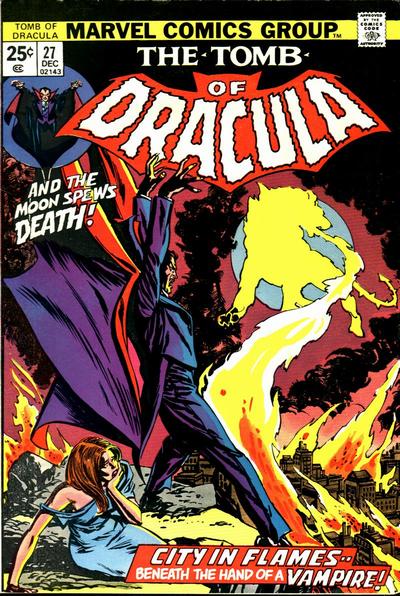
Of all the Marvel horror comics that were published in the 70s, Tomb of Dracula was the best.  Not only did it have the best stories, the best villain, and the best supporting cast (Blade, Hannibal King, Rachel van Helsing, Doctor Sun, and many others) but it also had the best covers.

Tomb of Dracula #27 (first released on September 3rd, 1974) is one of my favorites.  Gil Kane’s cover features Dracula, fire, a beautiful woman, a beast in the moon, and a melodramatic tag line.  What more could a comic boom reader ask for?

Previous Great Moments In Comic Book History:

  1. Winchester Before Winchester: Swamp Thing Vol. 2 #45 “Ghost Dance” 
  2. The Avengers Appear on David Letterman
  3. Crisis on Campus
  4. “Even in Death”
  5. The Debut of Man-Wolf in Amazing Spider-Man
  6. Spider-Man Meets The Monster Maker
  7. Conan The Barbarian Visits Times Square
  8. Dracula Joins The Marvel Universe
  9. The Death of Dr. Druid
  10. To All A Good Night
  11. Zombie!
  12. The First Appearance of Ghost Rider
  13. The First Appearance of Werewolf By Night
  14. Captain America Punches Hitler
  15. Spider-Man No More!
  16. Alex Ross Captures Galactus
  17. Spider-Man And The Dallas Cowboys Battle The Circus of Crime
  18. Goliath Towers Over New York
  19. NFL SuperPro is Here!
  20. Kickers Inc. Comes To The World Outside Your Window
  21. Captain America For President
  22. Alex Ross Captures Spider-Man
  23. J. Jonah Jameson Is Elected Mayor of New York City
  24. Captain America Quits
  25. Spider-Man Meets The Fantastic Four
  26. Spider-Man Teams Up With Batman For The Last Time
  27. The Skrulls Are Here
  28. Iron Man Meets Thanos and Drax The Destroyer
  29. A Vampire Stalks The Night
  30. Swamp Thing Makes His First Cover Appearance
  31. Tomb of Dracula #43
  32. The Hulk Makes His Debut
  33. Iron Man #182
  34. Tawky Tawny Makes His First Appearance
  35. Tomb of Dracula #49
  36. Marvel Publishes Star Wars #1
  37. MAD Magazine Plays Both Sides
  38. The Cover of Green Lantern/Green Arrow #85
  39. LBJ Stands Up For The Hulk
  40. Chamber of Chills #2
  41. Tomb of Dracula #41

Great Moments In Television History #40: Johnny Carson Talks To Vincent Price


I saw that today is the 100th birthday of one of the few men to have actually earned the right to be called the “King of Late Night,” Johnny Carson.  In honor of the occasion and the month, here’s Johnny interviewing Vincent Price.

This clip is from the September 27th, 1973 episode of The Tonight Show.  Vincent was on the show to promote his upcoming movie, Theatre of Blood.  During the interview, he also discussed Boris Karloff and Peter Lorre.  This clip features two class acts at their best.

Previous Moments In Television History:

  1. Planet of the Apes The TV Series
  2. Lonely Water
  3. Ghostwatch Traumatizes The UK
  4. Frasier Meets The Candidate
  5. The Autons Terrify The UK
  6. Freedom’s Last Stand
  7. Bing Crosby and David Bowie Share A Duet
  8. Apaches Traumatizes the UK
  9. Doctor Who Begins Its 100th Serial
  10. First Night 2013 With Jamie Kennedy
  11. Elvis Sings With Sinatra
  12. NBC Airs Their First Football Game
  13. The A-Team Premieres
  14. The Birth of Dr. Johnny Fever
  15. The Second NFL Pro Bowl Is Broadcast
  16. Maude Flanders Gets Hit By A T-Shirt Cannon
  17. Charles Rocket Nearly Ends SNL
  18. Frank Sinatra Wins An Oscar
  19. CHiPs Skates With The Stars
  20. Eisenhower In Color
  21. The Origin of Spider-Man
  22. Steve Martin’s Saturday Night Live Holiday Wish List
  23. Barnabas Collins Is Freed From His Coffin
  24. Siskel and Ebert Recommend Horror Films
  25. Vincent Price Meets The Muppets
  26. Siskel and Ebert Discuss Horror
  27. The Final Scene of Dark Shadows
  28. The WKRP Turkey Drop
  29. Barney Pops On National TV
  30. The Greatest American Hero Premieres
  31. Rodney Dangerfield On The Tonight Show
  32. The Doors Are Open
  33. The Thighmaster Commercial Premieres
  34. The Hosts of Real People Say “Get High On Yourself”
  35. The 33rd NFL Championship Game Is Broadcast In Color
  36. The Sopranos Premieres on HBO
  37. Eisenhower Hosts The First Televised Press Conference
  38. The Twilight Zone Premieres On CBS
  39. The Wolverines

Retro Television Review: Decoy 1.9 “Necklace of Glass”


Welcome to Retro Television Reviews, a feature where we review some of our favorite and least favorite shows of the past!  On Thursdays, I will be reviewing Decoy, which aired in Syndication in 1957 and 1958.  The show can be viewed on Tubi!

This week, Casey discovers that New York can be a lot of fun when you know the right people.

Episode 1.9 “Necklace of Glass”

(Dir by Teddy Sills, originally aired on December 9th, 1957)

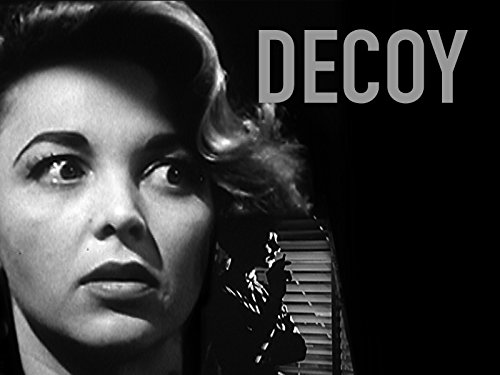
Casey goes undercover as a rich socialite in order to investigate a spree of jewelry thefts.  Unfortunately, Casey isn’t very good at her job in this episode.  Not only does she suspect the wrong person, a shady gigolo named Larry Babson (Martin E. Brooks), she also comes on too strong while trying to trick Larry into confessing.  Larry figures out that she’s a cop, finds the microphone that Casey hid in the apartment, and then storms out.  Fortunately, Larry’s wife (Rita Grapel) then shows up shortly afterwards and, not having had a chance to talk to Larry, reveals that she’s the one who has been masterminding the jewelry thefts.  Casey, who had been feeling pretty bad up until that point, promptly pulls out her badge.

I actually appreciated the fact that Casey basically blew her assignment in this episode.  Characters who are flawless and who never make mistakes are boring.  In the episode, Casey says that she was distracted by how much fun it was to pretend to be rich and it makes perfect sense.  Why wouldn’t the working class Casey enjoy the chance to live the high life for once?

The important thing is, even though she initially screwed up, Casey solved the case.  This was a good episode.  Casey wasn’t flawless but, in the end, luck was on her side.

Scenes That I Love: The Inevitability of Doom In The Dead Don’t Die


Jim Jarmusch’s The Dead Don’t Die is a film that definitely grew on me. When I first watched it, I thought it was intriguing but perhaps a bit too cutesy and enamored with itself. However, I later came to realize that Jarmusch actually found the perfect tone for his look at our zombie-saturated culture.

In the scenes below, Bill Murray, Chloe Sevigny, and the wonderful Adam Driver all deal with the inevitability of doom that comes with being a character in a zombie film.


October True Crime: Ed Kemper (dir by Chad Ferrin)


In 1964, 15 year-old Edmund Kemper murdered his grandparents.  When he was asked why he had killed the two people who basically raised him, Kemper reportedly replied, “I just wanted to see what it was like to kill grandma.”

Kemper spent the next five years imprisoned by the California Youth Authority.  He was discovered to have an IQ of 138.  The psychiatrists who examined him all commented on what a friendly and conscientious prisoner Kemper was.  Kemper never caused trouble.  He always cleaned up after himself.  He seemed to be truly happy while incarcerated.

When Kemper turned 21, he was released back into the world.  He moved in with his domineering mother, who worked as an administrative assistant at the local college.  Because it had been determined that he would probably never reoffend, his juvenile record was expunged.  Kemper went to community college.  He hung out at a local cop bar.  (He applied unsuccessfully to be a police officer.)  He got a job with Departments of Highways.  Because he stood 6’9, everyone knew him as the friendly and somewhat dorky “Big Ed.”

Edmund Kemper went on to kill eight more people, including his mother and her best friend.

Kemper turned himself into the police and confessed to his crimes.  At his trial, his lawyers unsuccessfully went with an insanity defense.  When he was convicted, Kemper requested the death penalty, just to learn that the Supreme Court had (temporarily) outlawed capitol punishment.  Kemper was sent to prison, for life.  And that’s where he is to this day.

What’s odd about Kemper is that, once he was back in prison, he again impressed everyone by being a friendly, polite, and conscientious prisoner.  Unlike most convicted murderers, Kemper admitted his crimes and was even willing to analyze the darkness that drove him to commit them.  In the early days of criminal profiling, Edmund Kemper was frequently interviewed by FBI agent Robert Ressler and his insights into his own mind are still frequently used to profile serial killers to this day.  Both Ressler and profiler John Douglas described Kemper as being a sensitive and likable man with a good sense of humor.  Thomas Harris has said that Kemper was one of the inspirations for Dr. Hannibal Lecter.

Released earlier this year, Ed Kemper stick fairly closely to the facts of the case.  Brandon Kirk may not be as a tall as the real-life Kemper but he’s still convincing as a socially awkward, somewhat nerdy man who seems to be as shocked as anyone by his crimes.  The majority of the film deals with Kemper’s relationship with his mother (Susan Priver), who is portrayed as being a deranged tyrant who alternates between gently teasing Kemper and telling him that he’s destined to be miserable and alone forever.  Gava gives a convincing performance but, at times, the film almost seems as if it’s putting all the blame for Kemper’s crimes on his mother.  In the end, Kemper’s the one who killed those hitchhikers, regardless of how much his mom yelled at him beforehand.

Ed Kemper is a bit of an uneven film.  Brandon Kirk, Susan Priver, and Brinke Stevens (cast as Kemper’s mom’s best friend) all give good performances but some of the other actors are a bit less convincing in their roles.  The film deserves some credit for not shying away from the darkness of Kemper’s crimes but the pacing is also off, with some scenes dragging forever and others ending quickly.  The film’s best scene comes towards the end, when Ed Kemper is interviewed by the FBI and points out that he could kill the agent anytime that he felt like it.  It’s a tense scene that reminds us that even the likable killers are still killers.

(An earlier version of this review mistakenly listed Cassandra Gava as the actress who played Kemper’s mother.  Gava plays Kemper’s grandmother.  Susan Priver played Kemper’s mother.  I regret the error and I apologize to both actresses.)