“Do ya feel lucky, Pilgrim?” What Dirty Harry Could Have Been


Paul Newman as San Francisco Police Detective Harry “Dirty Harry” Callahan?

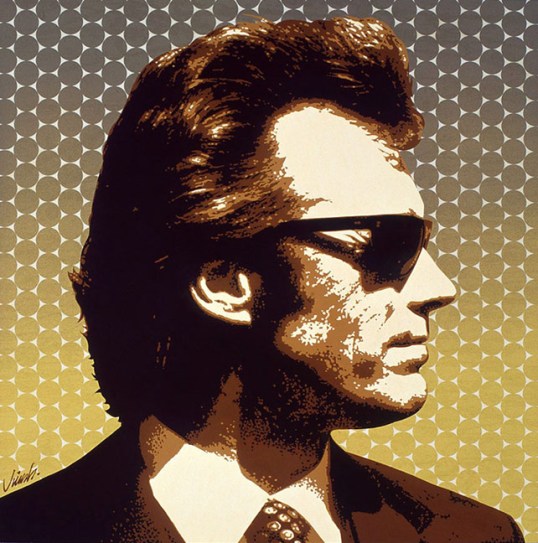
Today, it sounds unthinkable that the outspokenly liberal Newman could ever have been a contender for the role of Harry Callahan, a police detective who is quick with a quip but even quicker on the trigger.  As everyone knows, Clint Eastwood played Harry and, as a result, he finally became as big of a star in the United States as he already was in Europe.  Today, it’s impossible to imagine anyone other than Clint Eastwood torturing the Scorpio Killer for information and then announcing himself to be “all torn up about his rights.”  Just try to imagine Paul Newman snarling as reflexively as Clint Eastwood did upon hearing that the whiny guy in the liberal office taught constitutional law at Berkeley.  Try to imagine Paul Newman calling someone “a punk” or bragging about the power of his gun.  It can’t be done.

And yet, as hard as it is to believe, Clint Eastwood was not the first choice for Harry Callahan.  In fact, Eastwood apparently wasn’t even on Warner Bros.’s list of contenders when they initially bought the rights for the script that would eventually become Dirty Harry.
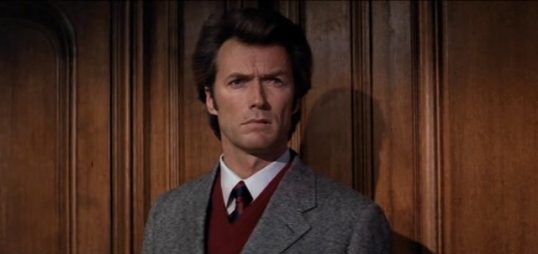
Written by Harry Julian Fink and Rita M. Fink, that script was originally called Dead Right and it took place in New York.  In the original script, Harry Callahan was world-weary, veteran New York cop, in his 50s and just a few months away from retirement.  In the original script, Harry pursued a serial killer named Travis.  When Warner Bros. bought the script in 1969, they viewed it as being a potential vehicle for Frank Sinatra with Irvin Kershner directing.  (Kershner is probably best remembered for later directing The Empire Strikes Back.)  As was his habit, Sinatra immediately demanded rewriters.  John Milius wrote three drafts, each one expanding on the idea of Callahan as a rebel against the system.  Terrence Malick (yes, that Terrence Malick) was also brought it and came up with a storyline in which the serial killer would specifically be targeting mobsters and other people who had escaped justice.  Somewhere, amongst all the rewrites, the action moved from New York to Seattle.

After all that effort, why didn’t Frank Sinatra play Harry Callahan?  Reportedly, he broke his hand and, as a result, he was told that he wouldn’t be able to hold a microphone or a gun or anything else while it was healing.  Since you really can’t have Harry Callahan without a gun, Sinatra left the project and Irvin Kershner went with him.
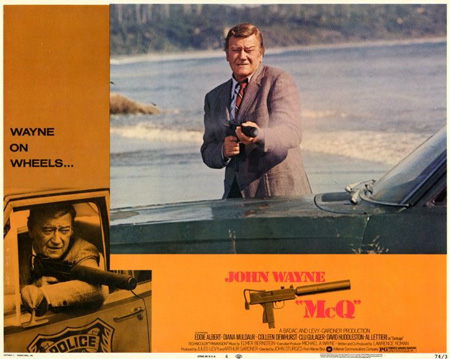
While trying (unsuccessfully) to recruit Sidney Pollack as their new director, Warner Bros. searched for a new leading man.  Reportedly, the script ended up on John Wayne’s desk.  Wayne later said that he turned down the role because he felt the violence was gratuitous.  Other sources indicate that John Wayne actually was interested in the role but that the studio didn’t consider him to be contemporary enough.  (After the success of Dirty Harry, Wayne would play a similar cop character in McQ and would provide a hint of what Dirty Harry starring John Wayne would have been like.)  Burt Lancaster turned down the role because he didn’t like the script’s politics.  Lee Marvin and Robert Mitchum both turned down the role because they refused to play cops.  George C. Scott reportedly refused the role because of the violence.  Marlon Brando was considered but, probably wisely, was never approached.

Having been turned down by all of the older tough guys, Warner Bros. went with the younger tough guys.  Steve McQueen turned down the role because he had already played a cop in Bullitt and he felt the critics would accuse him of repeating himself.  (He was probably right.)  Paul Newman refused the role on political grounds but, as he often tended to do whenever he turned down a role, he also recommended another actor for the part.  That actor was Clint Eastwood who was an old friend of Newman’s and who, obviously, had no problems with the film’s politics.

(Let’s take a moment to give some respect to Paul Newman, who was reportedly one of the nicest guys in Hollywood.)

Once Eastwood was on board, his requested that his friend and frequent collaborator, director Don Siegel, be hired to direct the film.  The script was again rewritten, moving the action to San Francisco and making Harry into a far less talkative character.  The serial killer known as Travis became the serial killer known as Scorpio.  The idea of the killer targeting criminals was abandoned at Siegel’s insistence, though Eastwood liked the idea enough to use it for Dirty Harry’s first sequel, Magnum Force.
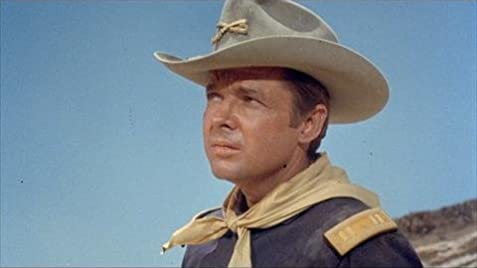
Audie Murphy

Originally, James Caan was approached for the role of Scorpio but Caan turned it down (which, of course, left him free to play Sonny in The Godfather).  Perhaps most intriguingly, Audie Murphy was offered the role.  Murphy was one of the most decorated combat soldiers of World War II.  He had gone from the Army to appearing in movies.  By the time Dirty Harry went into production, Murphy was largely appearing in B-westerns and was as known for his temper as his films.  (He was acquitted of attempted murder shortly before filming began on Dirty Harry.  Murphy said that his anger issues were largely due to the trauma of World War II and he was one of the first prominent people to openly speak about what has since become known as PTSD.)  Murphy undoubtedly would have been an intimidating Scorpio but he died in a plane crash before he could accept or refuse the role.

Instead, the role went to Andrew Robinson, who an unknown at the time.  He was also, in real life, a pacifist who had difficulty not flinching whenever he had to fire a rifle in the film.  That said, Robinson gave a brilliantly unhinged performance as Scorpio and reportedly had to get an unlisted telephone number because of all the angry and threatening phone calls that he received after the movie was released.

Now, I have to admit that I personally find the idea of Frank Sinatra/James Caan or, for that matter, a John Wayne/Audie Murphy police procedural to be kind of intriguing.  And goodness know, I would certainly like a chance to see Marlon Brando doing the “do you feel lucky, punk?” speech.  In the end, though, I think things turned out for the best.
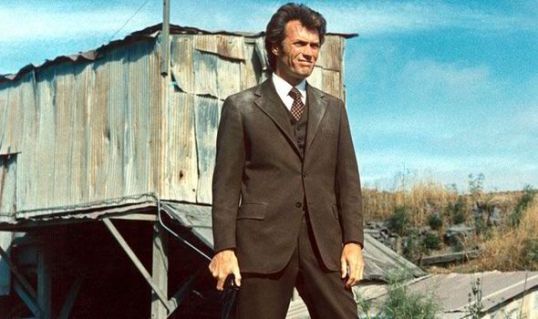
Scene That I Love: Clint Eastwood Tells Off The Motorcycle Cops in Magnum Force


Today, we celebrate the 92nd birthday of screen icon Clint Eastwood.

Of the many characters that Eastwood has played, Inspector “Dirty” Harry Callahan is one of the best-remembered and is still popular to this day.  When he first appeared, Dirty Harry was so willing to break the rules to bring the Scorpio Killer to justice that some critics accused 1971’s Dirty Harry as being a “fascist work of art.”  Callahan answered those critics in 1973’s Magnum Force, when he faced off against true fascism in the form of a group of vigilante motorcycle cops.  The motorcycle cops thought Harry would be happy to join them in their crusade to murder every criminal in San Francisco.

As Harry puts it when he runs into them in a parking garage. “I’m afraid you’ve misjudged me.”

Though Magnum Force never reaches the heights of the first Dirty Harry, the scene below is a classic and the line, “All our heroes are dead,” is one of the most important of the 70s.  (And, for that matter, the 2020s as well!)

Happy birthday, Clint Eastwood!

6 Classic Trailers For May 31st, 2022


The Delta Force (1986, directed by Menahem Golan)

93 years ago, on this date, Menahem Golan was born in Israel.  After serving in the Israeli Air Force, Golan would attend the Old Vic Theater School in London before returning to Israel and launching his legendary career in film.  With his cousin, Yoram Globus, and using Roger Corman as both a mentor and a inspiration, Golan would go on to producer and direct some of the most successful films in Israeli history.  Eventually, Golan and Globus would purchase Cannon Films and would be responsible for some of the greatest (in a fashion) films of the 80s.

Though Golan was best-known as a producer, he never stopped directing.  Today, on what would have been his birthday, Lisa Marie’s Favorite Grindhouse Trailers presents 6 trailers for 6 Golan films!

  1. Lepke (1975)

After finding great success in Israel, Golan first attempted to break into the American market with this biopic about the head of the Mafia’s Murder, Inc., Louis “Lepke” Buchalter.  Though the budget was low, Golan managed to get a name — in this case, Tony Curtis — to play the lead role.  As you can tell, the trailer wanted to make sure that you knew that this film was about Lepke.

2. Enter the Ninja (1981)

This was, I think, the first film that Golan directed after buying Cannon Films.  How great is Enter the Ninja?  It stars Franco Nero as a ninja!  Seriously, you don’t get much greater than that.  Anyway, as I think I’ve stared on this site before, Enter the Ninja is a lot of fun and Franco Nero was the sexiest ninja of the 80s.

3. The Delta Force (1986)

Chuck Norris was a Cannon mainstay and it seems appropriate that he starred in The Delta Force, a film that was very important to Golan.  The Delta Force was essentially a remake of an 1977’s Operation Thunderbolt, an Israeli film that earned Golan his only Oscar nominations when it was nominated for Best Foreign Language Film.  The Delta Force did not receive any Oscar nominations but it has a legion of fans.  Our own Jedediah Leland has frequently described this film as being the greatest ever made.  I don’t know if I’d go that far but still, it is always satisfying to see Chuck blow up the bad guys at the end of the movie.

4. Mack the Knife (1989)

Menahem Golan directs a musical!  Unfortunately, this film has never received a proper DVD or Blu-ray release.  Though it was a Cannon production, Golan and Globus had a falling out (one that was, at least partially, caused by Golan spending money on films like Mack The Knife) and Golan ended up distributing this film himself.  I find the trailer to be intriguing.  The film itself is on YouTube so I’ll watch it someday …. maybe.

5. Hit The Dutchman (1992)

Much like Lepke, this film is about a real-life gangster.  In this case, the gangster was Dutch Schultz.  Interestingly enough, the trailer suggest that Al Capone was active in New York whereas everyone knows that, though Capone did get his start in New York, he didn’t become a prominent gangster until he relocated to Chicago.

6. Crime and Punishment (2002)

Finally, this adaptation of the great novel was a bit of passion project for Golan.  He filmed it in Russia in 1993 but, because of financial difficulties, it was not given a release until 2002.

The TSL’s Grindhouse: The Incredible Melting Man (dir by William Sachs)


What goes up must come down
What goes ’round must come ’round
What’s been lost must be found

As the song says, what goes up must go down.  The 1977 film, The Incredible Melting Man, is about a man who went up and then came back down and …. AGCK!  What a mess!

The Incredible Melting Man opens with the launch of the first manned spaceflight to Saturn.  That’s right, Saturn.  The film takes place in the 70s, when mankind was still lucky to just be able to make it to the Moon and back.  But somehow, this rocket and its three passengers are going to fly all the way to Saturn, land, and then return to Earth.  And speaking of landing, how exactly do you land on a planet that doesn’t have a solid surface?  And, even more importantly, why do all of the shots of Saturn look like the sun?  How come there aren’t any rings?  WHAT IS GOING ON!?  Could it be that the rocket went off track and went to the sun instead?  It’s possible, I suppose.  Mistakes cannot be avoided, much like a spinning wheel turning around.

Anyway, the rocket eventually returns from Saturn or the sun or wherever it went.  Unfortunately, most of the crew is dead.  The only survivor is Steve West (played by Alex Rebar).  Apparently, West was so physically strong that he was able to survive whatever killed the other astronauts.  Unfortunately, West was still infected with Saturn microbes and now he’s slowly melting.  Steve doesn’t react well to that news so he escapes from the hospital and goes on a poorly-defined rampage.  He kills a nurse.  He rips the head off a fisherman.  He kills two old people who were trying to steal oranges.  Steve loses an eye.  His arm falls off.  He leaves behind a trail a radioactive goo.  Apparently, Steve has to consume human flesh to slow down the melting process but make no mistake, there’s no way he’s not going to end a puddle of goo.

Steve’s friend, Dr. Ted Nelson (Burr DeBenning), decides to try to track down Steve so that he can get Steve to stop eating people and just melt away in peace.  Ted can’t even tell the local authorities what he’s doing because that information is classified and Ted’s boss is like a total jerk.  Ted does tell his wife, Judy (Anne Sweeny).  Judy and Ted then get into an argument because Judy forgot to buy crackers the last time she went to the grocery store.  Some may scoff that the lengthy and not very relevant cracker discussion was included just to pad this film’s running time but I think it adds a level of reality to the proceedings.  People like crackers, even when they’re looking for a friend who is melting.

Anyway, The Incredible Melting Man is a weird little movie but I always kind of enjoy it.  As played by Burr DeBenning, Dr. Ted Nelson is one of the least likable heroes to ever show up in a movie.  He always seems to be annoyed about everything.  Even when Steve West is killing people, Ted mostly just seems to be annoyed by the fact that he’s having to go outside to deal with it.  Fortunately, Ted’s unlikability makes it fun to watch as absolutely nothing goes right for him over the course of the film.  Ted is beyond surly and Steve is beyond melty.  As bad as most of the dialogue and the acting may be, the melting man makeup is actually really effective and Alex Rebar does about as good a job as anyone cast as a melting man could.  Let’s give this one two and a half star and wonder how many people in 1977 saw it on a double bill with Saturday Night Fever.

Insomnia File No. 54: Jud (dir by Gunther Collins)


What’s an Insomnia File? You know how some times you just can’t get any sleep and, at about three in the morning, you’ll find yourself watching whatever you can find on cable or Netflix? This feature is all about those insomnia-inspired discoveries!

If you were having trouble getting to sleep last night, you could have gone over to YouTube and you could have watched the the 1971 film, Jud.

In fact, looking the film up on YouTube might very well be the only way that you could have watched JudJud is one of those obscure, 70s indie films that has apparently never gotten a proper video release in the United States.  The version that’s been uploaded to YouTube was taken from a Chinese VHS tape.  It had Chinese subtitles and the image was pretty grainy.  There was a point where, for three minutes, the image froze and only the audio could be heard.  In other words, it’s not the ideal way to watch any movie but, with Jud, that’s probably the best that anyone could hope for.

As for what Jud is about, it’s about a man named …. well, Jud.  Played by an appealing actor named Joseph Kaufmann, Jud has just returned to the United States from serving in Vietnam.  His uncle arranges for Jud to live at a rooming house, one that is full of the usual indie film eccentrics.  Jud doesn’t want to talk about what he saw in Vietnam and no one seems to want to talk to him about it.  But perhaps someone should because Jud is still haunted by flashbacks and nightmares, making this one of the first films to attempt to sympathetically deal with PTSD.  Jud just wants to get on with his life but, after everything he’s seen, he feels out of place in the civilian world.  A one night stand with a friendly hippy (played by future B-movie queen Claudia Jennings) leads to nowhere.  A fight in a diner leads to a police chase.  The only person who is interested in Jud’s story is Bill (played, quite well, by Robert Denman), whose status as a closeted gay man in the early 70s has taught him something about alienation.

Jud is an uneven film.  There are moments of real insight but there also moments where the film itself gets a bit too heavy-handed for its own good.  A lengthy scene where the viewer is subjected to close-ups of Jud’s roommates eating seems to go on forever.  (Anti-war films of the 70s always seemed to feature close-ups of old people eating for some reason.  I guess it was meant to be a commentary on American gluttony but it always feels more like lazy symbolism.)  Especially when compared to other films of the period, Jud deserves credit for portraying Bill sympathetically but it’s still hard not to feel that the character’s ultimate fate is a cliché.

That said, Joseph Kaufmann gives a good performance as Jud and wisely underplays the scenes that would lead a lesser actor to overact.  (Sadly, Kaufmann died in a plane crash, just two years after the release of Jud, at the age of 29.)  Despite featuring a bit more folk music that I would normally listen to, the film has a great soundtrack and, even more importantly, the songs fit well with the action.  (If nothing else, the lyrics help to share what Jud is feeling but can’t quite articulate.)  Finally, for a history nerd like me, Jud is interesting because it serves as a time capsule.  This low-budget, indie film was shot on the streets of L.A. in the early 70s and it has a bit of documentary feel to it.  Until someone invents a time machine and people get the ability to visit the past in person, films like Jud will do.

Previous Insomnia Files:

  1. Story of Mankind
  2. Stag
  3. Love Is A Gun
  4. Nina Takes A Lover
  5. Black Ice
  6. Frogs For Snakes
  7. Fair Game
  8. From The Hip
  9. Born Killers
  10. Eye For An Eye
  11. Summer Catch
  12. Beyond the Law
  13. Spring Broke
  14. Promise
  15. George Wallace
  16. Kill The Messenger
  17. The Suburbans
  18. Only The Strong
  19. Great Expectations
  20. Casual Sex?
  21. Truth
  22. Insomina
  23. Death Do Us Part
  24. A Star is Born
  25. The Winning Season
  26. Rabbit Run
  27. Remember My Name
  28. The Arrangement
  29. Day of the Animals
  30. Still of The Night
  31. Arsenal
  32. Smooth Talk
  33. The Comedian
  34. The Minus Man
  35. Donnie Brasco
  36. Punchline
  37. Evita
  38. Six: The Mark Unleashed
  39. Disclosure
  40. The Spanish Prisoner
  41. Elektra
  42. Revenge
  43. Legend
  44. Cat Run
  45. The Pyramid
  46. Enter the Ninja
  47. Downhill
  48. Malice
  49. Mystery Date
  50. Zola
  51. Ira & Abby
  52. The Next Karate Kid
  53. A Nightmare on Drug Street

4 Shots From 4 Films: Special Rainer Werner Fassbinder Edition


4 Or More Shots From 4 Or More Films is just what it says it is, 4 shots from 4 of our favorite films. As opposed to the reviews and recaps that we usually post, 4 Shots From 4 Films lets the visuals do the talking!

Today would have been the 77th birthday of that amazingly prolific Rainer Warner Fassbinder, if not for the fact that Fassbinder, along with being amazing prolific, was also amazing self-destructive.  Fassbinder was a director who loved to inspire controversy.  Chances are that viewers will either love or hate a Fassbinder film.  There doesn’t seem to be much middle ground.

In honor of a great contrarian, here are….

4 Shots From 4 Rainer Werner Fassbinder Films

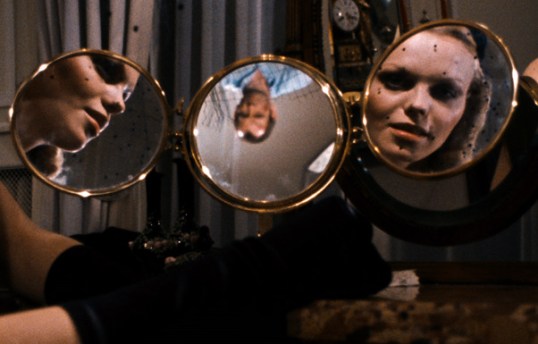
World on a Wire (1973, dir by Rainer Werner Fassbinder, DP: Michael Ballhaus)


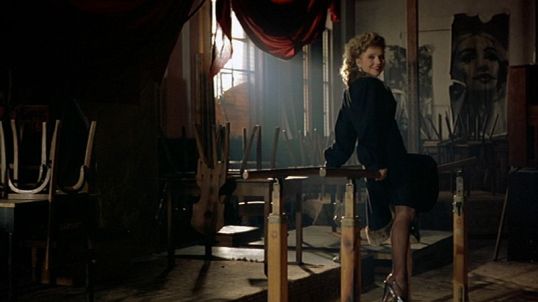
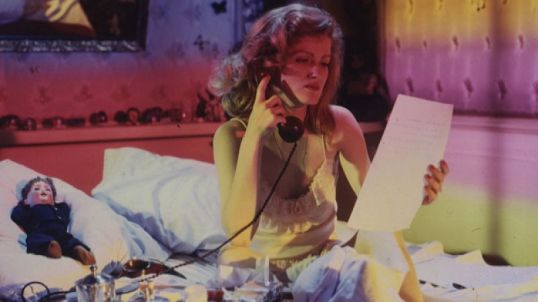
The Marriage of Maria Braun (1978, dir by Rainer Werner Fassbinder, DP: Michael Ballhaus)


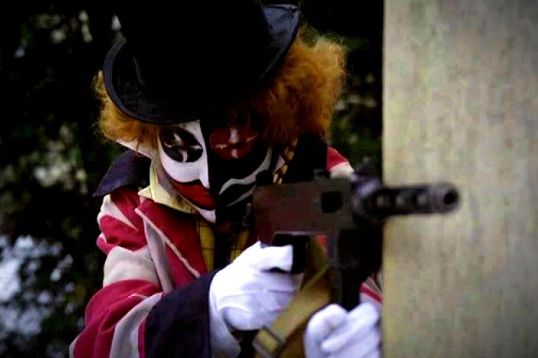
The Third Generation (1979, dir by Rainer Werner Fassbinder, DP: Rainer Werner Fassbinder)


Lola (1981, dir by Rainer Werner Fassbinder, DP: Xaver Schwarzenegger)

Today would have been the 77th birthday

4 Shots From 4 Films: Special Howard Hawks Edition


4 Or More Shots From 4 Or More Films is just what it says it is, 4 shots from 4 of our favorite films. As opposed to the reviews and recaps that we usually post, 4 Shots From 4 Films lets the visuals do the talking!

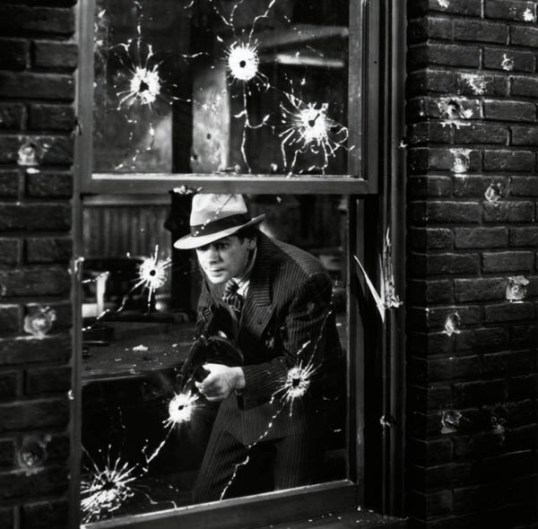
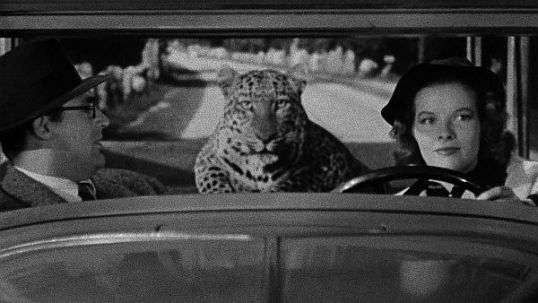
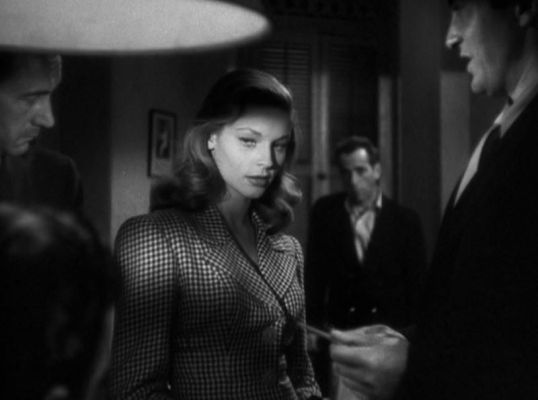
126 years ago, on this date, the great American filmmaker Howard Hawks was born in Indiana.  Over a career that spanned several decades, Hawks proved himself to be a master of every genre.  He made great crime films, great noirs, great comedies, and great westerns.  His influence continues to be felt to this day.  In honor of his legacy, it’s time for….

4 Shots From 4 Howard Hawks Films

Scarface (1932, dir by Howard Hawks, DP: Lee Garmes)

Bringing Up Baby (1938, dir by Howard Hawks, DP: Russell Metty)

To Have and Have Not (1944, dir by Howard Hawks, DP: Sidney Hickox)

Rio Bravo (1959, dir by Howard Hawks, DP: Russell Harlan)

For Memorial Day


“No duty is more urgent than that of returning thanks.”

— St. Ambrose

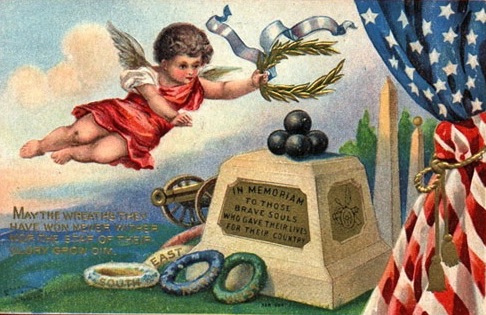
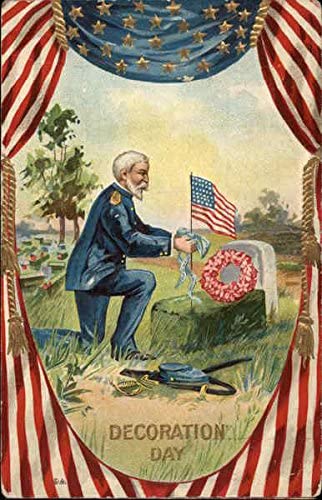
It can be difficult to know how to observe Memorial Day, especially in these times when people are so divided and there are so many voice out there saying that there are no more heroes.  For me, though, these two vintage images sum up what Memorial Day is about.  It’s not day for celebrating war.  It’s a day for honoring those who lost their lives fighting for this country and it’s a day to hope for peace.  It’s a day to give thanks and to pledge that their sacrifice will not have been in vain.