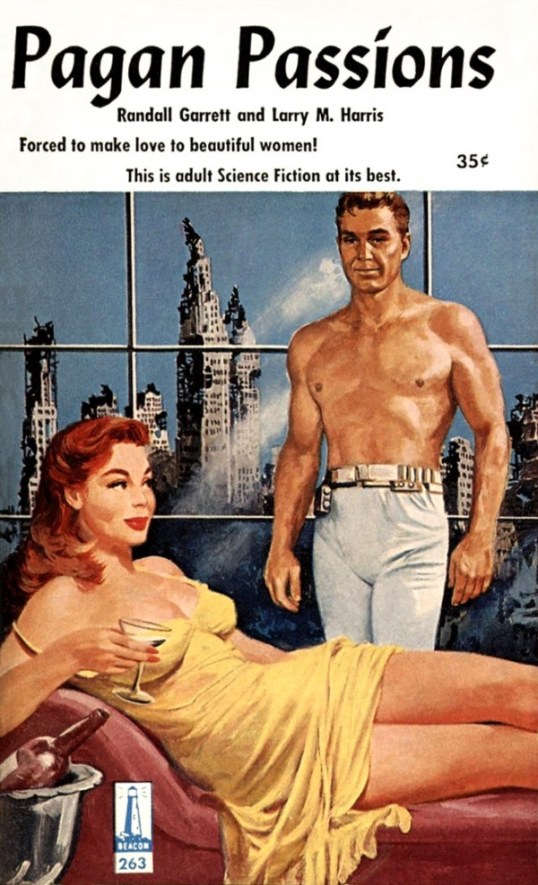
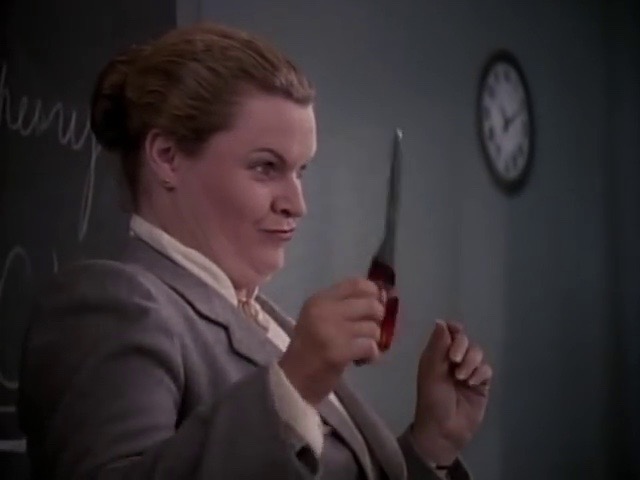
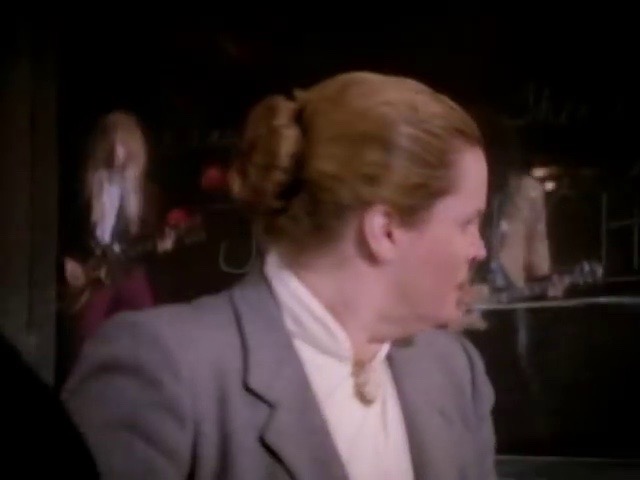
Music Video of the Day: One Step Closer by Linkin Park (2001, dir. Gregory Dark)


Yesterday I heard about the passing of Chester Bennington of Linkin Park. I have never been fan. I never really kept up on their career. However, I would feel remiss not doing a Linkin Park video today, so I picked the one video that did have a part in my life up to this point.

When this came out in 2001, I was 17 going on 18. Since I am part of whatever you want to call the transgenerational gap between Gen X and Millennials, my music as a kid was stuff like Nirvana or The Offspring. In other words, the Gen X bands of the early 90s. Despite the fact that I was in elementary and middle school during that time, watching Singles (1992) earlier this year when Chris Cornell also left us (his birthday was yesterday) was like looking through a time portal to an era I distinctly remember.

Britney Spears, Limp Bizkit, Backstreet Boys, and Blink-182 were the kind of musicians that popped up and flooded MTV and VH1 during the late 90s. Of course back then, you didn’t have a choice as to what videos you were going to see when you turned on the television. It’s not like it is today where if I want to watch Fat Lip by Sum 41, then I can, and then watch any other music videos I want for months or years before returning to watch that video. No such luck back then. If those weren’t the people you wanted to see, then too bad. As a result, I looked to the lists of greatest musicians that VH1 was putting out, and music documentaries in order to begin to fill in the music that came before my time–something I’m still doing to this day. That was me in high school. I was listening to The Velvet Underground while riding out musicians like the ones I already mentioned.

In 2001 I was in my last semester of high school. I’d been on permanent independent study for at least two-and-a-half years at that point. I watched a lot of TV, which didn’t help those musicians because it meant that I was probably seeing their video 2-3 times a day, everyday. That’s not a good thing. Aside from shows like TRL or the handful of videos VH1 played, there seemed to be no other outlet unless you were willing to be up early in the morning when MTV still played videos. Then I discovered that I had MTV2. They played all kinds of stuff. It was wonderful. This is where I remember Linkin Park first showing up on my radar. They showed up with this arguably embarrassing video. They looked and sounded like I would expect Backstreet Boys to be if they tried to combine rap with metal. They did nothing for me.

After I moved onto college and this video stopped being shown, the band basically disappeared from my life. It wasn’t until I transferred to Cal in 2007 that they showed up again. I don’t remember if my first roommate liked their music or not, but they came up. I was rooming with a freshman, so they were probably 10-11 when this came out. This was not the Linkin Park my roommate knew.

In the years that followed, I would hear them on the radio, and it wasn’t this Linkin Park. At the time of writing this, a new Linkin Park video was released for the song Talking To Myself. That is not the band in this video at all. They came a long way from my unfortunate introduction to them in presentation, style, and the place I was in at the time of its release. It’s doubtful that I’ll ever develop the kind of deep connection that many people have to the band. They slipped through the cracks in my life leaving only the memories of them that I have stated above.

Would I have written about this video at some point even if this tragedy hadn’t happened? Yes, I would have. While on the fringes, this video has stuck with me all these years. It would’ve essentially been the same thing I already wrote above about how much they changed while I wasn’t looking. It just wouldn’t have had to be in a somber tone, I would have had some fun with how ridiculous the video looks, made a comparison with It’s My Life by Bon Jovi, and it would have been wonderful to not have to include the following:

Rest in peace, Chester Bennington.

—————–

Now I need to talk a little bit about the crew because this may have one of the most unique directors I have come across while doing these posts. Gregory Dark got his start making adult films. I’ve only seen one of his movies–New Wave Hookers (1985). It is infamous for having Traci Lords in it. Well, had her in it, since the version that is available has her edited out, which is the version I saw–thankfully. The movie is bonkers, colorful, funny, has a humorous setup, and is so 80s it hurts–much like this video is so 2001 it hurts. That film seems to have kickstarted his career.

Looking at Dark’s filmography, it appears that about a decade later he moved into music videos. I can find credits for about 70 of them. I know that Michael Bay made an adult film while also doing music videos. But I’m pretty sure this is the first video I’ve spotlighted that was made by someone who had made a career out of making them.

The video was edited by prolific editor Jeff Selis. He’s done over 100 videos. Even with only 372 of these posts, this is already the third video he edited that I have put up here.

The concept for the video came from Linkin Park member Joe Hahn–according to IMVDb. According to Wikipedia, the video was originally supposed to be like the one released yesterday. He would go on to direct a bunch of their videos.

Toni Jo Peruzzi did the make-up for the video. For her, I can only find a handful of credits.
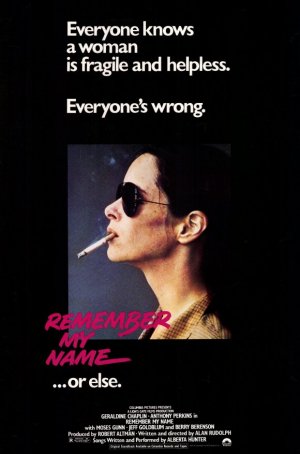
Insomnia File #27: Remember My Name (dir by Alan Rudolph)


What’s an Insomnia File? You know how some times you just can’t get any sleep and, at about three in the morning, you’ll find yourself watching whatever you can find on cable? This feature is all about those insomnia-inspired discoveries!

If you were having trouble sleeping last Tuesday, around one in the morning, you could have turned over to TCM and watched Remember My Name, an odd and sometimes frustrating little thriller from 1978.

Remember My Name opens with Emily (Geraldine Chaplin) showing up in a small town in California.  From the minute we first see and hear Emily, something seems to be off about her.  She views the world through suspicious eyes.  Whenever anyone talks to her, you’re never quite sure whether she’s going be friendly or if she’s going to lash out.  When she speaks, there’s something weird about her vocal inflection, as if she’s always struggling to figure out what she’s supposed to say.  She seems to be separated from the world, almost as if she’s walking through a living dream and only talking to figments of her imagination.  There’s nothing about her that feels at all authentic.

She moves into a small apartment and enters into a relationship with her handyman (Moses Gunn), a relationship that seems to be largely defined by her refusal to open up about herself.  She gets a job at a grocery story that’s managed by a Mr. Nudd (Jeff Goldblum).  Mr. Nudd mentions something about Emily knowing his mother.  Apparently, they met in prison.

Soon, Emily is stalking a construction worker named Neil Curry (Anthony Perkins).  When Neil spots her, he calls out her name and Emily runs away.  And yet, Neil doesn’t bother to tell his wife, Barbara (Berry Berenson), about Emily.  Soon, Emily is even breaking into the Curry home, silently shadowing Barbara as she walks through the house.

I described Remember My Name as being a thriller and I guess that, technically it is.  There are a few moments of tension, especially when Emily is stalking Barbara.  However, the film itself is directed in a detached manner by Alan Rudolph.  Rudolph was a protegé of director Robert Altman (who also produced Remember My Name) and Rudolph’s approach is very Altmanesque, often to the detriment of the film.  (Chaplin and Jeff Goldblum had both appeared in several Altman films, most famously in Nashville.)  Though the film is dominated by Chaplin and Perkins, it’s still very much an ensemble film and the action plays out in a deceptively casual, almost random manner.  It tries so hard to be Altmanesque that Remember My Name gets a bit frustrating, to be honest.  Chaplin gives such a good and memorable performance and she works very hard to make Emily a character who is both frightening and, at times, surprisingly sympathetic but, for the most part, Rudolph’s technique makes it difficult to get emotionally involved in any of the action unfolding on-screen.  Rudolph observes the action but refuses to comment on it.  As a result, Remember My Name is occasionally intriguing but, just as often, it’s rather boring.  Just like real life, I suppose.  And, just like real life, it’s not for everyone.

That said, it was interesting to see Anthony Perkins playing a role other than a knife-wielding inn manager.  Without resorting to any of the familiar tics or the neurotic speech patterns that typecast him forever as Norman Bates, Perkins plays Neil as just being a regular, blue collar guy and he actually does a pretty good job.  Watching the film, I got the feeling that this was perhaps Perkins’s attempt to change his image.  (Whenever Neil appears shirtless, both the film and Perkins seem to be saying, Check out this physique!  Would someone only capable of playing a psycho have abs like this?)  Neil’s wife, Barbara, was played Perkins’s wife, Berry Berenson.  Neither one of them is with us any longer.  Perkins died of AIDS in 1990 while Berry Berenson was on one of the planes that flew into the World Trade Center on 9-11.  They both did good work in this film, as did Chaplin and Goldblum and, really, the entire cast.  It’s just a pity that the film itself isn’t as good as the performances. 

Previous Insomnia Files:

  1. Story of Mankind
  2. Stag
  3. Love Is A Gun
  4. Nina Takes A Lover
  5. Black Ice
  6. Frogs For Snakes
  7. Fair Game
  8. From The Hip
  9. Born Killers
  10. Eye For An Eye
  11. Summer Catch
  12. Beyond the Law
  13. Spring Broke
  14. Promise
  15. George Wallace
  16. Kill The Messenger
  17. The Suburbans
  18. Only The Strong
  19. Great Expectations
  20. Casual Sex?
  21. Truth
  22. Insomina
  23. Death Do Us Part
  24. A Star is Born
  25. The Winning Season
  26. Rabbit Run

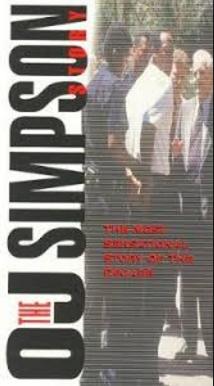
A Movie A Day #193: The O.J. Simpson Story (1995, directed by Alan Smithee)


Long before O.J.: Made In America

Before The People vs. O.J. Simpson

Before American Tragedy

Before today’s live, televised parole hearing…

There was The O.J. Simpson Story.

In 1994, shortly after O.J. Simpson was charged with the murders of Nicole Brown Simpson and Ron Goldman, Fox rushed The O.J. Simpson Story into production.  It was one of many “true life” stories that showed up as television movies during the 90s.  There was a movie about Woody Allen and Mia Farrow’s divorce.  There was a movie about David Koresh and the Branch Davidians, which actually aired while the siege in Waco was still ongoing.  There were three movies about Amy Fisher.  So, of course, O.J. would get a movie.

Though the movie was produced in 1994, it was not allowed to air in 1995 so that it would not prejudice any of the jurors in the case.  (After all, they might have done something crazy like ignore all of the DNA evidence and let O.J. go free.)  I think the legal authorities may have been giving The O.J. Simpson Story too much credit.  There were many bad made-for-TV movies made in the 90s but The O.J. Simpson Story may very well be the worst.  The only thing it could prejudice some against is television.

Opening with the discovery of the murders in Brentwood, The O.J. Simpson Story mixes scenes of O.J. (played by Bobby Hosea, who shows not a hint of O.J.s famous charisma) talking to the police and his lawyer, Bob Shapiro (Bruce Weitz, slightly more credible than John Travolta was in The People vs. O.J. Simpson) with flashbacks to O.J.’s youth, first marriage, and his relationship with Nicole (blandly played by Jessica Tuck, who, beyond the color of her hair, looked nothing like Nicole).  The film also devotes some time to O.J.’s friendship with A.C. Cowlings, who, as a young man, is played by Terrence Howard.

Several of the famous incidents of the case are wanly recreated.  The famous bronco chase is there, of course.  O.J. is shown beating Nicole in the infamous 1989 incident, which the movie suggests was triggered by Nicole telling O.J. that he would never win an Oscar for appearing in The Naked Gun.  But, since the movie was rushed into production before the trial even began, it is remarkable how much is left out.  There’s no Mark Furhman finding the black glove.  There’s no Kate Kaelin, Faye Resnick, Johnnie Cochran, or even Marcia Clark.  Because the movie was made before the trial had even begun, it does not even take a stand on whether or not O.J.’s guilty.  Narratively, it is an incomplete movie and evidence of why movies that claim to tell true stories should not be rushed into production before the story itself has been completed.

As for the film’s dialogue, when O.J. first meets Nicole, he asks her, “Any problem with going out with a brother?”

“Yeah,” Nicole says with a smile, “I’m in the Ku Klux Klan.”

Not surprisingly, The O.J. Simpson Story was directed by Alan Smithee, which was the pseudonym used by directors who felt that their movie has been so butchered by outside interference that they should not even be credited with the final result.  The O.J. Simpson Story is one of the worst Smithee films that I have ever seen.  Compared to The O.J. Simpson Story, Smithee’s work on Let’s Get Harry was Oscar-worthy.

As for the real life O.J. Simpson, earlier today, he was granted parole from the Nevada Parole Board.  He will be released from prison on October 1st.  He has said that he hope to be allowed to move to Florida after being released.  The real-life O.J. Simpson story continues.

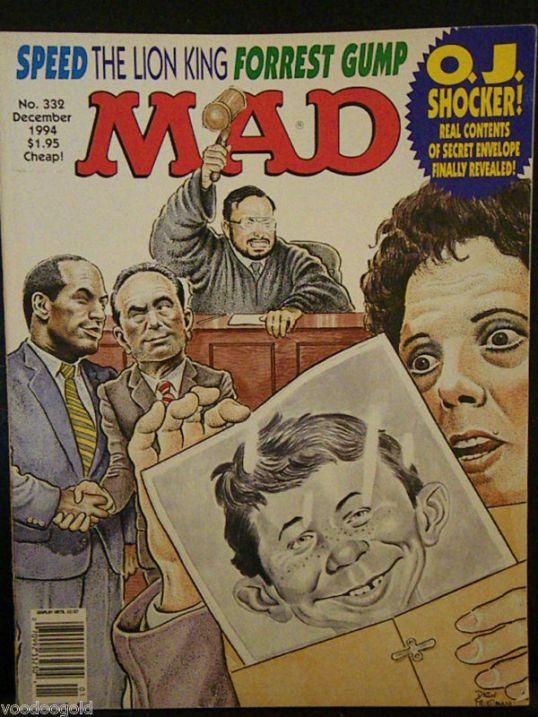
When it comes to the long saga of O.J. Simpson, it seems appropriate to give the last word to MAD Magazine:

Music Video of the Day: Edge Of A Broken Heart by Vixen (1988, dir. ???)


Sometimes there’s no info. Sometimes there’s a bunch of info. This time around, just about everything is condensed into a VH1 show from 2004.

I only have a couple of things to add.

  • The video is that standard stage performance mixed with behind-the-scenes stuff that Wayne Isham is credited with creating.
  • Richard Marx is the guy who turns around and looks surprised. He co-produced their debut album and wrote this song.
  • If you listened to the video above, then you heard mention of an earlier band called Madam X. I will find a Madam X video.
  • The band still plays today, but Jan Kuehnemund–the first person they talked to–passed away in 2013.

Enjoy!

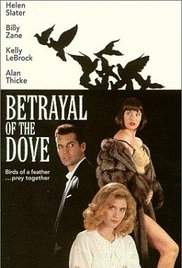
A Movie A Day #192: Betrayal of the Dove (1993, directed by Strathford Hamilton)


Stop me if you’ve heard this one before.
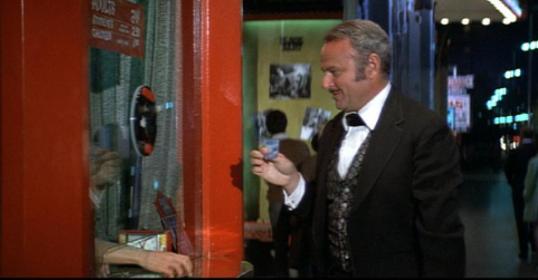
Ellie West (Helen Slater) has a 7 year-old daughter (Heather Lind), a sleazy ex-husband (Alan Thicke), a vampy best friend (Kelly LeBrock), and a pair of inflamed tonsils that need to come out.  When she goes in the hospital for what should be a routine procedure, she nearly dies on the operation table.  Something went wrong with the anaesthesia.  But what, why, and how?  Fortunately, Doctor Jesse Peters (Billy Zane) was there to save Ellie’s life.  Even as Ellie, with the encouragement of her best friend, starts to go out with Jesse, she still suspects that someone is trying to kill both her and her daughter.

While the title may sounds like an early 90s Merchant Ivory production, Betrayal of the Dove is actually just another “erotic” thriller, the type that used to show up exclusively on late night Cinemax.  The only thing that distinguished Betrayal of the Dove was the cast, which mixed B-movie stalwarts like Kelly LeBrock and Billy Zane with actors who usually did not appear in movies like this.  Alan Thicke was surprisingly good as a sleazy, abusive alcoholic and both Stuart Pankin and David L. Lander were cast in serious roles.

Perhaps the most surprising casting was that of veteran television comedian and Mel Brooks regular, Harvey Korman.  In the role of Ellie’s boss, Harvey not only played a serious role here but, at the end of the movie, he also got to save the day.  I’m not sure if Harvey did his own stunt work but if you have ever wanted to see Harvey Korman as an action hero, Betrayal of the Dove is as close as you’re going to get.

Or you could just watch Blazing Saddles again.


Structural Failure: THE BIG STREET (RKO 1942)


gary loggins's avatarcracked rear viewer

When I hear the word “Runyonesque”, I think about racetrack touts, colorful Broadway denizens, dames with hearts of gold, and the like. If you want to make a Runyonesque movie, what better way than to have author Damon Runyon himself produce it, as RKO did for 1942’s THE BIG STREET. All the elements are there, the jargon, the characters, but the film suffers from abrupt shifts in tone from comedy to drama, and a totally unpleasant role for Lucille Ball . The result is an uneven movie with a real downer of an ending.

Based on Runyon’s short story “Little Pinks”, it follows the unrequited love of bus boy Augustus “Little Pinks” Pinkerton for torch singing gold digger Gloria Lyons, dubbed “Her Highness” by Pinks. Henry Fonda plays Pinks as  lovestruck, spineless sad sack, dubbing Lucy Her Highness, even though she’s thoroughly rotten to him. When she’s smacked by her gangster boyfriend Case Ables ( Barton MacLane )…

View original post 380 more words

Music Video of the Day: Girlschool by Britny Fox (1988, dir. ???)


Of course there’s a video by a band named Britny Fox called Girlschool that came out in 1988. It wouldn’t be the weird world it is if that didn’t happen the same year as the band Girlschool did a cover of Fox On The Run.

I thought this was going to be a short post, but there’s a fair amount of info here.

First, yes, yes they were really there. According to an interview with bassist Billy Childs, they must have used some sort of cloth because he remembers being able to see the girls in the room while they were playing their part. He doesn’t know how it worked. Although at least as recently as 2015, he still wants to know exactly how they pulled that off. I’m assuming it operated the same way as a two-way mirror. That’s as far as I can go, short of digging into physics. It’s something that you see when you’re in a brightly-lit room, and don’t see if you are in a darkly-lit room.

While I can’t explain exactly how it works, I can show you some of the seams.

The clock is flat.

During the transition you can still see the bulletin board and clock.

The band is hiding behind Bach.

This part is kind of amazing to me. The band manager at the time had the foresight to film behind the scenes during the shooting. Here is the general behind-the-scenes stuff.

Now comes two people you might recognize in this video.

The first is the lady with the headphones. That is Kim Anderson who apparently did work on numerous videos, and is still remembered to this day along with other famous women from heavy metal videos. The band manager also edited together footage that included her.

You can see a super-short interview with her below.

The second is the teacher. That is Marianne Muellerleile. You may know her from one of her current 224 acting credits. The one that comes to mind is probably the wrong Sarah Connor from The Terminator (1984). However, she’s one of those actors who if a show had some success, then she was probably in at least one episode of it. My thanks go out to Billy Childs for bringing up where she was from in that aforementioned interview. It wasn’t coming to me.

The last is a quote from I Want My MTV. It’s from Kari Wuhrer talking about a time they shot the show Remote Control in Florida:

Kari Wuhrer: We shot in Florida during the third season, and Britny Fox were on the show as contestants. It was the height of hair metal. I hit on their singer. The next thing I knew, I was getting tattooed and I was on tour with them. He was so dumb, my father called him “the house plant.” As soon as the tour ended, I never heard from him again.

There you go. It’s one of the dumbest metal videos I’ve ever seen. At least Cherry Pie by Warrant was meant to be a parody. Yet, this does have some nice effects work. I just don’t know why it’s in this.

Enjoy!

A Movie A Day #191: Blue City (1986, directed by Michelle Manning)


Billy Turner (Judd Nelson) has always been the bad boy but now he just wants to return to his Florida hometown and reconnect with his estranged father.  As soon as he rolls into town, Billy gets into a bar brawl and is arrested.  The chief of police (Paul Winfield) informs Billy that his father has been murdered and that his stepmother has since married the local gangster, Perry Kerch (Scott Wilson).  Everyone knows that Perry murdered Billy’s father but no one can prove it.  He is told to get out-of-town but Billy’s not going out like that.  Instead, he gets together with his childhood friends, gimpy legged Joey (David Caruso) and Annie (Ally Sheedy), and seeks his revenge.

No, it’s not a picture of Judd Nelson hanging out with the a member of the Heaven’s Gate cult.  It’s the DVD cover for Blue City.

An infamous flop, Blue City was meant to show that the members of the infamous Brat Pack could play serious, adult roles.  Unfortunately, Blue City was released right at a time when everyone was starting to get sick of the Brat Pack.  (Even John Hughes had moved on, casting Matthew Broderick as Ferris Bueller, instead of Anthony Michael Hall.)  After countless magazine covers and the monster success of The Breakfast Club and St. Elmo’s Fire, a backlash was brewing and Blue City walked (or, in Joey’s case, limped) straight into it.

It also did not help the film’s prospects that it matched up the least interesting Brat Packer, Judd Nelson, with the member of the Brat Pack most likely to take herself too seriously, Ally Sheedy.  Playing roles that would have been played by Alan Ladd an Veronica Lake in the 40s, both Nelson and Sheedy are miscast and, strangely considering this was their third film together, have no chemistry.  Nelson, in particular, gives one of the most annoying performances in film history.  He never stops smirking, even when there is no reason for Billy Turner to be smirking.  With his wide-eyed stare and his attempts to speak like a tough guy, Nelson comes across like John Bender auditioning for West Side Story.  The scene where he manages to floor Tiny Lister with one punch is simply beyond belief.

When Judd Nelson can beat you up, there is only one thing left to do:

Thanks, Duke.

On a more positive note, David Caruso, long before he could usher in the Who by simply putting on his sunglasses, is better cast as Joey but there is nothing surprising about what eventually happens to him.  The best performance is from Scott Wilson, showing why he used to always play villains before reinventing himself as Herschel on The Walking Dead.  Wilson was so good that I realized, halfway through Blue City, that I actually would not have minded if he succeeded in killing Billy.

The most disappointing thing about Blue City is that it is a Florida noir from the 80s that somehow does not feature even a cameo appearance by Burt Reynolds.  Couldn’t Judd have taken just a few seconds during the filming of Shattered: If Your Kid’s On Drugs to convince Burt to drop by Blue City?

They could have used the help.