I’m going to turn west for my next few posts, and when we look at American folk we can’t ignore the blues. It’s an unfortunate fact that I know absolutely nothing about this genre. It’s a genre I’ve wanted to explore for a long, long time, but free time and interest simply haven’t yet coincided. I stumbled upon Hobo Blues entirely by accident about a year ago and have had a note glaring me in the face ever since: I had to work this song into a post one way or another.
You might ask how it legitimately fits into my theme. It’s certainly not about mythology or horror or anything that might immediately come to mind for the season. Quite the contrary, it calls to mind gritty dust and sweltering heat, tattered clothes and haggard spirits. But this is American folk and American tradition in a very real sense, and no old gods need be invoked to imbue it with otherwordly power. John Lee Hooker is in this video a man possessed, standing firm as steel while delivering an emotionally overwhelming performance. He taps into that same seemingly spiritual power that so many of the eastern bands I’ve featured aim to conjure, he just unabashedly draws it from within himself.
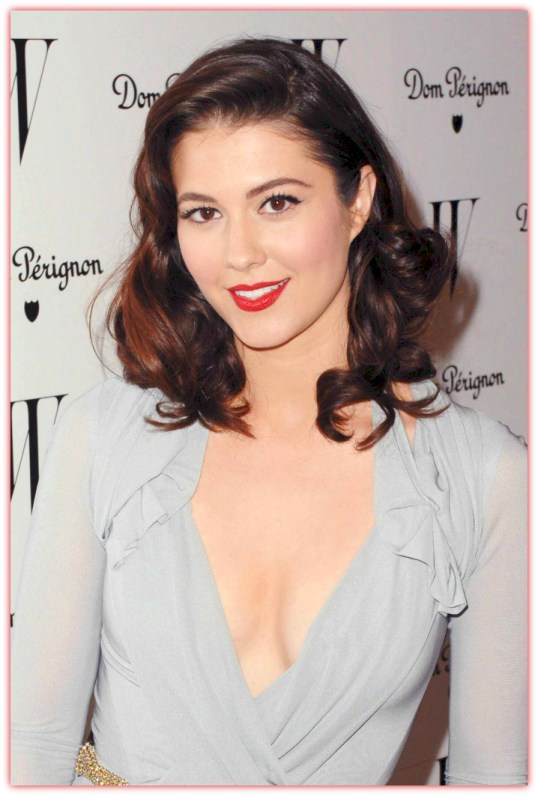
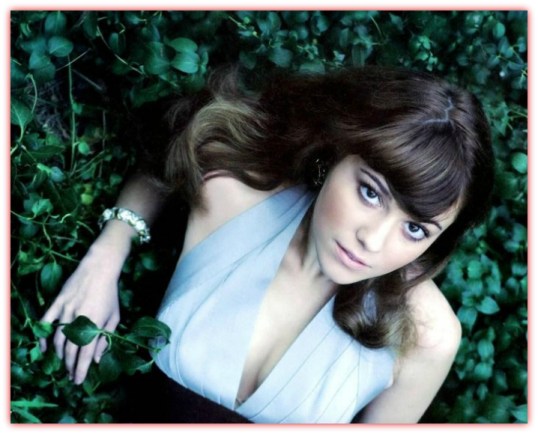
With this being horror-theme month here at Through the Shattered Lens I thought it was time for another “Hottie of the Day” entry and one who has some experience atbeing a scream queen in horror films these past couple years.
Mary Elizabeth Winstead is better known for the role (perfectly cast and played) of Ramona Flowers in Edgar Wright’s wright’s film adaptation of Scott Pilgrim vs. The World, but she has done quite a bit of work in the horror genre. One of her earliest films was as the lead in Final Destination 3. Then she has followed that up with roles in Quentin Tarantino’s half of Grindhouse as a naive young actress being stalked by Kurt Russell’s psychotic stuntman in Death Proof. Her last couple films have also been in the field of horror as she had major roles in both The Thing prequel and the fantasy horror mash-up this past summer with Abraham Lincoln: Vampire Hunter.
Ms. Winstead has become a favorite of genre fans and not just for her All-American girl-next-door look, but for the fact that she has talent as an actress and makes the most of every role she plays even in films that critically fails. Of late her work has gotten her noticed as a contender for the end of the year awards for best performance in a film with her performance as Kate Hannah in the comedy-drama Smashed.
Whether she wins awards later this year or not, here’s to hoping that she doesn’t stop doing genre projects while moving on towards more serious work.
Last night, my BFF Evelyn and I watched the infamous “And Then There Was Shawn” episode of the old ABC sitcom Boy Meets World.
Why Were We Watching It?
We were watching it because it’s October and we both had Halloween on the mind. Of course, according to the Boy Meets World wikia — and yes, I am as shocked as you to discover that such a thing exists — this episode actually originally aired on February 27th, 1998 so, technically, it was more of a belated Valentine’s Day episode than a Halloween episode. But anyone who has ever sat through And Then There Was Shawn knows that this was so totally a Halloween episode, even if it did air in February.
What Was It About?
And Then There Was Shawn pretty much starts out the exact same way as every single episode of Boy Meets World: Obsessive-stalkerCory (Ben Savage) and frigid, self-righteous Topanga (Danielle Fishel) are having issues and the entire world is just so concerned about whether or not they’ll be able to get back together so that they can eventually get married at the age of 18. Cory’s friend Shawn (played by the very adorable Rider Strong) manages to stop talking about living in the trailer park long enough to disrupt Mr. Feeney’s history class. Rather then questioning why his entire life seems to revolve around a bunch of 16 year-olds, Mr. Feeney (William Daniels) responds by giving everyone detention.
So, Topanga, Cory, and Shawn are all in Mr. Feeney’s after-school detention, along with Shawn’s boring girlfriend Angela and a random student named Kenny. (It took me a while to recognize that Kenny was being played by Richard Lee Jackson, who I remembered from Saved By The Bell: The New Class.) Since this is Boy Meets World, everyone is using their time in detention to discuss Cory and Topanga’s creepy relationship when suddenly “No one gets out of here alive” appears on the chalkboard, written in blood.
And from that moment on, it goes from being a standard episode of Boy Meets World to transforming into being perhaps one of the weirdest episodes ever to show up in a family sitcom.
Soon, Kenny’s dead as the result of someone jamming a pencil into his head, Mr. Feeney’s dead with a pair of scissors in his back, there’s a creepy janitor stalking the hallways, and Cory’s cute older brother Eric (Will Friedle) shows up, along with Jennifer Love Hewitt. By the end of the episode, almost the entire cast has been killed and, of course, it turns out that it’s all because the entire world revolves around Cory and Topanga…
What Worked?
Over the course of the episode, just about every character on the show is killed off. Considering just how annoying most of the characters on Boy Meets World could be, it’s hard not to appreciate this episode’s determination to kill all of them off.
The episode, itself, is actually pretty well-written and clever. Unlike a lot of sitcom Halloween episodes, And Then There Was Shawn actually feels like a legitimate (and respectful) homage to the great horror films of the past.
What Did Not Work?
I’ve often wondered if the audiences in the 20th Century found the character of Cory Matthews to be as creepy as I find him to be in the 21st. Seriously, whenever I see Boy Meets World, I’m struck by the fact that Cory basically spends every episode telling everyone that 1) they’ll never love anyone as much as he loves Topanga, 2) that Topanga’s belonged to him her entire life, and 3) that everyone in the world has an obligation to think about him and Topanga before they do or say anything. In addition to that, you have to consider his oddly co-dependent relationship with Shawn, the fact that he looks nothing like anyone else in his family, and the fact that whenever he and Topanga have a fight, he yells, “NO! We’re not supposed to ever disagree because I love you Topanga and … YOU LOVE ME!” Seriously, what a creep! Fortunately, Corey is less of a jerk than usual in this episode but, all things considered, it’s still hard to root for that little psycho.
Finally, what was up with the Boy Meets World theme song? I mean, it’s awful but it certainly does get stuck in your head.
“OMG! Just like me!” Moments
To be honest, I find almost all of the regular characters on Boy Meets World to be so annoying that I’m almost tempted to say that there wasn’t a single “Just like me!” moment in this episode. However, I do have to admit that — much like Jennifer Love Hewitt in this episode — I probably would have found time to make out with Eric as well. Seriously, he was soooooooooo cute!
I’m not sure how На Пороге Ночи (Na Poroge Nochi) ever found its way to my collection. The 20 minute demo was released back in 1998, and it is to the best of my knowledge the only thing Векша (Veksha) ever released. Perhaps simply being Russian pagan metal in 1998 (they come from Yaroslavl) was enough to preserve them. The recording quality is clearly terrible, verging on the point of comical, but for me this is the selling point. What might have been a fairly average song in a top notch studio sounds here pretty bizarre. The first time you hear the vocals will be a definite “wtf” moment.
The song/album name appears to translate to “Midnight on the Threshold”, at least according to Google. When I first saw it I thought it was saying something about pierogies, but it was not. At least this is the only major disappointment. Good luck finding anything more than track titles out about this obscure band though.
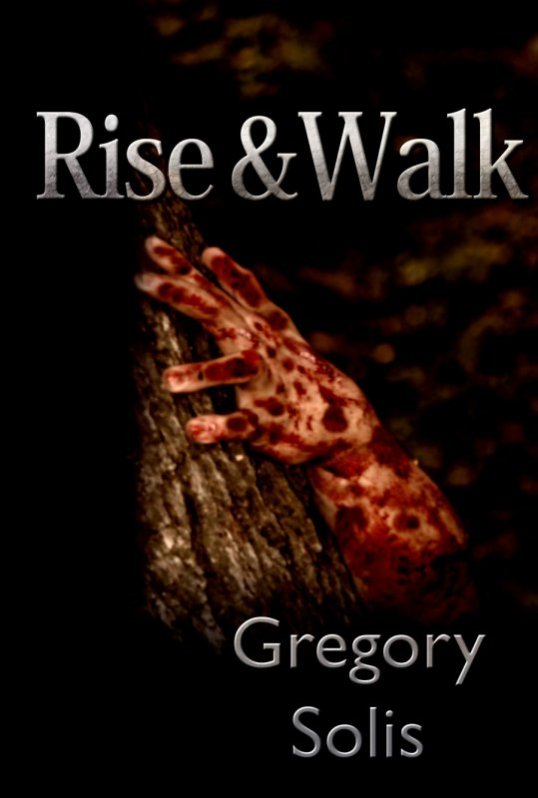
Gregory Solis’ Rise & Walkis the kind of zombie tale many fans of the genre think of writing day in and day out, but never get a chance either through lack of talent or just lack of motivation. Gregory Solis got to write his and on the surface it’s a decent first novel, albeit with some flaws that keeps it from being good. He has also written a very action-packed zombie story which steps on the gas from the prologue and doesn’t let up until the very end.
The story is a very simple one which many zombie genre fans have played, imagined and replayed it over and over in their minds. Instead of beginning the zombie story during the aftermath of the devastation an outbreak will cause, Solis instead goes right for the beginning. Call it the Z-Hour of the zombie genre. He writes about how it all begins and how quickly the contagion and its reanimated victims quickly multiply at a geometric rate to engulf a small, Northern California community. Unlike George Romero’s films which never fully explained the cause and origin of the zombie pandemic, Rise & Walk uses space debris from a meteor storm and the contents within as the cause of the zombification and the need of its victims to attack and devour the living.
Right from the get-go the action comes in fast and comes in furious. Solis doesn’t skimp on the gore and bloodletting. He describes every zombie attack on a living human with a near-pornographic detail. This splatterpunk style of writing my not be for everyone, but if one was a zombie fan then this should suit them just fine. The chaos caused by the geometrically increasing and advancing horde of zombies was one of the things Solis’ does quite well and something fans of the genre would recognize. People make dumb mistakes as they try to figure out what in the world is going on. Some make the right decisions and live while others do not and become zombies themselves or are just complete devoured.
Where Solis got the action and atmosphere down perfect for a zombie story, the main characters and their development could’ve been done much better. The main leads of Rise & Walk panic just like the rest of the humans, but they seem to recover from the shock of the situation rather too quickly and at times matter-of-factly. As the story progresses there’s really no tension or fear that the four leads (two male and two female) would come to any serious harm. Only those in the periphery of the leads seem fair game for a gruesome end (kids are not given a free pass in this book). The diminished sense of mortal danger in regards to the main leads keeps this book from rising from just being decent.
In the end, despite the flaws in how the main characters are written I will say that Rise & Walk by Gregory Solis is one good first novel from a first-time writer. It shows the writer has a modicum of talent for storytelling and he sure tells a fast-paced and mean zombie story. Fans of the genre should enjoy this book for what it is and hope that it won’t be the last from Gregory Solis.
Both Arleigh and I have devoted a lot of time on the site to talking about our mutual admiration for the films of Italian horror director Lucio Fulci. While Fulci will always have as many detractors as defenders, the fact of the matter is that Fulci has been a major and often unacknowledged influence on the direction of horror cinema. To cite just one prominent example, the disturbing and graphic body horror of The Walking Dead has less to do with Romero and everything to do with Fulci.
Fulci remains a controversial figure and that’s not surprising. For every Fulci lover, there’s a detractor. For every good horror film that he made between 1979 and 1982, there’s a terrible one that he made in the years leading up to his mysterious death. But what everyone seems to agree on is that his 1979 epic Zombi 2 is one of the best (and most important) of the post-Romero Zombie films. Zombi 2 may have been produced to take advantage of the popularity of Romero’s Dawn of the Dead but Fulci created a film that transcended its origins.
(Personally, I prefer Fulci’s film to Romero’s but that’s a discussion for another day.)
Zombi 2 is a film that’s provided us with a few scenes that we love here at the Shattered Lens. Whether it’s the scene where a zombie wrestles with a shark or the very first Fulci’s signature eyeball impaling, Zombi 2 is a film that is full of memorable scenes. Tonight, I want to highlight another moment from Zombi 2 — the conquistador scene.
As this scene begins, the film’s star are already fleeing from an army of zombies when they discover that it’s not just the recently deceased that they have to fear. This is a scene that manages to be shameless, silly, and disturbingly effective at the same time. In other words, it’s pure Fulci.
Here’s a song I thought fit the season rather nicely. Natural Spirit is a folk/pagan metal band from Ukraine, and Внукам Даждь-Бога (To The Grandchildren of Dazhd-God, at least as Encyclopaedia Metallum translates it) appears on their original 1999 demo Star Throne. The band have released three albums since, most recently in 2011, but this is the only one I’ve heard, so I can’t speak for what they sound like these days.
I’m always a sucker for that cheap, almost SNES-sounding keyboard you find especially on Ukrainian pagan metal albums (Nokturnal Mortum’s cover of “Sorrow of the Moon” by Celtic Frost could be straight out of Secret of Mana or Soul Blazer at times). Of course there’s nothing authentic about it, but its primitive sound in comparison to other synth puts it in a unique position to sound both ancient and entirely unnatural. It’s both reverently pagan and haunting in a dark, fantasy-themed way, uniting visions of Tolkienic landscapes with conjurations of long forgotten gods.
The name in the title, Dazhd-God, refers to the Slavic sun god Dažbog, son of the fire god Svarog. The frequent references to Slavic mythology in Eastern European folk and folk metal are always revealing, if only for the lack of attention this pantheon receives. Translations of the Prose and Poetic Eddas are a dime a dozen, and most people who have the slightest passing interest in mythology have probably read at least some segments of them. History and Germanic Studies departments around the world specialize in them. As diligent as metal bands have been in preserving tales of the Norse gods, the historical texts are there to be had with or without them. With no Slavic Snorri Sturluson to fall back on, Eastern European bands interested in preserving and resurrecting the past share less company. They are far more uniquely responsible for my having ever even heard these names. It is perhaps a consequence of this that lends Slavic pagan metal a stronger affinity with mysticism, often coupled with an almost violent, desperate sense of pride. Внукам Даждь-Бога avoids the latter, but it definitely presents Dažbog in an otherwordly, supernatural light that you won’t find much of in Norse-centric metal beyond Burzum.
Here we are again ghouls and ghoulettes. Time for another one of my favorite horror scenes. Some might say that the film I chose my latest favorite scene from is not truly a horror film but more a thriller are so definitely wrong. Both in it’s original novel form and in Carpenter’s film adaptation, Christine is definitely a horror film that eschews overt scenes of gore and violence and goes about it’s scares in a more round-a-bout way. It’s a horror film of a Boy-meets-Girl gone wrong. My own review of the film over a year ago show’s my positive take on this 80’s classic.
One of my favorite scenes from Christine happens midway through the film that also serves as the final clue that something may just be a tad different with Archie’s car named Christine. While the scene itself is not one of horror it does show the supernatural side of this film’s plot (a bit more simplified than the original novel’s but still keeping the theme of possessed inanimate objects giving life to itself). The combination of Christine showing Archie just what she’s capable of and Carpenter’s electronic film score as it segues into a seductive tune adds to the awesomeness of this scene.
Once this scene is over the audience now knows that Archie is fully gone over to Christine’s side and that the story will end not in a very happy note, but until that happens we see just how much this particular Boy seem to have finally met his ideal Girl.
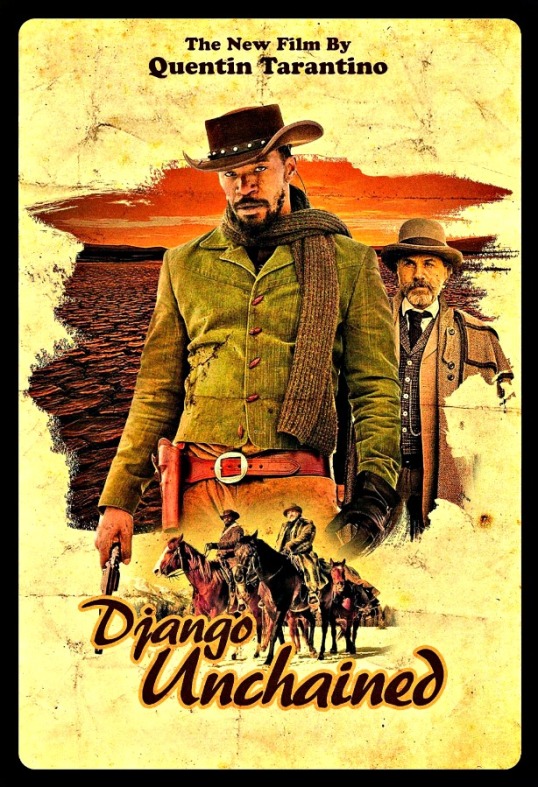
The last couple days have seen the release of a number of upcoming films that should be jockeying for all those fancy-pants end of season awards. One such film is the latest film from Quentin Tarantino. Django Unchained is his latest trip into the grindhouse world with this film being his take on the spaghetti westerns made popular by Italian maestros like Sergio Leone, Sergio Corbucci and Enzo G. Castellari.
It’s an ensemble cast that’s headlined by Jamie Foxx in the title role with Christoph Waltz, Samuel L. Jackson and Leonardo DiCaprio (playing against the grain as the main villain of the piece). To pay respect to the very genre that this film owes not just it’s title, but theme and tone, Tarantino has even cast the original Django in Franco Nero in the role of Amerigo Vassepi.
Django Unchainedis set for a Christmas Day 2012 release date (hopefully the world didn’t end just four days earlier).
Traditionally, I like to start my film reviews with a trailer but, with this trailer, I do feel the need to include a quick warning. The film being advertised, 1980’s Zombie Holocaust, was released at the height of the Italian exploitation boom and combined two notably gory genres of horror — the cannibal film and the zombie film. The trailer below is pretty explicit (even by the standards of the free speech zone known as the Shattered Lens) and is definitely not safe for work.
Like many of the classic Italian grindhouse films, Zombie Holocaustopens in New York City. A hospital attendant is caught devouring a cadaver in a morgue. After he attempts to escape by throwing himself out of a window, it’s discovered that 1) he’s a native of the Asian Molucca islands and 2) he’s only one of several natives to have both recently immigrated to New York City and gotten a job at a morgue. Dead bodies across NYC are being eaten and anthropologist Lori (played by Aelxandra Delli Colli, who is best known for being the only sympathetic character in Lucio Fulci’s New York Ripper) is determined to discover why.
In order to investigate, Lori and Dr. Peter Chandler (played by Ian McCullough, who was also in Fulci’s classic Zombi 2) lead an expedition to the island. Almost as soon as the expedition arrives, they find themselves being pursued by not only cannibals but zombies as well! Even worse, it turns out that there’s a mad scientist on the island. Dr. Obrero (Donald O’Brien, an Irish actor who appeared in a few hundred Italian films of every possible genre) is convinced that he can unlock the secrets of life by experimenting on dead bodies and doing brain transplants.
(To be honest, I’ve seen this film a few times and I’m still not quite sure what exactly Dr. Obrero was trying to accomplish but I guess it doesn’t matter. He’s a mad scientist with his own private laboratory so I guess he can pretty much do whatever he wants.)
I love Italian zombie films but, for the most part, I try to avoid the cannibal films. I saw both Cannibal Ferox and Cannibal Apocalypse because they both featured Giovanni Lombardo Radice and I saw Cannibal Holocaust because, seriously, that’s one of those films that any student of cinematic horror has to see at least one time. But otherwise, I tend to avoid the cannibal films because, to me, they’re just not that much fun to watch. (And the fact that most of them contain scenes of actual animal cruelty doesn’t help…)
However, Zombie Holocaust is one of the rare cannibal films that I can watch and enjoy because it’s just so ludicrous and over-the-top. It also helps that the film’s gore is so obviously fake that it becomes almost a postmodern statement on Italian cannibal films. And, finally, this film has got zombies in it and who doesn’t love zombies?
Of the countless zombie films that came out of Italy during the early 80s, Zombie Holocaust is one of the odder entries in the genre. While most Italian exploitation films were shameless when it came to imitating other movies, Zombie Holocaust attempts to outdo them all by cramming the conventions of three different genres into one mess of a movie. As such, the movie starts out as a standard cannibal film just to suddenly become an almost shot-by-shot remake of Zombi 2 before then finally wrapping things up by having Donald O’Brien pop up, acting like Peter Cushing in a Hammer Frankenstein film. There’s nothing graceful or subtle about this film’s everything-and-the-kitchen-sink approach to its story and, while the end result isn’t exactly pretty, it’s still watchable in much the same way that a televised police chase is watchable.
Director Marino Girolami was a veteran filmmakers who was ending a long career with his work on Zombie Holocaust and you have to admire the fact that, as opposed to many other filmmakers who have found themselves in a similar situation, he made an honest and unapologetic exploitation film, a shameless rip-off of about a thousand other films. Instead of being embarrassed by the film’s silliness, he instead embraced it and his cast did the same.
Playing the lead role, Scottish actor Ian McCullough plays his character with an attitude that, at times, almost comes across as a parody of stiff upper lip English imperialism. You may have to be a fan of grindhouse cinema to truly appreciate it but, whenever I’ve sat through this film, I always found myself smiling every time that McCullough discovered that another member of his expedition has been killed and responded with a frustrated, “And none of this would have happened if you had simply done as I had told you to do.” By the end of the film, I was expecting McCullough to approach the last remaining native and tell him, “You’re a better man than I am, Gunga Din.”
However, the film is truly stolen by Donald O’Brien, who plays the mad scientist with an almost alarming sense of authenticity. For the most part, nothing that O’Brien says during the film makes the least bit of sense but he delivers the lines with such conviction that it really doesn’t matter. In one of the film’s most famous scenes, O’Brien delivers the line, “Patient’s screams annoying me…performed removal of vocal chords.” It takes a special type of actor to make a line like that work and O’Brien was that actor.
Indeed, watching a film like this, it’s hard not to admire the fact that both the filmmakers and the cast managed to stay sane regardless of how ludicrous the film eventually became. That’s perhaps the best way to describe Zombie Holocaust. It’s ludicrous but it’s still a lot of fun.
(Speaking of ludicrous and fun, when Zombie Holocaust was released here in the States, it was renamed Dr. Butcher, M.D. and it was apparently advertised by a sound truck known as the Butchermobile. To me, that sounds like a lot of fun and it again reminds me that I was born a few decades too late.)





 Through the Shattered Lens