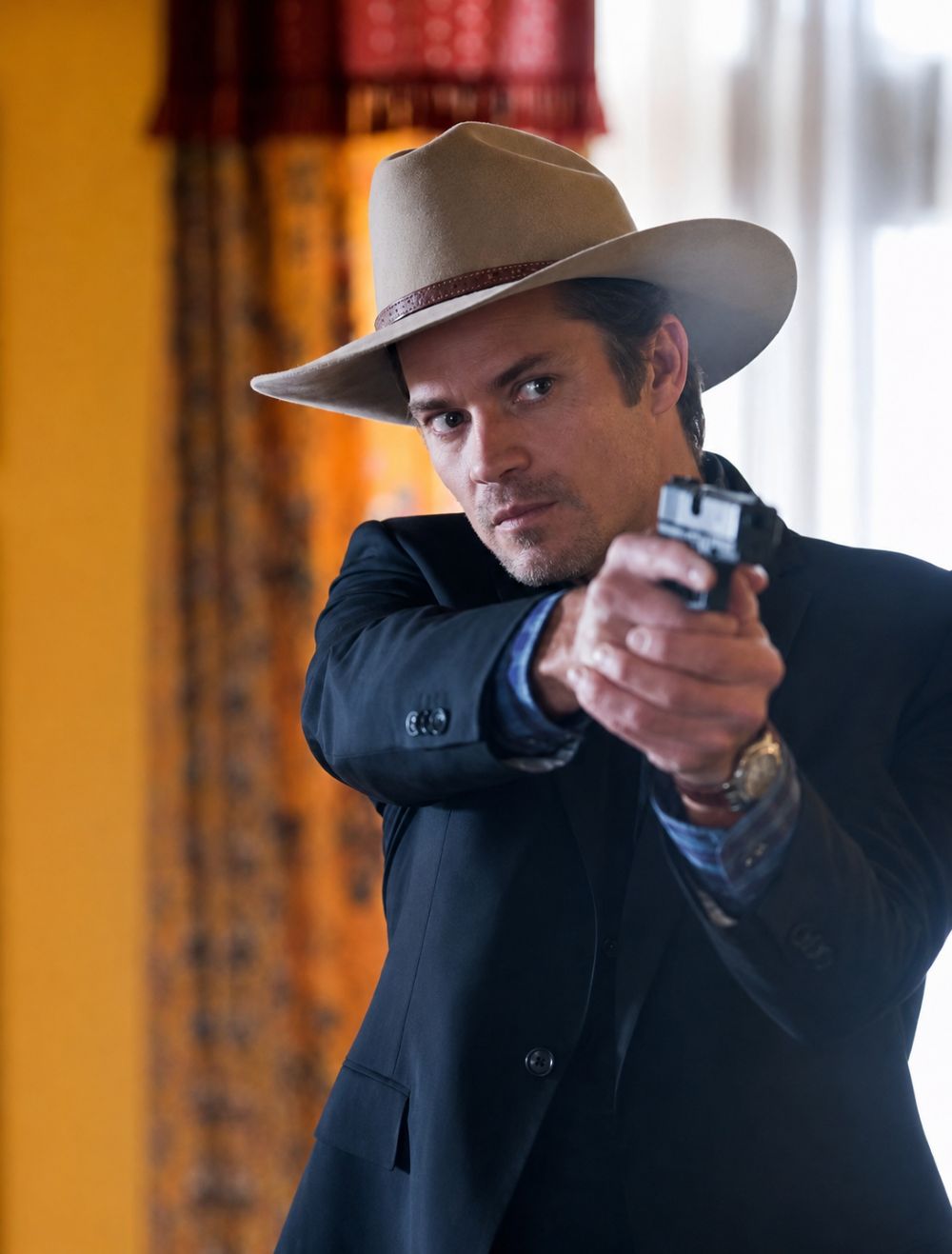
“You make me pull, I’ll put you down.” — Raylan Givens
U.S. Marshal Raylan Givens stands as one of television’s most compelling modern heroes, a character who embodies the contradictions of the American frontier in a contemporary setting. Created from the imagination of crime novelist Elmore Leonard, Raylan is a man who wears a Stetson and cowboy boots in an era of SUVs and cell phones, yet this anachronistic quality is not mere affectation but a statement of his character’s core philosophy. He seems to be a type of lawman born a century late, a man who would appear far more at home in the untamed frontier of the Old West than in the boardrooms and courthouses of modern Kentucky. He is an old-school lawman who lives by a personal code, a man who is as quick with a dry, cutting quip as he is with the Glock 17 he carries on his hip. His introduction in the series pilot, a showdown in a Miami restaurant, immediately establishes him as a man who operates on the edge, a true-blue hero who is nevertheless irresponsible, impatient, and troubled by his past. It is this tension between his heroic aspirations and his human flaws that makes him so fascinating to watch.
Raylan’s compelling nature is deeply rooted in the fact that he is not a clean-cut paragon of virtue but a man driven by a profound, barely concealed rage. As his ex-wife Winona observes, he is the angriest man she has ever known. This anger is the product of his harsh upbringing in Harlan County, Kentucky, where he was raised by a criminal father, Arlo, a man Raylan has spent his entire life trying not to become. The series constantly examines whether the sins of the father are visited upon the son, forcing Raylan to confront his own inherited demons. He suppresses his fury behind a calm, self-effacing demeanor, but it erupts in acts of incredible violence, which are almost always technically justified by his badge. This internal conflict makes him a psychologically rich character, as he struggles to be a good guy while wrestling with a brutish nature that often compels him toward the very lawlessness he is sworn to fight.
The brilliance of Raylan’s characterization is further enhanced by the world he inhabits, particularly his fraught relationship with his nemesis, Boyd Crowder. Boyd is not merely a villain but a mirror image of Raylan, a man who took a different path from the same origins. Their bond, forged in the coal mines of their youth, creates a relationship of mutual respect, intellectual equality, and inevitable, tragic conflict. The show was built around the idea that he and Boyd took opposite paths from the same origin. Where Raylan represents law tainted by hubris, Boyd represents crime tempered by a strange moral code, and their philosophical debates and cold-blooded confrontations elevate the show beyond a simple procedural. The viewer is left uncertain whether these two men are fated to kill one another or save one another, a tension that is central to the show’s enduring appeal.
This anachronistic quality is what truly separates Raylan Givens from the archetypal Western heroes of old, yet it also positions him as their spiritual heir. He is more akin to legendary Old West lawmen such as Wyatt Earp, Bass Reeves, and Seth Bullock—men who operated in territories where the law was often a suggestion and justice was dispensed at the barrel of a gun. Like Earp, Raylan possesses a quiet, intimidating presence that commands respect without demanding it. Like Reeves, he navigates a morally ambiguous world where the line between right and wrong is frequently blurred by personal history and regional loyalties. And like Bullock, he is a man of few words but swift action, quick to anger and quicker to draw. Raylan may wear a modern suit and carry a contemporary sidearm, but his soul belongs to the dusty streets of Dodge City or Deadwood. As his character evolves, especially in the revival Justified: City Primeval, he becomes a man fighting to come to terms with aging, fatherhood, and obsolescence, further testing whether his brand of frontier justice can apply beyond his home turf. This evolution ensures that the gunslinger myth is retooled for a modern audience, proving that the values of independence and ruggedness are not geographical but a matter of attitude.
Ultimately, Raylan Givens is a compelling hero because he refuses to be a simple one. He is a man who perpetually subverts his own archetype, a lawman who bends the law, a gentleman who is polite but ready to be brutal at the drop of a Stetson, and a loner who is inextricably tied to the people and place he desperately wants to escape. He is a hero for a cynical age, a man who makes the audience wrestle with the question of whether the ends truly justify the means—a question that is the very title of his show. By embodying the contradictions and complexities of modern life while carrying the spirit of the Old West in his bones, Raylan Givens proves that the Western is not dead; it simply evolved into a man in a Stetson, walking the thin line between law and justice.
Hero of the Day
- Inspector “Tequila” Yuen Ho-yan (Hard Boiled)
- Josey Wales (the Outlaw Josey Wales)
- Vince Majestyk (Mr. Majestyk)
- Monkey D. Luffy (One Piece)
- Leo Kessler (Ten to Midnight)
- Senku Ishigami (Dr. Stone)
- Marcus Fenix (Gears of War)
- Samwise Gamgee (Lord of the Rings)
- Haven Hamilton (Nashville)
- Bernardo O’Reilly (The Magnificent Seven)
- Maj. Motoko Kusanagi (Ghost in the Shell)
- Spike Spiegel (Cowboy Bebop)
- Chief Martin Brody (Jaws)
 Through the Shattered Lens