Music Video of the Day: Falling by Julee Cruise (1990, dir by ????)


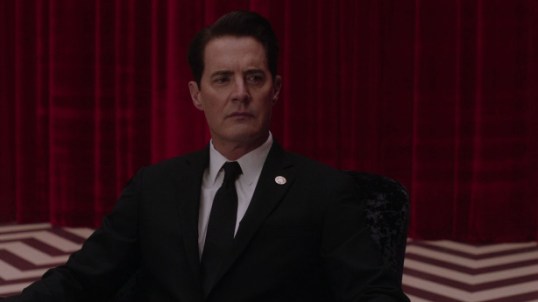
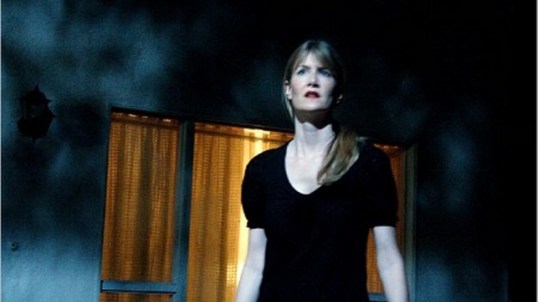
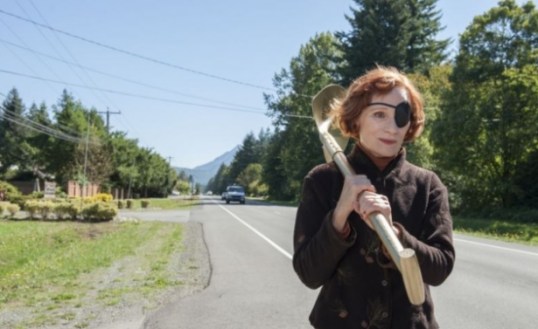
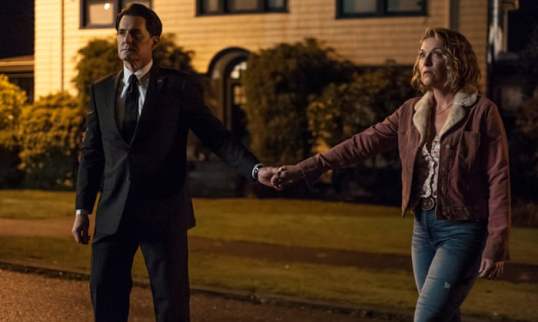
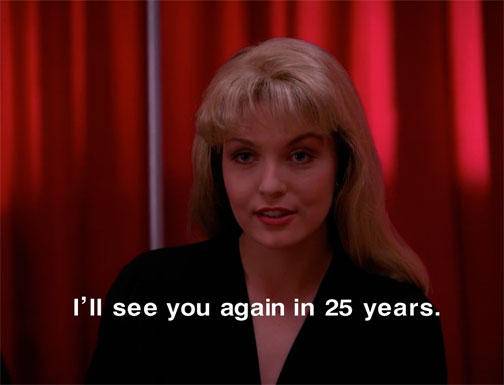
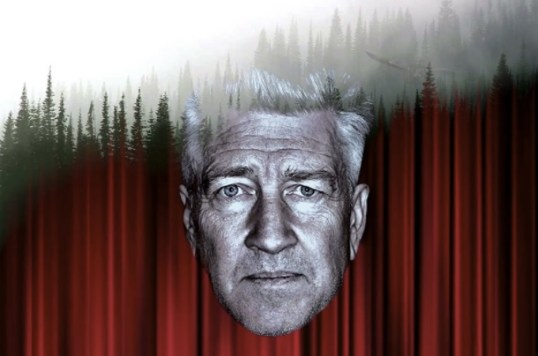
Seeing as how today is David Lynch’s birthday, it just seems appropriate that today’s music video of the day should come from Twin Peaks.  Julee Cruise played the singer at the Roadhouse during the first season of Lynch’s legendary show and her voice perfectly captured and, in many ways, helped to create the show’s mysterious and dream-like atmosphere.  (The Roadhouse, of course, became a much more menacing location when the series was revived for Showtime.  I mean, even “The Nine Inch Nails” ended up playing there.)

This video features a compilation of clips from the show.  Some of the clips were directed by David Lynch while some weren’t, so it’s a bit difficult to determine who should be credited as director for this video.  Regardless, this video still captures the unique power of Lynch’s vision.

Enjoy!

Don’t let yourself be hurt this time

Then I saw your face
Then I saw your smile

The sky is still blue
The clouds come and go
Yet something is different
Are we falling in love?

Don’t let yourself be hurt this time

Then your kiss so soft
Then your touch so warm

The stars still shine bright
The mountains still high
Yet something is different
Are we falling in love?

Falling
Falling
Are we falling in love?

Falling
Falling
Are we falling in love?

14 Shots From 13 Films: Special David Lynch Edition


4 (or more) Shots From 4 (or more) Films is just what it says it is, 4 (or more) shots from 4 (or more) of our favorite films. As opposed to the reviews and recaps that we usually post, 4 (or more) Shots From 4 (or more) Films lets the visuals do the talking.

Today, the Shattered Lens wishes a very special 75th birthday to the one and only David Lynch.  As should be evident by now, we’re big fans of David Lynch around here.  Not only is he a wonderfully unique filmmaker but he’s also literally the only person who can do what he does.  Trust me — I’ve seen hundreds of films that were made by people who obviously thought they were going to be the next David Lynch and none of them even come close.  David Lynch is a filmmaker who can make the most surreal images seem like the most natural thing in the world.

Speaking of images, it’s time for….

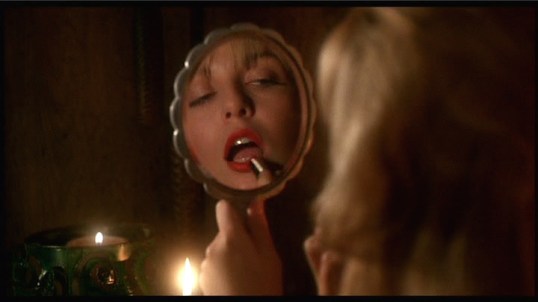
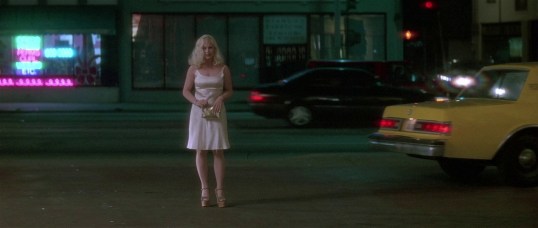
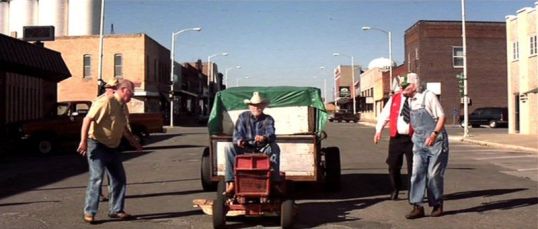
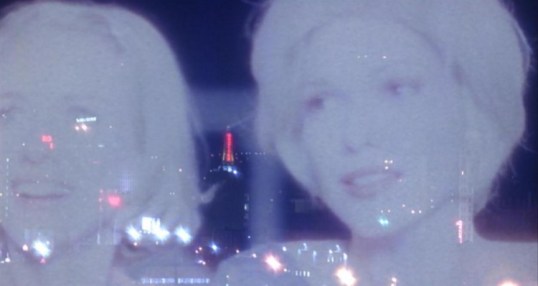
14 Shots From 13 David Lynch Films

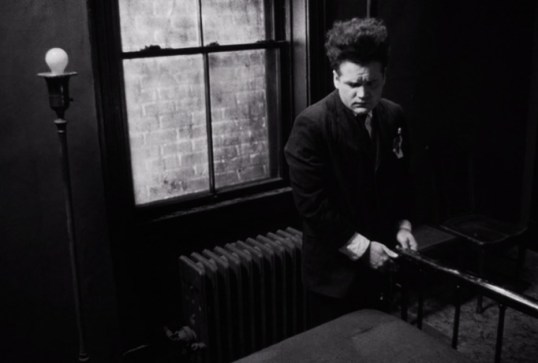
Eraserhead (1977, dir by David Lynch, DP: Frederick Elmes, Herbert Cardwell)

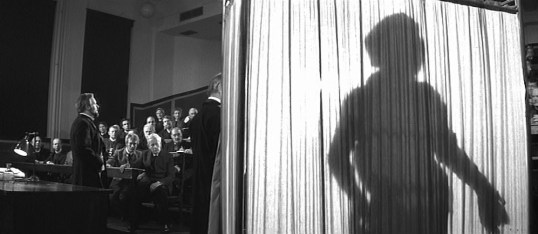
The Elephant Man (1980, dir by David Lynch, DP: Freddie Francis)

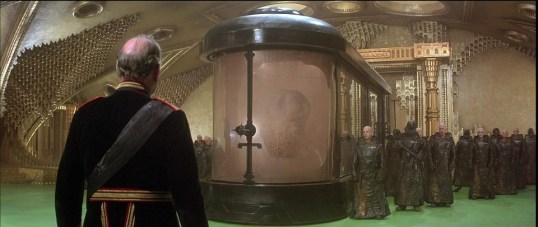
Dune (1984, dir by David Lynch, DP: Freddie Francis)

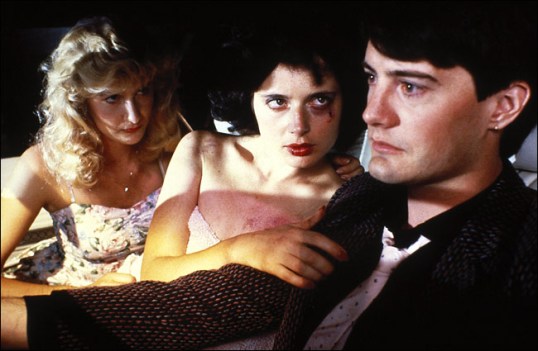
Blue Velvet (1986, dir by David Lynch, DP: Frederick Elmes)

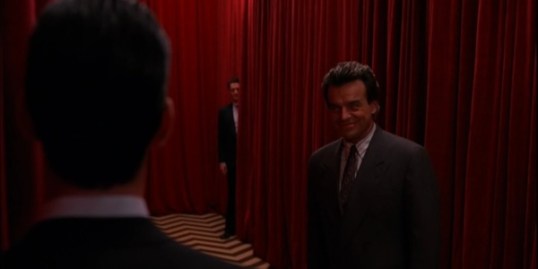
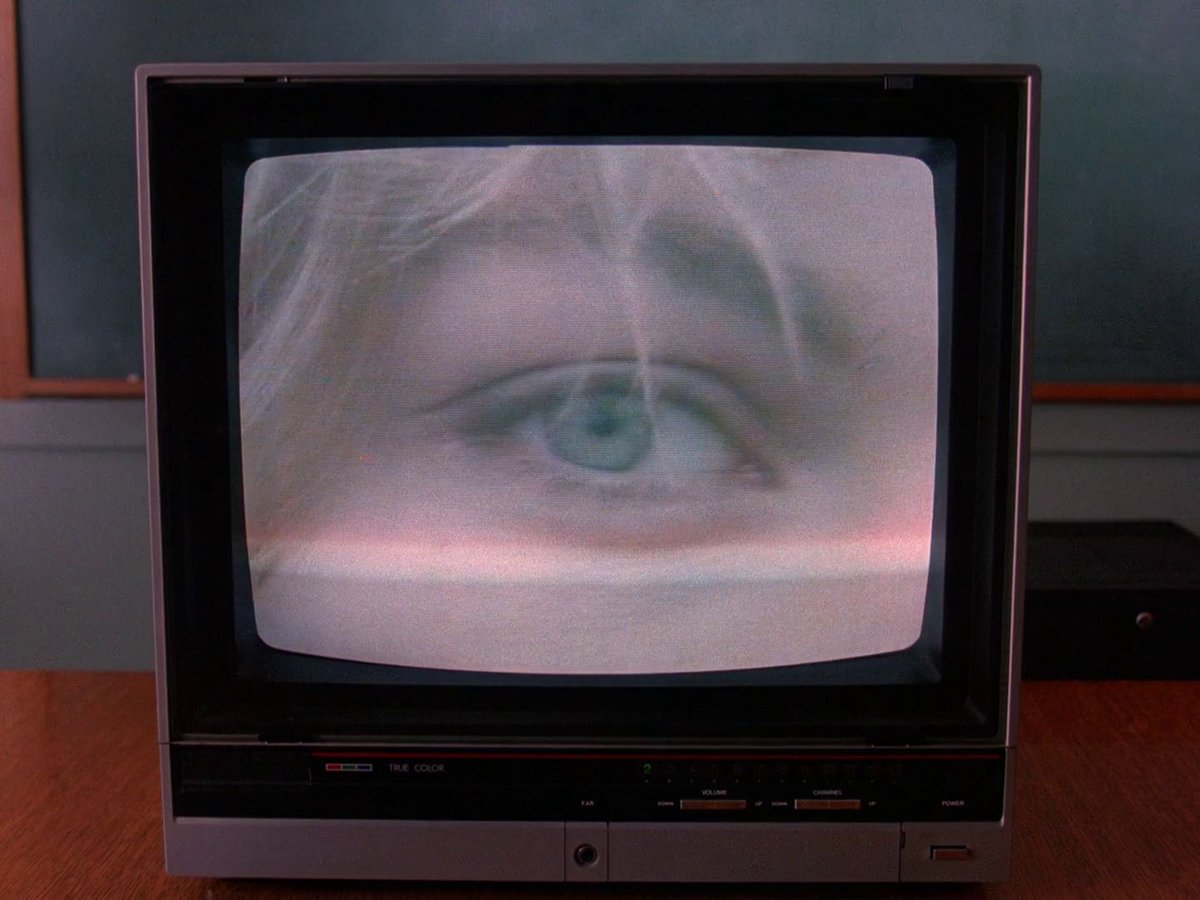
Twin Peaks 1.3 “Zen or the Skill To Catch a Killer” (1990, dir by David Lynch, DP: Frank Byers)

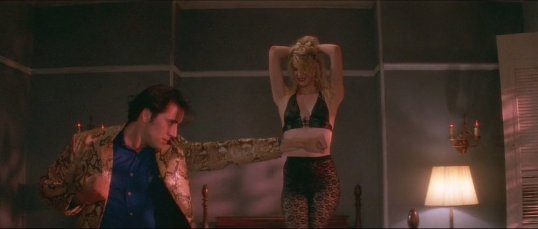
Wild At Heart (1990, dir by Frederick Elmes)

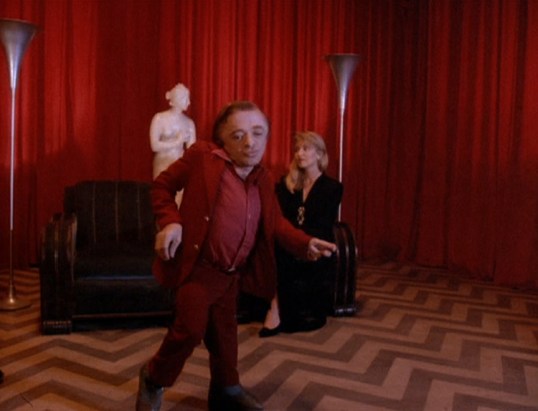
Twin Peaks 2.22 “Beyond Life and Death” (1991, dir by David Lynch, DP: Frank Byers)

Twin Peaks: Fire Walk With Me (1992, dir by David Lynch, DP: Ron Garcia)

Lost Highway (1997, dir by David Lynch, DP: Peter Deming)

The Straight Story (1999, dir by David Lynch, DP: Freddie Francis)

Mulholland Drive (2001, dir by David Lynch, DP: Peter Deming)

Inland Empire (2006, dir by David Lynch, DP: David Lynch)

Twin Peaks: The Return Part 15 (dir by David Lynch, DP: Peter Deming)

Twin Peaks: The Return Part 18 (2017, dir by David Lynch, DP: Peter Deming)

Happy birthday, David Lynch!

4 Shots From 4 Films: Happy Twin Peaks Day!


Happy Twin Peaks Day!

It was on this date in 1989 that Dale Cooper first arrived in the small town of Twin Peaks, Washington to help the authorities with their investigation into the death of Laura Palmer.  Here at the Shattered Lens, we’re all big fans of Twin Peaks.  Back in 2017, this site was literally a Twin Peaks fan site for a good couple of months.  As such, today is a big holiday around these parts and what better way to celebrate than with a special edition of 4 Shots From 4 Films?

So, in honor of Twin Peaks, here are….

4 Shots From 4 Films

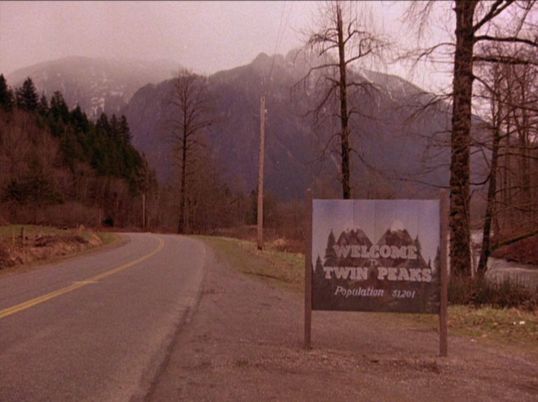
Twin Peaks: The Pilot (1990, dir by David Lynch)

Twin Peaks 2.22 “Beyond Life and Death” (1991, dir by David Lynch)

Twin Peaks: Fire Walk With Me (1992, dir by David Lynch)

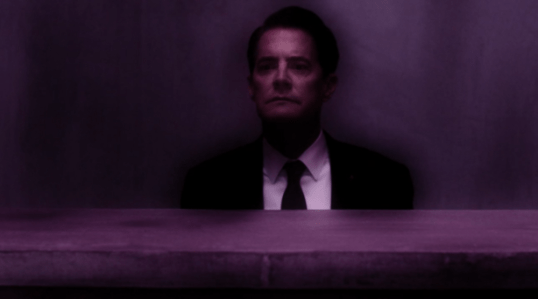
Twin Peaks: The Return Part 18 (2017, dir by David Lynch)

Happy Twin Peaks Day!

Scenes That I Love: Cooper Says Goodbye In Twin Peaks: The Return (Happy Birthday, Kyle MacLachlan!)


Happy birthday, Kyle MacLachlan!

Kyle MacLachlan is 61 years old today.  While MacLachlan has appeared in a lot of different movies and tv shows and he’s also played a lot of different characters, he will probably always be best known for playing FBI Special Agent Dale Cooper on Twin Peaks.  MacLachlan, with his combination of earnestness and darkness, was the prefect choice to play Cooper and it’s impossible to imagine Twin Peaks without him.

Of course, MacLachlan didn’t just play Dale Cooper during the third season of Twin Peaks.  He also played Cooper’s evil Doppelganger and, for the majority of Twin Peaks: The Return, he played Dougie.  Dougie could barely speak and usually had no idea what was happening around him but he still thrived in Las Vegas.  MacLachlan’s performance as Dougie was both funny and poignant.  At the same time, I do think that every fan of Twin Peaks breathed a sigh of relief when Cooper finally woke up from that coma, stopped acting like Dougie, and started acting like himself.

Today’s scene that I love comes from Part 16 of Twin Peaks: The Return.  In this David Lynch-directed scene, Cooper — who has only recently reclaimed his identity — says goodbye to Dougie’s wife and son.  Like so much of Twin Peaks; The Return, this is a scene that could be unbelievably mawkish in the hands of another actor.  However, Kyle MacLachlan plays the scene with such sincerity that it’s actually very touching.

In honor of Kyle MacLachlan’s birthday, enjoy today’s scene that I love:


Scenes That I Love: Audrey’s Dance From Twin Peaks: The Return


So, today is Sherilyn Fenn’s birthday and I figured that this would be the perfect time to share a scene that I love from Twin Peaks: The Return.  It’s also one of the most controversial scenes from the entire 18-hour film (and make no mistake, Twin Peaks: The Return is a film).  That’s saying something, considering that just about every single minute of David Lynch’s masterpiece was, at the very least, a little bit controversial.

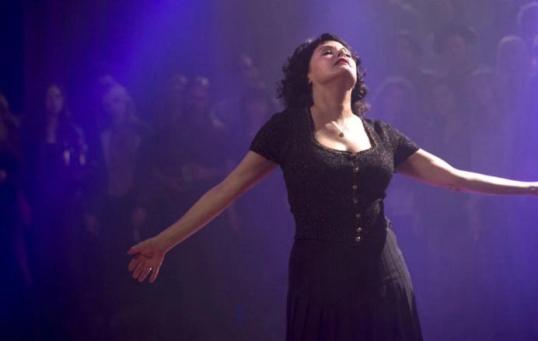
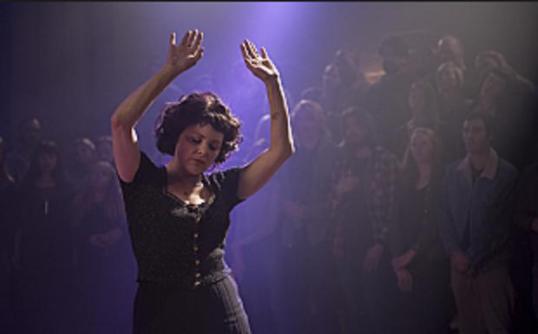
From Twin Peaks: The Return Part 16, it’s Audrey’s Dance!

So, what’s happening here?  That Audrey has undergone a great personal trauma is obvious to anyone who compares the Audrey in Twin Peaks: The Return to the Audrey in the original series.  The original series ended with Audrey in a coma.  In between the end of the first series and the start of the second, she was raped by the Doppelganger (apparently while she was still comatose) and she subsequently gave birth to the thoroughly evil Richard Horne.  There’s a lot of horrifying things in Twin Peaks but there’s nothing as horrific as what happened to Audrey.

Where things get murky is what happened to Audrey after the birth of Richard.  According to the books that Mark Frost wrote before and after Twin Peaks: The Return aired, Audrey later became a beautician and married her business manager.  For that reason, I think we can discount the theory that Audrey is still in the coma and having a dream in this scene.  Another popular theory is that Audrey is hallucinating in a mental hospital but again, I think we can discount that because, if she’s institutionalized, how could she become a beautician and marry her business manager?

I think a far more probable theory is that the Audrey who is living in Twin Peaks is another doppelganger and the real Audrey, like the original Cooper, is trapped in one of the lodges.  I also think that it can be argued that the Road House, where Audrey dances, is itself a portal.  It’s not an actual Lodge but it does seem to have a connection to the Black Lodge.  Perhaps the master of ceremonies is like emcee from Mulholland Drive, revealing that everything is an illusion.

Who knows, right?

As for Audrey’s dance in this scene, it’s a callback to a time when Audrey had her entire future ahead of her.  What Audrey once did playfully, she now does wistfully and with regret.  And yet, there’s a lot of hope to be found in her dance, or at least there is until reality intrudes in the form of two idiots getting into a fight.  That’s when Audrey (or Audrey’s doppelganger) is reminded that the world has changed and there’s no more room for happiness.

Hopefully, things have gotten better for Audrey since we last saw her.

4 Shots From 4 Films: Special David Lynch Edition


4 Shots From 4 Films is just what it says it is, 4 shots from 4 of our favorite films. As opposed to the reviews and recaps that we usually post, 4 Shots From 4 Films lets the visuals do the talking!

Today is David Lynch’s birthday!  The master of American surrealism and dream-like noir is 74 years old.  One of my fondest memories of the past ten years comes from those glorious few months in 2017 when Leonard, Ryan, Jeff and I watched and analyzed every single episode of Twin Peaks and Twin Peaks: The Return.  It was not only a chance to reacquaint ourselves with a master but it was also a lot of fun as well.  I mean, Lynch may be best known as a surrealist but he’s also a damn good director.

It’s been three years since the final episode of Twin Peaks and we’re still debating that final scream.

In honor of Lynch’s birthday, it time for 4 Shots From 4 Films!  It’s difficult to do one of these for David Lynch, not because it’s hard to find material but instead because it’s so difficult to narrow it down to just four shots.  Lynch has been making films from the 70s and, visually, every single one of them is stunning.  For this post, I’ve limited myself to the work that Lynch has released in the 21st century.

(And yes, Twin Peaks: The Return counts as a movie!)

4 Shots From 4 Films

Mulholland Drive (2000, dir by David Lynch)

Inland Empire (2006, dir by David Lynch)

Twin Peaks The Return Part Three (2017, dir by David Lynch)

Twin Peaks: The Return Part 5 (2017, dir by David Lynch)

Scenes That I Love: Norma Accepts Ed’s Proposal in Twin Peaks: The Return (R.I.P. Peggy Lipton)


As this day comes to a close, I have some sad news to report.  The actress Peggy Lipton passed away earlier today, at the age of 72.  While one generation may know her best as a star of 1960s television and others know her for her marriage to legendary music producer Quincy Jones (and as the mother of Rashida Jones), I knew Peggy Lipton as Norma Jennings, one of the few characters to get a happy ending in David Lynch’s Twin Peaks: The Return.

Norma was the owner of the Double R Diner and, for the most part, one of the few stable residents of Twin Peaks.  While the rest of the town was collapsing around her, Norma could usually be found in a back booth, going over expense reports and continually proving herself to often be the lone voice of sanity in her hometown.

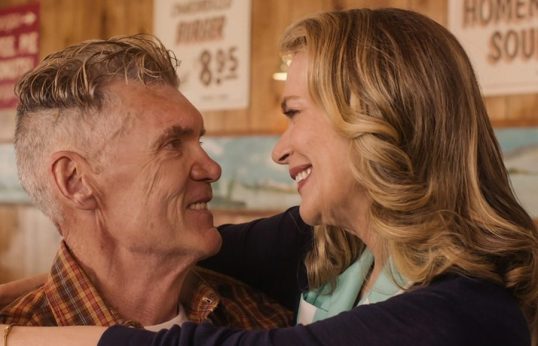
The love affair between Norma and Ed Hurley (Everett McGill) was a story that ran through both the original Twin Peaks and the Showtime revival.  One of the big moments in the revival came when Ed, having finally gotten Norma to agree to give him a divorce, finally asked Norma to marry him.  It’s perhaps the most unabashedly romantic scene to be found in David Lynch’s filmography.  (Lynch did the scene in one take and, according to Lipton, was in tears by the end of it.)  It’s a scene that’s wonderfully acted by both McGill and Lipton, with both actors saying so much without saying a word.

And here it is, a scene that I love from Part 15 of Twin Peaks: The Return:


Here Are The 70th Annual Emmy Winners!


To be honest, I didn’t actually watch the Emmys this year.  For one thing, I was upset that Twin Peaks was not nominated for Best Limited Series and I was even more upset that Kyle MacLachlan was totally overlooked.  It’s hard for me to take seriously an awards show that snubs Twin Peaks but honors Alec Baldwin’s uninspired Donald Trump impersonation.

However, I did kind of follow the ceremony on twitter.  I was happy, for instance, to learn that Bill Hader and Henry Winkler won for Barry and that Thandie Newton won for Westworld.  The Emmy that should have gone to Twin Peaks went to The Assassination of Gianni Verscace, which was good but uneven.  (The first five episodes were brilliant.  The final three felt somewhat superfluous.)  Ryan Murphy beat David Lynch for Best Director.  I mean, what the Hell?

Anyway, here’s the winners!

Best Comedy: “The Marvelous Mrs. Maisel” (Amazon)

Best Drama:“Game of Thrones” (HBO)

Best Limited Series: “The Assassination of Gianni Versace: American Crime Story” (FX)

Best Actress, Comedy: Rachel Brosnahan, “The Marvelous Mrs. Maisel”

Best Actor, Comedy: Bill Hader, “Barry”

Best Actress, Drama: Claire Foy, “The Crown”

Best Actor, Drama: Matthew Rhys, “The Americans”

Supporting Actress, Drama: Thandie Newton, “Westworld”

Supporting Actor, Drama: Peter Dinklage, “Game of Thrones”

Supporting Actress, Comedy: Alex Borstein, “The Marvelous Mrs. Maisel”

Supporting Actor, Comedy: Henry Winkler, “Barry”

Best Actress, Limited Series or TV Movie: Regina King, “Seven Seconds”

Best Actor, Limited Series or TV Movie: Darren Criss, “The Assassination of Gianni Versace: American Crime Story”

Supporting Actress, Limited Series or a Movie: Merritt Wever, “Godless”

Supporting Actor, Limited Series or Movie: Jeff Daniels, “Godless”

*Television Movie: “Black Mirror: USS Callister” (Netflix)

Variety Sketch Series: “Saturday Night Live” (NBC)

Variety Talk Series: “Last Week Tonight With John Oliver”(HBO)

Reality Competition Program: “RuPaul’s Drag Race” (VH1)

*Reality Host: RuPaul, “RuPaul’s Drag Race”

*Structured Reality Program: “Queer Eye” (Netflix)

*Unstructured Reality Program: “United Shades Of America With W. Kamau Bell” (CNN)

*Guest Actress, Drama: Samira Wiley, “The Handmaid’s Tale”

*Guest Actor, Drama: Ron Cephas Jones, “This Is Us”

*Guest Actress, Comedy: Tiffany Haddish, “Saturday Night Live”

*Guest Actor, Comedy: Katt Williams, “Atlanta”

*Documentary or Nonfiction Series: “Wild Wild Country” (Netflix)

*Animated Program: “Rick And Morty” (Adult Swim)

Writing for a Comedy Series: Amy Sherman-Palladino, “The Marvelous Mrs. Maisel” (Pilot)

Writing for a Drama Series: Joel Fields & Joe Weisberg, “The Americans” (“Start”)

Writing for a Limited Series, Movie or Drama: William Bridges & Charlie Brooker, “Black Mirror: USS Callister”

Directing for a Comedy Series: Amy Sherman-Palladino, “The Marvelous Mrs. Maisel” (Pilot)

Directing for a Drama Series: Stephen Daldry, “The Crown” (“Paterfamilias”)

Directing for a Limited Series: Ryan Murphy, “The Assassination Of Gianni Versace: American Crime Story” (“The Man Who Would Be Vogue”)

*Directing for a Variety Series: Don Roy King, “Saturday Night Live” (Host: Donald Glover)

Writing for a Variety Special: John Mulaney, “John Mulaney: Kid Gorgeous At Radio City”

Directing for a Variety Special: Glenn Weiss, “The Oscars”

*Awards presented during the Creative Arts Emmy ceremony on Sept. 8-9.