Horror Review: Ichi the Killer (dir. by Miike Takashi)


Filmmaking in Japan has always thrived on extremes—but not in one uniform direction. On one end lies the haunting, gothic atmosphere of horror steeped in shadows, ritual, and psychological dread; on the other lies the explosion of ultra-violence, pushed to grotesque and sometimes cartoonish heights. This duality mirrors the country’s broader cultural and artistic history, from the impressionistic ritualism of Noh theater and kabuki to the stark contrasts found in ukiyo-e prints. It was inevitable that such traditions would shape Japanese cinema, inspiring films that swing between meditative stillness and overwhelming sensory assault. Few modern filmmakers embody this radical spectrum more vividly than Miike Takashi, the ever-provocative and unapologetically eclectic mad genius of Japanese film.

Trying to find a Western counterpart to Miike often feels impossible. He refuses to be pinned down, leaping from genre to genre with the same restless energy as a filmmaker like Steven Soderbergh, but with far darker, more transgressive tendencies. Yet even in his eclecticism, Miike tends to operate at the polar extremes of Japanese genre filmmaking. One year he delivers chillingly restrained, gothic atmosphere—as seen in Audition or One Missed Call, both sustained by mood, dread, and psychological unease. The next, he unleashes pure ultra-violence, as in Dead or Alive or Ichi the Killer, films that seem designed to push cinematic violence far beyond socially tolerable thresholds. He’s made yakuza dramas, samurai fantasies, children’s stories, westerns, thrillers, and even musicals. To watch Miike is to surrender to unpredictability—but always to expect extremity.

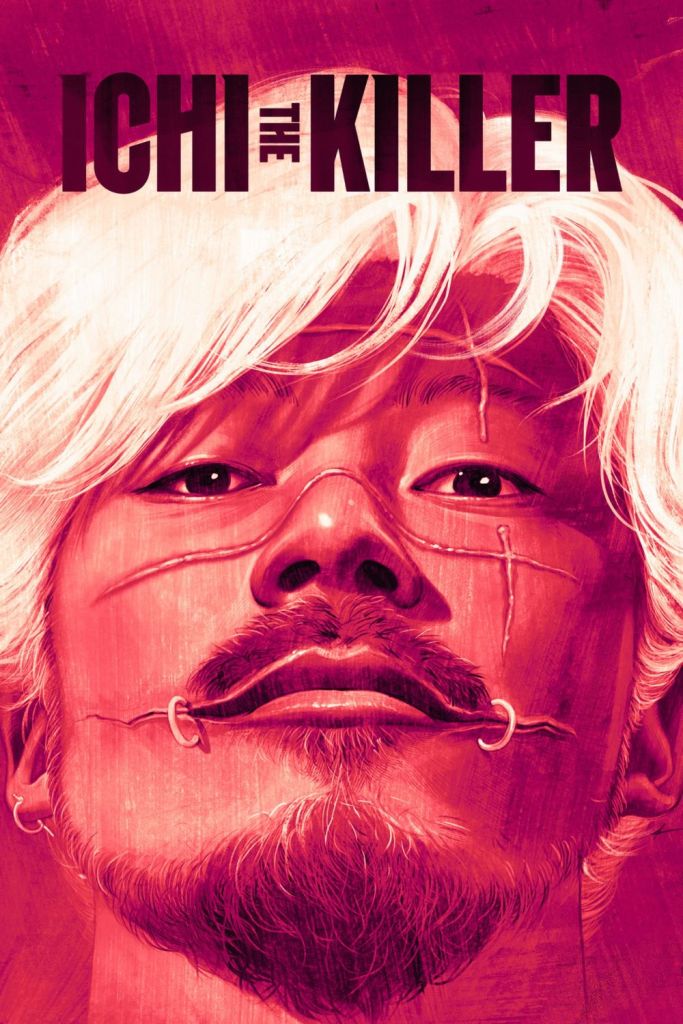
And nowhere is Miike’s fascination with the violent pole more vividly captured than in his infamous 2001 adaptation of Hideo Yamamoto’s manga Ichi the Killer (Koroshiya 1 in Japan). The film remains one of his boldest and most grotesque provocations: hallucinatory, hyper-violent, and defiantly sadomasochistic. If Audition showed Miike at his gothic and restrained, building terror through silence and stillness, then Ichi the Killer does the opposite—it blasts the viewer with sensory chaos, arterial spray, and sadomasochistic spectacle. The result pushes beyond gore into nightmare surrealism, so extreme it resembles Peckinpah’s The Wild Bunch refracted through a carnival mirror.

On its surface, the narrative is deceptively straightforward: at its core lies the hunt between two men. Ichi, an emotionally fragile vigilante manipulated into becoming a weapon of destruction, and Kakihara, a flamboyant, sadistic yakuza enforcer who thrives on pain both given and received. While Miike alters aspects of the manga, he retains the dual narrative thread of these two figures spiraling toward an inevitable rooftop showdown high above Tokyo’s neon chaos. Yet to describe the plot too literally is pointless. Miike warps Yamamoto’s crime saga into something closer to a fever dream, a delirious collage of violence and grotesquerie where linear logic is slowly dissolved, leaving behind only sensation.

Where Ichi the Killer separates itself is in its layered subtext of body horror and sadomasochism. Miike is not content with gore alone; he explores the intimate psychology of pain and pleasure, showing their fusion in ways that unsettle. This is established from the film’s beginning, in one of its most infamous moments, when Ichi—lonely, voyeuristic, and lost in disturbing fantasies—masturbates while watching a prostitute being assaulted, climaxing onto a balcony railing. The explicitness shocks, but more importantly, it plants the film’s thematic flag: eroticism polluted by brutality, desire inseparable from cruelty. Miike ensures the audience feels implicated, not just as witnesses but as voyeurs who cannot look away.

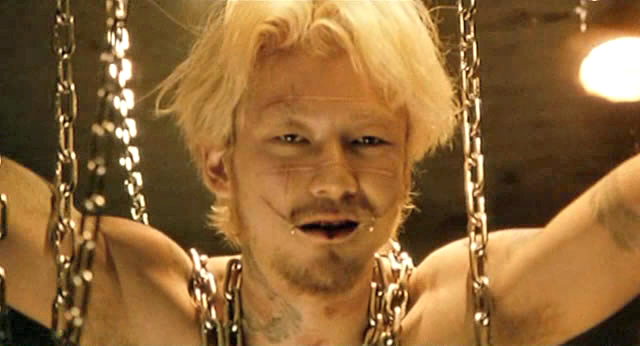
Kakihara embodies the other side of this sadomasochistic spectrum. He lives for violence, both inflicting and enduring it. His Glasgow smile—cut into his cheeks years before Ledger’s Joker canonized the image—is carved symbol of his philosophy: rebellion scarred into flesh, grotesque yet strangely glamorous. Much of this impact rests on Tadanobu Asano’s performance. Watching him in this role today, it’s startling to compare Kakihara to his later mainstream work in the Marvel Cinematic Universe (Thor films) or the prestige Shōgun remake. The actor who once played measured dignity and stoicism there is here unchained, flamboyant, and feral. His Kakihara is rockstar-like, charismatic, terrifying, and magnetic; the performance feels like a primal howl that stands in stark contrast to his more restrained global roles. By the finale, one could argue Kakihara comes closer to the film’s “hero” than Ichi himself, embodying violence not merely as cruelty but as pure identity.

The film unfolds as a series of violent tableaux, each more outrageous than the last, somewhere between grotesque cartoon and waking nightmare. Bodies are mangled, organs splatter, arterial spray bursts like abstract expressionist brushstrokes. Miike pushes the imagery so far it sometimes tips into slapstick, calling to mind Peter Jackson’s Dead Alive. It’s violence past the point of horror, collapsing into absurdist comedy: as if Tom and Jerry were redrawn with box cutters and razor wire. Tarantino’s famous “House of Blue Leaves” sequence in Kill Bill clearly draws inspiration from Miike’s operatic bloodletting.

And yet Ichi the Killer is not mere shock and gore. Beyond its chaotic excess, the film probes violence as spectacle—something audiences recoil from but also consume with fascination. Miike refuses to let the audience off the hook. He doesn’t desensitize; he implicates. Watching Ichi means simultaneously condemning its cruelty and acknowledging our own morbid curiosity. That tension—between gothic atmospheres of dread and gaudy ultra-violence—is where Miike thrives.

This duality makes Ichi the Killer one of the most notorious entries in modern cult cinema. It isn’t for everyone, and was never intended to be. Some audiences will find it unwatchable, others mesmerizing. But what is undeniable is its extremity, one end of the spectrum of Japanese genre filmmaking stretched to breaking point. If Audition embodies Miike’s gothic restraint, Ichi represents his carnival of brutality. Together, they capture the twin poles of his artistry and of Japanese extremity itself. Violence here is more than gore—it is body horror, sadomasochism, and spectacle fused together, a dark carnival Miike dares us to enter and dares us not to look away.
The Tournament beckons in the Mortal Kombat Trailer


Way back in 1995, Paul W. S. Anderson made his big break with the original Mortal Kombat film. 25 years is high time for an update. Produced by James Wan, this Mortal Kombat seems to be a little stronger with the story it’s sharing. So far, I’m liking the cast here. The Raid‘s Joe Taslim as Sub-Zero, Hiroyuki Sanada (Avengers: Endgame, The Wolverine) as Scorpion, True Blood’s Mechad Brooks as Jax, and those are just the names I recognize. I’m just happy they added Kung Lao to the mix.  I’m hoping there will be more fighting action in this version, and a great soundtrack to boot.

Directed by newcomer Simon McQuoid, Mortal Kombat’s release date is set for later this year, and since it’s a Warner Bros. Picture, there’s a good chance HBO Max may get it early as well.

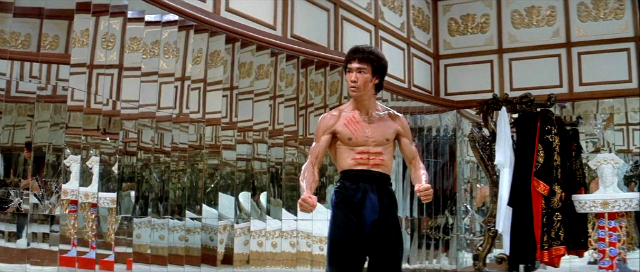
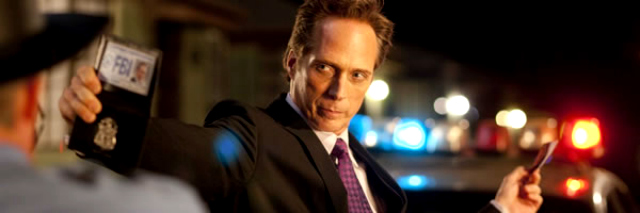
4 Shots From 4 Films: Enter the Dragon, Drive Angry 3D, The A-Team, Ichi the Killer


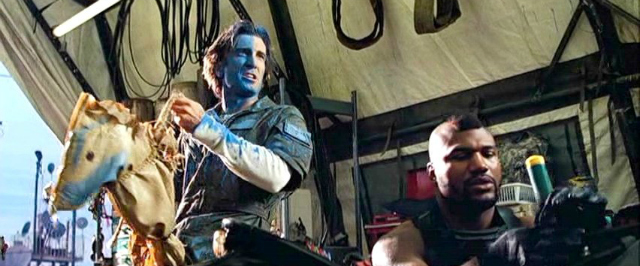
Tis November 27, 2015 and all 4 Shots from 4 Films are dedicated to four actors who share the same birth date. A date which all will have now figured out as being November 27. One comes from the Master of the Martial Arts himself, another a veteran character actor, a third who became a prawn and, lastly, the one who made the Glasgow Smile cooler before Heath Ledger.

4 SHOTS FROM 4 FILMS

Enter the Dragon (dir. by Robert Clouse)

Enter the Dragon (dir. by Robert Clouse)

The A-Team (dir. by Takashi Miike)

Ichi the Killer (dir. by Takashi Miike)

Anime You Should Be Watching: Redline


314090-redline

Anime has always skewed towards the hyperkinetic imagery that most Western animation rarely, if ever, put on the screen. Where Western animation has a much more flowing style that tries to mimic realism in the artform with anime we get intense action in the animation no matter what genre.

One recent anime that pretty much takes this hyperkinetic style to a new level was 2009’s OVA (original video animation) title from renowned anime studio Madhouse simply called Redline. It’s a wall-to-wall scifi action film that combines futuristic setting and world-building with the speed freak action of the racing genre.

Redline was directed by Takeshi Koike and it took him and his crew of animators from Madhouse a total of seven years and millions of dollars to finish the project. This was a project that pushed the animation to it’s limits with the film using over 100,000 hand-drawn pages of animations that at times looked like it was something that looked more computer-generated. It’s a film that showed many of Koike-san’s artistic influences from his mentor Yoshiaki Kawajiri (well-known for classic anime titles as Vampire Hunter D and Ninja Scroll) right up to the thick lines and heavy blacks of Frank Miller.

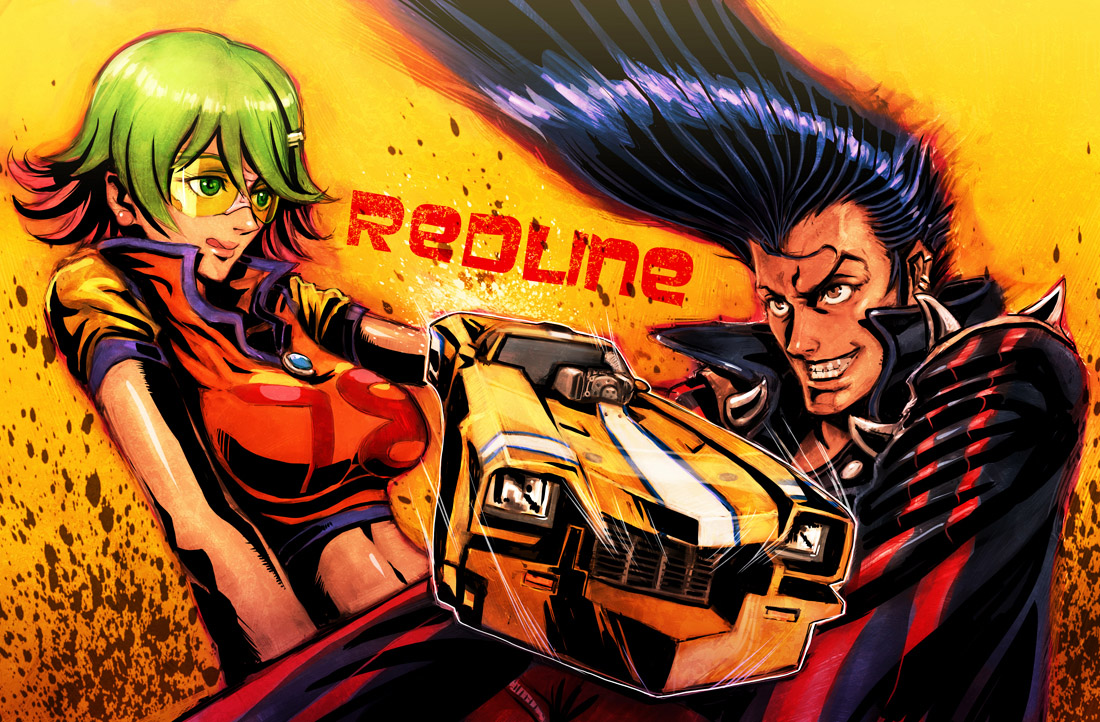
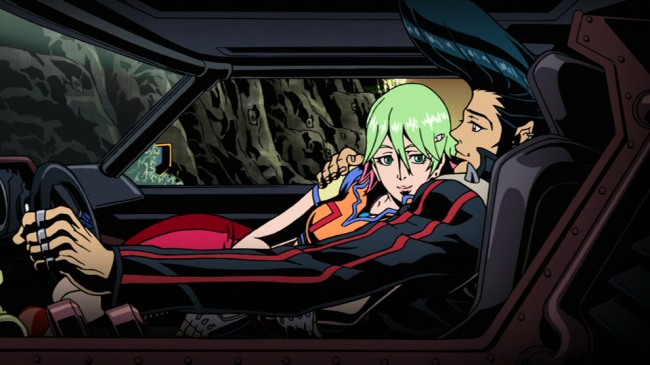
The plot for Redline is really not that complex and for some it’s too simple that it became a flaw. It’s a story about the a futuristic race that uses the greatest groundcar racers in the galaxy (instead of the current hovercar this world has turned to using) to tell a story about the underdog fighting against adversity to win not just the ultimate prize but the love of a girl who also happens to be one of his main rivals in the film. The story revolves around the main characters of Sweet JP, with his ludicrous pompadour (the subject of many jokes in the film) and 50’s-style Greaser leather jacket, and his main rival and love interest in Sonoshee.

Redline-BR-ext3

Redline barely brings the main leads past being cardboard cutouts as characters, but the story gives the two enough backstory to make them easy to relate to. Yet, it’s not the story that will hook and pull in anime fans both veterans and newbies. It’s all about the action and animation that makes this film one of those anime that people really should be watching. There’s so much action going on in the film that one could easily lose themselves in all that kinetic energy to forgive it’s story’s basic simplicity.

Some have called Redline as the anime version of the latest Fast and Furious films (mainly the last two), but I disagree with that assessment. The latest Fast and Furious films are attempts to make a live-action version of Redline. The two share similar traits and follow that racing creed that the Vin Diesel franchise has popularized: “Ride or Die”.

Redline might not the be the greatest story ever told in anime, but for pure-adrenaline action from beginning to end there’s none better. One can watch it on Youtube on their streaming service, yet I recommend that people who have a huge HDTV (especially the latest 4K screens) watch it on that to see hand-drawn animation at it’s best.


Trailer: 47 Ronin (Official)


47Ronin

So, we have Keanu Reeves playing against type in Man of Tai Chi now we have another Keanu extravaganza where he returns to the role he continues to be cast in. The role of the reluctant hero who also happens to be the only one who can save everyone.

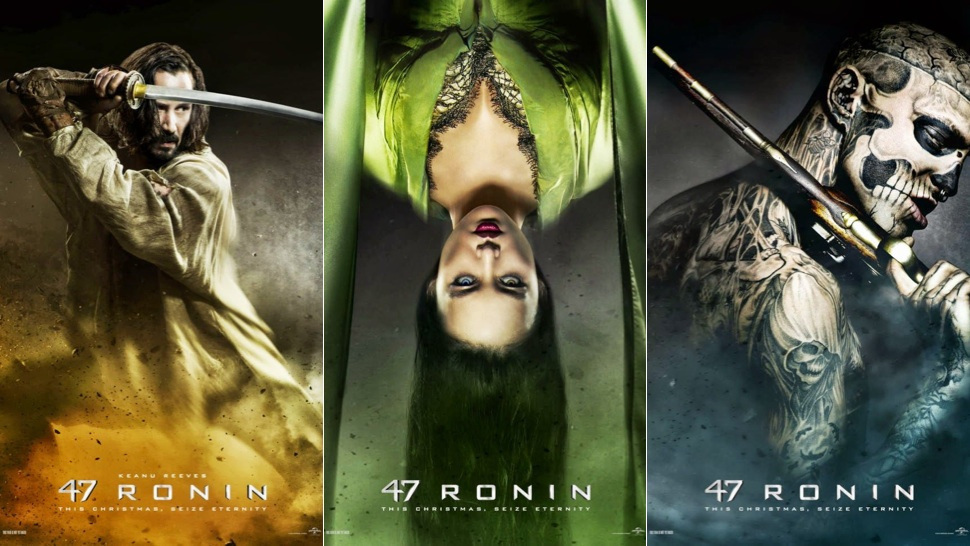
47 Ronin, I will have to assume, is probably very loosely-based on the 18th-century real-life account of the forty-seven ronin (masterless samurai) who took on the rival lord of their former lord and master. Their legend grew upon the success of their mission when they presented themselves to the Shogun and were given the chance to commit seppuku (ritual suicide) to keep their honor instead of being executed like criminals for the murder of the rival lord.

This story continues to remain a popular one in Japan and for those in the West who know of it. The film looks to take the basic premise but adapt the story in a more fantasy-setting that makes this 47 Ronin look more like a live-action anime than a traditional jidaigeki film like the recent 13 Assassins. This film marks one of the first Western Chushingura (fictional accounts of the forty-seven ronin event).

47 Ronin is directed by Carl Erik Rinsch and is set for a Christmas 2013 release date.

Trailer: Thor: The Dark World (Official)


1001383_551270781575795_85777536_n

The second film of Marvel’s Phase 2 for it’s Cinematic Universe comes in the form of Thor: The Dark World. I’m sure the title should give as to which of the Avengers character is front and center for this Phase 2 film.

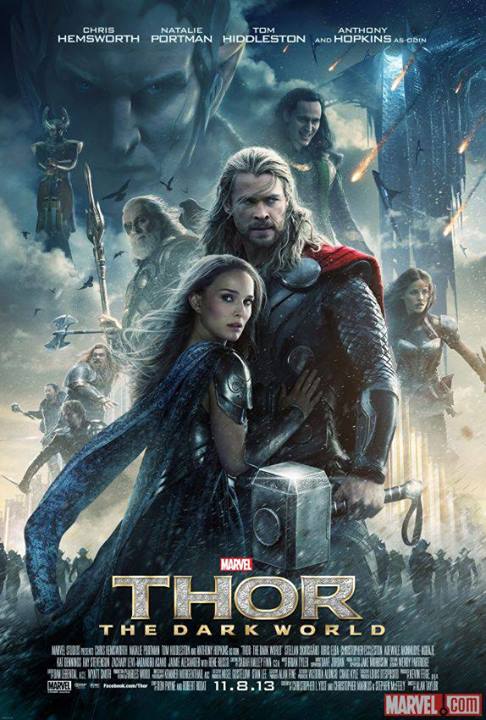
Above is the official theatrical poster for the film which has a strong fantasy, Drew Struzan feel to it. That’s more than appropriate since Thor bridges the gap between the more grounded superheroics of Midgard’s (that’s Earth to the layman) heroes (Captain America, Black Widow, Hawkeye and Iron Man) and the more fantasy and scifi denizens of Asgard like Thor and the upcoming film, Guardians of the Galaxy.

While this latest trailer released by Marvel is not the footage that was shown to Hall H attendees during Marvel’s panel at this year’s Comic-Con, it still manages to show some new footage in addition to one’s already shown at the initial teaser earlier. For one, it has more Loki (which is smart of Marvel since Loki has become this Cinematic Universe’s resident bad boy everyone seems to love or hate to love.) and it also shows some hints at the darker, grittier look that Alan Taylor looks to bring from his time as director of episodes of Game of Thrones for HBO.

Natalie Portman’s character, Jane Foster still seems to come off as not belonging to this ensemble, but there’s still chance that the finished product will flesh her out and her relationship with Thor to everyone’s satisfaction.

Thor: The Dark World is set for a November 8, 2013 release date.

Trailer: Thor: The Dark World (Official)


Thor the Dark World

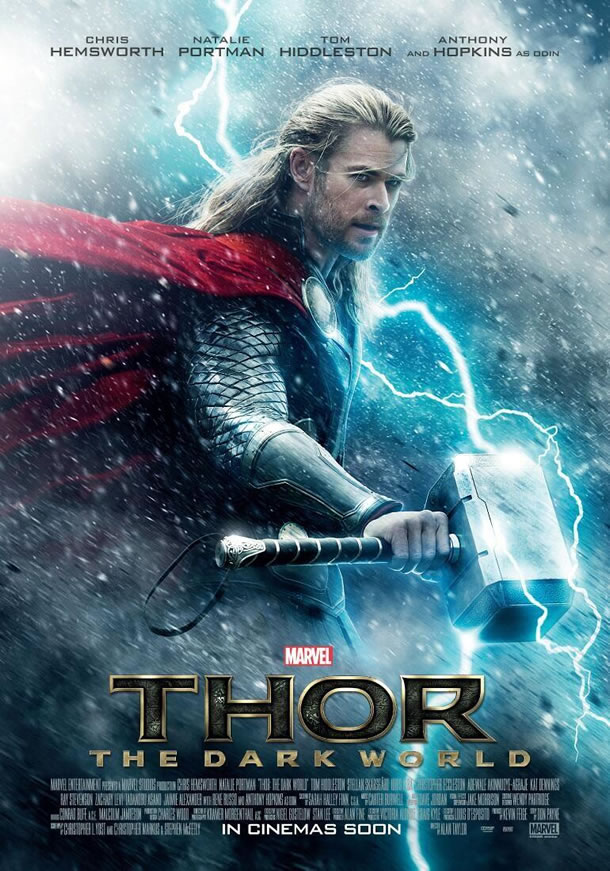
Iron Man 3 is already premiering in Europe and less than two weeks from premiering in North America. To help tie-over North American filmgoers until Iron Man 3 premieres on this side of the Atlantic Marvel Studios has released the first official trailer for the second film in Phase 2 of their Marvel Cinematic Universe.

Thor: The Dark World sees the Marvel action return to Asgard as Thor must now battle the return of an enemy older than the universe itself. Kenneth Branagh is out as director and in steps Alan Taylor of Game of Thrones as the filmmaker for this sequel. Most everyone returns for this second go-around in Asgard and the Nine Worlds with some new faces such as Chris Eccleston as Malekith the leader of the Dark Elves of Svartalfheim.

Thor: The Dark World is set for a November 8, 2013 release date.

Source: Joblo Movie Network

Trailer: Battleship (Super Bowl Spot)


Battleship is going to be the latest film to come out of that film blockbuster factory called Hasbro Studios. Like them or hate them their Transformers franchise by way of Michael Bay has been anything but flops. They’ve made truckloads of money for all involve despite each successive film in the franchise getting worse and worse. The latest Hasbro property to make it’s way onto the bigscreen will be a big-budget production of that classic naval war boardgame kids of all eras just simply called Battleship.

We’ve seen several trailers of the film now and this Super Bowl Sunday we see a new tv spot trailer which shows more of the alien invasion aspect of the film with more aliens in scifi-looking battle armor being seen. We still don’t know what causes this invasion to occur, but then again most of those who will see this film may not really care as long as the action comes fast and furious with enough of a story to keep things from becoming a huge jumbled mess.

Battleship is still set for a May 18, 2012 release date.

Source: Battleship the Movie

Trailer 2: Battleship (dir. Peter Berg)


With Skyrim having taken over my life for the past month or so I’ve been quite remiss with my duties on the site, but no more!

To help me catch up on things around these parts I’ve decided to join the rest of blogosphere and post the latest official trailer for what looks like the offspring when Transformers and 2012 decided to mate. What we get is Peter Berg’s ludicrous, but looks to be quite fun, film adaptation of that classic Hasbro wargame toy. Battleship looks to fill up 2012’s lack of a new Transformers film.

Some have begun to call this the Rihanna film, but I rather think that she’s just a piece in the machine that is Hasbro’s latest attempt to rule the entertainment world with their films based on their classic toy lines. I was very iffy about Berg doing this film, but after two trailer and this one showing more scifi carnage and action I may just put this on my “guilty pleasure” list for 2012.

Battleship is set of a May 18, 2012 release date.

Trailer: Battleship (dir. by Peter Berg) Teaser


It was just going to take before someone in one of the major Hollywood studios decided to tap into the board game market and pick one to adapt into a big-budget blockbuster. It worked wonders for Dreamworks and their bottom line with the Transformers trilogy. This time around we have Universal Pictures ready and set to release in the summer of 2012 their very own board game turned film in the Peter Berg-helmed Battleship.

Yes, you heard it right. That classic naval warfare game that made long road trips both easier to handle and also ripe for arguments has now been made into a film. There’s not much else to say other than watch the trailer. I will say that Liam Neeson must need a new mansion.