Guilty Pleasure No. 84: Last Action Hero (dir by John McTiernan)


Oh, Last Action Hero.

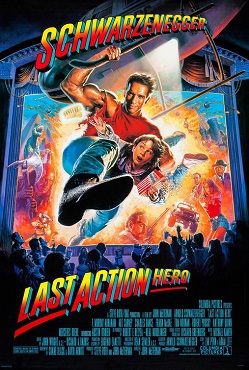
Ever since this film was first released in 1993, it’s usually held up as an example of a Hollywood fiasco.  The script was originally written to be a modest satire of action films.  The screenwriters wrote the character of Jack Slater, an movie action hero who comes into the real world, for Dolph Lundgren.  Instead, the film became an Arnold Schwarzenegger extravaganza and the studio ended up tossing a ton of money at it.  When the film was originally released, the reviews were mixed and the box office was considered to be disappointing.  (That it went up against the first Jurassic Park was definitely an underrated issue when it came to the box office.)  Ever since then, The Last Action Hero has had a reputation for being a bad film.

Well, I don’t care.  I like The Last Action Hero.  Yes, it’s a bit overproduced for a comedy.  (It breaks my own rule about how no comedy should run longer than two hours.)  Yes, it gets a bit sentimental with ten year-old Danny Madigan (Austin O’Brien) using a magic, golden ticket to enter the film world of his hero, Jack Slater.  If you want to argue that the film should have devoted more time to and gone a bit deeper into contrasting the film world with the real world, I won’t disagree with you.  But I will also say that Sylvester Stallone starring as The Terminator in Jack’s world was actually a pretty funny sight gag.  Danny knowing better than to trust a character played by F. Murray Abraham made me laugh.  Danny’s fantasy in which Arnold Schwarzenegger played Hamlet was made all the better by the fact that his teacher was played by Laurence Olivier’s wife, Joan Plowright.   Danny DeVito as Whiskers the Cartoon Cat makes me laugh as well, even if it is perhaps a bit too bizarre of a joke for this particular film.  (There’s nothing else about the Jack Slater films that would explain the presence of a cartoon cat.)

When you set aside the idea of the Last Action Hero being a symbol of Hollywood bloat and just watch it as a film, it emerges as an enjoyably goofy action movie, one that captures the joy of watching movies (because who hasn’t wanted to enter a movie’s world at some point in their life), and also one that features a rather charming performance from Arnold Schwarzenegger.  (Schwarzenegger, I should add, plays both himself and Jack Slater.  One of my favorite jokes is when the real Schwarzenegger is at a premiere and he mistakes the evil Ripper for Tom Noonan, the actor who played him in the previous Jack Slater film.)  Yeah, the golden ticket is a little bit hokey but who cares?  Underneath all of the special effects and action and money spent on star salaries, Last Action Hero is an action movie and comedy with a heart.  Danny meets his hero but also gets to become a hero himself.  And Jack Slater turns out to be everything you would hope your movie hero would be.  In the end, it’s obvious that a lot of the criticism of this film has more to do with the appeal of riding the bandwagon as opposed to what actually happens on screen.

Last Action Hero is a movie that I’ll happily defend.

Previous Guilty Pleasures

  1. Half-Baked
  2. Save The Last Dance
  3. Every Rose Has Its Thorns
  4. The Jeremy Kyle Show
  5. Invasion USA
  6. The Golden Child
  7. Final Destination 2
  8. Paparazzi
  9. The Principal
  10. The Substitute
  11. Terror In The Family
  12. Pandorum
  13. Lambada
  14. Fear
  15. Cocktail
  16. Keep Off The Grass
  17. Girls, Girls, Girls
  18. Class
  19. Tart
  20. King Kong vs. Godzilla
  21. Hawk the Slayer
  22. Battle Beyond the Stars
  23. Meridian
  24. Walk of Shame
  25. From Justin To Kelly
  26. Project Greenlight
  27. Sex Decoy: Love Stings
  28. Swimfan
  29. On the Line
  30. Wolfen
  31. Hail Caesar!
  32. It’s So Cold In The D
  33. In the Mix
  34. Healed By Grace
  35. Valley of the Dolls
  36. The Legend of Billie Jean
  37. Death Wish
  38. Shipping Wars
  39. Ghost Whisperer
  40. Parking Wars
  41. The Dead Are After Me
  42. Harper’s Island
  43. The Resurrection of Gavin Stone
  44. Paranormal State
  45. Utopia
  46. Bar Rescue
  47. The Powers of Matthew Star
  48. Spiker
  49. Heavenly Bodies
  50. Maid in Manhattan
  51. Rage and Honor
  52. Saved By The Bell 3. 21 “No Hope With Dope”
  53. Happy Gilmore
  54. Solarbabies
  55. The Dawn of Correction
  56. Once You Understand
  57. The Voyeurs 
  58. Robot Jox
  59. Teen Wolf
  60. The Running Man
  61. Double Dragon
  62. Backtrack
  63. Julie and Jack
  64. Karate Warrior
  65. Invaders From Mars
  66. Cloverfield
  67. Aerobicide 
  68. Blood Harvest
  69. Shocking Dark
  70. Face The Truth
  71. Submerged
  72. The Canyons
  73. Days of Thunder
  74. Van Helsing
  75. The Night Comes for Us
  76. Code of Silence
  77. Captain Ron
  78. Armageddon
  79. Kate’s Secret
  80. Point Break
  81. The Replacements
  82. The Shadow
  83. Meteor

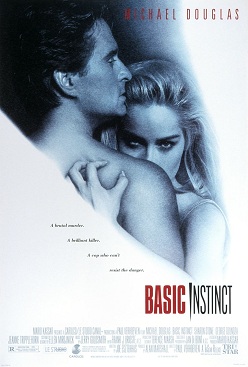
Basic Instinct (1992, directed by Paul Verhoeven)


Nick Curran (Michael Douglas) is a San Francisco police detective who, along with his jolly partner Gus (George Dzundza), finds himself investigating the ice pick-stabbing of a rock star.  The main suspect is glamorous writer Catherine Trammel (Sharon Stone), who is obviously guilty but manages to outsmart all of the men investigating her by not wearing panties during her interrogation.  Nick finds himself drawn to Catherine, despite his own relationship with with psychologist Elizabeth Garner (Jeanne Tripplehorn).  The more Nick digs into Catherine’s past, the more he becomes obsessed with her but also the more he suspects that she may be a serial killer.  This is mostly because Catherine obviously is a serial killer and anyone should have been able to figure that out.  Instead, Nick, an experienced homicide detective, just gets turned on.

It’s strange to remember how seriously people took Basic Instinct when it was released in 1992.  People debated whether it was a throwback to Hitchcock or just a dirty movie.  Feminists debated whether it was empowering or exploitive.  For several years afterwards, every show from The Simpsons to Seinfeld parodied the interrogation scene.  (In Seinfeld’s case, it helped that Wayne Knight appeared in the film as the district attorney who kept shifting in his seat to get a better view.)  Sharon Stone was described as being the new Grace Kelly and, for a period of years, was the subject of fawning profiles in which she was asked about the future of sex in movies.  For a while, she was inescapable.

Sharon Stone, to be fair, did make the role of Catherine her own.  It’s impossible to imagine some of the other actresses considered — Michelle Pfeiffer, Geena Davis, Mariel Hemingway, or Meg Ryan — in the role.  After a decade of not getting anywhere with her film career, Stone was hungry to be a star and was also willing to do things on camera that other name actresses would have refused.  Sharon Stone was not the next Grace Kelly and Catherine Trammel was ultimately more of a sexual fantasy than an actual character but Stone still deserves a lot of credit for her uninhibited performance in the role.  Though Stone later said that she didn’t realize what was actually being filmed during the interrogation scene, it’s her confidence and her unapologetic sensuality that makes the scene compelling.  Her performance has the energy that the sleepwalking Michael Douglas lacks.

Today, Basic Instinct is best-viewed as a satire.  Director Paul Verhoeven sends up both the cop film and the erotic thriller with a movie that turned everything to eleven.  The film’s sensibility is established by the fact that Michael Douglas’s “hero” is nicknamed Shooter because he killed two innocent people while high on cocaine.  The film’s main joke is an obvious one.  Everyone is too busy staring at Sharon Stone to notice that she’s about to stab them in the back with an icepick.  Joe Eszterhas’s script was vulgar to the point of parody and, fortunately, director Paul Verhoeven understood that even more than Eszterhas did.

Basic Instinct has been imitated countless times but it’s never been equaled.  To that, the credit is owed to Sharon Stone and Paul Verhoeven.


Trailer: Nobody 2


Ilya Naishuller’s 2021 action-comedy Nobody caught everyone by surprise. Many thought it was just a quick cash-grab to take advantage of the success with the John Wick action series. Nobody was released in the middle of the pandemic, yet it was received very positive reviews from critics and audiences, alike.

It was a no-brainer that a sequel would be greenlit. It took awhile to happen but most of the cast and crew are back with the exception of director Ilya Naishuller. Indonesian director Timo Tjahjanto now takes the director’s seat with some new, but familiar faces (Sharon Stone and Colin Hanks) joining the previous cast (Bob Odenkirk, Colin Salmon, Connie Nielsen, Christopher Lloyd and RZA).

From this first trailer, Nobody 2 looks to retain the action-comedy tone of the first, but with the visual flair of Timo Tjahjanto (see The Night Comes for Us for example of how batshit crazy his action turn out).

Nobody 2 arrives in theaters on August 15, 2025.

Richard Chamberlain – Allen Quartermain, Toshiro Mifune & Charles Bronson!


When I was a kid, I loved the movie KING SOLOMON’S MINES (1985) with Richard Chamberlain and Sharon Stone, along with its follow up ALLAN QUARTERMAIN AND THE LOST CITY OF GOLD (1986). These movies don’t really hold up very well these days, but that does not change the fact that they still hold a special place in my heart. That was during my “Indiana Jones” phase and I wanted to watch any movie with adventurers in jungles. ROMANCING THE STONE (1984) is one of those types of movies that really does hold up; THE FURTHER ADVENTURES OF TENNESSEE BUCK (1988), not so much. While we were watching King Solomon’s Mines, I remember my parents telling us kids that Chamberlain was in a miniseries called THE THORNBIRDS, but I’ve never watched it. It intrigued me though. TV miniseries were a big thing in the 70’s and early 80’s and Chamberlain was a king of the TV miniseries age. I discovered that even further when I became obsessed with Toshiro Mifune. I discovered his great miniseries SHOGUN (1980) that also starred Chamberlain. 

As an obsessed Charles Bronson fan, I also discovered that they starred together in an episode of the TV series DR. KILDARE (pictured above). He also worked with Bronson in the film A THUNDER OF DRUMS (1961). Richard Chamberlain may not be one of my all time favorite actors, but he was a part of my life growing up and he worked with my favorite actor of all time a couple of different times. That feeling of nostalgia causes me to mourn his loss. It’s like a part of me is now gone. RIP, Richard Chamberlain. Thanks for sharing your talent with us. 

ABOVE THE LAW – Steven Seagal’s action star debut! 


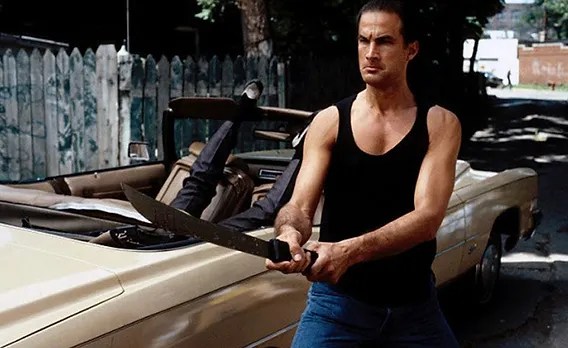
Did any actor have a better opening act than Steven Seagal? His first five movies are all star turns in high quality, enjoyable action films, beginning with ABOVE THE LAW, and then moving forward to HARD TO KILL, MARKED FOR DEATH, OUT FOR JUSTICE and UNDER SIEGE. While UNDER SIEGE has been described as “Die Hard on a boat” and OUT FOR JUSTICE occupies the top spot as my personal favorite Steven Seagal film, today we will focus on the movie that started it all, ABOVE THE LAW, from 1988. 

ABOVE THE LAW begins with Nico Toscani (Steven Seagal) providing a voiceover of his early years as a kid in Chicago who became obsessed with the martial arts and who found himself studying with the masters in the orient by the age of 17. He’s clearly a badass. By 22, he’s been recruited by the CIA and is completing missions in Viet Nam. While on a mission, he runs into Zagon (Henry Silva), a CIA torturer, who seems to be able to do whatever he wants with no consequences. After knocking the crap out of Zagon, Toscani quits on the spot and heads back to Chicago to become a tough cop and marry Sara (Sharon Stone). While working a touchy family situation in the Windy City, he stumbles upon a potential drug deal going down soon in the city. He and his partner Delores (Pam Grier) set up the bust, but the product of choice turns out to be C4 explosives, not drugs. Wouldn’t you know that the folks behind these C4 explosives are the CIA and Toscani’s old pal Zagon. Can he stop his old adversary this time and still protect his family?!! 

My favorite Chuck Norris film is from 1985 and is called CODE OF SILENCE. I mention that because there are quite a few similarities between ABOVE THE LAW and CODE OF SILENCE. First, Andrew Davis directed both films. He’s a talented filmmaker who would later direct such solid action films as THE PACKAGE (Gene Hackman & Tommy Lee Jones), UNDER SIEGE (Seagal & Tommy Lee Jones), and THE FUGITIVE (Harrison Ford and an Oscar winning Tommy Lee Jones). I wonder now how this film was made without Tommy Lee Jones?!! Second, both films feature a tough cop who practices martial arts and beats the crap out of corruption within law enforcement. In the case of CODE OF SILENCE, it was the police force itself; in ABOVE THE LAW, it’s the Central Intelligence Agency. It’s my personal opinion that CODE OF SILENCE is Chuck Norris’ finest hour. Steven Seagal gets this same kind of bravado and credibility in his very first film role. That’s truly unique. And finally, both movies feature the awesome Henry Silva as the bad guy. Silva has been a bad guy in so many movies, and he’s just damn good at it. I recently watched him in THE TALL T with Randolph Scott from way, way back in 1957. Damn, his Chink’s a psycho. Combine that with his turn as Billy Score in SHARKY’S MACHINE with Burt Reynolds, and you have a guy who deserves to be in the villain hall of fame. These tried and true elements all help produce a fine feature film debut for Seagal! 

Just one final comment about the movie’s theme… we all would like to think that no one is above the law in the real world. Unfortunately, all we have to do is watch the news to know that’s simply not the case. Our world is full of people who actually are above the law. One of the best things about a movie like ABOVE THE LAW is that we can watch the movie, munch our popcorn, and just pretend for 100 minutes that justice does exist. It may not be completely realistic, but it’s definitely a satisfying thought!

The TSL’s Horror Grindhouse: Scissors (dir by Frank De Felitta)


The plot of the 1991 film, Scissors, is not easy to describe. That’s not because the plot is particularly clever as much as it’s because it doesn’t make much sense.

Basically, Sharon Stone plays a woman named Angela Anderson. She is oddly obsessed with scissors and terrified about getting close to anyone. She’s been getting hypnotherapy from Dr. Carter (Ronny Cox) in an effort to understand why she’s so repressed but she doesn’t seem to be getting anywhere. This could possibly have something to do with the fact that Dr. Carter is continually distracted by the adulterous activities of his wife, Ann (Michelle Phillips).

Angela lives in a lonely but surprisingly big apartment with only her cat for company. Her cat is named Midnight and he’s a black cat so he automatically became my favorite character in the film. Living next door to her are two twin brothers. Alex (Steve Railsback) is a soap opera star. Cole (Railsback, again) is an artist in a wheelchair who continually paints cartoonish pictures of Angela being attacked by a man with a big red beard.

Then, one day, Angela goes out to buy some scissors. When she returns and gets on the elevator to head back up to her apartment, she’s attacked by a man …. A MAN WITH A RED BEARD! Fortunately, Angela is able to stab him with her scissors. After the man with the red beard runs off, Angela is discovered in the elevator by Alex and Cole. Alex and Angela fall in love. Cole’s not too happy about that.

Following so far?

Angela get a call about a job interview, one that requires her to go to a stranger’s apartment. Despite the fact that the film has spent nearly an hour setting up Angela as being intensely agoraphobic, she has no problem going to this apartment. However, once she enters the apartment, she finds herself locked in! She also discovers that the red-bearded man is also in the apartment. Fortunately, he’s dead. Unfortunately, it appears that he was killed by Angela’s scissors. There’s also a raven in the apartment. The raven continually taunts Angela, saying, “You killed him!” Let’s just be happy that Edgar Allan Poe wasn’t around to see this.

Trapped in the apartment, Angela has flashbacks to her past. Is Angela the murderer? Is all of this just happening in her mind? Or is someone trying to drive her over the edge?

Though Scissors is set up as a psychological horror film, it’s really more of an extended acting exercise for Sharon Stone. Stone wanders around the apartment. She talks to herself. She had a nervous breakdown or two. She discusses life with a puppet. Every single scene seems to be designed to make audiences go, “Wow, she really can act!” but, despite all of the histrionics on display, Angela is still a very one note character. By making her obviously unstable from the start, the film doesn’t really leave the character with much room to develop or take us by surprise. The film attempts to end on a bit of an ambiguous note as far as Angela’s character is concerned but that type of ambiguity has to be earned. There’s nothing to Stone’s performance to indicate that there’s anything about Angela that isn’t totally on the surface. To suggest that there was more to her than originally appeared is to insult the audience’s ability to discern hidden depths.

The film does eventually wrap up its mystery and present a solution of sorts. Unfortunately, it’s a totally unsatisfying solution and one that’s dependent on otherwise intelligent people coming up with a ludicrously overcomplicated scheme to deal with one not particularly complicated problem. It’s all pretty forgettable but at least the cat survives.

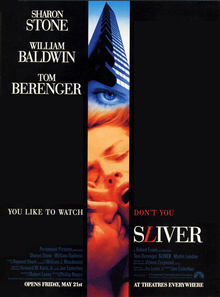
Sliver (1993, directed by Phillip Noyce)


Who here remembers Sliver?

It may be hard to believe it but Sliver was a big deal back in the day.  It was one of Robert Evans’s first producing gigs after getting out of rehab.  It was Sharon Stone’s first film after Basic Instinct.  The script was written by Basic Instinct‘s Joe Eszterhas, back when that was still something that people bragged about.  It featured Tom Berenger, back before he found himself relegated to character roles, and William Baldwin.  Remember William Baldwin?  He was Alec Baldwin’s younger brother.  He looked just like Alec but he never managed to project much of a personality whenever he was onscreen.  Even Stephen Baldwin was a more interesting actor than William.  Still, back in the day, William Baldwin was close to being a star.

William Baldwin’s lack of personality actually works for the role he plays in Sliver.  He’s Zeke, who owns an exclusive high-rise apartment building.  Zeke makes his money designing video games and he’s filled the building with secret video cameras so he can spend all day sitting in front of a wall of monitors and watching his tenants and experiencing their lives without having to get close to them.  Zeke’s a voyeur.  Back in the 90s, the surveillance thing was a big twist.  Today, we take it for granted.  We even applauded Batman for doing the same thing to all of the citizens of Gotham.

Sharon Stone plays Carly, the newest resident of the Sliver.  Carly is a recently divorced book editor snd is lonely and repressed despite being played by Sharon Stone.  She draws the attention of both Zeke and her neighbor, Jack (Tom Berenger).  Both are interested when they discover that Carly has a telescope on her balcony.  “She’s a voyeur!” Jack says.  When Carly gets involved with Zeke, Jack is obsessively jealous.  He insinuates that Zeke had something to do with the death of the previous tenant of Carly’s apartment.

After Basic Instinct, Sharon Stone made a series of films that were designed to show that she actually could act by casting her as characters who were meant to be sexually repressed.  The films never seemed to work because, at the height of Sharon Stone’s 90s stardom, there was nothing about her that suggested that she was repressed in any way.  What made her a star in the first place was that she was so uninhibited and not afraid to be as blunt about sex as any of her male co-stars.  In Sliver, she gives a performance that is somewhere between her vampish work in Basic Instinct and her terrible ice queen performance in Intersection.  At the start of the film, she feels miscast as a straight-laced book editor but her performance gets better once she starts hooking up with Zeke.  Sharon Stone tries, even if she doesn’t succeed.  That’s more than can be said for most of her co-stars.

“Get a life,” Sharon Stone says at the end of the movie and, as far as final lines go, it’s a bad one because it comes out of nowhere and her actions in the final scene don’t fit in with anything that she’s previously said or done in the film.  That’s because the ending was hastily reshot after test audiences disliked the original ending.  Test audiences often have the worst instincts.

Like many things, Sliver was big in the 90s but forgotten today.  It was a popular Blockbuster rental for a while.  VCRs were set for whenever it appeared on Cinemax.  When it first came out, it was all about Sharon Stone.  Today, it’s all about nostalgia.

Police Academy 4: Citizens on Patrol (1987, directed by Jim Drake)


Long before the end credits of 22 Jump Street imagined Jonah Hill and Channing Tatum going to culinary school, the flight academy, and into outer space, the Police Academy films bravely tested just how far one already thin premise could already be stretched.

In Police Academy 4, Commandant Eric Lassard (George Gaynes) comes up with another plan to make the city safer.  (Since Lassard has been coming up with plans for three years without any success, it may be time to let the old man retire peacefully.)  This time, he wants to institute Citizens on Patrol, which would mean training citizens to act like cops.  It sounds like the type of terrible idea that could get a city sued into bankruptcy but considering that this is a city where a human sound effects machine and the former head of the 16 precinct’s biggest gang can become decorated police officers, I guess it’s as good an idea as any.

As usual, Carey Mahoney (Steve Guttenberg) and the gang are ready to help Lassard.  Bruce Mahler’s Fackler is no longer a part of the ensemble but Bubba Smith, Bobcat Goldthwait, Michael Winslow, David Graf, Tim Kazurinsky, Marion Ramsey, and Brian Toschi are all back.  Also returning, after skipping out on the first two sequels, is Capt. Harris (G.W. Bailey).  Harris wants to see Lassard fail so that he can take over the police academy.  It’s the same thing as the first three films.  As in previous Police Academy films, there’s a visit to the Blue Oyster leather bar and a last minute crime wave to give the Citizens on Patrol a chance to prove they belong in the program.  The Citizens on Patrol include Billie Bird, Brian Backer, David Spade, wrestler Tab Thacker, and Corrine Bohrer as a love interest for Bobcat Goldthwait.  Sharon Stone also makes an appearance, playing a journalist and improbably falling for Steve Guttenberg.  Watching the film, it is obvious that the idea was that, in future Police Academy films, the Citizens on Patrol could replace any of the regular cast members who wanted too much money to return.  As a result, almost every veteran of the cast has a doppelganger in the Citizens on Patrol.  Brian Backer could replace Steve Guttenberg.  Tab Thacker is there to put Bubba Smith on notice that no one is irreplaceable.  Is Bobcat Goldthwait being difficult?  Just remind him that David Spade can play a crazy eccentric too.

Police Academy 4 is the most crowded of the Police Academy films and, even by the franchise’s undemanding standards, most of the jokes fall flat.  Jim Drake took over as director after the director of the previous two films, Jerry Paris, died of a brain tumor and Drake struggles to balance low comedy with police action.  Guttenberg and company don’t have the same energy in this installment as they had in the previous three and the new cast members all feel as if they’re out place sharing scenes with the veterans, like a group of underclassmen who have been invited on the senior trip.

This would be the final Police Academy film for Steve Guttenberg.  Would the franchise be able to survive without him?  Check here tomorrow to find out with my review of Police Academy 5!

Allan Quatermain and The Lost City Of Gold (1987, directed by Gary Nelson)


Having previously discovered and escaped King Solomon’s mines, Allan Quatermain (Richard Chamberlain) and Jesse Huston (Sharon Stone) are now living in a domestic bliss in Africa.  They’re planning on eventually returning to America so that they can get married but it turns out that Allan has one more quest that he has to complete before he can truly settle down.

When Allan receives information that his long last brother is not only still alive but has also discovered a fabled Lost City of Gold, Allan sets out to discover the city for himself.  Traveling with Jesse and an old friend named Umslopogaas (James Earl Jones!), Allan makes his way across the Sahara, survives a battle with a group of native, and manages to find both the city and his brother!

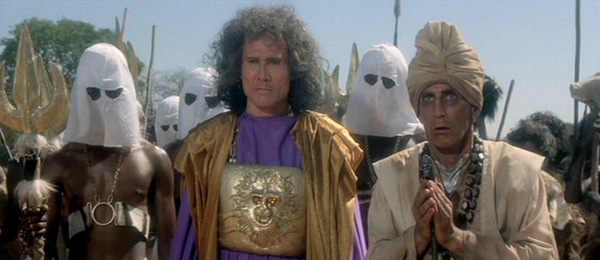
However, all is not well in the City of Gold.  Queen Nyelptha (Aileen Marson) is on the verge of going to war with Queen Sorais (Cassandra Peterson, a.k.a Elvira, Mistress of the Dark!!).  Manipulating both of the queens is the evil high priest, Agon (Henry Silva!!!!).  To save the City of Gold and his future marriage, Allan will first have to figure out a way to defeat Agon.

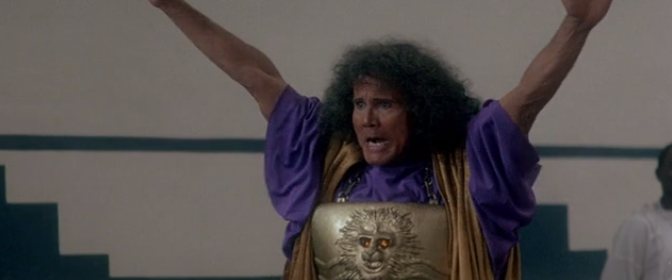
Allan Quatermain and the Lost City Of Gold was filmed back-to-back with King Solomon’s Mines.  The two films were released within a year of each other and, while King Solomon’s Mines was a minor box office success, Allan Quatermain and the Lost City of Gold was not.  I wasn’t expecting much when I watched the film but, believe it or not, Allan Quatermain and the Lost City of Gold is not that bad.  It’s a definite improvement on King Solomon’s Mines.  Richard Chamberlain is more believable as Quatermain in the sequel and he and Sharon Stone share the minimum amount of chemistry to be somewhat believable as a couple in love.  If that sounds like I’m damning with faint praise, it’s still an improvement over King Solomon’s Mines, where the two of them often seemed as if they couldn’t stand to be anywhere near each other.  Best of all, Allan Quatermain and the Lost City of Gold has Henry Silva in a ridiculous costume and that automatically makes the film worth watching.

Henry Silva, everyone.

Like King Solomon’s Mines, Allan Quatermain and The Lost City of Gold adds a large dose of intentional humor to its adventure story.  Fortunately, the comedy here is better executed than in the previous film.  There’s less mugging on Chamberlain’s part and some of the dialogue is genuinely amusing.

Of course, Allan Quatermain and The Lost City of Gold is not without its flaws.  This is a low-budget Cannon film that often tries too hard to duplicate the success of the Indiana Jones films without ever showing much understanding of what made those films successful in the first place.  Allan Quatermain and the Lost City of Gold can’t hold a candle to the classic adventure films of the past.  But, for a low-budget Cannon film starring Richard Chamberlain as a rugged, jungle explorer, it’s actually a lot of fun.

Plus, did I mention Henry Silva?

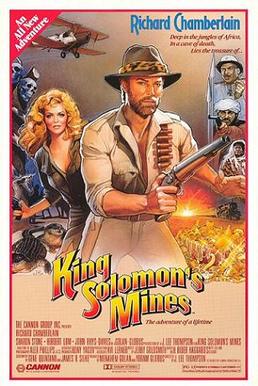
King Solomon’s Mines (1985, directed by J. Lee Thompson)


After her archaeologist father disappears while searching for the fabled mines of King Solomon, Jesse Houston (Sharon Stone) hires famed explorer Allan Quartermain (Richard Chamberlain) to help her find him.  After walking around in the jungle and exploring a nearby village, Allan and Jesse discover that her father has been kidnapped by a German military expedition who want to use King Solomon’s treasure to fund their war effort.  Working with the Germans is Allan’s old enemy, Dogati (John Rhys-Davies).  Allan and Jesse find themselves in a race against time to find the mines before the Germans.  Along the way, they steal an airplane, fight German soldiers on a train, and nearly get cooked alive in a giant cauldron.

Because this is a Cannon film and it was made at the height of Indiana Jones’s popularity and it stars John Rhys-Davies and it has a score that sounds like it was written by someone trying too hard to be John Williams, you might be tempted to think that King Solomon’s Mines is a rip-off of Raiders of the Lost Ark.  However, there are some crucial differences between Raiders and King Solomon’s Mines.  For instance, Raiders of the Lost Ark took place during World War II.  King Solomon’s Mines takes place during World War I.  Raiders of the Lost Ark had angels that melted a man’s face.  King Solomon’s Mines has a lava pit that makes you explode if you fall into it.  Raiders of the Lost Ark has a big fight in an airfield while King Solomon’s Mines has a big fight at an airfield …. well, wait, I guess they do have a few things in common.

Probably the biggest difference between Raiders of the Lost Ark and King Solomon’s Mines is that Raiders had Harrison Ford and Karen Allen while King Solomon’s Mines has to make due with Richard Chamberlain and Sharon Stone.  (If the imdb trivia section is to be believed, Sharon Stone was cast because Menahem Golan mistook her for Kathleen Turner.)  Along with generating zero romantic sparks, neither Chamberlain nor Stone come across as if they’ve ever even seen a jungle, much less explored one.  The only time that the two of them are credible as anything other than actors slumming on Cannon’s dime is when they’re yelling at each other.  There’s also a scene where they’re trying to steal an airplane and Chamberlain tells Stone to “reach between your legs and grab it.”  That was funny, I guess.

Along with trying to be an adventure, King Solomon’s Mines also tries to be a comedy.  As a general rule, Cannon films are great when they’re unintentionally funny but not so much when they actually try to be funny.  The film’s idea of comedy is Richard Chamberlain having to do an impromptu jig while someone shoots at his feet.  Add in a healthy dose of casual racism as Allan and Jesse run into a tribe in Africa who want to cook them in a giant stew pot and you’ve got a film so bad that you’ll hardly believe it could have been produced by the same people who gave us Delta Force, which is, of course, the greatest film ever made.

Golan and Globus had enough confidence in King Solomon’s Mines that they shot a sequel before the first film was even released.  Tomorrow, I will force myself to watch and review Allan Quartermain and The Lost City of Gold.  And, after that, I’ll probably go sit in a corner and think about what I’ve done.