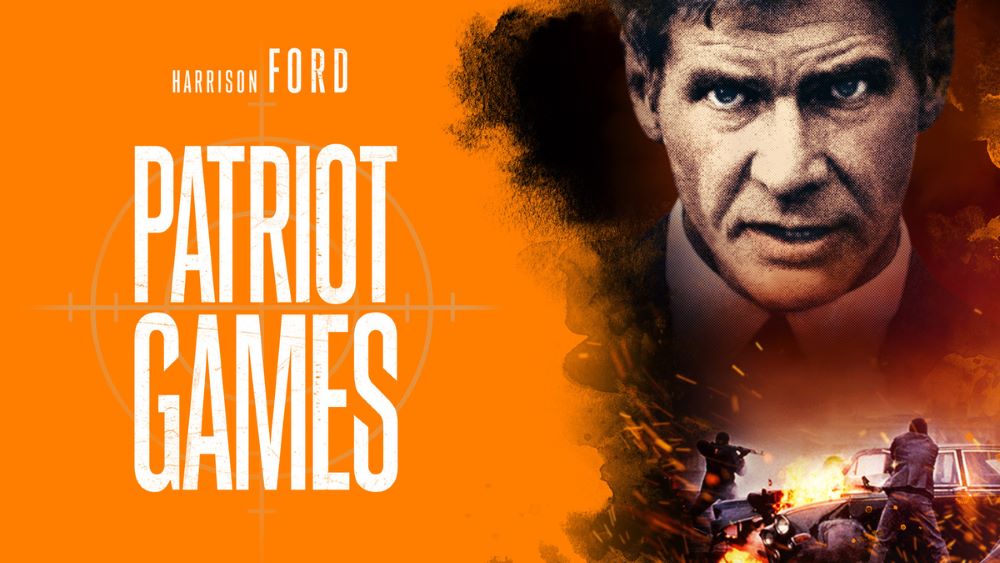
Review: Patriot Games (dir. by Phillip Noyce)


“You don’t know what it’s like to have your life destroyed by one stupid mistake!” — Sean Miller

Patriot Games hits the ground running by thrusting Jack Ryan and his family into the heart of a terrorist ambush on a London street, targeting a key British official tied to the royal family. Harrison Ford plays Ryan as a sharp-minded history professor and former CIA analyst on a simple vacation with his wife Cathy and daughter Sally, but his old Marine training surges up—he charges in, kills two attackers including one terrorist’s brother, and gets winged by a bullet himself. Right away, this setup grabs attention by showing how a random act of guts can boomerang into endless trouble, forcing a guy who craves quiet lectures to dodge bullets and betrayal across oceans, and it plants seeds about whether playing hero is worth the fallout on everyone you love.

Back in Maryland at the Naval Academy, Ryan tries piecing together normalcy, grading papers and dodging CIA calls, but Sean Miller—the captured terrorist whose sibling Ryan killed—gets sprung in a brutal prison convoy hit that leaves cops dead in the dirt. Miller, now laser-focused on payback, reroutes his rogue Ulster splinter group’s rage straight at Ryan’s home front, culminating in a savage freeway pileup where goons ram Cathy’s car off the road, injuring her and Sally badly. Ford nails the shift from composed academic to seething protector, his clenched jaw and urgent phone calls conveying a dad pushed to the brink, while these family-targeted strikes crank the paranoia, transforming everyday drives and school runs into potential kill zones that linger long after the crashes fade.

Sean Bean invests Miller with a coiled, wordless intensity—scarred features and piercing glares that scream obsession without needing speeches, flipping Ryan’s principled stand into the villain’s fuel for a mirror-image crusade. This fictional IRA offshoot rolls with pro-level gear for hits from UK alleys to U.S. suburbs, dodging authorities with insider tips, but their flat-out villainy skips any cracks in loyalty or ideology, turning them into efficient machines rather than messy humans with grudges worth unpacking. Anne Archer holds Cathy together through hospital beds and hushed fears, emerging tougher, as James Earl Jones’ Admiral Greer supplies the gruff guidance that tugs Ryan toward Langley, balancing the intimate home front with globe-spanning spycraft that feels like a real squeeze on one man’s bandwidth.

The camera shifts smoothly from rain-slicked London corners to bright Maryland bays, capturing open spaces that make characters look small and exposed against the sprawl. Gunshots snap clean and engines growl low during pursuits, pulling you deeper into the fray without drowning out the quieter beats. Horner’s soundtrack builds with brooding pipes and driving rhythms that hit hard in the final bay showdown, boats tearing through darkness with bursts of flame from hands-on stunts that pack a punch even now. Action ramps up step by step from early scraps to that watery chaos, mixing smarts with muscle, even if plot points line up a bit too neatly at times.

CIA war rooms buzz with satellite feeds sharpening grainy Libyan camp footage into proof of terror training, a tech showcase that echoes Clancy’s gearhead love and ramps brainpower against brute force without flashy overkill. Ryan hashes out returns to duty with British contacts, including a Sinn Féin type disavowing the extremists, sketching post-Cold War shifts where lone wolves replace nation-states in the threat lineup. Book-to-screen changes crank Ryan’s field time over desk strategy, letting Ford flex rugged moves that thrill audiences but sand off novel layers of naval tactics and alliance chess for punchier pacing.

Ford and Archer capture the raw friction in Ryan’s marriage through tense, whispered spats about diving back into danger, their easy chemistry making the pushback feel lived-in and real rather than scripted melodrama. Miller’s storyline hurtles toward a frantic leap onto Ryan’s rocking boat, boiling his grudge down to savage, no-holds-barred combat amid crashing waves. On-screen locations—from echoing Naval Academy corridors to churning bay waters—breathe life into the settings, casting national pride as a bruising, up-close shield instead of hollow cheers. Subtle audio touches, like distant creaks in the dim Ryan house, crank up the exposed feeling, linking slick production values to gut-punch emotions without piling on the noise.

Those procedural deep dives—poring over red-haired accomplice sketches or grilling shaky informants—add authentic wonkery, like Ryan spotting tells in grainy photos that crack the case wide, but they drag amid family rehab montages where Sally’s recovery mirrors the slow-burn hunt. The baddies’ cartoonish zeal glosses Northern Ireland’s brutal splits, opting for clear-cut evil over thorny politics that could’ve mirrored real headlines from the era, a choice that streamlines tension yet dates the take harshly next to modern nuance. Endgame flips the house siege into a decoy boat trap, Ryan baiting Miller solo on fiery Chesapeake swells, evolving his street-brawl start into tactical payback, though the tidy win lacks the submarine slyness of earlier Ryan yarns.

This swap prioritizes visceral family shields over shadowy sub hunts, hooking casual viewers while purists miss the book’s flowchart plotting, yet it spotlights Ford’s prime reluctant-warrior groove amid practical blasts that crush today’s green-screen slop. Pacing ebbs in alliance huddles, but peaks like the SAS desert wipeout—watched live via infrared ghosts—deliver clinical thrills tying brains to bangs seamlessly.

Taken together, the taut opener, vengeful pursuits, tech-savvy thrills, emotional anchors, dated politics, and solid craftsmanship add up to a clear verdict: Patriot Games is a good film, a reliable ’90s thriller that delivers crowd-pleasing tension and strong leads without reinventing the wheel. It holds up for its practical stunts and intimate stakes, earning replays as Ford’s standout Ryan turn, even if flaws like simplification and lulls keep it from greatness. Worth the watch for anyone craving balanced action with heart.
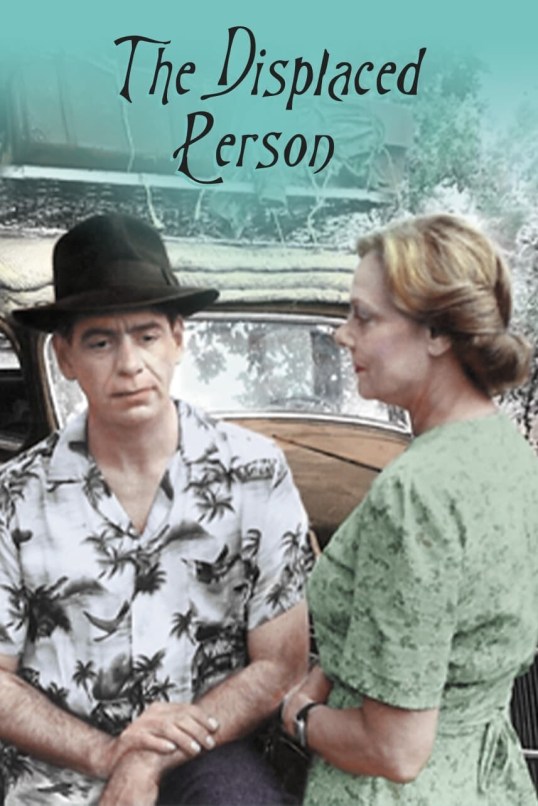
Retro Television Review: The American Short Story Episode 7: The Displaced Person


Welcome to Retro Television Reviews, a feature where we review some of our favorite and least favorite shows of the past!  On Saturdays, I will be reviewing The American Short Story, which ran semi-regularly on PBS in 1974 to 1981.  The entire show can be purchased on Prime and found on YouTube and Tubi.

This week, we have an adaptation of Flannery O’Connor’s longest short story.

Episode #7: “The Displaced Person”

(Dir by Glenn Jordan, originally aired in 1977)

Life at a Georgia farm is thrown into turmoil when the farm’s owner, widow Mrs. McIntyre (Irene Worth), agrees to give a job to a Polish refugee named Mr. Guizac (Noam Yerushalmi).  As World War II has just ended and Father Flynn (John Houseman) has assured Mrs. McIntyre that Guizac can drive a tractor, Mrs. McIntyre is happy to give Guizac a home in America.  Less happy are the people who already work at the farm, most of whom see the hard-working Guizac as being a threat.  Mrs. Shortley (Shirley Stoler) worries that her husband (Lane Smith) is going to lose his job to Guizac.  Meanwhile, a young farmhand named Sulk (Samuel L. Jackson) enters into a business arrangement with Guizac, one that causes Mrs. McIntyre to change her opinion of Guizac.  Needless to say, it all ends in tragedy.

This adaptation is based on a short story that Flannery O’Connor wrote after her own mother hired a family of Polish refugees to work at their family farm, Andalusia.  This adaptation was actually filmed at Andalusia, only a few months after Flannery O’Connor’s death.  The furniture seen in the house was O’Connor’s own furniture.  The peacocks the drive Mrs. McIntyre crazy and which cause Father Flynn to have a religious epiphany are the same peacocks that roamed the farm when Flanney O’Connor lived there.  The cemetery that Mrs. McIntyre visits is the O’Connor family cemetery.  It brings a sense of authenticity to the film, one that is often missing from films made about the South.

The adaptation moves at a deliberate pace but it’s well-acted and it stays true to O’Connor’s aesthetic.  Those who might complain that there are only two likable characters in the film — Mr. Guizac and Father Flynn — are missing the point of O’Connor’s story.  Even Mrs. McIntyre, who initially seems to be trying to do the right thing, is blinded by the prejudices of race and class.  Father Flynn never gives up on trying to redeem both Mrs. McIntyre and the rest of the world but one gets the feeling that he might be too late.

The cast is what truly makes this adaptation stand-out.  Irene Worth, John Houseman, Lane Smith, Robert Earl Jones, they all give excellent performances.  Samuel L. Jackson was very young when he appeared in The Displaced Person but he already had the screen presence that has since made him famous.  The best performance comes from Shirley Stoler, who plays Mrs. Shortley as being a master manipulator who, unfortunately, happens to be married to a worthless man.  Mrs. Shortley does what she does to protect her husband.  Mr. Shortley does what he does because he’s a loud mouth bigot.  Everyone has their own reasons, to paraphrase Jean Renoir’s The Rules of the Game.  In this story, those reasons lead to tragedy.

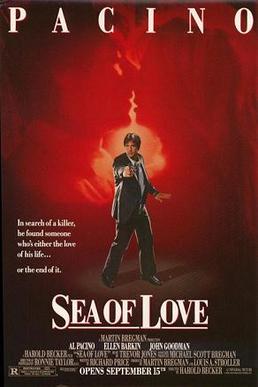
Sea of Love (1989, directed by Harold Becker)


In New York City, someone is ritualistically murdering the men who are placing rhyming personal ads in a tabloid newspaper.  Assigned to the case is Frank Keller (Al Pacino), an alcoholic burn-out whose wife just left him for another cop.  Keller and his partner (John Goodman) decide to go undercover.  Frank places a rhyming personal ad of his own and then goes to a restaurant to see who shows up.  When Helen Cruger (Ellen Barkin) answers the ad, it leads to a relationship between Frank and Helen.  Frank is falling for Helen but what if she’s the murderer?

Sea of Love is a superior thriller, even though it doesn’t really work as a mystery.  As soon as you see a certain person’s name in the cast list, you’re going to guess who the killer is because that person is always the killer.  Sea of Love isn’t really about the mystery, though.  It’s about people looking something that’s missing from their lives and realizing that the world is passing them by.  The movie works because of the performances of Al Pacino and Ellen Barkin, cast as two lonely middle-aged people who are desperately looking for some sort of connection.  Helen and Frank are both in their 40s and wondering if their current situation is really as good as it’s going to get.  The film uses Frank’s fear that Helen could be the killer as a metaphor for the fear that anyone feels when they are first starting to open up to someone.  Both Pacino and Barkin give emotionally raw and poignant performances.  I don’t think I’ve ever seen Al Pacino look as miserable as he did for the majority of Sea of Love.  This was Pacino’s first film role after the disaster of Revolution and the movie’s box office success was revived Pacino’s career and convinced him to give movies a try again.

Director Harold Becker captures the feel of New York at its grittiest and least welcoming and Richard Price’s script is full of priceless dialogue.  This is one of the rare films in which everyone has something intelligent or meaningful to say.  Featuring a strong supporting cast and career-best performances from Ellen Barkin and Al Pacino, Sea of Love is much more than just another cop film.

Film Review: Jackie Brown (dir by Quentin Tarantino)


It took me a while to really appreciated Jackie Brown.

I was nineteen and in college when I first watched the movie.  A friend rented it and we watched it with the expectation that it would be another Tarantino film that would be full of violence, fast music, and stylish characterizations.  And, of course, Jackie Brown did have all three of those.  But it was also a far more melancholy film than what we were expecting and compared to something like Kill Bill, Jackie Brown definitely moved at its own deliberate pace.  That’s a polite way of saying that, at times, the film seemed slow.  It seemed like it took forever for the story to get going and, even once it became clear that Jackie Brown (Pam Grier) and Max Cherry (Robert Forster) were going to steal from Ordell Robbie (Samuel L. Jackson), it still felt like an oddly laid back heist.  Robert de Niro, the film’s biggest star, played a guy who seemed to be brain dead.  Bridget Fonda brought an interesting chaotic energy to the film but her character was disposed of in an almost off-hand manner.  The whole thing just felt off.  I appreciated the performances.  I appreciated the music on the soundtrack.  But I felt like it was one of Tarantino’s weaker films.

As I’ve gotten older, I’ve come to better appreciate Jackie Brown.  First released in 1997 and adapted from a novel by Elmore Leonard, Jackie Brown finds Quentin Tarantino at his most contemplative.  Indeed, Tarantino wouldn’t direct anything quite as humanistic until he did Once Upon A Time In Hollywood.  If the heist seemed rather laid back, that’s because Jackie Brown really isn’t a heist film.  It’s a film about aging, starring two icons of 70s exploitation.  Robert Forster was 56 when he played bail bondman Max Cherry while Pam Grier was 48 when she was cast as Jackie Brown, the flight attendant turned smuggler.  Jackie and Max two middle-aged people faced with a world that doesn’t really make much sense to them anymore.  (Obviously, it’s easier for me to understand them now than it was when I was nineteen and I felt like the future was unlimited.)  Max bails people out of jail and it’s obvious that he still has a shred of idealism within him.  He actually does care about the people he gets out of jail and he’s disgusted by Ordell’s callous attitude towards the people who work for him.  Jackie is a flight attendant who, when we first see her, looks like she could have just stepped out of a 1970s airline commercial.  Ripping off Ordell isn’t just something that she’s doing for revenge or to protect herself, though there’s certainly an element of both those motivations in her actions.  This is also her chance to finally have something for her.  Jackie and Max are two lost souls who find each other and wonder where the time is gone.  All of those critics who have wondered, over the years, when Quentin Tarantino would make a mature movie about real people with real problems need to rewatch Jackie Brown.

Of course, it’s still a Quentin Tarantino film.  And that means we get a lot of scenes of Samuel L. Jackson talking.  This is one of Jackson’s best performances.  Ordell is definitely a bad guy and most viewers will be eager to see him get his comeuppance but, as played by Jackson, he’s also frequently very funny and definitely charismatic.  One can understand how Ordell lures people into his trap.  Jackson loves to watch video tapes of women shooting guns.  He allows De Niro’s Louis to crash at his place and the scene where Ordell realizes that Louis is thoroughly incompetent is brilliantly acted by both men.  And then you have Bridget Fonda, as a force of pure sunny chaos.  Jackson, De Niro, and Fonda are definitely a watchable trio, even if the film rightly belongs to Pam Grier and Robert Forster.

The older I get, the more I appreciate Jackie Brown.  This is the film where Tarantino revealed that there was more to his artistic vision than just movie references and comic book jokes.  This film takes Tarantino’s style and puts it in the real world.  It’s Tarantino at his most human.

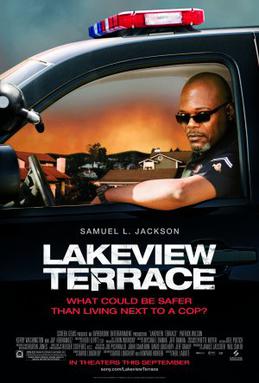
Lakeview Terrace (2008, directed by Neil LaBute)


Chris and Lisa Mattson (Patrick Wilson and Kerry Washington) move in to a large house in the Lakeview Terrace neighborhood of Los Angeles.  It’s a good house in a good neighborhood and it’s just too bad that their neighbor, Abel Turner (Samuel L. Jackson), is a corrupt cop who hates interracial couples.

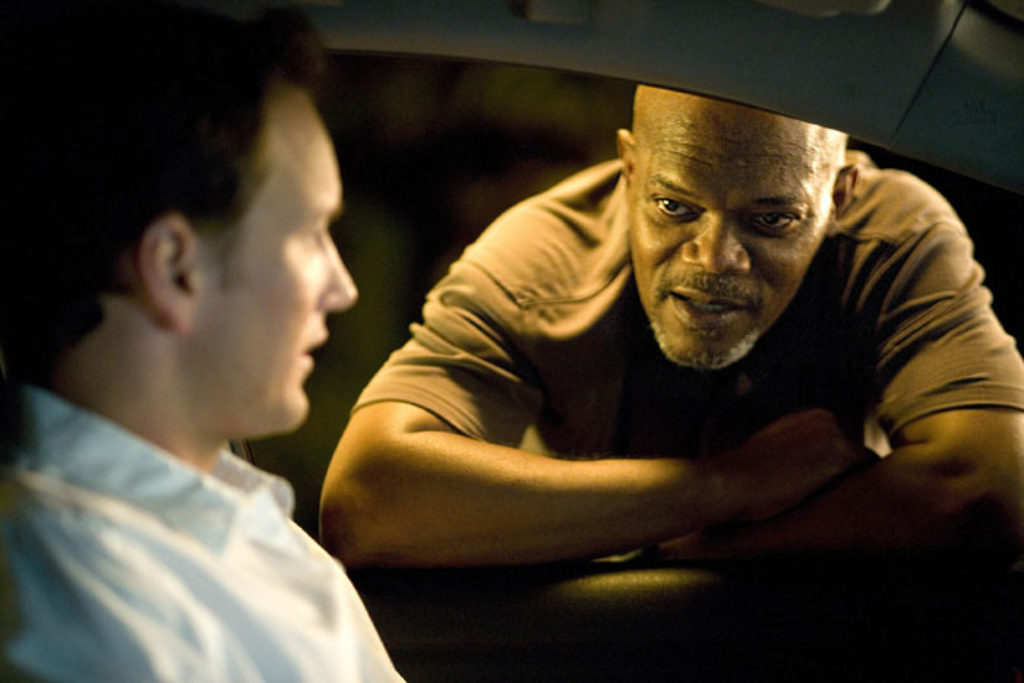
I remember that Lakeview Terrace caused a brief stir when it was released in 2008.  It was hardly the first film about an interracial couple being harassed by a bigot but it was one of the few where the bigot in question was a black man.  Abel hates white people.  He says it’s because his wife was cheating on him with a white man when she was killed in a car accident.  He does not appreciate Chris listening to rap music and dropping his cigarettes on the street. When Abel’s children spot Chris and Lisa having sex in their swimming pool, that’s all Abel needs to justify his dislike of the couple and his feelings that he doesn’t want this couple living next door.  When Chris asks if Abel could turn off the floodlights that shine into their bedroom window, Abel refuses.  When Chris tries to plant privacy trees, Abel cuts them down.  What starts out as a neighborhood feud escalates as Abel orders one of his informants to break into Chris and Lisa’s house.  Unfortunately, that third act twist also signals the moment that Lakeview Terrace goes from being a reasonably intelligent social satire to being a standard thriller.  Neil LaBute is a director who specializes in making people uncomfortable so it is too bad that Lakeview Terrace ends in a way designed to conform to what audiences have come to expect from thrillers.

Abel’s a hateful figure but Samuel L. Jackson is just as charismatic as ever and the passive-aggressive way that he initially responds to Chris and Lisa will be familiar to anyone who has ever had a bad neighbor or who has to deal with a cop having a bad day.  Patrick Wilson and Kerry Washington, neither one of whom is really that interesting an actor to begin with, are both stuck in bland roles and struggle to keep up with Jackson.  (Wilson and Washington even get out-acted by Ron Glass, playing Lisa’s disapproving father.)  It throws the movie off-balance.  At the same time, Jackson is such an actor who projects so much intelligence that it’s hard to believe that Abel would make the stupid mistakes that he makes towards the end of the movie.  Lakeview Terrace starts out fairly strong but loses its way towards the end.

#MondayMuggers present LAKEVIEW TERRACE (2008) starring Samuel L. Jackson!


Every Monday night at 9:00 Central Time, my wife Sierra and I host a “Live Movie Tweet” event on X using the hashtag #MondayMuggers. We rotate movie picks each week, and our tastes are quite different. For tonight, Monday March 24th, Sierra has chosen LAKEVIEW TERRACE starring Samuel L. Jackson, Patrick Wilson, Kerry Washington, Jay Hernandez, and Robert Pine. 

The story revolves around the interracial couple Chris and Lisa Mattson (Patrick Wilson and Kerry Washington) moving into their new home in a gated community in California. Their neighbor turns out to be the racist, dysfunctional and abusive LAPD Officer, Abel Turner (Samuel L. Jackson). Turner doesn’t want them in his neighborhood and proceeds to make their lives a living hell. 

Neil Labute directed LAKEVIEW TERRACE, which is loosely based on real life events, and he knows how to make an audience uncomfortable. Samuel L. Jackson is an incredible actor, so I’m really looking forward to his take on this hideous character. I’m expecting a lot of scenery to be chewed before this one ends. 

So, join us tonight for #MondayMuggers and watch LAKEVIEW TERRACE! It’s on Amazon Prime.

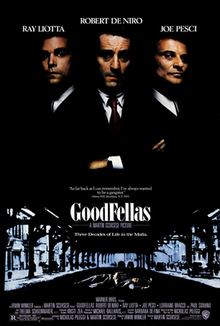
Lisa Marie Reviews An Oscar Nominee: Goodfellas (dir by Martin Scorsese)


First released in 1990 and continuously acclaimed ever since, Goodfellas did not win the Oscar for Best Picture.

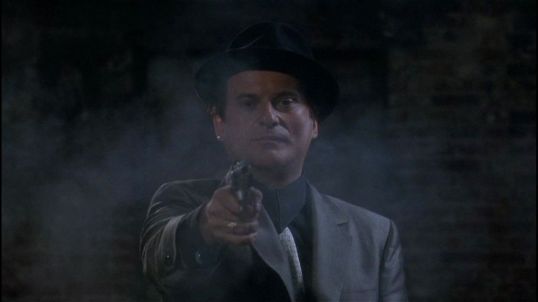
I’m always a bit surprised whenever I remember that.  Goodfellas didn’t win Best Picture?  That just doesn’t seem right.  It’s not the other films nominated that year were bad but Goodfellas was so brilliant that it’s hard to imagine someone actually voting for something else.  Seriously, it’s hard to think of a film that has been more influential than Goodfellas.  Every gangster film with a soundtrack of kitschy tunes from the 6os and 70s owes huge debt to Goodfellas.  Every actor who has ever been cast as a wild and out-of-control psycho gangster owes a debt to Joe Pesci’s performance as Tommy DeVito.  When Ray Liotta passed away two years ago, we all immediately heard him saying, “I always wanted to be a gangster.”  Robert De Niro’s Jimmy Conway remains the epitome of the ruthless gangster.  For many, Paul Sorvino’s neighborhood godfather redefined what it meant to be a crime boss.  Lorraine Bracco made such an impression as Karen Hill that it somehow seemed appropriate that she was one of the first people cast in The Sopranos, a show that itself would probably have not existed if not for Goodfellas.  Frank Sivero, Samuel L. Jackson, Tobin Bell, Debi Mazer, Vincent Gallo, Ileana Douglas, Frank Vincent, Tony Sirico, Michael Imperioli, Tony Darrow, Mike Starr, Chuck Low, all of them can be seen in Goodfellas.  It’s a film that many still consider to be the best of Martin Scorsese’s legendary career.  Who can forget Robert De Niro smoking that cigarette while Sunshine of Your Love blared on the soundtrack?  Who can forget “Maury’s wigs don’t come off!” or “Rossi, you are nothing but whore!?”  Who can forget the cheery Christmas music playing in the background while De Niro’s Jimmy Conway grows more and more paranoid after pulling off the biggest heist of his career?

Plus, it’s a Christmas movie!

And yet, it did not win Best Picture.

Myself, whenever I’m sitting behind a garbage truck in traffic, I immediately start to hear the piano coda from Layla.  For that matter, whenever I see a helicopter in the sky, I flash back to a coke-addled Henry Hill getting paranoid as he tries to pick up his brother from the hospital.  Whenever I see someone walking across the street in the suburbs, I remember the scene where Henry coolly pistol-whips the country club guy and then tells Karen to hide his gun.  I always remember Karen saying that she knows that many of her best friends would have run off as soon as their boyfriend gave them a gun to hide but “it turned me on.”  It would have turned me on as well.  Henry might be a gangster and his friends might be murderers but he doesn’t make any apologies for who he is, unlike everyone else in the world.

But it did not win Best Picture.

How many people have imitated Joe Pesci saying, “How am I funny?”  How many times did Pesci and Frank Vincent have to listen to people telling them to “go home and get your fucking shinebox?”  A lot of people remember the brutality of the scene where Pesci and De Niro team up to attack Vincent’s crude gangster but I always remember the sound of Donavon’s Atlantis playing on the soundtrack.

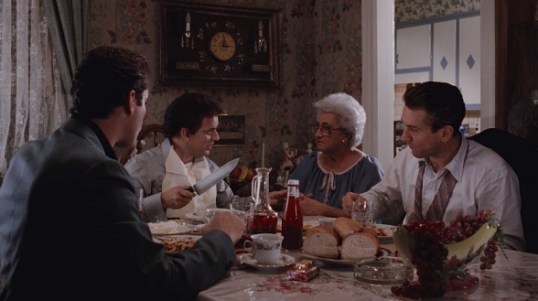
And then there’s Catherine Scorsese, showing up as Tommy’s mom and cooking for everyone while Vincent struggles to escape from the trunk of a car.  “He is content to be a jerk,” Tommy says about Henry Hill.  Just a few hours earlier, Tommy was apologizing to Henry for getting blood on his floor.

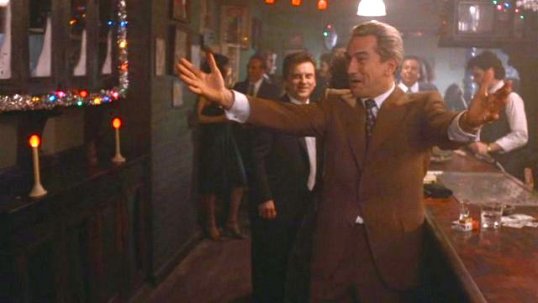
Goodfellas is a fast-paced look at organized crime, spanning from the 50s to the early 80s.  Ray Liotta plays Henry Hill, who goes from idolizing gangsters to being a gangster to ultimately fearing his associates after he gets busted for dealing drugs.  It’s a dizzying film, full of so many classic scenes and lines that it feels almost pointless to try to list them all here or to pretend like whoever is reading this review doesn’t remember the scene where the camera pans through the club and we meet the members of the crew.  (“And then there was Pete The Killer….”)  Goodfellas is a film that spend two hours showing us how much fun being a gangster can be and then thirty minutes showing us just how bad it can get when you’re high on coke, the police are after you, and you’ve recently learned that your associates are willing to kill even their oldest friends.  No matter how many times I watch Goodfellas, I always get very anxious towards the end of the film.  With the music pounding and the camera spinning, with Henry looking for helicopters, and with all of his plans going wrong over the course of one day, it’s almost a relief when Bo Dietl points that gun at Henry’s head and yells at him, revealing that Henry has been captured by the cops and not the Gambinos.  Karen desperately running through the house, flushing drugs and hiding a gun in her underwear, always leaves me unsettled.  It’s such a nice house but now, everything is crashing down.

There’s a tendency to compare Goodfellas to The Godfather, as their both films that re-imagine American history and culture through the lens of the gangster genre.  I think they’re both great but I also think that they are ultimately two very different films.  If The Godfather is sweeping and operatic, Goodfellas is the film that reminds us that gangsters also live in the suburbs and go to cookouts and that their wives take care of the kids and watch movies while the FBI searches their home.  If The Godfather is about the bosses, Goodfellas is about the blue collar soldiers.  The Godfather represents what we wish the Mafia was like while Goodfellas represents the reality.

Goodfellas is one of the greatest films ever made but it lost the Best Picture Oscar to Dances With Wolves, a film that left audiences feeling good as opposed to anxious.  To be honest, Martin Scorsese losing Best Director to Kevin Costner feels like an even bigger injustice than Goodfellas losing Best Picture.  One can understand the desire to reward Dances With Wolves, a film that attempts to correct a decades worth of negative stereotypes about Native Americans.  But Scorsese’s direction was so brilliant that it’s truly a shame that he didn’t win and that Lorraine Bracco didn’t win Best Supporting Actress.  It’s also a shame that Ray Liotta wasn’t nominated for playing Henry Hill.  At least Joe Pesci won an Oscar for redefining what it meant to be a gangster.

Goodfellas is proof that the best film doesn’t always win at the Oscars.  But it’s also proof that a great film doesn’t need an Oscar to be remembered.

Taking my love of movies on down the road (Part 1) – THE HATEFUL EIGHT 2015 Roadshow


I love movies. And when I say that I love movies, I don’t mean that I just enjoy watching them. When I say I love movies, what I’m really saying is that my love of cinema is part and parcel of who I am. And I truly enjoy sharing that love with any person who will listen to me, or in this case, read what I have to say. For most of my life, I experienced the wonder of movies either at my local cinema or on VHS, DVD or Blu-ray at my house. It was a really big deal for me to travel about 45 miles to the big city of Little Rock and watch a movie at the Cinema 150, which was the coolest theater in Arkansas prior to the stadium seating multiplexes that we have now. Unfortunately, it had to close its doors way back in 2003, but I still have fond memories of the place. Watching movies at the Cinema 150 was reserved for the big, special effects movies like TRUE LIES and TWISTER where the Cinema 150 could give you that added value! Those days that included dinner at Casa Bonita and a movie at the Cinema 150 were great days. In 2015, I started taking my love of movies on the road, and these have been some wonderful experiences for a movie lover like me. Over the next week, I’m going to share a few of those experiences here. I hope you enjoy them!

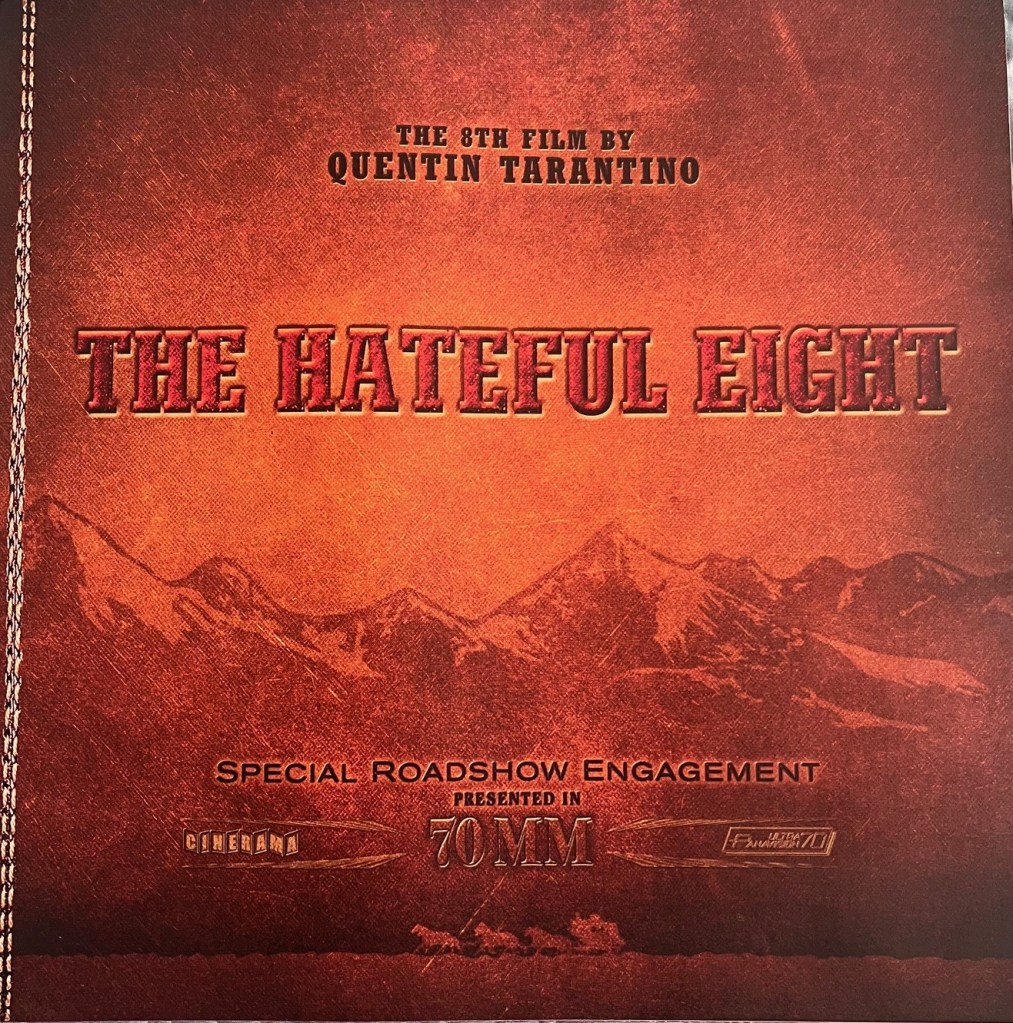
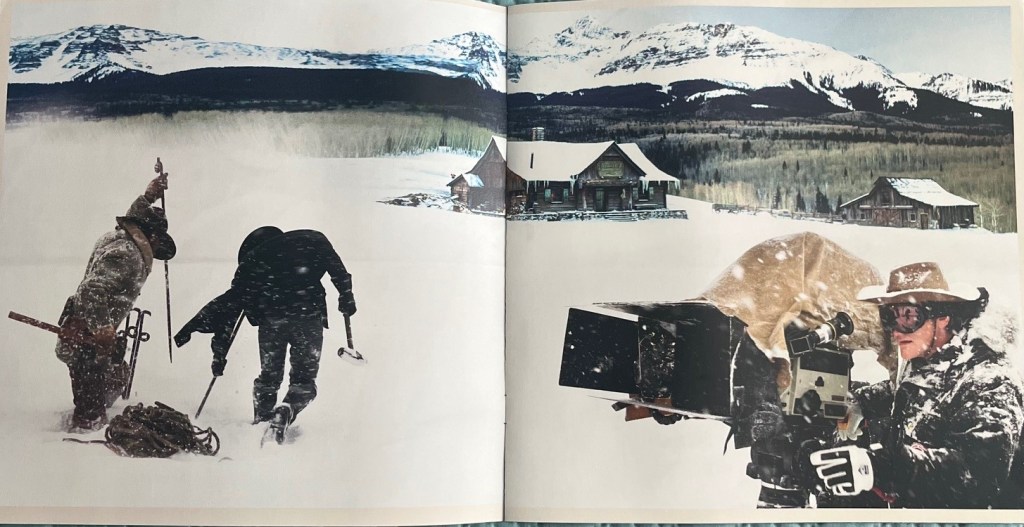
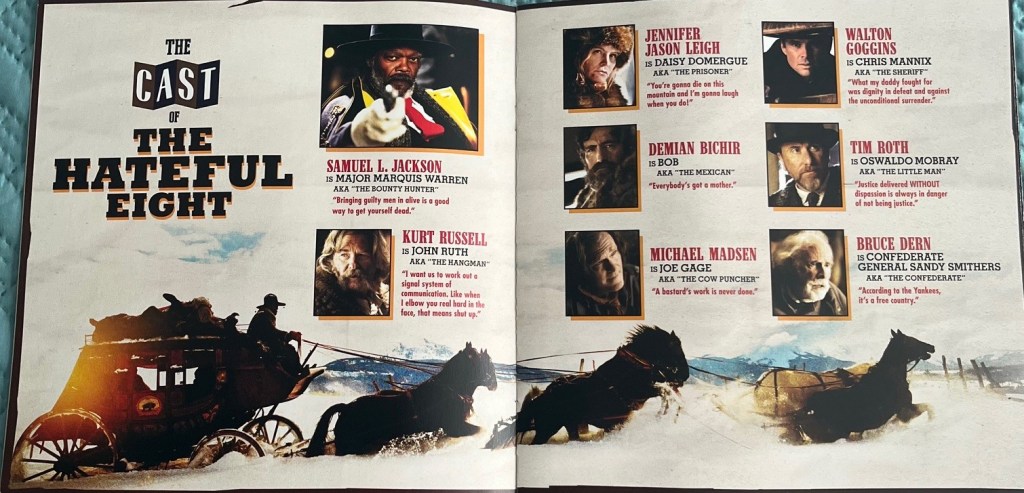
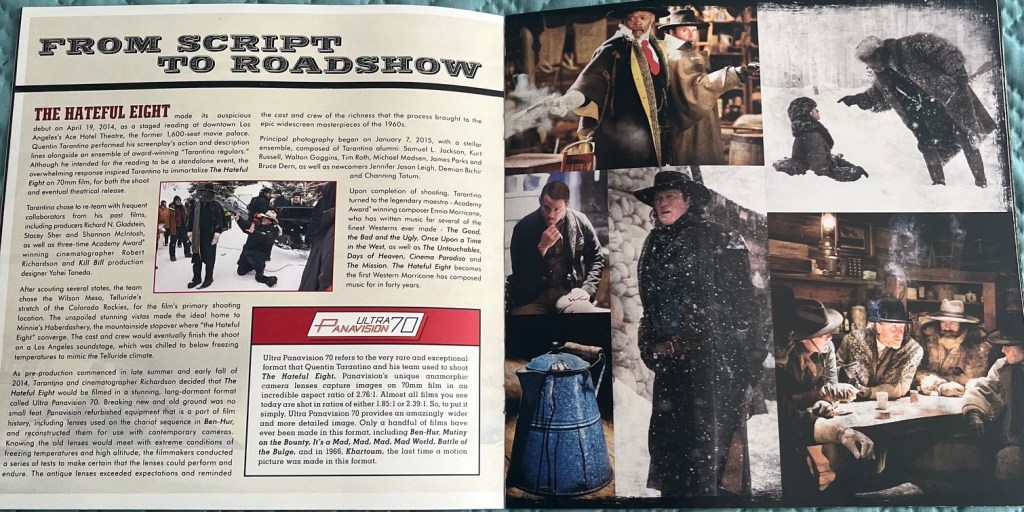
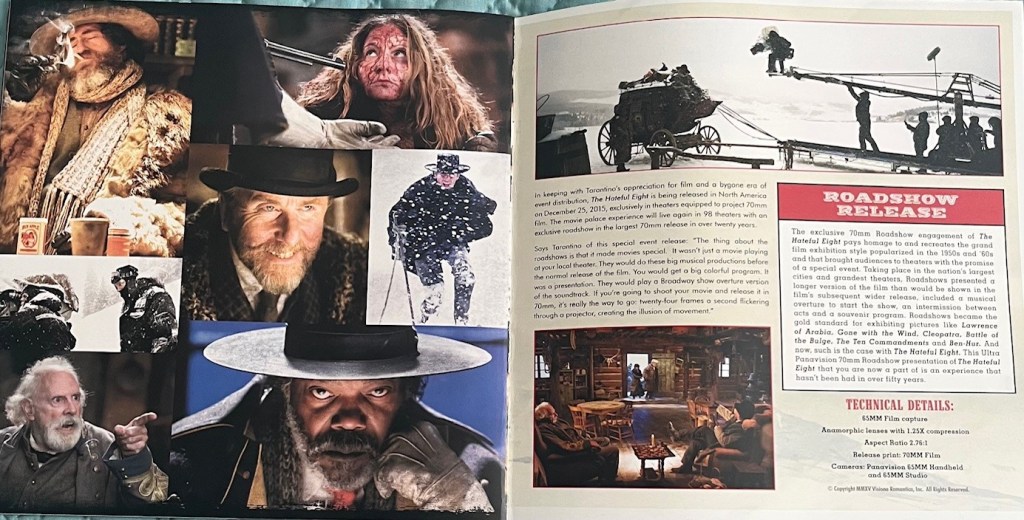
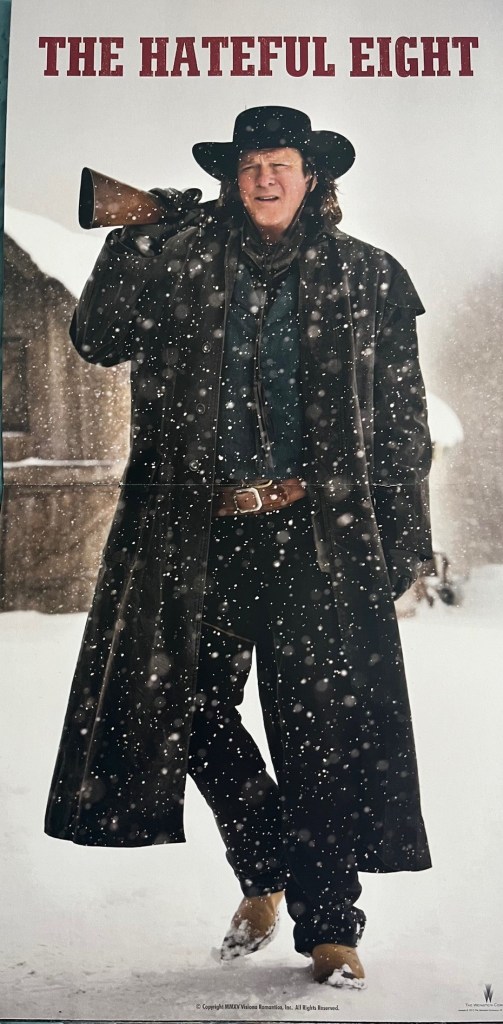
The first time I ever left the state of Arkansas specifically to watch a movie was the week after Christmas in 2015. My son Hank and I made the trip to Dallas, TX, actually Arlington, which was about a 4-hour drive, to attend the unique “Roadshow” presentation of THE HATEFUL EIGHT. Hank was 15 and I had introduced him to Tarantino’s films by this point. As an avid gamer, with a specific interest in first person shooter “War” games, he really liked INGLORIUS BASTERDS. He was a fun partner to have on this trip! I was excited to see Tarantino take on the western genre, one of my favorites. I thought Kurt Russell was perfect for the part of “the hangman” John Ruth, and we all know what Samuel L. Jackson is capable of when acting out Tarantino’s words. It was also a terrific showcase role for Jennifer Jason Leigh. But I have to admit the performance I enjoy the most of all is that of Walton Goggins as Sheriff Chris Mannix. As a big fan of the JUSTIFIED TV series, I couldn’t wait to see how he would perform in the company of those amazing film actors, and I was so glad to see him knock it out of the ballpark! The roadshow version of The Hateful Eight included a 70 MM projector, a 4-minute overture, 12-minute intermission, Cinerama logos, and a cool booklet. I still have the booklet from the show we attended. We both loved the movie. Hank and I were recently talking about Tarantino, and I asked him what his favorite Tarantino film was. Without hesitating, he said THE HATEFUL EIGHT. I love it as well. This “roadshow” movie experience is a very special memory that I have with my son. I’ve shared a few of the pictures from the booklet below. Enjoy!

THE LONG KISS GOODNIGHT (1996) – the $4 Million script!


Shane Black wrote a couple of my favorite action movies during my teenage years, LETHAL WEAPON and THE LAST BOY SCOUT. His scripts are characterized by strong violence balanced out by a healthy amount of comedic banter. That lethal (pun intended) combination made Shane Black a star in his own right, with his work being very much in demand. In 1994 he sold his script for THE LONG KISS GOODNIGHT for the unheard price of $4 Million. After hitting this payday, Black would go dark for the next decade and not release another screenplay until 2005’s KISS KISS BANG BANG, which was also his directorial debut. 

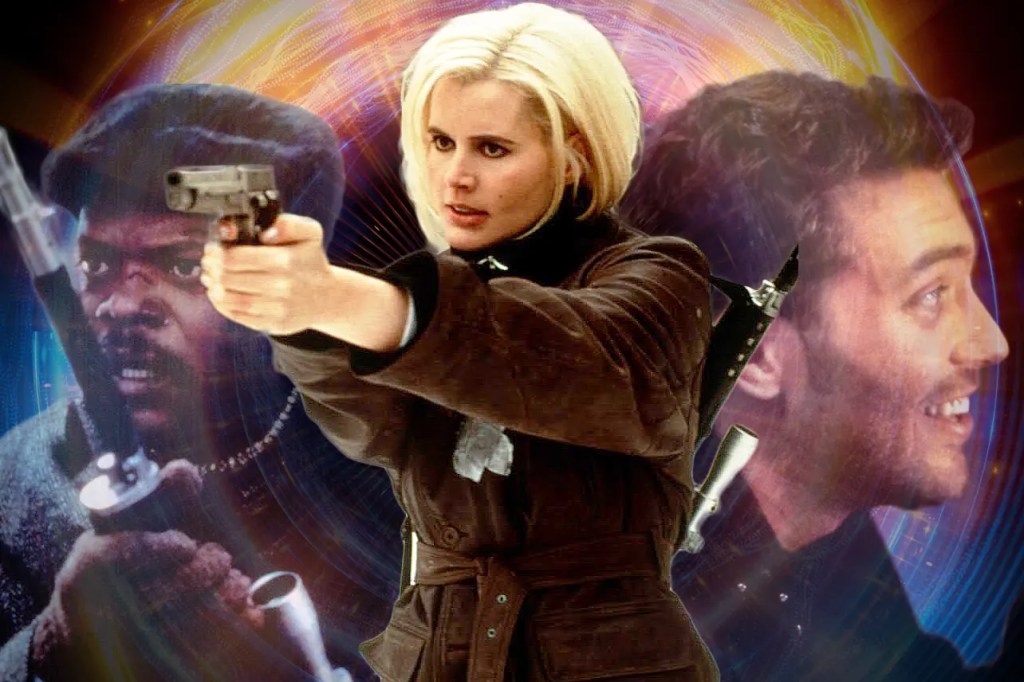
THE LONG KISS GOODNIGHT opens with Samantha Caine playing Mrs. Claus in her small town’s Christmas parade. She has a nice boyfriend, an 8 year old daughter, and she’s a member of the PTA. This is pretty good for a lady that doesn’t remember a damn thing about her life prior to 8 years ago. After celebrating her friends at a Christmas party, she’s driving a soused old man (Alan North) home when she hits a deer and flies right through the window and lands on a snowbank. This wakes up some of her memories and she starts having a few quick flashbacks and some odd dreams from her past, including the name Charly Baltimore. She also learns that she can easily break a buck deer’s neck and handle knives like a champ! Around this same time, low-rent private detective Mitch Hennessy (Samuel L. Jackson) who has been paid a retainer by Ms. Caine to be on the lookout for any clues related to her past, gets lucky and finds a letter from Caine to a supposed former lover. He heads her way to give her the update. When a local news program shows the beautiful Ms. Caine in the parade, some enemies from her past see the story and head to town to try to kill her. Surviving the attempt on her life, and now with Hennessy by her side, Samantha leaves to find out who she really is and unravel the secrets of her past. Is she a chef? Is she a school teacher? Is she a badass hit woman named Charly Baltimore? The fun is in finding out! 

Geena Davis is so good in her role as Samantha Caine / Charly Baltimore. She’s simultaneously beautiful, funny, sexy, cute as a button, and badass. She was married to the director, Renny Harlin, when the film was made and they both went all out to create a strong, female action hero. I think they succeeded admirably. Samuel L. Jackson is just so good in this type of role. He’s sarcastic and funny, a little sleazy, and very much a reluctant hero who does the right thing when he has to. In 2019, Jackson would go so far as to tell late night host Jimmy Fallon that Mitch Hennessy is his personal favorite role. The remainder of the cast is fine, with Brian Cox particularly standing out. His declarative statement about the ultimate results of a small lapdog continually licking his asshole really hit home for me and is reason enough alone to watch this film.  

Ultimately, even though I personally went to see it during its theatrical run, THE LONG KISS GOODNIGHT underwhelmed at the box office in 1996. It grossed around $90 million worldwide on a budget of around $65 million. But that’s fine to me, I enjoyed it in 1996, and I enjoyed it again when I watched it today! 

Lisa Marie’s Oscar Predictions For November


It’s that time of the month again!

December brings us to Awards Season so the Oscar race is about to become much clearer.  Until the precursors start pouring in, here are my current predictions!

Be sure to check out my predictions for April, May, June, July, August,  September, and October!

Best Picture

Anora

Blitz

The Brutalist

Conclave

Dune Part II

Emilia Perez

Gladiator II

Saturday Night

September 5

Wicked

Best Director

Sean Baker for Anora

Edward Berger for Conclave

Jon M. Chu for Wicked

Brady Corbett for The Brutalist

Ridley Scott for Gladiator II

Best Actor

Adrien Brody in The Brutalist

Timothee Chalamet in A Complete Unknown

Daniel Craig in Queer

Colman Domingo in Sing Sing

Ralph Fiennes in Conclave

Best Actress

Pamela Anderson in The Showgirl

Cynthia Erivo in Wicked

Karla Sofia Gascon in Emila Perez

Angelina Jolie in Maria

Mickey Madison in Anora

Best Supporting Actor

Yura Borslav in Anora

Kieran Culkin in A Real Pain

Samuel L. Jackson in The Piano Lesson

Guy Pearce in The Brutalist

Denzel Washington in Gladiator II

Best Supporting Actress

Danielle Deadwyler in The Piano Lesson

Selena Gomez in Emilia Perez

Saoirse Ronan in Blitz

Isabella Rossellini in Conclave

Zoe Saldana in Emilia Perez