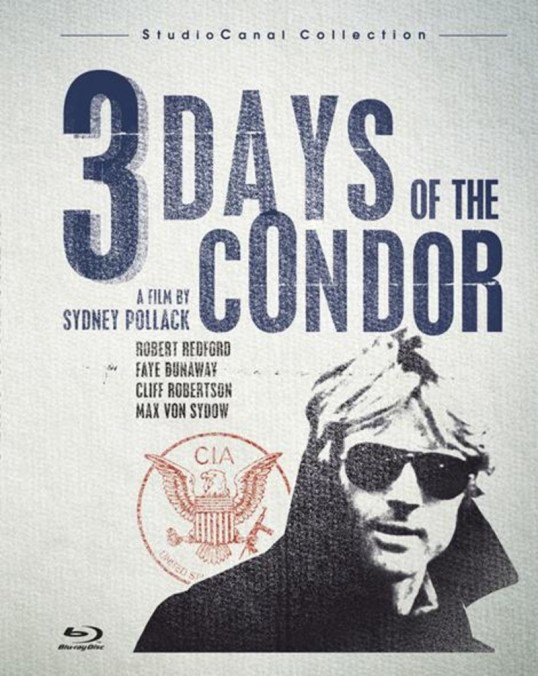
44 Days of Paranoia #8: Three Days of the Condor (dir by Sydney Pollack)


3DaysofTheCondor

When I first decided that I wanted to do the 44 Days of Paranoia, I went on Facebook and I asked my movie-loving friends to name some of their favorite conspiracy-themed films.  As the replies came flooding in, one thing that I quickly noticed was that a lot of them were naming films that had been made in the 1970s.

Usually, when I think about the 70s, I tend to assume that everyone in Texas was smoking weed in a high school parking lot, everyone in New York was snorting cocaine in Studio 54, and everyone in America was dancing nonstop.  And, to be honest, that doesn’t sound too bad to me.  If the 70s were just ten years straight of Dazed and Confused and Saturday Night Fever, then I would be the first one to hook up with anyone who could build a time machine.

However, the 70s were apparently also a very paranoid time.  When one looks over the most acclaimed and best-remembered films of the 70s, one is struck by the feeling that nobody trusted anyone and all official institutions were suspect.

Case in point: 1975’s Three Days of the Condor.

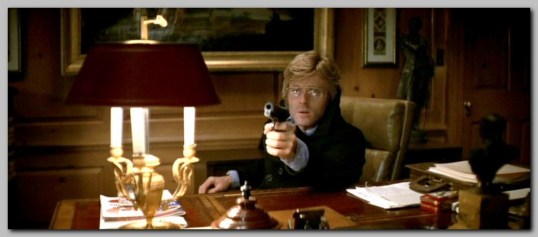
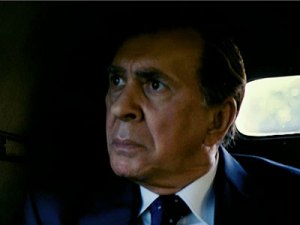
Robert Redford plays Joe Turner, a mild-mannered guy who works for the American Literary Historical Society in New York City.  The Society, however, is a CIA front and Turner’s job is to read cheap spy novels and analyze them to see if any real intelligence leaks might be found between the lines.  As the film opens, Turner arrives late for work.  He jokes with the chain-smoking secretary, shares a few curt words with his superior Martin, and flirts with fellow researcher Janice.  Then, Joe goes to lunch and, while he’s gone, Max Von Sydow shows up with a bunch of killers and guns down everyone else at the safe house.

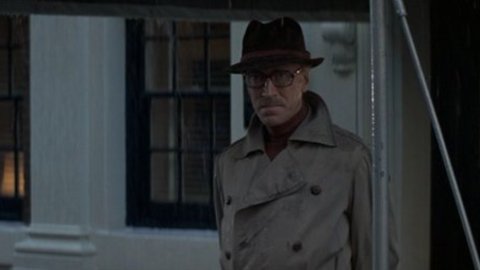
Max Von Sydow's courtly killer

Max Von Sydow’s courtly killer

The scene in which Von Sydow calmly kills all of Joe’s co-workers is one of the most disturbing that I’ve ever seen.  As directed by Sydney Pollack, the film’s violence comes in short, brutal bursts that are all the more nightmarish for lacking any of the flashy choreography that we, as viewers, have been conditioned to expect whenever we’re confronted by violent death on-screen.  Pollack also makes good use of Von Sydow’s kindly eyes and courtly manner, letting us know that, for him, murder is just a job.  Even though we’ve only spent a few minutes with Joe’s co-workers, we’ve still grown to like them and that makes Von Sydow’s matter-of-fact attitude all the more disturbing.

(It’s been a few days since I saw the film and I have to admit that I’m still haunted by the close-up of the burning cigarette still held in the dead secretary’s hand or the way that Martin’s toupee falls off his head after he’s shot.  Small as these details may seem, they stick in the mind and create a sickening feeling of life interrupted.)

When Joe returns from lunch, he finds all of his co-workers dead.  Fleeing the safe house, Joe calls the New York regional director of the CIA, Higgins (Cliff Robertson).  Higgins arranges for Joe to meet up with another agent and to be taken to safety.  However, when Joe arrives for the meeting, the other agent attempts to kill him.

Realizing now that the CIA specifically hit its own safe house and is now looking to kill him, Joe ends up kidnapping Kathy Hale (Faye Dunaway), a neurotic photographer, and forcing her to hide him while he desperately tries to figure out why he’s been targeted.

Thanks largely to Sydney Pollack’s thoughtful direction, Three Days of the Condor is an excellent, exciting, and thought-provoking thriller and, despite having been released close to 40 years ago, it features one major plot that’s probably even more relevant today than when the film was first released.  Redford and Dunaway both give excellent performances but the film really belongs to Max Von Sydow’s menacing and charming assassin.  Most of today’s “action” filmmakers could learn a lot from watching Three Days of the Condor.

end_office

The Oscar Season Begins With The Gotham Nominations!


UpstreamColor_KrisJeffEscalator_3000x1277

Can you guess what my favorite time of year is?

If you guessed November, you’re right!  My birthday is on November 9th, our own Dazzling Erin’s birthday is on November 24th, and then Arleigh’s birthday is on November 27th!  November is a big month here at the Shattered Lens.

My second favorite time of year?  October, of course!  How can you go wrong with so much horror?

And then, of course, my third favorite time of year is December because that’s when I get most of my presents.

Along with being my favorite three months of the year, another thing that all three of those months have in common is that they comprise what is known as Oscar Season.  Oscar Season is the period of time when the majority of the Best Picture contenders are released and all of the critic groups give out their awards in the hope of influencing the Academy’s nominations.  I love movies and I love awards so how can I not love Oscar Season?

Well, I’m happy to say that Oscar Season officially began earlier today when the nominations for the 23rd annual Gotham Independent Film Awards were announced.  The Gotham nominations aren’t exactly the best precursor of what’s going to be nominated in January but, nonetheless, they usually manage to include at least a few legitimate contenders.

This year, for example, Oscar front-runner 12 Years A Slave managed to collect the most Gotham nominations.  Personally, I’m just happy to see that my favorite film of 2013, Upstream Color, collected two nominations.

The Gothams will be awarded on December 2nd.

Here are the nominations:

Best Feature

12 Years a Slave

Steve McQueen, director; Brad Pitt, Dede Gardner, Jeremy Kleiner, Bill Pohlad, Steve McQueen, Arnon Milchan, Anthony Katagas, producers. (Fox Searchlight Pictures)

Ain’t Them Bodies Saints

David Lowery, director; Tony Halbrooks, James M. Johnston, Jay Van Hoy, Lars Knudsen, Amy Kaufman, Cassian Elwes, producers (IFC Films)

Before Midnight

Richard Linklater, director; Richard Linklater, Christos V. Konstantakopoulos, Sara Woodhatch, producers (Sony Pictures Classics)

Inside Llewyn Davis

Joel Coen and Ethan Coen, directors; Scott Rudin, Joel Coen, Ethan Coen, producers (CBS Films)

Upstream Color

Shane Carruth, director; Shane Carruth, Casey Gooden, Ben LeClair, producers. (erbp)


Best Documentary

The Act of Killing

Joshua Oppenheimer, director; Signe Byrge, Joshua Oppenheimer, producers (Drafthouse Films)

The Crash Reel

Lucy Walker, director; Julian Cautherly, Lucy Walker, producers (HBO Documentary Films)

First Cousin Once Removed

Alan Berliner, director and producer (HBO Documentary Films)

Let the Fire Burn

Jason Osder, director and producer (Zeitgeist Films)

Our Nixon

Penny Lane, director; Brian L. Frye, Penny Lane, producers (Cinedigm and CNN Films)


Bingham Ray Breakthrough Director Award

Ryan Coogler for Fruitvale Station (The Weinstein Company)

Adam Leon for Gimme the Loot (Sundance Selects)

Alexandre Moors for Blue Caprice (Sundance Selects)

Stacie Passon for Concussion (RADiUS-TWC)

Amy Seimetz for Sun Don’t Shine (Factory 25)


Best Actor

Chiwetel Ejiofor in 12 Years a Slave (Fox Searchlight Pictures)

Oscar Isaac in Inside Llewyn Davis (CBS Films)

Matthew McConaughey in Dallas Buyers Club (Focus Features)

Robert Redford in All Is Lost (Lionsgate and Roadside Attractions)

Isaiah Washington in Blue Caprice (Sundance Selects)


Best Actress

Cate Blanchett in Blue Jasmine (Sony Pictures Classics)

Scarlett Johansson in Don Jon (Relativity Media)

Brie Larson in Short Term 12 (Cinedigm)

Amy Seimetz in Upstream Color (erbp)

Shailene Woodley in The Spectacular Now (A24)


Breakthrough Actor

Dane DeHaan in Kill Your Darlings (Sony Pictures Classics)

Kathryn Hahn in Afternoon Delight (The Film Arcade and Cinedigm)

Michael B. Jordan in Fruitvale Station (The Weinstein Company)

Lupita Nyong’o in 12 Years a Slave (Fox Searchlight Pictures)

Robin Weigert in Concussion (RADiUS-TWC)

5-17-13-Upstream-Color

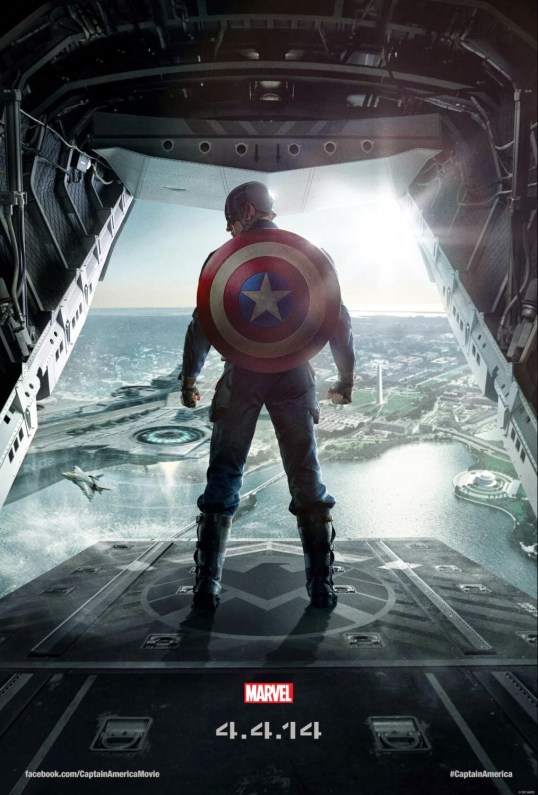
Trailer: Captain America: The Winter Soldier (Official)


captainamerica

We take a brief break from all things horror here at Through the Shattered Lens to bring to you the first official trailer for Marvel Studios second film in their Phase 2 of their Marvel Cinematic Universe.

Captain America: The Winter Soldier sees the return of Steve Rogers aka Captain America (The first Avenger) post-Battle of New York. He’s now an official member of S.H.I.E.L.D. but soon realizes that his 40’s ideals may not mesh well with the all-encompassing and super-secretive intelligence organization. From the look and feel of the trailer it looks like the film’s directors, Anthony and Joe Russo, are going for the conspiracy thriller tone for this new Captain America entry.

This is a good choice considering that the screenplay has been heavily influenced by Ed Brubaker’s run on the Captain America comics which also introduced the Winter Soldier of the film’s title.

Captain America: The Winter Soldier is set for a Spring, April 4, 2014, release date.

Scenes That I Love: The Candidate


(SPOILER WARNING)

It’s election day!  Today is the day that American citizens select the person that they’ll be angry with for the next four years.  Have you voted yet?  I did and, after I turned in my ballot, this guy at the polling place told me that I was the prettiest voter that he had seen all day.  Awwwwww!

Today’s scene that I love is particularly appropriate for Election Day.  In The Candidate (1972), Bill McKay (played by Robert Redford) runs for the U.S. Senate.  Directed in a documentary fashion by Michael Ritchie, The Candidate features excellent supporting performances from Melvyn Douglas and Peter Boyle and it’s one of the best films ever made about the American political system.

The scene below takes place at the end of the film, after the votes have been counted.  And, of course, the entire scene is a spoiler so don’t watch it if you haven’t seen The Candidate.

Scenes I Love: Spy Game (R.I.P. Tony Scott)


[SPOILERS]

The world of cinema lost one of it’s own with the death of British filmmaker Tony Scott (brother of filmmaker Ridley Scott). The circumstances of Tony Scott’s death has now been confirmed and could be found and read easily on most on-line news site.

This post is not to focus on Tony Scott’s death but on the life he lived and how his contribution to the art of filmmaking. Tony Scott has been a major influenc on me and those who grew up during the 80’s and 90’s. His films were huge commercial successes but also unique in that he tried to advance the genre of action filmmaking beyond the bullet point steps on how to make them that other filmmakers could never get beyond.

Tony Scott experimented and innovated with the action genre these last ten or so years to mixed results, but no one could ever say that his visual style was ever boring. Just like his brother Ridley, Tony Scott was a visual director first and foremost, but he also had a way in getting the most out of the cast he was given. It didn’t matter whether they were award-winning veterans like Denzel Washington or up-and-coming stars like Keira Knightley and Chris Pine. His action films weren’t just all about the visual and auditory overload his contemporaries only focused on. Tony Scott used his actors and got from them good to great performances which raised what would’ve been your typical action film to something more.

One of my favorite scenes Tony Scott ever did was also from one of his films I consider one of his best. It’s the last main sequence for his 2001 spy thriller, Spy Game, which starred Robert Redford and Brad Pitt. It was a film that was the passing of the torch from one blue-eyed star of Hollywood’s yesteryear to the current blue-eyed star. This film could’ve been all about action and explosions and techno-spy babble, but it instead became a great exercise in how to create an action-thriller that allowed for dialogue to become the engine that moved the action.

This scene is a favorite because it was the culmination of the machinations and secret plannings of Redford’s aging spymaster, Nathan Muir, to try and save his wayward protege in Brad Pitt’s Tom Bishop. While it would be best for people to watch this scene having watched the rest of the film beforehand, even just watching Redford take control of the room is a clue to how well Tony Scott allowed his actors to work the scene instead of forcing them to do it his way. It’s no wonder that Denzel Washington, considered to be the best actor of his generation, kept working with Tony over and over for the past decade.


Lisa’s Thoughts On 10 Best Picture Nominees That She’s Recently Seen: The Alamo, Becket, Elmer Gantry, Gaslight, Gladiator, Kramer Vs. Kramer,Marty, Of Mice and Men, Out of Africa, and Wilson


Since it’s Oscar weekend, I’ve been watching past and present Best Picture nominees like crazy.  Here are my thoughts on ten of them.

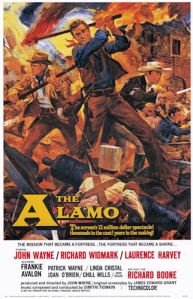
The Alamo (1960, directed by John Wayne, lost to The Apartment) — I’m a Texan which means that I’m legally required to watch both this film and the 2004 remake whenever they show up on television.  Both films are way too long and feature way too many characters speaking speeches as opposed to dialogue but, if I had to choose, I would have to go with the 1960 version of the story.  The original Alamo might be heavy-handed, poorly paced, and awkwardly acted but at least it’s sincere in its convictions.  I always cry when Richard Widmark dies.

Becket (1964, directed by Peter Glenville, lost to My Fair Lady) — This one is a personal favorite of mine.  The film is about the friendship and the eventual rivalry of King Henry II (Peter O’Toole) and Thomas Becket (Richard Burton).  Becket and Henry II start out the film drinking and whoring but eventually, Henry makes Becket Archbishop of Canterbury.  Becket, however, rediscovers his conscience and soon, Henry is famously asking, “Who will rid me of this troublesome priest?”  Becket is an exciting historical drama and Peter O’Toole is at his absolute best as the flamboyantly decadent Henry.

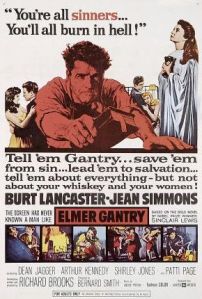
Elmer Gantry (1960, directed by Richard Brooks, lost to The Apartment) — Burt Lancaster plays Elmer Gantry, a traveling salesman and con artist who ends up falling in love with a saintly evangelist (played by Jean Simmons).  Gantry soon starts preaching himself and soon has an army of loyal followers.  However, Gantry’s new career is threatened when an ex-girlfriend-turned-prostitute (Shirley Jones) pops up and starts telling people how Gantry “rammed the fear of God into” her.  With its unapologetically corrupt lead character and its looks at how commerce and religion are often intertwined, Elmer Gantry makes a perfect companion piece to Paul Thomas Anderson’s There Will Be Blood.  Lancaster won an Oscar for his powerful and intense performance in the title role.

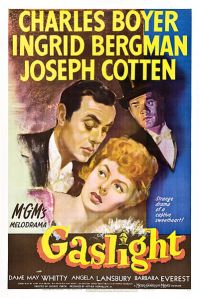
Gaslight (1944, directed by George Cukor, lost to Going My Way) — Evil Charles Boyer marries Ingrid Bergman and then attempts to drive her crazy.  Luckily, Inspector Joseph Cotten is on the case.  Gaslight is, in many ways, an old-fashioned melodrama but it’s still a lot of fun to watch.  Boyer is a suave devil and Joseph Cotten (one of my favorite of the old film actors) is a dashing hero.

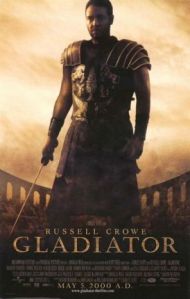
Gladiator (2ooo, directed by Ridley Scott, won best picture) — One thing that I’ve recently discovered is that men love Gladiator.  Seriously, they obsess over this film and hold Russell Crowe’s surly gladiator up as some sort of mystical ideal and if you dare to say a word against it in their presence, be ready for big and long argument.  So, I won’t criticize Gladiator too much other than to say that the film has always struck me as being kinda overlong, that the CGI is occasionally cartoonish, and that, despite his fearsome reputation, Russell Crowe is a lot more interesting as an actor when he plays a thinker as opposed to a fighter.  Joaquin Phoenix, playing the Emperor Commodus, is a lot of fun to watch.

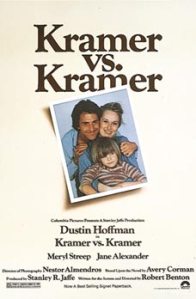
Kramer Vs. Kramer (1979, directed by Robert Benton, won best picture) — Dustin Hoffman plays a workaholic New York advertising executive who, after his wife Meryl Streep leaves him, ends up as a single father.  Kramer Vs. Kramer won best picture in 1979 but I have to admit that I didn’t care much for it.  Then again, I don’t think that I was the intended audience.  Instead, Kramer vs. Kramer appears to have been made to appeal to men frustrated with women wanting to have a life outside of being a domestic servant.  The film is well-acted though Hoffman’s character becomes insufferably smug once he gets comfortable with being a single father.

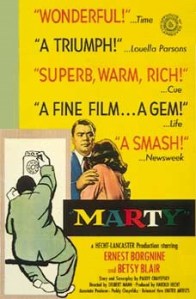
Marty (1955, directd by Delbert Mann, won best picture) — Lonely butcher Marty (Ernest Borgnine) romantically pursues a shy school teacher named Clara (Betsy Blair).  However, Marty’s friends and his family don’t like Clara and Marty soon finds himself having to choose between them.  Marty is a bit of an anomaly when it comes to best picture winners.  It’s not an epic, it doesn’t claim to solve any of the world’s problems, and it’s based on a tv show.  However, it’s also a sincerely sweet and heartfelt  film and also features excellent performances from Borgnine and Blair.

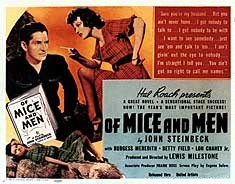
Of Mice and Men (1939, directed by Lewis Milestone, lost to Gone With The Wind) — “Tell me about the rabbits, George.”  Yes, it’s that film.  Smart and little George (Burgess Meredith) and big but simple Lenny (Lon Chaney, Jr.) are migrant farm workers who get a job working at ranch where Lenny ends up accidentally killing the rancher’s daughter-in-law.  Despite the fact that we all now tend to naturally smirk when we hear anyone say “Tell me about the rabbits, George,” Of Mice and Men remains an effective tear-jerker and both Meredith and Chaney give strong performances.

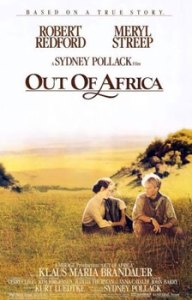
Out of Africa (1985, directed by Sydney Pollack, won best picture) — I recently sat down to watch this film because 1) my aunts love this film and get excited whenever they see that it’s going to be on TV and 2) Out of Africa was named the best film of the year I was born.  So, I sat down and watched it and then three or five hours later, I realized that the film was nearly over.  Anyway, the film is about a Danish baroness (Meryl Streep) who moves to a plantation in Africa and ends up having an affair with a British big game hunter.  The hunter is played by Robert Redford, who refuses to even try to sound British. (USA! USA! USA!)  Anyway, the film is pretty in that generic way that most best picture winners are but the film ultimately suffers because its difficult to care about any of the characters.  Streep acts the Hell out of her Danish accent but she and Redford (who seems to be bored with her) have absolutely no chemistry. I saw one review online that dismissed Out of Africa as a “big budget Lifetime movie” but Lifetime movies are a lot more fun.

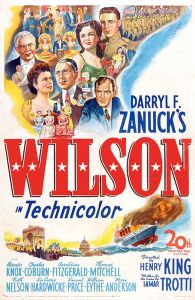
Wilson (1944, directed by Henry King, lost to Going My Way) — Wilson is a two-and-a-half biopic about Woodrow Wilson and his presidential administration.  Wilson is well-played by Alexander Knox, who later showed up in countless exploitation films.  Wilson shows up on cable occasionally and every time I’ve seen it, I’ve had mixed feelings about it.  The critical part of me tends to be dismissive of this film because it’s way too long, extremely stagey, and it glosses over the fact that Wilson was a virulent racist who idolized the Ku Klux Klan.  However, as a secret history nerd, I can’t help but enjoy seeing a film where Vincent Price plays the Secretary of the Treasury.

Two Post Presidents Day Reviews: Frost/Nixon (dir. by Ron Howard) and All The President’s Men (dir. by Alan J. Pakula)


“Now Watergate doesn’t bother me/does your conscience bother you?” — Lynard Skynard, Sweet Home Alabama

As part of my continuing quest to see and review every film ever nominated for best picture, I want to devote my first post Presidents Day post to two films: 2008’s Frost/Nixon and 1976’s All The President’s Men.

During my sophomore year of college, I had a political science professor who, every day of class, would sit on his desk and ramble on and on and on about his past as a political activist.  He protested Viet Nam, he hung out with revolutionaries, he loved Hugo Chavez, and I assume he probably had a Che Guevara poster hanging in his office.  Whenever he wanted to criticize George W. Bush, he would compare him to Richard Nixon and then pause as if he was waiting for the class to all start hissing in unison.  He always seemed to be so bitterly disappointed that we didn’t.  What he, and a whole lot of other people his age, didn’t seem to understand was that Richard Nixon was his boogeyman.  The rest of us could hardly care less.

That was the same problem that faced the 2008 best picture nominee Frost/Nixon

Directed rather flatly by Ron Howard, Frost/Nixon tells the true story about how a light-weight English journalist named David Frost (played by Michael Sheen) managed to score the first televised interview with former President Richard Nixon (Frank Langella).  Both Frost and Nixon see the interviews as a chance to score their own individual redemptions while Frost’s assistants (played by Oliver Platt and Sam Rockwell) see the interview as a chance to put Richard Nixon on trial for Watergate, the Viet Nam War, and every thing else under the sun.  That may not sound like a very exciting movie but it does sound like a sure Oscar contender, doesn’t it?

I’ve always secretly been a big history nerd so I was really looking forward to seeing Frost/Nixon when it was first released in 2008.  When I first saw it, I was vaguely disappointed but I told myself that maybe I just didn’t know enough about Richard Nixon or Watergate to really “get” the film.  So, when the film later showed up on cable, I gave it another chance.  And then I gave it a chance after that because I really wanted to like this film.  Afterall, it was a best picture nominee.  It was critically acclaimed.  The word appeared to be insisting that this was a great film.  And the more I watched it, the more I realized that the world was wrong.  (If nothing else, my reaction to Frost/Nixon made it easier for me to reject the similarly acclaimed Avatar a year later.)  Frost/Nixon is well-acted and slickly produced but it’s not a great film.  In fact, Frost/Nixon is epitome of the type of best picture nominee that inspires people to be cynical about the Academy Awards.

Before I get into why Frost/Nixon didn’t work for me, I want to acknowledge that this was a very well-acted film.  By that, I mean that the cast (Frank Langella, Michael Sheen, Kevin Bacon, Sam Rockwell, and Oliver Platt) all gave very watchable and entertaining performances.  At the same time, none of them brought much depth to their characters.  Much like the film itself, nobody seems to have much going on underneath the surface.  Frank Langella may be playing a historic figure but, ultimately, his Oscar-nominated performance feels like just a typically grouchy Frank Langella performance.  Michael Sheen actually gives a far more interesting performance as David Frost but, at the same time, the character might as well have just been identified as “the English guy.”  In fact, a better title for this film would have been The Grouchy, the English, and the Superfluous.

For all the time that the film devotes to Rockwell and Platt blathering on about how they’re going to be giving Richard Nixon “the trial he never had,” this film is ultimately less about politics and more about show business.  Ron Howard devotes almost as much time to the rather boring details of how the interviews were set up and sold into syndication as he does to the issues that the interview brings up.  Unfortunately, for a movie about show business to succeed, the audience has to believe that the show is one that they would actually enjoy watching,  This, ultimately, is why Frost/Nixon fails.  While the filmmakers continually tell us that the Frost/Nixon interviews were an important moment in American history, they never show us.  Yes, everyone has hideous hair and wide lapels but, otherwise, the film never recreates the period or the atmosphere of the film’s setting and, as a result, its hard not to feel detached from the action happening on-screen.  For all the self-congratulatory claims made at the end of the film, it never convinces us that the Frost/Nixon interviews were really worth all the trouble.  Much like my old poli sci professor, Frost/Nixon never gives us a reason to care. 

For a far more interesting and entertaining look at the Watergate scandal, I would recommend the 1976 best picture nominee All The President’s Men.  Recreating the story of how two Washington Post reporters (played by Robert Redford and Dustin Hoffman) exposed the Watergate scandal that eventually led to Nixon’s resignation, All The President’s Men is the movie that Frost/Nixon wishes it could be.  Despite being made only two years after Watergate, All The President’s Men doesn’t take the audience’s interest for granted.  Instead, director Pakula earns our interest by crafting his story as an exciting thriller.  Pakula directs the film like an old school film noir, filling the screen with menacing shadows and always keeping the camera slightly off-center.   Like Frost/Nixon, All The President’s Men is a well-acted film with a bunch of wonderful 70s character actors — performers like Ned Beatty, Jason Robards, Jack Warden, Martin Balsam, and Robert Walden, and Jane Alexander — all giving effectively low-key and realistic performances.   The end result is a film that manages to be exciting and fascinating to those of us who really don’t have any reason to care about Richard Nixon or Watergate.

Both of these two films were nominated for best picture.  Frost/Nixon quite rightly lost to Slumdog MillionaireAll The President’s Men, on the other hand, lost to Rocky.

6 Quickies In A Row: American, Buck, Exporting Raymond, The Greatest Movie Ever Sold, Resurrect Dead, and Senna


As part of my continuing effort to get caught up on reviewing all of the movies that I’ve seen so far this year, allow me to offer up 6 very quick reviews of 6 very different documentaries that I’ve recently seen.  Two of these documentaries — Buck and Senna — are still playing in theaters.  The other four — American, Exporting Raymond, The Greatest Movie Ever Sold, Resurrect Dead— are all available On Demand and on DVD and Blu-ray.

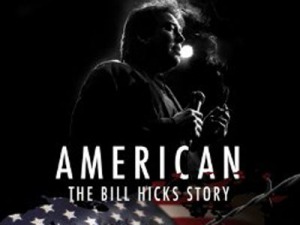
1) American: The Bill Hicks Story(dir. by Matt Harlock and Paul Thomas)

This heartfelt documentary about the life of the late comedian Bill Hick and it shows why his defiantly anarchistic humor is even more relevent today as it was during his heyday.  Here, his story is told through the use of cut-and-paste animation and it’s surprisingly poignant.  I didn’t know a thing about Bill Hicks before I saw this film but I was crying by the end of it.

2) Buck (dir. by Cindy Meehl)

Buck is a portrait of both the real-life horse whisperer Buck Brannaman and the various ranchers and horse owners who come to his various “clinics.”  The documentary covers Brannaman’s own abusive childhood and shows how he managed to turn the worst circumstances into something good.  The film works best when it just allows the charismatic Buck to talk about his life and his beliefs.  It’s less succesful when Hollywood phony Robert Redford pops up to talk about his feelings towards Buck.

3) Exporting Raymond (dir. by Phillip Rosenthal)

This is an interesting documentary in that it manages to be both entertaining and annoying at the same time.  Phillip Rosenthal was the creator of one of the most oddly durable sitcoms of all time, Everybody Loves Raymond.  In this documentary, which was directed by Rosenthal, we watch as he goes to Russia and deals with the resulting culture clash as he tries to adapt Raymond for Russian television. If you’re like me and you’re fascinated by all the behind-the-scenes production aspects of television and film,  then you’ll find a lot to enjoy in this documentary.  Unfortunately, Rosenthal himself is a bit too self-satisfied and, often times, he comes across like an almost stereotypical “ugly American.”  There’s something annoying about watching a wealthy, American television producer going over to a country that’s perpetually on the verge of self-destruction and then bitching about how ugly all the buildings look.

4) The Greatest Movie Ever Sold (dir. by Morgan Spurlock)

In The Greatest Move Ever Sold, Morgan Spurlock sets out to make the “Iron Man of documentaries,” a documentary that is completely and totally funded by product placement.  The documentary itself becomes about Spurlock’s attempts to find the corporate sponsors needed to make his documentary and the results are often hilarious and the film does succeed in getting you to think about how we are constantly bombarded with advertisements.  At the same time, this is also a good example of a “Who cares?” documentary.  Spurlock shows us how advertising works but he never really convinces us that it’s as big a problem as old toadsuckers like Ralph Nader and Noam Chomsky seem to think.  In many ways, Morgan Spurlock is a more likable version of Michael Moore in that he primarily makes documentaries for people who already agree with him. 

5) Resurrect Dead: The Mystery of the Toynbee Tiles (dir by John Foy)

This is a fascinating documentary about the mysterious Toynbee Tiles.  The Toynbee Tiles are, to quote Wikipedia, “messages of mysterious origin found embedded in asphalt of streets in about two dozen major cities in the United States and four South American capitals.”  That message is:

TOYNBEE IDEA
IN Kubrick’s 2001
RESURRECT DEAD
ON PLANET JUPITER.

These tiles first appeared in the 1990s and they’ve remained a perplexing unsolved mystery.  Nobody’s sure what the mysterious message means, who wrote the message, or even how the tiles were embedded into the asphalt.  This documentary is about not only the mysterious tiles but also the men who have, over the years, become obsessed with them and how that obsession has gone on to effect their own perception of reality.  The movie even offers up a plausible theory of who is responsible for the tiles.  Seriously, this is one of the most fascinating documentaries that I’ve ever seen.

6) Senna (dir. by Asif Kapadia)

Senna tells the life story of Ayrton Senna, a Brazilian formula one racer who was the world champion for three years before his own tragic death during a race.  I have to admit that I don’t know much about Formula One racing and, as a result, I had some trouble following Senna.  But Senna, seen in archival footage, is a charismatic and sometimes enigmatic figure and the racing footage is both exciting and, occasionally, frightening.

Lisa Marie Conspires Against The Conspirator (dir. by Robert Redford)


Robert Redford’s new historical drama The Conspirator is the first prestige picture of 2011 and it’s also (arguably) the worst film of the year so far. 

Oh, I hear you out there: “Really?  Worse than even Season of the Witch and Your Highness?”

Yes.  Way worse.  Season of the Witch and Your Highness might have been bad films but they knew they were bad.  They never truly aspired to be anything other than bad.  The problem with The Conspirator is that it’s obviously meant to be a great and important film.  It’s meant to shape public debate.  We’re supposed to feel like better people for having sat through it and the filmmakers are supposed to be better people just for having made it.  There’s a smugness to these type of self-styled “prestige pictures” that elevates their badness beyond anything to be found in Your Highness.  Indeed, if the makers of Your Highness appeared to be getting high off of herb than the people behind The Conspirator are high off of their own good intentions and that makes them for more annoying.

The Conspirator is based on the trial of Mary Surratt, the only woman to be arrested, tried, and subsequently executed as a result of the conspiracy to assassinate Abraham Lincoln.  The execution of Mary Surratt was controversial because 1) she was a civilian tried by a military tribunal, 2) the evidence against her was largely circumstantial (she owned the boarding house where the conspirators — including her son John Surratt — supposedly met), and 3) she was a woman.

Now, I have to confess that I’m secretly kind of a big history nerd and — unlike most of this film’s audience — I was already familiar with the story of Mary Surratt before I sat down in the theater.  The story of the Lincoln Conspiracy and the aftermath of the assassination is a really interesting one that is full of all sorts of weird twists and turns and odd characters all conspiring together and being mysterious.  It has all the makings of a great grindhouse film. 

However, director Robert Redford is too good to make a grindhouse movie.  No, he has something important to say and, as a result, The Conspirator becomes yet another one of those tedious films where every line of dialogue and every image is supposed to make us go, “Hey, they might be talking about post-Civil War America but, by golly, this is relevent to our post-911 lives!  OH MY GOD!”  So, we get Tom Wilkinson showing up randomly to give speeches about why military tribunals are the work of the devil.  Wilkinson is playing a historical figure Reverdy Johnson but they might as well have just renamed him “Prestige Actor Cast As Mouthpiece.”  And then Kevin Kline (as Secretary of War Edwin Stanton, though they should have just called him Dick Cheney) is there to go, “The whole world has changed.”  Meanwhile, the camera lingers over the conspirators being held in their dirty cells with bags over their heads (“OH MY GOD, HONEY!” we’re supposed to shout at our loved ones, “THAT’S JUST LIKE GUANTANAMO BAY!  WOW!”) and then we’re constantly reminded that Mary Surratt was a devout Catholic and that America in 1865 viewed Catholicism in much the same way that America views Islam in 2011. 

And, yeah, we get it and I’m not saying that director Redford is incorrect in his message or his beliefs.  However, a boring, heavy-handed film is just as boring and heavy-handed regardless of where its heart may lie.  The Conspirator is so busy being good for us that it forgets that it needs to entertain as well.  It preaches at us but it never bothers to engage us.

Mary Surratt is played by Robin Wright and she gives a good performance but because of the way the film is structured, Mary is never allowed to become anything more than a convenient symbol.  Instead, most of the film’s screen time is given to James McAvoy who plays the young lawyer who reluctantly defends her at trial.  Now, I love James McAvoy.  I’ve loved him ever since Atonement and that’s why it’s kinda heart breaking to see what a bad performance he gives here.  He’s good for the first ten minutes or so of the film but then he’s assigned to defend Ms. Surratt and I swear to God, he doesn’t stop yelling for the rest of the movie.  It’s not totally McAvoy’s fault.  As written, his character doesn’t really have much to do other than get mad.  As an actor, McAvoy can do anger quite well (again, check out Atonement) but here his anger just seems to spring out of nowhere.  At first, he is unconcerned about Mary Surratt and resentful that he has to defend her.  Then suddenly, he’s going all late style Al Pacino on everyone. 

Justin Long shows up as McAvoy’s best friend and seriously, if you’re making a historical drama, you don’t cast a guy who automatically makes you think, “He’s a PC and I’m a Mac.”  It’s not Long’s fault.  He’s a likable actor and he’s likable here even if his character doesn’t have any reason for being in the movie.  It’s just that typecasting is a bitch.  Alexis Bedel gets the thankless role of “rich snob who loses faith in her boyfriend” while Evan Rachel Wood, playing Mary Surratt’s daughter, is the only member of the cast who actually seems to truly connect with the material.

Regardless of the film’s historical accuracy, everything about The Conspirator feels false.   I don’t know if it was just the copy that I happened to see but the entire movie just looks like crap, a combination of soft-focus blurriness and respectfully muted colors.  This is another one of those films where the interior scenes are lit so that it appears that sunlight is just flooding in through the windows, making any white article of clothing just appear to throb with radiation.  Seriously, I had a headache after watching 30 minutes of this film.

As I said previously, there’s a great grindhouse movie waiting to be made out of this material.  For instance, did you know that Boston Corbett — the man who shot John Wilkes Booth — was also a religious fanatic who years earlier, in order to resist being tempted by a prostitute, castrated himself with scissors?  Also, did you know that Henry Rathbone — the army major who was sitting with Lincoln at the time of the assassination — was years later named Ambassador to Germany and, while in Germany, suffered a sudden nervous breakdown that led to him chopping off his wife’s head?  Also, one of the men who was arrested (though eventually released and never charged) for taking part in the conspiracy was Frances Tumblety who later moved to England where he would later become one of the many men suspected of being Jack the Ripper? 

And that’s just the tip of the iceberg.

However, The Conspirator is too busy being important to bother with being interesting.  While a grindhouse version of the story would have been both interesting and thought-provoking, The Conspirator is just a smug film that is never manages to live up to its own rather high opinion of itself.

10 Unacknowledged Christmas Classics


It’s December and that means that it’s the Christmas season and that can only mean an abundance of Christmas movies both at movie theaters and on television.  This Christmas movie has even become a genre in a way that the Thanksgiving movie or the Bank Holiday movie never has.

I love the Christmas season because 1) it’s one of the few times that there’s half a chance of seeing snow in Texas, 2) it gives me an excuse to bond with family, and 3) I get lots of presents.  And I enjoy Christmas movies so much that I can pretty much quote every line from It’s A Wonderful Life from memory.  I’ve even been known to enjoy the holiday movie marathons that pop up on the Lifetime Movie Network (especially if they feature Jeff Fahey and his bluer than blue eyes).  However, my favorite Christmas movie remains the original Miracle on 34th Street because Natalie Wood was one of my mom’s favorite actresses and Miracle was one of her favorite films.

However, in this post, I want to highlight 10 movies that have either been overlooked in the past or else films that, while properly acknowledged as classics, are rarely mentioned as being Christmas films.

1) In Bruges (2008)  — Two Irish hitman (Colin Farrell and Brendan Gleeson, both wonderful) hide out in Belgium during the Christmas holiday.  I love this film for so many reason but I have to specifically mention the performance of Ralph Fiennes, who plays an English crime boss with a foul mouth, a murderous personality, and a firmly held set of ethics.

2) Brazil (1985) — One reason why I love Terry Gilliam’s dark satire is because I actually have quite a bit in common with it.  We’re both often misunderstood, we’re both pretty to look at, and we were both released in 1985.  While Brazil is now often acknowledged as one of the best and most imaginative films of the last century, it’s often forgotten that all of this film’s action takes place over the Christmas season.  If you’ve never seen Brazil, see it now.  But be aware that you’ll never look at Michael Palin quite the same way again.

3) Three Days of The Condor (1975) — This espionage thriller (which stars a young, pre-Leatherface Robert Redford) skillfully contrasts cold-blooded violence with the bright outer happiness of the Christmas season.

4) Eyes Wide Shut (2000) — Stanley Kubrick’s final film is a tribute to MK-Ultra conspiracy theories and features rich people trying to be kinky during the Christmas season.  Nicole Kidman does redheads proud with her performance here and we get to see Tom Cruise smoke pot.

5) P2 (2007) — Rachel Nichols is trapped in a parking garage on Christmas Eve by a very scary Wes Bentley.  I have to admit that I’ve always had a morbid fear of either dying, getting seriously injured, or disappearing on Christmas Eve and therefore ruining the holiday for my family.  I guess that’s why P2 resonated with me.

6) Silent Night, Bloody Night (1974) — No, this is not a killer Santa film.  This is the film where a bunch of former Warhol superstars (Ondine and Candy Darling being the most prominent) play a bunch of mental patients who massacre their doctors in a disturbing, sepia-toned sequence.  Years later, on Christmas, another former Warhol superstar — the wonderful Mary Woronov — comes to investigate.  This is actually a fairly good film from director Theodore Gershuny.

7) Christmas Evil (1980) — Now this is a killer Santa film.  Harry is a loser who works in a toy factory but he’s obsessed with Christmas because, when he was a child, he saw mommy humping Santa Claus.  (Isn’t that a song?)  So, one Christmas, Harry dresses up like Santa and goes around killing neglectful parents and others who don’t have the Christmas spirit.  This is an oddly sweet film with an ending that brought very sincere tears to my eyes.

8 ) To All A Good Night (1980) — Okay, this is another killer Santa film and it’s one of those early ’80s slashers where everyone dies because they’re total and complete idiots but two things distinguish this film from other Killer Santa slasher films: 1) it features not one but two psycho Santas and the movie was directed by David Hess, star of Last House On The Left and The House On The Edge of the Park.

9) The Silent Partner (1978) —  However, the greatest of all killer Santas is to be found in this Canadian crime thriller.  Christopher Plummer plays a psycho bank robber who — disguised as Santa — robs a bank.  Elliot Gould plays a lonely bank clerk who uses the robbery as an excuse to steal some cash for himself which leads to Plummer eventually coming after him.  Plummer makes the scariest Saint Nick ever!

10) Kiss Kiss Bang Bang (2005) — This is pure grindhouse brilliance, a dark comedy and a metafictional satire disguised an action movie.  Robert Downey, Jr. is a small-time criminal who accidentally becomes a film star and ends up investigating a murder with a hard-boiled PI (a surprisingly self-aware performance from Val Kilmer).  And it all takes place during the holidays.