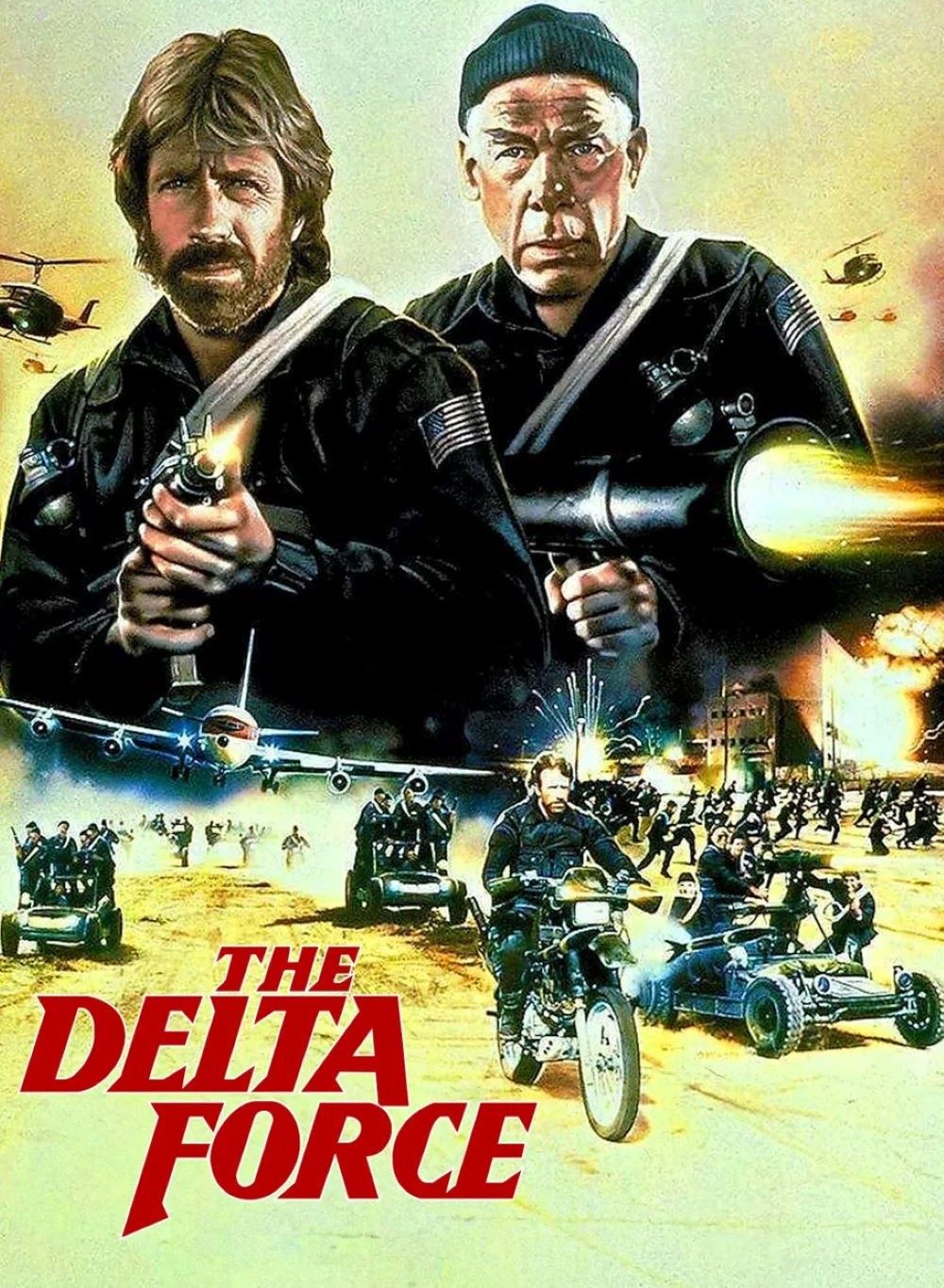
Guilty Pleasure No. 95: The Delta Force (dir. by Menahem Golan)


The Delta Force is the ultimate guilty pleasure from the ’80s, that rocket-bike-riding, Chuck Norris-kicking fantasy you pop on when you need two hours of unapologetic, brain-off escapism. It’s a hijacking thriller crossed with Cannon Films overkill, blending real Middle East tensions with pure action movie wish fulfillment, and yeah, it’s politically charged and dated as hell, but damn if it doesn’t deliver the kind of dumb-fun thrills that make you grin despite yourself.

Right from the jump, the film sets up its hook with a failed Delta Force raid in Iran, nodding to the real-life Eagle Claw disaster that still stung in 1986. Fast-forward, and Lee Marvin’s grizzled Colonel Nick Alexander gets yanked out of retirement when Lebanese militants hijack an Athens-to-New York flight, forcing it to Beirut and beyond. Enter Chuck Norris as Major Scott McCoy, the brooding ex-operator haunted by that botched op, who’s all too ready to strap on his gear when innocents are on the line. The setup drags you through passenger terror and terrorist demands, then explodes into rescue mayhem—it’s like the movie knows you’re here for the payback, and it serves it up hot.

As a plot, it’s pure popcorn simplicity: plane gets taken, hostages split by nationality and faith, planes hopscotch across terror hotspots, and Delta swoops in for the save. Drawing from the TWA 847 ordeal, the onboard stuff feels eerily real at first—sweaty close-ups of scared folks like Shelley Winters’ kvetching grandma or Martin Balsam’s anxious exec, turning the cabin into a pressure cooker. George Kennedy’s priest adds heart, and you almost buy the drama until Norris’ dirt bike starts spitting missiles, flipping the script to glorious absurdity. That’s the guilty pleasure pivot: from newsreel grit to arcade-game heroics, and you can’t help but love the whiplash.

Once the action ramps, The Delta Force leans into its B-movie soul with reckless abandon. McCoy’s team hits beaches, raids compounds, and yeah, that motorcycle sequence where Norris zips through baddies like a one-man apocalypse? Iconic cheese that screams “turn off your brain and enjoy.” It’s less about realism and more about catharsis—after watching hostages suffer, the third act’s bullet ballet feels like the justice porn we all secretly crave in these flicks. No deep strategy, just explosions and one-liners, perfectly tuned for that “hell yeah” rush that keeps you glued.

The cast is a riot of guilty-pleasure gold. Marvin, in his last role, growls through command with that unbeatable world-weary vibe, making every order land like gravitas wrapped in grit. Norris? Stone-faced perfection—says little, does everything, his quiet rage bubbling just enough to humanize the roundhouse legend. The passenger ensemble shines in panic mode: Winters chews scenery, Balsam frets convincingly, Kennedy prays with soul. Villain Robert Forster? Over-the-top terrorist glee, accent thick as plot armor, stealing scenes with gleeful menace that’s so cartoonish, it’s addictive.

Sure, the politics are a time-stamped minefield—terrorists as flat-out monsters, Middle East as villain playground, America as lone savior—but that’s part of the era’s guilty thrill. In a post-9/11 world, the stereotypes jar, yet for ’80s nostalgia buffs, it’s that raw, unfiltered patriotism dialed to eleven, the kind you laugh at now but cheered then. The film doesn’t pretend to balance views; it picks a lane—righteous rage—and floors it, making the righteousness feel perversely fun amid the preachiness.

Technically, it’s rough-around-the-edges charm personified. Menahem Golan directs with propulsive energy, keeping the 126 minutes zipping between dread and dazzle. Action’s shot clean—no shaky cam nonsense—with wide lenses capturing chaos in practical, pre-CGI glory that pops on a big screen. The score? Brass-blasting heroism that’s comically epic, sticking like glue and amping every slow-mo strut. Sets fake Beirut convincingly enough, backlots be damned, all fueling that immersive, low-budget magic.

The Delta Force thrives on its split personality: tense hijack bottle episode crashing into commando wet dream. Plane scenes build real unease, echoing headlines, but then rocket bikes and cheering crowds yank it back to fantasy ad. That clash? Pure guilty pleasure fuel—serious enough to hook you, silly enough to forgive its flaws, never letting tension sag.

Bottom line, embrace The Delta Force as peak time-capsule junk: terrorism tamed by ‘stache and firepower, geopolitics as blockbuster bait. Norris and Cannon diehards will fist-pump through every raid; casual viewers get a hoot from the excess. It’s flawed, fervent, and fantastically rewatchable— the kind of flick where you know it’s ridiculous, but two hours later, you’re humming the theme and plotting your next viewing. Guilty pleasure? Abso-freaking-lutely, and wear that shame badge proud.

Previous Guilty Pleasures

  1. Half-Baked
  2. Save The Last Dance
  3. Every Rose Has Its Thorns
  4. The Jeremy Kyle Show
  5. Invasion USA
  6. The Golden Child
  7. Final Destination 2
  8. Paparazzi
  9. The Principal
  10. The Substitute
  11. Terror In The Family
  12. Pandorum
  13. Lambada
  14. Fear
  15. Cocktail
  16. Keep Off The Grass
  17. Girls, Girls, Girls
  18. Class
  19. Tart
  20. King Kong vs. Godzilla
  21. Hawk the Slayer
  22. Battle Beyond the Stars
  23. Meridian
  24. Walk of Shame
  25. From Justin To Kelly
  26. Project Greenlight
  27. Sex Decoy: Love Stings
  28. Swimfan
  29. On the Line
  30. Wolfen
  31. Hail Caesar!
  32. It’s So Cold In The D
  33. In the Mix
  34. Healed By Grace
  35. Valley of the Dolls
  36. The Legend of Billie Jean
  37. Death Wish
  38. Shipping Wars
  39. Ghost Whisperer
  40. Parking Wars
  41. The Dead Are After Me
  42. Harper’s Island
  43. The Resurrection of Gavin Stone
  44. Paranormal State
  45. Utopia
  46. Bar Rescue
  47. The Powers of Matthew Star
  48. Spiker
  49. Heavenly Bodies
  50. Maid in Manhattan
  51. Rage and Honor
  52. Saved By The Bell 3. 21 “No Hope With Dope”
  53. Happy Gilmore
  54. Solarbabies
  55. The Dawn of Correction
  56. Once You Understand
  57. The Voyeurs 
  58. Robot Jox
  59. Teen Wolf
  60. The Running Man
  61. Double Dragon
  62. Backtrack
  63. Julie and Jack
  64. Karate Warrior
  65. Invaders From Mars
  66. Cloverfield
  67. Aerobicide 
  68. Blood Harvest
  69. Shocking Dark
  70. Face The Truth
  71. Submerged
  72. The Canyons
  73. Days of Thunder
  74. Van Helsing
  75. The Night Comes for Us
  76. Code of Silence
  77. Captain Ron
  78. Armageddon
  79. Kate’s Secret
  80. Point Break
  81. The Replacements
  82. The Shadow
  83. Meteor
  84. Last Action Hero
  85. Attack of the Killer Tomatoes
  86. The Horror at 37,000 Feet
  87. The ‘Burbs
  88. Lifeforce
  89. Highschool of the Dead
  90. Ice Station Zebra
  91. No One Lives
  92. Brewster’s Millions
  93. Porky’s
  94. Revenge of the Nerds

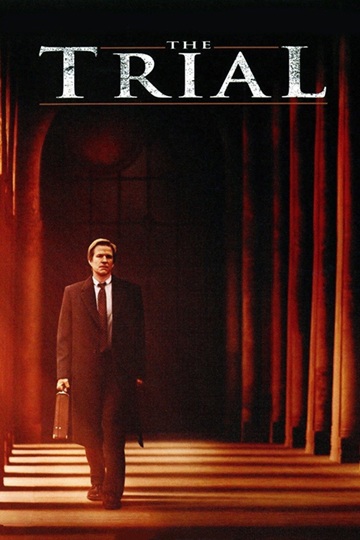
October Positivity: The Trial (dir by Gary Wheeler)


In 2010’s The Trial, Matthew Modine stars as Mac.

Mac is a Southern lawyer, even though it’s been a while since he practiced.  After his wife and children were killed in a car accident, Mac decided to retire from practicing law but he never surrendered his license.  A judge (Rance Howard) reaches out to him, asking him to serve as a public defender for Pete Thomason (Randy Wayne), a young man who has been accused of murdering his girlfriend.  The evidence is stacked against Pete and there are plenty of wealthy people who, for various reasons, want Pete to quickly be convicted.  Mac takes the case because he can tell that Pete is being railroaded.  When he discovers that Pete will possibly be facing the death penalty if he’s convicted, the case becomes very personal for Mac.

The prosecuting attorney (Bob Gunton) has managed to find a doctor (Brett Rice) who is willing to testify that Pete is a sociopath.  (The doctor has a reputation for finding just about anyone on trial to be a sociopath.)  Mac finds a doctor of his own, Dr. Anne Wilkes (Clare Carey), his testifies that Pete is nowhere near being a sociopath.  The problem is that Pete has no memory of what happened the night of the murder.  Mac may believe that Pete is innocent but can he convince the jury when the evidence all seems to suggest otherwise?

Like The List, The Trial was based on a novel by Robert Whitlow and it was directed by Gary Wheeler.  I was pretty hard on The List in last night’s review but I actually rather enjoyed The Trial, which was a solid and well-made legal thriller.  (The film’s status as a faith-based film largely comes from a scene in which Mac quotes the Book of Provers in regards to how, during a trial, it’s easy to believe the first person who speaks but it’s equally important to listen to how the accused replies.)  I enjoyed the twists and turns of the plot and the film’s ending worked well.  Though the film had a a made-for-television feel to it (despite having been a theatrical release), it still held and rewarded my interest.

It helped that the cast was well-selected and everyone gave good performances.  Matthew Modine, in particular, gave a strong performance as Mac, playing him not as being a saint but instead as being someone who was just determined to give his client the defense he deserved and to ultimately do the right thing.  Robert Forster played Mac’s brother-in-law and lead investigator and he brought his own brand of world-weary determination to the part.  Nobody plays a smug prosecutor as well as Bob Gunton, though it should be noted that the character himself never became a caricature.  Rance Howard was the ideal judge, tough but fair.  Randy Wayne was sympathetic as the confused Pete.  The cast really brought the film’s world to life.

I always enjoy a good legal thriller and The Trial was certainly that.

October True Crime: The Hunt For The BTK Killer (dir by Stephen Kay)


Dennis Rader is pure evil.

I feel confident saying that, though I’ve never met him.  He’s currently eighty years old and in prison, serving several life sentences for a series of murders he committed in the 1970s, the 80s, and the 90s.  Because he committed the murders at a time when Kansas did not have the death penalty, he escaped being executed.  That said, he won’t be eligible for parole until the next century so we can rest assured that Dennis Rader will die in prison.

Dennis Rader was a serial killer who decided to give himself a nickname.  He wrote letter to the local media in Wichita, Kansas and demanded to be known as The BTK Killer — for Bind Them, Torture Them, and Kill Them.  It was a dumbass nickname but it stuck.  Everything about the BTK case is disturbing but one that always gets me is that nearly got away with it.  His last known victim was an elderly woman who he killed in 1991.  By the time the current century rolled around, The BTK Case had gone cold and was being forgotten about.  Rader couldn’t handle that so he started writing the local media and eventually the police again in 2004.  Rader, being a moron, didn’t consider that he was mailing a DNA sample with every letter.  Eventually, he sent the cops as floppy disk of his “writings.”  What he didn’t realize is that the metadata from a deleted Word Document was still stored on the disk.

Dennis Rader was a deacon in his local church.  He was also an dog catcher and compliance officer for Park City, Kansas.  You know the self-important jerks who send you a letter threatening to fine you if you don’t mow your grass?  Dennis Rader was one of those guys.  When Rader was finally arrested, he was described as being a trusted member of his local community but let’s be honest.  Everyone hates their local compliance officers.  Most serial killers are driven by a need to control and dominate.  Perhaps one reason why Rader had stopped killing was because he was able to channel his sadism into his job.

After he was arrested in 2005, he was on television constantly and he was such a continual presence that he even worked his way into a few of my nightmares.  Rader confessed to his crimes in court, giving a monologue in which he dryly discussed each murder.  Later, one of the primetime news shows interviewed Rader in prison and again, Rader discussed each murder in a flat tone and only showed emotion when he talked about the prospect of never leaving prison.  It was disturbing to watch and listen to and sadly, the media made sure that we heard and listened to it a lot.

The Hunt For The BTK Killer was a made-for-television movie about Dennis Rader (played by Gregg Henry) and the detective (Robert Forster) who eventually arrested him.  It aired in 2005, the same year that Rader was captured and eventually sentenced for his crimes.  It’s a movie that was obviously shot very quickly to capitalize on the media attention that the case was receiving.  As is often the case with the movies like this, it was filmed up in Canada.  (Canadian film mainstay Maury Chaykin appears as a true crime writer.)  All that said, it’s still an effective film.  Gregg Henry, under a ton of makeup, plays Dennis Rader as being the type of busybody who gets off on telling people what to do and who believes that being a deacon at his church will absolve him from the murders that he committed.  It’s a good performance and Henry is well-matched with Robert Forster.  Forster’s naturally world-weary vibe made him the ideal choice for playing detectives who have seen the worst that humanity had to offer.  Most importantly, the film shows how fear can change a community.  When BTK is on the loose and sending taunting letters to the newspapers and the local television station, the people of Wichita soon start to suspect their neighbors and what was one a friendly town becomes a place where even Forster is at risk of getting accidentally stabbed by his terrified wife.

Dennis Rader was someone who obviously enjoyed the fear that he generated.  He cried when he went to prison and hopefully, he’s still crying now.

Horror Film Review: Alligator (dir by Lewis Teague)


1980’s Alligator begins in 1968.  While on vacation in Florida, a teenage girl named Marisa Kendall purchases a baby alligator named Ramon.  When she returns home to Chicago, her jerk of a father flushes Ramon down the toilet.

12 years pass.  Marisa (Robin Riker) becomes a herpetologist.  As for Ramon, he actually survives being flushed down the toilet and thrives in the sewer.  He eats the carcasses of animals that had been a part of an experiment involving a growth serum.  The serum had the desired effect of making the animals bigger but it also increased their metabolism to the extent that they became aggressive and had to eat constantly.  Evil industrialist Slade (Dean Jagger) is convinced that, by tossing the carcasses in the sewer, he’s ensured that no one will ever find out about the experiments.  Instead, he’s turned Ramon into a giant alligator who is always hungry.  Soon, the super-intelligent alligator is ambushing and eating sewer workers.

Burned-out Detective Dave Madison (Robert Forster) teams up with Marisa to solve the mystery of why so many body parts are turning up in the sewers.  It’s not easy.  No one wants to admit that there might be a giant alligator living under the city.  Everyone wants to believe that’s just an urban legend.  But, after a tabloid reporter (Bart Braverman) manages to snap a few photographs of Ramon before being devoured, the police are forced to deal with the fact that they’ve got an alligator on their hands.  As Slade continues to try to cover up his involvement, big game hunter Colonel Brock (Henry Silva) comes to town and announces that he will be capturing the alligator.

Directed by Lewis Teague and written by John Sayles, Alligator is a dark comedy disguised as a horror film.  While numerous people get eaten and the film ends on a properly ominous note, Alligator is obviously not meant to be taken seriously.  The cast is full of good actors who send up their own images.  That’s especially true in the case of Henry Silva, who appears to be having a blast as the hyper macho Colonel Brock.  Robert Forster, meanwhile, delivers his lines with a self-aware weariness that seems a bit more appropriate for a noir hero than a film about a detective investigating a giant alligator.  One reason why the film works is because Forster, Silva, and the rest of the cast understood exactly what type of film they were appearing in and they delivered their overheated lines with just enough wit to let the viewer know that the film was in on the joke.  The big and somewhat stiff-looking alligator may not look entirely real and it may move somewhat awkwardly but ultimately, it’s the most likable character in the movie.  It just wants to relax in the sewers but, every few minutes, someone else is bugging him.

When first released, Alligator struggled at the box office but it has since gone on to become a cult favorite.  Quentin Tarantino is a self-described fan and he had said he was inspired to cast Robert Forster as Max Cherry in Jackie Brown after seeing him as Dave Madison in this film.  That’s not bad for a movie about a giant alligator!

Join #MondayMuggers For THE DELTA FORCE!


Hi, everyone!  Guess is who is guest hosting the #MondayMuggers live tweet tonight?  That’s right …. me!

Tonight’s movie will be The Delta Force (1986), starring Chuck Norris, Lee Marvin, Robert Forster, George Kennedy, Robert Vaughn, Steven James, Hanna Schygulla, Shelley Winters, Martin Balsam, Bo Svenson, Joey Bishop, Susan Strasberg, Kim Delaney …. well, you get the idea.  There’s a lot of people in this movie!  Jedadiah Leland swears that this is the greatest film ever made.  We’ll find out tonight!

You can find the movie on Prime and then you can join us on twitter at 9 pm central time!  (That’s 10 pm for you folks on the East Coast.)  See you then!

Film Review: Jackie Brown (dir by Quentin Tarantino)


It took me a while to really appreciated Jackie Brown.

I was nineteen and in college when I first watched the movie.  A friend rented it and we watched it with the expectation that it would be another Tarantino film that would be full of violence, fast music, and stylish characterizations.  And, of course, Jackie Brown did have all three of those.  But it was also a far more melancholy film than what we were expecting and compared to something like Kill Bill, Jackie Brown definitely moved at its own deliberate pace.  That’s a polite way of saying that, at times, the film seemed slow.  It seemed like it took forever for the story to get going and, even once it became clear that Jackie Brown (Pam Grier) and Max Cherry (Robert Forster) were going to steal from Ordell Robbie (Samuel L. Jackson), it still felt like an oddly laid back heist.  Robert de Niro, the film’s biggest star, played a guy who seemed to be brain dead.  Bridget Fonda brought an interesting chaotic energy to the film but her character was disposed of in an almost off-hand manner.  The whole thing just felt off.  I appreciated the performances.  I appreciated the music on the soundtrack.  But I felt like it was one of Tarantino’s weaker films.

As I’ve gotten older, I’ve come to better appreciate Jackie Brown.  First released in 1997 and adapted from a novel by Elmore Leonard, Jackie Brown finds Quentin Tarantino at his most contemplative.  Indeed, Tarantino wouldn’t direct anything quite as humanistic until he did Once Upon A Time In Hollywood.  If the heist seemed rather laid back, that’s because Jackie Brown really isn’t a heist film.  It’s a film about aging, starring two icons of 70s exploitation.  Robert Forster was 56 when he played bail bondman Max Cherry while Pam Grier was 48 when she was cast as Jackie Brown, the flight attendant turned smuggler.  Jackie and Max two middle-aged people faced with a world that doesn’t really make much sense to them anymore.  (Obviously, it’s easier for me to understand them now than it was when I was nineteen and I felt like the future was unlimited.)  Max bails people out of jail and it’s obvious that he still has a shred of idealism within him.  He actually does care about the people he gets out of jail and he’s disgusted by Ordell’s callous attitude towards the people who work for him.  Jackie is a flight attendant who, when we first see her, looks like she could have just stepped out of a 1970s airline commercial.  Ripping off Ordell isn’t just something that she’s doing for revenge or to protect herself, though there’s certainly an element of both those motivations in her actions.  This is also her chance to finally have something for her.  Jackie and Max are two lost souls who find each other and wonder where the time is gone.  All of those critics who have wondered, over the years, when Quentin Tarantino would make a mature movie about real people with real problems need to rewatch Jackie Brown.

Of course, it’s still a Quentin Tarantino film.  And that means we get a lot of scenes of Samuel L. Jackson talking.  This is one of Jackson’s best performances.  Ordell is definitely a bad guy and most viewers will be eager to see him get his comeuppance but, as played by Jackson, he’s also frequently very funny and definitely charismatic.  One can understand how Ordell lures people into his trap.  Jackson loves to watch video tapes of women shooting guns.  He allows De Niro’s Louis to crash at his place and the scene where Ordell realizes that Louis is thoroughly incompetent is brilliantly acted by both men.  And then you have Bridget Fonda, as a force of pure sunny chaos.  Jackson, De Niro, and Fonda are definitely a watchable trio, even if the film rightly belongs to Pam Grier and Robert Forster.

The older I get, the more I appreciate Jackie Brown.  This is the film where Tarantino revealed that there was more to his artistic vision than just movie references and comic book jokes.  This film takes Tarantino’s style and puts it in the real world.  It’s Tarantino at his most human.

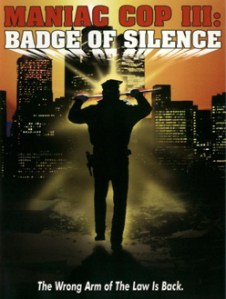
Maniac Cop III: Badge of Silence (1992, directed by William Lustig)


Despite finally getting his burial with honors at the end of Maniac Cop 2, Matt Cordell (Robert Z’Dar) returns for one last outing.  Raised from the dead by a voodoo houngan (Julius Harris), Cordell invades a hospital to seek vengeance for a comatose policewoman named Katie Sullivan (Gretchen Baker).  In a coma due to the wounds she received while thwarting a convenience store robbery, Katie is being framed by unscrupulous reporters and attorneys who claim that Katie was a bad cop who killed a clerk in cold blood.  Cordell sees Katie as being a fellow victim of anti-cop bias and he is not going to let anyone treat her with disrespect, which is something that two doctors (Robert Forster and Doug Savant) are unfortunate enough to discover.  Sean McKinney (Robert Davi) and Dr. Susan Lowery (Caitlin Dulany) try to figure out how to bring peace to the souls of both Cordell and Katie.

As opposed to the first two films, Maniac Cop III had a troubled production.  Lustig and screenwriter Larry Cohen wanted to set the film in a Harlem hospital and bring in an African-American detective to investigate Cordell’s activities.  The film’s Japanese producers insisted that Robert Davi return as the lead, even though the script’s lead character had little in common with the way Sean McKinney was portrayed in Maniac Cop 2.  Larry Cohen then refused to do any rewrites on the script unless he was paid more.  William Lustig filmed what he could and ended up with a 51-minute movie.  Extra scenes were directed by one of the film’s producers and the film was also padded out with outtakes from Maniac Cop 2.

The film is disjointed and there’s too much time devoted to Jackie Earle Haley playing a character who has much in common Leo Rossi’s serial killer from the second film.  (Haley’s performance is fine but the character feels superfluous).  But the movie’s hospital setting leads to some interesting kill scenes and Z’Dar and Davi both give good performances as two different types of maniac cops.  The supporting cast is full of good character actors like Haley, Forster, Savant, Julius Harris, Bobby Di Cicco, and Paul Gleason.  Despite the film’s flaws, Maniac Cop III is a solid ending for the trilogy.

Monday Live Tweet Alert: Join Us For Return of the Six Million Dollar Man and Bionic Woman and Jackie Brown!


As some of our regular readers undoubtedly know, I am involved in hosting a few weekly live tweets on twitter and occasion ally Mastodon.  I host #FridayNightFlix every Friday, I co-host #ScarySocial on Saturday, and I am one of the five hosts of Mastodon’s #MondayActionMovie!  Every week, we get together.  We watch a movie.  We snark our way through it.

Tonight, for #MondayActionMovie, the film will be 1987’s The Return of the Six Million Dollar Man and Bionic Woman!

Following #MondayActionMovie, Brad and Sierra will be hosting the #MondayMuggers live tweet!  We will be watching 1997’s Jackie Brown, starring Pam Grier, Robert Forster, Samuel L. Jackson, Robert De Niro, Bridget Fonda, Michael Keaton, and Diana Uribe!  The film is on Prime!

It should make for a night of fun viewing and I invite all of you to join in.  If you want to join the live tweets, just hop onto Mastodon, pull up Return of the Six Million Dollar Man and Bionic Woman on YouTube, start the movie at 8 pm et, and use the #MondayActionMovie hashtag!  Then, at 10 pm et, switch over to Twitter and Prime, start Jackie Brown, and use the #MondayMuggers hashtag!  The live tweet community is a friendly group and welcoming of newcomers so don’t be shy.   

Enjoy!

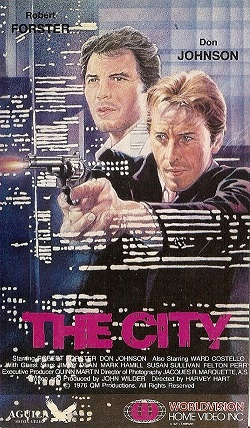
Retro Television Reviews: The City (dir by Harvey Hart)


Welcome to Retro Television Reviews, a feature where we review some of our favorite and least favorite shows of the past!  On Sundays, I will be reviewing the made-for-television movies that used to be a primetime mainstay.  Today’s film is 1977’s The City.  It  can be viewed on YouTube!

“Civilization began when man realized that he could not survive alone. He left the wilderness and built his citadels, security against intruders and erosion from within. The cities of the world have since become the crossroads of trade and ideas. Ideas that have made the human race more powerful than primitive man could ever have dreamed. Among these was an invention, a machine that conquered to contemporary enemies of man: time and distance….”

So goes the opening narration of 1977’s The City.  The narrator is the veteran character actor (and television producer) William Conrad and, as he speaks, we sees images of the California desert eventually being conquered by the growing city of Los Angeles.  It’s a bit of a portentous opening for a film that turns out to be fairly standard police procedural but it makes sense when you consider that The City was apparently meant to be a pilot for an anthology series about the people of Los Angeles.

The City features Mark Hamill, shortly before Star Wars would turn him into a cultural icon.  Hamill plays Eugene Banks, a sweaty, wild-eyed petty criminal who has made his way to Los Angeles from Texas.  Banks manages to get a nice apartment and a job working at a gas station.  One day, after a lawyer demands that Banks fill the tank of his Porsche, Banks snaps.  He grabs a wrench and attacks the car.  Then, he attacks the lawyer, beating the man until he dies.  Banks proceed to go on a crime and killing spree across Los Angeles, flashing a particularly scary-looking knife whenever he gets the chance.

Searching for Banks are two mismatched cops.  Matt Lewis (Robert Forster) is the tough-as-nails, emotionally reserved veteran with a bad knee and a determination to catch the bad guys.  The case becomes personal for Lewis after Banks kills his partner.  Brain Scott (Don Johnson) is a shaggy-haired country boy, much like Banks.  Brian comes from a wealthy family and is a bit more idealistic in his approach than Lewis.

Banks, it turns out, is obsessed with a country singer named Wes Collins (Jimmy Dean).  Banks not only resents the fact that Collins has everything that Banks has ever wanted but he’s also convinced that Collins is actually the father who abandoned him when he was a baby.  Banks wants to get revenge and he’s not going to let anyone, whether they be a bystander, a cop, or a dog, stand in his way.

Yes, Eugene Banks kills a dog in this film.  Fortunately, it happens off-screen but it’s still an indication of just how different this role is from Hamill’s best-known live action role.  As the two cops, Forster and Johnson work well together and bring their somewhat stereotypical characters to life but the main reason most people will watch this film will be for the chance to see Mark Hamill play an absolute lunatic.  With the exception of his somewhat dodgy Texas accent, Hamill does a good job with the role.  He’s got the crazy eyes down and he’s actually frightening when he attacks the lawyer at the start of the film.  The film itself is a bit predictable (i.e., the mismatched partners learn to work together, the bad guy gives a speech at an inopportune time) but The City is worth watching for the cast.

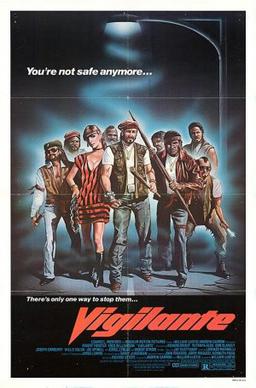
Vigilante (1982, directed by William Lustig)


The year is 1982 and New York City has gone to Hell.  While honest, hard-working people try to make a living and take care of their families, the streets are ruled by gangs and drug dealers.  The police and the legal system impotent in the face of intimidation and corruption.  Maybe it’s time for the citizens to take the streets back, by force if necessary.

That’s what Nick (Fred Williamson) and most of his friends believe.  Eddie Marino (Robert Forster) disagrees.  He says that people taking the law into their own hands will just lead to more violence and death.  The vigilantes will become just a bloodthirsty as the criminals.  While Eddie is debating policy with Nick, Eddie’s wife (Rutanya Alda) is threatening to call the police on a Che Guevara look-alike who she spots trying to set a gas station attendant on fire.  Eddie’s wife is stabbed.  His son is killed.  And when the man responsible is allowed to walk by a crooked judge, Eddie’s courtroom outburst leads to him being sent to jail.

Eddie spends 30 days in jail, fighting off predators and befriending a mysterious inmate named Rake (Woody Strode).  When Eddie is finally released, his traumatized wife no longer wants to be married to him but Eddie has found a new purpose in life.  Working with Nick, Eddie tracks down and murders the men who have destroyed his family.

One of the many films to be inspired by the success and enduring popularity of the original Death Wish, Vigilante is a classic of its kind.  Director William Lustig wastes no time in establishing New York City as being a graffiti-decorated war zone where good is fighting a losing war against evil and most of the victims are just innocent bystanders.  The New York of Vigilante looks even worse than it did in Lustig’s previous film, Maniac.  (Maniac’s Joe Spinell plays one a crooked lawyer in Vigilante.)  The action is brutal and bloody.  While Forster fights for his life in prison, the people who killed his son are allowed to run free.  It’s not subtle but, by the time Forster finally walks out of jail, you’ll be more than on his side and ready to see him get his revenge.  With his trademark intensity, Robert Forster is believable as someone who goes from aborhing to violence to being a stone cold killer who doesn’t even flinch when he shoots a defenseless man.  As Nick, Fred Williamson is his usual confident self.  Williamson may not have much range as an actor but he has such a forceful screen presence that he dominates any scene in which he appears.

Vigilante is a grim film, with Eddie ultimately going further than almost any other screen vigilante before him.  It’s also a deeply satisfying film because it appeals to everyone’s desire for revenge.  In the real world, vigilantes are often as dangerous as the people they’re trying to keep off the streets.  In the movies, though, they’re easy to root for.  They present easy and direct solutions to complex problems.  Even a film as dark as Vigilante works as a sort of wish fulfillment.  With crime on the rise and the constant news reports about innocent victims who just happened to be in the wrong place at the wrong time, it’s easy to root for Nick and Eddie as it once was for Paul Kersey.