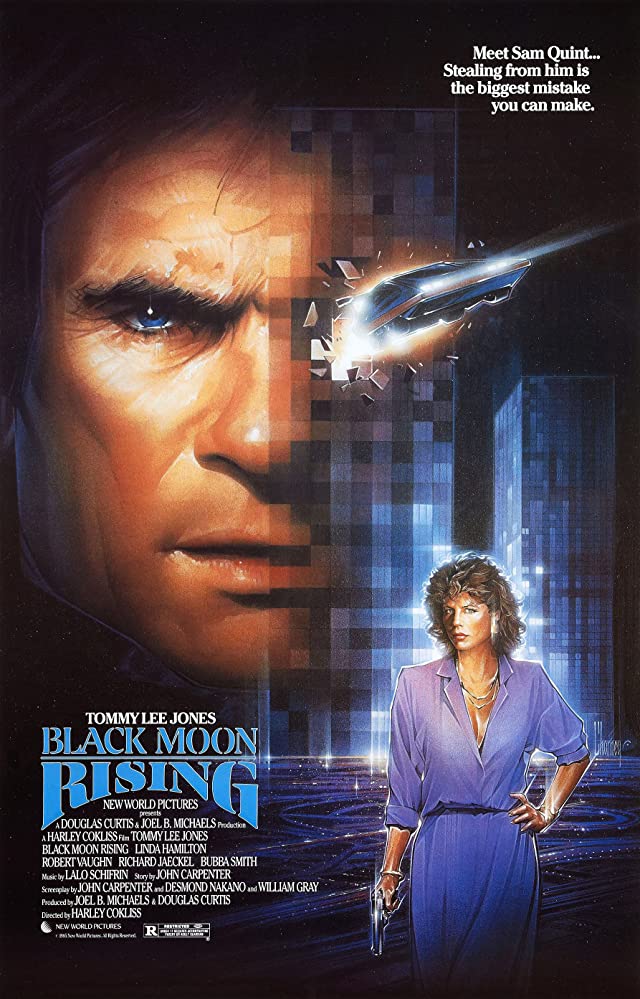
The FBI needs someone to steal a computer disk that can bring down a corrupt Las Vegas corporation so they hire reformed thief Sam Quint (Tommy Lee Jones). Quint manages to steal the disk but he finds himself being pursued by Ringer (Lee Ving), an old acquaintance who now works for the corporation. In order to keep the disk from falling into Ringer’s hands, Quint hides it in the back bumper of an experimental racing car called the Black Moon. The Black Moon, which runs on water and can fly when it reaches its top speed, is being taken to Los Angeles by Earl Windom (Richard Jaeckel) so Quint assumes that he’ll just follow Window to L.A. and then retrieve the disk when no one is watching.
However, as soon as the Black Moon arrives in Los Angeles, it’s stolen by Nina (Linda Hamilton). Nina works for Ed Ryland (Robert Vaughn), an outwardly respectable businessman who secretly runs a syndicate of car thieves. Now, Quint and Nina (who conventiently falls in love with Quint) have to steal the car back from Ryland while staying one step ahead of both Ringer and the FBI.
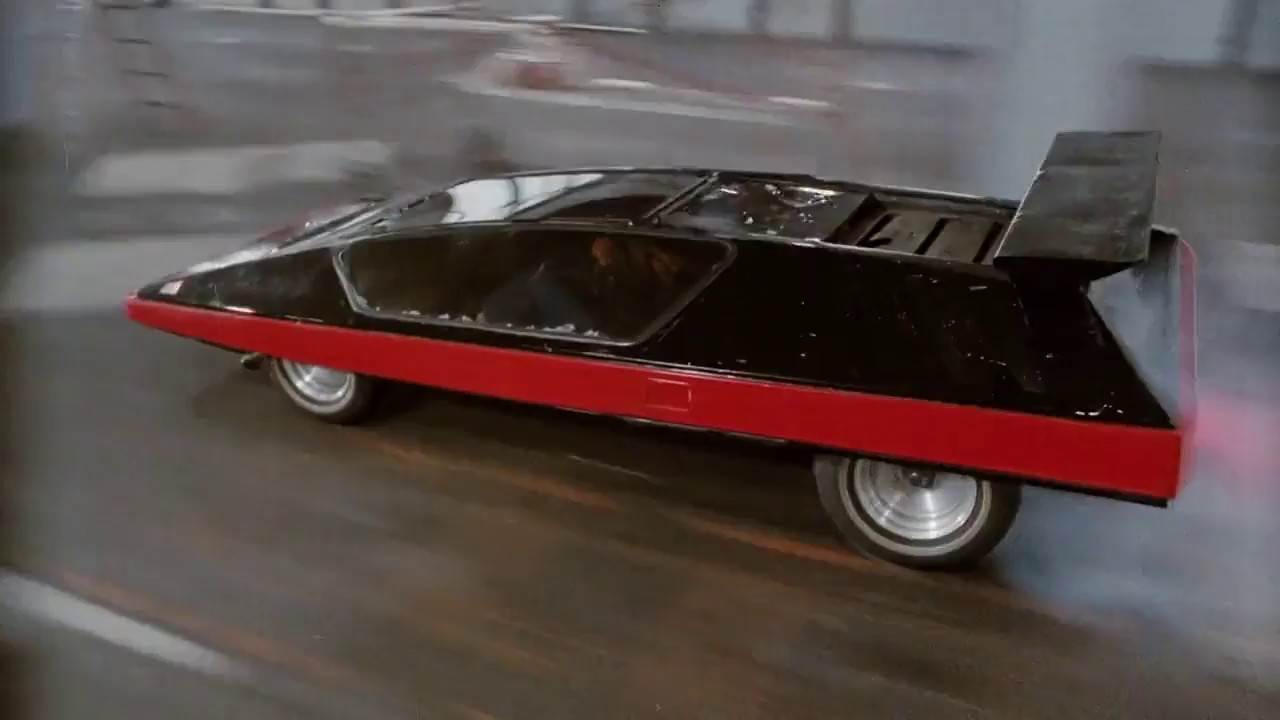
Black Moon Rising is not a movie that you watch for the plot or for the non-existent romantic chemistry between Tommy Lee Jones and Linda Hamilton. You don’t even watch it for the white collar villainy of Robert Vaughn, who basically just recycles his performance from Superman III. This is a movie that you watch for the car! The Black Moon is definitely an impressive vehicle. Who wouldn’t want to steal one of these?
In a car chase movie like Black Moon Rising, the most important thing is that the car must be cool. The Black Moon looks like something Mad Max would drive and it can actually fly so, by definition, it’s pretty cool. Unfortunately, Black Moon Rising doesn’t spend as much time with the car as it should. The movie gets bogged down with the scenes of Quint and Nina falling in love and Quint having to deal with his FBI handler (played by Bubba Smith). This is a film that would have benefited from being directed by someone like Hal Needham, who understood that people don’t come to car chase movies for the plot. They come to car chase movies because they want to see people driving fast and cars crashing in spectacular ways. Still, even though the car isn’t onscreen as much as it should be, the car is still cool enough to make Black Moon Rising watchable.
One final note: the screenplay is credited to John Carpenter. Though the imdb claims that this was the first script that Carpenter ever sold and that the film spent ten years in development, Carpenter says that he wrote the script around the same time that he made Escape from New York. He also says that he’s never actually seen the completed film.
Cocaine is flooding the United States and only one man is to blame! Ramon Cota (Billy Drago) is so evil that, after killing a group of DEA agents, he appears on closed-circuit television just so he can taunt their superior, John Page (Richard Jaeckel). When Ramon drives through his home country of San Carlos, he kills the peasants, rapes their women, and murders their babies, just because he can. He’s one bad dude.
Ramon is untouchable as long as he stays in San Carlos but occasionally he does have to leave the country so he can conduct business. A frequent flyer, Ramon always buys every seat in first class so that he and his bodyguards can have privacy. However, what Ramon didn’t count on, was Delta Force’s Col. Scott McCoy (Chuck Norris!). McCoy and his partner, Maj. Chavez (Paul Perri), aren’t intimidated by that curtain separating first class from the rest of the plane. As soon as Ramon’s flight enters American air space, they burst out of coach, knock out Ramon’s bodyguards, and then toss Ramon out of the plane. Being an experienced skydiver (not to mention that he’s also Chuck Norris), Col. McCoy is able to catch up to Ramon and grab him before he plummets all the way to the Earth.
Unfortunately, arresting Ramon in America means that you run the risk of a liberal, Carter-appointed judge setting a low-enough bail that Ramon can go free. Having taken advantage of America’s own legal system, Ramon murders Chavez and returns to San Carlos, leaving Col. McCoy and the rest of the Delta Force to seek vengeance for their fallen comrade.
Only Chuck Norris returns for this sequel to the greatest movie ever made. Unfortunately, Lee Marvin died shortly after the release of the first Delta Force. Even though John P. Ryan (as General Taylor) and Richard Jaeckel both seem to be attempting to channel Marvin’s grim, no-nonsense spirit in their performances, it’s just not the same. What made the first Delta Force so memorable was the mix of Marvin’s cool authority and Chuck Norris’s general badassery. Norris is as tough as always but the film still has a Lee Marvin-size hole in the middle of it and, without Marvin glaring at the bad guys and barking at the Washington pencil pushers who think they know how to keep America safe, Delta Force 2 could just as easily be a sequel to one of Norris’s Missing In Action films. This is a Chuck In The Jungle movie, with drug dealers replacing the usual Vietnamese POW camp commandants.
If you can see past the absence of Lee Marvin, Delta Force 2 is an okay Chuck Norris action movie. It’s typical of the movies that he made for Cannon but the fight scenes are well-directed by Chuck’s brother and Billy Drago is a loathsome drug lord who gets what he deserves. Chuck gets a few good one-liners and you’ve got to love the film’s final shot. Delta Force 2 never comes close to matching the original but at least it’s got Chuck Norris doing what he does best.
Firefighter Shelly Forsythe (Richard Roundtree) has just been assigned to a new firehouse and, from the minute he shows up, it’s trouble. Not only is he resented for taking the place of a popular (if now dead) firefighter but he’s also the first black to have ever been assigned to that firehouse. Led by angry racist Skip Ryerson (Vince Edwards), the other firemen immediately distrust Forsythe and subject him to a grueling hazing. However, Forsythe is determined to prove that he’s just as good as any white firefighter and refuses to be driven out. While the firehouse simmers with racial tensions, a gang of arsonists is setting buildings on fire.
Firehouse does not have much of a plot but what little it does have, it deals with in a brisk 72 minutes. Forsythe shows up for his first day. Everyone hazes him. Forsythe gets mad. There’s a big fire. And then the movie ends, without resolving much. Ryerson is still a racist and Forsythe is still mad at almost everyone in the firehouse. The characters are all paper thin and most of the fire fighting scenes are made up of grainy stock footage. What does make the film interesting is the way that it handles the causal racism of almost every white character. Ryerson, for instance, comes across as being an unrepentant racist but the film suggests that this is mostly due to him being too stubborn to change his ways and that Ryerson’s not that bad once you get to know him. When Andrew Duggan’s fire chief instructs Forsythe not to take any of the constant racial remarks personally, Firehouse portrays it as if Duggan is giving good and reasonable advice. The mentality was typical for 1973 but wouldn’t fly today.
One reason why Firehouse ends so abruptly is because it was a pilot for a television series. At the time Firehouse aired, it had been only two years since Roundtree starred as John Shaft and NBC hoped that to recapture that magic on a weekly basis. However, it would take another year before the Firehouse television series went into production and, by that time, Roundtree had left the project. In fact, with the exception of Richard Jaeckel, no one who appeared in the pilot went on to appear in the short-lived TV series.
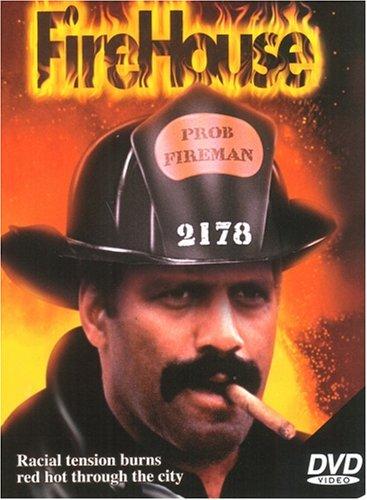
The DVD of Firehouse is infamous for featuring a picture of Fred Williamson on the cover, in which Williamson is smoking a cigar and wearing a fireman’s helmet. Williamson does not appear anywhere in Firehouse and I can only imagine how many people have sat through Firehouse expecting to see a Fred Williamson blaxploitation film, just to discover that it was actually a Richard Roundtree television pilot. Firehouse probably would have been better if it had starred Fred Williamson. Roundtree’s good but sometimes, you just need The Hammer.
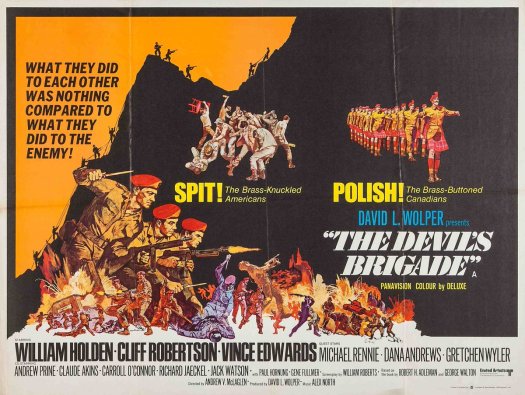
In the wake of 1967’s THE DRITY DOZEN came a plethora of all-star, similarly themed films. THE DEVIL’S BRIGADE is one of those, though just a bit different: it’s based on the true-life exploits of the First Special Service Force, a collection of American misfits straight from the stockades and the crack, highly disciplined Canadian military, forging them into one cohesive fighting unit.
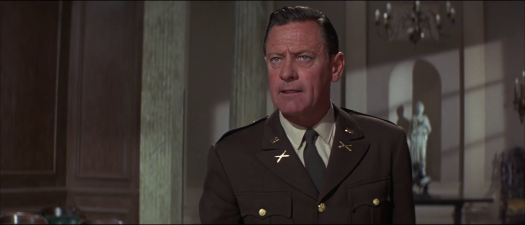
William Holden heads the cast as Lt. Col. Robert Frederick, tasked with putting the units together. His seconds-in-command are the cigar chomping American Major Brecker (Vince Edwards) and proud Canadian Major Crown (Cliff Robertson). The Americans, as rowdy a bunch of reprobates as there ever was, include Claude Akins , Luke Askew, Richard Jaeckel, and Tom Troupe, while the Canadians are represented by the likes of Richard Dawson, Jeremy Slate, and Jack Watson , war movie vets all. Andrew Prine is also aboard as an AWOL…
What’s an Insomnia File? You know how some times you just can’t get any sleep and, at about three in the morning, you’ll find yourself watching whatever you can find on cable? This feature is all about those insomnia-inspired discoveries!
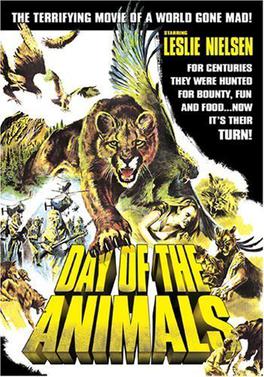
Last night, if you were having trouble sleeping around 2:30 in the morning, you could have turned on your television, changed the station to Movies TV, and watched the 1977 nature-goes-crazy horror film, Day of the Animals!
Now, I should admit that I was not suffering from insomnia last night. Jeff and I are currently up at beautiful Lake Texoma and we just happened to be up late last night and flipping through the stations. I should also admit that, unlike most of the other movies reviewed for this feature, Day of the Animals was not one of “those insomnia-inspired discoveries.”
No, we had both seen Day of the Animals before. The thing with Day of the Animals is that it’s one of those films that, if you see that it’s on TV, you simply have to stop what you’re doing and watch it. Considering that the man had a long career in the movies and I haven’t seen every film that he made, I could be wrong on this but I am fairly certain that Day of the Animals is your only opportunity to see Leslie Nielsen wrestle a grizzly bear.
Leslie Nielsen plays Paul, a businessman who is part of a group of hikers. Shortly before he wrestles with the bear, Paul stands, bare-chested, in the middle of a rainstorm and attempts to taunt God. “Melville’s God, that’s the God I believe in!” Paul shouts, “You want something!? YOU TAKE IT!” Then he turns to one of the hikers and says, “I know what I want and I’m taking it! I killed a man for you!”
Now, at this point, I should probably make it clear that Day of the Animals is not a comedy, though it’s always inspired a lot of laughter whenever I’ve watched it. Day of the Animals attempts to be a very serious horror movie. It even has an environmental message. Because of the hole in the ozone layer, solar radiation is driving all of the mountain animals crazy. Mountain lions attack campers. A grizzly bear wrestles Leslie Nielsen. A group of rats attempt to kill a policeman. German shepherds tear a man apart. And it’s not just the wild animals that are being affected. Leslie Nielsen goes crazy too.
Of course, Leslie Nielsen isn’t the only hiker. Genre vet Christopher George plays the leader of the tour and Lynda Day George is along for the ride as well. If you’ve seen the movie Pieces, you’ll remember Christopher George as the tough cop and Lynda Day George as the tennis pro who, at one point, dramatically screams “BASTARD!” into the wind. Susan Backlinie, who was the first victim in Jaws, also has a role in this film and that seems appropriate. Director William Girdler found quite a bit of success in ripping off Jaws. Before Day of the Animals, he directed Grizzly.
But good ole Leslie Nielsen is pretty much the entire show here. He tries really, really hard to give an intense and frightening performance. In fact, he tries so hard that you almost feel guilty for laughing at times. But then you see that head of perfect silver hair and you hear that deadpan voice saying, “Come here, you little punk!” and you just can’t help yourself.
Anyway, Day of the Animals may be bad but I defy anyone not to watch it.
In Montana, four men have infiltrated and taken over a top-secret ICBM complex. Three of the men, Hoxey (William Smith), Garvas (Burt Young), and Powell (Paul Winfield) are considered to be common criminals but their leader is something much different. Until he was court-martialed and sentenced to a military prison, Lawrence Dell (Burt Lancaster) was a respected Air Force general. He even designed the complex that he has now taken over. Dell calls the White House and makes his demands known: he wants ten million dollars and for the President (Charles Durning) to go on television and read the contents of top secret dossier, one that reveals the real reason behind the war in Vietnam. Dell also demands that the President surrender himself so that he can be used as a human shield while Dell and his men make their escape.
Until Dell made his demands known, the President did not even know of the dossier’s existence. His cabinet (made up of distinguished and venerable character actors like Joseph Cotten and Melvyn Douglas) did and some of them are willing to sacrifice the President to keep that information from getting out.
Robert Aldrich specialized in insightful genre films and Twilight’s Last Gleaming is a typical example: aggressive, violent, sometimes crass, and unexpectedly intelligent. At two hours and 30 minutes, Twilight’s Last Gleaming is overlong and Aldrich’s frequent use of split screens is sometimes distracting but Twilight’s Last Gleaming is still a thought-provoking film. The large cast does a good job, with Lancaster and Durning as clear stand-outs. I also liked Richard Widmark as a general with his own agenda and, of course, any movie that features Joseph Cotten is good in my book! Best of all, Twilight’s Last Gleaming‘s theory about the reason why America stayed in Vietnam is entirely credible.
The Vietnam angle may be one of the reasons why Twilight’s Last Gleaming was one of the biggest flops of Aldrich’s career. In 1977, audiences had a choice of thrilling to Star Wars, falling in love with Annie Hall, or watching a two and a half hour history lesson about Vietnam. Not surprisingly, a nation that yearned for escape did just that and Twilight’s Last Gleaming flopped in America but found success in Europe. Box office success or not, Twilight’s Last Gleaming is an intelligent political thriller that is ripe for rediscovery.
We all love a good cheese-fest every now and then, right? Well, THE GREEN SLIME delivers the limburger by the rocket-load, with its rock bottom special effects, silly looking monsters, overwrought dialog, and a cool heavy-metalish theme song (Who was that singer belting out the tune? More on that later!). This MGM/Toei Studios mashup was made with a Japanese crew and American cast, with an Italian pedigree, no less.
An asteroid codenamed ‘Flora’ is hurtling toward a collision course with Earth, and Comm. Jack Rankin is sent to space station Gamma-3 with orders to blow the thing to smithereens. Gamma-3’s Commander, Vince Elliott, holds a longtime grudge against Rankin, and his fiancé Dr. Lisa Benson just happens to be Rankin’s ex. I smell a love triangle brewing! Rankin, Elliott, and other crew members blast off to the asteroid to plant explosives, but there’s this Blob-like, pulsating ooze around gripping their…
Some of y’all may have noticed that, whenever I don’t have much to say about a movie, I’ll usually start things about be praising either the film’s title or its poster art.
With that in mind, the 1979 film The Dark has got a great title. I mean, what self-respecting horror film could actually resist a movie called The Dark? It’s a title that promises horror and blood and no holds barred morbidity! And really, the title is so brilliant that it almost doesn’t matter that the film itself come no where close to delivering.
And finally, just check out the poster art!
Seriously, that’s a great poster! If I had been alive in 1979, I totally would have wanted to see this movie just because of the poster. Not only is the film called The Dark but the poster literally promises that this movie is going to be — and I quote — “A chilling tale of alien terror!”
Woo hoo!
Of course, The Dark didn’t start out as a chilling tale of alien terror. The Dark is one of those films where what happened behind the camera is far more interesting than what was actually filmed. The story behind The Dark is a classic tale of low-budget, exploitation filmmaking:
Originally, The Dark was going to be a story about a zombie decapitating people in Los Angeles. The zombie had once been a Confederate soldier who ended up resorting to cannibalism. As originally envisioned, the Dark would feature numerous scenes of that dead Confederate wandering around with a big axe that it would use to chop off heads.
Tobe Hooper, who was hot as a result of having directed The Texas Chainsaw Massacre, was brought in to direct. However, after just a few days of shooting, he was replaced. Depending on which version you read, Hooper was either fired or he walked off the set. Either way, all accounts seem to agree that Hooper didn’t see eye-to-eye with the film’s producers. (One of those producers was Dick Clark, the same guy who always used to host ABC’s New Year’s special.)
With Hooper gone, a new director was brought in. That director was John “Bud” Cardos, who had previously had a drive-in hit with Kingdom of the Spiders. Cardos finished the film but he had no emotional investment in it and that’s obvious when you watch The Dark today. Visually, The Dark looks and feels like an old cop show, the type that you might expect to turn up on a cable station that is specifically programmed to appeal to the elderly.
The film that Cardos completed featured a Confederate zombie with an axe. However, the producers showed that film to a preview audience and quickly discovered that nobody cared about a Confederate with an axe.
So, they made some changes.
At the time, Alien was the most popular film at the box office so the producers thought, “Why not add some special effects, redub some dialogue, and make our Confederate zombie into an alien?” Sure, why not?
Hastily, The Dark was reedited. All shots featuring the zombie with an axe were removed from the film. Instead, whenever the monster attacked, the film now featured a freeze frame of the monster’s face with some hastily added laser beams shooting out of his eyes. This would be followed by a freeze frame of the victim and stock footage of an explosion….
(That said, there’s still plenty of references to the alien removing people’s heads…)
Interestingly, there’s still a scene in the film in which a police detective suggests that the creature might be a zombie. “Zom-bies!?” his superior yells, “I don’t want to hear those two words again!” Well, don’t worry. It’s not a zombie! It’s an alien!
(You do have to wonder why an alien would be wearing jeans and flannel shirt but, then again, why would a Confederate zombie be wearing jeans and a flannel shirt? It’s a strange world.)
As you’ve probably already guessed, The Dark is a bit of a mess. The alien is going around Los Angeles and blowing people up. (Though a few times, he also rips off their heads because … well, we already went into that.) The father of one of the victims is a burned out writer and he’s played by William Devane. (This is the same William Devane who has played the President in nearly every movie and TV show ever made. Words cannot begin to express how bored Devane appears to be in this movie. Oddly, with his hair long and graying, Devane bears an uncanny resemblance to Law & Order SVU‘s Richard Belzer.) The father is investigating, even though the lead detective (played by Richard Jaeckel) tells him not to. A reporter (Cathy Lee Crosby) is also investigating. And then there’s a psychic (Jacquelyne Hyde) and the psychic somehow knows what the monster is and who is going to die next.
The characters do eventually cross paths. When the detective meets the reporter, the detective announces that he’s going to kill the killer. “38 caliber justice?” the reporter replies. “If he’s dead, he can’t kill again!” the detective explains and he kind of has a point.
(Making it even stranger is that, while the detective and the reporter talk, there’s a political protest gong on behind them. The protest consists of people jumping up and down.)
It’s all really messy because, while watching the movie, you get the feeling that none of the actors knew what anyone else was filming. It’s like six different films with six different tones and they’ve all been smashed together. It’s also not particularly scary because ultimately, the zombie alien is just a freeze frame with some hastily added laser beams. (It doesn’t help that the lasers occasionally go “pew pew” when they’re fired.)
Actor Glenn Ford was born 100 years ago today in Sainte-Christine-d’Auergne, Quebec, Canada. Yes, the All-American star was actually Canadian, becoming a U.S. citizen in 1939. That same year, Ford signed a contract with Columbia Pictures and began a long, prosperous career with the studio. After getting noticed in films like HEAVEN WITH A BARBED WIRE FENCE, SO ENDS OUR NIGHT, and TEXAS (his first Western), Ford took a break from acting and joined the Marine Corps to serve in World War II.
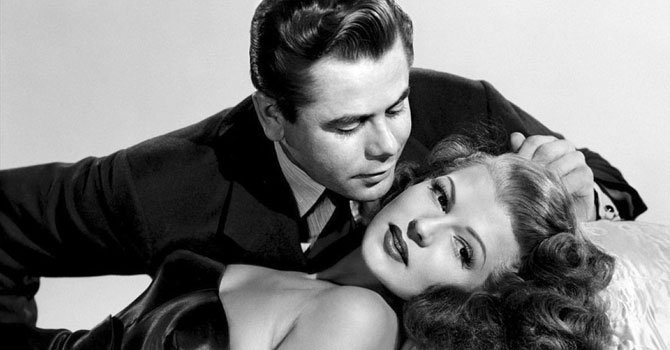
After the war, Glenn Ford was one of Hollywood’s top leading men. He hit it big with 1946’s GILDA, co-starring Rita Hayworth in what may very well be the first true film noir. Soon he found himself the hero in a string of successes: FRAMED, MAN FROM THE ALAMO, THE BIG HEAT , BLACKBOARD JUNGLE, JUBAL, and TEAHOUSE OF THE AUGUST MOON. But my favorite Ford role casts him…
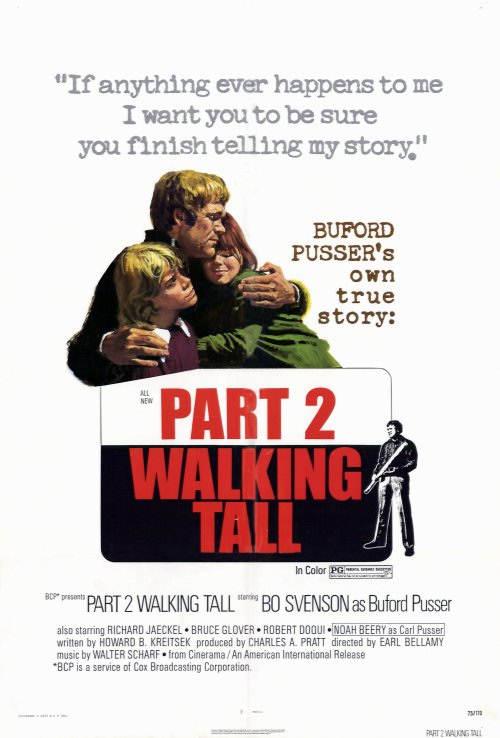
The 1975 southern melodrama Walking Tall Part 2 opens with a voice over telling us that we’re about to see more of the true of story Sheriff Buford Pusser, the Tennessee lawman who carried a big stick, battled the Dixie Mafia, and whose wife was killed in an ambush. Pusser, we learn, died under suspicious circumstances shortly after the release of the film Walking Tall.
Mere hours before he died, Pusser had signed a contract to play himself in Walking Tall Part 2. As a result of Pusser’s car “accident,” the film’s producers were forced to cast an actor as the lawman. Now, it would have made sense to, once again, give the role to Joe Don Baker. After all, he played the role in Walking Tall and I imagine that to most audiences at that time, he was Buford Pusser. However, for whatever reason, Baker was not given the role for a second time. Instead, the role was given to Bo Svenson and, while Svenson does not necessarily do a bad job in the role, he’s still no Joe Don Baker. The difference between Baker and Svenson is the difference between someone being a redneck and someone just pretending.
The film opens almost immediately where Walking Tall ended. Terribly wounded in the ambush that took his wife’s life, Buford is in the hospital and his face is covered in bandages. Townspeople gather outside both his room and his farm and they wonder whether he’ll run for reelection as sheriff. Someone else mentions that Buford has had massive facial reconstructive surgery.
Finally, the bandages are removed and we discover that Buford has turned into Bo Svenson. Now, Svenson and Baker do have enough facial similarities that you can force yourself to believe that surgery could lead to Baker having Svenson’s features. I mean, this isn’t like Mark Ruffalo taking over the role of Bruce Banner from Edward Norton. At the same time, it’s hard not to wonder how reconstructive surgery could have led to Buford Pusser becoming a blonde or, for that matter, apparently growing by 5 inches between Walking Tall and Walking Tall Part 2.
Anyway, Buford’s out of the hospital and, of course, he’s reelected as sheriff. One thing that quickly becomes apparent is that everyone in the world totally loves Buford Pusser. I lost track of how many characters specifically walked up to Buford to tell him that he was a great man and a great sheriff. Nobody complains about Buford’s habit of ignoring civil liberties while enforcing the law. Instead, everyone cheers for him.
(And, just in case the viewer is uncomfortable with the sight of the very white Buford taunting the mostly black moonshiners that he spends the film arresting, Buford’s black deputy constantly says stuff like, “Buford, you’re my kind of sheriff!”)
The only people who don’t like Buford are the local crime lords. They still want Buford dead so they hire a race car driver (Richard Jaeckel) to kill him. The race car driver’s girlfriend (Angel Tompkins) attempts to hit on Buford but Buford has no interest in her. Buford’s about enforcing the law and avenging his wife…
Walking Tall Part 2 is a pretty standard film. Whereas the original Walking Tall had a raw and unpredictable vibe to it, the sequel is predictable and boring. On the plus side, the film was made on location in rural Tennesee and some of the countryside is nice to look at.
As for Buford Pusser, he died before Part Two was released but the character would return in Walking Tall — The Final Chapter.
 The FBI needs someone to steal a computer disk that can bring down a corrupt Las Vegas corporation so they hire reformed thief Sam Quint (Tommy Lee Jones). Quint manages to steal the disk but he finds himself being pursued by Ringer (Lee Ving), an old acquaintance who now works for the corporation. In order to keep the disk from falling into Ringer’s hands, Quint hides it in the back bumper of an experimental racing car called the Black Moon. The Black Moon, which runs on water and can fly when it reaches its top speed, is being taken to Los Angeles by Earl Windom (Richard Jaeckel) so Quint assumes that he’ll just follow Window to L.A. and then retrieve the disk when no one is watching.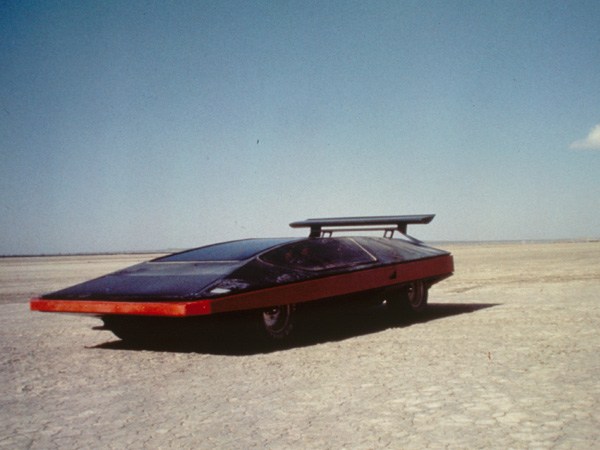



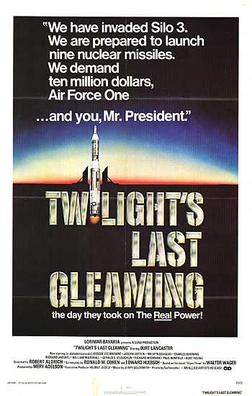 In Montana, four men have infiltrated and taken over a top-secret ICBM complex. Three of the men, Hoxey (William Smith), Garvas (Burt Young), and Powell (Paul Winfield) are considered to be common criminals but their leader is something much different. Until he was court-martialed and sentenced to a military prison, Lawrence Dell (Burt Lancaster) was a respected Air Force general. He even designed the complex that he has now taken over. Dell calls the White House and makes his demands known: he wants ten million dollars and for the President (Charles Durning) to go on television and read the contents of top secret dossier, one that reveals the real reason behind the war in Vietnam. Dell also demands that the President surrender himself so that he can be used as a human shield while Dell and his men make their escape.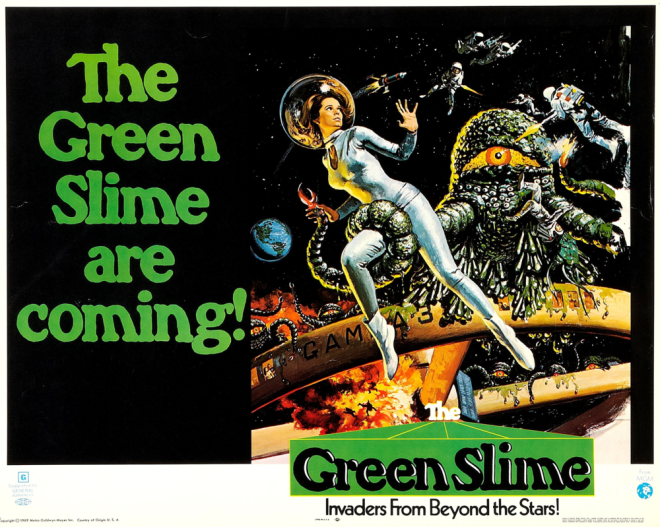


 Through the Shattered Lens