Retro Television Review: Homicide: Life On The Street 3.20 “The Gas Man”


Welcome to Retro Television Reviews, a feature where we review some of our favorite and least favorite shows of the past!  On Sundays, I will be reviewing Homicide: Life On The Street, which aired from 1993 to 1999, on NBC!  It  can be viewed on Peacock.

This week, the third season of Homicide comes to an end.

Episode 3.2o “The Gas Man”

(Dir by Barry Levinson, originally aired on May 5th, 1995)

The third season of Homicide was coming to an end and NBC was dragging its heels as to whether or not it would renew the show.  Homicide was critically acclaimed but its ratings were low, despite the efforts to make the show more audience-friendly during the third season.  Producer Barry Levinson grew frustrated with NBC’s refusal to tell him whether or not the show would be renewed.  Feeling that show was probably over, Levinson and showrunner Tom Fontana decided to do something truly radical.  They crafted a series finale that sidelined most of the major characters.

Instead, The Gas Man focuses on Victor Helms (Bruno Kirby) and his best friend, Danny Newton (Richard Edson).  Helms has just gotten out of prison, where he served six years after a gas heater he installed malfunctioned and caused the death of one of his customers.  Helms blames Frank Pembleton for the loss of both his freedom and his family.  (After getting released, Helms tries to talk to his teenage son but is rejected.)  Helms and Newton follow Pembleton across Baltimore, watching as he goes to work and to a fertility clinic.  While Pembleton is investigating the murder of a fortune teller, Helms and Newton sneak onto the crime scene and find both the murder weapon and the fortune teller’s severed head.  Helms takes both of them home and sends pictures to the Baltimore Sun, trying to taunt Pembleton.  Both the Sun and Pembleton assume its a hoax.  Eventually, Helms makes his move and, even with a knife to Pembleton’s throat, he realizes that he doesn’t have it in him to commit a cold-blooded murder.  He starts to cry.  Pembleton arrests him.  Life goes on.

This was an interesting episode.  The first time I saw it, I was a bit annoyed that the focus was taken off the lead characters.  But the more I think about it, the more I appreciate what Levinson was going for.  With this episode, he shows us what happens after the investigation and the conviction.  Victor Helms is angry because he feels, perhaps with some justification, that he was unfairly charged and convicted.  He’s obsessed with Pembleton but it’s clear that Pembleton doesn’t even remember him.  For Pembleton, arresting Victor Helms was a part of his job, nothing more.  For Helms, it was the moment that his entire life collapsed.  Bruno Kirby and Richard Edson both gave good performances as Helms and Danny.  Kirby captured Helms’s obsession but he also gave us some glimpses of the man that Helms used to be.  As portrayed by Edson, Danny’s loyalty to his friend was actually kind of touching.

Of course, it turned out that this episode was not the series finale.  Homicide would return for a fourth season, without Daniel Baldwin or Ned Beatty.  We’ll start season four next week!

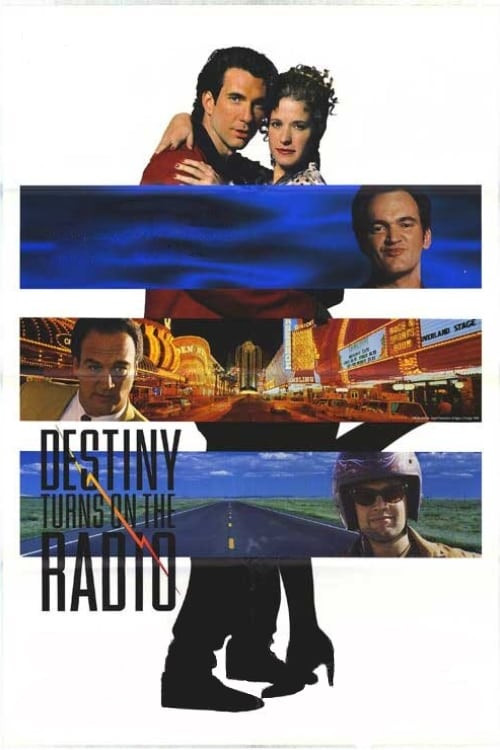
Destiny Turns On The Radio (1995, directed by Jack Baran)


Today, it can be easy to forget what an impact Quentin Tarantino had on pop culture in the 90s.  The one-two punch of Reservoir Dogs and Pulp Fiction inspired a generation of young and aspiring filmmakers to believe that anyone could make their own film.  Suddenly, you didn’t have to be a film school graduate to call yourself a filmmaker.  You could just be someone who loved movies and who was willing to keep hustling until you had something you could slip into Sundance.  That was the feeling, anyway.  The 90s were full of films about eccentric criminals who talked a lot and who loved pop culture, only three of which were directed by Quentin Tarantino.  Some of them were good.  Most of them were not.

Destiny Turns On The Radio was one of the first films to rip-off Pulp Fiction and it felt more cynical than most because it was directed by Jack Baran, who wasn’t even a video store clerk.  He was a producer of films like The Big Easy and Barfly, an industry veteran ripping off two films directed by someone who was, at that time, still an outsider.  The film tells a story that had plenty of Tarantino elements, including Quentin Tarantino himself.  Tarantino signed to play Johnny Destiny right after Pulp Fiction won the Palme d’Or at Cannes.

Johnny Destiny is a gambler who is apparently also a God.  He emerges from a lightning-filled pool and his dialogue is full of pseudo-philosophy.  He is driving through the desert when he picks up Julian (Dylan McDermott) and gives Julian a lift to Las Vegas.  Johnny Destiny is taking prison escapee Julian on a ride so that Julian can face his destiny.  Julian wants to recover some money from a bank job that he pulled off with Thoreau (James Le Gros) but it turns out that, when Johnny Destiny emerged from that pool, he also stole all the money.  (There’s no specific reason for Thoreau to be named after the famous philosopher, beyond the film trying to make itself seem deep by drawing in everyone who read Walden in AP English.)  Julian wants to get back together with Lucille (Nancy Travis), a singer who performs songs more appropriate for a 20s speakeasy than a Las Vegas lounge.  Lucille is involved with a gangster (Jim Belushi).  Belushi sings Vivia Las Vegas but otherwise, this is one of his more boring performances.

Like so many of the Pulp Fiction rip-offs of the 90s, Destiny Turns On The Radio is all self-conscious attitude and cool style, full of references to pop culture that fall flat because there’s no real thought behind them.  Reservoir Dogs and Pulp Fiction were full of style but they also told compelling stories.  Destiny Turns On The Radio is all style and little else and the cast never comes together the way that the actors in Tarantino’s first two movies did.  Watching this film, I realized why Dylan McDermott and Nancy Travis both found more success on television than in feature films.  The film posits Tarantino (as Johnny Destiny) as the epitome of cool but it then burdens him with the type of dialogue that he would have cut by the time he started a second draft.

Coming hot on the heels of the success of Pulp Fiction, Destiny Turns On The Radio actually led to a few years where many critics assumed Tarantino would be a two-trick wonder.  It was thought lightning struck twice but it would never strike a third time and Tarantino would spend the rest of his career as almost a parody of his earlier success.  Luckily, Tarantino proved them wrong and Destiny Turned On The Radio turned out to be not his career’s destination but instead just a detour.

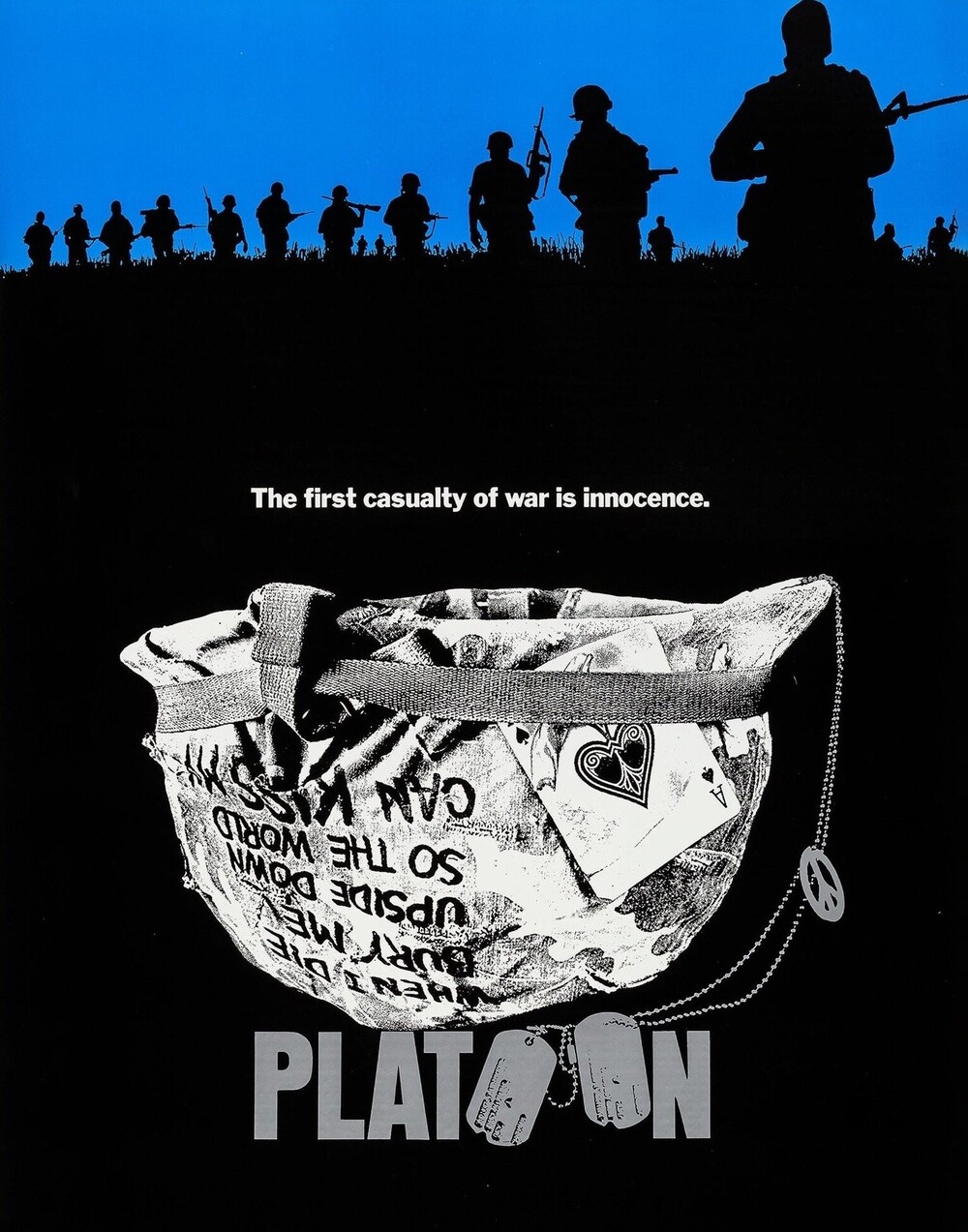
Lisa Marie Reviews An Oscar Winner: Platoon (dir by Oliver Stone)


One of my favorite scenes from TV’s King of the Hill occurs in an episode in which Hank and Peggy are celebrating their wedding anniversary.  They’ve sent Bobby and Luanne away for the weekend.  They have the house to themselves but, after their anniversary party, Peggy is feeling depressed.  She tells Hank that, for the first time ever, she feels old and she regrets all the dreams that she had that have yet to come true, like inventing and selling her own barbecue sauce.

Trying to cheer her up, Hank says, “C’mon, Peg.  We got the house to ourselves for weekend …. and I rented an R-rated movie!”

Peggy looks up, briefly hopeful that Hank did something romantic.  “What movie?” she asks.

Hank hesitates, glances down at the floor, and says, “Uhmm …. Platoon.”

It’s funny because it’s true.  Just about every man that I know loves Platoon.  First released in 1986 and reportedly based on Oliver Stone’s own experiences as an infantryman in Vietnam, Platoon is often cited as being one of the greatest war films ever made.  Oddly enough, the film has an anti-war and anti-military message but, in my experience, those who love it talk more about the battle scenes than any message that Stone may have been trying to impart about the futility of war.  Pauline Kael once wrote that Oliver Stone had left-wing politics but a right-wing sensibility and I think you can definitely see that in Platoon.  Despite all of the characters talking about how pointless the war is and how much they resent being forced to risk their lives for no apparent purpose, the film’s energy comes from the scenes of Chris Taylor (Charlie Sheen) stalking through the jungle and, towards the end, losing his mind and giving himself completely over to the adrenaline that comes from being trapped in the middle of a battle.  Throughout the film, we hear Taylor’s rather pedantic thoughts on the military and his fellow soldiers but it’s hard not to notice that his actions and his dialogue are usually far less eloquent.  Taylor may be a rich intellectual (and wow, is Charlie Sheen ever unconvincing when it comes to portraying that part of Taylor’s personality) but when he’s in the jungle, he’s just fighting for survival.

The film’s plot centers around the conflict between two sergeants, the peace-loving Elias (Willem DaFoe) and the war-loving Barnes (Tom Berenger).  Taylor has to decide which one of the two to follow.  The pot-smoking Elias loves his men and goes out of his way to protect them.  The beer-drinking Barnes has a much harsher view of the world but, at the same time, he’s the type of scarred warrior who seems immortal.  One gets the feeling that he’ll never be defeated.  The rest of the platoon is full of familiar faces, with everyone from John C. McGinley to Francesco Quinn to Tony Todd to Forest Whitaker to Johnny Depp to a baby-faced Kevin Dillon showing up.  (Dillon is especially frightening as a psycho who has, for some reason, been nicknamed Bunny.)  The majority of the platoon is dead by the end of the film.  Even with the leadership of Elias and Barnes, the soldiers are stuck in a winless situation.  As Taylor points out, the Americans aren’t just fighting the enemy.  They’re also fighting each other.

Platoon is certainly not my favorite of the film nominated in 1986.  I would have gone with A Room With A View.  (Blue Velvet, which is as influential a film as Platoon, was not even nominated.)  That said, I can’t deny the power of Platoon‘s combat scenes.  Though Stone’s script is didactic and Taylor’s narration is awkwardly deployed throughout the film, Stone’s direction definitely captures the fear and dread of being in a strange place with no idea of whether or not you’re going to survive.  Stone is critical of the military (at one point, an officer calls an air strike on his own men) but seems to love the soldiers, even the ones who have pushed over to the dark side.

Platoon was not the first Best Picture nominee to be made about the Vietnam War.  The Deer Hunter, Coming Home, and Apocalypse Now were all released first.  But both The Deer Hunter and Apocalypse Now are surreal epics that seem to take place in a dream world.  Coming Home, which has a script that somehow manages to be even more didactic than Platoon‘s, focuses on the war back home.  Platoon is far more gritty and personal film.  Watching Platoon, you can smell the gunpowder and the napalm and feel the humidity of the jungle.  I can understand why it won, even if I prefer to watch Helena Bonham Carter and Julian Sands fall in love.

Late Night Retro Television Review: Monsters 2.7 “Jar”


Welcome to Late Night Retro Television Reviews, a feature where we review some of our favorite and least favorite shows of the past! On Wednesdays, I will be reviewing Monsters, which aired in syndication from 1988 to 1991. The entire series is streaming on YouTube.

This week, Monsters brings together horror and noir!

Episode 2.7 “Jar”

(Dir by Bette Gordon, originally aired on November 1st, 1989)

Having been hired to find a missing woman, cynical private investigator Jack Bateman (Richard Edson) begins his investigation at the seedy bayou motel where the woman was last seen.  However, Mr. Hallet and Jack are not the only people at the hotel.  Ann Spiros (Gina Gershon) arrives with her loutish husband, the wealthy George (Ed Kovens).  Ann wants to get rid of her husband and she and Jack seem to share an immediate attraction to each other.  Does Mr. Hallet have something hidden away in all of his mason jars that could help Ann with that?  Of course, he does.  The show is called Monsters.  This episode is called Jar.  One doesn’t have to be a genius to figure out that something pretty extreme is about to happen in that isolated hotel and that it’s going involve something in a jar.

(Someday, remind me to write a post about all of the historical figures who had certain body parts preserved in a jar.  I don’t know why that would happen but no matter.  You can still see a few inches of Napoleon if you want to, though it might not be the part of him that you want to see.)

From the sultry saxophone on the soundtrack to the shadow visual style, this episode announces itself from the start as being an homage to film noir.  It works far better than I think anyone would have any reason to expect.  The bayou hotel is wonderfully atmospheric and steamy location.  One can literally feel the humidity that runs through this episode.  Though he was a bit young for the role, Richard Edson is a convincing hard-boiled detective.  Gina Gershon, as always, is a perfect femme fatale and seems to relish the opportunity to keep the audience guessing as to he motivations.  Ed Kovens is properly unsympathetic as the wealthy husband.  (Can you imagine how unpleasant noirs like this would be if the husbands were decent guys who just minded their own business?  It’s a good thing that they’re always louts.)  Finally, Fritz Weaver gives a nicely eccentric performance as old Mr. Hallet.  This episode is full of schemes and forbidden passions.  Fans of noir will appreciate the episode.

What’s especially surprising is just how well the supernatural and the monsters are all integrated into the noir format.  The monsters feel as if they belong in the story just as much as the hard-boiled detective and the sultry wife.  It takes a while for the monsters to do their thing but when they do, they definitely make an impression.

Monsters can be a bit of uneven show.  But Jar is definitely a triumph.

Retro Television Reviews: Miami Vice 1.16 “Smuggler’s Blues”


Welcome to Retro Television Reviews, a feature where we review some of our favorite and least favorite shows of the past!  On Mondays, I will be reviewing Miami Vice, which ran on NBC from 1984 to 1989.  The entire show is currently streaming on Tubi!

This week, Crockett and Tubbs head down to Colombia and learn about the smuggler’s blues!

Episode 1.16 “Smuggler’s Blues”

(Dir by Paul Michael Glaser, originally aired on Feb. 1st, 1985)

Someone is blowing up drug dealers and their families in Miami.  Homicide Detective Jones (Ron Vawter) doesn’t know why anyone cares about a bunch of smugglers being killed but DEA Agent Ed Waters (a youngish Richard Jenkins) is concerned that a vigilante is on the loose.

If there is a vigilante on the loose, who could it be?  Well, we know that it’s not going to be any of our regular cast members, even if Castillo does seem to be kind of tightly wound.  So, that really leaves Jones and Waters as our only two suspects.  Looking over the notes that I trotted down for this episode, I see that I immediately said that Waters had to be the killer because, when the killer anonymously called the Department towards the end of the episode, I instantly recognized Richard Jenkins’s voice.  Of course, it turned out I was totally wrong.  Detective Jones turned out to be the killer and apparently, I have no idea what Richard Jenkins actually sounds like.

Anyway, before Detective Jones can be revealed as the murder, Crockett and Tubbs have to go to Colombia so that they can go undercover as dealers and purchase a large amount of cocaine.  The idea is that the vigilante will target either Crockett and Tubbs or they’ll go after Trudy, who is undercover as Tubbs’s wife.  Working on their own, Crockett and Tubbs recruit a pilot named Jimmy Cole (Glenn Frey) to fly them to Colombia.

Former Eagle Glenn Frey was specifically cast in this episode because the plot was largely based on a song that he had written, Smuggler’s Blues.  (The episode’s script was written by Miguel Pinero, who played Calderone earlier in the season.)  The song is played throughout the episode, the lyrics hammering home one of Miami Vice‘s key themes.  The war on drugs can never be won because there’s way too much money to be made in smuggling and selling.

It’s a good episode, one that features a likable guest turn from Glenn Frey and plenty of action.  When Crockett and Tubbs land in Colombia, they find themselves having to fight off both enforcers and cops.  Their only ally is Cole, a man who they would normally be expected to arrest,  (In a nicely acted scene, Tubbs and Cole bond over the fact that they both served in Vietnam.)  Back in the United States, Crockett, Tubbs, and Cole have to fight off a thief, played by Richard Edson.  And after all that, it’s still up to Tubbs and Crockett to save Trudy from being blown up in a trailer and this leads to wonderfully tense bomb disarming scene.  In the end, Crockett and Tubbs score a victory but we are left with little doubt that it will only be a temporary one.  That’s the politics of contraband, to quote both the song and the show.

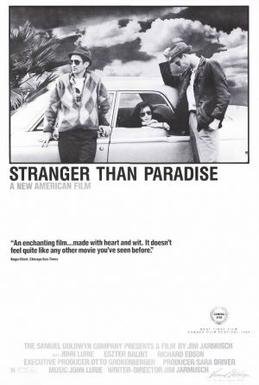
Sundance Film Review: Stranger Than Paradise (dir by Jim Jarmusch)


The Sundance Film Festival is currently taking place in Utah so, for this week, I’m reviewing films that either premiered, won awards at, or otherwise made a splash at Sundance!  Today, I take a look at 1984’s Stranger Than Paradise, which won the Special Jury Prize at the 1985 Sundance Film Festival.

‘You know it’s funny. You come to someplace new, and everything looks just the same.’

— Eddie in Stranger Than Paradise (1984)

Stranger Than Paradise tells the story of three friends.

Willie (John Lurie) lives in a small apartment in New York City’s Lower East Side.  He likes to go to the movies.  He likes to watch TV.  He likes to gamble, putting bets on horses and cheating at poker.  He was apparently born in Hungary, though he doesn’t speak with an accent and, whenever he has to deal with a relative, he always tells them, “Speak English.”  When his best friend asks him about why he never mentioned that he was Hungarian, Willie replies that he’s just as American as anyone.

Eva (Eszter Balint) is Willie’s cousin.  She’s travels to America from Budapest.  The plan is for her to live with her Aunt Lotte (Cecillia Stark) in Cleveland but, because Lotte is in the hospital, she begins her life in America by spending ten days in Willie’s cramped apartment.  Eva enjoys the music of Screamin’ Jay Hawkins.  When she’s walking to Willie’s apartment, I Put A Spell On You blares from the large tape player that she always carries with her.

And then there’s Eddie (Richard Edson).  Eddie may not be too smart but he’s always smiling and easy-going.  Unlike the somewhat churlish Willie, Eddie always seems to be enjoying himself.  When Eddie first meets Eva, most viewers will probably expect them to eventually become a couple.  That doesn’t happen, of course.  That’s not the type of film that this is.

http://www.youtube.com/watch?v=WpdHxSt8f7w

The first thing you notice about Stranger Than Paradise is the look of the film.  As one might expect from a film that reportedly had a budget of $10,000, the film looks cheap but there’s a beauty in that cheapness.  The harsh black-and-white magnifies every detail of the film’s locations.  When we watch Eva walking through New York City, the street may look desolate but it’s an exquisite desolation.

Directing his second film, Jim Jarmusch shoots nearly the entire film in single long takes and refuses to indulge in any of the usual tricks that movies often use to force an audience to identify with its main characters.  The camera rarely moves and every scene ends with a blackout.  It’s a technique that casts the audience as observers.  Willie, Eva, and Eddie may all be outsiders but, while watching the film, so is the audience.  Willie, Eva, and Eddie win us over because of the charm of the actors playing them and the deadpan humor of their dialogue but, at the same time, the film never lets us forget that we’re merely watching their lives unfold.

The humor in Stranger Than Paradise comes less from what these characters do and more from what they don’t do.  When Eva arrives in New York, Willie never offers to show her around.  There’s no trip to Broadway or the Statue of Liberty or anything else that we, as an audience, have been conditioned to expect whenever a stranger comes to New York for the first time.  Instead, Willie and Eva sit in Willie’s apartment and watch TV.  When Eddie asks Eva if she wants to join him and Willie at the movies, Willie tells Eva to stay in the apartment and not go outside.  Eva eventually wins Willie over by shoplifting dinner.

During the film’s second act, Willie and Eddie decided to visit Eva in Cleveland, despite not being sure where Cleveland is.  They ask one random guy standing on a street corner how to get there.  “I’m waiting for a bus,” the guy snarls back.  Later, as they drive drown a highway, Eddie asks Willie if they’re in Ohio yet.  “I think we’re in Pennsylvania,” Willie replies.  When they finally do get to Ohio, it turns out to be a frozen wasteland.  After meeting up with Eva, Willie and Eddie spend most of their vacation watching TV with Lotte.  Eventually, they visit Lake Erie.  It’s frozen but Eva, Willie, and Eddie still dutifully stand at the railing and stare down at it while a freezing wind howls around them.

Eventually, all three of them end up in Florida.  Instead of visiting Walt Disney World or Miami, they end up sitting in a cheap motel room.  Eva goes to the beach, which — when shot in black-and-white — looks just as desolate as Ohio in winter.  Eventually, all three of them stumble into money but that’s just a set up for the film’s final joke…

It’s a deliberately slow-moving film but it’s never less than watchable.  Lurie, Edson, and Balint all give such wonderfully deadpan performances that they’re a joy to watch even when they aren’t actually doing anything.  Stranger Than Paradise was Jim Jarmusch’s second film and also one of the first independent American films to receive widespread attention and acclaim.  (The National Society of Film Critics named it the best film of the year.)  34 years after it was first released, the film is an idiosyncratic joy to behold and definitely one that needs to watched by anyone who loves cinema.

Previous Sundance Film Reviews:

  1. Blood Simple
  2. I Don’t Feel At Home In This World Anymore
  3. Circle of Power
  4. Old Enough
  5. Blue Caprice
  6. The Big Sick
  7. Alpha Dog

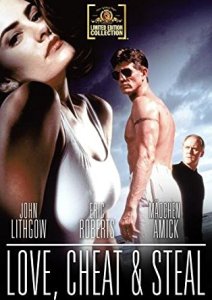
A Movie A Day #92: Love, Cheat, & Steal (1993, directed by William Curran)


Paul Harrington (John Lithgow) is a wealthy banking consultant who has just married a sexy, younger woman, Lauren (Madchen Amick).  Paul thinks that Lauren is perfect but then her brother, Donald (Eric Roberts), shows up.  What Paul does not know is that Donald is not actually Lauren’s brother.  Instead, Donald is Reno, Lauren’s first husband who she never actually divorced. Reno has just escaped from prison where he was serving time for a crime for which he believes Lauren framed him.  While Paul tries to save his father’s failing bank, Reno starts to plan a bank robbery and Lauren tries to balance her old life with Reno with her new life with Paul.
Mild neo noirs like Love, Cheat, & Steal were a dime a dozen in the 1990s.  Love, Cheat, & Steal was made for Showtime and, throughout the 1990s, it used to tempt kids like me with its promise of “Brief Nudity” and “Adult Situations.”  The only thing that makes it memorable is the presence of Madchen Amick, who was always the most beautiful of all of the Twin Peaks starlets, even if she often was overshadowed by Sherilyn Fenn and Lara Flynn Boyle.  Madchen Amick has the right combination of girl next door innocence and enigmatic sultriness to make her perfect for movies like Love, Cheat, & Steal.  Other than the presence of Madchen Amick, Love, Cheat, & Steal is best remembered for being your only chance to see Eric Roberts do a Jack Nicholson imitation.

One final note: Irish actor Dan O’Herlihy has a small role.  Though he is best known for playing Conal Cochran in Halloween 3, he also co-starred with Amick during the second season of Twin Peaks.

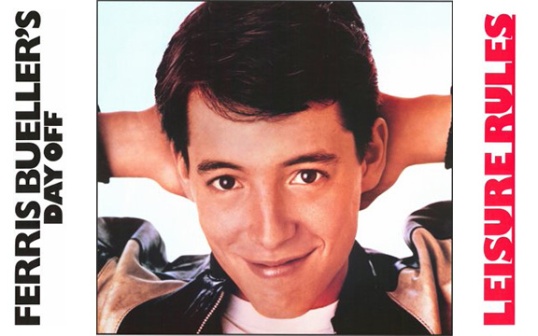
Back to School #42: Ferris Bueller’s Day Off (dir by John Hughes)


ferris-buellers-day-off-movie

Life moves pretty fast. If you don’t stop and look around once in a while, you could miss it. — Ferris Bueller (Matthew Broderick) in Ferris Bueller’s Day Off (1986)

While I was rewatching the 1986 John Hughes comedy Ferris Bueller’s Day Off for this review, I found myself thinking about all of the days (or, to be more precise about it, half-days) that I took off back when I was in high school.  It wasn’t that I didn’t like school.  Though I certainly didn’t truly appreciate it at the time, I actually had a pretty good time in high school.  I had an interesting and diverse group of friends.  I had lots of drama and lots of comedy.  I got good grades as long as it wasn’t a Math class.  (Drama, History, and English were always my best subjects.)  My teachers liked me.  But, at the same time, I couldn’t help but resent being required to go to school.  I do not like being told that I have to do something.

So, I would skip on occasion.  For some reason, it always seemed like my favorite classes were early in the day.  So, I’d go to school, enjoy myself up until lunch, and then me and a few friends would casually walk out of the building and we would be free!  There was a Target just a few blocks down the street from our high school and sometimes we’d go down there and spend a few hours shoplifting makeup.  Eventually, we did get caught by a big scary security guy who threatened to call our parents, made us return everything that we had hidden in our purses and bras, and then told us that we were never to step foot in that Target ever again.  And you know what?  In all the years since, I have yet to step back inside of that Target.

Interestingly enough, with all of the times that we skipped school, the worst thing that ever happened to me or any of my friends is that we got banned from Target.  We all still graduated, most of us still went to college, and, as far as I know, none of us have ever been arrested for a major crime.  None of us ever regretted missing any of the classes that we skipped.  For all the talk of how skipping school was the same thing as throwing away your future, it really was not that big of a deal.

ferrris38

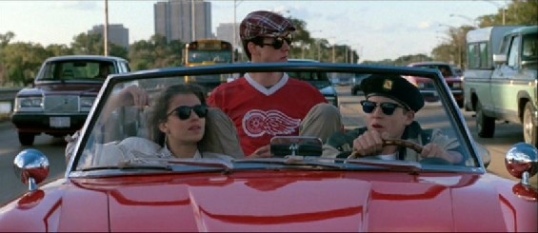
I think that’s one reason why, despite being nearly 30 years ago, Ferris Bueller’s Day Off is a film that continues to speak to audiences.  It’s a film that celebrates the fact that sometimes, you just have to take a day off and embrace life.  Technically, Ferris, Cameron (Alan Ruck), and Sloane (Mia Sara) may be breaking the law by skipping school and you could even argue that they’ve stolen Cameron’s dad’s car.

But, who cares?

You know who probably had perfect attendance in high school?  Principal Rooney (Jeffrey Jones) and seriously, who wants to grow up to be like that douchebag?

FerrisBueller_034Pyxurz

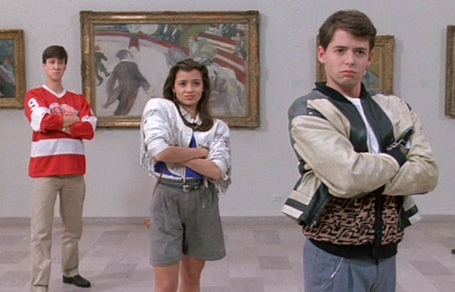
Whenever I do watch Ferris Bueller (and I’ve seen it more times than I can remember because seriously, I freaking love this movie!), I always find myself wishing that real-life could be as much fun as the movies.  As much as I may have enjoyed skipping school and shoplifting, it’s nothing compared to everything that Ferris does during his day off!  Ferris goes to a baseball game!  He takes his friends to a fancy restaurant!  He goes to an art museum!  (And, much like Sloane, my heart swoons at this point because I would have loved to have known a guy who would skip school so he could specifically go to the museum.)  Perhaps most importantly, he encourages his best friend Cameron to actually have a good time and enjoy himself.

Ferris, Sloane, and Cameron

In Susannah Gora’s book You Couldn’t Ignore Me If You Tried, an entire chapter is devoted to the making of Ferris Bueller’s Day Off and, to be honest, it’s actually makes for rather melancholy reading.  Ferris Bueller was the last teen film that John Hughes directed and the book suggests that a lot of this was due to the fact that Hughes didn’t have as good a time making the film as audiences would later have watching it.  In the book, Mia Sara speculates that Hughes never bonded with the cast of Ferris Bueller in the same way that he did with the casts of Sixteen Candles and The Breakfast Club.

gal_ferris_bueller_02

And indeed, it’s hard to imagine either Ferris Bueller or Matthew Broderick popping up in either one of those two films.  Ferris is far too confident to relate to the angst-driven worlds of Sixteen Candles, The Breakfast Club, or Pretty in Pink.  True, he doesn’t have a car and his sister (Jennifer Grey) resents him but otherwise, Ferris’s life is pretty much care-free.  Not only does he live in a beautiful house but he’s also already come up with a definitive philosophy for how he wants to live his life.  You look at Ferris and you know that he probably grew up to be one of those people who ended up working on Wall Street and nearly bankrupted the country but you don’t care.  He’s too likable.

ferrisbuellerkj09-05-26

His best friend, Cameron, is far more angsty but even his overwhelming depression doesn’t seem like it would be at home in any of Hughes’s other films.  If Cameron was a member of the Breakfast Club, he’d probably just sit in the back of the library and zone out.  Regardless of how much Judd Nelson taunted him, Cameron would stay in his shell.  If Cameron was in Sixteen Candles, it’s doubtful he would have been invited to the party at Jake Ryan’s house in the first place.  His depression is too overwhelming and his angst feels too real for him to safely appear in any film other than this one.  As a character, Cameron could only appear in Ferris Bueller’s Day Off because only Ferris Bueller would be capable getting Cameron to leave his bedroom.  On the one hand, the film may seem like a well-made but standard teen comedy where a lovable rebel defeats a hateful authority figure.  But, with repeat viewings, it becomes obvious that Ferris Bueller is truly about the battle for Cameron’s damaged soul.

ferris2.preview

There’s a prominent theory out there that the entire film is supposed to be Cameron’s daydream and that Ferris either doesn’t exist or he’s just a popular student who Cameron has fantasized to be his best friend.  I can understand the theory because Cameron really is the heart of the movie.  At the same time, I hope it’s not true because, if this is all a fantasy, then that means that Sloane never said, “He’s going to marry me,” while running back home.  And that would be heart-breaking because I love that moment!

628x471

Ferris Bueller’s Day Off may have John Hughes final teen film as a director (he would go on to write and produce Some Kind of Wonderful) but at least he went out on a true high note.

FerrisBueller-532_1444534a