The TSL’s Horror Grindhouse: Man on the Prowl (dir by Art Napoleon)


Man on the Prowl is a surprisingly intense film from 1957.

Doug Gerhardt (played by James Best) is an overly friendly young man with a pompadour and a quick smile.  Doug works as a deliveryman for a car dealership and he seems like a nice enough person.  He’s maybe a little bit goofy and, if you talked to him, you might think that he’s a little bit slow.  Still, it’s hard not to get caught up in his endless enthusiasm.  Doug is a very friendly man and he certainly does seem eager to help everyone that he meets.

Of course, Doug is also a sociopathic murderer.  He’s just been released from a mental hospital and, as we see when he strangles his date during the first few minutes of the movie, he’s still got some issues.  However, no one ever seems to really notice, just because he is so friendly and kind of dorky.  Even though his own mother (Vivi Janiss) tries to warn people that Doug is not well, most people just think that he’s a little bit eccentric.

When Doug nearly runs over Marian Wood (Mala Powers) and her son, Marian is not very happy with him.  Doug apologizes for driving too fast and he even insists on helping Marian carry in her groceries.  Marian goes from hating Doug to being somewhat forgiving of his reckless driving.  That’s the power of Doug’s charm.  He can go from nearly killing someone to making a new friend in just a matter of minutes.

Marian is married to Woody (Jerry Paris), though it’s not a particularly happy marriage.  Woody is always traveling on business, leaving Marian to take care of the house on her own.  Seeing an opening, Doug starts to casually drop by so that he can do things like help Marian fix the washing machine.  Of course, it’s hinted that Doug might be the one who broke the washing machine in the first place.  Doug is determined to replace Woody in Marian’s life.  When it turns out that Marian isn’t ready for husband to be replaced by a delivery boy (even if that delivery boy can fix a washing machine) …. well, Doug doesn’t take it well.

Man on the Prowl really took me by surprise.  For a film made in 1957, the story didn’t feel particularly dated, beyond a few things that couldn’t be helped.  (Doug’s pompadour comes to mind.)  If anything the film feels refreshingly honest in its willingness to admit that not all marriages are happy and not all wives are content with the idea of just sitting at home and waiting for their husband to return.  However, the thing that really took me by surprise was how Doug was portrayed.  Considering that the term “serial killer” wouldn’t be coined until 23 years after this film was originally released, Man on the Prowl is a surprisingly realistic portrayal of a serial killer.  Doug is someone who is empty on the inside but who keeps the world from noticing by deploying a charming smile and a friendly manner.  He’s Ted Bundy, decades before Bundy became a household symbol of evil.  As played by James Best, Doug is a very realistic and very frightening modern monster.

In many ways, Man on the Prowl is a prophetic film.  In 1957, someone like Doug was probably seen as being an aberration, a once-in-a-lifetime example of the natural order of things getting screwed up.  Now, however, we know that the world is full of Doug Gerhardts.  And we all feel a little less safe as a result.

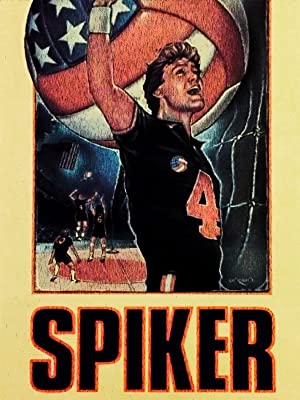
Guilty Pleasure No. 46: Spiker (dir by Roger Tilton)


The 1985 film, Spiker, is an attempt to make an exciting movie out of the one of the most boring sports in the world, men’s volleyball.  Not only does the film attempt to make volleyball look exciting but it attempts to do it on absolutely no budget.  Anyone who doesn’t appreciate the combination of guts and foolishness necessary to even attempt this is not a real film fan.

Spiker follows a group of college volleyball players as they train to qualify for the Olympics.  Or, at least, that’s what I think is supposed to be going on.  The plot is really difficult to follow, not because it’s complex but just because it’s volleyball and who cares?  We learn that the coach of the team (played by Michael Parks) is a tough taskmaster.  We learn that one of the players needs to get his act together and be more mature.  We learn that another member of the team has a wife who is jealous of all of his volleyball groupies.  Eventually, the team competes in Japan and Poland.  In Japan, the teammate who needs to get his act together gets drunk and wanders around with two prostitutes.  Poland, meanwhile, is represented by a high school gym and four women doing the polka.  One Polish woman asks a member of the team to smuggle out some letters.  Which he does.  Yay.  Exciting.

As I said, there’s a lot of volleyball in Spiker but you’re never really sure if the American team is winning or not.  Unless it’s being played on a beach and everyone’s wearing a skimpy bathing suit, volleyball is a thoroughly uncinematic sport.  I mean, what do you think of when you think about volleyball in the movies?  You think about Carrie White not hitting the ball and then burning down the school.  What you don’t wonder is, “I wonder who was winning when Carrie missed that hit?”

What makes Spiker a pleasure is it’s determination.  The film is truly convinced that it can somehow make volleyball exciting and you have to admire it for being so sure of itself.  It’s kind of like those people who spend night after night in Marfa, waiting for the UFOs to arrive.  They may be crazy but you can’t help but admire their dedication, even while you’re laughing at some of the absolutely atrocious dialogue.

The other thing that makes Spiker a guilty pleasure is the extremely intense and almost unhinged performance of Michael Parks at the volleyball coach.  Parks plays the coach as being tough-as-nails and always in a bad mood.  The film’s best scene features him throwing volleyball after volleyball at a player who has displeased him.  Parks does so with a look of grim determination on his face, the sign of a dedicated method actor giving it his best even in a B-movie that he probably agreed to do because he needed to pay the rent.  What makes Parks’s performance so memorable is that he never really seems angry.  Instead, he just seems to be perpetually annoyed and that makes him all the scarier.  Anger, after all, passes.  Annoyance is forever.

Spiker is a bad film but it’s endlessly watchable precisely because it so misjudged.  You can’t help but find both it and Michael Parks’s performance to be oddly fascinating.

Previous Guilty Pleasures

  1. Half-Baked
  2. Save The Last Dance
  3. Every Rose Has Its Thorns
  4. The Jeremy Kyle Show
  5. Invasion USA
  6. The Golden Child
  7. Final Destination 2
  8. Paparazzi
  9. The Principal
  10. The Substitute
  11. Terror In The Family
  12. Pandorum
  13. Lambada
  14. Fear
  15. Cocktail
  16. Keep Off The Grass
  17. Girls, Girls, Girls
  18. Class
  19. Tart
  20. King Kong vs. Godzilla
  21. Hawk the Slayer
  22. Battle Beyond the Stars
  23. Meridian
  24. Walk of Shame
  25. From Justin To Kelly
  26. Project Greenlight
  27. Sex Decoy: Love Stings
  28. Swimfan
  29. On the Line
  30. Wolfen
  31. Hail Caesar!
  32. It’s So Cold In The D
  33. In the Mix
  34. Healed By Grace
  35. Valley of the Dolls
  36. The Legend of Billie Jean
  37. Death Wish
  38. Shipping Wars
  39. Ghost Whisperer
  40. Parking Wars
  41. The Dead Are After Me
  42. Harper’s Island
  43. The Resurrection of Gavin Stone
  44. Paranormal State
  45. Utopia
  46. Bar Rescue
  47. The Powers of Matthew Star

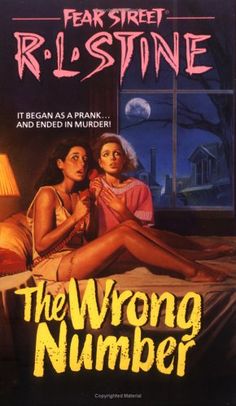
Horror Novel Review: The Wrong Number by R.L. Stine


The Wrong Number, an R.L. Stine novel that was first published way back in 1990, is a real artifact.

The plot itself is pretty simple and kind of ripped off from an old Joan Crawford called I Saw What You Did.  Basically, two teenage girls — Dina and Jade — are totally bored so they decided to pass the time by prank calling people.  They call up Jade’s sister.  They call up Rob, the boy whom Dina totally has a crush on.  It’s all pretty basic and, to be honest, kind of stupid.  I mean, if you’re going to prank call someone, don’t pretend like you’re calling on behalf of the mall or something.  Instead, you call them up and say something like, “You need to come home right away.  Everyone you love is dead.”

While Dina and Jade are making prank calls, some unidentified man is having a stream of consciousness discussion with himself, all about how his plan has nearly come to fruition and he just has to make sure that all the loose ends are tied up and how he’ll kill anyone who gets in his way.  Though the identity of this man is not immediately confirmed, it doesn’t take a genius to realize that that he’s eventually going to get an unwanted phone call from Dina and Jade.

Actually, it’s all Chuck’s fault.  Chuck is Dina’s half-brother and he’s got a history of fights and petty crimes.  He seems like kind of a punk but this being an R.L. Stine book, he’s actually just a misunderstood rebel who plays be his own rules.  It turns out that Chuck is an expert on prank calls.  Long story short, Dina and Jade eventually call up a man who is in the process of murdering his wife.  Somehow, this leads to them deciding that they need to investigate the murder themselves.  Myself, I’d probably just try to get on with my life but, on Fear Street, everyone’s curious.

The Wrong Number is pretty much typical Fear Street.  Solve the crime, get a boyfriend, try not to die.  It’s the type of book where Chuck gets into a knife fight after only being in town slightly less than day yet, instead of worrying that Chuck might have issues, it just makes him more attractive to Jade.  (Actually, speaking from my own long and sordid history of developing crushes on bad boys, that might be the most realistic part of the story.)

The most interesting thing about The Wrong Number is that it’s totally a product of its time.  This a book that literally could not take place today.  This plot is dependent upon everyone having a landline (and only a landline) and no one having caller ID or the ability to block annoying numbers.  It’s an artifact of a past time.  Thirty years ago, the world was a much different place.

International Horror Film Review: Deseo Deseo (dir by Eduardo M. Clorio)


Don’t ever play with mysterious board games, especially if you find them in the basement of a dead person’s house.

That would seem to be the main lesson of Deseo, Deseo.

The other, secondary lesson would be to be careful what you wish for.  You might just get it and all that.

Then again, I guess you could argue that the lesson is less about board games and less about wishes and more about the importance of not spending too much time hanging out with your cousins.  Because it really does seem as if a lot of the bad things that happen in Deseo Deseo could have been avoided if the cousins involved hadn’t all been so peculiarly close.  I mean, don’t get me wrong.  I come from a big Irish/Italian/Spanish family and I love my cousins but even I’m smart enough not to spend every waking moment with them.

(Basically, a cousin is a sibling for whom you’re not obligated to buy a birthday present.)

Anyway, Deseo Deseo is a Mexican horror film.  (The title translates to I Wish, I Wish.)  Though it’s listed on Prime as being a 2020 film, it’s actually been around for a while.  It was filmed and started making the rounds on the festival circuit in 2016.  It spent four years playing festivals before being “released” on Prime in August.  I point this out not to criticize.  Instead, I just always find interesting how we’ll refer to a film as if it belongs to the year that it finally got a wide release whereas many films — especially independent horror films — are usually one or two years old by the time they’re finally made available to the viewing, non-festival public.  I think sometimes there’s a tendency to assume that a film is shot and then it’s magically released a month or two later.  Actually, it takes a lot of work to not only make a movie but also to get it distributed.

Deseo Deseo tells the story of five cousins who visit the dilapidated home of their dead grandmother.  Each cousin is a very definite type.  You’ve got the fat nerdy guy and the arrogant wannabe rich guy and the awkward virgin guy and the girl who wants to be Salma Hayek and the other girl who is just normal enough that she might have a chance to survive the film.  They’ve all got their hopes and dreams, some of which are better than others.  The aspiring actress wants to be a star, which is understandable.  The awkward virgin guy wants to bang his cousin, which is really icky.

They find a board game in the basement and they make the mistake of playing it.  While holding a magical token, each one makes a wish.  The game then tells them what they have to do to make that wish come true.  (“I want to be a star.”  “Cheat on your boyfriend.”)  The game also tells them who will be punished if they fail to follow the instructions.  “It’s just a stupid game!” the arrogant rich guy says, despite the fact that the game gives some very specific recommendations.

One way or another, everyone’s wish come true.  Of course, this being a horror movie, the wishes usually come true in a totally unexpected way that kind of messes up everyone’s life.  And, of course, people have to die.  Eventually, our five cousins end up back in the basement, trying to wish their lives back to normal which …. yeah, don’t try to trick the demonic board game, folks.

“I wish for this all to end!” someone says.

“Kill them all,” the game suggests.

Seriously, don’t mess with board games!

So, the plot is a bit predictable but honestly, that really didn’t matter.  I mean, yes, the board game is obviously bad news and playing with it was a huge mistake but part of the deal that we enter into when we start watching a film like this is a willingness to accept that the film’s characters are going to do dumb things.  I liked Deseo Deseo, even if it wasn’t exactly the most original horror film that I’ve ever seen.  It was fast-paced, the atmosphere was creepy, and the actors were all likable enough that you at least felt a little bit of regret when they started dying.  I look forward to seeing what director Eduardo M. Clorio does next.

Horror Film Review: Population 436 (dir by Michelle McLaren)


Hi, and welcome to the 100th remake of The Wicker Man.

In this version from 2006, our victim is played by Jeremy Sisto.  He’s a good actor but he’s no Nicolas Cage.  He played Steve Kady, who works for the U.S. Census Bureau so let’s all take a moment to boo the federal government.  Booooo!  Steve has been sent to the small town of Rockwell Falls, North Dakota so that he can count the citizenry and I guess help to determine whether North Dakota should get a second congressional district.

Anyway, Steve arrives in town and he quickly meets Deputy Bobby Caine, who is played by Fred Durst.  A town where Fred Durst is responsible for maintaining law and order?  It’s a madhouse!  Actually, it’s a bit of a exaggeration to call the town a madhouse but there’s definitely something a little bit off about it.  The people seem to be old-fashioned and very religious. Could it be that they’re Mennonites?  If so, Steve’s gotten lucky because we’ve got a lot of Mennonites in Texas and, for the most part, they’re the nicest people you could hope to meet.

Anyway, Steve does some research and he discovers that the town has a long history of losing people to a mysterious fever and that somehow the town has never had more nor less than 436 citizens.  It’s almost as if something’s being done to specifically make sure that the town’s population always remains at 436.  The people who live there can’t leave without falling victim to any number of mysterious accidents.  The people who show up — like folks from the Census Bureau, for instance — are expected to stay.  Is it a supernatural thing or is it just an amazing religious-based coincidence?

Steve is going to have to figure it out because he’s falling in love with Courtney Lovett (Charlotte Sullivan) and she apparently doesn’t want to spend the rest of her life in a small town in North Dakota.  Also, it turns out that Bobby Caine is also in love with Courtney and he’s not happy about losing her to someone who works for the Census Bureau.  I don’t blame him.  I guess this where I would insert a joke about some song written by Limp Bizkit but, to be honest, I haven’t thought about Limp Bizkit in nearly twenty years and I’m not going to start now.

Anyway, this is kind of a padded review because there’s really not a lot to say about Population 436.  It’s an okay horror movie but it’s not a particularly interesting one.  By this point, we’ve seen so many messed up little towns and so many weirdly old-fashioned people with strange religious beliefs that it’s hard to be shocked by any of it anymore.  Even the movie’s “shock” ending feels predictable.  On the plus side, the film does make good use of the inherent creepiness of living in a state that’s defined by wide open spaces.  The town of Rockwell Falls does look convincingly creepy.  On the negative side, the film is a bit superficial and never bothers to really explore any of the issues that it raises.  It’s content to just say, “Religious people are crazy,” and while many will agree with that sentiment, it’s hardly as subversive a statement as Population 436 seems to think that it is.

Of course, if Population 436 encourages just one viewer to be paranoid about census takers and government bureaucracy, it will have all been worth it.

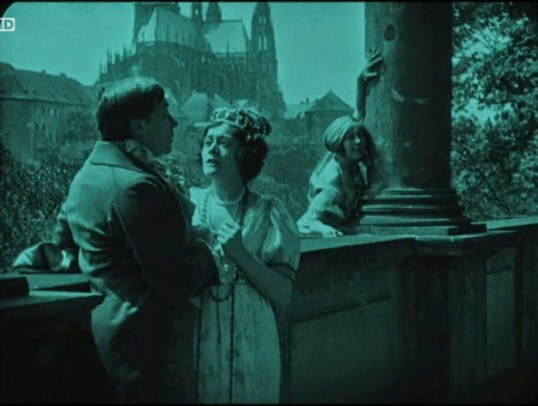
Horror On The Lens: The Student of Prague (dir by Stellan Rye and Paul Wegener)


For today’s horror on the lens, we have a film from 1913!  A German adaptation of Edgar Allan Poe’s William Wilson, The Student of Prague is often considered to be the first feature-length horror film.  Featuring Paul Wegener (who also co-directed the film) in the lead role, this is the story of what happens when the popular but poor Balduin attempts to get rich by dealing with the dark arts.  These things never work out well, as Balduin discovers once his reflection steps out of a mirror and goes out of its way to make Balduin’s life difficult.

Of course, to watch the film today, audiences have to adjust both their expectations and the way that they take in and process cinematic storytelling.  As of this writing, The Student of Prague is 106 years old and it’s definitely a film of its time.  The camera largely remains stationary and, from a modern perspective, the film is rather slow-paced.  And yet, the film’s story remains rather intriguing.  Despite the static camera work, the film manages to create and maintain a properly ominous atmosphere and a scene in which Balduin and Margit attempt to meet in a cemetery is effectively creepy.  Paul Wegener’s performance holds up well.  Largely eschewing the overly theatrical acting style that we usually tend to associate with silent cinema, Wegener gives a nuanced and effectively subtle performance as both Balduin and his doppelganger.  When he’s acting opposite of himself, you don’t think about the fact that you’re witnessing an early camera trick.  Instead, Wegener creates two separate but believable versions of the same character.  The doppelganger represents all of Balduin’s undesirable impulses and everything that has kept Balduin from achieving happiness.  By the end of the film, Balduin can’t live with his doppelganger but he can’t live without him as well.

The Student of Prague is an interesting piece of history and one that every true student of horror should watch and learn from at least once.

And here’s your chance!

Enjoy!

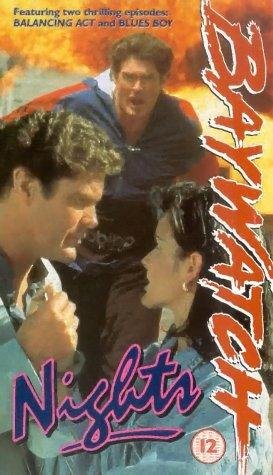
Horror On TV: Baywatch Nights 2.10 “Space Spore” (dir by Richard Freidman)


The 2nd season of Baywatch Nights was pretty clearly designed to duplicate the success of The X-Files and that’s certainly true of tonight’s episode, which finds David Hasselhoff, Eddie Cibrian, and Angie Harmon dealing with “space dust.”  It turns out that, in its way, space dust is almost as dangerous as regular dust!

Enjoy!


Horror on the Lens: Nosferatu (dir by F.W. Murnau)


Today’s Horror on the Lens is a classic film that really needs no introduction!  Released in 1922, the German silent film Nosferatu remains one of the greatest vampire films ever made.  It’s a film that we share every October and I’m happy to do so again this year!

Enjoy!

Horror on TV: Baywatch Nights 2.9 “Night Whispers” (dir by Reza Badiyi)


On tonight’s episode of Baywatch Nights, David Hasselhoff versus a vampire!

Yes, it’s just as silly as it sounds.  I mean, Hasselhoff vs. vampire pretty much tells you everything that you know.  The thing that amazes me about this show is that, even after confronting a different monster every week, Mitch still always seems to be somewhat skeptical.

“Okay, I’ll admit that sea serpents and aliens exist but vampires …. c’mon, there’s no way.”

Enjoy!

The TSL’s Horror Grindhouse: The Burning (dir by Tony Maylam)


Among some horror fans, the 1981 film, The Burning, has long had a reputation for being one of the best of the many films to come out of the early 80s slasher boom.

I have to admit that the first time I saw it, my thought process went something like this:  Oh great, more campers …. I can’t wait to see all of these people die …. God, these campers are annoying …. Thank God I never went to summer camp …. Wait, is that Jason Alexander …. when is the killer going to show up …. oh hey, that is Jason Alexander …. if I wanted to sit through a bunch of silly summer camp hijinks, I wouldn’t have gone searching for a horror film …. goddammit, was it really necessary for Jason Alexander to moon the camera …. wow, this movie is boring …. I don’t know who said this was scary but seriously …. oh God, now it’s turning into a movie about rafting …. I’ve about had it …. this movie is so bor–OH MY GOD WHAT THE HELL JUST HAPPENED! AGCK!  THERE GO HIS FINGERS OH MY GOD….

Seriously, The Burning is a film that requires a bit of patience.  You got to sit through a lot of silliness before you actually get to the horror but once you do …. oh my God!  It’s intense.  The killer in The Burning is Cropsy, a former groundskeeper who was set on fire by a bunch of campers years ago.  Now, he’s everyone’s worst nightmare — a madman with gardening shears.  It takes a while for Cropsy to really get into the spirit of things.  In fact, for a good deal of The Burning, no one is even talking about Cropsy, which is always a mistake when you’re trying to make a movie about a killer in the woods.  A young camper named Alfred (Brian Backer) keeps thinking that he see Cropsy sneaking around the camp but nobody believes him, largely because Cropsy doesn’t ever do anything to let people know that he’s back and ready to demonstrate how gardening tools can be used as an instrument of revenge.

However, once Cropsy actually gets going, he is terrifying!  The Burning is a good example of the type of horror movie that was made before the Nightmare on Elm Street series introduced the idea that killers could not only talk but also tell a lot of corny jokes.  Cropsy doesn’t speak.  Crospy doesn’t joke.  All Cropsy does is kill.  What makes Cropsy especially disturbing is that — much like the killer in The Prowler — he seems to get a lot of joy out of killing as brutally as possible.  He’s not Jason or Michael, killers who killed because that’s all they knew how to do.  Cropsy plots and calculates and hides and is basically everyone’s campfire nightmare come to life.

Now, as I said before, it does take Cropsy a while to get started.  And we do end up spending a lot of time watching campers do stupid things.  Yes, Jason Alexander is one of the campers.  He not only has hair but I think he’s supposed to be a teenager in this film.  He was 21 when the film was shot and he looks like he’s about 35.  He delivers his lines in such a way that it’s impossible not to think of The Burning as being a lost episode of Seinfeld where George Costanza goes camping.  On the plus side, he does get some vaguely funny lines, which is more than his co-stars get.

Speaking of co-stars, keep an eye out for Holly Hunter.  She was dating Jason Alexander at the time (as well as rooming with Frances McDormand) and she makes her film debut as one of the campers.  She gets one line.  “What if they don’t come back?”  It’s a good question.  What if they don’t?  (Cue dramatic music!)

Anyway, The Burning is a slasher film that requires some patience but when it needs to be scary, it gets the job done.  (The gore effects are by the one and only Tom Savini and yes, they are shocking and a bit disturbing.  If you’ve ever wanted to know what losing four fingers at once would look like, this is the film for you.)  It’s a bit too padded for its own good but Cropsy is an effective villain and the movie actually catches you by surprise regarding who survives and who doesn’t.  Amazingly, there was never a sequel to The Burning.  Personally, I don’t think it’s too late.  I want to see Jason Alexander return to the camp and finish Cropsy off, once and for all!