Film Review: Martha Marcy May Marlene (directed by Sean Durkin)


Martha Marcy May Marlene was, for me, one of the most surprising films of 2011.  I wasn’t expecting much when I went to see it because so much of the film’s publicity centered on the fact that it starred Elizabeth Olsen, the younger sister of the Olsen Twins.  Needless to say, we don’t usually associate the Olsen Twins with challenging and mature filmmaking and, even though they had nothing to do with Martha Marcy May Marlene, it was impossible to read or hear about the film without them being mentioned.  For a lot of people, this led to Martha Marcy May Marlene being dismissed by association.  That’s really not fair to the film or Elizabeth Olsen (or the Olsen Twins, for that matter).  Martha Marcy May Marlene is a haunting and disturbing little psychological thriller and one of the best films of 2011.

Olsen plays Martha, a young woman who, one day, shows up at the home of her older sister and her husband (played by Sarah Paulson and Hugh Dancy).  Though the film never gets into the specific details, it becomes apparent that Paulson and Olsen are the products of a dysfunctional background.  Olsen escaped by running away from home while Paulson found her exit by marrying the rather arrogant Dancy.  Hoping to repair their own strained relationship, Paulson agrees to let Olsen stay with them, despite both the objections of Dancy and Olsen’s refusal to say where she’s been.  No sooner has Olsen moved in then it starts to become apparent that she’s not the same person that Paulson remembers. When Paulson asks Olsen if she wants to take a swim in the nearby lake, Olsen responds by stripping off her clothes in front of Dancy and when Paulson and Dancy are trying to conceive their first child, Olsen sees nothing wrong with casually walking into the room and laying down on the bed beside them.  More ominously, Olsen soon reveals herself to be paranoid of strangers.  As Paulson struggles to understand her sister, we see flashbacks of a much more open (and trusting) Olsen joining a cult-like group, led by a magnetic John Hawkes.

Director Sean Durkin makes an assured debut with this film, subtly shifting between the present and the past and filling the screen with beautifully placid images that somehow manage to leave the audience with an unshakeable sense of menace and foreboding.  As a storyteller, Durkin keeps the audience guessing and wondering about both who Martha once was, who she eventually became, and who she’s going to be in the future.  Wisely Durkin doesn’t provide any easy solutions as much as he poses questions and then suggests a possible answer. 

If you’re like and you’re a true crime and/or exploitation junkie (I’m both), you’ll realize immediately that the character played by John Hawkes is pretty blatantly based on Charles Manson and his followers are the equivalent of Manson’s “family.”  What’s interesting is how Hawkes manages to keep his character both threatening and intriguing even after this become apparent.  Hawkes radiates such charisma in the beginning of the film that the scenes where he eventually reveals his true colors are shocking, despite the fact that you know they’re coming.  It’s a performance that proves that Hawkes is one of the best character actors working today and Durkin skillfully contrasts Hawkes’s more subtle form of domination with Hugh Dancy’s more obvious technique with the film ultimately suggesting that both of these patriarchal characters are just two sides of the same coin.

Ultimately, though, the film is dominated by Elizabeth Olsen who gives a performance that is simply brilliant.  Alternatively innocent and calculating, Martha is a fascinating character and Olsen brings her to haunting life.  As a result of Olsen’s brave performance, Martha Marcy May Marlene joins with Hanna and Shame as a great modern film about the search for identity.  This has been a year full of strong female performances and Olsen gives one of the strongest.  The next time some shyster tries to sell you on the idea that Rooney Mara is the actress of the future, tell them to go see Martha Marcy May Marlene.
A Quickie With Lisa Marie: Melancholia (dir. by Lars Von Trier)


Let us take a moment to consider the career of film director Lars Von Trier.  Is Von Trier a visionary?  Is he a genius?  Is he an artist who forces us to look at the world in a different way?  Is he one of the major voices working in the world of cinema today?  Or is he just full of crap?  This is the debate that always seems to come up whenever one talks about Lars Von Trier and a pretty good case can be made that the man is both a genius and an idiot, an artist and a charlatan.  How, we ask ourselves, do we reconcile the fact that this man who has directed so many memorable films is also the same man who goes to Cannes and hints that he might be sympathetic to Hitler.  As a result, Von Trier’s films seem to act as both aesthetic statements and as evidence in the never-ending trial to determine whether or not Lars Von Trier is worth all the trouble.  Melancholia — which is currently both playing at theaters and available OnDemand — is the latest exhibit in a long trial.

Melancholia is both the story of the relationship of two sisters (played by Charlotte Gainsbourg and Kirsten Dunst, who deservedly won best actress at Cannes for her performance here) and the story of what happens when a new planet called Melancholia appears in the sky and then promptly starts to move closer to the Earth.

The film is divided into two parts.  The first part takes place over the course of one long night.  Justine (Dunst) and her new husband Michael (Alexander Skarsgard who looks so amazing in a tux) attend a wedding reception at a mansion owned by Justine sister Clare (Gainsbourg) and Clare’s well-meaning but condescending husband John (Kiefer Sutherland).  While Justine and Michael, at first, appear to be the perfect couple, it slowly becomes apparent that the truth is far more complex.  The first part of the film takes its time establishing the characters and how they relate to each other but it never drags, largely because of the chemistry between Dunst and Skarsgard but also because Von Trier proves himself to be far more subtle director here than he’s usually given credit for being.  The first half of the film is full of details — some small and some not — that make us believe that these very familiar actors actually are the characters that they are portraying.  While Von Trier never explicitly show us what’s at the heart of Skarsgard and Dunst’s trouble relationship, he includes enough details that we, as the viewer, can figure it out.  Under Von Trier’s skilled direction, even such little things as Dunst’s constant struggle to keep her dress up take on an added and poignant significance.

In the second half of the film, a depressed Dunst is now living in the mansion with Gainsbourgh and Sutherland.  Despite the fact that Dunst is nearly catatonic, Sutherland has little sympathy for her and makes no secret of the fact that he’s not happy to have her living in his home.  However, things change rather quickly once it is learned that the new planet Melancholia is on a collision course with Earth.  While Sutherland insists that the two planets will not actually collide and Gainsbourgh panics, Dunst starts to find herself oddly rejuvenated by the prospect that the world might end…

If you were dismissive of Von Trier before this movie came out, I doubt watching Melancholia will change your mind.  In many ways, this film epitomizes everything that people tend to hate about his movies.  However, I loved Melancholia.  Visually, it’s beautiful and the film student in me loved the film simply for the many homages to Last Year at Marienbad.  Von Trier gets excellent performance from the entire cast but really, this is Kristen Dunst’s film and she proves that she’s capable of a lot more than just being a Manic Pixie Dream Girl.  Speaking of someone who has battled depression all of her life, I have to say that Dunst gets it right, capturing not only the pain of permanent sadness but also the odd moments of clarity that seem to come with it.  Finally, this is a unique film and it’s unique because Von Trier is a director that’s not afraid to be an egocentric asshole when it comes to telling the story that he wants to tell. 

I could spend hours debating what exactly Melancholia means and I’d probably change my mind several times during the conversation.  However, one thing is for sure: Melancholia is one of the best of films of 2011.

A Quickie With Lisa Marie: The Adventures of TinTin (dir. by Steven Spielberg)


Originally, this was supposed to be the year of Steven Spielberg.  After all, Spielberg had two major films open within days of each other and, earlier this year, various know-it-all pundits declared that both of these films (along with David Fincher’s dumbed down version of Girl With The Dragon Tattoo) would be major awards contenders.  This was, of course, before films like Hanna, The Artist, Drive, and The Tree Of Life came out and made Spielberg’s trademark suburban cinematic vision seem almost quaint.  Spielberg’s two films — The Adventures of TinTin and War Horse — both very much remain in the hunt for nominations but few seem to be expecting them to actually win anything.  Oddly enough, it’s as if Spielberg’s films somehow went from being overrated to underrated before they were even released.

I haven’t seen War Horse yet (and the commercials don’t fill me with hope) but, in the case of TinTin, this is unfortunate because I saw the film on Friday and it’s a perfectly enjoyable animated film that, while never reaching the intertextual heights of Rango or matching the “awww” factor of Puss in Boots , is still a bit more memorable than Pixar’s Cars 2.  Based on a Belgian comic book, (which I had never heard of before so don’t expect me to get into the whole debate about whether Spielberg does the original justice) The Adventures of TinTin is about a “boy reporter” named TinTin (voiced by the always likable Jamie Bell) who, along with his adorable dog Snowy, ends up going on a quest for lost treasure.  The film plays out like an old-fashioned adventure film with TinTin and Snowy’s quest taking them from one exotic locale to another.  Continually, they find themselves getting captured by various bad guys and having to escape in some properly exciting manner.  Along with the way, they meet an alcoholic sea captain (voiced by Andy Serkis) and a whole variety of flamboyant characters.  My favorite characters were the two well-meaning but inept police detectives, Thompson and Thompson.  Thompson and Thompson are voiced by Simon Pegg and Nick Frost and the two of them have so much chemistry and play off each other so well that they’re even fun to just listen to.

When I saw The Adventures of TinTin, I was sincerely surprised by how quickly the film moved.  Usually, I find that the majority of Spielberg films tend to drag in the middle.  Whenever there’s nothing to blow up or an excuse to fill the scene with soaring music conducted by John Williams, Spielberg seems to lose his way as a filmmaker and can almost seem desperate in his attempts to convince us that he’s a serious artist.  However, it almost seemed as if The Adventures of TinTin was over before it even started.  This is not a film that drags but instead one that cheerfully leaps from one action sequence to another.  It’s as if working on an animated film freed Spielberg up from his inherent need to remind us that he’s a respectable filmmaker.  For once, he’s willing to just have fun without trying to justify it.  Since I was seeing the film with two hyperactive children (my nephew who is five and my niece who is three), I was happy and relieved that the film didn’t have any slow spots.  The movie, as a matter of fact, held their attention better than it held mine and all three of us loved Snowy.  An important lesson for all aspiring filmmakers: If you’re ever in doubt, always cut to a small animal doing something cute.

Ultimately, TinTin is an enjoyable little film that really doesn’t add up too much.  This isn’t another Toy Story 3 or a How To Train Your Dragon.  This is not a film to bring tears to your eyes but it’s enjoyable enough and it’s a rare Spielberg film that seems to be unashamed of simply being message-free entertainment.

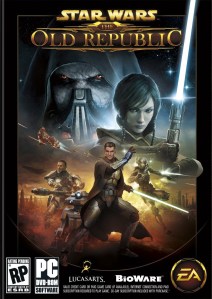
Star Wars: The Old Republic


As BioWare’s ad campaign boldly proclaims… the wait is over.

I don’t know how many Star Wars fans are still willing to embrace new products that come out without some measure of hesitation. I’m certain that many people still love Star Wars, and refuse to let their love be tainted by any of the more questionable decisions that the brand has made over the years. As a boy, I would certainly have counted myself amongst that group; as an adult, I simply feel free to make the choice not to give money to things that I don’t enjoy. It was definitely with a significant measure of hesitation that I placed a pre-order for BioWare’s brand-spankin’-new MMO, Star Wars: The Old Republic.

As the name implies, this game takes place during that lengthy and largely unexplored time of the Old Republic. Since the Republic persisted for thousands and thousands of years, it makes for a seemingly endless breeding ground for unique and individual stories without the need to be concerned with the absolute canon of the six Star Wars films. In other words, the further removed we are from characters like Luke Skywalker and Darth Vader, the easier it is to make a game that still feels like Star Wars… but doesn’t even attempt to infringe upon the films or their core events. The setting for The Old Republic is set some time after the events of the two “Knights of the Old Republic” games. Darth Revan, at least, is considered to be an almost-mythical figure in this time period. It still follows the progress of ongoing hostilities (if not outright war) between the Sith Empire and the Republic. Beyond that, the game’s story depends heavily (at least insofar as I’ve progressed myself) on which character class you’ve selected. Unlike other MMORPGs that you might have played in the past, the Old Republic is designed to provide a story and interaction-rich single player leveling experience. It uses a dialogue wheel with a variety of options and relies heavily on interactive conversations with NPCs to determine which quests your character obtains, what rewards you get from them, your alignment toward the Light or Dark sides of the Force, and how much your companions (more on this in a moment) like you. There are definitely still periods in your leveling experience which feel like a traditional grind; you will find yourself completing circuits of non-individual quests to shore up your XP total and bring in much-needed credits.

Based on your character class, you have a main personal story that you’re progressing through. My character, a bounty hunter, is attempting to be the overall winner in a massive competition of bounty hunters staged by the Mandalorians that requires me to go around the galaxy hunting the most difficult of targets – and the other hunters who have been assigned to the same targets. The missions specific to this bounty hunter storyline are accessed through single-character “phases” – areas only accessible to you – and serve to give the player the impression that they are advancing their character’s story along with their skills. Because these events are personal to the player and follow a linear progression, the NPCs involved become increasingly impressed with you, your reputation, and your abilities. Compared to other MMO-style games where your personal contribution to the world is rarely felt in any meaningful way, this game goes out of its way to try and make the player feel involved and important. This is particularly important, I think, in the context of the Star Wars setting. While of course the game involves fighting through seemingly endless hordes of creatures, rebels, insurgents, bandits, etc. in the wilds and in quest areas, the pacing of the game and the structure of the quests all seem bent toward keeping the feel of a Star Wars adventure. The game is not encouraging a long grind against increasingly formidable types of bats; your character has important business to be about, and just has to scythe through bad guys of various competency levels in order to complete that business.

Further adding to the immersion of the game is the aforementioned companion system. As you progress through your story, your character will acquire access to different companions. As you’d expect, these companions (one of them, anyway) joins you in battle and helps by fighting your enemies. In addition, your companions deal with the responsibility of gathering and crafting for the game’s profession system, which boasts an impressive variety of skills, from which your character may select three. Since your companions take care of most of this nonsense, it might sound like the professions are fairly hands-off. Fortunately or unfortunately, this is not really the case; you still must micromanage your crew of companions, dispatch them on missions, and set them to crafting. You cannot simply queue up a list of things for them to make or do, and it can quickly become tiresome to constantly refer to your crew management window and dispatch your minions. Unlike most of the game’s other features, this one does feel like it breaks the rhythm of your individual Star Wars story.

Incidentally, your friends still can have plenty to do with your experience in the game; situations called Flash Points call for parties to group up and take on significant challenges together (much like a dungeon in Everquest’s Lost Dungeons of Norrath, or in World of WarCraft). End game content is also available, but even with my early access, I certainly haven’t achieved such a high level as to be involved in any of that yet. Still, given the composition of the game so far, there is reason for me to remain optimistic about continuing game content.

The last thing rolling off my tongue is a little discussion of the space combat system. Yes! There is space combat! You can take your starship into space combat missions which are worth XP and credits for your character. They use a Starfox-style system of controls; your ship moves toward your mouse cursor, you have both lasers and missiles, and you can perform a barrel roll (the default key is the space bar!) You’ll have to deal with both enemy starfighters and capital class starships, and complete different objectives like escorting a friendly starship to safety, or destroying certain elite enemy targets, etc. It’s very much in the background (most of the action takes place ‘on the ground’ for your character) of the game, but it’s certainly a lot of fun, and the XP rewards are more than worth delving into it if you find the space combat minigame at all playable. My recommendation is to try it and have fun.

Film Review: Sherlock Holmes: A Game of Shadows (dir. by Guy Ritchie)


One of my favorite films of 2009 was Guy Ritchie’s Sherlock Holmes.  I saw the first (of probably many) sequels to that film this weekend.  Now, I have to admit that I was kinda worried about Sherlock Holmes: A Game of Shadows.  As much as I loved the first film, it definitely had the feeling of being a happy accident.  There were so many obvious ways to screw the film up that I found myself suspecting that that’s exactly what would happen with the sequel and I worried that a bad sequel would make it impossible for me ever to really enjoy the first film.  Well, having seen Game of Shadows, I can see that no, it’s not as good as the first film.  However, it’s still  pretty good.

Game of Shadows picks up the story a bit after the end of the first film.  Sherlock Holmes (Robert Downey, Jr.) is still doing cocaine and solving mysteries in London.  Dr. Watson (Jude Law) is still his best friend and is still planning on getting married and, not surprisingly, Holmes is still not happy about the idea of losing him.  Holmes is also still investigating the mysterious criminal mastermind, Dr. James Moriarty (Jared Harris).  Holmes discovers that Moriarty is behind a series of world-wide anarchist bombings and, with the world on the verge of war, Holmes and Watson attempt to both figure out why and to thwart Moriarty’s scheme.  While I haven’t read enough Sherlock Holmes to say for sure (I read the Hound of the Baskervilles in high school and that’s about it), I get the feeling that, plotwise, this film was probably more James Bond than traditional Sherlock Holmes.  But no matter, it’s an intriguing enough plot and director Ritchie wisely doesn’t spend too much time trying to hammer home that similarities between Moriarty’s scheme and certain modern-day conspiracy theories.

If the first Sherlock Holmes was a comedy with some action scenes, this sequel is definitely an action film with a lot of comedic relief.  Whether or not this increases or diminishes your enjoyment of the sequel really depends on how you feel about the action genre in general.  To be honest, most big budget action films bore me several shades of silly and Game of Shadows pulls out all the usual tricks — slow motion explosions, fist fights full of jump cuts so quick that it becomes impossible to really keep track of who is actually fighting who, and the whole zooming into the barrel of a gun just as the trigger is pulled routine.  And yet these action sequences didn’t inspire my usual eye rolling, if just because it was obvious that the film itself understood just how over-the-top and silly all of it was.  The film has the decency not to demand that I take it seriously and for that, I’m more willing to accept the predictable parts than I would be with a film like Battle L.A.

Besides, even with the increased emphasis on action, the filmmakers still understand that what made the first Sherlock Holmes work was the chemistry between Robert Downey, Jr. and Jude Law.  Seriously, Downey and Law have some of the strongest chemistry in the movies today.  Certainly, there a more believable couple than Natalie Portman and Ashton Kutcher.  (It’s probably not a coincidence that the film, very early on, establishes that Watson is getting married and that Holmes is still mourning Rachel McAdams from the previous film.)  You buy their friendship and it’s just fun to watch these two actors bouncing lines off of each other.  Downey still comes across more like Robert Downey. Jr. than Sherlock Holmes (and that’s just fine with me) but Jude Law actually gets a chance to act in this film and he brings a lot of life to a character who, on paper, would just seem to be the prototypical sidekick. 

Joining the cast in this installment as Jarded Harris as the evil Dr. Moriarty and Noomi Rapace as the gypsy fortune teller who gets caught up in Moriarty’s latest scheme.  Now, you may be surprised to hear this with the current efforts to brainwash us all into being Rooney Mara-compliant but Rapace was the original Girl With the Dragon Tattoo and, regardless of the film establishment’s attempts to revise history, she is the one who made Lisbeth Salander into an icon.  Unfortunately, Rapace doesn’t get to do much here but I was happy to see her if just to know that the Hollywood establishment hadn’t succeeded in erasing her from history.  As Moriarty, Jared Harris doesn’t have a lot of scenes but he still totally dominates the entire film.  Harris’s Moriarty is truly serpent-like, outwardly smooth and calm but, on the inside, always ready to strike.  He makes Moriarty into such a memorable, genuinely threatening villain that he ends up giving the film an extra dimension that otherwise wouldn’t be there.  It’s a great performance and hopefully, when the inevitable third Sherlock Holmes film is made, Moriarty will be back and Harris will be playing him.

Lisa Marie Cries and Cries As She Watches A Dolphin Tale (dir. by Charles Martin Smith)


On Wednesday evening, Jeff and I went down to the dollar theater and we finally got around to seeing A Dolphin Tale.  A Dolphin Tale is one of those movies that I was really enthusiastic about seeing when it first opened in theaters but then, for whatever reason, I just never got around to seeing it.  So, I was happy to have a chance to catch it before it left theaters for a sure-to-be popular life as a video rental.  The film’s trailer led me to suspect that I would cry and cry while watching A Dolphin Tale and I was not disappointed.

This is going to be a pretty simple review because A Dolphin Tale is a pretty simple movie and that’s exactly why it’s a good movie.  The movie tells the true story of Winter, a dolphin who was horribly injured by a crab trap and who lost her tail as a result.  After almost dying, Winter manages to fight back and is soon able to swim again.  However, swimming with no tail is damaging her spine and, unless something can be done, Winter will eventually end up killing herself.  Luckily for Winter, there’s a dedicated and eccentric scientist (played by Morgan Freeman, who can make any line sound like an edict from God) who dedicates himself to building her a prosthetic tail.  Will Freeman be able to get the tail built before Winter has to be put down and, more importantly, will Winter be able to learn how to use the new tail before her new home, the Clearwater Marine Hospital, runs out of money and is sold off to a businessman who wants to turn the place into a hotel?

If you don’t already know the answer then you’ve never seen a movie before.  Yes, A Dolphin’s Tale is predictable and yes, it’s not very subtle about manipulating the audience’s emotions but I don’t care.  The movie is just so sincere and the film’s story is just so inspiring that I had no problem allowing myself to be manipulated.    This is a movie that has a good heart and it’s obvious that for director Smith and for most of the cast (which includes Ashley Judd, Harry Connick, Jr., and Nathan Gamble, along with Freeman) that this film really was a labor of love.  The true star of the film, however, is Winter, who plays herself in this film.

The film itself is in 3-D and yes, there’s about a hundred shots of Winter swimming straight at the camera that were obviously included just because the film was in 3-D but who cares?  Yes, it’s manipulative but it works.  At the film’s end, we see documentary footage of Winter actually being rescued and cared for by the real people who we’ve just seen recreated in the film.  Not a single one of them looks as good as Harry Connick, Jr. or quite as wise as Morgan Freeman but they all look like heroes to me.

Seriously, if this film doesn’t touch you then you have no heart and you are quite possibly a member of the walking dead.


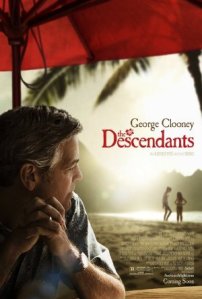
A Dangerous Quickie With Lisa Marie: The Descendants (dir. by Alexander Payne)


One thing that always happens at Oscar season is that certain films will be so embraced by the critical establishment that even daring to challenge their opinion to even the slightest degree will be interpreted as some sort of cinematic heresy.  These are the films that make you feel as if Roger Ebert is standing directly behind you, holding a gun to your head and commanding you to enjoy and be moved by what you’re watching.  Last year, that film was The Social Network.  This year, at least for me, it’s The Descendants.

One reason why The Descendants has been so praised by the critics is because it’s seen as being a film about “real people” and “real life.”  It’s advertised as a film with no easy villains and no easy heroes.  This is the type of film that people tend to praise for not falling into specific genre.  However, those critics are wrong because The Descendants is a pure genre film, make no mistake about it.  It is the latest entry in the Mediocre White Man film genre.  The MWM genre tends to center on middle-aged white guys who are comfortably upper middle class, have quirky relatives, and have been afflicted by ennui.  The protagonist of the MWM film usually narrates the action for us and tends to spend a lot of time explaining how he’s managed to structure his life for maximum efficiency while, at the same time, shutting himself off emotionally from the rest of the world.  Over the course of the MWM film, the protagonist is usually forced to deal with some crisis that makes him realize that 1) he’s getting old, 2) his safe life has become a prison, and 3) there’s not much he can do about it.  The MWM film will feature at least one or more scenes featuring our protaganist either aimlessly running or standing still on an escalator with a blank expression on his face while some old song from the 60s or 70s plays on the soundtrack.  

MWM films tend to do well critically because most critics are mediocre white men themselves.  They also do well with the Academy, probably for the same reason.  And, don’t get me wrong.  There have been some excellent MWW films released over the past decade.  Sideways, Up in the Air, Thank You For Somoking, and even Michael Clayton are all excellent MWM films.  The problem isn’t that The Descendants is a MWM film, the problem is that it doesn’t really bring anything new to genre and even the film’s most effective moments feel awfully familiar.

In The Descendants, George Clooney (a mainstay of MWM genre) plays Matt King, a wealthy attorney living in Hawaii.  Matt’s wife is in a boating accident that leaves her brain-dead.  Matt, who has always been “the backup parent,” finds himself forced to take care of his two daughters (Amara Miller and Shailene Woodley) while going from island to island to inform people of Elizabeth’s impending death.  Along the way, he discovers that Elizabeth has been having an affair with a sleazy real estate agent (Matthew Lillard) and he’s forced to confront the fact that he hasn’t always been the best husband or father.  There’s a lot of quirky and funny moments and there’s a lot of sad moments but they’re never feel quite as genuine as the film seems to believe.  Instead, they often feel more like they were just put there to satisfy the demands of the MWM genre.  The end result is a film that too often seems to mistake ambiguity for insight and which ultimately seems to be more safe than honest.

That doesn’t necessarily mean that The Descendants is a bad film.  Much like The Social Network, it’s a good film that also happens to be very overrated.  Director Alexander Payne keeps the story moving and, as predictable as the film may be, it’s still well-acted and occasionally well-written.  Though I thought a lot of the dialogue was a bit too spot-on perfect (this is a film where even the inarticulate characters sound calculated), the script features enough good one-liners to keep the film entertaining.  Amongst the cast, Robert Forster is poignant as Elizabeth’s grieving father (and his “I’m going to hit you line,” is perfectly delivered) and Judy Greer makes the most of the thankless role of Lillard’s wife.

In the end, I guess the Descendants is a lot like an old middle school crush.  He’s so cute and appealing that it takes a while of digging and soul searching before you can admit that there’s really not much going on there.

Film Review: Santa Claus Conquers The Martians (dir. by Nicholas Webster)


As our longtime readers may have noticed, I’m running behind on getting my weekly exploitation and grindhouse trailer post together.  I apologize for the delay and this week’s post should be up either tomorrow or on Monday.  However, until I finally manage to get my act together, why not enjoy a classic holiday film that just happens to be in the public domain?

You may think that you know everything about Santa but did you know that he’s also a super hero who is capable of interstellar conquest?  Did you know that he’s not only needed on Earth but on Mars as well? Did you know that apparently some people known him as “Santy Claus?”  And most importantly, did you know that Santa is actually kind of a creepy old man whose trademark laugh can actually sound quite disturbing in certain circumstances?

Okay, maybe that’s not true about the actual Santa Claus.  But it’s certainly true about the Santa Claus who turns up in the 1964 film Santa Claus Conquers The Martians.  This film, an obvious labor of love from director Nicholas Webster, presents us with a universe where the children of Mars are so stricken with ennui that the King of Mars has no choice but to go down to Earth and kidnap Santa.  Santa, however, manages to conquer those Martians while bringing holiday goodness and cheer to children all over the universe.  Santa, by the way, is played by John Call and … well, it’s a performance that has to be seen.

In fact, Santa Claus Conquers The Martians itself is a film that simply must be seen.  Everything from the cardboard robot to the cardboard South Pole to the cardboard cast to the painfully catchy theme song “Hooray for Santy Claus” simply demands that you watch this film at least once.  Santa Claus Conquers The Martians has earned its reputation for being one of the worst films ever made but you know what?  It’s also a lot of fun and it’s still better than Avatar.

Seriously, Avatar sucks.

So, please, sit back with your computer and enjoy Santa Claus Conquers The Martians.  Hopefully, next year at this time, it will be rereleased in 3-D.  And, if you’ve seen this film before, you know what the means.  That’s right — Dropo right in your face!

What Lisa Marie Watched Last Night: Betrayed at 17 (dir. by Doug Campbell)


It’s been too long since I did a What Lisa Marie Watched Last Night post so allow me to correct that by telling you about what I watched last night.  Last night, I turned on the Lifetime Movie Network and I watched a future classic — Doug Campbell’s Betrayed at 17.

Why was I watching It?

I was watching it for two reasons.  First off, I’m an unapologetic admirer of director Doug Campbell’s previous film, Accused at 17.  I’m hoping that Campbell will go the trilogy route and give us a Convicted at 17 at some point in the near future.  Secondly, this film was on the Lifetime Movie Network and I love LMN.

What Was It About?

Okay, there was a lot of plot to deal with here.  The film starts out with scummy high school football player Greg (Andy Fischer-Price) seducing insecure virgin Lexi (Amanda Bauer) and secret recording the encounter on his laptop because, apparently, that’s the type of terrible things that 17 year-old boys do.  Anyway, Greg’s got an ex-girlfriend named Carleigh (Katie Gill) and we know that Carleigh has some issues because she’s blonde, rich, drives a convertible, and says stuff to Lexi like: “I nearly ran your fat ass over.”  Well, Carleigh finds out about the sex tape and gets so upset that she uploads the video to YouTube and soon, the whole school is watching it and Lexi gets so upset that she runs out into the middle of the street and gets run over by a truck.

So far, we’ve got the makings of a typical anti-bullying polemic and the film seems to be going down that route as Lexi’s mom (Alexandra Paul) demands justice for her daughter.  However, then the film takes a sudden turn and just goes freaking crazy!  See, Greg is feeling guilty about his part in Lexi’s death so Carleigh shows up with a gun and kills him!  Then she steals Greg’s wallet and uses it to frame Lexi’s drug addict older brother (Shane Ross).  So, Lexi’s mom and Greg’s mom (Paula Trickey) team up to try to take Carleigh down.

By the way, did I mention that Carleigh’s Dad is apparently in the Mafia?  Well, I’m not sure if he actually is but he certainly acts like he is…

Seriously, this is a deceptively simple movie that’s really quite odd and compulsively watchable in the best Lifetime tradition.

What Worked?

In many ways, this film epitomized everything that I love about a good Lifetime film.  It took a serious issue (bullying, in this case) and then explored it in the most melodramatic, over-the-top, tawdry, and silly way possible. 

Just the title itself — Betrayed at 17 — is genius.  Seriously, when you’re 17, everything is such a drama!  Or at least it was for me.  And I can remember that everything — and I do mean everything — was framed through the lenses of nonstop, over-the-top melodrama.  Whether it was some other girl talking to “my man” or my best friend failing to answer her phone or any of the countless arguments that I had with my mom over things that seem so amazingly unimportant now, it was always all about being and feeling betrayed.

Finally, while this film is full of histrionic dialogue, there’s one scene that manages to perfectly capture the excruciating awkwardness of being in love when you’re in your teens.   Greg, while admiring Lexi’s legs, asks her about a scar.  “I cut myself shaving,” Lexi replies.  Now, believe it or not, I had almost the exact same conversation when I was 17 and this film got it right.

What Didn’t Work?

Well, originally this looked like it was going to be yet another mawkish, if well-intentioned anti-bullying polemic but once people started drawing guns on each other and desperately trying to take out security cameras, it all worked.  This was two hours of pure, silly Lifetime goodness.

“OMG!  Just like me!” Moment:

Oh my God, a few!  Listen, what 17 year-old girl didn’t get filmed having sex with a jock or accidentally end up shooting her ex-boyfriend?  Seriously, that’s just a part of growing up.

Lessons Learned:

1) Guns are dangerous.  So are videos of your ex having sex with some other girl.  Put them together and inevitably, someone’s going to end up dead.

2) Fortunately, it’s apparently very easy and simple to frame someone for murder.  So, if you haven’t done it yet, hurry up before things get complicated.

Lisa Marie Does J. Edgar (dir. by Clint Eastwood)


On Friday, as I was watching the new Oscar contender from Clint Eastwood, J. Edgar, something rather odd happened.

Without giving out in spoilers, here’s what was happening on screen: Leonardo DiCaprio (playing J. Edgar Hoover, the first director of the F.B.I.) had just offered a job to Clyde (played by Armie Hammer).  Clyde — who we’ve been told has “no interest in women” — accepts on the condition that he and Edgar have lunch and dinner together everyday.  As soon as Clyde gave his condition, I heard it.

“UGGGGGGH!”

“EWWWWWW!”

“DAMN, UGGGGGGGGGGGGGGGGH!”

It was coming from several rows behind us so I glanced over my shoulder and, brushing a strand of my naturally red hair out of my eyes, I saw the source of all this commentary.  Two men, sitting on the top row.  Judging from their bull necks and the globby roundness of their bodies, they were former athletes-turned-movie-critics.  They both wore baseball caps and there was an empty seat between them which, as I know from years of observing the odd social rituals of the male species, probably meant that they had come to the film together but they were too scared of accidentally touching arms to actually sit next to each other.  (Seriously, what’s up with that?)  Anyway, I held my perfectly manicured middle finger to my lips, gave them a nice, long “shhhhhhhhhh!,” and then turned back to the movie.

A bit later into the film, Leonardo DiCaprio and Armie Hammer had a violent wrestling match which ended up with DiCaprio kissing Hammer.

And oh my God, you would have thought that the world was ending.

“EWWWWWWWWWW!” it started.

“GAWD, MAN!  GAWD!” it continued.

“UGGGGGGGGGGGHHHHHHHHHHHHHHHHH!”

“THAT’S SICK, MAN, SICK!  UGGGGHHHHHHHHHH!”

And it just kept going.  “EWWWWWWWWW!  GAWD, DISGUSTING!  EWWWWW!”

All of this from the same two idiots.  I again looked over my shoulder at them, gave them my little “shhhhh!” command but I doubt they noticed because one of them was staring at the ceiling while punching the chair in front of him while the other was staring at the floor, shaking his head and going, “DAMN, MAN!  DAMN!” 

And, I do not kid, this went on for like the next 15 minutes.

(Incidentally, this is only point in the film in which DiCaprio is seen to actually kiss anyone.)

Here’s a few random thoughts inspired by these two “gentlemen:”

1) Did the two gentleman not know which film they had bought tickets for?

2) Did they not know that J. Edgar is a biopic about J. Edgar Hoover, a man who most historians seem to agree was probably gay?

3) Were the two men illiterate or had they just not bothered to read any of the literally hundreds of reviews of J. Edgar, the majority of which mentioned that J. Edgar Hoover is assumed by many to have been gay?

4) Were these two guys — both of whom appeared to be a lot older than me — unaware that J. Edgar Hoover was gay?  Because, seriously, I knew he was gay before seeing the film and I’m a part of the notoriously ignorant Wikipedia generation that knows nothing and is proud of it.

5) Did not the fact that J. Edgar has been advertised as being “the latest film from the writer of Milk,” not clue them into the possibility that this film might feature at least one gay character?

6) Finally — is this not 2011?  I mean, did these two guys just wake up one day in pre-Project Runway America, found themselves a time machine, and then decided to transport themselves to 2011 just so they could see a movie? 

Seriously, guys, some people are gay.  Deal with it.

As for the movie itself, it’s definitely an improvement over Eastwood’s last film, the absolutely awful Hereafter.  It’s a long movie but it doesn’t drag and, even though it’s a bit too self-conscious in its attempts to be a “great film,” it still has its entertaining moments.  DiCaprio, Hammer, Judi Dench, Jeffrey Donovan and Naomi Watts all give excellent performances and DiCaprio’s “old age” makeup is actually a bit more effective than you’d guess from the trailer. 

That said, J. Edgar shares one major flaw with Hereafter and it’s a big one.  Both films attempt to use several different stories to paint one big picture and, in both cases, all of the different stories simply fail to come together.  The sequences in which J. Edgar is a young man searching for the Lindbergh Baby and railing against gangsters are exciting and consistently interesting.  However, the scenes in which Hoover — now an old, paranoid man — struggles to write his memoirs and attempts to blackmail Martin Luther King, are heavy-handed, predictable, and ultimately rather cartoonish. 

The end result is a film that is always watchable and frequently fascinating but also one that is also fatally uneven and ultimately frustrating.  It’s nowhere close to being the best film of the year but it is one of the more interesting.