Retro Television Review: Decoy 1.4 “To Catch A Thief”


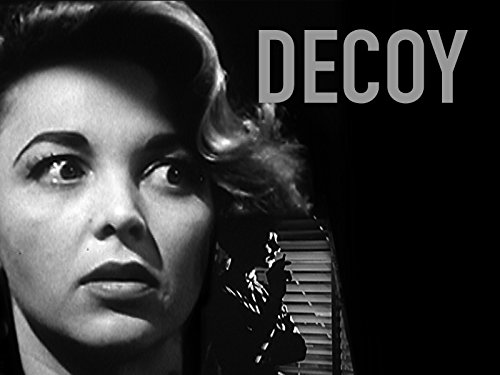
Welcome to Retro Television Reviews, a feature where we review some of our favorite and least favorite shows of the past!  On Thursdays, I will be reviewing Decoy, which aired in Syndication in 1957 and 1958.  The show can be viewed on Tubi!

This week, Casey investigates a case of insurance fraud.

Episode 1.4 “To Catch A Thief”

(Dir by Teddy Sills, originally aired on November 4th, 1957)

A thief and his girlfriend mug a business owner named Mr. Whitaker (John McGovern).  When the police capture the thief, Mr. Whitaker claims that more money was stolen from him than was recovered.  Casey is sent undercover to discover whether or not Whitaker is lying or if a cop actually skimmed the cash that they recovered.

Pretending to be the thief’s girlfriend, Casey approaches Mr. Whitaker and tries to blackmail him.  When Mr. Whitaker appears to be innocent, his secretary (Mary James) falls under suspicion.  Mr. Whitaker, however, is eventually exposed as trying to commit insurance fraud when he has a conversation with his secretary at the police headquarters.  Unfortunately, for him, the room was bugged.

This episode bothered me.  On the one hand, I didn’t want an innocent police officer to be suspended for stealing money that he didn’t steal.  On the other hand, having Casey go undercover as a blackmailer felt almost as if it verging on entrapment.  As well, I found it hard to understand why Mr. Whitaker would be fooled into thinking Casey was the one who had robbed him earlier.  Didn’t Mr. Whitaker see the people who mugged him?

This episode just didn’t work for me.

Late Night Retro Television Review: 1st & Ten 1.10 “Wine Time”


Welcome to Late Night Retro Television Reviews, a feature where we review some of our favorite and least favorite shows of the past! On Wednesdays, I will be reviewing 1st and Ten, which aired in syndication from 1984 to 1991. The entire series is streaming on Tubi.

This week, it’s hard to win a game when you’re star players are in jail.

Episode 1.10 “Wine Time”

(Dir by Bruce Seth Green, originally aired on January 27th, 1985)

When the Bulls are cheated by a fake vineyard owner named Jacques St. George (Peter Elbling), Bubba and Jethro (Cliff Frazier) end up in prison for attacking him.  Jethro is surprised to discover that their cellmate is an old friend of his named Mike (Eddie Bell).  Mike wears a long blonde wig and a dress.  Jethro doesn’t know what to make of it.  Mike explains that he likes “dressing like this” and says it’s no different from how much Jethro enjoys playing football.

Meanwhile, Diane is desperate to get Bubba and Jethro out of jail in time for their next game.  She even goes to Arcola Brothers for help but, in the end, she decides that she can’t compromise her morals by accepting favors from gangsters.  The team plays with Jethro and Bubba.  The team loses.

Meanwhile, Dr. Death (Donald Gibb) and Otis (Tiny Lister), two defensive backs, go to the hospital and threaten to toss Jacques out of a window until he agrees to drop the charges.

This episode actually had a few amusing moments, mostly due to the performances of Gibb and Lister.  I appreciated the fact that the team lost the game as opposed to pulling off some sort of last minute miracle.  Diane refused to compromise her principles and that’s a good thing.  But her solution was still basically to allow Dr. Death and Otis to threaten to kill a guy.  This episode sent some very mixed messages.

I will say this.  Michael V. Gazzo’s performance as Sal Arcola is one of the few things that I consistently enjoy about this show.  A playwright, Gazzo had a pretty good side career going as a movie and television mobster.  He’ll always be best remembered for playing Frankie in The Godfather, Part II1st & Ten is no Godfather but Gazzo is always entertaining.

Retro Television Review: The Love Boat 6.17 “Gopher’s Daisy/Our Son, The Lawyer/Salvaged Romance”


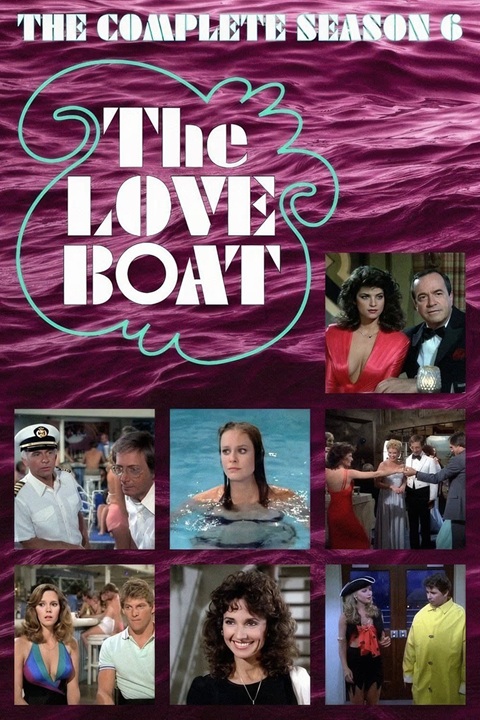
Welcome to Retro Television Reviews, a feature where we review some of our favorite and least favorite shows of the past!  On Wednesdays, I will be reviewing the original Love Boat, which aired on ABC from 1977 to 1986!  The series can be streamed on Paramount Plus!

Come aboard!  Love is life’s sweetest reward….

Episode 6.17 “Gopher’s Daisy/Our Son, The Lawyer/Salvaged Romance”

(Dir by Richard Kinon, originally aired on January 29th, 1983)

Gopher has a new exercise machine but only he and the Captain know about it.  All through the cruise, Gopher and Stubing disappear into Gopher’s cabin, put out the “Do Not Disturb” sign and then groan and moan while using the exercise machine.

At the same, the ship has a stowaway.  As a part of her sorority initiation, Jennifer Canfield (Chanelle Lea) has to take a cruise without paying for it.  (That’s an odd initiation ritual.)  Having figured out Gopher’s schedule, Jennifer secretly stays in his room whenever he’s doing his duties.  Julie and Isaac both spot Jennifer sneaking in and out of Gopher’s cabin and they quickly decide that both Gopher and Stubing must have brought her aboard to be their — what?  Their personal sex slave?  That seems to be the implication.  Strangely, neither Isaac nor Julie seem to be too upset about that implication.  Julie has a cocaine problem so I guess I can understand her attitude but Isaac …. well, I expect more from Isaac.

Eventually, Jennifer is caught.  Instead of having her arrested, the Captain allows Julie and Isaac to pay for Jennifer’s fare on the boat.  So, does this mean that Jennifer’s not going to be allowed to join the sorority?

(Myself, I’m just considering the amount of people who have stowed away on the Love Boat over the past few seasons.  Seriously, taking a cruise without paying for it appears to be the easiest thing in the world.)

Meanwhile, James Coco and Doris Roberts play Harriet and Lou, a married couple who board the boat with their son, Jonathan (Adam Arkin).  Now that Jonathan has graduated law school and passed the bar, he thinks that it might be time for him to move into a place of his own.  Harriet is so traumatized at the thought of Jonathan moving out that she demands a divorce from Lou.  Both Harriet and Lou want to be represented by Jonathan.  Run, Jonathan, run!  In the end, the marriage is saved and everything get worked out but seriously, Jonathan needs to do more than just get an apartment of his own.  He needs to move to another state or maybe even another country.

(Also, in the past, there’s no way Julie would have ignored a handsome, single lawyer on the ship.  Unfortunately, Julie now seems to be more concerned with finding her next fix than finding a husband.)

Finally, Allison Newman (Joan Rivers) is a recently divorced woman who starts a tentative shipboard romance with passenger Max Glutovsky (Alex Rocco).  However, when Max tries teacher her how to play shuffleboard and puts his hands around her waist, Allison yells for him to leave her alone and runs away.  Max thinks that Allison is rejecting him because he’s not as rich as she is.  Max, you dumbass!  Allison has just had a mastectomy,  Her husband left her after the operation and now, she’s feeling insecure about getting close to anyone.  Of the three stories, the one worked the best, due to the performances of Rivers and Rocco.

The Rivers/Rocco story was effective.  The storyline with Roberts, Coco, and Arkin was rather shrill and left me feeling sorry for Adam Arkin’s character.  (Casting Doris Roberts as an overly possessive mother made this story feel like an unsuccessful dry run for Everybody Loves Raymond.)  Isaac and Julie thinking Gopher was sex fiend?  That was just silly.  In other words, this was a pretty uneven cruise.

Next week, hopefully things will look up with a two-hour episode set in Greece!

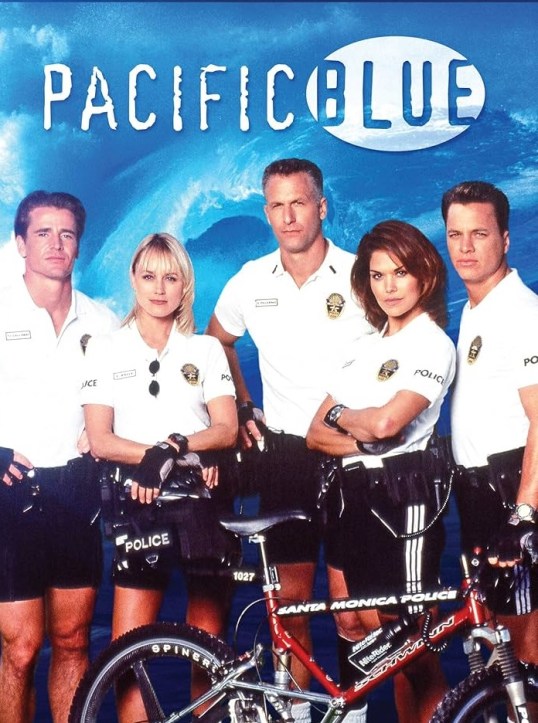
Late Night Retro Television Review: Pacific Blue 2.20 “Bad Company”


Welcome to Late Night Retro Television Reviews, a feature where we review some of our favorite and least favorite shows of the past! On Tuesdays, I will be reviewing Pacific Blue, a cop show that aired from 1996 to 2000 on the USA Network!  It’s currently streaming everywhere, though I’m watching it on Tubi.

This week, Palermo is the peace maker.  *snicker*

Episode 2.20 “Bad Company”

(Dir by Corey Michael Eubanks, originally aired on April 6th, 1997)

In Santa Monica, there are two gangs.

One gang is group of white bikers.  The other gang is a group of black men who spend all of their time playing basketball.  The two groups hate each other but they all respect Lt. Palermo.  Palermo previously brokered a peace between the two group.  However, the peace is now threatened because someone has been tagging up both gang’s territories.  The two gangs are about to go to war, despite Palermo riding his bicycle all over town….

*snicker*

I’m sorry, I can’t help but laugh.  Listen, I know that gangs and gang culture are no laughing matter.  But this episode features angry gang meetings that are broken up by Palermo riding up on his bicycle and talking tough to everyone.  Palermo looks ridiculous with his shorts and his polo shirt and his Schwinn bicycle.  “Palermo’s the peace maker!”  What’s Palermo going to do if someone breaks the peace?  Chase him on his bicycle?

It turns out that a gun dealer (Daniel Quinn) is trying to kickstart his business by starting a gang war.  He’s not very good at his job because the gangs soon team up with the — *snicker* — bike patrol to him down.

Meanwhile, when Victor’s friend is killed after an underground fighting match by an associate of the gun dealer’s, Victor goes undercover to catch him.  Elvis (David Lander), the bike engineer who used to be a member of the regular cast, witnessed the murder and he finds himself being pursued by the gun dealer.  Don’t worry, Elvis!  The bike patrol is looking out for you!  Mixing the broad humor of David Lander’s performance as Elvis with a storyline about how gangs are destroying communities and getting innocent people killed was a decision that really didn’t pay off.  “Increase the peace and now laugh at this guy with an exaggerated accent.”

This episode was  a pretty good example of why Pacific Blue’s main weakness was always its premise. This episode featured a lot of scenes of the members of the bike patrol looking serious and barking out orders.  It’s hard to be intimidated by someone wearing shorts and riding a bicycle.

The title of this episode is Bad Company.  In the end, the truly bad company rode a Schwinn.

Retro Television Review: Fantasy Island 7.10 “Goin’ On Home/Ambitious Lady”


Welcome to Retro Television Reviews, a feature where we review some of our favorite and least favorite shows of the past!  On Tuesdays, I will be reviewing the original Fantasy Island, which ran on ABC from 1977 to 1984.  Unfortunately, the show has been removed from most streaming sites.  Fortunately, I’ve got nearly every episode on my DVR.

This week is another trip to the Island that feel a bit too familiar.

Episode 7.10 “Goin’ On Home/Ambitious Lady”

(Dir by Don Ingalls, originally aired on January 7th, 1984)

Nope.  I’m just not going to do it.  I refuse to spend too much time on this episode.  This episode felt like a rehash of several earlier episodes, all of which worked considerably better and didn’t feature Lawrence hovering in the background.

Billy Joe Pine (Mickey Gilley) is a country-western star who comes to the Island because he wants to be reunited with the family that he left behind when he traveled from the farm to …. Nashville, I guess.  His father (Leif Erickson) forgives him but his younger brother (John Dennis Johnston) is less inclined.  Mickey Gilley was a real-life country western singer and the only reason I know this is because he appeared previously on Fantasy Island as himself.  That episode wasn’t great but it was a masterpiece compared to this one.  “They don’t let you swim in your long johns!” is a line that is uttered at one point and I cringed like I’ve never cringed before.  This whole thing just felt rehashed and tired.

The second fantasy featured fashion designer Bryana Spencer (Mary Ann Mobley) and her husband, Fred Nelson (Ron Ely).  Fred gave up a promising entertainment career so that he could work as the exclusive emcee for Bryana’s fashion shows.  Bryana’s fantasy is for Fred to find the success that he gave up while Fred’s fantasy is for Bryana and him to experience that type of love that they felt for each other before Bryana became successful.  In other words, it’s time for another Fantasy Island fashion show!

Character actor George Wyner (you would recognize him) made me smile as the fashion show’s choreographer but otherwise, this was a pretty boring fantasy.  Mobley and Ely didn’t have much chemistry.  Then again, neither did Roarke and Lawrence.  The entire time I watched this episode, I kept thinking to myself, “Tattoo liked country western music.  Tattoo liked fashion shows.  This could have been a great Tattoo episode!”

This was not a great trip to the Island.

Retro Television Review: Miami Vice 4.20 “A Bullet For Crockett”


Welcome to Retro Television Reviews, a feature where we review some of our favorite and least favorite shows of the past!  On Mondays, I will be reviewing Miami Vice, which ran on NBC from 1984 to 1989.  The entire show can be purchased on Prime!

This week, in honor episode 4.20, Cockett and Tubbs get high.

Just kidding!  Instead, Crockett takes a bullet and Phil Collins sings Something In The Air tonight.

Episode 4.20 “A Bullet For Crockett”

(Dir by Donald L. Gold, originally aired on April 15th, 1988)

After Crockett is shot by a drug dealer’s girlfriend, he fights for his life while the other members of the Vice Squad hover nearby.  Crockett remembers past moments.  The other members of the Vice Squad remember past moments….

Hey, it a clip show!

Usually. I hate clip shows but I’ll defend this one because it was well-edited and it reminded me of how good this show was before season 4 started.  Plus, the episode made good use of Something In The Air Tonight.

The important thing is that, after all the memories were shared, Tubbs took down the shooter and Crockett woke up.  Let’s not worry too much about why Crockett’s new wife never came to the hospital.  She at least appeared in flashback.

What doe it say about Season 4 that the best episode was probably the clip show?

Late Night Retro Television Review: Degrassi: The Next Generation 1.5 “Parents Day”


Welcome to Late Night Retro Television Reviews, a feature where we review some of our favorite and least favorite shows of the past!  On Sunday, I will be reviewing the Canadian series, Degrassi: The Next Generation, which aired from 2001 to 2015!  The series can be streamed on YouTube and Tubi.

This week, Emma goes on a crusade and Canada will never be the same.

Episode 1.5 “Parents Day”

(Dir by Eleanore Lindo, originally aired April 15th, 2002)

Its Parents Day at Degrassi!

Toby Isaacs is paranoid that his divorced parents are going to get into an argument as soon as they’re in a room together and that’s exactly what happens.  When Snake tells them that Toby could have the best grades in school if he only applied himself, his mom and his dad start blaming each other.  This scene always makes me cringe, largely because I was in the same boat in high school.  “Lisa is smart as a whip,” one of my teachers said during my junior year, “but she doesn’t focus in class and is easily distracted.”  “Lisa Marie,” my mother said, “did you hear that?”  “Hear what?,” I replied.

Anyway, Toby tells his parents that the reason he’s struggling is because they’re always fighting.  His parents apologize to him.  Awwwww!  That’s sweet.  It would never happen in real life but it’s still sweet.  (Having seen the entire series, it’s always a bit jarring to be reminded of how much the first season focused on Toby, someone who — in future seasons — would often just be a background character.)

Meanwhile, we meet Sean’s totally cool older brother and guardian, Tracker (Kris Holden-Reid).  How cool is Tracker?  His name’s Tracker!  Plus, he calls out Emma to her face.  Emma, in a sign of things to come, has written an editorial for the school paper in which she complains about a once-a-week broadcast called NAK (News About Kids).  She feels that NAK is just propaganda.  When Principal Raditch points out that NAK donated the school’s computer lab in return for the school showing their broadcast (and again, it’s like a 10-minute program that is shown ONCE a week), Emma writes that the school shouldn’t accept anything from NAK and students should just use their home computers.  When Emma overhears Tracker describing her editorial as being “garbage,” she gets mad at tells him that he’s an idiot.  Tracker points out that not all kids — like Sean, for instance — can afford a home computer.

Here’s the thing: Tracker’s correct.  Even when I first saw this episode as an idealistic teenager who agreed with Emma about NAK being propaganda, I thought Tracker was correct.  Not all kids can afford their own computer.  If showing a 10-minute, once-a-week broadcast that most students would probably end up talking through meant the school got a computer lab, it seemed like a reasonable compromise.

However, this episode introduced one of the themes that would become prominent on Degrassi in later seasons.  Emma is never wrong.  Even when it’s clear that Emma is totally wrong and is being unreasonable, the show will still end with someone telling Emma that she’s right.  This episode ends with Sean telling Emma that her editorial wasn’t garbage.  Emma smiles because she has a crush on Sean and that’s sweet and all but you know what?  That editorial was totally garbage!

My feelings were mixed on this episode.  I could relate to Toby’s embarrassment.  I could also relate to Paige’s over-the-top efforts to impress Toby’s mom, who we’re told is casting director.  But this episode also launched the whole “Emma-is-a-crusader” thing, which would eventually become one of the more annoying things about the show.  In the end, though, I guess the important thing is that everyone survived Parents Day.

Retro Television Review: Homicide: Life on the Street 4.6 “Hate Crimes”


Welcome to Retro Television Reviews, a feature where we review some of our favorite and least favorite shows of the past!  On Sundays, Lisa will be reviewing Homicide: Life On The Street, which aired from 1993 to 1999, on NBC!  It  can be viewed on Peacock.

This week, Lewis solves a cold case.

Episode 4.6 “Hate Crimes”

(Dir by Peter Weller, originally aired on November 17th, 1995)

On the eve of Thanksgiving, a young man is killed outside of a gay night club.  Bayliss and Pembleton are investigating.  All of the witnesses say that the man was jumped by a group of skinheads.  While Pembleton, as usual, is set on capturing the guilty party, Bayliss is uncomfortable about the what he assumes to have been the victim’s identity.

Bayliss is a homophobe?  Really?

I guess this development doesn’t come totally out-of-nowhere.  There was an earlier episode where Bayliss was clearly uncomfortable dealing with an S&M-themed murder so he does have a history of getting weirded out by anything that goes against what he considers to be the straight and the conventional.  At the same time, it’s kind of hard to feel that Bayliss is often just whatever the writers need him to be at the moment.  For this episode, Pembleton needed a homophobe to deal with.  And, since Felton and Bolander are no longer on the show, the job fell to Bayliss, even though Bayliss — even at his most awkward and uncomfortable — has never been presented as being prejudiced before. For me, it’s hard not to feel that the episode would have been even more interesting if it was Pembleton — self-righteous, faith-struggling, Jesuit-trained Pembleton — was uncomfortable with the victim’s identity and if, for once, Bayliss could have been the tolerant one.  Pembleton’s a great character but occasionally, it’s hard not to feel that he’s almost too flawless.

That said, this storyline features a brilliant twist.  When Pembleton and Bayliss talk to the victim’s father (the great Terry O’Quinn), they ask him if he knew that his son was gay.  The father gets angry at them, says that if his son was gay then he deserved to die, and then kicks them out of the house.  Later, Bayliss and Pembleton learn that the victim was not gay.  Instead, the skinheads assumed he was gay and attacked him because he was outside of the nightclub.  Bayliss and Pembleton return to the victim’s father and tells him that his son wasn’t gay.  Only then does the victim’s father start to cry.  For him, his son was not worthy shedding a tear over until he was assured that his son wasn’t gay.  Of course, the father doesn’t realize that his prejudice is the same prejudice held by the skinheads who killed his son.  He’s stunned to hear his son was killed due to a mistake but it doesn’t occur to him that he rejected his son because he made the same mistake.

While that was going on, Lewis defied Howard and solved the Erica Chilton case.  (During the previous season, Howard was given the Chilton case after Crosetti committed suicide.  The since-departed Felton lost a key piece of evidence.)  When Erica Chilton’s daughter was brought to the office because she had been having dreams about her mother’s death, Lewis and Kellerman were the two detectives that talked to her.  Howard was not happy about this, saying that Lewis should have let her handle the interrogation.  Lewis. who has not been happy about Howard getting promoted to sergeant, told her to back off and to stop criticizing his former partner.  While the two of them were arguing, Kellerman got the little girl to remember that the murderer was wearing a monogrammed shirt and that his initials with “T.M.”  At the time of her murder, Erica was engaged to Tom Marans (Dean Winters).

Howard demanded that Lewis tell her before he interrogated Marans so that she could be in the Box.  So, of course, after Lewis and Kellerman tricked Tom into coming down to the station by telling him they needed him to look over some new evidence, Lewis proceeded to interrogate Tom without Howard being there.  With help of a new voice analysis machine, Lewis was able to get Tom to confess without much effort.  Lewis was also able to get a date with the voice analyst, Debbie Haskell (Allison Smith).  Sgt. Howard, meanwhile, got very, very pissed off.

Finally, Brodie (Max Perlich) — the cameraman who helped Lewis and Kellerman out a few episodes ago — got a new job when he was hired to help the Homicide Department film crime scenes.  I’m kind of amazed that they didn’t already have someone to do that.

This was a good episode, even if Bayliss’s homophobia did feel a bit forced.  While Andre Braugher and Kyle Secor were as great as always, I have to say that Clark Johnson really stole this episode as the cocky and rebellious Meldrick Lewis.  Howard is absolutely right about Lewis not treating her with the respect that she deserves.  At the same time, Lewis did finally solve the Chilton case.  So, maybe they’re even.

Probably not.


Late Night Retro Television Review: Good Morning, Miss Bliss 1.9 “Let’s Get Together”


Welcome to Late Night Retro Television Reviews, a feature where we review some of our favorite and least favorite shows of the past!  On Saturdays, I will be reviewing Good Morning, Miss Bliss, which ran on the Disney Channel from 1988 to 1989 before then moving to NBC and being renamed Saved By The Bell.  The entire show is currently streaming on Prime!

This week, the kids learn yet another lesson about conflict resolution.

Episode 1.9 “Let’s Get Together”

(Dir by Burt Brinckerhoff, originally aired on February 18th, 1989)

After Ms. Palladino (Joan Ryan) is kicked out of her apartment by her boyfriend, she temporarily moves in with Miss Bliss.  It doesn’t go well.  Ms. Palladino is messy and quirky and accident-prone.  Miss Bliss is British.  Can these two friends figure out how to live together?

Meanwhile, Nikki and Zach have been assigned to work on a class project but they’re suddenly not getting along.  They have to convince Miss Bliss that the telephone is a worthwhile invention.  (Miss Bliss plays the role of a skeptical pilgrim.)  Nikki wants to use a bunch of charts to make her point.  Zach pretends to call Nikki on the phone and apologizes to her for not being a good friend.  It’s extremely awkward to watch, despite the fact that Mark-Paul Gosselaar and Heather Hopper both pour their hearts into the scene.  Actually, maybe that’s why it’s so awkward to watch.  Imagine being a student, trapped in that classroom and forced to listen to Zach and Nikki work out their differences.  Miss Bliss give them an A and decides to stop being such a bitch to Ms. Palladino.  Good for her!

This episode probably would have been more effective if we hadn’t already been subjected to an episode where Mickey and Zach get into a disagreement and then talk about their friendship while the entire school watches.  This episode felt like a do-over.  I also found it curious that all the students apparently knew that Miss Bliss and Ms. Palladino were living together and not getting along.  First off, why would the students know this and secondly, why would the students cares?

I’m starting to think that Good Morning Miss Bliss was not a realistic portrayal of the Indiana middle school experience.

Retro Television Review: The American Short Story #15: The Sky Is Gray


Welcome to Retro Television Reviews, a feature where we review some of our favorite and least favorite shows of the past!  On Saturdays, Lisa will be reviewing The American Short Story, which ran semi-regularly on PBS in 1974 to 1981.  The entire show can be purchased on Prime and found on YouTube and Tubi.

This week, we have an adaptation of a 1963 short story.

Episode #15: The Sky Is Gray

(Dir by Stan Lathan, originally aired in 1980)

This adaptation of an Ernest Gaines short story takes place in Louisiana during the 1940s.  James (James Bond III) is a young black child who lives on a farm.  His father is overseas, serving in the Army during World War II.  His mother (Olivia Cole) is a stern but loving woman who is trying to raise the sensitive James in a world where one often has to depend on their inner strength to survive.  When James comes down with a toothache, he and his mother travel to a nearby town so he can see the dentist.  From having to stand in the back of the bus to listening to a debate between a priest and a militant in the dentist’s office, it’s an eye-opening journey for James.  When the white receptionist at the dentist’s office arbitrarily cancels James’s appointment and tells him and his mother to come back tomorrow, the two of them seek shelter.  James discovers how strong his mother is when they’re harassed by a pimp (Reuben Collins).  He also learns that there is unexpected kindness in the world when a white store owner invites him and his mother inside to give them shelter from the cold and windy day.  During one trip to the dentist, James learns that the world is far more complicated than he originally knew.

This was an okay adaptation of Gaines’s acclaimed short story.  Young James Bond III gave a good performance as James and the episode was full of scenes that visually captured the feel of being an outsider.  That said, as was often the case with this series, the adaptation was so straight-forward that it didn’t really capture the nuance of Gaines’s writing.  In the short story, Gaines put the reader right into James’s head.  The adaptation doesn’t really do that.  A heavy-handed musical score doesn’t help matters but, with all that in mind, this was still an effective coming-of-age tale.