Late Night Retro Television Review: Degrassi Junior High 2.10 “Censored”


Welcome to Late Night Retro Television Reviews, a feature where we review some of our favorite and least favorite shows of the past!  On Sunday, I will be reviewing the Canadian series, Degrassi Junior High, which aired on CBC and PBS from 1987 to 1989!  The series can be streamed on YouTube!

This week, Degrassi tackles freedom of the press and freedom of lockers.

Episode 2.10 “Censored”

(Dir by Mike Douglas, originally aired on March 7th, 1988)

The inside of Joey’s locker is covered with pin-ups.  When L.D. and Alexa walk by and see Joey, Wheels, and Snake rating the pin-ups, L.D. is offended while Alexa is amused.  (Alexa, I have to admit, has become the character to whom I relate on this show.)  When Joey the announces that he would only rate L.D. “a four,” L.D. responds by covering the inside of her locker with pictures of half-naked men.  L.D. then goes to the principal to complain about Joey’s pin-ups.  When Joey gets in trouble, he complains about L.D.’s locker.  In the end, both Joey and L.D. end up in school suspension together.  Awwwwww!

However, that’s not the only case of censorship in this episode!  When Caitlin overhears the principal talking to two parents who want Spike to be forbidden to attend school until she gives birth, Caitlin decides to use the power of the press.  She writes an editorial called “Keep Spike At Degrassi,” in which she announces that everyone knows that Spike is pregnant and that Spike should be allowed to continue to go to class.  Everyone who reads it says that it’s the best thing that Caitlin has even written but Mr. Radish, the faculty advisor to the school newspaper, announces that it is a violation of school policy and that it can’t be published.  So, Caitlin decides to print up several copies of the editorial and then just hand them out to students in the hallway.

Now, you may have noticed that Caitlin did not talk to Spike before writing or printing up her editorial.  And, to Caitlin’s shock, Spike is not at all happy about the editorial, explaining that she’s under enough stress without everyone at the school reading about her life.  Spike feels that Caitlin used her and Spike is totally correct.  Everyone tells Caitlin that she’s a great writer and she’s a hero for standing up to the school administration but Spike is still pretty much alone and isolated at school.  The episode ends with a classic depressing Degrassi freeze frame, this time of Spike walking up the school’s front steps and looking totally alone.

With this episode, Caitlin becomes the first of many crusading journalists to pass through the halls of Degrassi.  What sets this story apart from future episodes about the school newspaper is its willingness to admit that not all issues are as a simple as they originally appear.  I appreciated the fact that Spike was given a chance to call out Caitlin for essentially using Spike’s problems to promote herself and I liked the fact that the show didn’t pretend like there was some sort of easy or perfect solution for any of the issues that both Spike and Caitlin were dealing with.

Degrassi Junior High has often been called the most realistic and honest teen show ever made and episodes like this one show why.

Retro Television Review: In Broad Daylight (dir by Robert Day)


Welcome to Retro Television Reviews, a feature where we review some of our favorite and least favorite shows of the past!  On Sundays, I will be reviewing the made-for-television movies that used to be a primetime mainstay.  Today’s film is 1971’s In Broad Daylight!  It  can be viewed on YouTube.

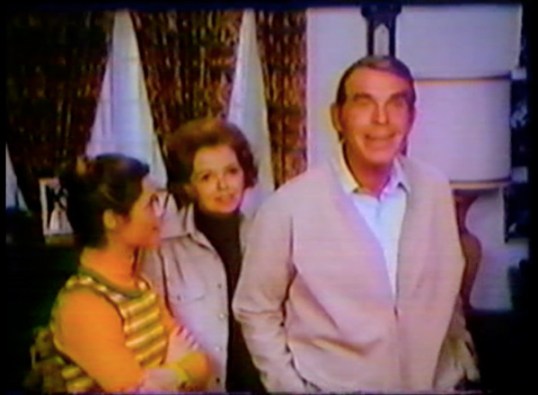
Tony Chappel (Richard Boone) is an actor who has just recently lost his sight as a result of an accident.  Released from the hospital, Tony struggles to adjust to living in a world without his vision.  When one cab driver says to him, “Didn’t you used to be Tony Chappel?,” he flinches as he realizes that his career as a famous actor is now considered to be over.  One day, he comes home early and overhears his wife (Stella Stevens) fooling around with his lawyer and “best friend” (Fred Beir).  Tony promptly decides to murder his wife and frame his friend for the crime.

Tony decides to use his acting skills to his advantage.  He memorizes the the area around him so that he can make his way through it by memory.  He puts on a fake beard, speaks with Greek accent, and makes a point of carrying a camera with him.  He starts taking public transportation and going out of his way to be talkative and social  Everyone that he meets, he tells them about how he’s been taking pictures of the city and how he can’t wait to see how they come out.  When his wife is eventually murdered, the police receive a reports of a mysterious Greek man, one who was definitely not blind, in the area.  However, Lt. Bergman (John Marley) has his doubts and comes to suspect that Tony is the killer.

In Broad Daylight was made from an early script written by Larry Cohen, who would later go on to direct films like God Told Me To.  It’s a clever script, one that sets up an intriguing premise and which ends on a properly twisty and satisfactory note.  The film works because it is as much of a character study as a thriller.  Tony’s wife not only cheats on him but also betrays him at the moment when he needs her and his friends the most.  Tony has gone from being a movie star to being a man who can barely walk from one room to another.  He’s already angry.  Discovering that his wife is laughing at him behind his back is the last straw.

Larry Cohen reportedly felt that Richard Boone was miscast as Tony.  I felt that Boone did a pretty good job, even if he did overact a bit while Tony was trying to convince everyone that he was a Greek tourist.  Stella Stevens is perfectly cast as his wife and Suzanne Pleshette is sympathetic as his nurse.  Godfather fans will be happy to see John Marley not having to deal with a horse’s head but instead playing the clever detective who attempts to solve the murder.

In Broad Daylight is a clever and entertaining thriller and character study.

Late Night Retro Television Reviews: Check It Out! 2.21 “Jack Be Numbskull”


Welcome to Late Night Retro Television Reviews, a feature where we review some of our favorite and least favorite shows of the past!  On Saturdays, I will be reviewing the Canadian sitcom, Check it Out, which ran in syndication from 1985 to 1988.  The entire show is currently streaming on Tubi!

This week’s episode defies description.  Read on.

Episode 2.21 “Jack Be Numbskull”

(Dir by Alan Erlich, originally aired on March 5th, 1986)

Awwww, look how cute these two are!

After an office party, Marlene and Christian go home together.  The next morning, Christian has decided that he is totally in love with Marlene while Marlene will do just about anything to get Christian to stop bothering her with his romantic declarations.  (In real life, Kathleen Laskey and Jeff Pustil have been married since 1990.)

Marlene’s solution to her Christian problem is to invite her ex-boyfriend, the brutish Bruno (Eric Keenleyside), to the store and to tell him to threaten to beat up Christian, just to scare him off.  Marlene doesn’t want Bruno to actually hurt anyone, of course.

Bruno, however, mistakes Howard for Christian and threatens him.  When Howard makes a sarcastic comment about how he is going to fight Bruno in the alley, a visiting Mrs. Cobb (Barbara Hamilton) overhears and decides that sponsoring a boxing match between Bruno and an employee will be the perfect way to advertise Ka-Blam, a vitamin supplement that is so powerful that it’s sold in a container that looks like a hand grenade.  Mrs. Cobb also decides that Bruno will be Mr. Ka-Blam.

So, to make clear:

  1. Mrs. Cobb thinks it will be a good idea to have a fight in one of her stores
  2. Mrs. Cobb thinks hiring a violent criminal to be a store mascot is a good idea
  3. Mrs. Cobb wants to have Bruno beat up one of her store managers
  4. Mrs. Cobb wants the manager to get beaten up while the customers watch.

Yeah, it doesn’t make much sense to me, either.

A few hours before the boxing match, Howard breaks his hand so he has to find a replacement to fight Bruno.  Christian volunteers.

Christian is not much of a fighter but he impresses everyone with his refusal to surrender or throw in the towel.  However, after an illegal blow sends Christian to the canvas, Howard rushes into the ring and punches Bruno in the stomach and then knocks him out with an uppercut.  Wait a minute, I thought Howard’s hand was broken….

This episode was just silly.  It was so silly that it almost worked, just on the basis of weirdness alone.  The action played out like a fever dream and logic was abandoned early on and perhaps that was for the best.  This episode was so strange that it defies a traditional review but I will say that Christian and Marlene did make for a cute couple so I hope this is something that the show continued to explore.

Next week, the first season comes to a close!

Retro Television Review: Welcome Back, Kotter 3.14 “Epstein’s Madonna”


Welcome to Retro Television Reviews, a feature where we review some of our favorite and least favorite shows of the past!  On Saturdays, I will be reviewing Welcome Back Kotter, which ran on ABC  from 1975 to 1979.  The entire show is currently streaming on Tubi!

This week, Epstein is finally the center of the action.  Unfortunately, the episode doesn’t really take advantage of the character and all of his possibilities.

Episode 3.14 “Epstein’s Madonna”

(Dir by Bob Claver, originally aired on December 8th, 1977)

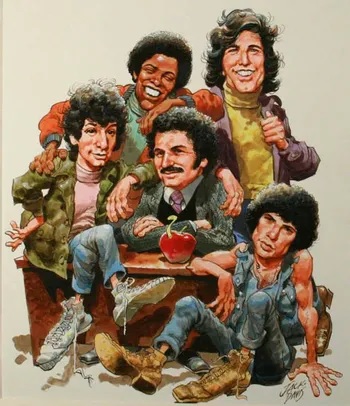
For his art project, Epstein paints a picture of a naked woman on the outside wall of Buchanan High.  (Actually, it stretches out across two walls.)  The Sweathogs are impressed.  The local media wants to do a story on the painting.  Epstein is proud of himself.  Woodman is offended, even after Gabe points out that Botticelli also painted nudes.

“Botticelli,” Woodman replies, “didn’t paint a nude with Born To Boogie tattooed on her thigh!”

Gabe is all about defending Esptein’s right to express himself …. up until he realizes why the painting looks so familiar to him.  As Epstein explains it, he put Julie’s head on Debbie Del Vecchio’s body.  Gabe likes the body but he’s less happy about Julie’s face staring at him from the wall.  And it must be said that the painted Julie looks even more annoyed with Gabe than the real-life Julie.

Julie, surprisingly enough, is flattered.  That’s not really the reaction that one would expect from Julie, who is usually a lot more uptight.  But, after being married to Gabe for five years or however long they’ve been together, Julie is probably just happy to know that there are still other options out there for her.  Seriously, Julie …. Epstein takes care of his family and he has that cute gap between his front teeth.

Does Gabe deface Epstein’s artwork?  Though tempted, he does not.  Someone else does and there’s some confusion when Gabe is caught holding the spray-paint can but that’s all forgotten when the other Sweathogs jump in to help fix the painting.  Good for them!  Epstein passes his class, the painting gets to say on the wall for a week, and …. well, that’s it.  Wow, that wasn’t a very consequential episode.

“Lisa, what about the jokes!?”

Oh yeah!  Gabe tells Julie about his Cousin Janet, who lied about being pregnant and seriously injured so that her parents would be less upset about the D she got in English.  He also talks about his Uncle Willie who used his resemblance to Jimmy Cagney to get laid.  Julie was amused by both jokes, which I think was a record for her.

This episode really didn’t have much going on.  In the first season, Gabe would have had a semi-serious heart-to-heart talk with Epstein about his love for art and it would have been touching.  But, in the third season, the show was more about catch phrases and audience applause than teaching life lessons.  It’s a shame because Robert Hegyes usually did a pretty good job as the tough but secretly sensitive Juan Epstein.  This episode has to be considered a bit of a missed opportunity.

Late Night Retro Television Review: Friday the 13th: The Series 1.22 “The Pirate’s Promise”


Welcome to Late Night Retro Television Reviews, a new feature where we review some of our favorite and least favorite shows of the past! On Fridays, I will be reviewing Friday the 13th: The Series, a show which ran in syndication from 1987 to 1990. The show can be found on YouTube!

This week, there’s something in the fog!  Can Micki and Ryan stop the horror of the thing in the fog?  FOG!

Episode 1.22 “The Pirate’s Promise”

(Dir by Bill Corcoran, originally aired on June 27th, 1988)

In the 18th century, a group of pirates killed their captain, Angus McBride, and stole his treasure.  They used the money to start a seaside village in New England and to become respectable citizens.  Over two hundred years later, the spirit of Captain McBride is hanging out in the fog and desiring vengeance on the descendants of his crew.

Hmmm …. this sounds familiar.

This episode has more than a little in common with John Carpenter’s The Fog.  This time, as opposed to it being the result of an anniversary curse, it’s a crazed lighthouse keeper named Joe Fenton (Cedric Smith) who summons the ghost of Captain McBride with a cursed foghorn but otherwise, much of the plot and the show’s imagery feels as if it was lifted directly from Carpenter’s classic horror film.  Captain McBride emerges from the fog several times during the episode.  He kills his victim’s with a hook and then tosses a few coins at Joe.

Micki and Ryan show up in town to retrieve the foghorn.  (This is another episode in which Jack is not present.)  It’s interesting how these cursed antiques often tend to end up in small towns, like the one in this episode or The Quilt of Hathor.  The previous few episodes featured Ryan having to say goodbye to someone as a result of a cursed item.  This time, it’s Micki whose heart is broken when the sweet proprietor of the local history museum is stabbed with a saber while trying to protect her.  The episode ends with Micki sobbing while Ryan tries to comfort her, which is quite a change from how these things usually go.  For once, Micki is the one who gets to show emotion while Ryan is the one who takes a more pragmatic approach to dealing with the horrors of the cured antiques.

As for the episode, it wasn’t bad.  Director Bill Corcoran did a good job of creating a properly ominous atmosphere and Cedric Smith was perfectly creepy as the evil lighthouse owner.  The low-budget was evident by the fact that the time itself seemed to be nearly deserted.  Even though the town was described as being small, it still seems like it should have been home to more than just a handful of people and I found myself wondering if maybe the show decided to save money by not hiring extras.  That minor quibble aside, this was an effective episode as long as you were willing to overlook the plot’s similarity to Carpenter’s film.

Next week, hopefully, Jack will come back and maybe Micki will have cheered up.  Someone likeable dies in every episode so you would think they would be used to it by now.

Retro Television Review: T and T 3.1 “Cracked”


Welcome to Retro Television Reviews, a new feature where we review some of our favorite and least favorite shows of the past! On Fridays, I will be reviewing T. and T., a Canadian show which ran in syndication from 1987 to 1990.  The show can be found on Tubi!

This week, the final season of T and T begins with some changes!

Episode 3.1 “Cracked”

(Dir by Don McCutcheon, originally aired on January 6th, 1990)

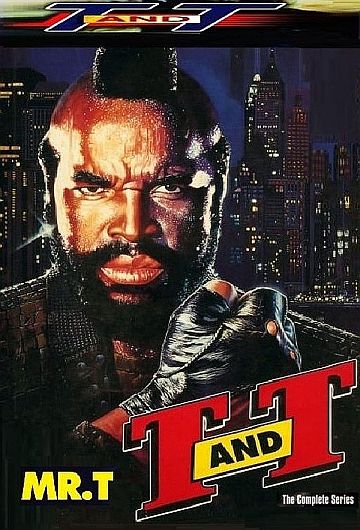
The first episode of the third season begins with all new opening credits.  We no longer hear about T.S. Turner’s backstory.  I guess it no longer matters that Turner was framed for a murder that he didn’t commit and that crusading lawyer Amy Taler got him out and put him in a suit and tie to work as a private investigator.

That’s not all though.  Amy herself is no longer listed in the opening credits.  Instead, there’s a new T in T & T.  Kristina Nicoll joins the cast as “Terri Taler.”  Judging by her last name, it’s easy to guess that she is meant to be Amy’s sister.  Of course, if the credits didn’t specifically tell you that Terri’s last name is Taler, you wouldn’t have the slightest idea who she was.  This episode begins with Terri already well-established as a neighborhood activist and as Turner’s partner.  Amy is not even mentioned.  It’s as if she just vanished and suddenly, there was Terri.

I have to admit that really bothered me.  It’s true that Amy didn’t get to do much during the second season and I can understand why Alex Amini might have wanted to do other things than just stand in the background while Mr. T growled.  But Amy was still technically the co-lead and it just feel wrong to not even have someone say, “Hey, what happened to Amy?”

(Joe Casper is also gone without explanation but Joe was never that important of a character to begin with.)

As for the episode itself, the neighborhood is sick of being home to a crack house.  While Terri encourages everyone to protest in front of the house and to take pictures of anyone going inside (which sounds like a good way to get some people killed, to be honest), T.S. tracks down the owner of the house and demands that he work with the police to get the crack dealers out of there.  T.S even goes undercover as a drug dealer so that he can get into the house himself….

Seriously, in what world, could Mr. T ever go undercover?  I mean, even in-universe, it’s established that T.S. is one of the people protesting the crack house.  How are the dealers not going to recognize T.S. Turner?  And before anyone says it’s because they’re smoking crack, let me just say that I have some doubts as to whether or not they actually were using that house as a crack house.  Seriously, it was the neatest and cleanest crack house that I’ve ever seen.

(Not that I’ve seen many crack houses, mind you.  I once lived across the street from someone who stole copper wiring for a living and his house was a mess so I assume a crack house would be even worse.)

Eh.  The third and final season is not off to a great start, you all.  Hopefully, next week, we’ll get an explanation as to why there’s now a different T in T and T.

Late Night Retro Television Review: Highway to Heaven 2.1 and 2.2 “A Song For Jason”


Welcome to Late Night Retro Television Reviews, a feature where we review some of our favorite and least favorite shows of the past!  On Thursdays, I will be reviewing Highway to Heaven, which aired on NBC from 1984 to 1989.  The entire show is currently streaming on Freevee and several other services!

This week, Highway to Heaven begins its second season with a two-part episode.

Episodes 2.1 and 2.2 “A Song For Jason”

(Dir by Michael Landon, originally aired on September 18th and September 25th, 1985)

Well, this is certainly a tear jerker.

The two-part second season opener of Highway to Heaven finds Jonathan and Mark assigned to work at Camp Good Times, an actual summer camp for children who have cancer.  And while Jonathan is, as usual, enthusiastic about the assignment, Mark responds by begging to be allowed to sit this one out.  Jonathan’s response is to tell Mark to stop feeling sorry for himself and to help the kids.  Mark starts to walk away from his friendship with Jonathan until he runs into one of the kids, Jason (Joshua John Miller, whose best-known work as an actor might be as the scary child vampire in Near Dark).  Jason basically repeats the same thing that Jonathan said, telling Mark that he needs to stop feeling sorry for himself.  Mark realizes that if a kid like Jason can be brave in the face of cancer then the least Mark can do is spend a summer as a camp counselor.

(Adding a bit of poignance to all this is that both Victor French and Michael Landon would die of cancer five years after this episode aired.)

Jason is the son of rock star Miki Winner (Barry Williams — yes, Greg Brady).  Miki is always finding excuse not to spend any time with his sick son.  Maybe Jonathan can change his mind.

But that’s not all!

Curtis (played by a ten year-old Giovanni Ribisi in his acting debut) is scared to death to go outside, a result of his overprotective mother (Robin Riker) constantly harping on the fact that he could die at any minute.  Can Jonathan help Curtis have fun while encouraging his mom to let Curtis be a kid?

Teenage jock Gary (Brian Lane Green) has bone cancer and might lose his leg.  Can he got over his bitterness and get a date with camp counselor Trish (Jill Carroll)?

And will Mark finally realize that there is hope to be found in even the most dire of situations?

(The answer to all of that is yes but you probably already guessed that.)

Even by the standards of Highway to Heaven, this episode was a bit heavy-handed, without a subtle moment to be found.  Barry Williams is as unconvincing a rock star here as he was on The Brady Bunch Variety Hour.  Some of the kids were better actors than others.  It’s also hard not to feel that the story could have been told in just one episode.  The first part, especially, feels a bit padded.  That said, it all still brought tears to my mismatched eyes because, seriously, how couldn’t it?  This is one of those episodes where the show’s earnestness and sincerity really worked to its advantage.  The episode is so heartfelt that it feels rather churlish to be too nit-picky about it.  In the end, flaws and all, the episode works.

Add to that, if you can’t enjoy the scene where Jonathan disguises himself as a barber and shaves a bully’s head, I don’t know what to tell you.

Retro Television Review: Changing Patterns 1.1 “Pilot”


Welcome to Retro Television Reviews, a feature where we review some of our favorite and least favorite shows of the past!  On Thursdays, I will be reviewing Changing Patterns, which aired on CBS in 1987.  The entire show is currently streaming on YouTube!

This week, Valerie Perrine and Brenda Vaccaro are changing patterns!

Episode 1.1 “Pilot”

(Dir by Linda Day, originally aired on June 26th, 1987)

Molly (Oscar nominee Valerie Perrine) and Maxine (Oscar nominee Brenda Vacarro) are two housewives who lives in the suburbs.  Molly’s husband (Alex Rocco) is an old friend of Maxine’s husband (Robert S. Woods).  Maxine’s husband makes smoothies in the blender.  Molly’s husband likes to play golf.  They made a fortune in the tire business but now, they’re both retired and ready to support Maxine and Molly’s dream.  What a wacky group of neighbors.

Molly and Maxine are trying to break into the fashion industry.  Since this the 80s, all of their designs feature shoulder pads and none of them look like they would, in any way, flatter the figure of anyone under the age of 57.  Despite having never sold a design and presumably having never made any money from their career, Molly and Maxine have a store in the mall and they’re able to employ a professional cutter (Eric Christmas).

When Steve Ballinger (George DelHoyo), a buyer from Sacks, steps into their store, he’s impressed with their work.  He wants to buy some of their hideous designs.  But — uh oh! — he also mentions that he would like to set Maxine up with a single friend of his.  Molly and Maxine assume that Steve is talking about himself and, eager to make a sale, they don’t reveal that Maxine is married.

Molly and Maxine lie to their husbands and then meet Steve for dinner.  Steve shows up with his wife!  And his single friend, Jim (Hugh Maguire).  When Molly and Maxine thought that Steve was interested in Maxine himself, they thought he was being sleazy.  But when they discover that Steve just wants to Maxine to hook up with his friend, they think it’s charming.  Either way, it doesn’t really seem that professional on Steve’s part.  I, honestly, was expecting Steve to be revealed to be a big liar.  I mean, do buyers of major stores really walk around the strip mall?  Not to mention that none of Molly and Maxine’s designs were actually any good or, in any way, unique.  Steve might soon be out of a job.

Anyway, Maxine reveals that she is married and everyone has a good laugh over the misunderstanding.  Then Molly and Maxine go home and have a second dinner with their husbands, who are both amazingly forgiving of the whole lying thing.  I mean, Alex Rocco was Moe Greene.  There’s just something weird about seeing him play such a wimpy character.

You can probably guess that this was the only episode of Changing Patterns.  The show had a number of problems, including a laugh track that went off even when nothing funny was happening.  The main problem, though, is that Molly and Maxine were pretty much interchangeable.  They both had the same personality, the same outlook, the same ambitions, and the same sense of humor.  That might work for a friendship but, for a television show, it means that there’s not enough conflict to keep things interesting.  For Changing Patterns to succeed, it would have needed to change its own patterns.

Retro Television Review: The Love Boat 4.8 “The Baby Alarm/Tell Her She’s Great/Matchmaker, Matchmaker Times Two”


Welcome to Retro Television Reviews, a feature where we review some of our favorite and least favorite shows of the past!  On Wednesdays, I will be reviewing the original Love Boat, which aired on ABC from 1977 to 1986!  The series can be streamed on Paramount Plus!

This week …. stuff happens!

Episode 4.8 “The Baby Alarm/Tell Her She’s Great/Matchmaker, Matchmaker Times Two”

(Dir by Ray Austin, originally aired on November 29th, 1980)

This episode opens with Doc, Gopher, and Julie all angry with Isaac.  Apparently, while they were on shore leave, they went to see a church production of MacBeth, one that starred Isaac’s Aunt Tanya (Isabel Sanford) as Lady MacBeth.  Apparently, the play was terrible and Aunt Tanya was even worse and somehow this is Isaac’s fault.

(Myself, I’m more confused by the idea of a church doing a production of MacBeth.)

Isaac, however, has one more favor to ask.  Aunt Tanya is going to be a passenger on the next cruise, along with her husband, Charles (Mel Stewart).  Isaac begs everyone to tell Tanya that she was great in the play.  Everyone acts as if this is the most difficult thing that they’ve ever been asked to do but they finally agree.  Even Captain Stubing agrees, even though he wasn’t at the play.

(Again, I’m confused as to why everyone is so upset over having to be polite to Isaac’s aunt.  Were they all planning on throwing tomatoes at her and booing when she boarded the ship?)

All of the praise goes to Aunt Tanya’s head and, halfway through the cruise, she decides to leave her husband and go to Hollywood to be a star.  Isaac finally has to tell Tanya that she’s not a good actress and that he had to beg his co-workers to be nice to her.  Good Lord, how bad could she have been?  The important thing, though, is that, by crushing Tanya’s dreams and confidence, Isaac is able to save the marriage.

Speaking of marriage, Mr. and Mrs. Clark (Troy Donahue and Terry Moore) think that it would be great if their son, Brett (Lorenzo Lamas, who looks nothing like either Troy Donahue or Terry Moore), married his friend-since-childhood, Cathy Cummings (Melissa Sue Anderson).  Cathy’s parents (Farley Granger and Joan Lorring) agree!  Brett and Cathy get so annoyed with all of the matchmaking going on that they decide to pretend that they’re sleeping together just to freak out their parents.  And it works, despite the fact that the parents wanted them to get together in the first place.  I guess the parents expected them to hold off on having sex until after the wedding.  Get with the times, you boomers!  Anyway, having fake sex causes Cathy and Brett to fall in love so I guess there will be real sex in the future …. but only after they say, “I do!”  Dumb as this storyline was, Lorenzo Lamas and Melissa Sue Anderson were really cute together.

Finally, Cynthia Bowden (Susan Howard) boards the boat with her adorable baby.  The baby has a sixth sense.  If he cries, Cynthia knows that any nearby man is no good.  For instance, no good Gig Wayburn (Stan Sells) is only interested in one thing and the baby cries as soon as he enters the cabin.  Good, baby!  Fortunately, when the baby’s father, Bill (John Reilly), shows up on the boat, the baby doesn’t cry at all and it leads to a happy reunion between him and Cynthia.

This week’s episode was pretty bland and I actually found myself struggling to remember much about it while writing up this review.  Some cruises are like that, I guess.

Oh well….

….

….

….

….

Personally, I think I’d make a kickass Lady MacBeth.

Late Night Retro Television Review: Baywatch Nights 1.18 “Vengeance”


Welcome to Late Night Retro Television Reviews, a feature where we review some of our favorite and least favorite shows of the past!  On Tuesdays, I will be reviewing Baywatch Nights, a detective show that ran in Syndication from 1995 to 1997.  The entire show is currently streaming on You tube!

This week, Baywatch Nights get uncomfortably violent as a crazed killer escapes from prison and targets everyone responsible for putting him away in the first place.

Episode 1.18 “Vengeance”

(Dir by Georg Fenady, originally aired on April 20th, 1996)

A psycho murderer named Johnny Larkin (Robert Dryer) escapes from prison and kills everyone who he blames for his conviction.  He shoots a bailiff in the head.  He beats the judge to death with his own gavel.  He shoots the jury foreman and dunks his dead body into a fish tank.  His latest target?  The cops who arrested him, Lea Broussard (Dominique Jennings) and her former partner, Garner Ellerbee.  It falls to Garner, Mitch, and Ryan to stop him.

Yikes!  My main thought on this episode of Baywatch Nights was that it was unusually violent for the show.  The episode opens with Johnny beating the judge to death and then its followed by a lengthy scene of Lea staring at the blood-drenched blanket covering the judge’s body and it just keeps going from there.  The jury foreman begs for his life and says that he was just doing his civic duty and, as he died, it occurred to me that no one volunteers for jury duty.  The man’s life is ended because he was randomly selected to serve.  By the time Johnny was attempting to drown Lea, I found myself wondering about the families of all the people who had been killed and how their lives would be forever changed.  It didn’t make for very pleasant viewing and it made the scenes of Mitch and Ryan flirting feel very awkward and out-of-place.  I know that I’ve complained about Baywatch Nights leaving behind its noir inspirations to become an imitation of Baywatch but this episode goes too far in the other direction.  Baywatch Nights should be a fun detective show, not a disturbing hour of televised horror.

I will give the show some credit for making Johnny Larkin into a genuinely scary villain.  Robert Dryer played Johnny with just the right of amount of ruthless madness.  That said, how stupid was Johnny to leave a newspaper clipping about his trial with the judge’s dead body?  Basically, Johnny announced his guilt and that he was seeking to kill everyone who had anything to do with him getting convicted the first time.  Way to lose the element of surprise, Johnny.

Anyway, this episode just wasn’t any fun and, as a result, I really don’t have much to say about it.  If there’s anything that a show like Baywatch Night should never do, it’s taking itself seriously.  This is a series that was made to be parodied and it is at its best when it hints that it’s in on the joke.  Hopefully, next week’s episode will be better!