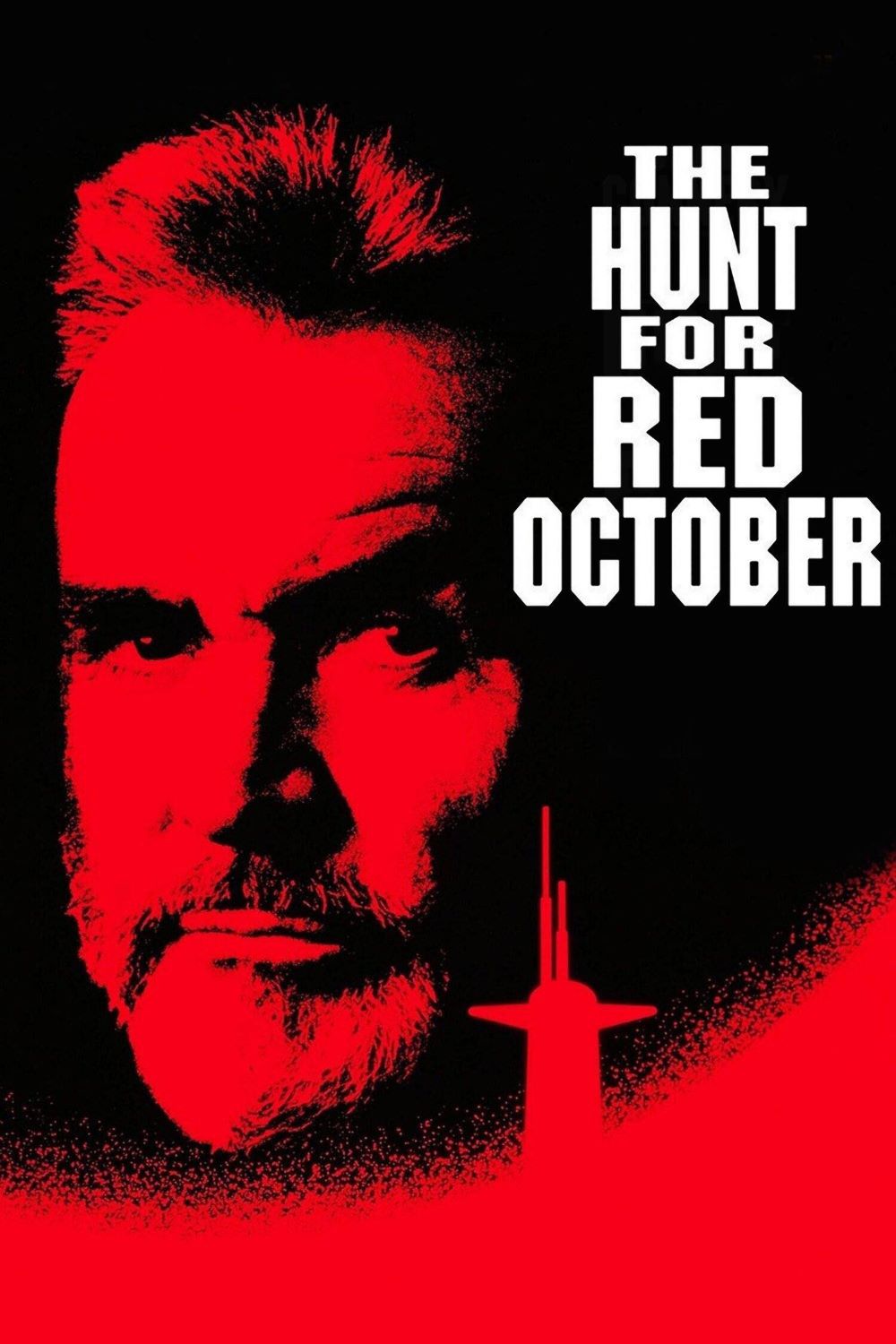
Review: The Hunt for Red October (dir. by John McTiernan)


“I’m a politician. Which means that I am a cheat and a liar, and when I’m not kissing babies, I’m stealing their lollipops.” — Dr. Jeffrey Pelt, National Security Advisor

The Hunt for Red October glides into the tail end of Cold War cinema like a stealthy sub cutting through midnight swells, packing a smart mix of spy intrigue and nail-biting underwater showdowns that keep you locked in from the opening credits. Directed by John McTiernan, fresh from helming Die Hard, this 1990 adaptation of Tom Clancy’s doorstopper novel smartly distills pages of naval geekery into a taut, propulsive thriller where Soviet skipper Marko Ramius—Sean Connery in full brooding mode—pilots the formidable Red October, a behemoth sub with a hush-mode propulsion system that ghosts past detection like a shadow in fog.

McTiernan shines in wrangling the script from Clancy’s tech-heavy tome, slicing through the babble to propel the story with crisp momentum and unrelenting suspense, turning potential info-dumps into pulse-quickening beats that hook casual viewers and sub nerds alike. The premise grabs fast: Ramius’s bold maneuvers ignite a transatlantic frenzy, with U.S. and Soviet forces locked in a paranoid standoff over what looks like an imminent crisis. That ’80s-era distrust simmers perfectly here, crammed into a runtime that pulses with fresh urgency decades later, amplified by those dim-lit sub corridors in steely teal tones that squeeze the air right out of the room.

Alec Baldwin embodies Jack Ryan as the reluctant brainiac from CIA desks, sweaty and green around the gills yet armed with instincts that cut through official noise like a periscope through chop. Pulled from family downtime—teddy bear in tow—he injects everyday stakes into the global chessboard, proving heroes don’t need camo or cockiness, just smarts and stubbornness. Connery’s Ramius dominates as a haunted vet with a personal chip on his shoulder, steering a tight-knit officer corps including Sam Neill’s devoted second-in-command, their quiet bonds hinting at deeper loyalties amid the red menace.

Standouts fill the roster seamlessly: James Earl Jones lends gravitas as the steady Admiral Greer backing Ryan’s wild cards; Scott Glenn commands the American hunter sub with laconic steel; Jeffrey Jones brings quirky spark to the sonar savant whose audio tricks flip the script on silence. The dialogue crackles with shorthand lingo and understated jabs, forging a crew dynamic that’s as pressurized as the hull plates, pulling you into hushed command post vibes without a whiff of cheesiness.

​​

McTiernan elevates the genre by leaning on wits over blasts—thrilling pursuits deliver without dominating, letting mind games and split-second calls drive the dread, all while streamlining Clancy’s minutiae into seamless propulsion. Gadgetry gleams without overwhelming: the sub’s whisper-quiet tech sparks clever cat-and-mouse in hazard-filled depths, ramping uncertainty to fever pitch. Pacing builds masterfully from war-room skepticism—Ryan battling brass skepticism—to heart-in-throat ocean dashes, every frame taut as a bowstring. Practical models and effects ground the peril in gritty tangibility, no digital gloss, evoking Ice Station Zebra‘s frosty traps but streamlined into a relentless machine that dodges the older film’s drag. It’s a clinic in balancing spectacle and smarts, where tension coils from isolation’s cruel math: one ping too many, and it’s lights out.

On the eyes and ears front, the movie plunges into submersed nightmare fuel—consoles pulsing crimson in battle stations, scopes piercing mist-shrouded waves, silo bays looming like sleeping leviathans. McTiernan tempers his action flair for thinker-thrills; Basil Poledouris’s great orchestral score surges with iconic power through the chases—those brooding horns, choral swells, and rhythmic pulses echoing engine throbs have etched into legend, pounding your chest like incoming cavitation and elevating every dive. Audio wizardry seals the immersion: hull groans, ping echoes, bubble roars craft a metallic tomb where errors echo eternally. Flaws peek through—early scenes drag with setup chatter, foes skew broad-stroked—but the core hunt erases them, surging to a sharp, satisfying close that nods to Ryan’s budding legend without overplaying the hand.

’90s tentpole lovers and thaw-era history fans find a benchmark here, as the film plays the long con of trust amid torpedoes, fusing bombast with nuance that reboots chase in vain. It bottles superpower jitters spot-on—frantic commands clashing with strike debates—yet softens adversaries via Connery’s world-weary depth and Neill’s subtle conviction. Endless rewatches uncover gems: crew hints dropped early, sonar hacks foreshadowing real tech leaps. Baldwin’s grounded Ryan—chopper-barfing, suit-clashing, chaos-navigating—earns triumphs the hard way, contrasting Das Boot‘s bleak grind with upbeat ingenuity that feels won, not waved. Poledouris’s motifs linger post-credits, a symphonic anchor boosting replay pulls.

Endurance stems from mastering sub-horror’s essence: solitude sharpening choices, where flubs invite apocalypse. Ramius embodies defector realism—war-weary idealist mirroring history’s turncoats—while Clancy’s specs (sub classes, velocities) anchor without anchoring down. McTiernan sidesteps flags; zero flag-waving, pure operator craft in dodges and climactic finesse that blends brains with boom. Quirks delight—the premier’s bluster, aides’ cool calculus—padding a 134-minute gem that exhales you surfacing, amped. Expands on score’s role too: “Hymn to Red October” choral rise mirrors Ramius’s quiet rebellion, threading emotional undercurrents through mechanical mayhem, a Poledouris hallmark outlasting the film.

Bottom line, The Hunt for Red October captivates via cerebral kick—shadow games in fluid physics, intellect over muscle, audacious plays punking empire folly. Sparks post-view chin-strokes on allegiances and risks. Connery’s gravelly “One ping only, Vasily” endures as gold; storm-watch it, trade sofa for sonar station—raw thrill spiked with savvy. Sub saga staple? This silent stalker nails every target.

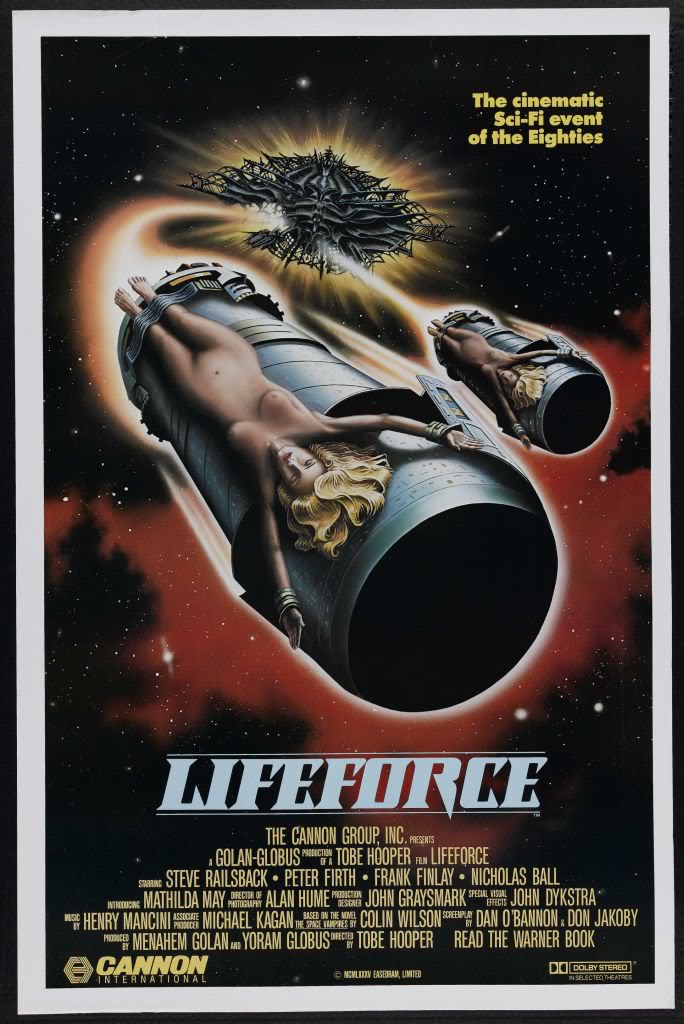
Guilty Pleasure #88: Lifeforce (dir. by Tobe Hooper)


Hey, hey, wait just one second. Lifeforce is a movie everyone treasures. Here’s Arleigh’s take on the film. Check that out first and then double back here if you like.

Lifeforce (1985, dir by Tobe Hooper)

Tobe Hooper’s Lifeforce is one of those films that had a lot of play in my Grandmother’s house, primarily because of my younger Aunt, Puddin. Puddin was the other movie lover on my Dad’s side of the family, the youngest of his generation. While she couldn’t fully make the connections between actors or directors the way my father could, she loved films all the same. With films like Marnie, West Side Story, Conan the Barbarbian, she spent most of her free time immersed in movies. If you wanted to see her swoon, mention Sean Connery, Tyrone Power or Arnold Schwarzenegger in her presence. She had a habit of using movies she watched often as white noise when cleaning around the house. As a result, we saw Lifeforce a lot growing up. She adored the film mainly because the two heroes in it barely made any mistakes, but most importantly for Henry Mancini’s score. Besides, It’s a Cannon film. You know it’s good. 

Lifeforce is the story of one of the greatest buddy pairings in of the 1980s. Yeah, Beck and Gallagher did awesome stuff in The Hidden. Riggs and Murtaugh solved the cases no matter how thin the leads were, and even with all his technology, Alex Murphy still needed Lewis for backup. These all pale in comparison to Lifeforce‘s Colonel Carlsen (Steve Railsback, Helter Skelter) and Colonel Caine (Peter Firth, The Hunt for Red October). The two characters’ laser focus and quick thinking help to keep the film moving, despite how crazy things can and do get. They also manage to have each other’s back in nearly every situation. They aren’t without troubles, however. Poor Carlsen is plagued with nightmares of making out with naked space vampires. 

Halley’s Comet returns close to Earth. With it comes an incredibly large umbrella shaped ship that is discovered by the crew of the Churchill. Col. Carlsen, along with the other astronauts, find a series of sleeping humanoid bodies inside and bring 3 (two males and one female) on board. When the Churchill’s signal is lost, the Columbia is sent out to retrieve them. The crew is lost, Carlsen is missing, but the 3 alien bodies are brought back home to Earth for study. This goes about as well as one would hope, with the Space Girl (Mathilda May, Becoming Collette) waking up and causing havoc throughout the local Space Institute before walking away naked, into the night. Anyone she comes into contact with and kisses becomes an energy vampire, requiring a transfusion, else they shrivel and turn into dust. 

Since we’re dealing with space vampires, I should inform you now that there’s quite a bit of nudity and maybe just a wee bit of sexual tension in Lifeforce. The lines between Rabid and Showgirls comes kind of close in all this. When Carlsen forces a possible suspect to divulge the location of the Space Girl, slapping her up a bit, he tells Caine he should leave. Caine’s response is that he’s “a natural voyeur”. Does much of it make sense? No. Was it entertaining? Sure. The third act of Lifeforce is the best part, with all of London just a mess. Despite all this, Carlsen & Caine split up to save the day. 

The cast for the film is nice. In addition to Railsback and Firth, we’ve got a Dune crossover with both Freddie Jones and Patrick Stewart on hand. We also have a small cameo with Dragonslayer’s John Hallam as a nurse. The best role other than the leads go to Frank Finlay and to Mathilda May. Finley’s Doctor Fallada is kind of a Van Helsing like character, piecing together all of the clues so our heroes can take the proper action. May, though she’s not given a lot to say (or to wear, for that matter) makes for an impressive villain that talks with her eyes.

The effects for Lifeforce came by way of John Dykstra, who worked on Firefox and The Empire Strikes Back. He’d later go on to work on Invaders From Mars for Hooper. Musically, Henry Mancini’s score helps to carry the film along. Honestly, I’ve only ever known him from the Pink Panther scores, so I quite enjoyed it. I always let the end credits play through for the music. Overall, Lifeforce is a great watch if vampires are your thing and nudity isn’t too much of a problem. In my mind, The Adventures of Carlsen & Caine would rival some of the best supernatural tales.

In examining this, I also found that there are some connections between this and Hammer Films’ Five Million Years to Earth (a.k.a. Quatermass and the Pit). I’m still on the look out for that one. 

In Tobe Hooper’s Lifeforce, Col. Carlsen & Col. Caine aren’t playing around.

Previous Guilty Pleasures

  1. Half-Baked
  2. Save The Last Dance
  3. Every Rose Has Its Thorns
  4. The Jeremy Kyle Show
  5. Invasion USA
  6. The Golden Child
  7. Final Destination 2
  8. Paparazzi
  9. The Principal
  10. The Substitute
  11. Terror In The Family
  12. Pandorum
  13. Lambada
  14. Fear
  15. Cocktail
  16. Keep Off The Grass
  17. Girls, Girls, Girls
  18. Class
  19. Tart
  20. King Kong vs. Godzilla
  21. Hawk the Slayer
  22. Battle Beyond the Stars
  23. Meridian
  24. Walk of Shame
  25. From Justin To Kelly
  26. Project Greenlight
  27. Sex Decoy: Love Stings
  28. Swimfan
  29. On the Line
  30. Wolfen
  31. Hail Caesar!
  32. It’s So Cold In The D
  33. In the Mix
  34. Healed By Grace
  35. Valley of the Dolls
  36. The Legend of Billie Jean
  37. Death Wish
  38. Shipping Wars
  39. Ghost Whisperer
  40. Parking Wars
  41. The Dead Are After Me
  42. Harper’s Island
  43. The Resurrection of Gavin Stone
  44. Paranormal State
  45. Utopia
  46. Bar Rescue
  47. The Powers of Matthew Star
  48. Spiker
  49. Heavenly Bodies
  50. Maid in Manhattan
  51. Rage and Honor
  52. Saved By The Bell 3. 21 “No Hope With Dope”
  53. Happy Gilmore
  54. Solarbabies
  55. The Dawn of Correction
  56. Once You Understand
  57. The Voyeurs 
  58. Robot Jox
  59. Teen Wolf
  60. The Running Man
  61. Double Dragon
  62. Backtrack
  63. Julie and Jack
  64. Karate Warrior
  65. Invaders From Mars
  66. Cloverfield
  67. Aerobicide 
  68. Blood Harvest
  69. Shocking Dark
  70. Face The Truth
  71. Submerged
  72. The Canyons
  73. Days of Thunder
  74. Van Helsing
  75. The Night Comes for Us
  76. Code of Silence
  77. Captain Ron
  78. Armageddon
  79. Kate’s Secret
  80. Point Break
  81. The Replacements
  82. The Shadow
  83. Meteor
  84. Last Action Hero
  85. Attack of the Killer Tomatoes
  86. The Horror at 37,000 Feet
  87. The ‘Burbs

Playing Catch-Up With The Films of 2016: Alice Through The Looking Glass, Gods of Egypt, The Huntsman: Winter’s War, Me Before You, Mother’s Day, Risen


Here are six mini-reviews of six films that I saw in 2016!

Alice Through The Looking Glass (dir by James Bobin)

In a word — BORING!

Personally, I’ve always thought that, as a work of literature, Through The Looking Glass is actually superior to Alice’s Adventures in Wonderland.  That’s largely because Through The Looking Glass is a lot darker than Wonderland and the satire is a lot more fierce.  You wouldn’t know that from watching the latest film adaptation, though.  Alice Through The Looking Glass doesn’t really seem to care much about the source material.  Instead, it’s all about making money and if that means ignoring everything that made the story a classic and instead turning it into a rip-off of every other recent blockbuster, so be it.  At times, I wondered if I was watching a film based on Lewis Carroll or a film based on Suicide Squad.  Well, regardless, the whole enterprise is way too cynical to really enjoy.

(On the plus side, the CGI is fairly well-done.  If you listen, you’ll hear the voice of Alan Rickman.)

Gods of Egypt (dir by Alex Proyas)

I don’t even know where to begin when it comes to describing the plot of Gods of Egypt.  This was one of the most confusing films that I’ve ever seen but then again, I’m also not exactly an expert when it comes to Egyptian mythology.  As far as I could tell, it was about Egyptian Gods fighting some sort of war with each other but I was never quite sure who was who or why they were fighting or anything else.  My ADHD went crazy while I was watching Gods of Egypt.  There were so much plot and so many superfluous distractions that I couldn’t really concentrate on what the Hell was actually going on.

But you know what?  With all that in mind, Gods of Egypt is still not as bad as you’ve heard.  It’s a big and ludicrous film but ultimately, it’s so big and so ludicrous that it becomes oddly charming.  Director Alex Proyas had a definite vision in mind when he made this film and that alone makes Gods of Egypt better than some of the other films that I’m reviewing in this post.

Is Gods of Egypt so bad that its good?  I wouldn’t necessarily say that.  Instead, I would say that it’s so ludicrous that it’s unexpectedly watchable.

The Huntsman: Winter’s War (dir by Cedric Nicolas-Troyan)

Bleh.  Who cares?  I mean, I hate to put it like that but The Huntsman: Winter’s War felt pretty much like every other wannabe blockbuster that was released in April of last year.  Big battles, big cast, big visuals, big production but the movie itself was way too predictable to be interesting.

Did we really need a follow-up to Snow White and The Huntsman?  Judging by this film, we did not.

Me Before You (dir by Thea Sharrock)

Me Before You was assisted suicide propaganda, disguised as a Nicolas Sparks-style love story.  Emilia Clarke is hired to serve as a caregiver to a paralyzed and bitter former banker played by Sam Claflin.  At first they hate each other but then they love each other but it may be too late because Claflin is determined to end his life in Switzerland.  Trying to change his mind, Clarke tries to prove to him that it’s a big beautiful world out there.  Claflin appreciates the effort but it turns out that he really, really wants to die.  It helps, of course, that Switzerland is a really beautiful and romantic country.  I mean, if you’re going to end your life, Switzerland is the place to do it.  Take that, Sea of Trees.

Anyway, Me Before You makes its points with all the subtlety and nuance of a sledge-hammer that’s been borrowed from the Final Exit Network.  It doesn’t help that Clarke and Claflin have next to no chemistry.  Even without all the propaganda, Me Before You would have been forgettable.  The propaganda just pushes the movie over the line that separates mediocre from terrible.

Mother’s Day (dir by Garry Marshall)

Y’know, the only reason that I’ve put off writing about how much I hated this film is because Garry Marshall died shortly after it was released and I read so many tweets and interviews from people talking about what a nice and sincere guy he was that I actually started to feel guilty for hating his final movie.

But seriously, Mother’s Day was really bad.  This was the third of Marshall’s holiday films.  All three of them were ensemble pieces that ascribed a ludicrous amount of importance to one particular holiday.  None of them were any good, largely because they all felt like cynical cash-ins.  If you didn’t see Valentine’s Day, you hated love.  If you didn’t see New Year’s Eve, you didn’t care about the future of the world.  And if you didn’t see Mother’s Day … well, let’s just not go there, okay?

Mother’s Day takes place in Atlanta and it deals with a group of people who are all either mothers or dealing with a mother.  The ensemble is made up of familiar faces — Jennifer Aniston, Julia Roberts, Kate Hudson, and others! — but nobody really seems to be making much of an effort to act.  Instead, they simple show up, recite a few lines in whatever their trademark style may be, and then cash their paycheck.  The whole thing feels so incredibly manipulative and shallow and fake that it leaves you wondering if maybe all future holidays should be canceled.

I know Garry Marshall was a great guy but seriously, Mother’s Day is just the worst.

(For a far better movie about Mother’s Day, check out the 2010 film starring Rebecca De Mornay.)

Risen (dir by Kevin Reynolds)

As far as recent Biblical films go, Risen is not that bad.  It takes place shortly after the Crucifixion and stars Joseph Fiennes as a Roman centurion who is assigned to discover why the body of Jesus has disappeared from its tomb.  You can probably guess what happens next.  The film may be a little bit heavy-handed but the Roman Empire is convincingly recreated, Joseph Fiennes gives a pretty good performance, and Kevin Reynolds keeps the action moving quickly.  As a faith-based film that never becomes preachy, Risen is far superior to something like God’s Not Dead 2.


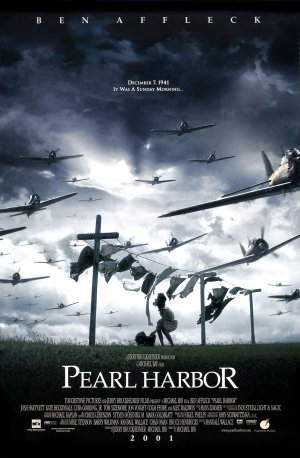
Embracing the Melodrama Part II #100: Pearl Harbor (dir by Michael Bay)


Pearl_harbor_movie_poster

“And then all this happened…”

Nurse Evelyn Johnson (Kate Beckinsale) in Pearl Harbor (2001)

The “this” that Evelyn Johnson is referring to is the Japanese attack on Pearl Harbor.  You know, the date will live in infamy.  The attack that caused the United States to enter World War II and, as a result, eventually led to collapse of the Axis Powers.  The attack that left over 2,000 men died and 1,178 wounded.  That attack.

In the 2001 film Pearl Harbor, that attack is just one of the many complications in the romance between Danny (Ben Affleck), his best friend Rafe (Josh Hartnett), and Evelyn (Kate Beckinsale).  The other complications include Danny briefly being listed as dead, Danny being dyslexic before anyone knew what dyslexia was (and yet, later, he’s still seen reading and writing letters with absolutely no trouble, almost as if the filmmakers forgot they had made such a big deal about him not being able to do so), and the fact that Rafe really, really likes Evelyn.  Of course, the main complication to their romance is that this is a Michael Bay film and he won’t stop moving the camera long enough for anyone to have a genuine emotion.

I imagine that Pearl Harbor was an attempt to duplicate the success of Titanic, by setting an extremely predictable love story against the backdrop of a real-life historical tragedy.  Say what you will about Titanic (and there are certain lines in that film that, when I rehear them today, make me cringe), Leonardo DiCaprio and Kate Winslet had genuine chemistry.  None of that chemistry is present in Pearl Harbor.  You don’t believe, for a second, that Ben Affleck and Josh Hartnett are lifelong friends.  You don’t believe that Kate Beckinsale is torn between the two of them.  Instead, you just feel like you’re watching three actors who are struggling to give a performance when they’re being directed by a director who is more interested in blowing people up than in getting to know them.

Continuing the Titanic comparison, Pearl Harbor‘s script absolutely sucks.  Along with that line about “all this” happening, there’s also a scene where Franklin D. Roosevelt (Jon Voight) reacts to his cabinet’s skepticism by rising to his feet and announcing that if he, a man famously crippled by polio and confined to a wheelchair, can stand up, then America can win a war.

I’ve actually been to Pearl Harbor in Hawaii.  I have gone to the USS Arizona Memorial.  I have stood and stared down at the remains of the ship resting below the surface of the ocean.  It’s an awe-inspiring and humbling site, one that leaves you very aware that over a thousand men lost their lives when the Arizona sank.

I have also seen the wall which lists the name of everyone who was killed during the attack on Pearl Harbor and until you’ve actually been there and you’ve seen it with your own eyes, you really can’t understand just how overwhelming it all is.  The picture below was taken by my sister, Erin.

Pearl Harbor 2003If you want to pay tribute to those who lost their lives at Pearl Harbor, going to the Arizona Memorial is a good start.  But avoid Michael Bay’s Pearl Harbor at all costs.

Review: Lifeforce (dir. by Tobe Hooper)


“I mean, in a sense we’re all vampires. We drain energy from other life forms. The difference is one of degree. That girl was no girl. She’s totally alien to this planet and our life form… and totally dangerous.” — Dr. Hans Fallada

1985’s Lifeforce, directed by Tobe Hooper, was critically panned and barely registered at the box office. Yet in the decades since its release, something curious has happened: the film has gathered a loyal cult following among fans of science fiction and horror. Hooper’s film fuses so many genre conventions that it resists classification—too strange for pure sci-fi, too grandiose for standard horror. The result is a striking and eccentric reinvention of the vampire myth, a lavish but uncanny blockbuster that feels imported from an alternate cinematic timeline.

The film begins squarely in the realm of science fiction. Conceived during the public fascination with Halley’s Comet ahead of its 1986 return, Lifeforce rode the wave of comet-themed media flooding the decade. Most were cheap cash-ins. Hooper’s film stood out for its ambition and its visual scale.

Coming off Poltergeist, Hooper received an unusually large budget—a far cry from the lean, feral energy of The Texas Chainsaw Massacre. The story follows the crew of the shuttle Churchill as they discover a massive alien spacecraft hidden in the comet’s tail. Inside, frozen in suspended animation, are three humanoid figures. The ship’s dignified name feels ironic, even doomed; considering what’s to come, Demeter might have been more fitting. Like the sailors of Stoker’s novel, these astronauts inadvertently ferry an ancient predatory force home—yet this time, the threat arrives from the stars.

The horror unfolds once the crew retrieves its mysterious “specimens.” Members die in gruesome succession until only one survivor, Colonel Tom Carlsen (Steve Railsback), escapes in a pod back to Earth. Railsback’s performance is an intriguing mix of unhinged emotion and grim conviction. His intensity suits a film that constantly walks the line between pulp spectacle and cosmic tragedy.

When the story shifts to London, Lifeforce transforms into a supernatural thriller with procedural undertones. Peter Firth’s Colonel Colin Caine becomes the viewer’s compass: calm, authoritative, and determined to impose order on mounting chaos. As London succumbs to panic and outbreak, his steady professionalism anchors the outlandish events. His partnership with Railsback’s haunted, psychic Carlsen gives the middle act its volatile energy.

Among the supporting cast, Frank Finlay leaves one of the strongest impressions as Dr. Hans Fallada, a scientist fascinated by death and metaphysical energy. He serves as both philosopher and investigator, treating the vampiric invasion as a riddle of life itself. His restrained curiosity lends weight to scenes that might otherwise descend into absurdity. While the city collapses, Fallada studies the phenomenon with eerie calm, treating catastrophe as an experiment in cosmic entropy.

Patrick Stewart also makes a memorable, if brief, appearance as Dr. Armstrong, the head of a psychiatric hospital linked to the Space Girl’s psychic presence. His role builds to the film’s most grotesque and bizarre sequence: an exchange of minds, sudden possession, and an unnervingly intimate kiss with Railsback. The moment condenses everything Lifeforce represents—erotic, macabre, and unconcerned with boundaries. Stewart brings a gravitas that makes the absurd strangely compelling, a counterweight to Railsback’s volatility and Mathilda May’s silent allure.

May, as the unnamed Space Girl, says little but dominates the film through presence alone. She embodies an alien ideal of beauty and destruction, gliding through scenes with a composure that’s both sensual and predatory. Her nudity, much debated at the time, plays less as exploitation and more as elemental symbolism—the human body as an expression of both creation and death, desire and annihilation.

Supporting figures from the British military and government round out the ensemble, emphasizing the film’s descent into bureaucratic chaos. Michael Gothard’s Kane, a Ministry of Defence officer struggling to reconcile logic with the inexplicable, captures the helplessness of institutional order collapsing under cosmic threat. His pragmatic exchanges with Firth highlight competing instincts between reason and survival.

As the infection spreads, Lifeforce expands into a vision of urban apocalypse that fuses British science fiction and American spectacle. London becomes a nightmare tableau—crowds of shriveled corpses feed on energy while arcs of blue plasma swirl through the sky. The city’s fall evokes both George A. Romero’s zombie apocalypse and the metaphysical unease of Nigel Kneale’s Quatermass stories. Amid the insanity, Finlay and Firth remain the emotional touchstones, keeping the audience oriented as narrative logic begins to dissolve.

For all its ambition, however, Lifeforce suffers from erratic pacing and tonal whiplash. The first act unfolds with deliberate, moody wonder, then abruptly veers into frenzied exposition and psychic melodrama once the story reaches Earth. The balance between unsettling mystery and outright spectacle often collapses under its own weight. Scenes that should evoke cosmic terror sometimes tip into unintended camp, particularly in the dialogue-heavy middle stretch. Hooper’s direction, though visually imaginative, occasionally struggles to maintain coherence amid the script’s shifting identities—part creature feature, part disaster epic, part metaphysical drama. The editing, especially in the theatrical cut, undercuts tension with rushed transitions that leave emotional beats hanging. Railsback’s manic performance, while strangely compelling, can also verge on excess, blurring the line between conviction and chaos.

Tonally, the film wavers between awe and amusement. For some viewers, its earnest delivery will read as self-parody; for others, its collision of erotic horror and science fiction grandeur gives it a singular vitality. Lifeforce’s flaws are inseparable from its daring. It dares to fail boldly, and in that failure finds a kind of messy transcendence—larger than reason, too strange to fade.

In the end, Lifeforce lingers as one of the strangest hybrids of its era: part gothic fable, part erotic horror, part apocalyptic science fiction. It was too eccentric to find mainstream success, yet its sincerity and scope give it lasting resonance. The ensemble performances and tonal daring hold the film together, transforming potential chaos into something mythic—a story about possession, contagion, and humanity’s fatal pull toward the unknown.

Beneath its spectacle, the film engages in a deeper dialogue between gothic and cosmic horror traditions. Its characters represent a spectrum of responses to the incomprehensible: Fallada’s intellectual curiosity, Firth’s stoic resolve, Railsback’s frenzy, and May’s serene seduction. Together they form a portrait of human fragility in confrontation with the infinite. Where gothic horror finds fear in the collapse of reason, cosmic horror finds it in the vast indifference of the universe.

By fusing these lineages, Lifeforce becomes a mythic apocalypse that feels both intimate and vast—an encounter between flesh and void, terror and temptation. Its fusion of genres, ideas, and performances ensures its peculiar power endures, a reminder that some of the strangest failures of 1980s cinema are also its most visionary.