Lisa Marie Reviews An Oscar Winner: Platoon (dir by Oliver Stone)


One of my favorite scenes from TV’s King of the Hill occurs in an episode in which Hank and Peggy are celebrating their wedding anniversary.  They’ve sent Bobby and Luanne away for the weekend.  They have the house to themselves but, after their anniversary party, Peggy is feeling depressed.  She tells Hank that, for the first time ever, she feels old and she regrets all the dreams that she had that have yet to come true, like inventing and selling her own barbecue sauce.

Trying to cheer her up, Hank says, “C’mon, Peg.  We got the house to ourselves for weekend …. and I rented an R-rated movie!”

Peggy looks up, briefly hopeful that Hank did something romantic.  “What movie?” she asks.

Hank hesitates, glances down at the floor, and says, “Uhmm …. Platoon.”

It’s funny because it’s true.  Just about every man that I know loves Platoon.  First released in 1986 and reportedly based on Oliver Stone’s own experiences as an infantryman in Vietnam, Platoon is often cited as being one of the greatest war films ever made.  Oddly enough, the film has an anti-war and anti-military message but, in my experience, those who love it talk more about the battle scenes than any message that Stone may have been trying to impart about the futility of war.  Pauline Kael once wrote that Oliver Stone had left-wing politics but a right-wing sensibility and I think you can definitely see that in Platoon.  Despite all of the characters talking about how pointless the war is and how much they resent being forced to risk their lives for no apparent purpose, the film’s energy comes from the scenes of Chris Taylor (Charlie Sheen) stalking through the jungle and, towards the end, losing his mind and giving himself completely over to the adrenaline that comes from being trapped in the middle of a battle.  Throughout the film, we hear Taylor’s rather pedantic thoughts on the military and his fellow soldiers but it’s hard not to notice that his actions and his dialogue are usually far less eloquent.  Taylor may be a rich intellectual (and wow, is Charlie Sheen ever unconvincing when it comes to portraying that part of Taylor’s personality) but when he’s in the jungle, he’s just fighting for survival.

The film’s plot centers around the conflict between two sergeants, the peace-loving Elias (Willem DaFoe) and the war-loving Barnes (Tom Berenger).  Taylor has to decide which one of the two to follow.  The pot-smoking Elias loves his men and goes out of his way to protect them.  The beer-drinking Barnes has a much harsher view of the world but, at the same time, he’s the type of scarred warrior who seems immortal.  One gets the feeling that he’ll never be defeated.  The rest of the platoon is full of familiar faces, with everyone from John C. McGinley to Francesco Quinn to Tony Todd to Forest Whitaker to Johnny Depp to a baby-faced Kevin Dillon showing up.  (Dillon is especially frightening as a psycho who has, for some reason, been nicknamed Bunny.)  The majority of the platoon is dead by the end of the film.  Even with the leadership of Elias and Barnes, the soldiers are stuck in a winless situation.  As Taylor points out, the Americans aren’t just fighting the enemy.  They’re also fighting each other.

Platoon is certainly not my favorite of the film nominated in 1986.  I would have gone with A Room With A View.  (Blue Velvet, which is as influential a film as Platoon, was not even nominated.)  That said, I can’t deny the power of Platoon‘s combat scenes.  Though Stone’s script is didactic and Taylor’s narration is awkwardly deployed throughout the film, Stone’s direction definitely captures the fear and dread of being in a strange place with no idea of whether or not you’re going to survive.  Stone is critical of the military (at one point, an officer calls an air strike on his own men) but seems to love the soldiers, even the ones who have pushed over to the dark side.

Platoon was not the first Best Picture nominee to be made about the Vietnam War.  The Deer Hunter, Coming Home, and Apocalypse Now were all released first.  But both The Deer Hunter and Apocalypse Now are surreal epics that seem to take place in a dream world.  Coming Home, which has a script that somehow manages to be even more didactic than Platoon‘s, focuses on the war back home.  Platoon is far more gritty and personal film.  Watching Platoon, you can smell the gunpowder and the napalm and feel the humidity of the jungle.  I can understand why it won, even if I prefer to watch Helena Bonham Carter and Julian Sands fall in love.

4 Shots From 4 Films: Special Kevin Costner Edition


4 Or More Shots From 4 Or More Films is just what it says it is, 4 shots from 4 of our favorite films. As opposed to the reviews and recaps that we usually post, 4 Shots From 4 Films lets the visuals do the talking!

Today, the Shattered Lens wishes a happy birthday to Kevin Costner!  It’s time for….

4 Shots From 4 Kevin Costner Films

Dances With Wolves (1990, dir by Kevin Costner, DP: Dean Semler)

JFK (1991, dir by Oliver Stone, DP: Robert Richardson)

The Postman (1997, dir by Kevin Costner, DP: Stephen F. Windon)

Open Range (2003, dir by Kevin Costner, DP: J. Michael Muro)

Scenes That I Love: “Greed is Good” from Wall Street


Today, the Shattered Lens wishes a happy 79th birthday to actor and producer Michael Douglas!

For today’s scene that I love, we have a scene from Oliver Stone’s 1987 film, Wall Street.  In this scene, Michael Douglas plays Gordon Gekko.  Gekko is supposed to be the film’s villain but he’s actually a lot more compelling and, at times, sympathetic than the film’s heroes.  He’s not a judgmental jerk like the union leader played by Martin Sheen.  Nor is he a snitch like his protegee, played by Charlie Sheen.  Instead, Gordon Gekko is honest about who he is.

This is the scene that won Michael Douglas an Oscar.  Watching him in this scene, it’s easy to see why Douglas’s performance supposedly inspired a lot of people to get a job working on Wall Street.  Douglas is so charismatic in this scene that he makes this movie, directed by a future supporter of Bernie Sanders, into one of the best advertisements for capitalism ever filmed.

Scene That I Love: Garrison Meets X in JFK


Today is Oliver Stone’s birthday so, for all conspiracy-loving readers, here is a key scene from Stone’s 1991 film, JFK!  In this scene, Kevin Costner’s Jim Garrison meets the mysterious man known as X (played by Donald Sutherland).  X explains the conspiracy to Garrison.

This scene certainly convinced a lot of people.  Personally, I think Oswald acted alone but one cannot deny Stone’s talent as a filmmaker.

4 Shots From 4 Films: Football!


4 Or More Shots From 4 Or More Films is just what it says it is, 4 shots from 4 of our favorite films. As opposed to the reviews and recaps that we usually post, 4 Shots From 4 Films lets the visuals do the talking!

I have to admit that I don’t know much about football but I do know quite a bit about football movies.  Since today is Super Bowl Sunday, it seems appropriate to pay tribute to America’s unofficial holiday with….

4 Shots From 4 Football Films

The Freshman (1925, dir by Fred C. Newmeyer and Sam Taylor, DP: Walter Lundin)

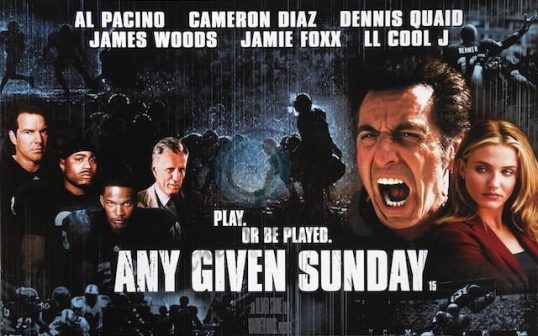
Any Given Sunday (1999, dir by Oliver Stone, DP: Salvatore Totino)

Friday Night Lights (2004, dir by Peter Berg, DP: Tobias Schliessler)

Carter High (2015, dir by Arthur Muhammad, DP: Ron Gonzalez)

Scenes That People Love: The Al Pacino Locker Room Speech From Any Given Sunday


I once read an article where Al Pacino’s lock room speech in Oliver’s Stone 1999 football film, Any Given Sunday, was described as being the most inspirational locker room speech ever.

I don’t really know if I agree with that.

I mean, to be honest, Al Pacino’s Tony D’Amato kind of looks really beaten down in this scene.  It looks like, instead of spending the previous night studying game film and coming up with plays, the coach spent the previous night out drinking.  If I was one of his players, I would be wondering if the coach was hungover and I might reset that.  I might be like, “Hey, I’ve been staying off cocaine all week for this game and then coach shows up looking like he’s just killed Frank Lopez.  Someone get Aaron Eckhart in here — he’s the coach we need!”  Also, for the most part, his speech seems to be more about him than the team.  It’s like, “I’ve got failed marriages, I’ve got this, I’ve got that …. life is a game of inches!”  Well, that’s great, Tony, but how are we going to win the game?  “I got problems!”  Well, we’ve all got problems, coach!  I mean, he’s talking to a room full of people who probably can’t stand up without hearing a hundred different things going snap in their knees.

Do locker room speeches really make that much of a difference?  I’ve seen enough sports films that I often wondered this.  Is it a requirement that a coach give a speech?  If the coach refused to give a speech, the team would still be obligated to go out there and play hard, right?  As I’ve said many a time, I really don’t get the point of long speeches but some of that is because of the ADD.  There’s no way that I could listen to anyone talk about life being a game of inches for four minutes.  I would just zone out.

What if a coach filibustered and just kept going and going in his speech?  Would the team have to forfeit?

Would it have been more effective to show the team the Willie Beamon music video as opposed to forcing them to listen to a speech from hung over Tony D?  Well, probably not.  If I remember correctly, the team did win the big game and they did it even after Dennis Quaid got injured for like the 100th time.  So, I guess the speech did work.  That shows you everything I know about football.

Anyway, I know a lot of people love this speech.  I mean, there’s a reason why it showed up in that car commercial.  And, to be honest, it worked pretty well in that commercial.  Certainly, it made more sense to use Tony’s “life is a game of inches” speech as opposed to Robin Williams’s poetry speech from Dead Poets Society.  (Car commercials are weird.)  So, in honor of those people and Super Bowl Sunday, here is the Tony D’Amato Any Given Sunday locker room speech:

An Offer You Can’t Refuse #19: Scarface (dir by Brian DePalma)


“Hello to my little friend!”

Hi, little friend….

BOOM!

The 1983 film, Scarface, is a misunderstood film.  As we all know, it’s the story of Tony Montana (Al Pacino), who comes to Miami from Cuba along with his friend, Manny (Steven Bauer).  In return for murdering a former member of Castro’s government, Tony is given a job working for Frank Lopez (Robert Loggia).  When it becomes obvious that Tony is becoming too ambitious and might become a threat to him, Frank attempts to have Tony killed.  However, the assassination attempt fails, Tony murders Frank, and then Tony becomes Miami’s richest and most powerful crime lord.  Soon, Tony is burying his face in a mountain of cocaine while making deals with a sleazy Bolivian drug lord named Alejandro Sosa (Paul Shenar).  Tony also marries Frank’s mistress, Elvira Hancock (Michelle Pfieffer), though it’s obvious from the start the the only person that Tony truly loves is his sister, Gina (Mary Elizabeth Mastrantonio).  Anyway, it all eventually leads to a lot of violence and a lot of death.  Even F. Murray Abraham ends up getting tossed out of a helicopter, which is unfortunate since his character was a lot of fun.

Scarface is a famous film, largely because of Oliver Stone’s quotable dialogue and the no holds barred direction of Brian DePalma.  However, I think that people get so caught up on the fact that this is a classic gangster film that they miss the fact that Scarface is also an extremely dark comedy.  It satirizes the excess of the 80s.  Once Tony reaches the top of the underworld, he becomes a parody of the nouveau riche.  He moves into a gigantic house and proceeds to decorate it in the most tasteless way possible and there’s something oddly charming about this crude, not particularly bright man getting excited over the fact that he can finally afford to buy a tiger.  Towards the end of the film, there’s a scene where Tony rants while lounging in an indoor hot tub while Elvira languidly snorts cocaine and complains about the crudeness of his language and, at that moment, Scarface becomes a bit of a domestic comedy.  Tony’s reached the top of his profession, just to discover that it takes more than a live-in tiger and a wardrobe of wide lapeled suits to achieve true happiness.  So, he ends up sitting glumly in his office with a mountain of cocaine rising up in front of him.  “The world is yours” may be Tony’s motto but it turns out that the world is extremely tacky.  For all of his attempts to recreate himself as a wealthy and sophisticated man, Tony is still just a barely literate criminal with a nasty scar and a sour disposition.  The only thing he’s gotten for all of his ruthless ambition is an order of ennui with a cocaine appetizer.

I’ve always found Brian DePalma to be an uneven director.  He has a very distinct style and sometimes that style is perfectly suited to the story that he’s telling (i.e., Carrie) and sometimes, all of that style just seems to get in the way (i.e. The Fury).  Scarface, however, is the ideal story for DePalma’s over-the-top aesthetic.  DePalma’s style may be excessive but Scarface is a film about excess so it’s a perfect fit.  For that matter, you could say the same thing about Oliver Stone’s screenplay.  Stone has since stated that he was using almost as much cocaine as Tony Montana while he wrote the script.  The end result of the combination of Stone’s script, DePalma’s hyperactive direction, Pacino’s overpowering lead performance, and Giorgio Moroder’s propulsive score is a film that feels as if every minute is fueled by cocaine.  It’s not just a film that’s about drugs.  It’s also a film that feels like a drug.

Scarface is a big movie.  It runs nearly three hours, following Tony from his arrival in the United States to his final moments in his mansion, taking hundreds of bullets while grandly announcing that he’s still standing.  (Even after all of the bad things that Tony has done — poor Manny! — it’s impossible not to admire his refusal to go down.)  It’s also a difficult movie to review, largely because almost everyone’s seen it and already has an opinion.  Personally, I think the film gets off to a strong start.  I think the scenes of Tony ruthlessly taking control of Frank’s empire are perfectly handled and I love the scenes where Pacino and Steven Bauer just bounce dialogue off of each other.  They’re like a comedy team who commits murder on the side.  I also loved the “Take it to the limit” montage, which belongs in the 80s Cinema Hall of Fame.  At the same time, I think the final third of the movie drags a bit and that Tony’s sudden crisis of conscience when he sees that a man that he’s supposed to murder has a family feels a bit forced.  It also bothers me that Elvira just vanishes from the film.  At the very least, the audience deserved more of an explanation as to where she disappeared to.

But no matter!  Flaws and all, Scarface is a violent satire that holds up surprisingly well.  Al Pacino’s unhinged performance as Tony Montana is rightly considered to be iconic.  Pacino’s gives such a powerhouse performance that it’s easy to forget that the rest of the cast is pretty impressive as well.  I particularly liked the wonderfully sleazy work of F. Murray Abraham and Paul Shenar.  That said, my favorite character in the film remains Elvira, if just because her clothes were to die for and she just seemed so incredibly bored with all of the violent men in her life.  She goes from being bored with Frank to being bored with Tony and how can you not admire someone who, even when surrounded by all Scarface’s excess, just refuse to care?

Scarface is an offer that you can’t refuse.

Previous Offers You Can’t (or Can) Refuse:

  1. The Public Enemy
  2. Scarface (1932)
  3. The Purple Gang
  4. The Gang That Could’t Shoot Straight
  5. The Happening
  6. King of the Roaring Twenties: The Story of Arnold Rothstein 
  7. The Roaring Twenties
  8. Force of Evil
  9. Rob the Mob
  10. Gambling House
  11. Race Street
  12. Racket Girls
  13. Hoffa
  14. Contraband
  15. Bugsy Malone
  16. Love Me or Leave Me
  17. Murder, Inc.
  18. The St. Valentine’s Day Massacre

4 Shots From 4 Films: Special Kevin Bacon Edition


4 Shots From 4 Films is just what it says it is, 4 shots from 4 of our favorite films. As opposed to the reviews and recaps that we usually post, 4 Shots From 4 Films lets the visuals do the talking!

Today is the birthday of everyone’s favorite, hard-working character actor, Kevin Bacon!  And that means that it’s time for….

4 Shots From 4 Films

Friday the 13th (1980, dir by Sean S. Cunningham)

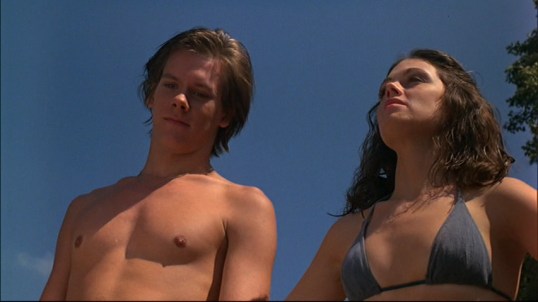
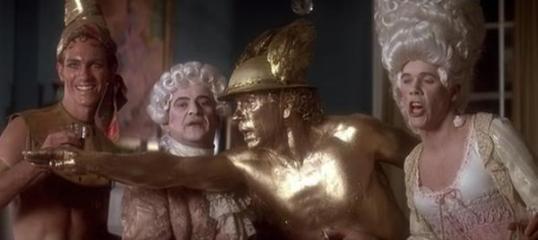
Quicksilver (1986, dir by Thomas Michael Donnelly)

JFK (1991, dir by Oliver Stone)

X-Men: First Class (2011, dir by Matthew Vaughn)


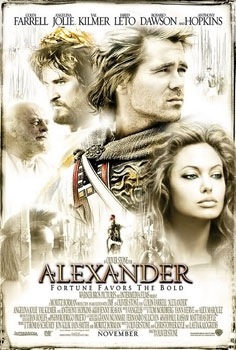
Film Review: Alexander (dir by Oliver Stone)


Before I really get into talking about Oliver Stone’s 2004 film, Alexander, I should acknowledge that there’s about four different version of Alexander floating around.

There’s the widely ridiculed theatrical version, which was released in 2004 and which got terrible reviews in the United States, though it was apparently a bit more popular in Europe.  This version of Alexander was a notorious box office bomb and Oliver Stone’s career has never quite recovered from it.  Though Stone’s still making movies, it’s been a while since he’s really been taken as seriously as you might expect a two-time Oscar winner to be taken.  The box office and critical failure of Alexander is a big reason for that.

There’s also the Director’s Cut of Alexander, which is slightly shorter than the version that was released into theaters and which apparently emphasizes the action scenes more than the original film did.  For an Oscar-winning director to release a director’s cut that’s actually shorter than the version that he originally sent into theaters is rare and it shows that the film’s subject matter was one that Stone was still trying to figure out how to deal with.

There is also the “Final Unrated Cut,” which lasts 3 hours and 45 minutes and which Stone described as being the Cecil B. DeMille-version of the story.  At the time the Final Unrated Cut was released in 2007, Stone announced that he had put everything back into the movie and that we were finally able to see the version of the story that he wanted to tell.

However, Stone apparently still left some stuff out because, in 2009, we got the Final Cut, which goes on for 206 minutes and which, once again, apparently includes everything that Stone wanted to put in the original cut of the film.  The Final Cut has actually received some positive reviews from critic who were not impressed by the previous three versions of Alexander.

For the record, I saw the Director’s Cut.  This is the second of the Alexanders, the one that runs 167 minutes.  Some day, I’ll watch the four hour version and I’ll compare the two films.  But for now, I’m reviewing the 167-minute version of Alexander.

Anyway, Alexander is a biopic of Alexander The Great, the Macedonian ruler who took over a good deal of the known world before mysteriously dying at the age of 32.  The film jumps back and forth in time, from an elderly Ptolemy (Anthony Hopkins, going about as overboard as one can go while playing an ancient Greek historian) narrating the story of Alexander’s life to Alexander (Colin Farrell) conquering his enemies to scenes of Alexander’s mother (Angelina Jolie) and one-eyed father (Val Kilmer) shaping Alexander’s outlook on the world.  Along the way, we discover that Alexander was driven to succeed and forever lived in the shadow of his father.  We also discover that he may have been in love with his general, Hephaistion (Jared Leto), even though he married Roxane (Rosario Dawson, who gets to do an elaborate dance).  We also discover that no battle in the ancient world could begin before Alexander gave a long speech and that all of the Macedonians spoke with thick Irish accents.  Stone has said that the Irish accents were meant to signify that the Macedonians were working-class.  Other people say that, because Colin Farrell’s accent was so thick, the rest of the cast had to imitate him so he wouldn’t sound out-of-place.

And here’s the thing — yes, Alexander is a big, messy film that is often incoherent.  Yes, the cast is full of talented actors, every single one of which has been thoroughly miscast.  Yes, it’s next to impossible to keep track of who is fighting who and yes, it’s distracting as Hell that all of the Macedonians have Irish accents and that Angelina Jolie uses an Eastern European accent that’s so thick that it almost becomes a parody of itself.  All of these things are true and yet, I was never bored with the director’s cut.  The sets were huge, the costumes were beautiful, and the cast was eccentric enough to be interesting.  Val Kilmer, Angelina Jolie, and Anthony Hopkins all go overboard, chewing every piece of scenery that they can get their hands on.  Colin Farrell alternates between being determined and being wild-eyed.  Jared Leto allows his piercing stare to do most of his acting.  Even Christopher Plummer shows up, playing Aristole with a North Atlantic accent.  No one appears to be acting in the same film and strangely, it works.  The ancient world was chaotic and the combination of everyone’s different acting styles with Stone’s frantic direction actually manages to capture some of that chaos.

Oliver Stone apparently spent years trying to bring his vision of Alexander’s life to the big screen.  Watching the film, it’s a classic example of a director becoming so obsessed with a story that they ultimately forgot why they wanted to tell it in the first place.  Stone tosses everything he can at the cinematic wall, just to see what will stick.  Is Alexander a tyrant or a misunderstood humanist?  Is he a murderer or a noble warrior?  Is he in love with Hephaistion or has his borderline incestuous relationship with his mother left him incapable of trusting anyone enough to love them?  The film doesn’t seem to know who Alexander actually was but it’s so desperate to try to find an answer among all of the endless battle scenes and lengthy speeches that it becomes undeniably compelling to watch.  If nothing else, Alexander gives us the rare chance to see an Oliver Stone film in which Stone himself doesn’t seem to quite know what point it is that he’s trying to make.

Alexander is a mess but there’s something fascinating about its chaos.  It’s a beautiful wreck and, as with all wrecks, it’s impossible to look away.

Any Given Sunday (1999, directed by Oliver Stone)


With Any Given Sunday, Oliver Stone set out to make the ultimate football movie and he succeeded.

Any Given Sunday is not just the story of aging coach Tony D’Amato (Al Pacino).  It’s also the story of how third-string quarterback Willie Beamon (Jamie Foxx) allows celebrity to go to his head while the injured starter, Cap Rooney (Dennis Quaid), deals with his own mortality and how, at 38, he is now over-the-hill.  It’s also about how the team doctors (represented by James Woods and Matthew Modine) are complicit in pushing the players beyond their limits and how the owners (Cameron Diaz) view those players as a commodity to be traded and toyed with.  It’s about how the Sharks represent their home city of Miami and how cynical columnists (John C. McGinley plays a character that is obviously meant to be Jim Rome) deliberately set out to inflame the anger of the team’s fans.  It’s about how politicians (Clifton Davis plays Miami’s mayor and asks everyone to “give me some love”) use professional sports to further their own corrupt careers while the often immature men who play the game are elevated into role models by the press.  It’s a film that compares football players to ancient gladiators while also showing how the game has become big business.  In typical Oliver Stone fashion, it tries to take on every aspect of football while also saying something about America as well.

In the role on Tony D, Pacino famously describes football as being “a game of inches” but you wouldn’t always know it from the way that Oliver Stone directs Any Given Sunday.  As a director, Stone has never been one to only gain an inch when he could instead grab an entire mile.  (Stone is probably the type of Madden player who attempts to have his quarterback go back and throw a hail mary on every single play.)  Tony tells his players to be methodical but Stone directs in a fashion that is sloppy, self-indulgent, and always entertaining to watch.  One minute, Al Pacino and Jim Brown are talking about how much the game has changed and the next minute, LL Cool J is doing cocaine off of a groupie’s breast while images of turn-of-the-century football players flash on the screen.  No sooner has Jamie Foxx delivered an impassioned speech about the lack of black coaches in the league then he’s suddenly starring in his own music video and singing about how “Steamin’ Willie Beamon” leaves all the ladies “creamin’.”  (It rhymes, that’s the important thing.)  When Tony invites Willie over to his house, scenes of Charlton Heston in Ben-Hur are on TV.  Later in the movie, Heston shows up as the Commissioner and says, about Cameron Diaz, “she would eat her young.”

Any Given Sunday is Oliver Stone at both his best and his worst.  The script is overwritten and overstuffed with every possible sports cliché  but the football scenes are some of the most exciting that have ever been filmed.  Only Oliver Stone could get away with both opening the film with a quote from Vince Lombardi and then having a player literally lose an eye during the big game.  Stone himself appears in the commentator’s both, saying, “I think he may have hurt his eye,” while the doctor’s in the end zone scoop up the the torn out eyeball and put it into a plastic bag.  Only Stone could get away with Jamie Foxx vomiting on the field during every game and then making amazing plays while a combination of rap, heavy metal, and techno roars in the background.  Stone regulars like James Woods and John C. McGinely make valuable appearances and while Woods may be playing a villain, he’s the only person in the film willing to call out the coaches, the players, the owners, and the fans at home as being a bunch of hypocrites.  Stone’s direction is as hyper-kinetic as always but he still has no fear of stopping the action so that Foxx can see sepia-toned images of football’s past staring at him from the stands.  Stone directs like defensive lineman on steroids, barreling his way through every obstacle to take down his target.  No matter what, the game goes on.

Any Given Sunday is the ultimate football movie and more fun than the last ten super bowls combined.