Review: 48 Hrs. (dir. by Walter Hill)


“This ain’t no god damn way to start a partnership.” – Reggie Hammond

48 Hrs. bursts onto the screen with a gritty prison breakout that sets the stage for chaos in the foggy streets of San Francisco, where a pair of ruthless killers slip away after gunning down a cop’s partner in cold blood. Jack Cates, the surviving detective, is left battered and furious, piecing together a case that points to a slick convict named Reggie Hammond holding the key to the crooks’ whereabouts—and a stash of stolen cash. With time ticking down, Jack pulls strings to get Reggie out on a 48-hour pass, thrusting these two polar opposites into a reluctant alliance that turns the city into their personal battlefield of bullets, banter, and bad blood.

From the jump, Jack comes across as the ultimate rough-around-the-edges cop, nursing a flask under his trench coat, snapping at colleagues, and charging headfirst into danger like a man who’s got nothing left to lose. His apartment is a mess of empty bottles and regret, and his rocky relationship with his girlfriend underscores how the job has chewed him up and spit him out, leaving him more beast than man. Reggie, by contrast, rolls in with street-honed swagger, his prison jumpsuit barely containing the energy of a guy who’s survived by being quicker on his feet and sharper with his mouth than anyone around him. He’s got a girlfriend waiting with that hidden money, and no intention of playing nice with a cop who’s eyeing him like fresh meat.

The beauty of their pairing lies in how the film lets their friction spark from the very first shared car ride, where Jack’s growled commands clash against Reggie’s nonstop ribbing, turning a simple stakeout into a verbal demolition derby. Picture them peeling out after a lead goes south, tires screeching through narrow alleys while Reggie gripes about the beat-up car and Jack slams the dash in frustration—it’s these raw, unscripted-feeling moments that make the movie breathe. As they hit up seedy bars, chase informants through strip joints, and dodge ambushes, the script peels back layers: Jack’s not just a bully, he’s haunted by close calls; Reggie’s bravado masks real fear of ending up dead or broke.

One standout sequence drops them into a hillbilly roadhouse packed with hostile locals, where Reggie grabs the mic for an impromptu takedown that flips the room from menace to mayhem, buying them time while Jack backs him up with sheer firepower. It’s tense, hilarious, and perfectly timed, showing how their skills complement each other—Jack’s brute force meeting Reggie’s silver tongue—in ways neither saw coming. The villains, led by a stone-cold Luther and his trigger-happy sidekick, keep the heat cranked high, popping up for savage hits that leave bodies in the gutter and force the duo to improvise on the fly, like hot-wiring rides or shaking down lowlifes for scraps of intel.

Walter Hill’s direction keeps it all taut and visceral, with handheld cameras capturing the sweat and grime of every punch thrown or shot fired, no glossy filters to soften the blows. The San Francisco backdrop shines through rain-slicked hills, neon-lit dives, and shadowy piers, giving the action a grounded, almost documentary edge that amps up the stakes. Sound design punches too—the roar of engines, the crack of gunfire, the thud of fists—layered over a pulsing ’80s score that shifts from funky grooves during chases to ominous drones in quieter beats, mirroring the push-pull between comedy and threat.

Diving deeper into the characters, Jack’s arc feels earned through small touches: a hesitant phone call to his ex, a flicker of respect when Reggie saves his skin, moments that humanize the hardass without forcing redemption. Reggie evolves too, his initial scam-artist vibe giving way to flashes of loyalty, like when he risks his neck to protect that cash not just for himself, but to build something real outside the walls. Supporting roles flesh out the world—the precinct captain barking orders, the sultry singer tangled with the bad guys, Reggie’s tough-as-nails woman who won’t take guff—but they never overshadow the core duo, serving as sparks for conflict or comic relief.

Pacing-wise, the film rarely pauses for breath, clocking in under two hours yet packing in a full meal of twists, from double-crosses at motels to a frantic foot chase across rooftops that leaves you winded. The 48-hour ticking clock adds urgency without gimmicks, every dead end ramping tension as dawn breaks on their deadline. Humor lands organically too, not from slapstick but from character-driven zingers—Reggie calling out Jack’s outdated tough-guy schtick, Jack grumbling about Reggie’s flashy clothes—keeping the tone light even as blood spills.

Of course, watching through modern eyes, the dialogue packs some era-specific punches, with raw language around race, cops, and crooks that reflects ’80s attitudes head-on, for better or worse. It’s unapologetic, mirroring the film’s macho pulse, but adds texture to the time capsule feel, making replays fascinating for how boldly it leaned into taboos. The women, while fierce in spots, often play second fiddle to the bromance brewing, a hallmark of the genre that 48 Hrs. helped cement before it evolved.

What elevates this beyond standard action fare is how it nails the buddy dynamic’s slow burn: no instant high-fives, just gradual thaw from shared survival, culminating in a dockside finale where alliances solidify amid explosions and last stands. The editing zips between high-octane set pieces and downtime breather scenes, like a roadside diner heart-to-heart that reveals backstories without halting momentum. Cinematography plays with shadows and neon to heighten paranoia, turning everyday spots into pressure cookers.

Influence-wise, you can trace lines straight to later hits—the grizzled vet and smooth-talking newbie formula got refined here, blending Lethal Weapon grit with Beverly Hills Cop wit years ahead of schedule. Performances anchor it all: the leads’ chemistry crackles, carrying weaker beats on sheer charisma, while Hill’s lean style ensures every frame earns its keep. Runtime flies because it’s efficient, no fat, just muscle.

Final stretch ramps to operatic violence on those windswept docks, bullets flying as personal scores settle, leaving our heroes bloodied but bonded in a way that feels hard-won. 48 Hrs. endures as a rowdy blueprint for the genre, blending laughs, thrills, and toughness into a package that’s addictive on first watch and rewarding on revisit. It’s got heart under the bruises, edge in the jokes, and a vibe that’s pure ’80s adrenaline—grab it for a night of no-holds-barred entertainment that still packs a wallop over four decades later.
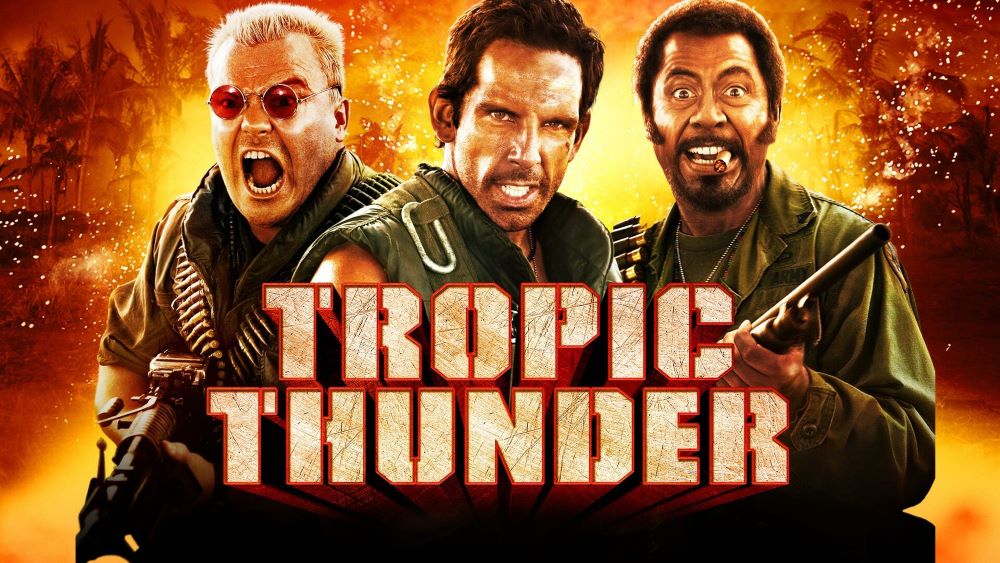
Review: Tropic Thunder (dir. by Ben Stiller)


“A nutless monkey can do your job.” — Les Grossman

Ben Stiller’s Tropic Thunder is a bold, chaotic comedy that dives headfirst into the wild world of Hollywood satire. The film, which Stiller directed, co-wrote, and starred in, feels like a high-energy roast of the movie industry itself, blending action, parody, and sharp commentary into one explosive package. The cast is stacked with familiar faces like Robert Downey Jr., Jack Black, Jay Baruchel, Brandon T. Jackson, and even Tom Cruise in a shockingly hilarious cameo, all committed to the film’s madcap, anything-goes spirit.

A distinctive touch that shows Tropic Thunder’s deep commitment to Hollywood satire is how it begins—not with a typical studio logo or title sequence—but with a series of fake movie trailers. These trailers parody different film genres and Hollywood clichés, setting an irreverent tone before the actual film even starts. The highlight is undoubtedly the “Oscar-bait” trailer for Satan’s Alley, a pitch-perfect send-up of self-serious, emotionally heavy dramas designed for awards season attention. By embedding these faux trailers, the film immerses viewers in its meta commentary and signals from the outset that it’s willing to mock and take apart the film industry at all levels.

This movie-within-a-movie begins with a group of egotistical actors trying to make a serious war film based on the fictional memoir of a Vietnam veteran. Their attempt at gritty realism falters under the weight of their own vanity and cluelessness, turning the set into a feverish comedy of errors. When the director dies and the actors are abandoned in a real jungle with actual dangers, the film blurs the lines between fantasy and reality, leading to a relentless cascade of absurd situations and insider jokes about Hollywood machinery.

Robert Downey Jr.’s portrayal of Kirk Lazarus, a method actor who undergoes extreme skin pigmentation surgery to play a Black character, is both provocative and hilarious. His performance skewers Hollywood’s past mistakes with race and casting, while his tense exchanges with Brandon T. Jackson’s Alpa Chino, who plays a genuinely Black rapper, provide sharp moments that balance discomfort with comedy. Downey Jr.’s “blackface” was a conscious satire of method acting and Hollywood egos, an attempt to ridicule extreme lengths actors go for acclaim rather than an endorsement of offensive practices. However, even at its release in 2008, it sparked conversations about the boundaries of comedy and racial sensitivity—an issue that would be even more controversial in 2025’s cultural climate.

Similarly, the film’s handling of ableist humor through the subplot of Simple Jack, a fictional movie starring Ben Stiller’s character as a person with intellectual disabilities, drew mixed reactions. While intended as a biting critique of Hollywood’s exploitation of disability for sympathy and awards, the portrayal nonetheless walked a tightrope that made some audience members uncomfortable. This nuanced but risky satire highlights how Tropic Thunder throws a wide net in exposing Hollywood’s many blind spots, yet its fearless approach also invites legitimate questions about respect and representation.

Jack Black delivers wild physical comedy as Jeff Portnoy, a drug-addled comedian losing control, offering a blend of slapstick and oddly sincere moments. Meanwhile, Tom Cruise steals the film with his iconic turn as Les Grossman, the balding, foul-mouthed studio exec whose explosive rants and dance moves have reached legendary status. Industry insiders often note that Grossman’s tempestuous persona seems inspired by real-life producer Scott Rudin, known for a similarly volatile temperament.

Much of the film’s humor targets Hollywood’s obsession with awards and ego, skewering Oscar-bait films, blockbuster excess, and ridiculous celebrity antics. The fake trailers highlight these themes, and Lazarus’s infamous line “Never go full retard, man!” takes aim at acting extremes motivated by prestige rather than authenticity. Stiller’s direction embraces loud, over-the-top action sequences that mimic classic Vietnam War movies but infuse them with cartoonish chaos, while the lush jungle serves as a satirical arena for exposing the actors’ incompetence.

While Tropic Thunder is gleefully offensive and hilarious, its treatment of race and disability sparked debate about where satire crosses lines. The film’s biting self-awareness and sharp commentary doesn’t always prevent discomfort, but it highlights the difficulty of balancing edgy humor with social consciousness in comedy. The film’s reception reveals how comedy evolves with cultural awareness; what passed as biting satire in 2008 would face even fiercer scrutiny in today’s more sensitive and politically aware environment.

From an entertainment standpoint, the movie delivers nonstop laughs, with rapid-fire jokes, strong chemistry among the cast, and sharp Hollywood references that keep fans engaged. Downey Jr.’s method acting antics, Black’s physical comedy, and Cruise’s outrageous studio boss combine into a relentless comedic assault. It’s not a film for those who prefer safe or sanitized humor, but for those who appreciate biting satire with reckless energy, it’s a must-watch.

Looking back, Tropic Thunder stands as a snapshot of a moment before social media and instantaneous backlash reshaped Hollywood comedy. Its controversial content might not get greenlit today, much like the boundary-pushers Blazing Saddles and Airplane! before it. Yet, as history shows, comedy will always find new ways to challenge sensibilities and push limits. Only time will tell what the next film is that dares to cross such lines again.

If you haven’t experienced Tropic Thunder, prepare for a relentlessly funny, sharply satirical comedy that skewers everything from celebrity egos to studio politics with savage wit and over-the-top energy.

14 Days of Paranoia #6: The Player (dir by Robert Altman)


1992’s The Player tells the story of Griffin Mill (Tim Robbins).

It’s not easy being Griffin Mill.  From the outside, of course, it looks like he has the perfect life.  He’s a studio executive with a nice house in Hollywood.  He’s young.  He’s up-and-coming.  Some people, especially Griffin, suspect that he’ll be the president of the studio some day.  By day, he sits in his office and listens to pitches from respected screenwriters like Buck Henry.  (Henry has a great idea for The Graduate II!)  During the afternoon, he might attends dailies and watch endless takes of actors like Scott Glenn and Lily Tomlin arguing with each other.  Or he might go to lunch and take a minute to say hello to Burt Reynolds.  (“Asshole,” Burt says as Griffin walks away.)  At night, he might go to a nice party in a big mansion and mingle with actors who are both young and old.  He might even run into and share some sharp words with Malcolm McDowell.

But Griffin’s life isn’t as easy as it seems.  He’s constantly worried about his position in the studio, knowing that one box office failure could end his career.  He fears that a new executive named Larry Levy (Peter Gallagher) is after his job.  Two new screenwriters (Richard E. Grant and Dean Stockwell) keep bugging him to produce their downbeat, no-stars anti-capitol punishment film.  His girlfriend (Cynthia Stevenson) wants to make good movies that mean something.  Even worse, someone is sending Griffin threatening notes.

It doesn’t take long for Griffin to decide that the notes are coming from a screenwriter named Dave Kahane (Vincent D’Onofrio).  Griffin’s attempt to arrange a meeting with Dave at a bar so that Griffin can offer him a production deal instead leads to Griffin murdering Dave in a parking lot.  While the other writers in Hollywood mourn Dave’s death, Griffin starts a relationship with Dave’s artist girlfriend (Great Scacchi) and tried to hide his guilt from two investigating detectives (Whoopi Goldberg and Lyle Lovett).  Worst of all, the notes keep coming.  The writer, whomever they may be, is now not only threatening Griffin but also seems to know what Griffin did.

After spend more than a decade in the industry wilderness, Robert Altman made a critical and commercial comeback with The Player.  It’s a satire of Hollywood but it’s also a celebration of the film industry, featuring 60 celebrities cameoing as themselves.  Everyone, it seems, wanted to appear in a movie that portrayed studio execs as being sociopathic and screenwriters as being whiny and kind of annoying.  The Player both loves and ridicules Hollywood and the often anonymous men who run the industry.  Largely motivated by greed and self-preservation, Griffin may not love movies but he certainly loves controlling what the public sees.  In the end, only one character in The Player sticks to her values and her ideals and, by the end of the movie, she’s out of a job.  At the same time, Griffin has a social life that those in the audience can’t help but envy.  He can’t step out of his office without running into someone famous.

The Player is one Altman’s most entertaining films, with the camera continually tracking from one location to another and giving as a vision of Hollywood that feels very much alive.  Tim Robbins gives one of his best performances as Griffin Mill and Altman surrounds him with a great supporting cast.  I especially liked Fred Ward as the studio’s head of security.  With The Player, Altman mixes melodrama with a sharp and sometimes bizarre comedy, with dialogue so snappy that the film is as much a joy to listen to as to watch.  That said, the real attraction of the film is spotting all of the celebrity cameos.  (That and cheering when Bruce Willis saves Julia Roberts from certain death.)  Altman was a director who often used his films to explore eccentric communities.  With The Player, he opened up his own home.

Previous entries in 2025’s 14 Days Of Paranoia:

  1. The Fourth Wall (1969)
  2. Extreme Justice (1993)
  3. The Lincoln Conspiracy (1977)
  4. Conspiracy (2007)
  5. Bloodknot (1995)

Lisa Marie Reviews An Oscar Nominee: The Thin Red Line (dir by Terrence Malick)


Based on a novel by James Jones (and technically, a sequel of sorts to From Here To Eternity), 1998’s The Thin Red Line is one of those Best Picture nominees that people seem to either love or hate.

Those who love it point out that the film is visually stunning and that director Terrence Malick takes a unique approach to portraying both the Battle of Guadalcanal and war in general.  Whereas Steven Spielberg’s Saving Private Ryan told a rather traditional story about the tragedy of war (albeit with much more blood than previous World War II films), The Thin Red Line used the war as a way to consider the innocence of nature and the corrupting influence of mankind.  “It’s all about property,” one shell-shocked soldier shouts in the middle of a battle and later, as soldiers die in the tall green grass of the film’s island setting, a baby bird hatches out of an egg.  Malick’s film may have been an adaptation of James Jones’s novel but its concerns were all pure Malick, right down to the philosophical voice-overs that were heard throughout the film.

Those who dislike the film point out that it moves at a very deliberate pace and that we don’t really learn much about the characters that the film follows.  In fact, with everyone wearing helmets and running through the overgrown grass, it’s often difficult to tell who is who.  (One gets the feeling that deliberate on Malick’s point.)  They complain that the story is difficult to follow.  They point out that the parade of star cameos can be distracting.  And they also complain that infantrymen who are constantly having to look out for enemy snipers would not necessarily be having an inner debate about the spirituality of nature.

I will agree that the cameos can be distracting.  John Cusack, for example, pops up out of nowhere, plays a major role for a few minutes, and then vanishes from the film.  The sight of John Travolta playing an admiral is also a bit distracting, if just because Travolta’s mustache makes him look a bit goofy.  George Clooney appears towards the end of the film and delivers a somewhat patronizing lecture to the men under his command.  Though his role was apparently meant to be much larger, Adrien Brody ends up two lines of dialogue and eleven minutes of screentime in the film’s final cut.

That said, The Thin Red Line works for me.  The film is not meant to be a traditional war film and it’s not necessarily meant to be a realistic recreation of the Battle of Guadalcanal.  Instead, it’s a film that plays out like a dream and, when viewed a dream, the philosophical voice overs and the scenes of eerie beauty all make sense.  Like the majority of Malick’s films, The Thin Red Line is ultimately a visual poem.  The plot is far less important than how the film is put together.  It’s a film that immerses you in its world.  Even the seeming randomness of the film’s battles and deaths fits together in a definite patten.  It’s a Malick film.  It’s not for everyone but those who are attuned to Malick’s wavelength will appreciate it even if they don’t understand it.

And while Malick does definitely put an emphasis on the visuals, he still gets some good performances out of his cast.  Nick Nolte is chilling as the frustrated officer who has no hesitation about ordering his men to go on a suicide mission.  Elias Koteas is genuinely moving as the captain whose military career is ultimately sabotaged by his kind nature.  Sean Penn is surprisingly convincing as a cynical sergeant while Jim Caviezel (playing the closest thing the film has to a main character) gets a head start on humanizing messianic characters by playing the most philosophical of the soldiers.  Ben Chaplin spends most of his time worrying about his wife back home and his fantasies give us a glimpse of what’s going on in America while its soldiers fight and die overseas.

The Thin Red Line was the first of Terrence Malick’s films to be nominated for Best Picture and it was one of three World War II films to be nominated that year.  However, it lost to Shakespeare In Love.

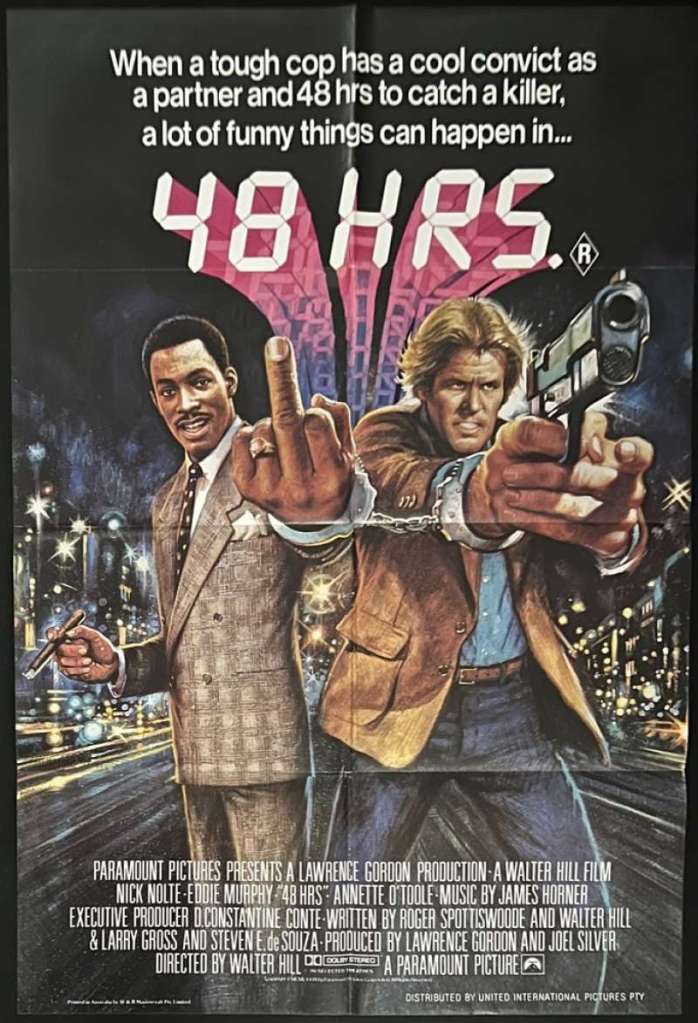
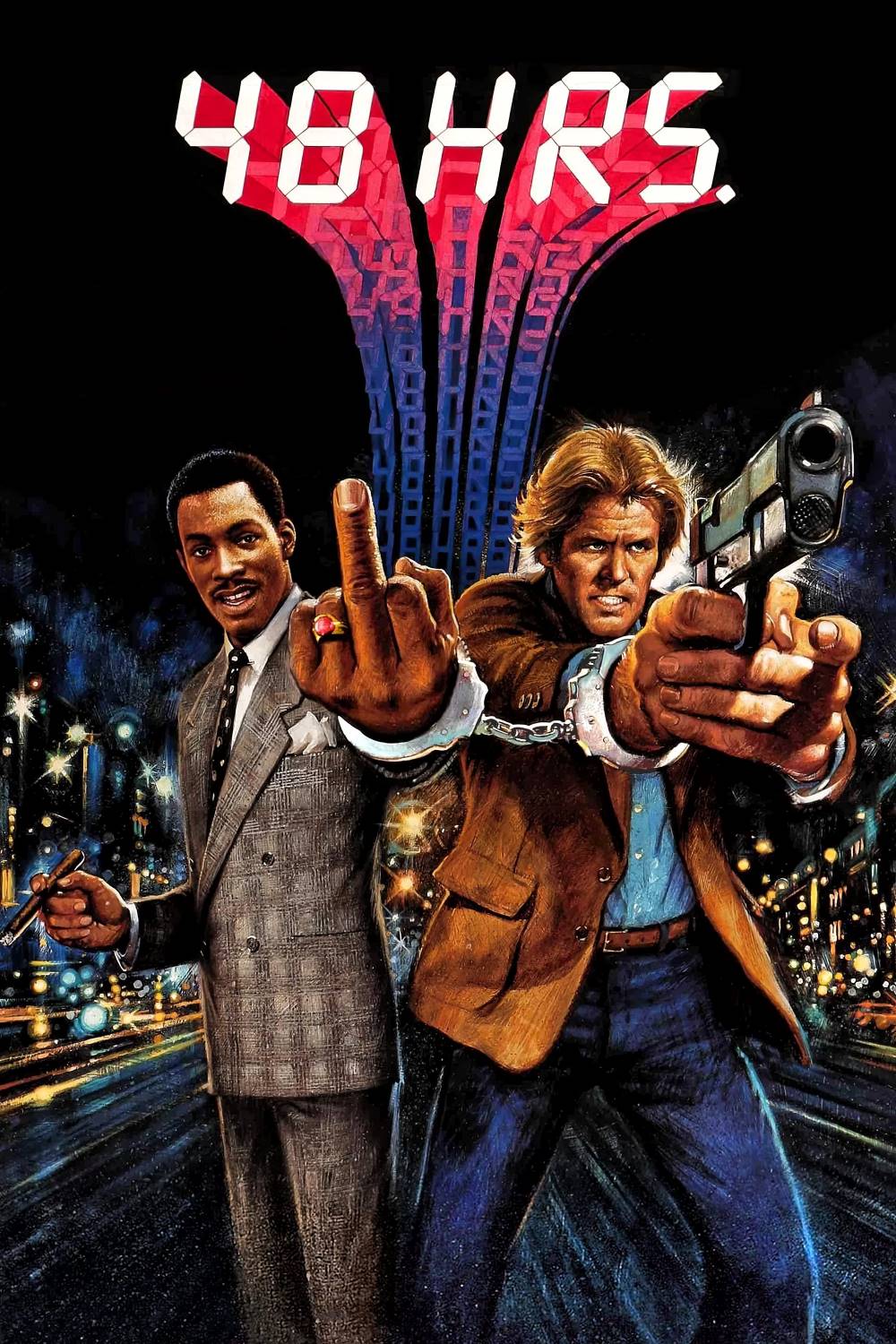
48 Hrs (1982, directed by Walter Hill)


48 Hrs. begins with a violent and bloody jailbreak.  The fearsome Billy Bear (Sonny Landham) helps his criminal associate, Albert Ganz (James Remar), escape from a chain gang and kills several guards in the process.  Billy and Ganz then head to San Francisco, where they start killing their former associates while searching for Luther (David Patrick Kelly).  Another bloody shootout leaves several detectives dead and SFPD Detective Jack Cates (Nick Nolte) looking for revenge.

That’s not the way you might expect one of the most famous comedies of the 80s to begin.  It’s not until Jack arranges for another associate of of Ganz’s to be released from prison for 48 hours that anything humorous happens in the film.  However, because Reggie Hammond is played by Eddie Murphy, 48 Hrs. quickly becomes very funny.

Murphy was appearing on Saturday Night Live when he was cast in 48 Hrs, in a role that was written with Richard Pryor in mind.  One of the first things that Murphy requested was that the character’s name be changed from Willie Biggs to Reggie Hammond.  Murphy made the role his own and watching him, it’s hard to believe that he was only 21 and also that 48 Hrs was his first film.  Murphy performs with the confidence of a natural movie star.  He’s good in the film’s most famous scene, where he pretends to be a cop and talks down an entire bar full of rednecks.  (I can’t repeat his most famous line but everyone knows it.)  But Murphy is even better in the scenes where he’s just reacting to Nolte’s slovenly cop.

The comedy in 48 Hrs comes from the mismatched partnership and initially hostile chemistry of Jack Cates and Reggie Hammond.  Cates has a job to do while Reggie, understandably, wants to enjoy as much freedom as he can before he gets sent back to prison.  The humor is so effective because it’s almost entirely character-based.  There are no gags but there are two well-written characters with differing ways of looking at the world who have to learn how to work with each other.  The two of them start out disliking and distrusting each other but ultimately become best friends, even if Jack does punch Reggie and Reggie does keep trying to steal Jack’s lighter.  Because this is a Walter Hill movie, there’s still a lot of action.  Nolte and Murphy may make you laugh but there’s nothing funny about full-on psycho performances of James Remar and Sonny Landham.  48 Hrs. not only allows Murphy and Nolte to show off their comedic ability but it also allows them to be true action heroes.

Popular with critics and audiences, 48 Hrs. was the most commercially successful film of 1982.  It set the standard for most buddy-cop movies to this day and it introduced the world to Eddie Murphy.

#MondayMuggers – Why 48 HRS (1982)?


Every Monday night at 9:00 Central Time, my wife Sierra and I host a “Live Movie Tweet” event on X using the hashtag #MondayMuggers. We rotate movie picks each week, and our tastes are quite different. Tonight, Monday December 30th, we’re watching 48 HRS. starring Nick Nolte and Eddie Murphy.

So why did I pick 48 HRS., you might ask?

  1. It’s quite simply one of the best “Buddy-Cop” action comedies of all time! If you love tough, violent, badass action, as well as laughing your ass off, 48 HRS. is the perfect movie for you.
  2. Eddie Murphy made one of the great film debuts of all time with 48 HRS. After establishing himself as a comic genius on Saturday Night Live with roles like Mr. White, Buckwheat, and Mr. Robinson, Murphy absolutely steals his debut film. Nick Nolte is also great as the tough, grizzled cop, but it’s Murphy’s performance that turned this into a classic.
  3. Walter Hill directed 48 HRS. and he’s one of my favorite directors. My personal favorite film as I type this is Hill’s directorial debut, HARD TIMES (1975), starring legendary tough guy icon, Charles Bronson. Hill has such a great resume of top-notch films including THE DRIVER (1978), THE WARRIORS (1979), THE LONG RIDERS (1980), SOUTHERN COMFORT (1981), CROSSROADS (1986), EXTREME PREJUDICE (1987), and RED HEAT (1988). And 48 HRS. is probably the best of the bunch.
  4. I love the songs in the film. Of course it starts with Eddie Murphy’s rendition of “Roxanne” by The Police. And then you can’t help but want to dance when the BusBoys are singing “The Boys are Back in Town” and “New Shoes.” Heck, I love “Torchy’s Boogie” by Ira Newborn as well, setting the stage for Murphy’s rousting of the redneck bar, one of the movie’s best scenes!   

So join us tonight to for #MondayMuggers and watch 48 HRS. It’s on Amazon Prime.

Retro Television Reviews: Death Sentence (dir by E.W. Swackhamer)


Welcome to Retro Television Reviews, a feature where we review some of our favorite and least favorite shows of the past!  On Sundays, I will be reviewing the made-for-television movies that used to be a primetime mainstay.  Today’s film is 1974’s Death Sentence!  It  can be viewed on YouTube!

There’s been a murder!

A young woman has been strangled in her own home.  The nosy neighbor (Hope Summers) testifies that the woman often argued with her woman and that she heard the woman yelling on the night of the murder.  The husband, John Healy (Nick Nolte), is found in a neighborhood bar and, when he’s brought back to his house, his drunken reaction to seeing his dead wife doesn’t do much to keep him from looking totally guilty.

However, the viewer knows that John is innocent because the viewer has already seen that the woman was murdered by Don Davies (Laurence Luckinbill), the man with whom she was having an affair.  She demanded that he leave his wife for her and Don, realizing that his cheating was about to revealed, responded by strangling her.

Don’s wife is Susan Davies (Cloris Leachman), who knows that she and Don have been going through a rough patch but who certainly had no idea that Don was cheating on her.  Shortly after the murder, Susan is called up for jury duty.  She’s placed on the jury and told that she will be an important part of a major trial.  As a result, she and the other jurors will be sequestered in a hotel….

And who is the defendant in this trial?  John, of course!

As opposed to the other members of the jury, who are ready to convict John even before the first bit of testimony is heard, Susan pays attention to what is said in the courtroom.  She listens to Lubell (Alan Oppenheimer), the prosecutor.  She listens to Tanner (William Schallert), the defense attorney.  She comes to believe that John is innocent but will she be able to hold her own against the rest of the jury?  And will she ever figure out that the murder was actually committed by her husband?

It’s an intriguing premise, even if it is a bit far-fetched.  I mean, it really is an amazing coincidence that Susan just happened to end up on the jury for a case involving a murder that was actually committed by her husband.  However, this is a made-for-television movie and, as soon as “Produced by Aaron Spelling” appears on the screen, most viewers should be savvy enough to know what they’re getting into.  Instead, the main problem with the film is that it opens by showing us who the murderer is.  Therefore, there’s really zero suspense as to who actually committed the crime.  Instead, the viewer spends the entire movie waiting for Susan to catch up.  Since the majority of the film takes place in court, it’s a very talky film but there’s no joy to be found in paying close attention to every word said and picking up on the details that will allow you to solve the crime for yourself.  This is a case where the film spoils its biggest twist and, despite good performances from Leachman and Luckinbill, it’s a bit dull.

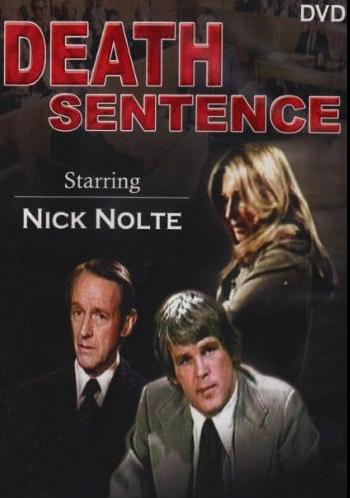
(Nick Nolte, for his part, spends most of the movie silently sitting in the courtroom.  He’s not bad and his look of anguish is believable but it’s hardly a starring role, regardless of what the film’s video packaging might otherwise claim.)

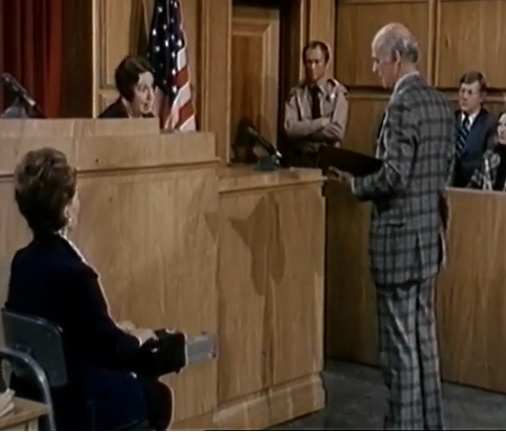
In the end, what I’ll mostly remember about Death Sentence were the atrocious fashion choices made by the prosecutor.  Seriously, would you trust a man wearing this suit?

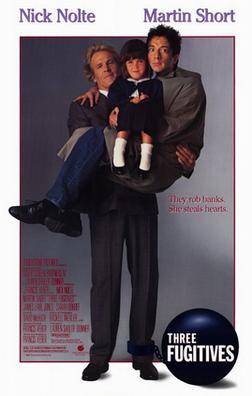
Three Fugitives (1989, directed by Francis Veber)


Daniel Lucas (Nick Nolte) is having a bad day.  He’s just gotten out on parole after spending 5 years in prison for armed robbery.  No sooner has Lucas left the prison than he’s met by Detective Dugan (James Earl) and his partner, Inspector Tenner (Alan Ruck).  Dugan says that he knows that Lucas is going to return to his life of crime and that, when he does, Dugan will be there to arrest him.

Determined to go straight, Lucas heads to the nearest bank.  Maybe he thinks that going to a bank and not robbing it will convince everyone that he’s no longer a criminal.  Unfortunately, the bank does end up getting robbed, not by Lucas but by Ned Perry (Martin Short).  Ned’s not much of a bank robber.  In fact, he’s never committed a crime in his life.  But he desperately needs the money so he can afford a special school for his young daughter, Meg (Sarah Doroff), who hasn’t spoken since her mother died.  When the bank robbery doesn’t go as planned and Lucas ends up accidentally getting shot, Lucas and Ned end up going on the run together with Dugan and Tenner in pursuit.

When I was a kid, Three Fugitives was a movie that seemed like it was on television nearly every day.  Of course, it was popular on HBO but it also used to regularly show up on the local stations, with all of Nick Nolte’s profanity awkwardly edited out.  Looking back, I can see why Three Fugitives was so popular with television programmers who needed something fill a two-hour time slot.  It’s got enough broad slapstick and just enough violence to keep the kids happy while also being so sentimental and inoffensive that parents wouldn’t complain about what their children were watching.

That Three Fugitives was such a ubiquitous presence on television is really the only memorable thing about it.  On paper, the idea of pairing Nick Nolte with Martin Short sounds like it should generate a lot of laughs and they are funny in the initial bank hold-up but after that, neither seems to be acting in the same movie.  Nolte is too serious for the comedic scenes and Short is too cartoonish for the serious scenes and their partnership is never credible.  Nick Nolte was the king of the mismatched buddy comedy in the 80s but Three Fugitives is no 48 Hours.

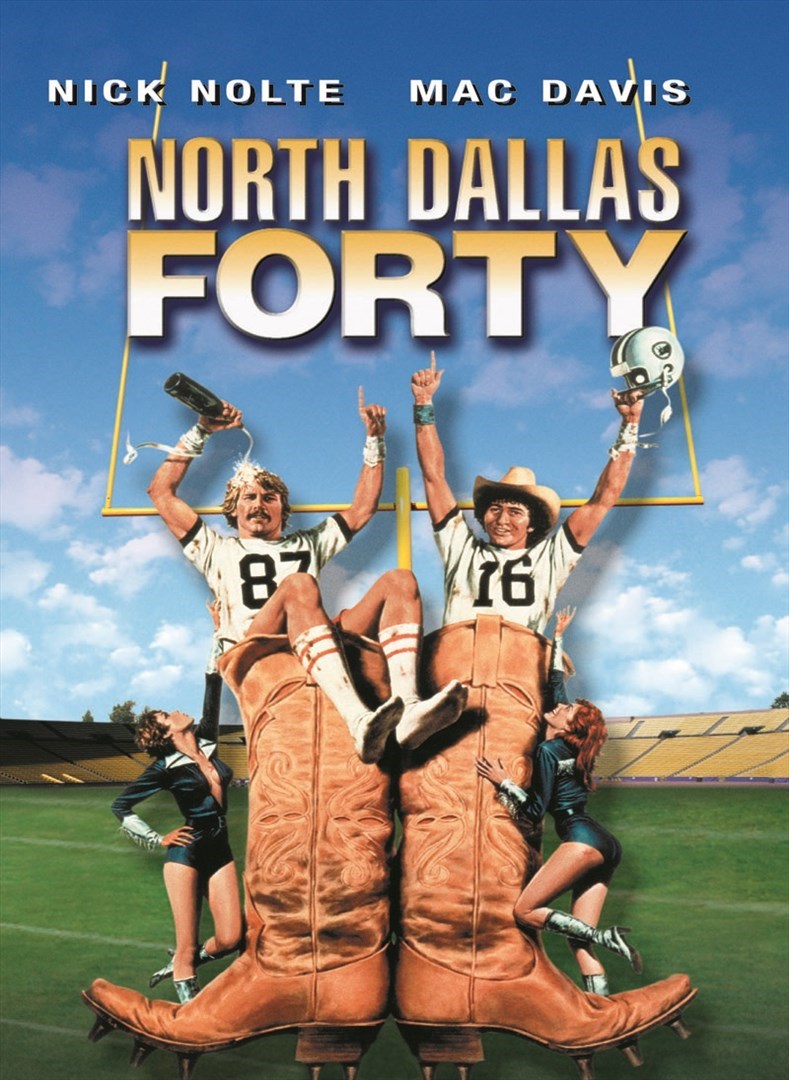
North Dallas Forty (1979, directed by Ted Kotcheff)


Pete Gent was a college basketball star at Michigan State University who, in 1964, received a tryout with the Dallas Cowboys.  Intrigued by the $500 that the team was offering to any player who attended training camp that summer, Gent accepted.  Despite the fact that Gent had never before played football, the Cowboys were impressed with his athleticism and they signed him to the team.

For five seasons, Gent played wide receiver.  During that time, he caught a lot of balls, became close friends (or so he claimed) with quarterback Don Meredith, and got under the skin of Coach Tom Landry with his nonconformist attitude.  After several injuries kept him off the field during the 1968 season, Gent was traded to the Giants who waived him before the next regular season began.

Out of work and with no other team wanting to sign him, Gent wrote a thinly veiled autobiographical novel about his time with the Cowboys.  North Dallas Forty was published in 1973 and it immediately shot up the best seller charts.  When the book was published, football players were still regularly portrayed as being wholesome, all-American athletes and the Dallas Cowboys were still known as America’s Team.  North Dallas Forty shocked readers with its details about groupies, drugs, racism, and gruesome injuries.  The NFL, of course, claimed that Gent was just a disgruntled former player who was looking to get back at the league.  When asked about the book (which portrayed him as being a marijuana-loving good old boy), Don Meredith was reported to have said, “If I’d known Gent was as good as he says he was, I would have thrown to him more.”

Meredith had a point, of course.  In the book, Pete Gent portrays himself as not only being the smartest man in football but also as having the best hands in the league.  Men want to be him.  Women want to be with him.  And the North Dallas Bulls (which is the book’s version of the Dallas Cowboys) don’t know what they’re losing when they release him for violating the league’s drug policy.  Today, when you read it and you’re no longer shocked by all of the drugs and the sex, North Dallas Forty comes across as mostly being a case of very sour grapes.

Luckily, the film version is better.

Nick Notle plays Phil Elliott, a broken-down receiver who wakes up most mornings with a bloody nose and who can barely walk without first popping a hundred pills.  Phil is a nonconformist and a rebel.  He loves to play the game but he hates how it’s become a business.  Mac Davis plays Seth Maxwell, the team’s quarterback and Phil’s best friend.  Seth is just as cynical as Phil but he’s better at playing politics.  G.D. Spradlin is B.A. Strother, the cold head coach who is a thinly disguised version of the legendary Tom Landry.  In the novel, B.A. Strother was portrayed as being a hypocritical dictator.  The film’s version is more sympathetic with Strother being portrayed as stern but not cruel.  Strother even tells Phil that he “can catch anything.”

Both the film and the book take place over the course of one week leading to a big game against Chicago.  In the book, Phil says that he and Seth don’t care about whether or not they win.  In the movie, they much do care but, at the same time, they know that they’re being held back by a system that cares more about whether or not they follow the rules than if they win the game.  While Phil’s teammates (including Bo Svenson as Joe Bob Priddy and John Mantuszak as O.W. Shaddock) behave like animals, Phil falls in love with Charlotte Caulder (Dayle Haddon), who doesn’t care about football.

Pete Gent was originally hired to write the film’s screenplay but left after several disagreements with producer Frank Yablans.  (The screenplay was completed by Yablans, directed Ted Kotcheff, and an uncredited Nancy Dowd.)  The movie loosely follows the novel while dropping some of its weaker plot points.  As a result, the film version has everything that made the novel memorable but without any of Gent’s lingering bitterness over how his career ended.  The novel used football as a metaphor for everything that was going wrong in America in the 60s and 70s but the movie is more of a dark comedy about one man rebelling against the system.

There’s only a few minutes of game footage but North Dallas Forty is still one of the best football movies ever made, mostly because Nick Nolte is absolutely believable as an aging wide receiver.  He’s convincing as someone who can still make all the plays even though he’s usually in so much pain that it’s a struggle for him to get out of bed every morning.  He’s also convincing as someone who loves the game but who won’t give up his freedom just to play it.  This is a definite improvement on the novel, in which Phil seemed to hate football so much that it was hard not to wonder why he was even wasting his time with it.  Country-and-western signer Mac Davis is also convincing as Seth Maxwell and fans of great character actors will be happy to see both Charles Durning and Dabney Coleman in small roles.

Whether you’re a football fan or not, North Dallas Forty is a great film.  Coming at the tail end of the 70s, it’s a character study as much as its a sports film.  It’s also one of the few cinematic adaptations to improve on its source material.  As a book, North Dallas Forty may no longer be shocking but the movie will be scoring touchdowns forever.

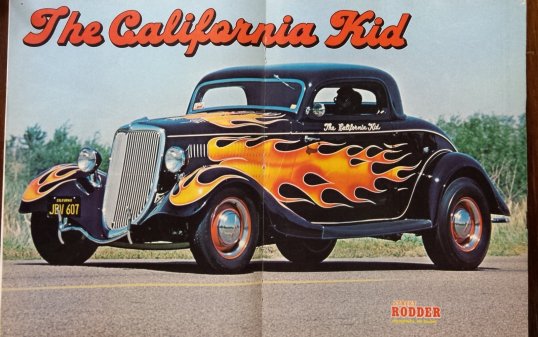
Automotive Stardom: The California Kid (1974, directed by Richard T. Heffron)


In 1973, a customized 1934 Ford three-window coup appeared on the cover of the November issue of Custom Rod.  The car had been created by legendary customizer Pete Chapouris and it was called The California Kid.  The cover caught the attention of television producer Howie Horowitz, who thought that maybe the car could become a star.

A year later, the car starred in it’s own made-for-TV movie.  Naturally, that movie was called The California Kid.

The California Kid takes place in 1958 in the small town of Clarksberg.  Clarksberg is known for being a town that does not tolerate speeders.  Sheriff Roy Childress (Vic Morrow) lost his wife and daughter to a speeder and, ever since, he’s become a fanatic about making sure that people respect the speed limits.  He’ll give a ticket to anyone who he sees going too fast.  He’ll even impound your car.  And if you don’t learn your lesson or if you try to outrun him, he’ll get behind your car, give it a push, and send both you and your vehicle plunging over the side of a mountain.

That’s what happens to Don McCord (Joe Estevez), a Marine who was just trying to get back to back to his base on time.  After Don and his car go over the side of a cliff, the official ruling is that it was an accident.  However, Don’s brother, Michael (Martin Sheen, real-life brother of Joe Estevez), doesn’t buy that.  Determined to prove that his brother was murdered, Micheal rolls into town, behind the wheel of the California Kid.

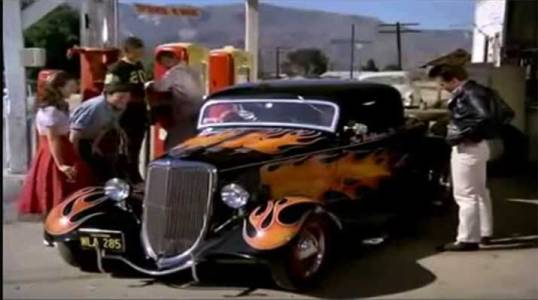
The California Kid is a typical 70s car chase movie.  There’s not much going on other than the sheriff chasing the Michael and the California Kid.  Martin Sheen coasts through the movie, doing the James Dean impersonation that he perfected in the previous year’s Badlands and Vic Morrow plays his thousandth sadistic authority figure.  The supporting cast is full of familiar names who don’t get to do much.  Michelle Phillips plays the waitress who falls in love with Martin Sheen.  (It’s always a waitress.)  Stuart Margolin is Morrow’s deputy and keep an eye out for Nick Nolte, playing a mechanic.  Interestingly, The California Kid was written by Richard Compton who, a year later, would direct Notle in his first starring role in the 1975 car chase film, Return to Macon County.  Of course, the real star of the movie is the car and the California Kid earns its star billing.  The movie might not be anything special but there’s no way you can watch it and not want to drive that car.

This is a made-for-TV movie so you won’t hear any profanity and the characters are all as simple can be.  However, there are enough shots of cars going over cliffs to keep chase enthusiasts entertained.