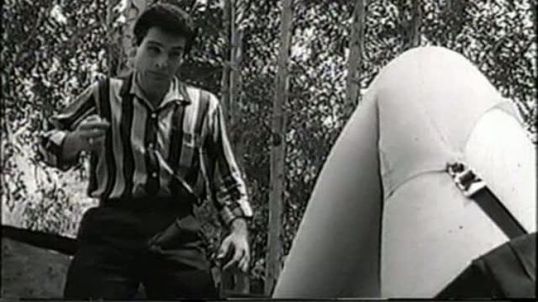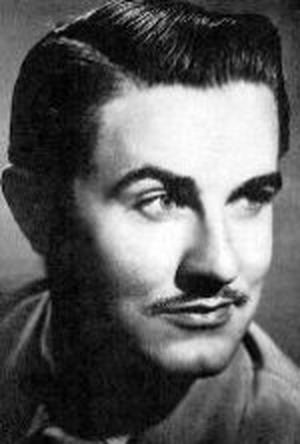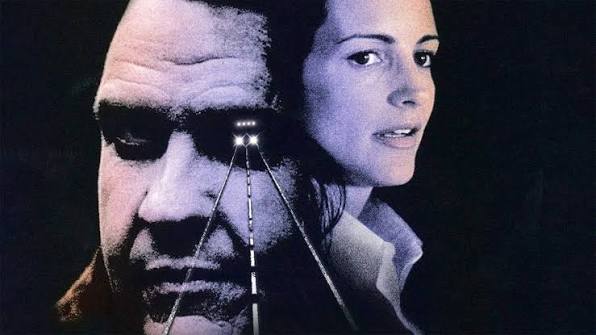
Brad’s “Hero of the Day” – Vince Majestyk (MR. MAJESTYK)!


“He didn’t want to be a hero…until they pushed him too far.”

One of the reasons that MR. MAJESTYK (1974) is such a great movie is the fact that Vince Majestyk couldn’t care less about being a hero. He has too much work to do. He just wants to get his melons in and be left alone. And when an arrogant gangster tries to bully him, his stubborn ass refuses to be pushed around. That’s all there is to it. This simple character and story results in Vince Majestyk becoming an incredible badass hero.

Charles Bronson plays Majestyk with complete confidence. He’s not scared of Al Lettieri’s hitman, Frank Renda, one bit. The man’s more of a nuisance to him than anything because he’s keeping him from getting his work done. Majestyk feels authentic as a blue-collar, capable, hardworking man. With Bronson’s weathered features, he fits the part perfectly and looks like a man who’s worked outdoors for decades. That gives the film a credibility many action movies lack. You realize almost immediately that Renda has made a big mistake by going after a guy who is a lot smarter and tougher than he seems. The entire story plays out with a feeling of experience and determination beating misplaced arrogance.

Vince Majestyk is a man who has morals that are proven by his actions, not his words. He treats people the way he wants to be treated. He doesn’t posture or scream and threaten people. He’s a man of his word, and when he’s threatened, he simply draws a line in the sand and refuses to budge. That stubbornness becomes heroic as the villains, and the local law enforcement always underestimates him. And when it’s all said and done, you get the feeling that Majestyk will just get back in his truck and go to work.

That’s ultimately why Vince Majestyk is a great movie hero. He’s tough without being cocky, moral but not preachy, and dangerous even though he’s not Superman. Bronson played a lot of heroic characters over the years, but Vince Majestyk is my personal favorite!

Hero of the Day

4 Shots From 4 Films: Special Danny Trejo Edition


4 Shots From 4 Films is just what it says it is, 4 shots from 4 of our favorite films. As opposed to the reviews and recaps that we usually post, 4 Shots From 4 Films lets the visuals do the talking!

Today, the Shattered Len wishes a happy 82nd birthday to the man and the legend, Danny Trejo!  Trejo’s journey from being a gang member to an ex-con to a drug counselor to a pop cultural institution is an inspiring one, all the more so because Danny Trejo is so candid about both his past struggles and his present successes.  

It’s time for….

4 Shots From 4 Danny Trejo Films

Runaway Train (1985, dir by Andrei Konchalovsky, DP: Alan Hume)


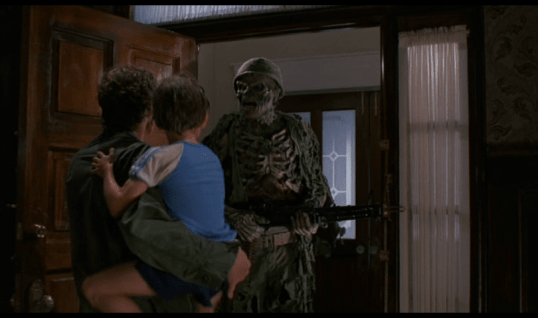
Death Wish 4: The Crackdown (1987, dir by J. Lee Thompson, DP: Gideon Porath)


Heat (1995, dir by Michael Mann, DP: Dante Spinotti)


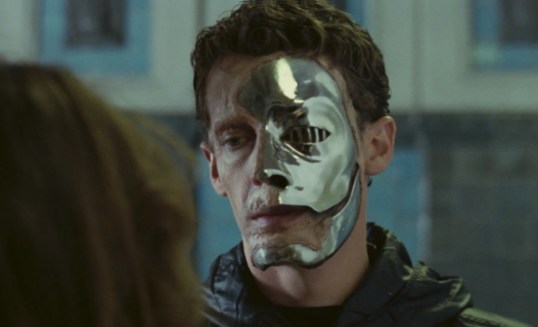
Machete Kills (2013, dir by Robert Rodriguez, DP: Robert Rodriguez)

4 Shots From 4 Films: Special John Glen Edition


4 Shots From 4 Films is just what it says it is, 4 shots from 4 of our favorite films. As opposed to the reviews and recaps that we usually post, 4 Shots From 4 Films lets the visuals do the talking!

Today, the Shattered Lens wishes a happy birthday to English director and editor, John Glen!  It’s time for….

4 Shots From 4 John Glen Films

For Your Eyes Only (1981, dir by John Glen, DP: Alan Hume)

Octopussy (1983, dir by John Glen, DP: Alan Hume)

A View To A Kill (1985, dir by John Glen, DP: Alan Hume)

Christopher Columbus: The Discovery (1992, dir by John Glen, DP: Alec Mills)

4 Shots From 4 Films: Special Sofia Coppola Edition


4 Shots From 4 Films is just what it says it is, 4 shots from 4 of our favorite films. As opposed to the reviews and recaps that we usually post, 4 Shots From 4 Films lets the visuals do the talking!

Today is the birthday of one of my favorite American directors, the one and only Sofia Coppola!  In honor of this day, here are….

4 Shots From 4 Sofia Coppola Films

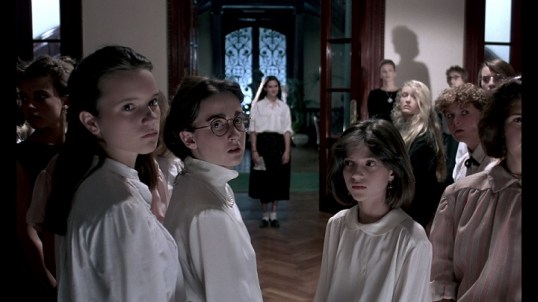
The Virgin Suicides (1999, dir by Sofia Coppola, DP: Edward Lachman)

Lost In Translation (2003, dir by Sofia Coppola, DP: Lance Acord)

Maire Antoinette (2006, dir by Sofia Coppola, DP: Lance Acord)

Somewhere (2010, dir by Sofia Coppola, DP: Harris Savides)

Brad takes on THE WHITE BUFFALO (1977), starring Charles Bronson and Will Sampson!


Charles Bronson as Wild Bill Hickok

Back in 2023, my family visited the Black Hills of South Dakota. The first thing we did was visit Mount Rushmore. The second thing we did was visit the Mount Moriah Cemetery and the final resting place of Wild Bill Hickok. Situated on the top of a hill overlooking the city of Deadwood, it’s a beautiful place that also includes the graves of Calamity Jane and Sheriff Seth Bullock. I insisted that we see the location for possibly the most superficial reason possible… because Charles Bronson played Hickok in THE WHITE BUFFALO.

Based on a novel by Richard Sale, the story opens with Hickok having a recurring nightmare of a snowy showdown with a giant white “spike.” And if he has pistols handy, he wakes up firing them uncontrollably and you’d better not be nearby. Determined to face his fear, he heads out into the hills with his friend Charlie Zane (Jack Warden), hoping to find the albino buffalo, so he can put him down and end the nightmares. Around the same time, the great beast has stampeded the camp of Crazy Horse (Will Sampson) killing his child in the process. Convinced that the child cannot have peace in the afterlife, Crazy Horse sets out to kill the buffalo so he can wrap his child in its white “robe” and free her spirit. With Hickok a prolific killer of Indians, and Crazy Horse a brave Lakota Oglala warrior, the two men seem to be on a deadly collision course in those snowy hills.

Charles Bronson’s final western, THE WHITE BUFFALO has a lot of the scenes you’d expect. With Bronson playing a famous gunman, we get to see several gunfights as he makes his way through various Wyoming towns, featuring well-known actors like Clint Walker and Ed Lauter. We also get to see him visit various saloons, as well as the widow Schermerhorn, played by Kim Novak. When he really “knew” her, she was a prostitute named Poker Jenny. Along with those I’ve already mentioned, it’s an all-star affair as we see such familiar faces as Stuart Whitman, John Carradine, Slim Pickens, and even a young Martin Kove sprinkled throughout the film. And of course, we get to see Bronson take on the gigantic white buffalo of the title, first in his dreams, and then later in reality! Directed by veteran filmmaker J. Lee Thompson, these scenes are staged and executed well, with Hickok’s nightmares given an especially eerie quality.

Will Sampson as Crazy Horse

While the movie has the expected scenes, it’s the unexpected character moments that sets THE WHITE BUFFALO apart as a uniquely strong entry in Bronson’s filmography. Hickok may be a man haunted by dreams of a monstrous white buffalo, but Bronson plays him in such a way that we can feel his exhaustion and literal sickness from too many years of a dangerous and difficult life. The buffalo is more than just an animal… it’s a symbol of guilt, fear and the coming of death itself. Bronson could always underplay a role better than just about anyone else, but here he’s reflective and haunted in way that I’ve not seen before, and he’s really good.

I also think the movie gets better every time Bronson shares a scene with Will Sampson. Sampson brings dignity and intelligence to Crazy Horse. His mission is more noble than Hickok’s, and an unexpected friendship develops between the two men, despite their vast differences. Ultimately, it’s this relationship that provides the film an emotional weight that sneaks up on you by the end, even if it’s not meant to last.

THE WHITE BUFFALO is not a perfect film. The animatronic buffalo may look a little hokey, and the film may seem a little slow at times for those expecting an action-packed western or monster movie. However, Bronson and Sampson are so good in their myth-making performances that the film eventually becomes something more. It’s the idea of watching two aging warriors, bound together through the bravery of confronting death, that I found to be more interesting and compelling than anything else on display.

THE WHITE BUFFALO is currently streaming on Amazon Prime, Tubi, PlutoTV, and The Roku Channel.

Wild Bill Hickok’s gravesite in Mount Moriah Cemetery in Deadwood, South Dakota

4 Shots From 4 Films: Special Harvey Keitel Edition


4 Shots From 4 Films is just what it says it is, 4 shots from 4 of our favorite films. As opposed to the reviews and recaps that we usually post, 4 Shots From 4 Films lets the visuals do the talking!

Today, the Shattered Lens wishes a happy 87th birthday to the legendary actor, Harvey Keitel!  It’s time for….

4 Shots From 4 Harvey Keitel Films

Mean Streets (1973, dir by Martin Scorsese, DP: Kent L. Wakeford)


Taxi Driver (1976, dir by Martin Scorsese, DP: Michael Chapman)


Reservoir Dogs (1992, dir by Quentin Tarantino, DP: Andrzej Sekuła)


Bad Lieutenant (1992, dir by Abel Ferrara, DP: Ken Kelsch)

Brad revisits A BETTER TOMORROW II (1987), starring Chow Yun-Fat & directed by John Woo!


John Woo’s A BETTER TOMORROW was such a gigantic hit in Hong Kong cinemas when it came out in 1986 that you had to know that a sequel would soon follow. A BETTER TOMORROW II would open a year later, bringing back all the stars from the original. This film would go even bigger with both the action and the melodrama, with varying levels of success, but we’ll get to that in a little bit.

The plot seems familiar at first, as ex-gangster Ho (Ti Lung) is let out of prison to work with the police to dig up dirt on his old friend Lung (Dean Shek), a former criminal who’s trying to run a legitimate business down at the shipyard. The main reason he agrees to help though, is because his younger brother / undercover cop Kit (Leslie Cheung) is working on the case and Ho wants to protect him. After a series of double-crosses and betrayals, it seems that we’re in for the same type of story that we got in the first film. Key differences emerge when Lung is framed for murder and escapes to New York City. There we meet Ken Gor (Chow Yun-Fat), the conveniently discovered twin brother of tragic hero Mark Gor. Ken tries to help Lung, who has fallen into a state of catatonic shock upon learning that his daughter has been killed. When death squads come after him in New York, Ken shows his badass cred and saves his ass. Lung eventually snaps out of it and the two head back to Hong Kong together. There they team up with Ho and Kit to exact bloody vengeance on all who have gotten in the way of their efforts at personal reform!        

The first thing I’ll say about A BETTER TOMORROW II is that the film has some incredible action sequences, some of the best you’ll ever see, and some of Woo’s best work. The finale where the trio of Ken, Ho and Lung storm the bad guy’s mansion is a masterpiece of extended and creative bloody violence. I 100% recommend the film for the action.

The second thing I’ll say about A BETTER TOMORROW II is that it has some of the most over the top melodrama that you’ll ever see. My comment is mainly aimed at the section of the film where Ken tries to get Lung to snap out of his shock. I really don’t enjoy these scenes, with my least favorite being the scene where Chow Yun-Fat tries to force a completely zoned out Dean Shek to eat. There is a lot of good-looking food wasted in that scene, and I cringe every time I watch it!   

I’ve read that the film was a troubled production, and that John Woo and producer Tsui Hark had very different ideas on the type of movie that each wanted to make. Both tried to produce different edits of the film, and with too many cooks in the kitchen, we ended up with this glorious Frankenstein. When the dust settled, John Woo mostly disowned the film except for that majestic, crimson-stained finale. Tsui Hark would take over the series and turn out A BETTER TOMORROW III a couple of years later, while Woo would move on to THE KILLER.  

There are interesting ideas here, and the film almost wants to turn into a comic book. For example, the scene that first introduces us to Ken Gor, Mark’s twin brother, features an old man who’s devoted his life to drawing storyboard illustrations of the adventures of Mark, Ho and Kit. He even has Mark’s trademark sunglasses and blood-stained, bullet-riddled coat, which you know Ken will put on at some point. This seems appropriate to many of the shenanigans that go on, but then the film will switch its focus to extended scenes of a depressed Kit or a drooling Lung, and it seems like we’re in a different movie. There are parts of this film that I love and there are parts that I just want to be over.

At the end of the day, if you’ve come to A BETTER TOMORROW II for the promise of John Woo’s awesome action, you will get your fill. You’ll get to see Chow Yun-Fat at his charismatic best, wearing his long coat and sunglasses, and wielding twin barettas as he takes out hordes of henchmen. You’ll get to see Ti Lung swinging a sword that might bring back images of his Shaw Brothers heydays! Just be prepared to watch Dean Shek spill milk, eat through an orange (peel and all), and gnaw on a piece of frozen meat along the way.       

A BETTER TOMORROW II is currently streaming on Amazon Prime, Tubi, and Plex.

4 Shots From 4 Films: Special Jess Franco Edition


4 Shots From 4 Films is just what it says it is, 4 shots from 4 of our favorite films. As opposed to the reviews and recaps that we usually post, 4 Shots From 4 Films lets the visuals do the talking!

Today is the 96th anniversary of the birth of Jesus Franco!  One of the most prolific filmmakers of all time, Franco made movies that …. well, they’re not easy to describe.  Jess Franco was responsible for some of the most visually striking and narratively incoherent films ever made.  He made films that you either loved or you hated but there was no mistaking his work for being the work of someone else.

Today, in honor of his birthday, here are….

4 Shots From 4 Films

The Awful Dr. Orloff (1962, dir by Jess Franco, DP: Godofredo Pacheco)

Nightmares Come At Night (1970, dir by Jess Franco)


She Killed In Ecstasy (1970, dir by Jess Franco, DP: Manuel Merino)

Female Vampire (1973, dir by Jess Franco, DP: Jess Franco)

Brad reviews SMOKE SIGNALS (1998), starring Adam Beach!


There’s a scene early in SMOKE SIGNALS where Victor Joseph, played by Adam Beach, tries to teach Thomas Builds-the-Fire (Evan Adams) how to be a real Indian. He ends the scene with “This ain’t Dances-with-Salmon you know?!” It’s a funny exchange, but it also clues the audience in on the fact that this isn’t going to be your typical Hollywood movie about Indians. Directed by Chris Eyre and written by Sherman Alexie, it’s the first feature-length film written, directed, and produced by Native Americans to reach a wide audience both in the United States and beyond. As such, we get a story that feels fresh while tackling a variety of difficult subjects with humor and optimism.

The story focuses on Victor as he travels from the Coeur d’Alene Indian Reservation in Idaho to Phoenix, Arizona to retrieve his father’s possessions after learning that he’s passed away. His father abandoned him and his mother when he was just a boy, and he’s clearly been scarred by the situation. Along for the ride, mainly because he can afford to pay their bus fare, is Thomas Builds-the-Fire, his nerdy and talkative friend. From this point, the film becomes a road trip, and we follow along as they make it to Arizona and back. While there is funny stuff along the way, the movie is mostly interested in observing Victor as he comes to terms with the trauma and pain left behind when his dad went away.

I’ve always liked Adam Beach, and he’s very good here as Victor. His character spends a lot of the movie angry at the world, but from time to time, he’ll flash this big, wonderful smile. It’s a nice inside-out performance as he seems to be simmering on the inside and just trying not to explode. And then there’s Evan Adams, whose Thomas is awkward and optimistic, and who loves to tell big stories about Victor’s dad. For example, they have this awesome exchange where Thomas tells Victor that his dad looks like Charles Bronson. As Bronson’s biggest fan, I can tell you that Victor’s dad, played by Gary Farmer, looks nothing like Charles Bronson. The scene has a nice punchline as Thomas tells him that he doesn’t mean the Charles Bronson from the first DEATH WISH, but more like the Charles Bronson of DEATH WISH 5! The movie has several unexpected scenes like this, and the genuine chemistry between these two guys is what makes the movie work for me. I believe it when their characters begin to understand and appreciate each other, and it’s their emotional connection that gives the film some staying power even after the credits roll.

There are some additional performances that I enjoyed. I mentioned Gary Farmer, who plays Victor’s dad. His Arnold Joseph is not the most sympathetic character in the world, as he chooses to run away from a guilt that he can never deal with. Somehow, by the end, we have some understanding of his actions. And then there’s Irene Bedard as Suzy Song, the young lady who befriends Victor’s dad and calls his mom when he passes away. Best known for being the voice of Pocahontas in the Disney animated classic, she conveys kindness and compassion in her relatively small role. Tantoo Cardinal is good as Victor’s mom, and Tom Skerritt even shows up in a cameo as a police chief in Arizona. Sherman Alexie’s screenplay, based on his book “The Lone Ranger and Tonto Fistfight in Heaven,” is simple, yet full of depth, and it’s brought to life by an excellent cast.        

Even though SMOKE SIGNALS was made almost thirty years ago, it’s still a very relevant film to this day. It’s funny, it tackles difficult subjects that are universal to all of us, and it’s told from a Native American perspective that we seldom see. In other words, it feels like we’re dealing with real people, not the romantic caricatures or noble victims that Hollywood still tries to push on us in movies about Indians. It’s not a flashy film in any way, and that’s okay. It’s one of those movies that understands its characters and trusts the audience enough to just hang out and observe them. Anchored by an excellent performance from Adam Beach, it’s a perfect example of how movies can be a lot better when Hollywood gets out of the way and let’s genuine, talented people tell their stories.  

I watched SMOKE SIGNALS on the Paramount Plus streaming service.

Brad reviews COLD WAR II (2016), with Chow Yun-Fat, Aaron Kwok & Tony Leung Ka-fai!


As soon as I finished watching COLD WAR (2012), I went to the fridge, grabbed myself a refreshing beverage and immediately started up COLD WAR II (2016). The original film ends on a cliffhanger, so I was excited to see what happens next!

COLD WAR II opens right after the events of the first film, resolves its pressing cliffhanger in the first 20 minutes, and then doubles down on the intrigue and political power plays that defined the original. I don’t want to give away too much of the plot, so as not to take away some of the fun surprises. I will say that most sequels go bigger by doubling body counts or explosions, but in this film the conspiracies just get a lot deeper, and the political manipulations start reaching for much broader power. I still found the situations to be interesting thanks to the intense atmosphere of the film and the strong performances of the cast.   

In the roles of Sean Lau and M.B. Lee, Aaron Kwok and Tony Leung Ka-fai continue to excel, but circumstances quickly erode some of the goodwill that was created between their characters at the end of the first film. This temporarily creates the risk that this follow-up could end up feeling like a retread of their heated rivalry in part 1. Higher, even more personal stakes helped alleviate some of that concern.

The best thing that happens for COLD WAR II is the addition of Chow Yun-fat to the cast in the important supporting role of Oswald Kan. Kan is a former judge and brilliant legal mind who leads a special committee investigating the fallout from the events of the first film. The middle section of the film features a series of scenes with Chow in intense confrontations with both Tony Leung and Aaron Kwok. It’s especially fun seeing Chow mix it up with Tony as their careers go way back to working with each other in classics like PRISON ON FIRE (1987) and A BETTER TOMORROW III (1989). These scenes freshen up the material, but they also connect us emotionally to Hong Kong cinema of the golden years through one of its biggest, most honorable stars. Chow gives the film a moral center as Oswald Kan seems free from the ethical compromises that our other main characters are having to make. It’s an impressive and charismatic turn from Hong Kong’s all-time greatest leading man.

Just as in the first film, there aren’t a lot of action scenes, but the ones we have are bigger and even more impressive. There’s an action sequence in a tunnel about an hour into the film that blew me away with its execution and intensity. Its resolution also surprised me, which is not always easy to do. Still, this incredible scene serves the plot well, providing clear and obvious motivation for the actions of each of the main characters throughout the remainder of the film.

COLD WAR II follows the motto of most sequels to box office smashes… “Go big or go home!” While the plot becomes even more complicated this time around, the continued excellence in the performances, especially with the addition of Chow Yun-Fat, helps to provide the solid emotional payoffs needed to keep the series moving forward. With the excellent action set pieces also adding to the fun, the filmmakers have managed to create a sequel that I rate just as high as the original. Now, bring on COLD WAR 1994!

COLD WAR II is currently streaming on Amazon Prime, Tubi, PlutoTV, Plex, and the Roku Channel!