Book Review: Murder By Design: The Unsane Cinema of Dario Argento by Troy Howarth


Ah, Dario Argento.

That Argento is responsible for some of the greatest horror and suspense films of all time, everyone agrees. At the same time, there’s a tendency amongst critics to be unfairly dismissive of his post-Opera films. The claims that Argento either lost his touch or that he ceased to care about his films or that Asia Argento is somehow to blame for the uneveness of his later films have themselves become clichés, repeated by people who really should know better. Obviously, any director is going to struggle to follow-up the string of masterpieces that Argento directed early on in his career. And yet, the claim that Argento’s later films aren’t worth watching simply does not hold up under scrutiny. Unfortunately, these claims became even more widespread with the release of the unnecessary remake of Suspiria. When it become obvious that Luca Guadagnino’s film was a pretentious disaster, his online supporters responded by trying to destory the legacy of Argento’s masterpiece.

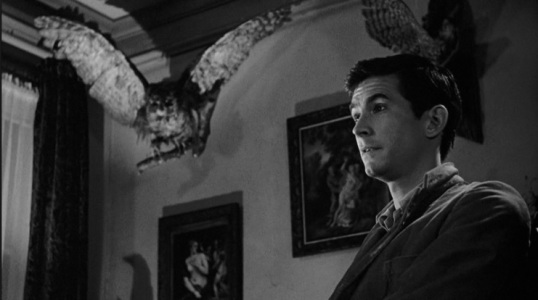
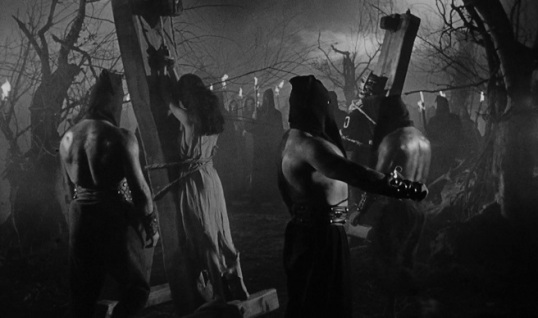
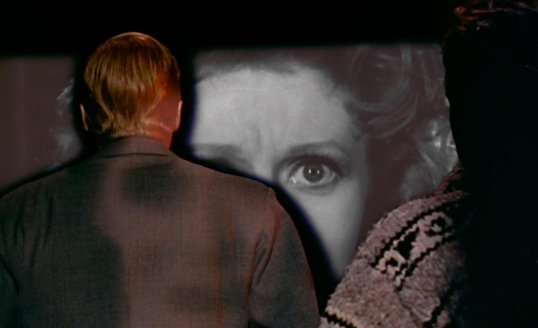
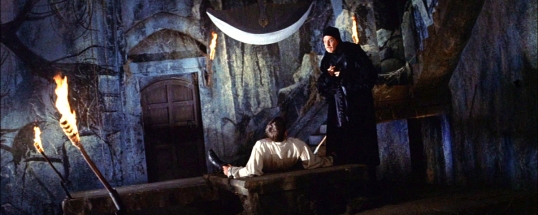
That’s why I’m grateful for Troy Howarth’s Murder By Design. Published in 2020, Murder By Design examines the life and the work of Dario Argento. It’s a combination of a biography and a critical analysis and it’s probably about as fair of an examination of Argento’s controversial legacy as I’ve ever read. Howarth, of course, writes about the films that everyone agrees are brilliant but, even more importantly, Howarth also gives the same amount of consideration to the films that are usually dismissed, like Phantom of the Opera and The Stendhal Syndrome. Though Howarth is hardly a blind Argento cheerleader — he’s critical of many of Argento’s later films — he also doesn’t give in to the temptation to lazily dismiss everything that Argento directed after 1985. He approaches Argento as both a fan and a scholar, critical but open-minded. As a result, he not only provides an interesting look at Argento but also a look at the development of post-World War II film industry and at the growth of horror as a genre.

Even better, Howarth explores all of Argento’s work. That includes the screenplays that he wrote before directing his first film. That includes the films that he produced and the television shows that he hosted. He makes the case for Argenton as an artist whose influence and vision goes far beyond just the films that he’s directed. Troy Howarth is one of the best writers about Italian cinema out there and Murder By Design is a must-read for anyone serious about Argento.

International Horror Film Review: Escape From The Bronx (dir by Enzo G. Castellari)


The Slo Mo of Doom!

All bad action films tend to feature it.  (Actually, it shows up in some good action films as well.)  Whenever a group of soldiers step on a mine and slowly flip through the air as a result of the subsequent explosion, that’s the Slo Mo of Doom.  Whenever an important supporting character is shot and the film suddenly slows down so that each frame of their collapse is their highlighted, that’s the Slo Mo of Doom.  Sometimes, it’s a way of saying, “Hey, you should care more about this violent death than you care about all of the other violent deaths in this movie.”  Sometimes, it’s a way of showing off the fact that the producers could afford stunt people, even if they couldn’t afford anything else.  Other times, it’s just a way to pad out the running time so that a movie can at least reach the 90 minute mark before the end credits roll.  Regardless of the reason why it’s deployed, Slo Mo of Doom is usually a good sign that you’re watching a cheesy action film.

Last night, when I watched the 1983 Italian film, Escape from the Bronx, with a group of friends, we counted at least six instances of the Slo Mo of Doom.  There may have been even more, it’s hard to say.  Along with frequent slow motion, Escape from the Bronx features a lot of flame throwers, several corporate bad guys, and an abundance of graffiti.   It also featured Henry Silva as a villain named Floyd Wangler and Antonio Sabato, Sr. as a flamboyant rebel leader who dressed like he was appearing in an Off Broadway adaptation of The Fantasticks.  In short, it was a classic of its kind.

Escape From The Bronx takes place in, what was then, the future.  (To be specific, the story is said to take place in the year 2000.)  The Bronx has become such an eyesore that an evil corporation wants to blow up all the buildings and rebuild.  Unfortunately, the residents of the Bronx know how difficult it is to find an apartment in New York City and they don’t want to move.  In order to change their minds, Floyd Wangler and his army of jackbooted, flame thrower-wielding bad guys invade the Bronx.  “Leave the Bronx!” they announce.  “It is time to leave the Bronx.”  And, to be honest, the Bronx looks like a terrible place to live so maybe they have a point.

A motorcycle-riding bad boy named Trash (played by Mark Gregory) doesn’t want to leave the Bronx so he goes underground.  While the buildings are being blown up and people are being set on fire, Trash teams up with Doblon (Antonio Sabato, Sr.) and his gang of flashy rebels.  Working with a mercenary named Strike (Giancarlo Prete) and journalist named Moon Gray (Valeria D’Obici), Trash plots to kidnap the president of the corporation.  Of course, by doing so, Trash might be doing exactly what Floyd wants him to do.

Both John Carpenter’s Escape from New York and George Miller’s Mad Max films were very popular in Europe and Escape From The Bronx was one of the many Italian films to imagine New York (or, in this case, one unfortunate borough of New York) as being some sort of a post-apocalyptic wasteland.  (In fact, Escape From The Bronx was a sequel to another film called The Bronx Warriors.  The adventures of Trash could not be contained to just one film.)  One could argue that Escape From The Bronx was an early warning against the horrors of gentrification, with the poor being set on fire so that the rich can blow up their homes and make even more money.  Personally, I thought the film was much more about the struggle of the Italian film industry to come to terms with the legacy of Mussolini.  Floyd Wangler may have had a silly name but, as played by Henry Silva, he was the chilling epitome of the authoritarian impulse come to life.  With his black uniform and his steely gaze, it was easy to imagine Floyd as one of the fascists who marched on Rome in 1922.  There’s a definite political subtext to Escape from the Bronx, one that can easily get overshadowed by the prominent use of the Slo Mo of Doom.

That’s not to say that Escape from the Bronx is a particularly good film, of course.  There’s a few decent action scenes but the middle part of the film drags and Mark Gregory doesn’t have much screen presence.  Henry Silva is better-cast as the bad guy but it’s hard to take a villain named Floyd seriously.  That said, Escape from the Bronx is an entertaining film to watch with a group of friends.  This is a film that invites you to talk back to the screen and, with all of its costumed rebels, it’s actually a good film for October.  Whatever its flaws, I defy anyone to watch this film without getting “Leave the Bronx” stuck in their head.

And, if nothing else, you can always have fun counting all of the Slo Mo of Doom.

4 Shots From 4 Kevin S. Tenney Films


4 Shots From 4 Films is just what it says it is, 4 shots from 4 of our favorite films. As opposed to the reviews and recaps that we usually post, 4 Shots From 4 Films lets the visuals do the talking!

Today, we wish a happy birthday to Kevin S. Tenney, director of some of most best loved horror films of the 80s and the 90s!  It’s time for….

4 Shots From 4 Kevin S. Tenney Films

Witchboard (1986, dir by Kevin S. Tenney, DP: Roy Wanger)

Night of the Demons (1988, dir by Kevin S. Tenney, DP: David Lewis)

Witchboard 2: The Devil’s Doorway (1993, dir by Kevin S. Tenney, DP: David Lewis)

Pinnochio’s Revenge (1996, dir by Kevin S. Tenney, DP: Eric Anderson)

Insomnia File #49: Mystery Date (dir by Jonathan Wacks)


What’s an Insomnia File? You know how some times you just can’t get any sleep and, at about three in the morning, you’ll find yourself watching whatever you can find on cable or Netflix? This feature is all about those insomnia-inspired discoveries!

If you were having trouble getting to sleep last night, around one in the morning, you could have turned over to the HBO Family channel and watched the 1991 comedy, Mystery Date!

A young and extremely adorable Ethan Hawke plays Tom McHugh, a college student who is in love with Geena (Teri Polo), the housesitter next door. The only problem is that Tom is extremely shy and can’t even work up the nerve to ask Genna out. It sure would help if he was rich and charming like his older brother, Craig (Brian McNamara). Eventually, Craig helps his brother out. He gives Tom his credit card and his car so that Tom can take Geena out on a date. What an nice brother! Soon, Tom and Geena are hitting the town and having a great time. They even see Gwar perform which …. well, okay. That probably would not be my ideal first date but whatever.

Unfortunately, it turns out that Craig has gotten involved with some pretty bad things and, as a result, there are two dead bodies in the trunk of the car! Uh-oh, that could be awkward. Plus, the Chinese mafia (led by B.D. Wong) are determined to kill Tom because they think that he’s Craig. And finally, to top it all off, Tom has got a crazed flower delivery guy (played by Fisher Stevens) following him all over the city. Can Tom possibly survive the night and still get a second date!?

Mystery Date starts out nicely. Ethan Hawke is cute in a non-threatening sort of way. Teri Polo is likable. They seem like they would make a cute couple. You want things to work out for them. Unfortunately, once the date actually starts, the film gets frantic without getting any funnier. It becomes a case of the film just trying too hard and you feel as if the film is demanding that you laugh as opposed to offering up a reason to laugh. You watch the film and you don’t so much think about what you’re watching as you think about films like Risky Business and Better Off Dead, both of which told similar stories with a lot more energy and imagination. You have to kind of imagine that whenever Ethan Hawke gives one of his interviews where he talks about why he’s not interested in doing typical mainstream films, this is probably the type of movie that he was talking about. Among the many other things for which we have to thank Richard Linklater, he ensured that Ethan Hawke would never have to star in Mystery Date 2.

Previous Insomnia Files:

  1. Story of Mankind
  2. Stag
  3. Love Is A Gun
  4. Nina Takes A Lover
  5. Black Ice
  6. Frogs For Snakes
  7. Fair Game
  8. From The Hip
  9. Born Killers
  10. Eye For An Eye
  11. Summer Catch
  12. Beyond the Law
  13. Spring Broke
  14. Promise
  15. George Wallace
  16. Kill The Messenger
  17. The Suburbans
  18. Only The Strong
  19. Great Expectations
  20. Casual Sex?
  21. Truth
  22. Insomina
  23. Death Do Us Part
  24. A Star is Born
  25. The Winning Season
  26. Rabbit Run
  27. Remember My Name
  28. The Arrangement
  29. Day of the Animals
  30. Still of The Night
  31. Arsenal
  32. Smooth Talk
  33. The Comedian
  34. The Minus Man
  35. Donnie Brasco
  36. Punchline
  37. Evita
  38. Six: The Mark Unleashed
  39. Disclosure
  40. The Spanish Prisoner
  41. Elektra
  42. Revenge
  43. Legend
  44. Cat Run
  45. The Pyramid
  46. Enter the Ninja
  47. Downhill
  48. Malice

Horror Film Review: The Devil’s Rain (dir by Robert Fuest)


Was I the only one who was relieved that William Shatner didn’t die this week?

Seriously, when I heard that the 90 year-old Shatner was going to be taking a trip on one of the Amazon rockets, I was really worried.  First off, you’re taking a 90 year-old into space.  Secondly, you’re doing it with a rocket that people don’t really know that much about.  And third, that 90 year-old is a cultural icon and one who probably played no small role in causing people like Jeff Bezos and Elon Musk to become obsessed with conquering space in the first place.  With the exception of George Takei, everyone loves William Shatner.  (And, at this point, Takei’s constant sniping about Shatner is coming across as being just a little bit petty.  Move on, George!  People love you, too.)

As I watched Shatner land back on Earth, I found myself thinking about The Devil’s Rain, a film from 1975 that starred William Shatner as a man whose exploration of the unknown led to a far less triumphant result.   

In this film, Shatner plays Mark Preston, a youngish man who lives on ranch with his father (George Sawaya) and his mother (Ida Lupino).  For some reason, the Preston family owns a book that is full of evil magic.  Satanic high priest Jonathan Corbis (Ernest Borgnine) wants the book and when the Prestons refuse to hand it over, he makes it his mission to destroy them.  He gets things started by turning Mark’s father into a weird, waxy zombie who melts in the rain.  Not wanting the same fate to befall the rest of the family, Mark grabs the book and heads to a desert ghost town that has been taken over by Corbis and his followers.  Mark never returns.

Mark’s older brother, Tom (Tom Skerritt) then shows up in town, searching for Mark.  Accompanying him are his wife (Joan Prather) and a paranormal researcher (Eddie Albert).  Tom discovers that Corbis is transforming his followers into zombies who have no memories and who exist only to …. well, I’m not sure what the point of it all is but I guess it basically comes down to Corbis needing something evil to do.  Not only has Mark become one of his Corbis’s followers but, if you keep an eye out, you might spot a very young John Travolta in the background.  This was Travolta’s film debut.  According to the end credits, the character he plays is named Danny.  Danny Zuko, perhaps?  That would serve him right for making Sandy doubt herself.

The Devil’s Rain is one of the many low-budget movies that William Shatner did between the end of the Star Trek TV show and the start of the Star Trek movies.  It’s a bit of an disjointed film, as I think any film starring William Shatner and Tom Skerritt as brothers would have to be.  Skerritt gives a very laconic performance, playing his character as if he was the star of a Western.  Shatner, meanwhile, does that thing where he randomly emphasizes his words and gets the full drama out of every sentence and facial expression.  But, as much as Shatner overacts, you can’t help but enjoy his performance because he’s William Shatner and that’s what he does.  The same is true of Ernest Borgnine, who overacts in his role just as much as you would expect Ernest Borgnine to overact when cast as an evil cult leader.  For that matter, Eddie Albert isn’t exactly subtle as the paranormal researcher.  Don’t even get me started on Keenan Wynn, playing yet another small town sheriff.  Let’s just say that, with the exception of Tom Skerritt, the cast of The Devil’s Rain is not necessarily full of actors noted for their restraint.  That said, there’s something rather charming about everyone’s attempts to steal every scene in which they appear.

The Devil’s Rain is a deeply silly film but that doesn’t make any sense but it’s hard not to get caught up in it.  Even if the fact that this film is perhaps your only opportunity to see John Travolta melt on screen isn’t enough to make you watch, Shatner vs. Borgnine with Skerritt approaching in the distance is just too entertaining to resist!  Thankfully, Shatner survived appearing in this film and revitalized his career through a combination of Star Trek movies and Canadian tax shelter flicks.  He’s a survivor.  In fact, I guess I shouldn’t have been surprised that, even at the age of 90, Shatner has no trouble going into space.  William Shatner’s going to be around forever.

Horror on the Lens: Dr. Jekyll and Mr. Hyde (dir by John S. Robertson)


394px-Dr_Jekyll_and_Mr_Hyde_1920_poster

Ever since the birth of film, Robert Louis Stevenson’s Dr. Jekyll and Mr. Hyde has been a popular subject for adaptation.  Not only does the classic story of a good doctor who unleashes his evil instinct via potion serve as a potent metaphor for everything from sexual repression to drug addiction, but the dual role of Dr. Jekyll and Mr. Hyde has provides an excellent opportunity for an actor to show off.

The first film adaptation of Dr. Jekyll and Mr. Hyde is believed to have been made in 1908.  Two more version followed in 1912 and 1913 and then, suddenly, 1920 saw three different film versions.

The best known of the 1920 version is our film for today.  This version is best remembered for John Barrymore’s powerful performance in the title role but it also holds up remarkably well as a work of cinematic horror.

Scenes That I Love: The Preying Mantis Scene From Dracula 3D


Dracula 3D (2012, dir by Dario Argento)

Dario Argento’s 2021 film, Dracula 3D, doesn’t get the respect that it deserves. I guess that’s to be expected, as people are pretty much obsessed with criticizing Dario and his later films. Personally, I think it’s an enjoyable and unique version of the legend. Thomas Kretschmann is a credible Dracula. Rutger Hauer was a great Van Helsing. The whole thing is wonderfully over-the-top and stylish.

Plus, to my knowledge, this is the only Dracula film in which the Count turns into a preying mantis and beheads someone. Don’t believe me? Here is today’s horror scene that I love:

4 Shots From 4 Dracula Films


4 Shots From 4 Films is just what it says it is, 4 shots from 4 of our favorite films. As opposed to the reviews and recaps that we usually post, 4 Shots From 4 Films lets the visuals do the talking!

Today, let us take just a few moments to pay tribute to one of the icons of Halloween.  He was born into nobility but he never let that stop him from visiting the village at night and getting a taste of the common life.  I’m talking, of course, about the original royal influencer, Count Dracula!  Everyone knows Dracula.  Everyone wants to either be with or even be Dracula.  It’s no wonder that he’s been the subject of so many biopics.

In honor of the Count’s legacy, here are….

4 Shots From 4 Dracula Films

Dracula (1931, starring Bela Lugosi as the Count, Dir by Tod Browning, DP: Karl Freund)

Horror of Dracula (1958, starring Christopher Lee as the Count, Dir by Terence Fisher, DP: Jack Asher)

Dracula (1979, starring Frank Langella as the Count, Dir by John Badham, DP: Gilbert Taylor)

Dracula 3D (2012, starring Thomas Kretschman at the Count, dir by Dario Argento, DP: Luciano Tovoli)

Horror on the Lens: Nosferatu (dir by F.W. Murnau)


Today’s Horror on the Lens is a classic film that really needs no introduction!  Released in 1922, the German silent film Nosferatu remains one of the greatest vampire films ever made.  It’s a film that we share every October and I’m happy to do so again this year!

Enjoy!

Cleaning Out The DVR: Seven Days In Utopia (dir by Matt Russell)


Last night, as a part of our attempt to make some space on the DVR so that I can record every upcoming episode of The Bachelorette and she can record the World Series, Erin and I watched the 2011 film, Seven Days In Utopia.

Seven Days In Utopia is a Texas-set (and Texas-filmed) movie about a young pro golfer named Luke Chisholm (played by Lucas Black) who has a very public meltdown while in the middle of a tournament. Feeling that his career is pretty much over, Luke jumps in his car and goes speeding around Southwest Texas. Because he’s not pay attention to the road (which, I’ll be honest, occasionally happens when you’re driving through rural Texas.), he almost doesn’t notice the cow standing in front of his car. Fortunately, Luke swerves and avoids the cow. Unfortunately, he crashes through a fence.

The fence belongs to Johnny Crawford (Robert Duvall), a friendly rancher who — coincidence of coincidences — also happens to be a former pro golfer! With Luke’s car temporarily out-of-commission, he’s stuck in Utopia for at least seven days. Johnny offers to spend those days teaching Luke everything that he needs to know about golf and about life. Luke agrees, because what else are you going to do when you’re stranded in Uvalde County?

Seven Days In Utopia is one of the few films in my lifetime to have been released with G rating and it pretty much earns that G-rating by being the most inoffensive film ever made. Seven Days in Utopia is almost aggressive in its pleasantness. Johnny is very nice. Luke is very nice. Just about everyone that Luke plays against is pretty nice. Everyone in town is pretty nice, even if they do give Luke a hard time about being a “city boy.” Deborah Ann Woll plays the nice waitress at the local diner, with whom Luke has a very pleasant romance. Woll and Black make for a cute couple and they have a nice chemistry. They’re all very pleasant.

Seven Days In Utopia is one of those films that you end up watching when you need something to watch with an older relative who doesn’t understand why “all the movies nowadays have to use all that language!” It’s an old-fashioned movie. That, in itself, is hardly a problem for me. I like old movies and, despite my love of horror as a genre, I can also appreciate movies that are not meant to traumatize the audience. For that matter, I like Lucas Black and I like Deborah Ann Woll. As for Robert Duvall — I mean, My God, he’s one of the last of the great character actors. He’s Boo Radley and Tom Hagen, for God’s sake! Of course, I love Robert Duvall and Duvall really is probably the only actor who could make an idealized character like Johnny Crawford into a real human being. That said, Seven Days In Utopia is also a rather slow film. The pacing will make you feel all seven of those days and the lessons that Johnny teaches to Lucas aren’t particularly profound once you look beyond the fact that they’re being taught by legitimate great actor Robert Duvall. It’s an nice film and the scenery is pretty but, while watching it, it’s hard not to miss the anarchistic spirit of golfers like Shooter McGavin and Happy Gilmore.