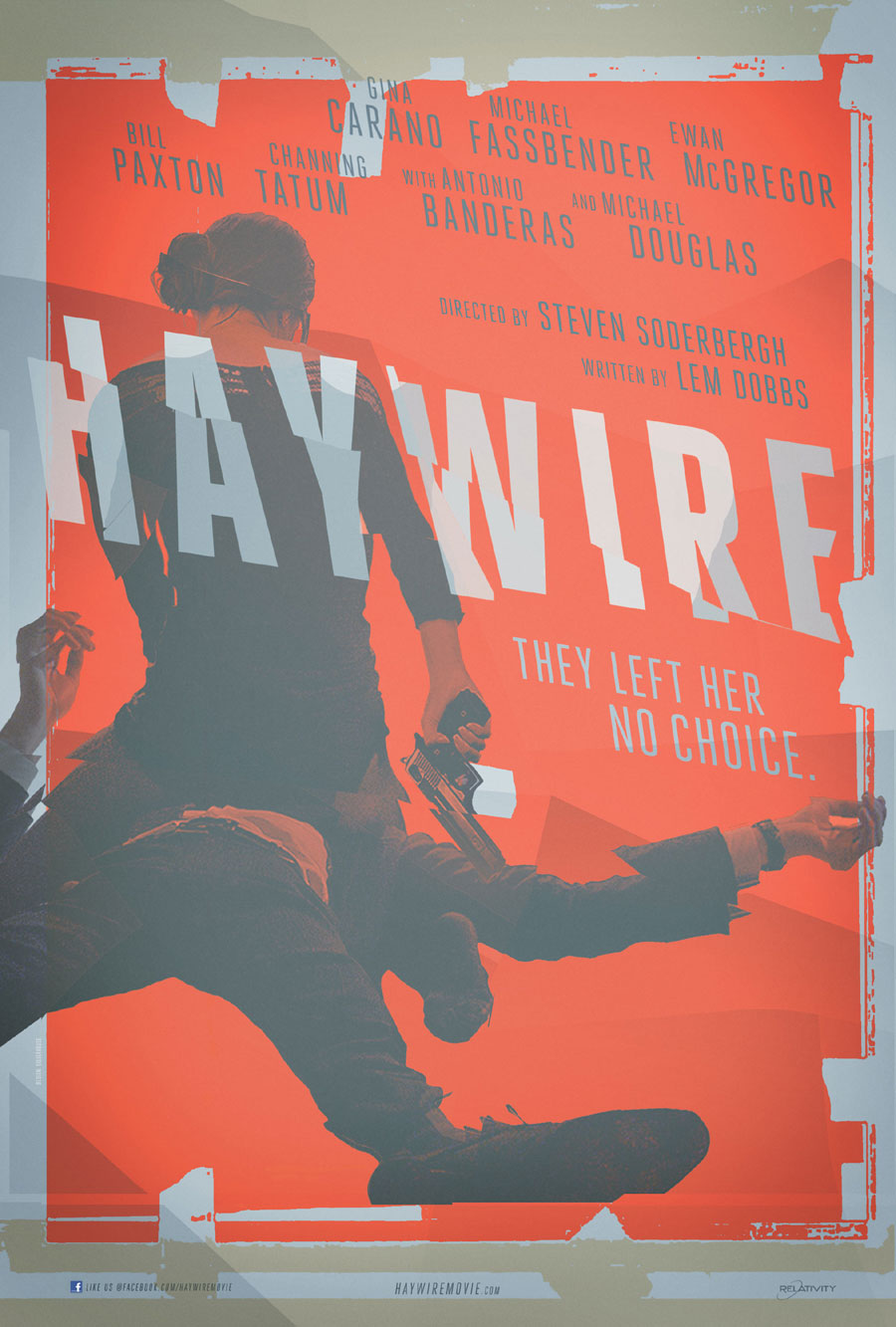
It would seem that Steven Soderbergh was quite busy doing something small and simple leading up to his upcoming world-encompassing viral apocalypse film, Contagion. He managed to film an action-thriller (still feels new to say Soderbergh and action-thriller in the same breath) starring MMA fighter Gina Carano as the lead. The film’s title is Haywire and from the synopsis bouncing around the film looks to be quite a throwback to the late 80’s and early 90’s action-thrillers where the main lead is a super-spy or operative betrayed by those they work for and must now take them out to save their loved ones.
It’s going to be interesting to see how Soderbergh handles action on the level Haywire seems to be promising in the trailer. Even if he punts that side of the film the cast alone should make this film worth a look when it comes out. I mean outside of Carano there’s Michael Douglas, Michael Fassbender, Ewan MacGregor, Bill Paxton and Antonio Banderas (channeling a wicked imitation of Saddam Hussein’s fugitive beard).
Haywire is set for a January 20, 2012 release date.
To say that I am a huge fan of Canadian auteur and all-around genius filmmaker David Cronenberg would be the understatement of the decade. I count him as one of the greatest filmmakers of the last 30 years. Seen his style go from grindhouse video nasties type of horror to the sublime. He’s one filmmaker who has never had to compromise his filmmaking style to suit the audience. You either accept what he has crafted or not.
The last 5-6 years has seen his stock rise amongst the film community as films like A History of Violence and Eastern Promises has gotten him recognition from the Academy voters, Film Circles and others in the film elite community. At the same time these films have been widely regarded by film fans as some of the best of the past decade. It helps that he seems to have found a partner-in-crime in another auteur with actor Viggo Mortensen who played lead in both those films.
Now for 2011 the two partner up again for the third time for Cronenberg’s film adaptation of the stage play “The Talking Cure” which itself was adapted from the non-fiction book, A Most Dangerous Method. The film is called A Dangerous Method and stars Viggo Mortensen as Sigmund Freud, Michael Fassbender as Carl Jung and Keira Knightley as Sabina Spielrein. These three become the focal point of a sort of relationship triangle as the friendship between Freud and his younger apprentice in Jung becomes even more complicated when young Sabina get’s between the two men who would give rise to the study of psychoanalysis.
That brief synopsis doesn’t make this film very interesting at first glance, but this is Cronenberg who never picks projects and stories to tell unless it appealed to him. I wouldn’t be surprised if the film wasn’t just a story about three individuals and their relationships towards each other, but something even more abstract as Cronenberg’s bound to explore the early days of psychoanalysis itself.
Here’s to hoping A Dangerous Method delivers on everything fans of Cronenberg have come to expect from him…or not expect as the man has a tendency to surprise with each new film.
The name Matthew Vaughn should be familiar with comic book fans everywhere. In 2005, Vaughn was introduced as the director to replace Bryan SInger for the third film in the X-Men franchise. The news was met with some cautious optimism. This was a filmmaker who had quite the loyal and growing following for his work on Stardust and Layer Cake. Months after he was picked my 20th Century Fox news came down that he was backing out of the project due to personal reasons and the film scrambled for a replacement which ended up being Brett Ratner. History was made that day as the beginning of the franchise’s decline began and steep plummet which recently reached it’s nadir with 2009’s Wolverine: Origins.
It’s has now been five years since X-Men: The Last Stand made it to the big-screen and now we have a new film in the franchise. X-Men: First Class has a familiar name behind the director’s seat and it looks like Matthew Vaughn stayed this time around (after directing a smaller superhero film in Kick-Ass for 2010) to craft what could become the best film in the X-Men/Wolverine film franchise. This film is a prequel/reboot of sorts (more on that later) and brings a fresh set of eyes and take on the origin story of this franchise.
X-Men: Last Stand actually begins the film exactly how the first X-Men film began with the 1944 World War II concentration camp setting where a young Erik Lensherr (later to become Magneto) finally manifests his power over magnetic fields as he watches his parents torn from his side. The first film ended that sequence once Erik was knocked out, but this time around it continues with a mysterious man named Schmidt (aka Sebastian Shaw and played with James Bond villainous-flair by Kevin Bacon) taking great interest in Erik and his ability which Erik could only use during bouts of pain and anger. The film continues this slight change in the series’ origins by switching over to Westchester County and into the expansive home of a young Charles Xavier who finds a certain young, blue-skinned shapeshifter named Raven who he invites to stay and become his friend once he realized he wasn’t the only one who was different and with abilities.
These two sequences continue to move the film forward as the we see these two “leaders in the making” adults and trying to find their place in the world of the free-swinging lifestyle and the Cold War culture of the 1960’s. Charles Xavier (played like a well-meaning cad and good-natured naivete about the world by James McAvoy) is a student working on his doctorate in Oxford on genetic theories while his “sister” Raven (Jennifer Lawrence) accompanies him. This is a Xavier who still hasn’t found the patient benevelonce of Patrick Stewart’s Professor X and uses his considerable telepathic abilities to help him pick up on beautiful coeds instead. It’s during such a scene where we see Raven show just a hint of jealousy as Xavier tries his lines and moves on a beautiful British lass. It would seem Raven’s feelings for her ‘brother” may go beyond sibling affection though Xavier doesn’t see her as anything other than a sister for him to protect.
Erik Lensherr’s time as an adult was shown as having become a life of obsession over his treatment at the hands of the Nazi’s and those of Schmidt’s as he travels the world in search of escaped Nazi war criminals. Erik takes him throughout South America as he finds the trail of Nazis hiding out in that region since the end of the war. We see this adult Erik hardened by his anger and single-minded need for revenge on Schmidt and those he worked for. He’s not above using his abilities to kill in order to get the information he requires and there’s a hint of satisfaction when he does kill those he sees as responsible for his tragic upbringing with his magnetic abilities. These two adult sequences continues the film’s theme of the ideological difference between Xavier and Erik being formed through nature and nurture as their lives moved down diverging paths from an early beginning until it convergence for a small, brief period around the time of the Cuban Missile Crisis.
The film’s second act begins with Moira McTaggart (Rose Byrne), now a covert CIA Agent, investigating a certain Col. Hendry who she suspects as having betrayed the nation to the Soviets, but instead finds out that the true nature of Hendry’s associations were much more insidious and dangerous. The iconic Hellfire Club of the comics finally make their appearance with Schmidt who actually happens to be Sebastian Shaw (whose powers grant him the ability to absorb all kinetic energy which he uses to keep himself young and can release with explosive results), Emma Frost (January Jones) who’s a telepath with the ability to turn body in a sort of diamond-form, Riptide who can create tornado-like abilities and finally the demonic-looking Azazel whose ability to teleport might give people not well-versed in the “X-Men Universe” a clue as to one-half of parents who may be responsible for Nightcrawler in the second film.
X-Men: First Class spends much of this second act like it was Ocean’s 11 as Xavier and Erik get recruited by the CIA to find other mutants and create their own mutant team to counter Sebastian Shaw’s Hellfire Club and his goal of initiating World War III between the US and the USSR and thus destroy all of humanity and leave the planet for the mutants to rule over. Yeah, it is this part of the film’s plot which may strain the suspension of disbelief for some audiences who never grew up reading the comics, but it shouldn’t. Ian Fleming’s James Bond series used scenarios just as ludicrous with villains just as Machiavellian in the form of SPECTRE so X-Men: First Class and it’s world domination plans shouldn’t be too farfetched to fans of that British superspy and his adventures.
This middle section of the film is where X-Men: First Class actually begins to lag after a strong first act. I don’t know if the sequences of the new recruits training, bonding and learning how to use their powers could’ve been written to move much faster without losing some of the character building scenes. From how this second act played it seemed to look like scenes were actually cut out to try and keep the film from being too long (it’s final cut being just a tad over two hours already upon release), but I wouldn’t be surprised if the DVD/Blu-Ray release actually has a director’s or uncut version that actually expands this middle section to really give life to it instead of having it play out like a perfunctory training montage with a dash of character beats.
The film hits it’s action-film stride with the third and final act as Xavier and Erik’s team of young mutants must now use their abilities to stop Shaw and his Hellfire Club and at the same time prevent World War III from beginning and not freaking out the humans who are still unaware of their existence as a whole. It’s this third section which we see too much of it in the trailers and tv spots that one might say we’ve seen it all before we even see the film as a whole, but it still kept back a lot from those ads to make the whole final twenty minutes of the film thrilling and action-packed.
All of this could just mean that X-Men: First Class was just your run-of-the-mill superhero action film that we get on a yearly basis come summertime, but it’s a testament to Matthew Vaughn’s direction and the strength of the script by Vaughn, longtime collaborator Jane Goldman and Thor scribes Ashley Edward Miller and Zack Stentz that the film goes beyond being just an action film with all it’s sturm und drang coupled with fancy special effects. The previous films in the series always explored important cultural and moral themes that’s always been the bread-and-butter of the X-Men stories in the comic books. We just don’t see the film explore the ideological difference between Xavier’s peaceful co-existence between humans and mutants alike, but also we get more detail on why Magneto finally comes to the conclusion that war between humans and mutants was an inevitability and why his stance doesn’t fall under the aegis of being evil, but something that anyone could understand and even support whether one was human or mutant.
The story also doesn’t just pay lip-service to the idea of how mutants view themselves and how even within the mutant community there’s a visible rift between those whose abilities are invisible to the general population and those whose abilities and genetic mutation physically manifest themselves in such ways that to many might not look to appealing. This idea really gets a major exploration in the subplot involving Raven (soon to be Mystique), Hank McCoy and, to a certain degree, Xavier and Erik. We see how those like Xavier whose abilities don’t show in a physical manner have a sort of “don’t ask, don’t show” about those like Raven when it comes to their power when in public.
Raven (played beautifully by Jennifer Lawrence) is caught between Xavier who wants her to remain incognito so as not to shock the world too soon in realizing that mutants exists and that of Erik who sees Raven’s original blue-skinned form as beauty and perfection and how she should never hide who she truly is. This tug and pull between her two mentors makes for a convincing subplot in how Raven comes to the conclusion which would take her to the side of Magneto in later films, but also highlight how the two sides in later films have so much intertwining bonds of friendship and relationship that seeing them against each other becomes a tragedy on its own. Civil wars are not just a thing of humans but those who sees themselves apart from them.
The great performances by most of the leads add to the film’s strength. McAvoy and Fassbender, at first, look to be unconvincing in terms of their appearance as the younger versions of Patrick Stewart and Ian McKellen, respectively. This becomes a non-issue once they’ve established themselves through their performances which gives new layers to the personalities of Professor X and Magneto. Many people always saw these two as the comic book version of Martin Luther King, Jr and Malcolm X, but that’s an oversimplification. The film and the performances by McAvoy and Fassbender digs deeper into both their characters’ motivations and ideologies and how their past experiences and upbringing couple with their time together as brothers-in-arms and friends show more about these two than just being mutant-proxies of MLK and Malcolm X. The other young mutants do an adequate enough job that they don’t seem lost in the film. Nicholas Hoult as the young Hank McCoy and how he plays off Lawrence’s Raven during their little subplot in the film is one stand-out that I hope gets explore even more in any follow-up sequel.
There’s a nice burgeoning young love chemistry between him and Lawrence as Beast and Raven that doesn’t seem too tacked on to create a the prerequisite love couple in any film. Their common trait of having physical mutations and how they seem to both feel apart even from their fellow mutants develop their characters in ways the previous films in the series never did. They never want to rid themselves of their mutant powers. They just want to look normal and still keep their abilities. It’s a having your cake and eat it too mentality that has some surprising results for both Raven and Hank.
X-Men: First Class has had some fans of the series put in a very difficult situation. The film definitely is a prequel to the previous films, but it also does a major time in rewriting continuity in the series. I was one of those fans and thought it would ruin the film in the context of the franchise. I’m surprised that in the end I didn’t really care and actually hope that this film actually is a reboot of the franchise. I see this film and forget the previous three as being part of it. This film was just too good and fun in it the end for continuity issues to become the major flaw that sinks it. I liken this film as similar to Christopher Nolan rebooting the Batman film franchise. That film honored the contributions to the character, but went on it’s own way to tell that character’s tale. I see Vaughn doing the same with this film. He has done something which many thought was a near-impossible task and that’s make the X-Men franchise relevant once more in a pop-culture landscape that seems to have left the franchise behind after the disastrous Wolverine: Origins of 2009.
This film delivered on the ideas that made the comic books so beloved by millions of fans for almost a half-century. It made great use of the 1960’s time and setting to tell a story of these characters beginnings as heroes and villains (though the latter shouldn’t be seen as them being truly just evil bad guys). Even the inclusion of real-world historical event like the Cuban Missile Crisis was a nice touch which gave the film a foundation in realism. Again, this film played off like a superhero, Marvel version of an Iam Fleming James Bond story. For those who are huge fans of the previous films there’s even two brief cameos of those films two favorite characters that appear in this film. They don’t come off as cheesy and unnecessary and actually come off as great additions. I won’t mention who these cameos were but the audience’s reaction to them was very vocal and very positive. I say the same should be said for X-Men: First Class as a film that resuscitates the franchise.
Today we saw the release of the second official trailer for the upcoming X-Men prequel/reboot helmed by British director Matthew Vaughn.
X-Men: First Class looks to show the early days when Professor X and Magneto were still friends and allies instead of the adversarial relationship they had in the first three films in the franchise. This new trailer shows more of the characters who will be involved in this film. It also shows the mutants and their powers in action. I must admit that I wasn’t too thrilled with the previous trailers shown about this film, but this latest shows more action and finally reveals it’s summer blockbuster pedigree. The sequence with Magneto lifting the submarine out of the water was really cool.
It’s still not the superhero film this summer that tops my must-see list, but this trailer has put this film in the running as one of the films I must-see.
X-Men: First Class is still slated to have a June 3, 2011 release.
Hey, ladies! Did your man make you sit through Battle Los Angeles? Did he spend the whole time going, “Oh Hell yeah!” every time something exploded? Did he insist on repeatedly going, “Hoorah!” after the movie ended?
You want to get revenge? Well, here’s what you’re going to do. You’re going to go up to him and you’re going to tell him, in the sweetest way possible, that he’s going to take you to see the latest film adaptation of Jane Eyre. Tell him that this is a revisionist take on the story and that its full of scenes of lesbian flirtation between Jane and Helen. Of course, that’s a lie but this is the same guy who just gave you a card for Valentine’s Day. You don’t owe him a damn thing.
And who knows? He might find something to enjoy in Jane Eyre because it’s one of the best films of 2011 so far. (Though I doubt it because Jane Eyre really is an unapologetic chick flick.)
Charlotte Bronte’s Jane Eyre is one of those books that has a timeless appeal to it. I don’t know if it was the first novel to feature a young governess isolated in a creepy mansion but it certainly set the standard that all other gothic romances would have to meet. The first film version was a silent film from 1910 and since then, Jane Eyre and the enigmatic Mr. Rochester have been played by everyone from Joan Fontaine and Orson Welles to Susannah York and George C. Scott to Charlotte Gainsbourg and William Hurt. In this latest version, Jane is played Mia Wasikowska and Rochester by Michael Fassebender and the end result is probably the best film version of Jane Eyre to date.
With a few notable exceptions, the film is faithful to Bronte’s book. Jane is an orphan who, after being mistreated by her wealthy aunt (Sally Hawkins, cast very much against type), is sent away to a “charity school” where she is again mistreated and abused until finally, she turns 18 and she leaves the school to take a job as the governess for a young French girl named Adele (Romy Settbon Moore). Adele is the ward of the mysterious, arrogant, surly, but oh so hot Mr. Rochester. Though Rochester is, at first, a rather fearsome employer, he soon starts to warm up to Jane and the two of them defy the 19th century class system by falling in love. However, not everything is perfect. Jane discovers that Rochester has secrets of his own and then there’s the constant sound of footsteps and moaning that seem to echo through the old mansion late at night. Fires are mysteriously set. A guest is savagely attacked in his sleep. When Jane discovers the truth, she also discovers that nothing is as perfect as it seems.
One reason why the original novel has remained such an important work (and one that is still readable as opposed to say, The Scarlet Letter) is because Bronte used her narrative to tell several different stories. Me, I’ve always related to the character of Jane and her struggle to maintain her independence in a society where women are not encouraged to think for themselves. Others see the story as an early soap opera, a melodramatic romance in which true love conquers all. There’s also an argument to be made that the book is primarily meant to be an examination of the 19th century British class system. Of course, if that’s all a bit too much for you, you can always just read Jane Eyre as an early “haunted house” story.
The genius of this latest film adaptation is to be found in the way that director Cary Fukunaga and screenwriter Moira Buffini brings all of these various themes to life while still crafting a compelling and entertaining movie out of them. Perhaps the biggest change they made is to begin their film near the book’s conclusion. They then proceed to tell the story of Jane’s childhood and romance with Rochester through flashback, a move that recreates the book’s ground-breaking 1st person narration (ground breaking because, before Jane Eyre, it was rare that any female character was allowed to tell her own tale). While some may complain that the 1st half of the book is pretty much reduced down to 15 minutes of screen time, Fukunaga and Buffini pick their scenes carefully and, most importantly. the essence of Bronte’s narrative comes through if not the exact details.
As a director, Fukunaga plays up the gothic aspects of the story. Whenever Jane ventures outside, the skies are overcast and you can almost literally feel the chill of a desolate wind. Meanwhile, the interior scenes are so full of menacing shadows and expressionistic camera angles that Fukunaga’s film almost feels like the noir version of Jane Eyre. By doing so, this Jane Eyre becomes not just a prototypical gothic love story but instead, it becomes a true coming-of-age story with the mysteries of Mr. Rochester coming to symbolize the mysteries of life itself.
Fukanaga is helped by some excellent performances. Jamie Bell and Judi Dench — playing a clergyman and a housekeeper respectfully — both bring life to characters that have been reduced to stereotypes in previous versions of this story. Fassebender is a perfect Rochester, displaying both strength and weakness in equally believable measures. However, the film’s success or failure obviously lies with Mia Wasikowska’s performance in the title role and this is Jane Eyre’s crowning triumph. Wasikowska gives a fiercely, intelligent performance. Her Jane is strong-willed, indepedent, and intelligent without ever becoming so idealized as to be unbelievable. If Jane Eyre was the first strong woman to appear in literature, Wasikowska gives a performance that is equally strong. There have been over 20 Jane Eyres since 1910 and Mia Wasikowska may very well be the best.
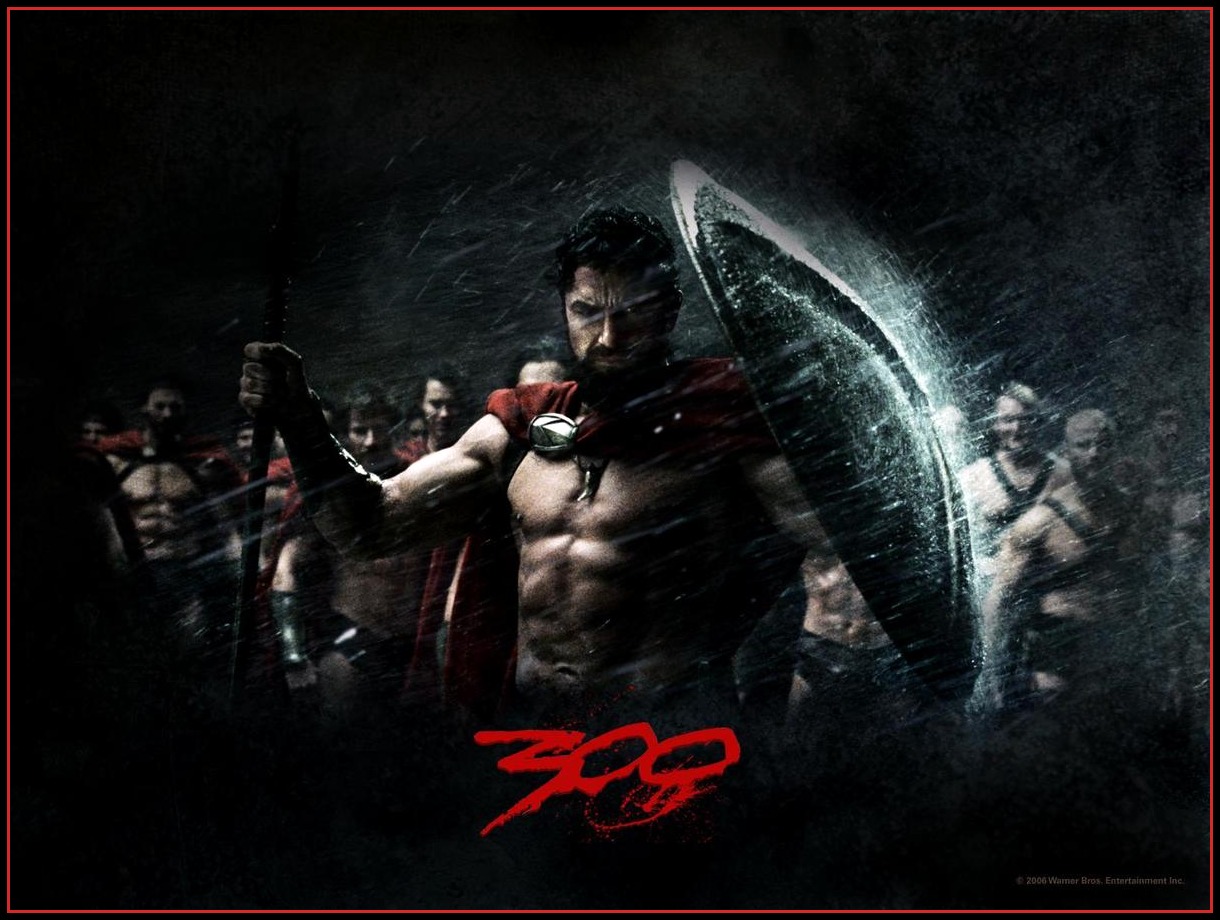
I will get it out of the way and say that this was not and was not meant to be a historically accurate depiction of Ancient Greece. It was never meant to be even when it was still just an Eisner-Award winning graphic novel from the mind of iconic graphic novelist and artist Frank Miller. With that out of the way I was able to watch and enjoy Zack Snyder’s film adaptation on its own terms without the criticism of historical accuracies looming dangerously over my head. 300 deserves the label of being an event film. From start to finish, Snyder’s film practically screams blockbuster and popcorn and I wouldn’t have it any other way.
Frank Miller’s 300 was at its time an interesting depiction of one of history’s greatest military last stands. Miller already known for hyperstylizing the look and feel of the noir genre with his Sin City graphic novels, takes the same approach with his depiction of King Leonidas and his 300 Spartans taking a final last stand against Persian God-King Xerxes at a narrow mountain pass called Thermopylae (literally meaning Hot Gates in Greek). Zack Snyder took this graphic novel and painstakingly stayed true to the visuals Miller and his colorist wife, Lynn Varley put on paper. Looking back at my memory of some of the panels and images from the graphic novel. Snyder and his crew of art directors, cinematographers and CGI-artists were successful in translating almost every page of the graphic novel onto the screen.
Like Robert Rodriguez’s adaptation of Miller’s Sin City, Zack Snyder’s 300 pretty much brings the graphic novel to moving life. This means he stuck to the source material quite literally which limits his own take on the graphic novel. Like Rodriguez, Snyder doesn’t really put his own signature stamp as a director to the film. It’s not too much of criticis since he does a great job of translating Miller’s work onto film, but one wonders what sort of personal touches he could’ve added to the finished look that wasn’t lifted from Miller’s style and whether it would’ve changed the overlook look and feel of the film.
The story is quite simple and just takes the basic summary of the historical event itself. Spartan King Leonidas (played with visceral gusto and machismo by Scottish thespian Gerard Butler) makes a decision to go to war and confront the encroaching and fast approaching massive Persian Army led by Xerxes (Rodrigo Santoro) intent on conquering the Hellenic city-states of the Greek Peninsula. Persian ambassadors ride forth to demand oaths of fealty from those city-states ahead of the army’s path. Sparta is one such city-state, but different from the rest of its Hellenic brethrens. Sparta has gone down in history as a word synonymous with unbending dedication to a strict, ascetic warrior code. Warfare and battle were what Spartans were born and trained to do from an early age. Weakness and physical imperfections weeded out from the time of birth (the film explains just what happens to male newborns with physical imperfections and deformities). The answer Leonidas gives the Persian delegation could be seen as somewhat extreme, but not contrary to his nation’s warrior-culture of never surrendering and seeing death in battle the greatest glory for a Spartan to achieve. From this sequence right up to the end of the film we get to see just how much of a warrior culture the Spartans were in extreme detail.
It’s during the prolonged battle scenes between Leonidas’ Spartans and Xerxes army which will have everyone chomping at the bit. If you have to see this film for any particular reason outside of watching superbly-trained underdogs slaughtering and endless supply of enemy troops then you will most likely be disappointed by the slower scenes away from Thermopylae. Indeed, this film an its original source material would’ve worked even better without the extra filler Snyder and his writers added to give the film more depth. I’m all for more emotional depth and characterization in my films but when a movie is all about a bloody and heroic last stand of a few against the many, scenes which slow the story down does more to break the rhythm and tone of a film than add to it. Othe than a deeper understanding of the kind of partnership Leonidas had with Gorgo, his Spartan Queen, most of the subplots added by Snyder and his writers could easily have been left out and still ge a kick ass action epic.
It’s the action scenes which reall stand out visually. Some people might see the style tricks of speed ramping certain action sequences then slowing it down considerably to show the minute detail of the battle scene as being to gimmicky, but I would disagree and say it actually gives the movie a mythical quality in its storytelling. One thing I have to say about Zack Snyder as a director (his remake of George A. Romero’s Dawn of the Dead better than what detractors have made it out to be) is that he knows how to film action and with special mention to bloody and gory action. He makes these scenes of dismemberments, decapitations, and disembowlments look like a piece of performance art.
These scenes of carnage would be considered extremely gratuitious if it didn’t look so made up good. Even the way the blood flows, spurts and splashes look like something Jackson Pollock would take interest in. The speed up and slow down of the sequences also gives the fight scenes a certain rhythm that once an audience picks up on will follow it through to the end. This is why the scenes back in Sparta with a duplicitous politician and his powerplay to assume control and power seem such a downer instead of enhancing the sacrifice of Leonidas and his men. Those scenes just feel tacked on and completely superfluous. Luckily, there’s not enough of them to slow down the frantic pace developed by the battle itself.
The performances by all actors involved really doesn’t require too much criticism or reflection over. Gerard Butler does a great and convincing job as the Spartan King and his conviction in confronting Xerxes and his army with so few seem very believable. It’s not a star-making performance but it does show that Butler can add a bit of gravitas to a character and role so basic in characterization. Lena Hedley is radiant as his partner and Queen. Despite the weird sounding name of Gorgo, Hedley plays the strong-minded and equally influential wife to Butler’s Leonidas. It’s only her scenes back in Sparta as she tries to rally her people to support their king which keeps these slower sequences from fully pulling down the film. The performances were good enough to keep the acting in the film from becoming too campy or too serious. It’s an action film and with enough action going on in the movie I could forgive the writers (both Miller and the screenwriters) from scrimping on character build up.
All in all, Zack Snyder’s film adaptation of Frank Miller’s 300 succeeds in bringing the book to moving life. Throughout the run of the film it was hard not to get lost in the beautiful visuals. Whether it was the muted color pallette which puts most of the scenes in an almost sepia-tone look to over-emphasizing certain colors to set a certain mood. From oversaturation of reds in one sequence to one where everything seem to be tinted with the many shades of blues at night. This is what 300 will be best remembered for. It’s technical use of CGI to paint the environment in unrealistic but beautiful ways which gives the scenes a lyrical and mythical look to them once the actors were superimposed over them. The film really was a painting come to life and it shows once again how computer and digital filmmaking technology have now afforded directors in making what used to be impossible technically to something that could be done with the limit being the artist’s imagination.
This film will not win many acting, directing and even screenwriting awards (which it didn’t once award season rolled around), but it doesn’t have to for people to enjoy it. It will entertain and pull its audience into a living and modern retelling of a legend. Whether all that happened on the screen was exactly as it happened in 480 B.C. doesn’t matter. What it does show is that through retelling down the years even all the embellishments added to the story of Leonidas and his men doesn’t diminish the fact that what they did and accomplished was how legendary heroes were made and remembered.
Of all the Marvel Comic book films coming out this summer it is the one not being made by Marvel themselves which seems to be getting the biggest amount of negative press and buzz from the fans. The last couple weeks has seen pictures from the set either leaked by accident or on purpose to gauge fan reaction. To say that reaction has been underwhelming would be an understatement.
The film is 20th Century Fox Studios latest film on the X-Men franchise. A franchise which is now batting 2-for-4. The first two films in the franchise were thought of as being very good to great and the last two seen as a major mess or just plain awful. Now the fifth film has just released it’s first official trailer and from the look of things it looks to be retconning all the vents which occurred in the first four films. The scenes used for the trailer looked very good and the looks of the many (people complaining about the amount of characters in the third Nolan/Batman film will be apoplectic once they see First Class) characters gives me some hope.
The film has Matthew Vaughn just fresh off of Kick-Ass and it will be up to him to create a gem out of the rough stone people seem to be judging the film at the moment. X-Men: First Class is set for a June 3, 2011 release.
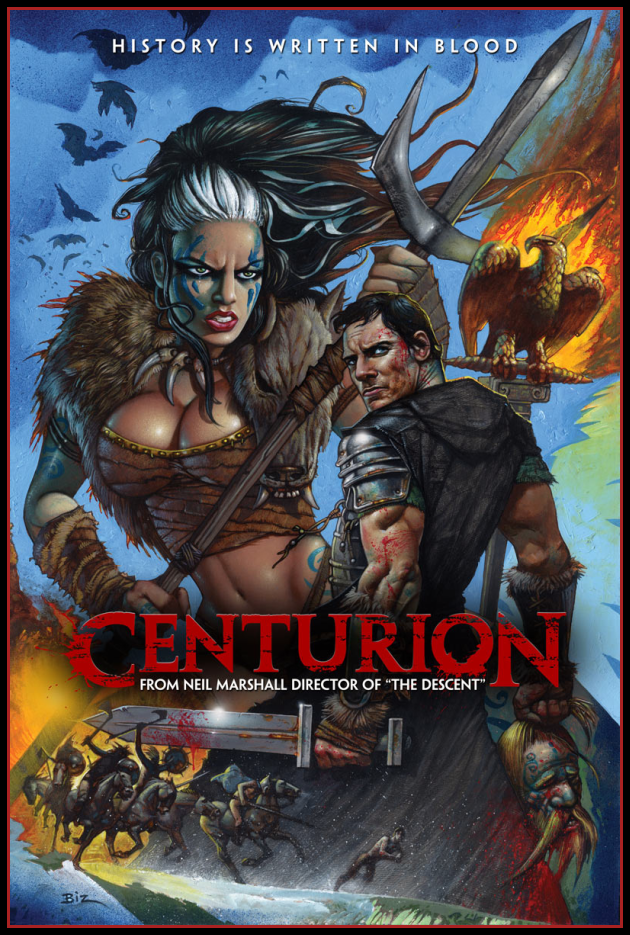
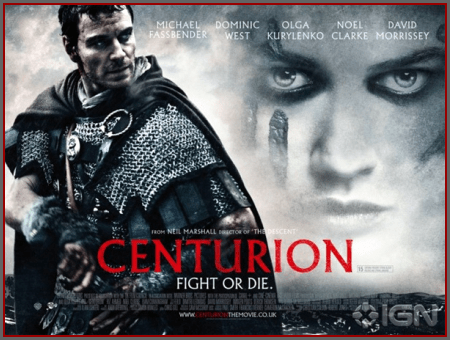
I’ll outright say and admit that one of my favorite filmmakers has to be British-filmmaker Neil Marshall who burst into the scene almost a decade ago with his genre mash-up werewolf film, Dog Soldiers. Since then he has come out with a film every couple years which follows what’s becoming a trademark style of his.He would take a well-worn and used genre and mash it together with a few others to create a film that’s wholly his own. He did this with his follow-up films in The Descent and Doomsday. Now it’s 2010 and we have his latest film and it follows his usual style. Centurion is an adventure, chase and men on a mission film that doesn’t reinvent the genres it’s smashing together but instead embraces their traditions and creates a rip-roaring yarn which moves at a frenetic pace with characters who grow and expose their motivations as the film progresses to it’s bittersweet finale.
Neil Marshall will always be known to fanboys and the action crowd even if the elites of the film industry continues to dismiss the man as nothing more than competent filmmaker. In Centurion he shows that he could work within a traditional sword and sandal story and still show his signature style. We have it’s main character of Roman centurion Quintus Dias (played with a subdued and introspective seriousness by Michael Fassbender) who gets captured by the Picts of Britain during Rome’s occupation of the island. Unlike most Romans captured by the guerilla-warfare conducting Picts, Quintus has learned to speak Pict thus has become a valuable capture. But his loyalty to his Empire and its people dashes the hopes of the Picts ever learning anything from Quintus and decides to play some sport with him as the hunted prey.
It’s during the hunt for Quintus by a band of Pict warriors that he stumbles upon the Roman Ninth Legion led by General Titus Flavius Virilus (Dominic West). Once freed from his captors and hunters, Quintus is more than happy to rejoin his fellow Roman centurions in their hunt to once and for all destroy Pict leader Gorlacon (Urlich Thomsen) and his Pict army. To aid them in their search for this enemy army is the mute Brigantes scout, Etain (played with silent fury by Olga Kurylenko), who knows the lands where the Picts hide and do their hit-and-run raids.
It’s once the whole Ninth Legion has been led into the thick forests by Etain that the trap was sprung with Etain herself the catalyst for what amounts to as the massacre of the Legion. It’s this event which Marshall in his own way tries to explain one of history’s mysteries: The mysterious fate of the Roman Ninth Legion. Historians have never agreed as to why the Legion disappeared from Roman and historical records and Marshall’s film is one theory.
The rest of the film has the handful of the Legion who has survived trying, at first, to free their general from Pict captivity and when that mission fails with deadly results the remaining men who has chosen to follow Quintus try to make a run back to Roman lines. On their heels like a she-wolf leading a pack of wolves is Etain whose thirst for vengeance for what the Romans did to her (raped her as a young child and cut out her tongue in addition to wiping out her family and tribe) pushes her to get these Romans with near-supernatural drive. It’s rare to find a film where the main villain is a woman, but one whose abilities surpasses that of the men she’s hunting and whose motivations make her more than a tad sympathetic to her cause.
Centurion does action well with sequences involving a jump off of a steep cliff and into the river below to last stand inside an abandoned Roman fort. Marshall knows how to stage and shoot these scenes so we never lose sight of where the participants are. Most filmmakers nowadays try to hide their inability to choreography action sequences by using quick cut editing, hand-held camera jittery viewpoints and, at times, just shooting it from a distance. Neil Marshall doesn’t do anyone of these gimmicks and tricks which just shows that while his hybrid style in terms of storytelling might be new and refreshing he still embraces the traditional ways if it serves his films properly.
The acting in this film was quite good from not just its leads in Fassbender and Kurylenko but from everyone. This film’s ensemble cast includes veteran British actors just as Liam Cunningham, Paul Freeman and David Morrissey. Other supporting players such as Imogen Poots, Urlich Thomsen and Dominic West do a great job in the limited roles they’re given. The fact that Kurylenko utters not one word in her scenes yet commands each and everyone she’s in shows just how well Marshall can direct not just action pieces but how to direct his actors in doing their jobs.
This film doesn’t do anything to reinvent the action genre that is it’s foundation, but what it does is show that action films sometimes could be just as good when it’s filmmaker leans on practices from traditions past. Outside of the CGI-blood used to show the brutality of the fights and deaths this film is quite lacking in the CG department. Shot on location in the highlands of Scotland and studios near and around London, Centurion is quite a throwback to the sword and sandal films which dominated the film industry during the late 50’s and most of the 60’s. Marshall’s latest will not win any mainstream awards, but the genre crowd will definitely embrace it as something that will entertain and thus welcome it with cult status.
I have been a huge fan of Neil Marshall. The British filmmaker burst into the genre scene with his cult-classic werewolf-siege flick, Dog Soldiers. He then follows that up with the excellent all-female cast monster mash, The Descent. His third outing was a bit mixed for some, but I definitely had a great time with Doomsday. Marshall really knows the genre he works in and also enjoys staying in it.
His fourth film is a historical thriller set during the Roman occupation of Britain during the 2nd Century A.D. The film was originally called The Ninth Legion during the production, but has since been officially changed to Centurion. The basic premise of the film is Marshall’s telling of the legend of the 9th Legion and their disappearance north of Hadrian’s Wall. He’s made it known that the film will not be historically accurate and wasn’t meant to be. The film will be his way to re-tell the legend of the legion’s disappearance, it’s cause and wrap an action-thriller around it.
Starring in the film are Dominic West, Michael Fassbender (last seen as the British operative Hickox in Inglourious Basterds) and Olga Kurylenko. The film is tentatively dated to be released in the U.K. on April 23, 2010. No set date has been announced for a NA release, but I’m sure it will get one. It better.

 Through the Shattered Lens