Review: Kraven the Hunter (dir. by J. C. Chandor)


Kraven is Sony’s latest attempt to mine its Spider-Man-adjacent characters for cinematic gold, this time taking a stab at Sergei Kravinoff, better known as Kraven the Hunter. Even if you’re going in with rock-bottom expectations set by Morbius or the patchy Venom films, you might find yourself torn between mild intrigue and full-on indifference. The movie doesn’t bomb, but it certainly doesn’t soar either—it lands squarely in the “it’s fine, I guess” territory, buoyed by a handful of positive elements but weighed down by a laundry list of issues.

The film tries to position itself as a darker, grittier entry in Sony’s Spider-Man Universe but ultimately falls flat in several key areas. The movie follows Sergei Kravinoff (Aaron Taylor-Johnson), a man battling his toxic past and violent instincts, trying to define himself apart from his ruthless father, Nikolai (Russell Crowe). While Taylor-Johnson puts in a committed, physical performance and the action sequences deliver some visceral excitement—with brutal fight scenes and a snowy prison breakout standing out—the film struggles to transcend its predictable, shallow narrative.

One of the strongest aspects of Kraven is its commitment to visceral, intense action. The movie doesn’t shy away from bloody, fierce fights, embracing Kraven’s nature as a hunter rather than a hero. Physicality is a highlight here with Taylor-Johnson convincingly portraying the character’s power and agility. Some of the choreography—such as a snow-covered prison escape and a jungle chase—inject adrenaline into the movie, complemented by Russell Crowe’s imposing presence as the domineering father. Ariana DeBose’s Calypso and Alessandro Nivola’s Rhino provide interesting, if underdeveloped, counterparts that add flavor to the otherwise monochrome supporting cast.

However, the film is weighed down by a paint-by-numbers storyline that treads the well-worn path of antihero origin stories without adding fresh insight or emotional texture. The plot feels cliched and forgettable, with many moments so awkward and stilted that the dialogue and narrative flow could easily be accused of being AI-generated—and that accusation wouldn’t be out of place. This mechanical, artificial quality in the script creates a disconnect that makes characters seem like hollow archetypes rather than fully realized people. It’s as if the story was stitched together by a formula rather than human creativity, robbing the film of natural humor, depth, or emotional impact.

The biggest glaring example of this artificiality comes in the odd use of CGI for some of the characters’ facial movements. In particular, a scene with DeBose’s Calypso involved digital manipulation of her mouth and eyes to sync dialogue after filming, creating an uncanny, often distracting effect. This technique, reminiscent of the awkward, jarring movement of digitally animated mouths on still images, recalls the uncomfortable “Annoying Orange” vibe and highlights a troubling overreliance on technology rather than retakes or better production planning. It is a standout low point that further reinforces the impression of a rushed or overly engineered project.

The emotional core of Kraven revolves around the toxic father-son dynamic, which Crowe and Taylor-Johnson approach with convincing intensity, though the writing undermines their efforts with repetitive, obvious lines. The other characters, including Calypso, Rhino, and the Foreigner, suffer from limited screen time and one-dimensional arcs, often serving only to advance the plot mechanically rather than enrich the story. The film’s isolation from the broader Spider-Man universe also makes the stakes feel lower, leaving Kraven’s violent vendetta somewhat directionless and detached from broader consequences.

Visually, the film is inconsistent. While it nails gritty, physical action sequences, the CGI and digital alterations break immersion. The attempt at a darker, more grounded tone battles against these technical missteps and a narrative stuck in early-2000s superhero tropes.

Kraven offers some genuinely brutal action and committed performances but is hamstrung by a formulaic, AI-esque script and distracting technical glitches like the digital mouth-sync. It feels like a film caught between creative ambition and lazy execution, where flashes of potential are overwhelmed by awkward dialogue and uninspired plotting. For fans craving raw action or eager to see a Spider-Man villain on screen, it may be a mildly watchable diversion; for anyone seeking a fully fleshed-out, emotionally engaging story, Kraven is likely to disappoint.
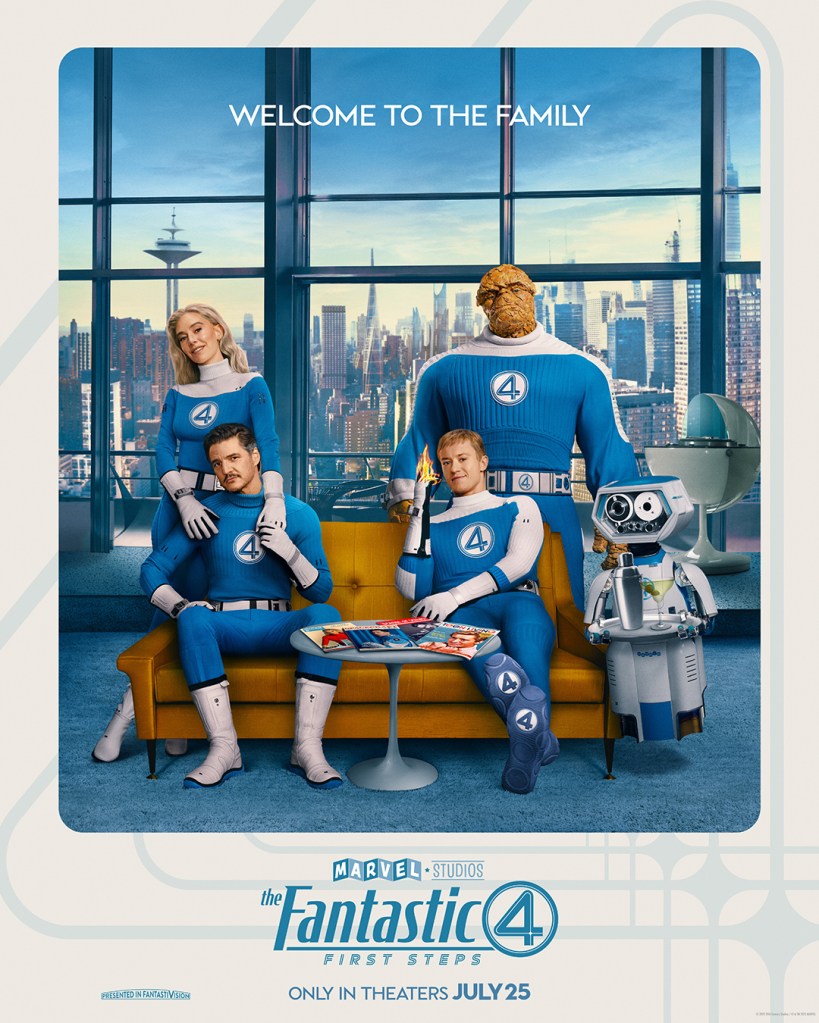
Fantastic Four: First Steps (Official Trailer)


Since Iron Man first hit theaters in the summer of 2008, especially with the post-credits scene of Nick Fury asking Tony Stark if he knew anything about the Avengers Initiative, comic book fans have always been hoping that all the Marvel Comics properties would soon interact with each other. X-Men and Fantastic Four characters were controlled by 20th Century Fox.

This began to change in 2011 with the massive hack of Sony servers which gave the public behind-the-scenes info on Sony execs worried about the Spider-Man film franchise and how it was lagging behind Disney’s Marvel Cinematic Universe under the control of uber-producer Kevin Feige. In just a few years after this hack rumors of Spider-Man being loaned out to become part of the MCU became fact.

The next major shift in fans wanting all of Marvel properties becoming part of the MCU was Disney’s purchase and merger with 20th Century Fox in 2017 and completed in 2019. With just a few small restrictions here and there (Universal still hold the rights to the Incredible Hulk character but allowed Disney to the character), the MCU was now pretty much complete.

The first thing fans wanted was a new take on Marvel Comics’ first family: The Fantastic Four.

There’s been several attempts to put the Fantastic Four on the big-screen. From the 1994 unreleased Roger Corman low-budget film to the three films when 20th Century Fox was still a separate studio, fans never really bought into those iterations. But now that the first family was back under Marvel Studios control, especially with Kevin Feige as producer, fans were once again hopeful.

The first official trailer is now out and it looks like it will lean heavily on the Fantastic Four’s 1960’s origins right down to the retro-futuristic design and theme. How the film will explain where the team has been during the MCU timeline will be a narrative that a team of screenwriters and director Matt Shankman will have to navigate.

Fantastic Four: First Steps arrives in theaters on July 25, 2025.

Daredevil: Born Again – Official Trailer (Disney+)


The first official trailer for the return of Daredevil to the small screen has finally been released by Marvel Television (a part of Marvel Studios). Daredevil: Born Again will finally and officially be the homecoming of the live-action Daredevil character that many fans have been clamoring for. Disney is finally embracing the Netflix Marvel shows as part of the MCU (they ignored the ABC/Netflix Marvel shows like they were something one found under their shoes).

Charlie Cox is back as Matt Murdock aka Daredevil, The Man With No Fear. Vincent D’Onofrio is also back as his arch nemesis Wilson Fisk aka The Kingpin. Pretty much the rest of the cast of the Netflix Daredevil show and its many spin-offs are back, as well.

There was some major fears and trepidations from fans of those shows that Disney will water down the mature-aspect of those shows in order to have them on Disney+. The fact that Kevin Feige and his braintrust at Marvel Studios made a major overhaul of the shows creative team six-episodes in of the shows production to start anew tells me that the initial plan to make the show more lighthearted didn’t so well when reviewed by the powers-that-be. So, after some many months of major reshoots, change in showrunner and directors, we now see a taste of that pivot away from the studio’s original plan.

Daredevil: Born Again trailer channels the original Netflix series’ serious and mature tone. Even the fear that the violence of the original series would be water-downed could be put to rest. Daredevil: Born Again definitely is for mature-audiences only.

The Marvel Cinematic Universe hasn’t has many hits since the end of Avengers: End Game, but this trailer (hopefully just a hint of what to expect when the show comes out) is a right step in the direction of righting the MCU ship, because the pop-culture landscape is much better when its tentpole franchises are working perfectly on all cylinders rather than not.

Great Moments In Comic Book History #36: Marvel Publishes Star Wars #1


As strange as it seems now, the Star Wars comic book series nearly didn’t happen.

In 1975, while Star Wars was still in pre-production, George Lucas approached DC Comics and offered them the chance to adapt his upcoming film into a comic book.  When DC turned Lucas down, Lucasfilm’s publicity supervisor, Charles Lippincott, Jr., took the project to Marvel Comics.

At first, Stan Lee turned down the project because he didn’t want to commit to a series before the film itself had been completed.  (Again, as strange as it sees now, Star Wars was not originally expected to become the commercial hit that it did.)  Lippincott, still trying to set up a series somewhere, then tried to recruit Roy Thomas to write it.  After he was allowed to look at a production sketch of the Cantina scene, Thomas realizes that Star Wars was tailor-made for a comic book adaptation.  Thomas arranged for Lippincott to get a second meeting with Stan Lee and, this time, the comic book adaptation was greenlit.

Allowed to look at an early draft of the script and also to visit the set during shooting, writer Roy Thomas and artist Howard Chaykin collaborated on a six-issue adaptation of the movie.  The series actually came out before the film.  The first issue was released on April 12th, a full month before the movie was released into theaters.  Along with Alan Dean Foster’s novelization, the comic book series play a huge role in publicizing a film that many were expecting to be dismissed as just being a B-movie for kids.

Because no one expected the film or the comic book series to be a huge success, Marvel was able to negotiate a very favorable contract with Lucasfilm, one that Marvel almost complete artistic control over the comic and which also allowed Marvel to use the Star Wars character with no royalty payments until the series sold 100,000 issues.  When the success of the film led to the comic book become the industry’s top seller from 1977 through 1979, the financial windfall saved Marvel from having to file for bankruptcy.

For many future Star Wars fans, their first exposure to characters like Luke Skywalker and Darth Vader came in April of 1977 when they looked at the magazine rack in their local store and saw the now-iconic cover of Star Wars #1.

After reading about how Luke came to own to droids with a secret, readers could then turn to the back cover and learn how to improve their jump shot.

Previous Great Moments In Comic Book History:

  1. Winchester Before Winchester: Swamp Thing Vol. 2 #45 “Ghost Dance” 
  2. The Avengers Appear on David Letterman
  3. Crisis on Campus
  4. “Even in Death”
  5. The Debut of Man-Wolf in Amazing Spider-Man
  6. Spider-Man Meets The Monster Maker
  7. Conan The Barbarian Visits Times Square
  8. Dracula Joins The Marvel Universe
  9. The Death of Dr. Druid
  10. To All A Good Night
  11. Zombie!
  12. The First Appearance of Ghost Rider
  13. The First Appearance of Werewolf By Night
  14. Captain America Punches Hitler
  15. Spider-Man No More!
  16. Alex Ross Captures Galactus
  17. Spider-Man And The Dallas Cowboys Battle The Circus of Crime
  18. Goliath Towers Over New York
  19. NFL SuperPro is Here!
  20. Kickers Inc. Comes To The World Outside Your Window
  21. Captain America For President
  22. Alex Ross Captures Spider-Man
  23. J. Jonah Jameson Is Elected Mayor of New York City
  24. Captain America Quits
  25. Spider-Man Meets The Fantastic Four
  26. Spider-Man Teams Up With Batman For The Last Time
  27. The Skrulls Are Here
  28. Iron Man Meets Thanos and Drax The Destroyer
  29. A Vampire Stalks The Night
  30. Swamp Thing Makes His First Cover Appearance
  31. Tomb of Dracula #43
  32. The Hulk Makes His Debut
  33. Iron Man #182
  34. Tawky Tawny Makes His First Appearance
  35. Tomb of Dracula #49

Here’s The Trailer for Guardians of the Galaxy Volume 3!


To be honest, I’ve been a little bit bored with the MCU lately.  I mean, the Spider-Man films were fun and WandaVision was certainly better than I was expecting it to be but, for the most part, it’s been hard to shake the feeling that, post-Endgame, the MCU has lost a bit of its spark.  Endgame was such a logical place to stop that everything that’s come after it has felt a bit superfluous.

Still, if anyone can respark my interest in the MCU, it would be James Gunn and the Guardians of the Galaxy.  And, fortunately, they’ve got a new film coming out next year!  Here’s the trailer, which seems to promise that the Guardians will continue to poke subtle fun at the conventions of the MCU while also using those conventions to their advantage.

At the very least, it should have a good soundtrack.


Do Comics Publishers Need Readers Anymore? Part One


It’s easy to forget now, but when Marvel Studios launched in 2008, the move was met with a fair amount of then-understandable skepticism — after all, not only had the publisher sold away the film and TV rights to most of its “A-list” characters in a series of bad deals largely brokered by Smilin’ Stan Lee himself, they’d also sold off a fair number of “B-listers” as well : Spider-Man was unavailable for them to use, as were the X-Men, but so were also-rans such as Daredevil and The Punisher. The cupboard wasn’t bare, by any means, but properties such as Iron Man and Captain America — while they certainly had their fans — were nothing the major studio players were all that interested in. It’s fair to say, in fact, that at the time of the MCU’s genesis, the most bankable character under the company’s control was The Hulk, the rights to whom had reverted back to Marvel after Universal declined to produce a follow-up to Ang Lee’s 2003 box office disaster featuring the big green guy.

My, how times change. Nearly 15 years on, not only are Iron Man, Captain America, Daredevil, and The Punisher more popular with movie-going audiences than Batman and Superman, people are forking over hefty monthly subscription fees to Disney Plus to watch shows featuring such formerly-bottom-tier characters as Moon Knight, The Vision, Winter Soldier, and Loki.  Hell, even joke properties like Ant-Man have become box office gold. Odds are pretty good that, at this point, Marvel would even turn a hefty profit off the likes of Alpha Flight or Damage Control, so insatiable is the public’s appetite for their product.

All of which, believe it or not, is my long-winded way of getting back to the title of this short series and assuring you, dear reader, that the question I’m asking is NOT a rhetorical one — at least not in all cases. Admittedly, there are comics publishers that clearly and obviously DO need readers — in fact, we’ve spilled a generous amount of digital ink on this very site examining how the burgeoning YA market has forever altered the publishing strategy of one company, in particular, as they appear to be abandoning their artistic principles wholesale in an attempt to chase down a readership that may not even be there for the taking at this point and trust me when I say that what’s true for Drawn+Quarterly is just as true for Top Shelf, although the scale is vastly different given the latter puts out five or six books per year while the former puts out 30-40. So, yeah, SOME publishers still rely on people BUYING, READING, and maybe even LIKING their books — but what about everyone else?

Certainly, Marvel’s success in the “wider world” hasn’t translated into any sort of appreciable sales bump for their printed product — the comics market as a whole is slightly up compared to where it was a few years ago, and up a bit more than that if we cast our sights back a decade or so, but the idea that a comic like Thor only moves a thousand or two more copies a month than it did BEFORE three multi-million-dollar blockbusters were extrapolated from it has to be considered something of a disappointment no matter how one chooses to look at it. Ditto for Spider-Man. And The X-Men. And Doctor Strange. And — well, all of ’em. Clearly, then, some sort of fundamental disconnect exists between the “comics crowd” and the “movie crowd,” even when it comes to the EXACT SAME characters and content.

In fact, the two markets are so completely divorced from one another at this point that Marvel and DC aren’t even really bothering with one of the oldest tricks in the book anymore : launching a new series to coincide with the release of a big-budget film. When DC did this back in 1989, releasing the new Batman series Legends Of The Dark Knight at roughly the same time as Tim Burton’s Batman film, the results were spectacular, with LOTDK #1 becoming the biggest-selling comic of the year and the biggest-selling first issue of ANY comic in almost 50 YEARS. By the time 2012 rolled around and Marvel released a new Avengers #1 within weeks of Joss Whedon’s The Avengers movie, though, no one gave a shit and the series fizzled out within a few short years — only to be replaced by ANOTHER new Avengers #1 just in time for the Avengers : Age Of Ultron flick. That title was even shorter-lived, however, and by the time the third and fourth Avengers films rolled around, Marvel had thrown in the towel on the whole concept of cashing in quick with new comics to accompany new movies.

Obviously, then, REALLY popular films don’t translate into comic book sales, but the reverse is also true : REALLY popular comics don’t necessarily lead to box office fortunes. DC has learned this the hard way more than Marvel has, of course, with top-selling titles like Watchmen and top-selling storylines like the death of Superman failing to catch fire with theater-goers (although the widely-held view that Batman V. Superman‘s $900 million box office take represented a “disappointment” may have more to do with a successful “whisper campaign” directed against both the film and its fortunes than it does with financial realities — I mean, come on, I know we live in absurd times, but the idea that a movie that rakes in just under a BILLION DOLLARS is a “flop” is just plain nuts), but in its own way this is just further proof of the argument that I’m laying out, is it not? Comic book CHARACTERS are more popular than ever, but comic books THEMSELVES are almost becoming surplus to requirements, while comic book SALES offer nothing by way of a “leading indicator” as to what will or won’t be popular with the broader, entertainment-starved public.

From a purely logical point of view, nothing about this makes any real sense, of course, but logic also dictates that the super-hero movie craze probably should have died out years ago, yet here we are. As is the case with the multinational banks, then, it appears as though we’ve entered a period of history where at least Marvel, and maybe even DC, are quite simply “too big to fail,” and we’re going to be stuck with them for the rest of our fucking lives — but how long will they even BOTHER sticking with an archaic “delivery system” for their stories? 

Already Marvel Unlimited, the company’s digital comics platform, is more or less DARING readers to stick with printed periodicals, given they offer almost everything in the publisher’s vast back catalogue for something like six or seven bucks a month and have gone from having a one-year lag between print and digital availability to a mere a six months, and now just THREE months, while DC is doing their level best to chase off what readers they have left by slowly rolling out an absurdly high $4.99 cover price on more and more of their books. Factor in the inherently limited reach of so-called “direct market” distribution, and you honestly have to wonder if either of these companies even CARES about selling comics anymore, because it sure doesn’t look like it. Sure, they need stories to make movies out of, but more and more often what we see on the big screen bears little to no resemblance to any printed-page antecedent — original screenplays are taking the place of adapted ones, origins of characters are radically altered, entire modern-day mythologies are scrapped in favor of new, POST-modern ones. Hell, if you look at the comic book version of Aquaman and the cinematic version, about all they have in common is a name.

Admittedly, the demise of the monthly “floppy” has been predicted for years now and it has yet to come to pass, but I’m not really here to echo that death knell — Marvel and DC will continue to publish comics for as long as they FEEL like publishing comics. They simply don’t seem concerned about SELLING too many of them at this point, and aren’t going to invest any real capital into boosting their circulation figures. They need SOME readers, sure — but evidently not a whole lot of ’em. What they DON’T need is the publicity black eye they’d get from shutting down their publishing operations, so as long as they can run things on the cheap (and we all know they do), and make a few bucks’ profit at the end of the day, their parent companies will keep tolerating their continued existence as a necessary hassle.

So — do Marvel and DC need readers? I guess so. At least a few — and at least for now. What’s perhaps MORE surprising, though, is that there is a veritable gaggle of middle-rung publishers who don’t seem to  need ANY readers AT ALL to stay afloat — but we’ll get into that next time.

***************************************************************

This essay originally appeared on my Patreon site, and is presented here as part of a craven week-long event to gin up interest in getting YOU, dear reader, to subscribe to said site.

And, really, why not? You get three new posts on the worlds of comics, films, television, literature, and politics every week, and subscribing costs as little as a buck a month. Check it out over here : https://www.patreon.com/fourcolorapocalypse

Great Moments In Comic Book History: Zombie!


Back in 1954, Marvel Comics was known as Atlas and, like most publishing companies, it was putting out its share of horror-themed comics.  In those days, before Fredric Wertham declared that comic books were destroying America’s youth and the industry sought to protect itself by creating the Comics Code Authority, comic books were full of stories about monsters, killers, and macabre revenge.

Published by Atlas, Menace was one of many horror comics to populate the nation’s newsstands in the 50s.  It was an anthology series and today, it’s best remembered for featuring work from Golden Age artists like Bill Everett and George Tuska.  The credited writer for the first eight issues was a young Stan Lee, decades away from becoming the public face of Marvel Comics.

Menace only ran for 11 issues but during that time, it introduced one character who would later make a comeback and become a part of the Marvel universe.  That character was The Zombie!

Zombie was introduced in the top story of Menace #5 (July 1953).  At the time, he had no name and was given no past, beyond having a daughter.  Living in the swamps of Louisiana, he is controlled by a madman who orders the Zombie to mug someone in New Orleas.  The Zombie goes down to the French Quarter (where, humorously, no one notices anything strange about him) but his attempt at mugging is thwarted by a policeman.  The Zombie returns home, where his angry master orders the Zombie to attack the young woman that the master is in love with.  His master wants to rescue the young woman and win her love.  However, the woman reminds the Zombie of his daughter so the Zombie strangles his master instead!

It was a typical horror comic stuff, not quite as graphic as what EC was producing but still more macabre than what Marvel would later be known for.  Though Menace only lasted for 6 more issues and the Comics Code would temporarily put an end to the horror comics boom, the Zombie would eventually return, with a slight makeover.

In the 1970s, when the Comics Code Authority finally started to loosen up, Marvel returned to publishing horror with vengeance.  Along with comic books featuring Dracula, Frankenstein’s Monster, and Werewolf By Night, Marvel also published black-and-white horror magazines, which were not regulated by the Comics Code and could therefore include graphic violence, tame profanity, and cleavage, lots and lots of cleavage.  Among those magazines was Tales of the Zombie.

The Zombie returned, now with longer hair and a backstory that established that he was once a millionaire named Simon Garth until his former gardener (his master from the original story) put him under a voodoo curse.  The first issue of Tales of the Zombie featured an extended retelling of the first Zombie story.  The subsequent issues followed the undead Simon as he haunted the bayous of Louisiana and fought other supernatural creatures.  It turned out that there wasn’t really much that could be done with a mindless zombie and Tales of the Zombie only ran for 10 issues, one less than Menace.  In 1975, Tales of the Zombie ended with Simon Garth finally reaching his final resting place and dying a second time.

But you know Marvel!  No one, not even a zombie, dies forever.  Simon Garth has since been resurrected, though he’s only been used sparingly.  There’s not much that can be done with him but his first appearance in Menace remains popular and has since been included in many horror comic anthologies.

You can’t keep a good zombie down.

Menace (Vol.1 #5, July 1953)

“Zombie!”

  • Writer — Stan Lee
  • Artist — Bill Everett
  • Inker– Bill Everett
  • Letterer — Bill Everett

Previous Great Moments In Comic Book History:

  1. Winchester Before Winchester: Swamp Thing Vol. 2 #45 “Ghost Dance” 
  2. The Avengers Appear on David Letterman
  3. Crisis on Campus
  4. “Even in Death”
  5. The Debut of Man-Wolf in Amazing Spider-Man
  6. Spider-Man Meets The Monster Maker
  7. Conan The Barbarian Visits Times Square
  8. Dracula Joins The Marvel Universe
  9. The Death of Dr. Druid
  10. To All A Good Night

Marvel Studios Invites You Back To The Movies


Due to the Pandemic, 2020 was the first year since 2009 not to see the release of any new Marvel films. Many people wondered if the MCU would be able to survive taking a year off. Would people still care about or even remember the Marvel movies without having a new one released every four months? With so many of the MCU’s most popular characters either dead or retired by the end of Avengers: Endgame, would viewers in a post-Pandemic world still flock to theaters to see what Marvel’s fourth phase had to offer?

The positive responses to Disney+’s WandaVision and Falcon and the Winter Soldier would seem to suggest that the answer is yes but the first real test will be when Black Widow, Shang-Chi, The Eternals, and the latest Spider-Man film are released later this year. Black Widow is the first solo movie of one of the Marvel’s most popular characters and Spider-Man is Spider-Man so both are expected to be blockbusters. The Eternals are less well-known but, because their movie was directed by Nomadland‘s Chloe Zhao, expectations are high. Shang-Chi is probably the biggest question mark but the trailer generated a lot of enthusiasm.

With Black Widow just a few months away from opening, Marvel Studios today released a sizzle reel to remind viewers of what’s coming out. After a brief look at Marvel’s past, the trailer provides footage of Black Widow, Shang-Chi, and, for the first time, The Eternals. It ends with a list of upcoming Marvel films, including the newly titled Black Panther: Wakanda Forever and The Marvels. (The Marvels is the sequel to Captain Marvel, presumably titled to remind people that there is more to the film than Brie Larson.) Finally, things end with a hint that The Fantastic Four will soon be joining the Marvel Cinematic Universe.

Face Front, Marvelites!: RIP Stan “The Man” Lee


gary loggins's avatarcracked rear viewer

I know it’s popular these days among a certain coterie of Comic Book Buffs to bash Stan Lee’s contributions to the medium in favor of artist/collaborators Jack Kirby and Steve Ditko . You’ll never find me in that crowd. Not ever. I learned to read (with the help of my dad) at the tender age of three through comics… simple stuff at first, funny books like YOGI BEAR and BEETLE BAILEY. As I progressed into the realm of superheroes, my vocabulary improved thanks to writers like Gardner Fox, John Broome, and especially Stan Lee, who took me to Asgard and Outer Space with Shakespearean-styled dialog and college-level words that made me keep a dictionary always at the ready. Screw you, Dr. Frederic Wertham!!

The Titanic Trio: Stan Lee, Jack Kirby, Steve Ditko

Stanley Martin Lieber was born December 28, 1922, the eldest son of immigrant parents (his younger sibling Larry…

View original post 914 more words

Rest In Peace, Stan Lee


In 1939, a 17 year-old aspiring writer named Stanley Lieber landed a job at Timely Comics in New York City.

At first, Stanley’s job was just to get coffee, make sure that the inkwells were full, and occasionally proofread copy.  In 1941, when the third issue of Captain American Comics needed a text story so that it could be shipped as a magazine instead of just as a comic book, Stanley was assigned the job.  Because the young man had an ambition to some day write the great American novel and felt that being associated with comic books would make it more difficult to convince publishers to take him seriously, Stanley Lieber wrote the story under a pseudonym, Stan Lee.

And the rest, as they say, is history.  Timely eventually became Atlas and then Atlas was rebranded Marvel and, through it all, Stan Lee remained at the company, providing continuity from one decade to another.  Ironically, for someone who originally feared being too associated with comic books, Stan Lee went on to become not only the face but, for several decades, the voice of Marvel Comics.

Among comic book historians, Stan Lee is an often divisive figure.  By his own admission, Lee loved the spotlight and it can be argued that he unfairly overshadowed his publicity-shy colleagues.  To solely give Lee the credit for creating characters like Spider-Man and the Fantastic Four does a disservice to the work of artists and writers like Jack Kirby, Steve Ditko and so many others.  As a company, Marvel has a deserved reputation for not treating its artists with the respect or the financial compensation that they deserved.  How much of the responsibility for any of that falls on Lee’s shoulders is a controversial subject and will continue to be so for years to come.

What isn’t controversial was that,  whether he hitting the college lecture circuit, recording the introductions for the animated Spider-Man and His Amazing Friends TV show, or giving interviews with publications like Playboy and Rolling Stone, there was never a bigger cheerleader for comic books than Stan Lee.  At a time when DC comics was busy imitating the campy Batman TV show, Marvel Comics were, in their own way, dealing with world in which their readers lived.  From the platform of Stan’s Soap Box, Stan Lee spoke against racism and prejudice.  When the U.S. Department of Health, Education, and Welfare approached Lee to do a story about the dangers of drug abuse, Lee did it in defiance of the Comic Codes Authority.  Three issues of Spider-Man were released without the CAA’s seal of approval, opening the way for all comic books to deal with real world issues.

Stan Lee as Mr. Fantastic in What If #11 (as drawn by Jack Kirby)

For many comic book readers who might have otherwise felt that they didn’t fit in, Stan Lee said, “Here, you do belong.”  Today, it might seem easy to poke fun at Lee’s endless enthusiasm, his cries of “excelsior,” and the way that he called Marvel readers “true believers.”  But for many readers,  there was much comfort to be found in Lee’s corny sayings.  Lee had a way of making readers feel as if they were all in it together.  Whether you were a true believer or a member of the Merry Marvel Marching Society, you belonged.  For kids who felt like outsiders, Lee was there to tell them that everyone was capable of being a hero, whether they had super powers or not.

In his twilight years, Lee was rediscovered by a new generation of fans.  Spotting Lee’s trademark cameos became one of the pleasures of watching any Marvel film.  Sometimes, he was a postman.  In Deadpool, he worked in a strip club.  More than once, he was a janitor.  I once saw him driving a bus.  In the second Guardians of the Galaxy film, he was sitting on the moon and telling the Watchers about his adventures on Earth and it just seemed like he was right where he belonged.

Stan Lee passed away today at the age of 95.

I knew I’d have to write this some day but I always hoped it wouldn’t be any time soon.

Rest in Peace, Stan Lee.