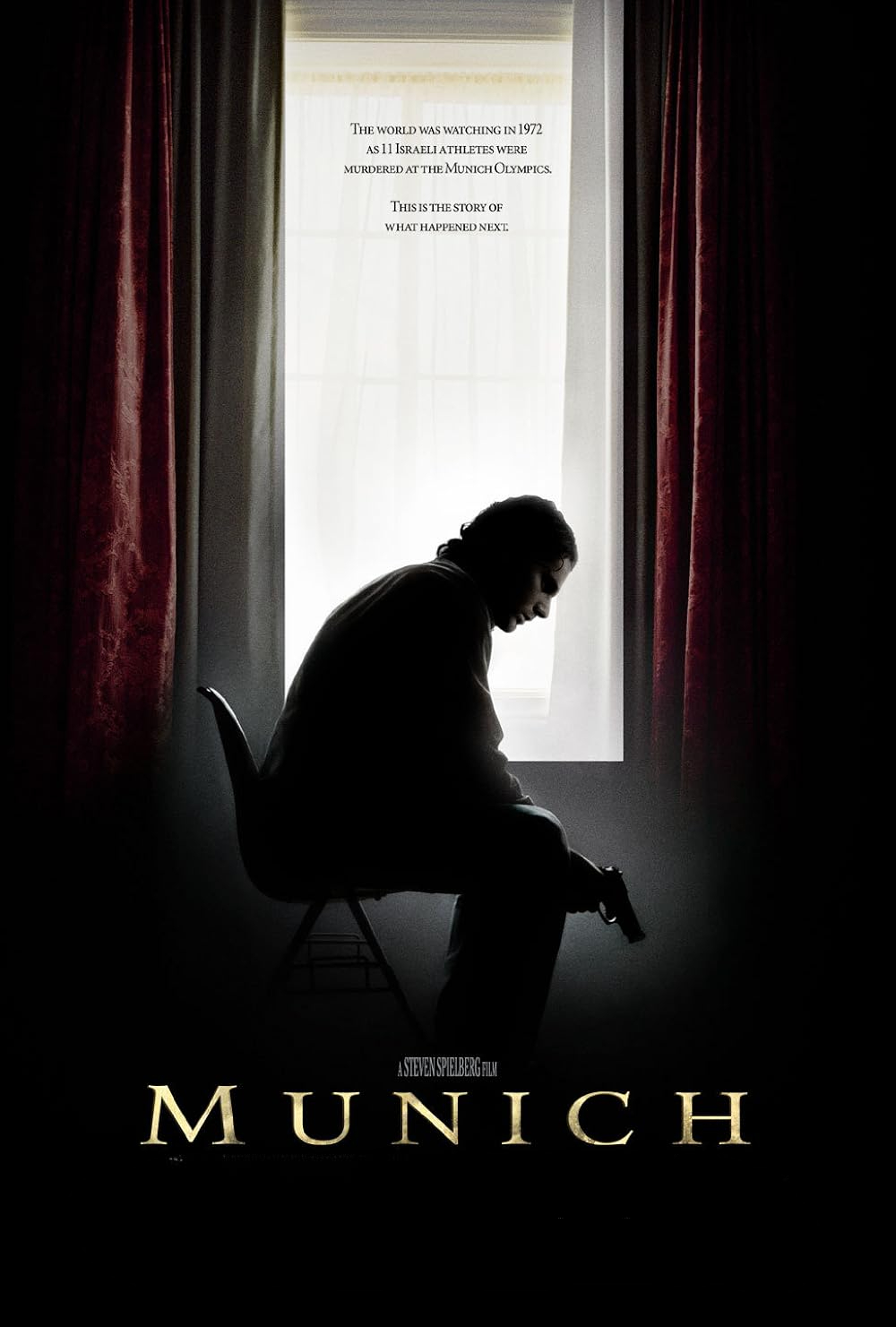
Review: Munich (dir. by Steven Spielberg)


If you’re looking for a comfortable, easily digestible thriller with clear-cut heroes and villains, Munich is going to be a tough sit. This 2005 film, now two decades old, finds Steven Spielberg operating at a peak level of craft, but it’s a cold and angry kind of mastery. It’s a dense, paranoid, and deeply unsettling historical drama that feels less like a movie and more like a wound that’s been picked at for years. Based on the book Vengeance, the film dramatizes the secret Israeli mission, “Operation Wrath of God,” to hunt down and assassinate the Palestinian militants responsible for the massacre of 11 Israeli athletes at the 1972 Munich Olympics. But here’s the kicker: this isn’t an action movie about a bunch of spies getting revenge and feeling good about it. Spielberg isn’t making a war film about who is right and who is wrong. Munich is a film about the ugly, corrosive nature of state-sponsored violence and the way it eats away at the soul of everyone involved. It’s a thriller, sure, but the tension isn’t built around whether the team will succeed, but around the psychological and moral cost of their success. There’s no triumph here, no victory lap—just the sinking realization that for every target they eliminate, the wound in the world only seems to get deeper.

The movie is anchored by a phenomenal performance from Eric Bana as Avner, the team’s leader. He’s a man of deep patriotism, handpicked for this mission by Prime Minister Golda Meir (Lynn Cohen) herself, but he’s completely unprepared for the psychological toll the job will take. He’s joined by a fantastic ensemble that includes Daniel Craig as a brutal and cold-blooded South African operative, and Mathieu Kassovitz as a toymaker turned reluctant bomb expert. They’re a tight, desperate group, and as they move from one European capital to the next, meticulously planning and executing assassinations, the initial sense of righteous duty slowly curdles into paranoia, guilt, and nihilism. The film doesn’t shy away from the violent acts, but it presents them not as a cause for celebration, but as messy, brutal affairs that often have unintended, horrific consequences—like a scene where a bombing intended for a target gets dangerously close to an innocent child. You can feel the weight of every decision pressing down on these men, and Spielberg makes sure you sit with that discomfort rather than brushing past it for the sake of pacing.

One of the most crucial—and still controversial—aspects of Munich is its willingness to humanize the Palestinian perspective. This isn’t a film that paints the Black September terrorists as caricatures of evil. In one of the film’s most powerful scenes, Avner and a PLO member named Ali (Omar Metwally) engage in a tense, philosophical debate about their respective claims to the land. Avner warns that the world will see the Palestinians as “animals” for their actions, to which Ali chillingly replies, “Yes, but then the world will see how they’ve made us into animals. They’ll start to ask questions about the conditions in our cages.” The film doesn’t excuse the terrorism, but it forces the audience to understand the desperation and statelessness that fuels it, presenting a horrifying symmetry where both sides see themselves as victims fighting for survival. It’s a gutsy move for a mainstream Hollywood director, especially in the mid-2000s, and it’s precisely that moral even-handedness that made the film so divisive upon release—and still makes it so damn compelling today.

And that’s where this film connects to a larger, darker moment in Spielberg’s career. Munich was released at the tail end of what some critics have rightly called his “Post-9/11 triptych,” alongside Minority Report (2002) and War of the Worlds (2005). These aren’t just three random films. They are all steeped in a profound sense of paranoia and fear of the outsider that was so prevalent in America after 9/11. Minority Report imagines a society where you’re arrested for a crime before you commit it; War of the Worlds literalizes the fear of a sudden, devastating attack on American soil; and Munich transposes those anxieties onto the Israeli-Palestinian conflict. Spielberg used this triptych to explore the American psyche’s newfound sense of vulnerability and its willingness to embrace extreme, morally ambiguous measures—like torture and preemptive strikes—in the name of security. It was a director grappling with a changed world, and Munich, with its focus on a secret, government-approved assassination squad, feels like his most potent and cynical entry in the series. You can almost hear the echo of post-9/11 rhetoric in every scene, as if Spielberg was holding up a dark mirror to his own country’s creeping acceptance of extrajudicial killing.

But the bleakest part of Munich is how it transcends even that specific historical and political moment. The film relentlessly returns to the theme of the “violence loop.” The team assassinates one target, and he is immediately replaced by someone even more radical. They get a hit, and there’s a retaliatory bombing. It’s a terrifyingly accurate depiction of what has continued to happen for decades after the film’s events. Avner realizes that their entire operation, the endless cycle of state-sponsored revenge, is ultimately pointless for achieving peace. It’s a desperate, bloody game of whack-a-mole that only ensures the conflict continues in perpetuity, a cycle of vengeance that simply feeds on itself. As the film shows, and as is still plain to see today, the violence doesn’t end when the “list” is completed; it just regenerates. The final scenes, where Avner finds himself unable to even sleep in his own bed, watching his young daughter with a haunted look, drive home that the real casualty of state-approved assassination isn’t just the targets—it’s the humanity of the people pulling the trigger. He’s won the tactical war, but he’s lost every single battle that actually mattered.

Ultimately, Munich is a masterclass in filmmaking that offers no easy answers, and watching it today, with the current geopolitical landscape looking more fractured than ever, its relevance hasn’t faded one bit—if anything, it’s sharper and more painful now than it was in 2005. The same arguments, the same grievances, the same bloody score-settling between Israel, the Palestinians, and their Arab allies are still playing out in real time, with no end in sight. And yet, for all its brutal honesty, the film also exposes a tragic truth: this movie, like so much of the discourse surrounding the conflict, will probably only deepen the divide between the two groups watching it, as each side can point to it and say, “See? That’s what they do to us. That’s our pain validated.” It becomes another piece of ammunition in an endless argument rather than a bridge toward understanding. The brilliant cinematography from Janusz Kaminski and the chilling, minimalist score from John Williams only add to that oppressive, paranoid atmosphere, making it not a film that will make you feel good about anything, but one that will make you think—and perhaps that’s exactly why it remains so damn relevant decades later.

So what’s the way out? The film doesn’t give you a manual, but it does whisper a desperate question between its frames: can either side actually step back from the brink long enough to see the loop they’re both trapped in? Because the violence loop isn’t a natural disaster—it’s a human creation, and what humans build, humans can theoretically unbuild. But that would require something infinitely harder than pulling a trigger or planting a bomb—it would require acknowledging that your own righteous suffering doesn’t cancel out the other side’s legitimate pain, it would require looking at the face of your enemy and seeing not a monster but a person who also loves their children and believes they’re fighting for survival. The film dares to suggest that the only real break in the cycle might come from exhaustion, from the sheer soul-crushing fatigue of burying one more generation, or from a moment of radical, almost insane empathy that makes someone say “enough” before the next retaliation.

Spielberg doesn’t offer that moment in the movie, because he knows it hasn’t happened yet in real life—Munich isn’t a prescription; it’s an autopsy. Every few years, when the news cycle inevitably rolls around to another flare-up in that tortured corner of the world, this movie comes back to mind not as a prophecy, but as a painfully accurate diagnosis. It’s a powerful, haunting reminder that the echo of old violence is never truly silent, and that in the long run, vengeance is often a debt that can never be repaid. If you go in expecting a straightforward revenge fantasy, you’ll walk out exhausted and conflicted. But if you go in ready to wrestle with some of the ugliest questions about justice, morality, and state power, then Munich will stick with you like a splinter you just can’t dig out—and maybe, just maybe, that splinter is the first tiny crack in the loop that someone, someday, will have the courage to break.

Daredevil: Born Again – Official Trailer (Disney+)


The first official trailer for the return of Daredevil to the small screen has finally been released by Marvel Television (a part of Marvel Studios). Daredevil: Born Again will finally and officially be the homecoming of the live-action Daredevil character that many fans have been clamoring for. Disney is finally embracing the Netflix Marvel shows as part of the MCU (they ignored the ABC/Netflix Marvel shows like they were something one found under their shoes).

Charlie Cox is back as Matt Murdock aka Daredevil, The Man With No Fear. Vincent D’Onofrio is also back as his arch nemesis Wilson Fisk aka The Kingpin. Pretty much the rest of the cast of the Netflix Daredevil show and its many spin-offs are back, as well.

There was some major fears and trepidations from fans of those shows that Disney will water down the mature-aspect of those shows in order to have them on Disney+. The fact that Kevin Feige and his braintrust at Marvel Studios made a major overhaul of the shows creative team six-episodes in of the shows production to start anew tells me that the initial plan to make the show more lighthearted didn’t so well when reviewed by the powers-that-be. So, after some many months of major reshoots, change in showrunner and directors, we now see a taste of that pivot away from the studio’s original plan.

Daredevil: Born Again trailer channels the original Netflix series’ serious and mature tone. Even the fear that the violence of the original series would be water-downed could be put to rest. Daredevil: Born Again definitely is for mature-audiences only.

The Marvel Cinematic Universe hasn’t has many hits since the end of Avengers: End Game, but this trailer (hopefully just a hint of what to expect when the show comes out) is a right step in the direction of righting the MCU ship, because the pop-culture landscape is much better when its tentpole franchises are working perfectly on all cylinders rather than not.

Daredevil Has No Need For Iron Suits or Magic Hammers


daredevil

“I accept your conviction. The lone man who thinks he can make a difference.” — Wilson Fisk

Today we saw the release of the official trailer for Netflix and Marvel Television’s first of five series based on characters from the Marvel Universe. Daredevil will be the first out of the gate and it looks to darken things a bit in the Marvel Cinematic Universe by bringing to the small screen one of it’s street-level heroes.

Daredevil (aka Matt Murdock) will soon be joined by Jessica Jones, Luke Cage and Iron Fist in their own web series on Netflix before teaming up for the Defenders series.

Under the guiding hands of showrunner (and Whedon alum) Stephen S. DeKnight, Daredevil will soon be available for bingewatchers everywhere on April 10, 2015.

Trailer: Daredevil


daredevil“Bless me father for I have sinned.” — Matt Murdock

Marvel has pretty much been dominating the big-screen with it’s yearly event offerings. 2015 will not be an exception with Avengers: Age of Ultron set for a summer release expected to rake in the box-office by the money bins. Now, Marvel has set it’s site on the small-screen with it’s first Netflix Original Series that will be the first link in a five series set that will culminate in a team-up series called the Defenders.

This first link will be a new, and hopefully better take, on the street-level superhero Daredevil aka the Man With No Fear. The blind lawyer by day and vigilante by night whose blindness since childhood has helped him developed the rest of his senses beyond human levels. We shall not speak of the film adaptation starring Ben Affleck over ten years ago.

Marvel’s Daredevil will release all 10-episodes on Netflix this April 10, 2015.

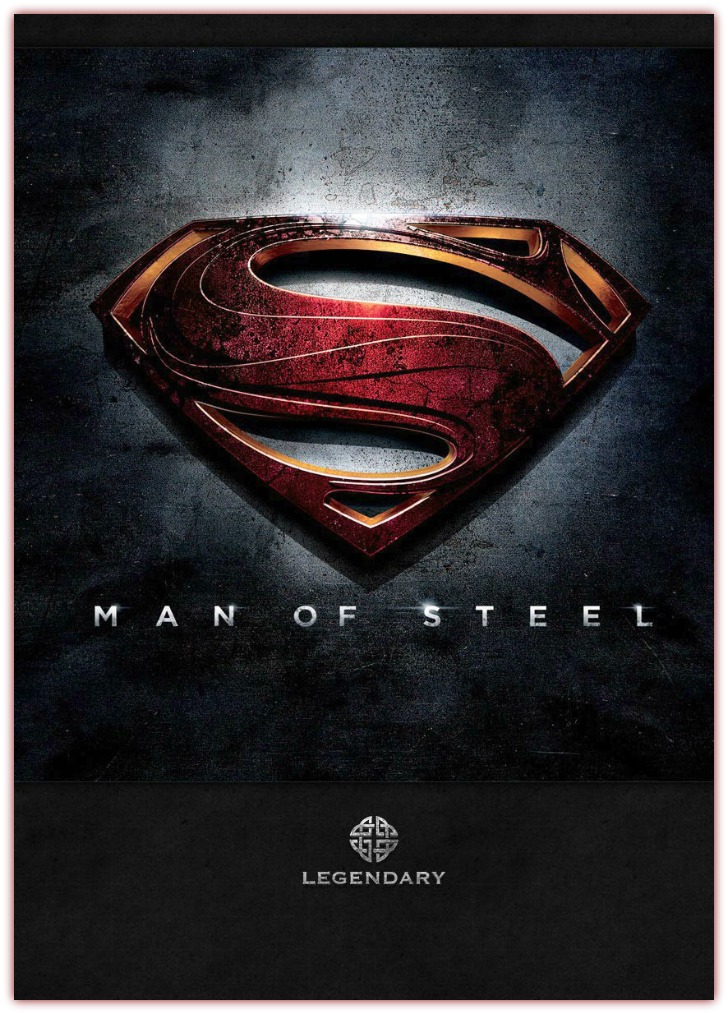
Film Review: Man of Steel (dir. by Zack Snyder)


New%20Man%20of%20Steel%20PosterHere the short of it, for anyone looking to make a decision based on what’s being written here (spoiler free part): 

Man of Steel is a great film, though has it’s flaws. The film is a coming of age story of an individual who knows what he’s capable of, but in fearing the world’s reaction to his existence, keeps it at bay until he can discover who and what he is. Where Marvel celebrates the removal of the Masked Hero (with Iron Man), DC looks towards giving the audience a reason why Superman has to be Clark Kent, which I thought worked very well. Carried by some fantastic casting, the film manages to raise the stakes for Superman (and the damage level of anywhere there’s a fight – I’m talking Dragonball Z levels of damage) in a way that up until now really wasn’t depicted well. Rather than taking the lazy route of Superman Returns (which just took Superman II’s ending and ran with it, saying that III and IV just didn’t happen), Man of Steel tries to re-invent things a little, which works on some levels, but not on all.

The faults of the film lie in the same problems that plagued the entire Dark Knight Trilogy. There’s a scene or two that ends without “closing the loop” and work within a bubble of action – a catastrophe occurs for one or two people, but before you can wonder how everyone else in the area fared, you’re left to believe “Well, let’s just assume they’re all okay and everything was fixed.” It’s the same as the Joker throwing Rachel Dawes out of a window and leaving the audience to believe that the Joker’s crew just left the way they came with no fuss or muss. The film also suffers from the physical fight issues of “Batman Begins”. It all moves so fast that in some cases, you’re left with this shaky-cam feel. It almost warrants a second viewing just to try to see the punches / kicks you may have missed the first time around. And the last act has a lot of that. This is the thing that may hurt the film with older movie goers. Imagine having something you’ve grown up with for who knows how long displayed at a speed so fast, it moves like a video game? That could be jarring.

And for those of you want to read more (it may get just a little – very little – on the spoilery side here): 

I’ll start with this. I’m not a huge fan of Superman overall. Although I’ve seen all of the previous film (many of them at the movies), I’ve always thought of Superman as a seriously overpowered character. With the pieces of his own planet being the only thing that could hurt him, what were the chances anyone could find that stuff? For this, I found the Marvel characters more interesting and relatable. How many stories can you really write about the Hulk, or Namor / Aquaman for that matter? That’s where I put Superman in the scheme of things.

That said, Zack Snyder’s Man of Steel did manage to invoke an emotion in me that I’ve never felt for the character in all these years – Sadness. It was like watching a Bond film and actually worry about Bond, imagine that. You figure this guy has all these powers, he can frickin fly, dammit. He has heat vision, x-ray vision and freezing breath. One could choose, with all that power to just dominate humanity. It’s Clark’s parents – all of them – that give him the power of choice. To decide as he grows to become who he wants to be and how to use those abilities.  That has to be pretty difficult. One scene hit home for me, involving Clark learning an ability. It’s short, but reflects the isolation of someone who is considered very different from those around him.

I loved Man of Steel. It’s does have its issues, but for me it’s such a step in a better direction for the Superman franchise. That isn’t to say that the films before it were terrible or horrid (save for Quest of Peace, which was utter crap), but Man of Steel brings so much more action and love for the character overall. Where Superman Returns was more of a drama with slices of action, perhaps Man of Steel is best consider a reversal.

When it comes to the story – penned by Christopher Nolan and David Goyer, and with Goyer doing the screenplay – I liked where it went. It didn’t try to recreate anything from the first two movies, nor did it sway so far away from it that you wondered what it was all for (Amazing Spider Man, with its thousands of radioactive spiders that could make any scientist Spider-Man with a well timed bite). The origin parts are delivered piecemeal though flashbacks, which allowed the whole story to flow pretty evenly. It’s when the movie gets into the third act – the “Hero has to face said Event” sequence that Goyer loves so much that it starts turning right back into the Batman Begins train sequence. At least the level of the event is big enough so that only Superman could really deal with it, but personally, I’ll admit that I wanted a bit more for what was done.

Casting wise, I don’t think they could have done much better than this. Henry Cavill, who I remember from 2002’s The Count of Monte Cristo and Showtime’s The Tudors, is damn near perfect as the Man of Steel, though he has so much seriousness to him that you wanted to say…”Hey, Hakuna Matata, dude. It’ll all work out. Just lighten up a little.” There’s very little playing around here.  Then again, given the way the character was written this time around, he doens’t have all that much to laugh about, I suppose.

Amy Adams really isn’t the Lois Lane I expected. She’s not written in the style of the intrepid reporter that has to get herself in trouble, but still manages to find herself facing problems in the pursuit of a good story. She wasn’t bad at all, really, but one smart thing the story does is forces her to have to be in the mix of this in less of a spectator role and more of a participant. That I enjoyed.

I gave Michael Shannon a lot of flak for his performance in last year’s Premium Rush, but I owe him an apology. All that craziness in that film is just gone here, his General Zod is subdued and even. I also enjoyed that they gave him something more to work with other than “Dominate the creatures of this planet because we hate the son of Jor-El”. His Villain has a fully plausible reason for what he’s doing, so much so that you could almost empathize with it. He’s not very different from Magneto against the X-Men in that fashion, and I felt it added quite a deal to this story. Don’t get me wrong. Terrence Stamp was great, and his “Kneel Before Zod” was always cool, but the premise in Superman II was a little odd. I figure they’d get bored with us kneeling after a while and just leave the planet once discovering our love for reality tv (Pawn Stars for me).

Someone pointed out online that both of Kal-El’s parents were Robin Hood. Both Russell Crowe and Kevin Costner do indeed play Clark’s fathers and both are used better in this than in previous versions. Each character has a view in what Clark can be become, and both individuals seem to be right, but between the two I thought Costner fared better. One thing about Crowe, he’s given quite a bit to do in this film, which surprised me. I did really didn’t expect to see much of him in this.

Diane Lane is a sweet Martha Kent. While I love Lane in her movies, I don’t know. I kind of feel anyone could have played that. She performs the role well, though. Laurence Fishburne makes for a good Perry White, channelling his character from Hannibal, as does Christopher Meloni as a Military General. I really want to see more from Meloni, actually. The scene stealer, by far (and future Hottie of the Day, if I can find enough pictures of her) is Pandorum’s Antje Traue as Zod’s henchwoman, Faora. Every scene she’s in makes her to be that Darth Maul /   Hellboy kind of supporting baddie, providing as much of a challenge to Superman as Zod. And for the time she has on screen, Ayelet Zurer sells it totally as Lara, siding with her husband to send their child away for a chance at a better life. That can’t be an easy decision for anyone or anything, but I could at least feel she was bothered by it.

Personally, I didn’t want another origin tale. The way I view it, some of these characters are so burned into our minds that we really don’t need to know the back story. However, Man of Steel does provide an origin tale that seems to make sense with the way things are today. We don’t trust what we don’t understand and unless we can catalog and easily reference it to something comparable, we usually consider it something bad. As this story tells it, Superman may or may not have the luxury to openly say “Hey, I’m Kal-El, from Krypton, let me walk among you.” as easily as Tony Stark could proclaim he was Iron Man.

As for the DC Cinematic Universe, if this is the first film that’s going to lay the groundwork, it’s a nice start. It doesn’t leave any breadcrumbs for audience expectation for a Justice League movie, but if  DC is smart, they’ll get whatever the next movie they want to do started right after this. That’s the hope, anyway.

With a new direction in tone also comes a new score. Hans Zimmer knocks the soundtrack out of the ballpark with this one. Bringing together nearly 12 drum legends for percussion (including Sheila E. And Jason Bonham), Zimmer creates a theme for the hero that will undoubtedly be reused in sports venues for years to come. It’s uplifting in places and creepy in others. Some themes borrow a little bit from his own Angels & Demons, but this is something Zimmer is known for. Having listened to the score for most of the week, I’m already humming it off and on.

And what about the kids? The kids should be fine seeing this. There’s a childbirth sequence in the very beginning that may require some explaining to the littlest of viewers, and there’s violence all over the place, but all it’s worth, there’s not a whole lot of blood and very little gore. Nothing anyone who plays Call of Duty on the regular couldn’t handle.

Oh, one more thing. The 3D is good here, particularly in the flight sequences, but you’re not really missing anything if you happen to catch it in 2D. Note that there isn’t anything after the credits with this film.

Trailer: Man of Steel – “Fate of Your Planet”


ManofSteel

Leading up to this film I was still hesitant to embrace it after the underwhelming Superman Returns. I think the more fun and energetic Marvel Studios fare has spoiled me to the the more dour (though still entertaining) take on the DC main heroes (though the Green Lantern one was neighter serious, fun or enjoyable).

The trailers and teasers already released for Man of Steel has focused a lot on the existential question about who or what Superman is and his role on Earth. Some of the teasers and trailers even try to ape the Terence Malick visual-style with the close-ups of waving wheatfields and background narration asking deep questions. But this latest trailer now switches gear and focuses on the villain of the film and more action.

I’m not hugging this film 100%, but this latest trailer has me closer to embracing it.

Will Man of Steel be too dour a la Christopher Nolan or two much a visual overload by way of Zack Snyder or will the two differing storytelling styles be able to meld into a perfect balance to finally give Superman his day in the sun once again.

Man of Steel is set for a June 14, 2013 release date.

Trailer: Man of Steel (3rd Official)


ManofSteel

We’re now just two months away from one of this year’s biggest and most-anticipated films. It’s also one of the biggest gamble for Warner Bros. Pictures in light of the success that Marvel/Disney had with their Marvel Cinematic Universe.

Man of Steel looks to reboot that Superman film franchise after the lackluster Superman Returns of a few years back. Gone are Bryan Singer and in comes Zack Snyder in the director’s chair with Christopher Nolan (himself reviving the Batman franchise from the depths) overlording over it all. It’s a recipe that smells success, yet there’s still some nagging doubt about whether it’s going to rule the summer and become the stepping stone to what Warner Brothers hopes will be their return shot at Marvel/Disney: a Justice League film.

The first trailer for Man of Steel had quite the Malickesque look to it. From the subtle music in the background to existential narration about the nature of Superman. Then that was followed up a couple months later by a more action-packed trailer that had the hallmarks of Snyder as a visual artist of onscreen mayhem. Now we have a third trailer (hopefully a final one) that seems to be an amalgam of the first two that tries to explore the nature of Superman in regards to his adopted planet and then some action that shows Man of Steel won’t be a two and half hours of Zack Snyder channeling his inner Terence Malick.

Man of Steel is set for a June 14, 2013 release date.

Trailer: Man of Steel (2nd Official)


ManofSteel

The very first Man of Steel trailer was underwhelming and played out more like a Terence Malick production. A lot seem to have happened between the release of that first official to the latest one which Warner Brothers premiered earlier today. Where the first trailer was all about serene images of Kal-El in his Clark Kent persona going through his Jack London phase this second trailer delves more into the persona of an emergent Superman who fears that the world he intends to protect from General Zod may not and will not be ready to accept his as their savior.

We get to see more glimpses of the action Man of Steel seem to have more of than the underwhelming reboot done by Bryan Singer just a couple years ago. There’s scenes of entire high-rises collapsing and what looks like Superman battling either Zod or, at the very least, Zod’s minions. We also get to see some of the other cast members from Costner’s Pa Kent to Diane Lane as Ma Kent. We already get to see Michael Shannon as General Zod and Richard Schiff as S.T.A.R. Labs director Dr. Emil Hamilton. The film doesn’t give it out but whether Emil Hamilton is an ally of Superman or a potential enemy the film will have to answer.

The story has a lot of the gritty, realistic DNA that Christopher Nolan’s Dark Knight trilogy had but the impressive visuals that Zack Snyder has become well-known for. It’s going to be interesting to see if the Nolan narrative aesthetic will be able to co-exist with the Snyder flair for imagery.

We’ll find out in June 14, 2013 if all the questions being asked about this second reboot of the Superman franchise will be positive ones or more of the case of opportunity and potential wasted.