Man-Thing (2005, directed by Brett Leonard)


Kyle Williams (Matthew Le Nevez), the newly appointed sheriff of a Louisiana parish, wants to know why so many people have disappeared in the swamp. Oilman Frederick Schist (Jack Thompson) puts the blame on activist Rene LaRoque (Steve Bastoni), who lives in the swamp and has been vandalizing Schist’s oil rigs. Indigenous shaman Horn (Rawiri Paratene) suggests that the culprit is actually a legendary spirit that lives in and protects the swamp and is angry because Schist cheated the local Seminole chief out of his land.

Loosely based on one of Marvel’s most endearingly weird characters, Man-Thing had a modest budget, decent special effects, and an insanely detailed swamp. It also had a lot more gore and nudity than the usual comic-book adaptation. What it didn’t have was a decent script or a cast that could do much with what they were given. (The great Australian actor Jack Thompson is ludicrous in the role of Frederick Schist.) Considering how simple the plot is, Man-Thing has a lot of head-scratching moments. If the Man-Thing has been summoned to protect the swamp from the oil companies and the rednecks, why does it also kill a Native shaman? In the comic books, at least, the Man-Thing had once been a man before he was transformed into a swamp monster. In this one, there’s no real origin for the creature. This movie could just as easily have been called Plant-Thing.

Man-Thing was actually one of the most interesting characters introduced when Marvel started publishing horror comics in the 1970s. Formerly a biochemist named Ted Sallis, Man-Thing lived in the Everglades and could detect emotions. His touch could burn, but only if the person being touched was afraid of him. With no memory of his former life as a human, Man-Thing was the guardian of the Nexus of All Realities. When Man-Thing got his own series, writer Steve Gerber gave him an eccentric and colorful supporting cast, including Howard the Duck and teenage sorceress Jennifer Kale. The comic-book Man-Thing provided a lot of good material for a potential film, so it’s too bad that this version turned him into just another swamp monster.

Man-Thing was originally meant to be a theatrical release but was dumped onto the Sci Fi Channel instead. (It did get a brief theatrical release in a few international markets, including Spain, where it bombed.) In the later Marvel Cinematic Universe, the character played a supporting role in 2022’s Werewolf by Night, so who knows? Maybe he’ll get the film he deserves someday.
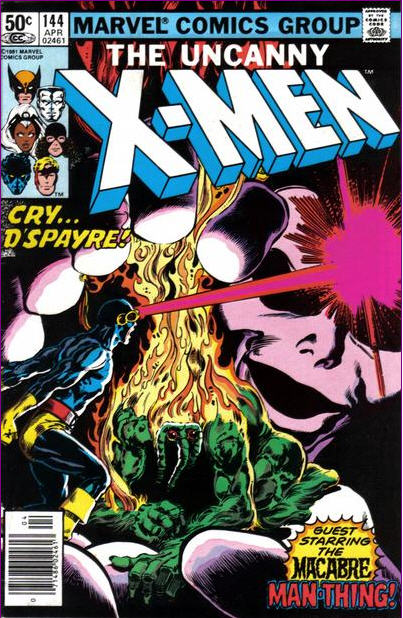
Great Moments In Comic Book History: “Even in Death…”


The Uncanny X-Men #144 finds Scott Summers (better known as Cyclops, the occasional leader of the X-Men) working on a fishing boat in the Florida Everglades.  Scott’s new boss, Lee Forrester, is obviously interested in him but Scott is still mourning Jean Grey.  It’s been months since Jean, consumed by the Dark Phoenix, chose to protect the universe by destroying herself.  Scott has taken a leave of absence from the X-Men to grieve and, as they used to say back in the day, find himself.

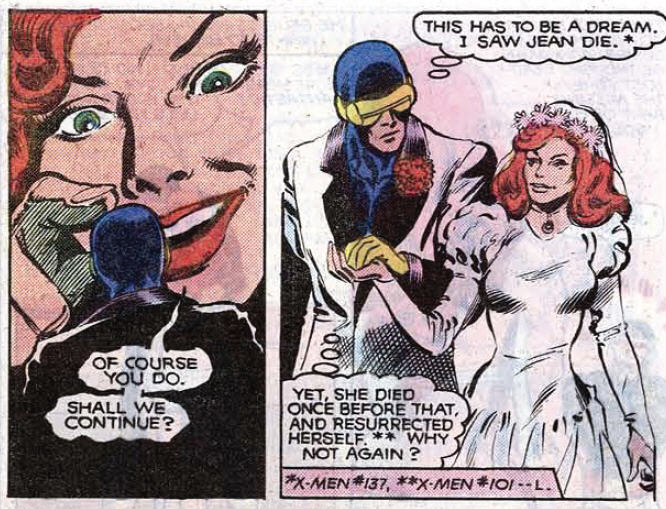
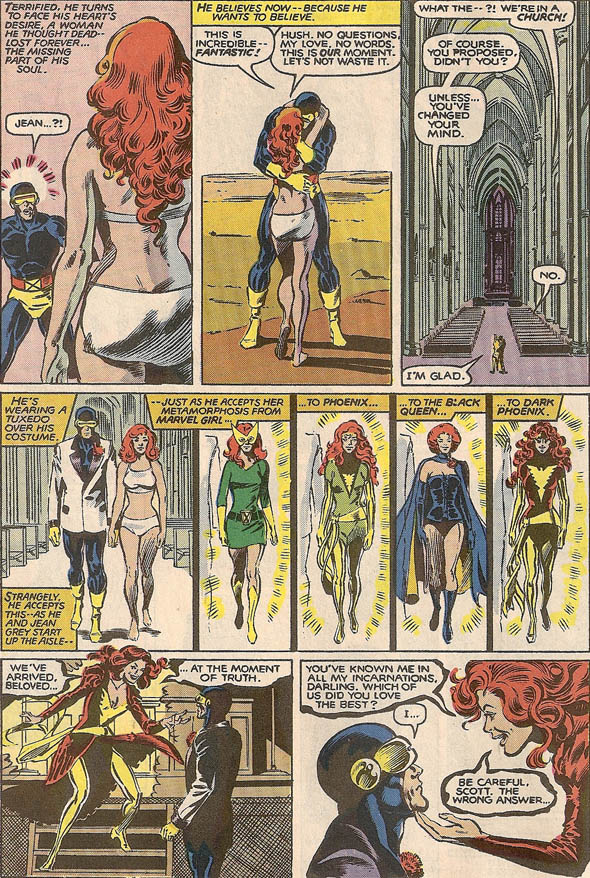
When the fear-inducing demon D’Spayre shows up, it not only drives Lee’s father to suicide but it also forces Scott to deal with his deepest fears.  Scott hallucinates the plane crash that led to him and his brother being separated from their parents.  He visualizes the X-Men dead, having been killed by Sentinels.  And finally, in the issue’s most famous scene, he finds himself walking down a church aisle with Jean.

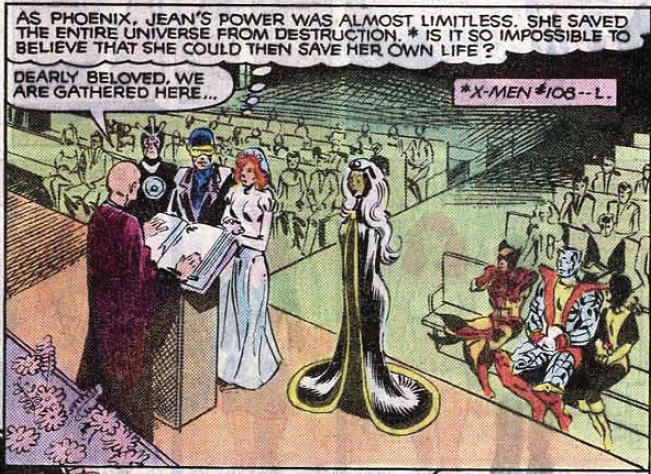
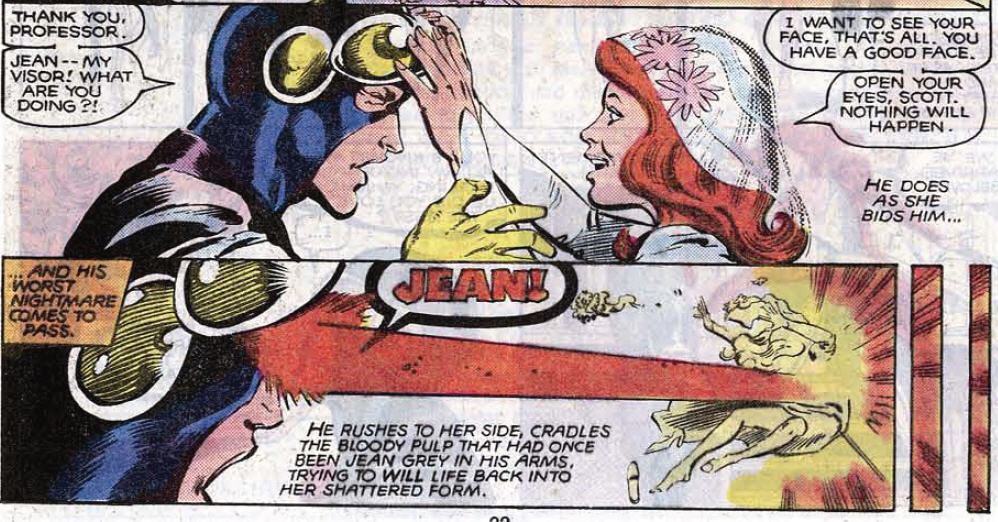
As they walk down the aisle, Jean’s costume changes to reflect all of the different roles that she played as member of the X-Men.  She goes from being in her underwear to being in her green Ms. Marvel costume to being the Phoenix to being the Hellfire Club’s Black Queen to finally being the Dark Phoenix.  When they reach the minister, Jean is dressed as a bride.  When the minister tells Scott that he may kiss the bride, Jean suddenly reaches up and lifts Scott’s visor.  A blast a red energy brings the wedding to an abrupt end.

Eventually, Scott teams up with the Man-Thing (who is Marvel’s version of Swamp Thing) and is able to easily defeat D’Spayre.  Since all you have to do to make D’Spayre go away is refuse to believe what he’s showing you, he is not one of Marvel’s most intimidating villains.  Still, Scott’s church hallucination provides not only a perfect coda for the Dark Phoenix saga but it also shows a comic book character dealing with depression.  That’s an emotion that, until Chris Claremont started writing the X-Men, super heroes rarely had to deal with for more than an issue or two.  Even Spider-Man, with all of his problems and guilt, always kept his sense of humor.  This issue of the X-Men finds Scott deeply mired in his grief.  Even after Scott defeats D’Spayre, the sadness remains but he swears to himself that will not surrender to it.

Of course, the impact of this issue is lessened by the fact that Marvel would later reveal that the Dark Phoenix who sacrificed herself was just an energy force that took on Jean’s memories and personality while the real Jean remained in suspended animation at the bottom of Jamaica Bay.  X-Men #144 is still a good issue and a good example of Chris Claremont’s ability to bring out the humanity in even those with super powers.

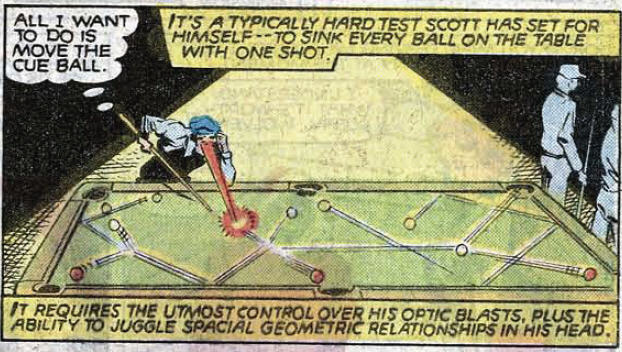
Plus, we learn how Cyclops plays pool

The Uncanny X-Men #144 (April, 1981)

“Even in Death”

  • Writer: Chris Claremont
  • Guest Penciler: Brent Anderson
  • Inker: Josef Rubenstein
  • Letterer: Tom Orzechowski
  • Colorist: Glynis Wein
  • Editor: Louise Jones
  • Editor-in-Chief: Jim Shooter

Previous Great Moments In Comic Book History:

  1. Winchester Before Winchester: Swamp Thing Vol. 2 #45 “Ghost Dance” 
  2. The Avengers Appear on David Letterman
  3. Crisis on Campus