Let’s take a moment to appreciate Frank Drebin (Leslie Nielsen), a true American hero.
Even though Frank is just a Los Angeles cop, he still goes to the Middle East and disrupts a conference of America’s greatest enemies. He beats up Fidel Castro. He knocks out Gadafi and Yasser Arafat. He cleans Gorbachev’s head. (“I knew it!” he says as the birthmark disappears.) He takes out Idi Amin and he sends the Ayatollah Khomeini through a window. Thirty-seven years ago, this scene opened The Naked Gun and, after all that time, it is still funny because Leslie Nielsen plays it all with a straight face, delivering his silly lines without flinching. It’s also interesting that none of the leaders taken down by Frank Drebin are around anymore. Khomeini died just a few months after this film came out. Gorbachev was the last to go, in 2022, by which time he was no longer an enemy. Consider it the Frank Drebin Effect. He’s making the world safe for democracy.
When Drebin returns to Los Angeles, he’s informed by Captain Ed Hocken (George Kennedy) that Police Squad has been put in charge of security for a visit from Queen Elizabeth (Jeanette Charles) and that Officer Nordberg (O.J. Simpson) is in the hospital and suspected of being a dirty cop. The Mayor (Nancy Marchand) doesn’t want Los Angeles to be embarrassed by a police scandal before the Queen arrives so Drebin has 24 hours to exonerate Nordberg. Drebin’s attempt to clear Nordberg’s name leads him to a shipping magnate (Ricardo Montalban) who has come up with a diabolical scheme to assassinate the Queen at a baseball game. It also leads to love between Drebin and Jane Spencer (Priscilla Presley).
Though Liam Neeson did a fine job in the recent reboot, there really is only one Frank Drebin and his name is Leslie Nielsen. The original Naked Gun is nearly 40 years old and, even if some of the jokes are dated, it’s still laugh out loud funny. Most of the credit has to go to Leslie Nielsen and ability to deliver even the most bizarre bits of dialogue with natural authority, gravitas and a straight face. Whether he’s mumbling his way through the National Anthem, paying an informer for information, or hamming it up as an umpire, Nielsen is never less than hilarious. By the end of the movie, it’s impossible to look at Nielsen without laughing. Kennedy, Presely, and Montalban also generate their share of laughs. John Houseman has a great cameo as an unflappable driving instructor. (“Now, extend your middle finger.”) As for OJ Simpson, he doesn’t seem to be in on the joke like the rest of the cast but he does frequently get injured and re-injured throughout the movie and there’s definitely some pleasure to be found in that.
(When Simpson died, director David Zucker said, “His acting was a lot like his murdering: He got away with it, but no one believed him.” That sounds about right.)
Liam Neeson made for a fine Frank Drebin, Jr. I hope he has many more adventures. But the greatest Frank Drebin will always be Leslie Nielsen and the original Naked Gun will always be one of my favorite comedies. Sometimes, it’s good just to laugh.
The 1987 film, Tough Guys Don’t Dance, opens with Tim Madden (Ryan O’Neal) talking to his father, tough Dougy (Lawrence Tierney). Dougy has stopped by Tim’s New England home to let Tim know that he has decided stop chemotherapy and accept his eventual death from cancer because, as Dougy puts it, “Tough guys don’t dance.” The tone of Dougy’s voice is all we need to hear to know that, in his opinion, his son has spent way too much time dancing.
Tim is an ex-convict turned writer and, when we first see him, he’s obviously had a few rough nights. He explains to Dougy that he woke up after a bender with his ex-girlfriend’s name tattooed on his arm, blood all over his jeep, and two heads dumped in his marijuana stash. Tim says that he’s hopeful that he’s not the murderer but he can’t be sure. He’s been drinking and doping too much. He suffers from blackouts. He’s not sure what happened.
The majority of the film is made up of flashbacks, detailing Tim’s affairs with a number of women and also his odd relationship with the town’s police chief, Luther Regency (Wings Hauser). Luther is married to Tim’s ex-girlfriend, Madeleine (Isabella Rossellini), who long ago accompanied Tim on a trip to North Carolina where they hooked up with a fundamentalist preacher (Penn Jillette) and his then-wife, Patty Lariene (Debra Sundland). (Tim found their personal ad while casually skimming the latest issue of Screw, as one does I suppose.) Patty Lariene eventually ended up married to Tim, though she has recently left him. As for Madeleine, she has never forgiven him for a car accident that they were involved in. Is Tim capable of loving anyone? Well, he does say, “Oh God, oh man,” repeatedly when he discovers that his wife has been having an affair.
Tim tries to solve the murders himself, finding that they involve not only him and Luther but also Tim’s old prep school friend, Wardley Meeks III (John Bedford Lloyd) and also some rather stupid drug dealers that Tim hangs out with. The plot is almost ludicrously convoluted and it’s tempting to assume that the film is meant to be a parody of the noir genre but then you remember that the film is not only based on a Norman Mailer movie but that it was directed by Mailer himself. Mailer, who was the type of public intellectual who we really don’t have anymore, was blessed with a brilliant mind and cursed with a lack of self-awareness. There’s little doubt that we are meant to take this entire mess of a film very seriously.
And the film’s theme isn’t hard to pick up on. By investigating the murders, Tim faces his own troubled past and finally comes to understand why tough guys, like his father, don’t hesitate to take action. Tough guys don’t dance around what they want or need. That’s a pretty common theme when it comes to Mailer. Tim Madden is not quite an autobiographical character but he is, by the end of the story, meant to represent the type of hard-living intellectual that Mailer always presented himself as being. Unfortunately, Ryan O’Neal wasn’t exactly an actor who projected a good deal of intelligence. And, despite his lengthy criminal record off-screen, O’Neal’s screen presence was somewhat docile. That served him well in films like Love Story and Barry Lyndon. It serves him less well in a film like this. It’s easy to imagine O’Neal’s Tim getting manipulated and, in those scenes where he’s supposed to be a chump, O’Neal is credible enough in the role. It’s far more difficult to buy the idea of Tim actually doing something about it.
Indeed, it’s hard not to feel that co-star Wings Hauser would have been far more credible in the lead role. But then, who would play Luther Regency? Hauser gives such a wonderfully unhinged and out-there performance as Luther that it’s impossible to imagine anyone else in the role. Maybe Hauser could have played both Tim and Luther. Now that would have made for a classic film!
Tough Guys Don’t Dance is weird enough to be watchable. The dialogue is both raunchy and thoroughly humorless, which makes it interesting to listen to, if nothing else. The moments that are meant to be funny are so obvious (like casting noted atheist Penn Jillette as a fundamentalist) that it’s obvious that the moment that feel like clever satire were actually all a happy accident. As far as Norman Mailer films go, this one is not as boring as Wild 90 but it also can’t match the unhinged lunacy of a frustrated Rip Torn spontaneously attacking Mailer with a hammer at the end of the unscripted Maidstone. It’s a success d’estime. Mailer flew too close to the sun but the crash into the ocean was oddly entertaining.
I became obsessed with actor Charles Bronson in 1986 after receiving a VHS copy of DEATH WISH 3 as a Christmas present. Going along with that obsession was my desire to see every Charles Bronson movie that had ever been made. As much as I enjoyed re-watching DEATH WISH 3, it was always a treat when I could rent a different Bronson film at the video store. The current Bronson movie at the video store in 1987 that appealed to me as a 13 year old boy was MURPHY’S LAW, so I wanted to rent it as often as possible. There were even a couple of times when different friends asked me to spend the night, and I had one requirement for saying yes… that we rent MURPHY’S LAW! Y’all, don’t think too bad of me for this admission. Remember, I was only 13 years old, I couldn’t drive, and I didn’t have a job so if I had to use a friend’s mom to get my Bronson fix, that’s just what I had to do! Based on the timing of my initial Bronson obsession, DEATH WISH 3 and MURPHY’S LAW are 1-2 in the films that I’ve watched the most times during my life.
In MURPHY’S LAW, Charles Bronson plays Jack Murphy, a tough cop who seems to be experiencing a series of unfortunate events:
A thief named Arabella McGee (Kathleen Wilhoite) tries to steal Murphy’s car and drives it through the window of a pizzaria. We know that’s his car because he loudly proclaims, “That’s MY car!!” He even wastes money on a sack of groceries by throwing it at his car while she’s driving away. He’s able to chase her down on foot, but she kicks him in the testicles and runs off leaving him doubled over in pain, grocery-less, and clutching the family jewels!
A mafia kingpin named Frank Vincenzo (Richard Romanus) wants to kill him because Murphy was forced to shoot and kill the kingpin’s brother. We know the cop and the kingpin don’t like each other, because a little before the shooting they have a slight disagreement in front of the mafioso’s mother over whether the brother is a scum-sucking pimp or a talent agent. Unable to resolve the debate amicably, the mafioso inquires as to whether or not Jack has ever heard of “Murphy’s Law, if anything can possibly go wrong it will?” Murphy responds with an alternative version of Murphy’s Law, the only law that he knows, and one that I greatly prefer. You get the feeling that this argument may be revisited later in the film.
Murphy’s now ex-wife Jan (Angel Tompkins) is performing extremely artistic striptease routines at a local club called Madam Tong’s. She’s also making love to the manager of the club. Rather than drinking at home alone until he passes out like most depressed men, Murphy hangs out at Madam Tong’s watching her shake her goodies for a bunch of horny lowlifes, before following them home and watching from outside until they turn off the bedroom lights. Very sad indeed.
And here’s the worst part, on one of those typical nights where he’s obsessively stalking his wife, another mystery woman (Carrie Snodgress) knocks him in the head, shoots the slimy manager and Mrs. Murphy with his gun, and then frames him for their murders. Arrested for the murders and subsequently handcuffed to the thief who tried to steal his car, Murphy must stage a daring helicopter jailbreak in order to find out who framed him and clear his name before everything and everyone he holds dear is taken from him!
There are several reasons that I loved MURPHY’S LAW back in the eighties, and that I still enjoy it now. First, of course, is Charles Bronson. He was around 64 years old when he filmed MURPHY’S LAW, but he’s still in great physical condition in 1986. One of Bronson’s greatest strengths is his screen presence, and he still dominates each frame he’s in. Second, the film has an excellent supporting cast. Carrie Snodgress is having a ball playing the main villain in the film. I’ve seen her in quite a few movies, like PALE RIDER with Clint Eastwood, and 8 SECONDS with Luke Perry, but I’ve never seen her in a role like this. Snodgress was nominated for an Oscar for her role in a 1970 film called DIARY OF A MAD HOUSEWIFE. I’ve never seen that one before, but I should probably check it out! I love Kathleen Wilhoite as Arabella McGee, the thief who ends up handcuffed to Bronson. Her vocabulary, while probably not very realistic for the streets of LA at the time, was hilarious to me as a teenager. I enjoy calling the people I love “snot licking donkey farts” on occasion to this very day. It’s Kathleen Wilhoite singing the title song over the closing credits! And Robert F. Lyons is very special to me in his role as Art Penney, Jack Murphy’s partner. We got to interview him on the THIS WEEK IN CHARLES BRONSON podcast about his roles on DEATH WISH 2, 10 TO MIDNIGHT, and MURPHY’S LAW. He was so generous with his time, and just a hell of a nice guy! I’ve attached a link to the YouTube video of the interview with Mr. Lyons if you’re interested in the great stories he tells us about his time in Hollywood! Finally, MURPHY’S LAW was directed by J. Lee Thompson, my personal favorite director who worked with Bronson. Thompson directed Bronson in 9 different films, beginning with ST. IVES in 1976 and ending with KINJITE: FORBIDDEN SUBJECTS in 1989. No matter the material, you always knew that Thompson would deliver a film with a certain quality that made Bronson look good!
I’ll always be a fan of MURPHY’S LAW, partly for nostalgic reasons, but mainly because I think it’s an entertaining mid-80’s action film for Bronson at a time when he was one of the kings of the video store!
As seen in the 1993 made-for-TV movie Casualties of Love, Joey is a saintly, salt-of-the-Earth blue collar guy who works as an auto mechanic on Long Island. He’s also an aspiring drummer, one who struggles with a major cocaine addiction. When his loving wife, Mary Jo (Phyllis Lyons), threatens to leave him and take the kids unless he cleans up his act, Joey checks into rehab. Six months later, he leaves rehab clean and sober and dedicated to his family. All of the other patients lean out of their windows and wish Joey well. Everyone loves Joey!
Joey, the most handsome and sweetest auto mechanic in the state of New York, does have a problem, though. A sociopathic teenager named Amy Fisher (Alyssa Milano) has grown obsessed with him and keeps intentionally damaging her car so that she can come hang out at the garage. When the other mechanics say that Amy is hot, Joey agrees but that’s all he does. Joey loves his wife. When Amy tries to kiss him at a carnival, he shoves her away and then kisses his wife to make sure that everyone understand that Joey Buttafuoco is the best guy ever. When Amy accuses Joey of giving her a STD, everyone realizes she’s lying because Joey would never have an STD in the first place.
And when Amy shoots Mary Jo in the face, the media and the police try to make it seem like Joey is somehow to blame but again, we know that he’s not. Joey Buttafuoco is a name that means honor and respect.
Uhmm …. yeah.
So, this is story is very loosely based on a true story and by that, I mean that there was a teenager named Amy Fisher who shot a woman named Mary Jo in the face and later said that she was having an affair with her husband, Joey. Apparently, there were three made-for-TV movies made about the case, all of which premiered in the same month. Casualties of Love is told from the point of view of Joey and Mary Jo and it fully supports Joey’s initial claim that he never slept with Amy and she was just some obsessed psycho.
While watching this film, I got bored enough to look up the case on Wikipedia and I learned that, after this movie aired, Joey admitted that he did have an affair with 16 year-old Amy Fisher and he subsequently went to jail for statutory rape. After getting out of jail, Joey divorced his wife and has subsequently been in and out of trouble with the law. He also become a regular on TV court shows, where he would sue people who failed to pay him for fixing their cars. My point is, Joey Buttafuoco sounds like a bit of a sleaze in real life. That makes this film’s portrayal of him as being some sort of Saint of Long Island feel rather dumb.
Actually, it would feel dumb even if the real Joey Buttafuoco was a solid citizen. Casualties of Love is one of the silliest films that I’ve ever seen, portraying Joey as being a streetwise former cocaine addict who was somehow too naive to realize that it would look bad to spend time in his office alone with Amy. As Joey, Jack Scalia is very handsome and very sincere and he feels totally miscast as someone who spends hours working underneath the hood of other people’s cars. Leo Rossi and Lawrence Tierney both show up, mostly so they can say, “Oh, what were you thinking!?” to Joey. As Amy Fisher, Alyssa Milano gives an amazingly lifeless performance. Occasionally she talk fast and plays with her hair. This is the film’s way of letting us know that she’s supposed to be unhinged. I mean, I do the same thing. If you’ve got long hair, you’re going to play with it whenever you got bored. It doesn’t make you crazy.
Unfortunately, though the film may be silly, it’s not much fun. The direction is workmanlike and the film’s portrayal of Joey and Mary Jo’s marriage is so earnestly bland that the film never even rises to the level of camp. The film ends with a warning that Amy would soon be eligible for parole. (Oddly, it also points out that Amy could take college courses in jail, as if that was a bad thing.) Meanwhile, “Mary Jo is taking it one day at a time.” Fortunately, Mary Jo eventually took herself out of Joey’s life and filed for divorce. That’s the happy ending this film lacks.
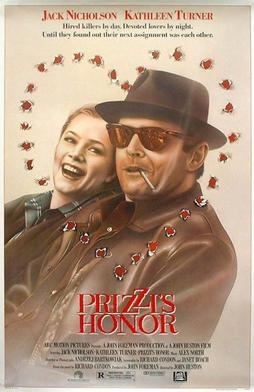
First released in 1985, Prizzi’s Honor tells the story of Charley Partanna (Jack Nicholson), a blue collar guy who lives in Brooklyn and who is a hard-working hit man for the Prizzi crime family. Charley is the son of Angelo (John Randolph), who is the right-hand man to the family’s elderly but still ruthless Don (William Hickey). In the past, Charley came close to marrying the Don’s daughter, Maerose Prizzi (Anjelica Huston), and he is almost as much a member of the family as the Don’s two sons, Eduardo (Robert Loggia) and Dominic (Lee Richardson).
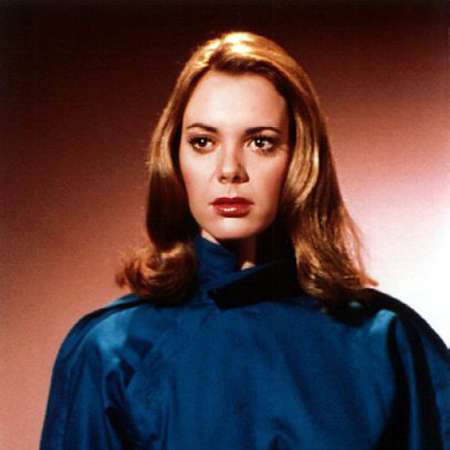
While attending a family wedding, Charley meets and is immediately infatuated with a woman named Irene Walker (Kathleen Turner). Later, when Charley is sent to California to kill a man who robbed one of the family’s Vegas casinos, he is shocked to discover that the man is Irene’s husband. Irene swears that she didn’t have anything to do with the casino theft and, after a whirlwind courtship, Charley and Irene get married in Mexico. What Charley doesn’t know (but eventually discovers) is that Irene is herself a professional killer. While Charley and Irene try to balance work and love, Maerose conspires to turn the family against Irene and win Charley back.
Directed by the legendary John Huston, Prizzi’s Honor is pitch black comedy about two hard-working people who kill for a living. (The film’s big set piece is an extended sequence in which Charley and Irene’s attempt to pull a job together goes wrong in every way and they end up arguing about their relationship while dragging dead bodies from one room to another.) Though Prizzi’s Honor was released long before the series premiered on HBO, the film feels almost like a companion piece to The Sopranos, full of mobsters who are not as clever as they think they are and who struggle to uphold the old ways in an increasingly complicated world. Particularly when compared to the gangster who populate a film like TheGodfather, the Prizzis are defined by their pettiness. If Don Corleone epitomized wisdom and honor, Don Prizzi epitomizes someone who holds onto power solely for power’s sake.
Prizzi’s Honor is one of those films that probably seemed a bit more revolutionary when it was first released than it does today. At this point, we’ve seen so many films about hired killers who have quirky conversations while carrying out their work that the mix of violence and dark humor can feel almost like a cliché. As well, there are certain parts of the film, like the opening wedding sequence, that feel as if they go on for just a few minutes too long, as if John Huston himself was not always comfortable with the balance between the dark drama and the comedy of mob manners. That said, Jack Nicholson, Kathleen Turner (who gives a performance worthy of the great femme fatales of film noir), Anjelica Huston, John Randolph, and especially William Hickey all give strong enough performances to hold the audience’s attention and the film’s finale cuts to the point in such a way that it leaves you reconsidering everything that you’ve previously seen. Prizzi’s Honor has its flaws but Nicholson and Turner have such chemistry that the film’s ending sticks with you.
Prizzi’s Honor was nominated for 8 Oscars, including Best Picture, Best Director, Best Actor, and Best Supporting Actor for William Hickey. (Oddly, Kathleen Turner was not nominated for playing Irene.) In the end, it only won one Oscar that year, for supporting actress Anjelica Huston. The Oscars that year were dominated by a far more convention love story, Out of Africa.
Like a lot of people, I enjoy browsing the trivia sections of the IMDb. While it’s true that a lot of the items are stuff like, “This movie features two people who appeared on a television series set in the Star Trek Universe!,” you still occasionally came across an interesting fact or two.
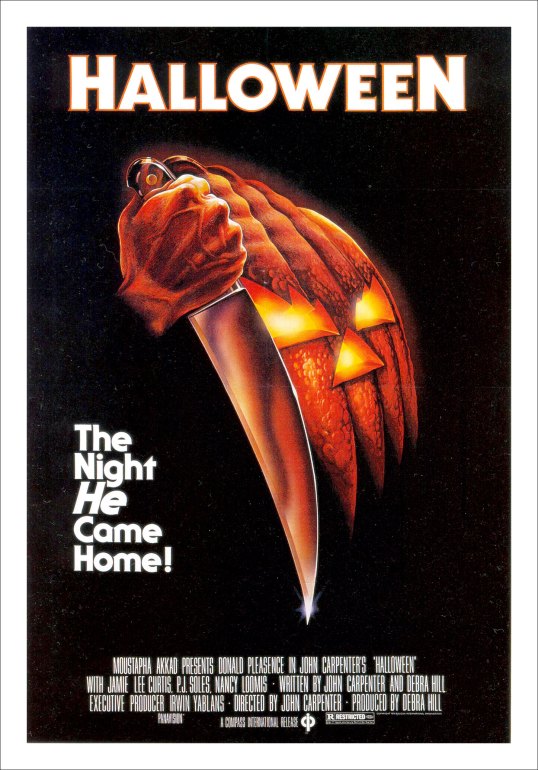
Of course, sometimes, you just come across something that makes so little sense that you can only assume that it was posted as a joke. For instance, I was reading the IMDb’s trivia for the original 1978 Halloween and I came across this:
Peter O’Toole, Mel Brooks, Steven Hill, Walter Matthau, Jerry Van Dyke, Lawrence Tierney, Kirk Douglas, John Belushi, Lloyd Bridges, Abe Vigoda, Kris Kristofferson, Sterling Hayden, David Carradine, Dennis Hopper, Charles Napier, Yul Brynner and Edward Bunker were considered for the role of Dr. Sam Loomis.
Now, some of these names make sense. Despite the fact that Sam Loomis became Donald Pleasence’s signature role, it is still possible to imagine other actors taking the role and perhaps bringing a less neurotic interpretation to the character.
Peter O’Toole as Dr. Loomis? Okay, I can see that.
Kirk Douglas, Sterling Hayden, Charles Napier, Steve Hill, or Lloyd Bridges as Dr. Loomis? Actually, I can imagine all of them grimacing through the role.
Walter Matthau? Well, I guess if you wanted Dr. Loomis to be kind of schlubby….
Abe Vigoda? Uhmmm, okay.
Dennis Hopper? That would be interesting.
Mel Brooks? What? Wait….
John Belushi? Okay, stop it!
Dr. Sam Loomis
My point is that I doubt any of these people were considered for the role of Dr. Loomis. Both director John Carpenter and producer Debra Hill have said that they wanted to cast an English horror actor in the role, as a bit of an homage to the Hammer films of the 60s. Christopher Lee was offered the role but turned it down, saying that he didn’t care for the script or the low salary. (Lee later said this was one of the biggest mistakes of his career.) Peter Cushing’s agent turned down the role, again because of the money. It’s not clear whether Cushing himself ever saw the script.
To be honest, I could easily Peter Cushing in the role and I could see him making a brilliant Dr. Loomis. But, ultimately, Donald Pleasence was the perfect (if not the first) choice for the role. Of course, Pleasence nearly turned down the role as well. Apparently, it was his daughter, Angela, who changed his mind. She was an admirer of John Carpenter’s previous film, Assault on Precint 13. Carpenter has said that he was originally intimidated by Donald Pleasence (the man had played Blofeld, after all) but that Pleasence turned out to be a professional and a gentleman.
Laurie Strode
Of course, Halloween is best known for being the first starring role of Jamie Lee Curtis. Curtis was actually not Carpenter’s first choice for the role of Laurie Strode. His first choice was an actress named Annie Lockhart, who was the daughter of June Lockhart. Carpenter changed his mind when he learned that Jamie was the daughter of Janet Leigh. Like any great showman, Carpenter understood the importance of publicity and he knew nothing would bring his horror movie more publicity then casting the daughter of the woman whose onscreen death in Psycho left moviegoers nervous about taking a shower.
There was also another future big name who came close to appearing in Halloween. At the time that she was cast as Lynda, P.J. Soles was dating an up-and-coming actor from Texas named Dennis Quaid. Quaid was offered the role of Lynda’s doomed boyfriend, Bob but he was already committed to another film.
Not considered for a role was Robert Englund, though the future Freddy Krueger still spent some time on set. He was hired by Carpenter to help spread around the leaves that would make it appear as if his film was taking place in the October, even though it was filmed in May.
Robert Englund, making May look like October
Interestingly enough, Englund nearly wasn’t need for that job because Halloween was not originally envisioned as taking place on Halloween or any other specific holiday. When producer Irwin Yablans and financier Moustapha Akkad originally approached Carpenter and Hill to make a movie for them about a psycho stalking three babysitters, they didn’t care when the film was set. It was only after Carpenter and Hill wrote a script called The Babysitter Muders that it occurred to Yablans that setting the film during Halloween would be good from a marketing standpoint. Plus Halloween made for a better title than The Babysitter Murders.
And, of course, the rest is history. Carpenter’s film came to define Halloween and it still remains the standard by which every subsequent slasher movie has been judged. Would that have happened if the film had been known as The Babysitter Murders and had starred John Belushi?
Listen, there’s a lot of things that can be said about the 1952 Best Picture winner, The Greatest Show on Earth. Not only was it one of three Cecil B, DeMille films to be nominated for best picture (along with 1934’s Cleopatra and 1956’s The Ten Commandments) but it was also the only one to win. It brought Cecil B. DeMille his first and only nomination for best director. (DeMille lost that directing Oscar to John Ford but he still took home an award, as the producer of The Greatest Show On Earth.) The Greatest Show on Earth not only featured Charlton Heston in his first starring role but, with a finale that featured everyone involved in the same spectacular train crash, it also set the standard for the countless disaster movies that would follow.
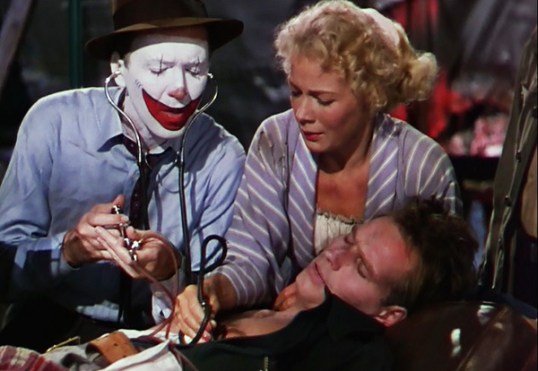
But, with all of that in mind, the main thing that you’ll remember about this movie is that Jimmy Stewart was Buttons the Clown.
Buttons is a beloved member of the Ringling Bros. and Barnum & Bailey’s Circus. He travels with the circus across the country, entertaining children and generally helping out wherever he can. Everyone loves Buttons, despite the fact that no one has ever seen him without his makeup. (That said, you only have to hear him speak to immediately recognize him as being played by Jimmy Stewart.) Not even the circus’s no-nonsense manager, Brad Braden (Charlton Heston, naturally), knows what Buttons actually looks like. Everyone assumes that Buttons is just a dedicated performer, a method clown.
However, it turns out that Buttons has a secret. Of course, nearly everyone at the circus has a secret but Buttons’s secret is a little bit more serious than just a love triangle or a case of professional jealousy. There’s a reason why Buttons is surprisingly good at providing first aid to the members of the circus. Before he was a clown, Buttons was a doctor. And, while he was a doctor, he killed his wife.
NO! NOT JIMMY STEWART!
In Buttons’s defense, it was a mercy killing and he feels really bad about it. That, of course, doesn’t matter to the FBI agent (Henry WIlcoxon) who suspects that the doctor may be hiding among the circus performers. At first, Buttons views that train crash as the perfect opportunity to escape but then he finds out that many of his fellow performers have been seriously injured. A doctor is needed. Perhaps even a doctor in clown makeup….
Even under all that makeup, Jimmy Stewart does a great job of bringing Buttons to life. Sometimes, we associate Stewart so much with his famous way of speaking that we overlook just what a good actor Jimmy Stewart actually was. Even before you discover why Buttons is running from the cops, Stewart does a good job of capturing the sadness and the regret that lies at the heart of Button. He’s truly a tragic clown.
Buttons’s status as a fugitive is just one of the many subplots to be found in The Greatest Show On Earth. There’s a lot of drama (not to mention parades and performances) to get through before that train crashes. Brad, for instance, is struggling to keep the circus from going bankrupt. Meanwhile, his girlfriend, Holly (Betty Hutton), is torn between him and the arrogant but charming Great Sebastian (Cornel Wilde). In fact, every woman in the circus — including Gloria Grahame and Dorothy Lamour — is in love with the Great Sebastian. Sebastian is a bit self-centered but he’s famous enough to ensure that the circus won’t have to be closed. Or, at least, he is until he’s injured in a trapeze accident. Will Sebastian ever perform again? Meanwhile, there’s a jealous elephant trainer named Klaus (Lyle Bettinger) and a crooked concessionaire named Harry (John Kellog). A local gangster, Mr. Henderson (Lawrence Tierney), is trying to muscle his way into the circus’s business. Is it any surprise that Brad always seems to be in something of a bad mood? He’s got a lot to deal with!
And yes, it’s all a bit overblown and a bit silly. And yes, the film really does feel like it was meant to be a commercial for Ringling Bros. And yet, in its way, the film definitely works. There’s a sincerity at the heart of the film, one that’s epitomized by Cecil B. DeMille’s opening narration. “”A fierce, primitive fighting force that smashes relentlessly forward against impossible odds: That is the circus — and this is the story of the biggest of the Big Tops — and of the men and women who fight to make it — The Greatest Show On Earth!” DeMille was 71 years old when he made The Greatest Show On Earth and he was coming to the end of a legendary filmmaking career. DeMille was one of the founders of the American film industry and you can argue that, if not for some of his silent spectacles, Hollywood would have always remained just a neglected suburb of Los Angeles. If anyone understood that importance of that old saying, “The show must go on!,” it was Cecil B. DeMille. And really, that’s what The Greatest Show On Earth is all about. It’s a tribute to the performers who refuse to give up. Love triangles? Fugitive clowns? Injured acrobats? Lawrence Tierney? No matter what, the show must go on!
The Greatest Show On Earth is often described as being one of the worst films to win the Academy Award for Best Picture. That has more to do with the quality of the films that it beat — High Noon, The Quiet Man, Moulin Rouge, and Ivanhoe — than the film itself. The Greatest Show On Earth is old-fashioned and a bit silly but it’s still entertaining. Should it have beaten High Noon? That would be a definite no. But it’s still better than Crash.
At the start of the 1951 film, The Hoodlum, Vincent (played by the legendary Lawrence Tierney) is rotting away in prison. Even though the parole board is considering whether or not to release him, things aren’t looking good for Vincent. The warden (Gene Roth) has taken it upon himself to attend the parole hearing and remind them of Vincent’s long criminal record. Vincent’s been in trouble for as long as he’s been alive. The warden says that allowing Vincent to walk the streets will just make the streets even more unsafe.
However, Vincent’s mother (Lisa Golm) swears that she’ll keep an eye on Vincent. She will give Vincent a place to live and she’s even arranged for Vincent to get a job at the family gas station, where he’ll be working under his brother, Johnny (played Lawrence’s younger brother, Edward Tienery). Moved by a mother’s tears, the board grants Vincent parole.
Big mistake. As soon as Vincent’s out of prison, he starts making plans to return to his old life. He has no interest in working in a gas station and he resents Johnny’s success. Vincent is the type of bum that steals his brother’s girlfriend, gets her pregnant, and doesn’t feel the least bit guilty when she jumps off a roof to her death.
Vincent’s also the type who always has a scheme going. For instance, it turns out that his brother’s gas station is right across the street from both the town mortuary and the bank! Soon, Vincent is hanging out with his old gang and plotting to rob an armored car. Vincent’s not going to let anyone stand in his way. Not the police. Not his lover. Not even his own brother. The only person that Vincent seems to care about is his sickly mother and, even then, Vincent doesn’t actually care enough to stay out of trouble.
The Hoodlum is a low-budget gangster noir. It’s only an hour long so it doesn’t waste any time. Instead, it jumps straight into its often sordid story. From the minute that Vincent gets out of prison, he’s greedily watching that bank and telling off anyone who looks at him funny. What makes Vincent an especially despicable character is that he’s not even good at what he does. If Vincent was some sort of criminal mastermind, you could at least get some sort of guilty pleasure out of watching him rob that armored car. Instead, Vincent’s an idiot who not only messes up everything that he does but who isn’t even smart enough to understand that he’s screwed up.
Fortunately, Vincent is played by Lawrence Tierney. Tierney was a veteran tough guy, an actor who played killers onscreen and who spent a good deal of his offscreen time sitting in jail. (Tierney had a bad habit of getting into bar brawls.) In the role of Vincent, Tierney is a force of pure, uninhibited destructive energy. When he glares at his brother, you feel the resentment. When he rushes at a security guard while holding a gun, you never doubt that he’s capable of using it. Tierney gives such a raw and angry performance that you can’t stop watching him. Vincent quickly overstays his welcome but Tierney remains a fascinating actor.
The Hoodlum is a short and brutal little movie, one that works best as a showcase for the intimidating talent of Lawrence Tierney.
While flipping through the channels late one Saturday night, I came across a title called THE PROWLER. It was not a remake of the 1951 film noirdirected by Ida Lupino and starring Van Heflin and Evelyn Keyes, but a slasher shocker with a couple of noir icons in the cast, namely Lawrence Tierney and Farley Granger. Intrigued by this, I decided what the hell, let’s give it a watch! And though Tierney and Granger are in it, their screen time is limited, and I discovered the real star of this film is makeup/special effects wizard Tom Savini.
The plot is your basic “psycho-killer on the loose terrorizing coeds” retread, but the backstory was enough to hook me. We begin with newsreel footage of the troops returning home from WWII in 1945, and a graduation dance at a California college. Pretty young Rosemary Chapman, who wrote her soldier boy…
The Sundance Film Festival is currently taking place in Utah so, for this week, I’m reviewing films that either premiered, won awards at, or otherwise made a splash at Sundance! Today, I take a look at 1992’s Reservoir Dogs, which premiered at that year’s Sundance Film Festival.
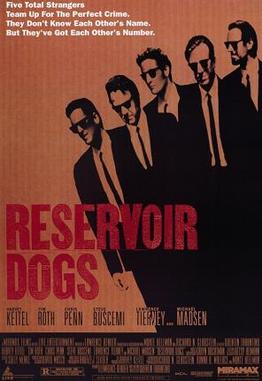
Technically, I guess I’m obligated to start this review with a spoiler alert. Though, seriously, is there anyone out there who hasn’t seen Reservoir Dogs? I guess that there may be. But surely, even if you haven’t seen it, you know everything that happens in the movie. You know about the Like A Virgin conversation at the start of the movie. You know about the ear scene. You’ve seen countless parodies of that scene where the cast walks down the street in slow motion. I find it hard to believe that there are people who don’t know everything about this film but still, I guess it’s always a possibility.
Reservoir Dogs is a challenging film to review, though not because it’s overly complicated or difficult to follow. Instead, the problem is that it’s hard to know what’s left to say about Reservoir Dogs. Just about every crime film that has come out in my lifetime has owed an obvious debt to Reservoir Dogs. It’s the film that launched the directorial career of Quentin Tarantino. It’s also features one of the greatest acting ensembles in the history of American film: Harvey Keitel, Tim Roth, Michael Madsen, Steve Buscemi, Chris Penn, Kirk Baltz, and Lawrence Tierney. Tierney’s presence was especially important. By appearing in the film, the veteran tough guy actor passed on the torch of hard-boiled crime to a new generation.
At its most basic, Reservoir Dogs is a heist film. It employs the type of jumbled timeline that has become a Tarantino trademark. The film starts with a group of 8 criminals eating breakfast and preparing to rob a jewelry store. Then it jumps forward to immediately after the crime, with Mr. Orange (Tim Roth) shot in the gut and Mr. White (Harvey Keitel) desperately trying to get them both to the safety of a warehouse. That’s where they are joined by Mr. Pink (Steve Buscemi). Mr. Pink is convinced that they were set up. He rants about being a professional. He asks if Mr. White had to shoot anyone during his escape.
“A few cops,” Mr. White says.
“No real people?” Mr. Pink replies.
Eventually, Mr. Blonde (Michael Madsen) shows up. We already know, from the film’s first scene, that Mr. Blonde strongly feels that everyone should tip their waitress. After he arrives at the warehouse, we discover that he also likes good music and torturing hostages. Meanwhile, the robbery’s mastermind, Joe Cabot (Lawrence Tierney) and his son, Eddie (Chris Penn), are also on their way to the warehouse. Neither one is happy about how things are going.
And while all this goes on, Mr. Orange continues to bleed in the background…
Reservoir Dogs is known for being a violent film and, even though the movie is 26 years old, some of the violence can still catch you off-guard and make you flinch. The scene where Mr. Blonde chops off the cop’s ear is still not easy to watch. However, the scene that always freaks me out is when Mr. White starts shooting at a police car and the windshield is suddenly smeared with blood. Mr. White is one of the film’s more sympathetic characters but he doesn’t hesitate to kill.
Of course, I think it could also be argued that Reservoir Dogs is actually as close as Tarantino has come to making a film that condemns violence. Not counting the flashbacks, the story largely plays out in real time, which means that we basically spend the entire movie watching and listening as Mr. Orange slowly bleeds to death in front of us.
I rewatched Reservoir Dogs for this review and I have to say that I was really surprised to see how well the film holds up. I was honestly expecting to be a little bit bored with it, just because I’d already seen it multiple times and I knew who the cop would turn out to be. I already had all of the film’s great lines memorized. But, as soon as the film started with everyone arguing about Like A Virgin and whether or not to tip their waitress, I was sucked back into Tarantino’s world. Once again, I found myself laughing at Steve Buscemi’s brilliant delivery of the line: “Why am I Mr. Pink?” I was enthralled all over again by Tim Roth’s nervous intensity and Harvey Keitel’s weary integrity. Even Michael Madsen’s psycho routine felt fresh, despite the fact that he’s played numerous cool-as-ice psychos over the course of his career. Even the way Chris Penn told the story about Lady E still made me laugh.
(To be honest, the line that makes me laugh the most in Reservoir Dogs — and don’t ask me why because I’m not sure of the exact reason — is when the unseen cop who is heard to say, “Yeah, give me the bearclaw,” while following Eddie’s car.)
It’s just a cool movie. How can you resist this?
What happen at the end of the film? Well, we all know the basics. (And here’s where that probably unnecessary spoiler alert comes into play.) Mr. White kills Joe and Eddie, all to protect Mr. Orange. Mr. Pink runs from the warehouse. The seriously wounded Mr. White cradles the dying Orange in his arms. Orange confesses to being a cop. Mr. White lets out a wail of both physical and emotional pain. The police enter the warehouse and order Mr. White to drop his gun. Mr. White shoots Orange in the head and is then gunned down by the police.
But what happened to Mr. Pink?
That’s a serious question because Mr. Pink is my favorite member of this band of robbers. (He gets all the best lines, probably because Tarantino was planning on playing the role himself before Steve Buscemi auditioned.) A lot of people will tell you that they can hear Mr. Pink being arrested outside of the warehouse, shortly before the cops come in and kill Mr. White. And yes, I realize that, in at least one draft of the script, that’s exactly what happened.
Well, I don’t care. We don’t actually see Mr. Pink getting arrested. We don’t hear him getting shot. As far as I’m concerned, Mr. Pink made it out of there alive and managed to escape with the diamonds. The police may have yelled at him to stop but, in the end, they were too busy killing Mr. White to keep an eye on him. Mr. Pink escaped and is currently living on the beach somewhere. As a result of selling the diamonds, he’s now financially comfortable but he still doesn’t tip his waitress. That’s just the way Mr. Pink is.
Finally, one little bit of trivia: Reservoir Dogs may have premiered at the 1992 Sundance Film Festival but it didn’t win any awards at the end of it. Instead, the big winner that year was a comedy called In The Soup. The star of that film? Steve Buscemi.
 Let’s take a moment to appreciate Frank Drebin (Leslie Nielsen), a true American hero.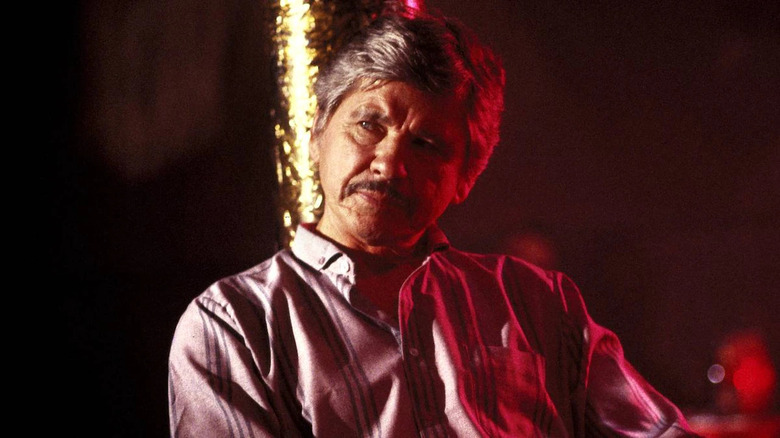






 Through the Shattered Lens