Sundance Film Review: Reservoir Dogs (dir by Quentin Tarantino)


The Sundance Film Festival is currently taking place in Utah so, for this week, I’m reviewing films that either premiered, won awards at, or otherwise made a splash at Sundance!  Today, I take a look at 1992’s Reservoir Dogs, which premiered at that year’s Sundance Film Festival.

Technically, I guess I’m obligated to start this review with a spoiler alert.  Though, seriously, is there anyone out there who hasn’t seen Reservoir Dogs?  I guess that there may be.  But surely, even if you haven’t seen it, you know everything that happens in the movie.  You know about the Like A Virgin conversation at the start of the movie.  You know about the ear scene.  You’ve seen countless parodies of that scene where the cast walks down the street in slow motion.  I find it hard to believe that there are people who don’t know everything about this film but still, I guess it’s always a possibility.

Reservoir Dogs is a challenging film to review, though not because it’s overly complicated or difficult to follow.  Instead, the problem is that it’s hard to know what’s left to say about Reservoir Dogs.  Just about every crime film that has come out in my lifetime has owed an obvious debt to Reservoir Dogs.  It’s the film that launched the directorial career of Quentin Tarantino.  It’s also features one of the greatest acting ensembles in the history of American film: Harvey Keitel, Tim Roth, Michael Madsen, Steve Buscemi, Chris Penn, Kirk Baltz, and Lawrence Tierney.  Tierney’s presence was especially important.  By appearing in the film, the veteran tough guy actor passed on the torch of hard-boiled crime to a new generation.

At its most basic, Reservoir Dogs is a heist film.  It employs the type of jumbled timeline that has become a Tarantino trademark.  The film starts with a group of 8 criminals eating breakfast and preparing to rob a jewelry store.  Then it jumps forward to immediately after the crime, with Mr. Orange (Tim Roth) shot in the gut and Mr. White (Harvey Keitel) desperately trying to get them both to the safety of a warehouse.  That’s where they are joined by Mr. Pink (Steve Buscemi).  Mr. Pink is convinced that they were set up.  He rants about being a professional.  He asks if Mr. White had to shoot anyone during his escape.

“A few cops,” Mr. White says.

“No real people?” Mr. Pink replies.

Eventually, Mr. Blonde (Michael Madsen) shows up.  We already know, from the film’s first scene, that Mr. Blonde strongly feels that everyone should tip their waitress.  After he arrives at the warehouse, we discover that he also likes good music and torturing hostages.  Meanwhile, the robbery’s mastermind, Joe Cabot (Lawrence Tierney) and his son, Eddie (Chris Penn), are also on their way to the warehouse.  Neither one is happy about how things are going.

And while all this goes on, Mr. Orange continues to bleed in the background…

Reservoir Dogs is known for being a violent film and, even though the movie is 26 years old, some of the violence can still catch you off-guard and make you flinch.  The scene where Mr. Blonde chops off the cop’s ear is still not easy to watch.  However, the scene that always freaks me out is when Mr. White starts shooting at a police car and the windshield is suddenly smeared with blood.  Mr. White is one of the film’s more sympathetic characters but he doesn’t hesitate to kill.

Of course, I think it could also be argued that Reservoir Dogs is actually as close as Tarantino has come to making a film that condemns violence.  Not counting the flashbacks, the story largely plays out in real time, which means that we basically spend the entire movie watching and listening as Mr. Orange slowly bleeds to death in front of us.

I rewatched Reservoir Dogs for this review and I have to say that I was really surprised to see how well the film holds up.  I was honestly expecting to be a little bit bored with it, just because I’d already seen it multiple times and I knew who the cop would turn out to be.  I already had all of the film’s great lines memorized.  But, as soon as the film started with everyone arguing about Like A Virgin and whether or not to tip their waitress, I was sucked back into Tarantino’s world.  Once again, I found myself laughing at Steve Buscemi’s brilliant delivery of the line: “Why am I Mr. Pink?”  I was enthralled all over again by Tim Roth’s nervous intensity and Harvey Keitel’s weary integrity.  Even Michael Madsen’s psycho routine felt fresh, despite the fact that he’s played numerous cool-as-ice psychos over the course of his career.  Even the way Chris Penn told the story about Lady E still made me laugh.

(To be honest, the line that makes me laugh the most in Reservoir Dogs — and don’t ask me why because I’m not sure of the exact reason — is when the unseen cop who is heard to say, “Yeah, give me the bearclaw,” while following Eddie’s car.)

It’s just a cool movie.  How can you resist this?

What happen at the end of the film?  Well, we all know the basics.  (And here’s where that probably unnecessary spoiler alert comes into play.)  Mr. White kills Joe and Eddie, all to protect Mr. Orange.  Mr. Pink runs from the warehouse.  The seriously wounded Mr. White cradles the dying Orange in his arms.  Orange confesses to being a cop.  Mr. White lets out a wail of both physical and emotional pain.  The police enter the warehouse and order Mr. White to drop his gun.  Mr. White shoots Orange in the head and is then gunned down by the police.

But what happened to Mr. Pink?

That’s a serious question because Mr. Pink is my favorite member of this band of robbers.  (He gets all the best lines, probably because Tarantino was planning on playing the role himself before Steve Buscemi auditioned.)  A lot of people will tell you that they can hear Mr. Pink being arrested outside of the warehouse, shortly before the cops come in and kill Mr. White.  And yes, I realize that, in at least one draft of the script, that’s exactly what happened.

Well, I don’t care.  We don’t actually see Mr. Pink getting arrested.  We don’t hear him getting shot.  As far as I’m concerned, Mr. Pink made it out of there alive and managed to escape with the diamonds.  The police may have yelled at him to stop but, in the end, they were too busy killing Mr. White to keep an eye on him.  Mr. Pink escaped and is currently living on the beach somewhere.  As a result of selling the diamonds, he’s now financially comfortable but he still doesn’t tip his waitress.  That’s just the way Mr. Pink is.

Finally, one little bit of trivia: Reservoir Dogs may have premiered at the 1992 Sundance Film Festival but it didn’t win any awards at the end of it.  Instead, the big winner that year was a comedy called In The Soup.  The star of that film?  Steve Buscemi.

Previous Sundance Film Reviews:
  1. Blood Simple
  2. I Don’t Feel At Home In This World Anymore
  3. Circle of Power
  4. Old Enough
  5. Blue Caprice
  6. The Big Sick
  7. Alpha Dog
  8. Stranger Than Paradise
  9. sex, lies, and videotape

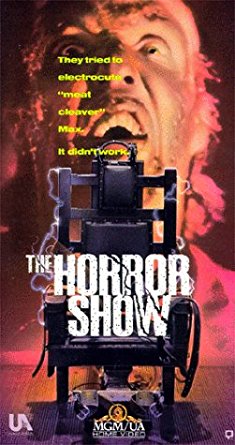
A Movie A Day #269: The Horror Show (1989, directed by James Isaac and David Blyth)


For the crime of having murdered over a 100 people, “Meat Cleaver Max” Jenke (Brion James) is sentenced to death and sent to the electric chair.  Even though everyone thinks that Max was electrocuted, his electricity-fueled spirit is still alive and pissed off.  If this sounds familiar, that is because it is the exact same premise that was used in Destroyer.  The only difference is that Max is not haunting a prison and killing a film crew.  Instead, he is living in a basement and seeking revenge on Lucas McCarthy (Lance Henriksen), the cop who arrested him.

Lucas is already tightly wound.  There is a scene where Lucas is watching as his family laughs uproariously at a late night comic who is telling a not very funny joke about then-Vice President Dan Quayle.  When Lucas thinks that he sees Max on TV, he pulls out his gun and shoots the screen.  His wife, son, and daughter will probably never laugh at another joke about any vice president.  Soon, Lucas is seeing and hearing Max everywhere.  Max says that he is going to tear Lucas’s world apart and he means it.

That The Horror Show is going to be a mess is obvious from the opening credits, where the screenplay is credited to Alan Smithee.  The credited director is visual effects specialist James Isaac but most of the film was reportedly directed by David Blythe.  Isaac stepped in when Blythe was fired by producer Sean S. Cunningham.  Full of false scares and scenes where people go down into the basement for no reason other than to become Max’s latest victim, The Horror Show is usually boring, except for when it is violent, gory, and mean-spirited.  There are moments of strange attempts at humor that do not seem to belong.  In the middle of all the carnage, there is a subplot about McCarthy’s son (Aron Eisenberg) ordering case after case of Nestle Quick.  Did Nestle pay for the product placement?  Were they happy to be associated with a movie where Lance Henriksen has a nightmare that his daughter (played by DeeDee “sister of Michelle” Pfieffer) is pregnant with Max Jenke’s baby?

The Horror Show provided both Lance Henriksen and Brion James with rare starring roles and they did their best what they had to work with.  Also keep an eye out for veteran tough guy Lawrence Tierney as the warden who supervises Max’s execution.

A Movie A Day #177: Murphy’s Law (1986, directed by J. Lee Thompson)


What is Murphy’s Law?

Let’s ask LAPD Detective Jack Murphy.

“Don’t fuck with Jack Murphy.”

Normally, having a law named after you would be pretty cool but it appears that this is just a law that Jack came up with himself.  Having to come up with your own law is kind of like having to come up with your own nickname.  Dude, it’s just lame.  Since Jack Murphy is played Charles Bronson, we can cut him some slack.

Murphy’s Law was one of the many film that, towards the end of his career, Bronson made for Cannon Films.  He played a detective in almost all of them.  Jack Murphy is Dirty Harry without the fashion sense.  He is also an alcoholic who cannot get over his ex-wife (Angel Tompkins) and her decision to become a stripper.  Not only has Murphy managed to piss off his superiors with his bad attitude but the mob is out to get him.  Everyone has forgotten Murphy’s Law.  Everyone is fucking with Jack Murphy.

Jack’s main problem, though, is Joan Freeman (Carrie Snodgress).  Years ago, Murphy sent Joan to prison for murder but, because it’s California and Jerry Brown appointed all of the judges, Joan gets out after just a few years.  Joan starts to systematically murder everyone that Murphy knows, framing Murphy for the murders.  Murphy’s arrested by his fellow cops, all of whom need a refresher on Murphy’s Law.  Though handcuffed to a young thief (Kathleen Wilhoite), Murphy escapes from jail and set off to remind everyone why you don’t fuck with Jack Murphy.

Murphy’s Law is a typical Cannon Bronson film: low-budget, ludicrously violent, borderline incoherent, so reactionary than it makes the Dirty Harry films look liberal, and, if you’re a fan of Charles Bronson, wildly entertaining.  Bronson was 65 years old when he played Jack Murphy so he cannot be blamed for letting his stunt double do most of the work in this movie.  What’s interesting is that, for once, Bronson is not the one doing most of the killing.  Instead, it is Carrie Snodgress, in the role of Joan Freeman, who gets to murder nearly the entire cast.  There is nothing subtle about Snodgress’s demonic performance, which makes it perfect for a Cannon-era Bronson film.  In fact, Carrie Snodgress gives one of the best villainous performances in the entire Bronson filmography.  There is never any doubt that Snodgress is capable of killing even the mighty Charles Bronson, which makes Murphy’s Law a little more suspenseful than most of the movies that Bronson made in the 80s.

Whatever else can be said about Murphy’s Law, it does feature one of Bronson’s best one liners.  When Joan threatens to send him to Hell, Murphy replies, without missing a beat, “Ladies first.”  Only Bronson could make a line like that sound cool.  That’s Bronson’s Law.

Number One With A Bullet: Lawrence Tierney in DILLINGER (Monogram 1945)


gary loggins's avatarcracked rear viewer

dillinger1

Poverty Row Monogram Studios found themselves with a huge hit on their hands when they released DILLINGER, making a star out of an obscure actor named Lawrence Tierney in the process. This King Brothers production brought the gangster movie back in big way, with Tierney’s ferocious performance turning him into a film noir icon. DILLINGER burst the Kings out of the B-movie bracket, and gave the little studio its first major Oscar nomination for Best Screenplay.

dillinger2

The saga of bank robber John Dillinger should be familiar to most of you through its myriad film portrayals, so let’s skip the story and go straight to Tierney. Though the film bills him as “Introducing Lawrence Tierney”, the RKO contract player had been in films a couple years playing bit parts in movies like GHOST SHIP and BACK TO BATAAN when his home studio loaned him out to the Kings. The New York-born actor took…

View original post 657 more words

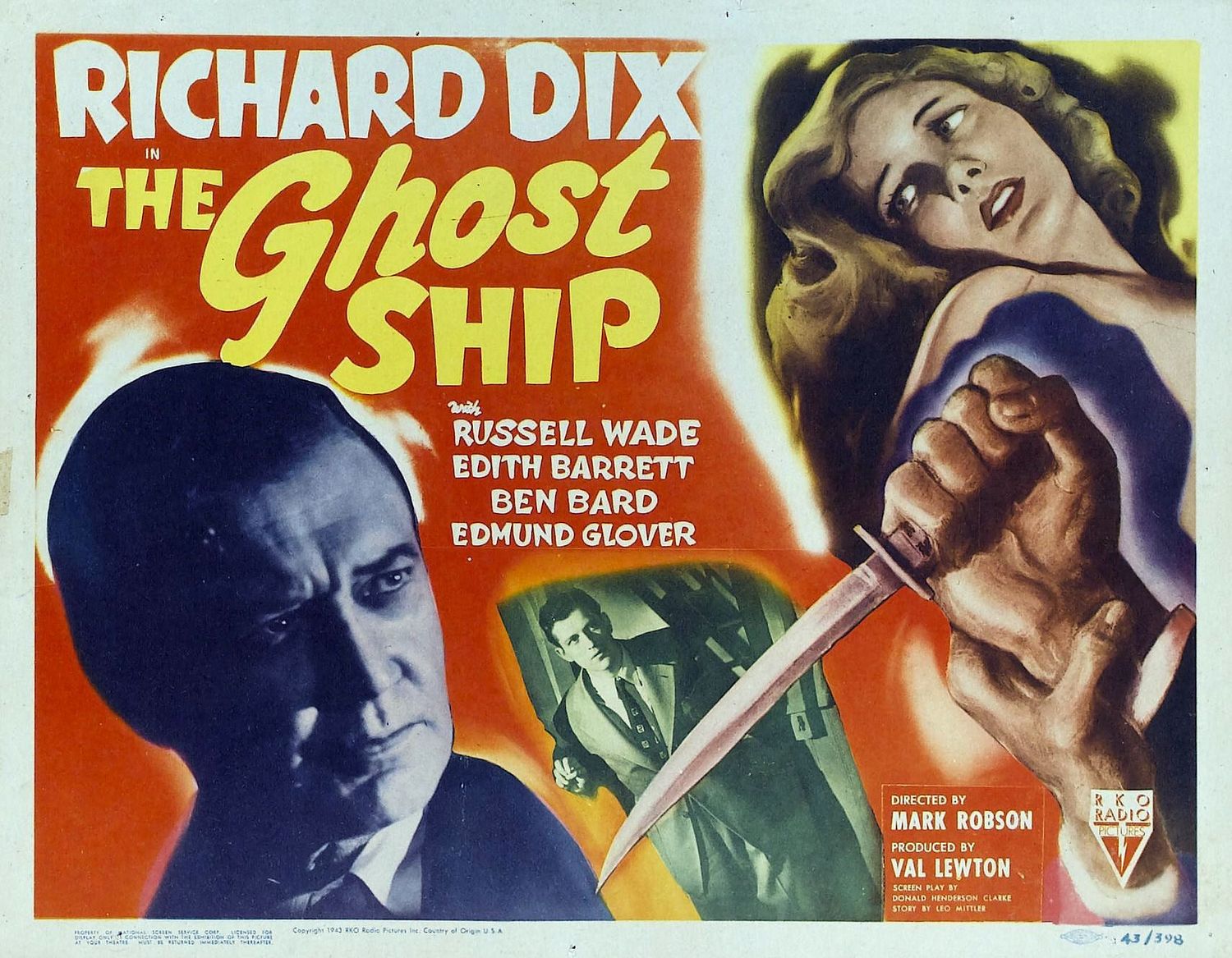
Halloween Havoc!: GHOST SHIP (RKO 1943)


gary loggins's avatarcracked rear viewer

gs1

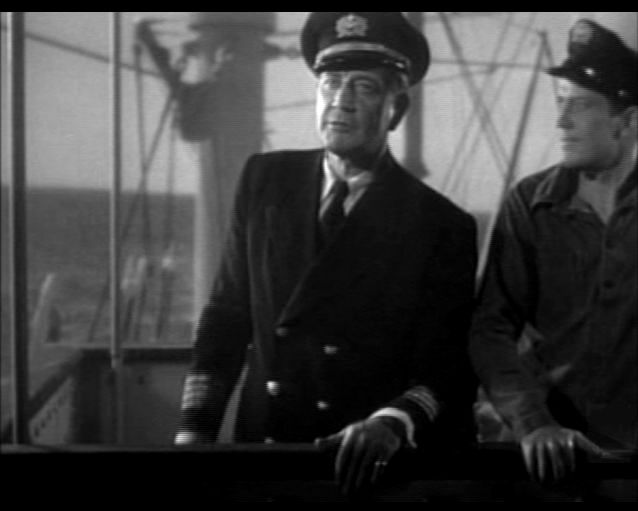
Val Lewton produced some of the most memorable horror films of the 1940’s, moody, atmospheric set pieces noted for their intelligent scripts, chiaroscuro lighting, and eerie use of sound. CAT PEOPLE, THE BODY SNATCHER,  and THE SEVENTH VICTIM  are just three that spring to mind when I think of Lewton movies. GHOST SHIP is one of his lesser known films, a psychological thriller about a sea captain obsessed with authority who goes off the deep end, and while it’s not supernatural as the title implies, it’s a good film worth rediscovering.

gs2

A blind street singer on a fog-shrouded corner gives an ominous warning to 3rd Officer Tom Merriam, about to embark on his first voyage aboard the S.S. Altair, captained by veteran sailor Will Stone. Stone is stern but friendly, eager to teach Tom the ways of the sea, and implement his view’s of the captain’s authority. A crewman dies just…

View original post 709 more words

Horror Film Review: The Prowler (dir by Joseph Zito)


The_Prowler

“A prowler has been seen around the campus and, well … he could be dangerous.”

— Miss Allison (Donna Davis) in The Prowler (1981)

Miss Allison was one of those largely ineffectual authority figures who always seems to turn up in slasher films from the early 80s.  It was easy to be dismissive of her and personally, I can’t get over the fact that she would actually show up for the big graduation dance wearing pantyhose with sandals.  But still, Miss Allison had a point here.  There was a prowler wandering around campus and was he ever dangerous!

Of course, this all could have been avoided if they just hadn’t had a graduation dance to begin with.  Eccentric old Maj. Chatham (Lawrence Tierney) understood that.  He remembered what had happened at the town of Avalon Bay’s graduation dance of 1945, how Rosemary (Joy Glaccum) and her new date where both killed by a pitchfork-wielding maniac.  Chatham had spent the last 35 years protesting any plans to hold another graduation dance.

However, in 1980, one feisty student named Pam (Vicky Dawson) finally convinced the town to allow them to hold a graduation dance.  It probably helped the Pam’s boyfriend, Mark (Christopher Goutman) was a deputy.  The morning of the dance, reports came in that someone had robbed a nearby store, murdered the store owner, and might be heading towards the town of Avalon Bay.

The sheriff (Farley Granger, who played Guy Haines in Hitchcock’s Strangers on a Train) reacted to this news by announcing that he was going fishing and leaving Mark in charge.  And, before the viewer could say, “Wait a minute — how does that make any sense?,” the sheriff was gone, the dance was on, and a maniac in a combat uniform was killing people with a bayonet and a pitchfork.

Yes, Miss Allison, the prowler was quite dangerous.

Having read that plot description, you might have a suspicion as to who the prowler actually was.  But you’re probably thinking to yourself, “No, that is way too obvious a solution!”  Well, no — it isn’t.  You will not learn the Prowler’s identity until the final few minutes of the film but you will have guessed it early on.

The Prowler is not going to win any points for originality.  It’s a slasher film from the early 80s, with everything that implies.  For people who know their horror history, it’s a time capsule of that brief period when slashers were still making an effort to be American gialli, before the genre became dominated by loquacious monsters like Freddy Krueger and postmodern snark.  As a character, the Prowler says next to nothing and really has no personality beyond a few questionable hobbies.  But he certainly does kill a lot of people and seems to truly enjoy it.

And, if you hate these type of films, you’re going to hate The Prowler.  But, that being said, The Prowler is actually one of the better examples of the early 80s slasher genre.  Much as he would do with both Abduction and Friday the 13th — The Final Chapterdirector Joseph Zito keeps the bloody action moving and, though they may be playing stock characters, he gets above average performances from his entire cast.  As opposed to a lot of slasher films of the period, you actually feel bad when these people meet their untimely end.

And finally, the Prowler himself is just scary!  The combination of the Prowler’s menacing appearance and Tom Savini’s relentless gore effects sets this film apart from other contemporary slashers, like Graduation Day.  Even by the standards of slasher psychos, the Prowler is cruel and sadistic.  It’s not just that he kills with a bayonet.  It’s that he obviously get so much enjoyment from doing it.  At its best, The Prowler is pure nightmare fuel.

Finally, on a personal note, I have to admit that it kind of freaked me out that one of the Prowler’s victims was named Lisa.  As I’ve said before, slasher films tend to scare me precisely because I know that there’s no way I’d survive one.  We always tell ourselves that people in slasher movies die because they do unbelievably stupid things but honestly, I think we all do a lot of stupid things every day.  After all, we all behave under the assumption that we’re not on the verge of being attacked by a knife-wielding maniac.  Hence, it’s easy to say, “Don’t go in that room!” but why shouldn’t someone go in that room?  After all, they’re not watching the movie.  They don’t know there’s a killer in that room.  Lisa in The Prowler certainly did some stupid things and what freaked me out was that I could easily imagine myself doing the same stupid things.

(True, unlike the film’s Lisa, I wouldn’t go out by myself in the middle of night, strip down to my underwear, and then jump in a pool but I’m planning on conquering my fear of drowning someday soon and who knows what might then happen!)

Seriously, people — be kind to the Lisas in your life.

The Daily Grindhouse: Abduction (dir. by Joseph Zito)


Before I went on vacation, I searched through my film collection and I found a banged-up VHS tape that I had ordered off of Amazon a while back.  I had been inspired to order the tape because it contained a movie based on a true crime case that I was oddly obsessed with at that time.  However, as is typical with my obsessions, I had pretty much lost interest by the time the movie actually showed up on my doorstep.  Hence, that tape sat unwatched until last week when I finally curled up on my couch and watched it.

Released in 1975, Abduction is an example of the “Ripped-From-The-Headlines” genre of grindhouse filmmaking.  These films specialized in taking sordid true stories and giving them an even more sordid cinematic interpretation.  They were often advertised as the film that would tell you “the shocking true story!” or “the story that they don’t want you to know.”  Despite a disclaimer at the beginning of the film that informs us that any resemblance to anyone living or dead is “purely coincidental,” Abducted tells us “the shocking true story!” behind the kidnapping of Patricia Hearst.

In 1974, newspaper heiress Patty Hearst was a 19 year-old student at Berkeley who was kidnapped from her apartment by a group of left-wing revolutionaries known as the Symbionese Liberation Army (SLA).  The SLA was led by a charismatic escaped prisoner who called himself Field Marshal Cinque and who announced — via a messages that Hearst read into a tape recorder — that Hearst was being held hostage in the name of social justice.  The police and FBI spent several months unsuccessfully searching for Hearst until one day, the SLA released an audio tape in which Hearst announced that she had now joined the SLA and wanted to be known as Tania.  Hearst was soon robbing banks and went from being a hostage to a wanted criminal.  When she was arrested in 1975, Hearst claimed to have been brainwashed by the SLA and people still debate whether she was a sincere revolutionary, a calculating criminal, or just a weak-willed victim.

One of the more fascinating aspects of the Hearst case is that, a year before Hearst was kidnapped, a book called The Black Abductor  was released.  The Black Abductor tells the story of an heiress named Patricia who is kidnapped by a group of left-wing revolutionaries led by a charismatic escaped prisoner and who eventually decides to join with her violent captors.  No one was sure who actually wrote the book (though it was credited to a “Harrison Chase”) and the FBI apparently investigated whether or not the book had been used as a blue print for the actual kidnapping.

(I actually have a copy of the Black Abductor.  I found it in the nostalgia section of Half-Price Books, mixed in with the usual collection of detective novels, westerns, and tv novelizations.  I squealed a little when I recognized the title and wow, did I ever get the strangest look at the front register when I paid for it.  The book itself is actually pretty boring.)

Abduction, probably in order to avoid a lawsuit from the Hearst family, is officially based on the novel Black Abduction and not the kidnapping of Patty Hearst.  That said, the movie (which was released after Hearst had robbed her first bank but before she was arrested) is totally about the kidnapping of Patty Hearst.

In Abduction, Hearst is called Patricia Prescott and her father is no longer in the newspaper business.  Instead, he’s a real estate developer who is planning to destroy the ghetto and replace it with high-income housing.  Patricia (played by Judith-Marie Beragan) is kidnapped and her older boyfriend is beaten up by a group of revolutionaries.  Patricia is held prisoner in a barren apartment and, in a disturbingly clinical scene, is raped (and filmed) by both the group’s leader (an escaped prisoner, of course) and a female member of the group.  Scenes of Patricia being slowly brainwashed are intercut with scenes of a brutal FBI agent beating up liberal grad students and Patricia’s parents (played by Hollywood veterans Leif Erickson and Dorothy Malone) obsessively watching video tapes of their daughter being sexually assaulted.

Abduction is one of those low-budget, relentlessly sordid films that really can’t stand on its own as a work of art but, never the less, remains a fascinating portrait of the time that it was made.  In true exploitation fashion, the film is deliberately made to appeal to both sides of the cultural divide.  When the FBI agent played by Lawrence Tierney is seen smirking as his partner smacks around a smug leftist, the filmmakers are both appealing to the paranoia of the liberals and providing wish fulfilment for the right.  By the same token, when Patricia stands in a doorway with a smoking shotgun in her hands, it’s an image that’s calculated to be empowering, erotic, and frightening all at the same time.   Like many grindhouse film, Abduction might not be a great (or even good) film but as a reflection of the psyche of the times that produced it, it’s an invaluable document.