The 1976 film, The Eagle Has Landed, takes place during World War II.
The year is 1943 and, with the war turning against Germany, Heinrich Himmler (Donald Pleasence, in a chilling turn) orders Colonel Max Radl (Robert Duvall) to come up with a plan to kidnap Winston Churchill. When Radl learns that Churchill is scheduled to visit a small, coastal British village, he recruits a cynical member of the IRA, Liam Devlin (Donald Sutherland), to travel to the village and make contact with a Nazi sleeper agent, Joanna Grey (Jean Marsh). While Devlin sets up the operation in Britain and falls in love with Molly Prior (Jenny Agutter), Radl recruits disillusioned Colonel Kurt Steiner (Michael Caine) to lead the mission to kidnap Churchill.
At first the village is welcoming to Steiner and his men, who are disguised as being Polish paratroopers. However, it doesn’t take long for the plan to fall apart. Soon, Steiner and his men are holding the villagers hostage in a church while battling a group of American soldiers led by the incompetent Colonel Clarence Pitts (Larry Hagman) and Captain Harry Clark (Treat Williams). Meanwhile, in Germany, Radl learns that Hitler did not actually authorize the mission to kidnap Churchill and that he has been set up as the scapegoat in case the mission fails.
The Eagle Has Landed can seem like a bit of an odd film. For a film that was released in the same year as Network, All The President’s Men, and Taxi Driver, The Eagle Has Landed feels rather old-fashioned and almost quaint in its storytelling. This was the final film to be directed by John Sturges, a director who started his career in the 1940s and whose best-known films included The Magnificent Seven and The Great Escape. Sturges’s direction is efficient but not at all flashy. (It’s a film that feel like its very much a product of the mid-60s as opposed to the mid-70s.) The story plays out at a deliberate pace, one that leaves no doubt that the film was based on a novel. In fact, it sometimes feels as if the film itself should have chapter headings. The film holds your interest but it’s hard not to feel that a film that should have been an epic action film has instead been turned into something far less ambitious.
Sturges works with an ensemble cast, with no one member of the cast really dominating over the other. (I guess if the film has a main character, it would be Donald Sutherland’s Liam Devlin but, for all the time that’s devoted to him, he actually doesn’t do that much once the action starts.) The cast is full of good actors, though a few of them are miscast. Neither Michael Caine nor Robert Duvall make much of attempt to sound German. As a member of the IRA, Donald Sutherland sounds as Canadian as ever. Fortunately, Caine, Duvall, and Sutherland are all strong-enough actors that they can make an impression even with somewhat distracting accents. Treat Williams is a bit bland as the heroic American but Larry Hagman generates a few chuckles as Williams’s amazingly dumb commanding officer. The important thing is that ensemble is strong enough to hold the viewer’s attention.
The Eagle Has Landed is an old-fashioned but still entertaining film. The actors are fun to watch, the action scenes are fairly exciting, and it ends with a clever twist, one that was apparently historically accurate. It’s a well-done historical melodrama, even if it’s never quite as epic as it aspires to be.
Way back in 1960, Director John Sturges took Akira Kurosawa’s timeless classic SEVEN SAMURAI (1954) and translated its themes of honor and sacrifice into the American western THE MAGNIFICENT SEVEN. A classic on its own, the film stars such cinematic legends as Yul Brynner, Steve McQueen, James Coburn, Eli Wallach, and Charles Bronson. The storyline of a small group of men protecting a village from bandits proved to be an irresistible subject once again, especially the way it was handled here. Its theme music by Elmer Bernstein is one of the most instantly recognizable pieces of music in western cinema. It’s not easy translating a masterpiece without suffering quite negatively in comparison, and I’ve always admired how Sturges and his team of writers were able to create a film that both honored the source material while successfully transferring its content to a different part of the world.
The lead performances of Yul Brynner and Steve McQueen anchor the film, and the screenplay masterfully takes the time to introduce us to each of the seven men and their myriad of reasons for taking on this mission. We care about the men because we get to know them. After Brynner and McQueen, we learn James Coburn is the most badass, Robert Vaughn is the most cowardly, Brad Dexter is the most money hungry, and Horst Buchholz is the most naive. Unsurprisingly, my favorite of the characters is Bernardo O’Reilly, played by Charles Bronson. In my opinion, the character of O’Reilly represents the heart of the story. His character is as tough as it gets and great with a gun, but it’s the way he cares for the actual people, especially the children of the village, that really stands out. It’s in these small moments and exchanges between Bronson and the kids, where the film seems to transcend the genre and become something even more reflective and meaningful. So when Bronson pays the ultimate price, it’s not for some grand purpose or ideal, it’s specifically for those kids, and the moment becomes powerful. For my money, Bronson gives one of the more moving turns in classic western cinema that remains under appreciated to this day.
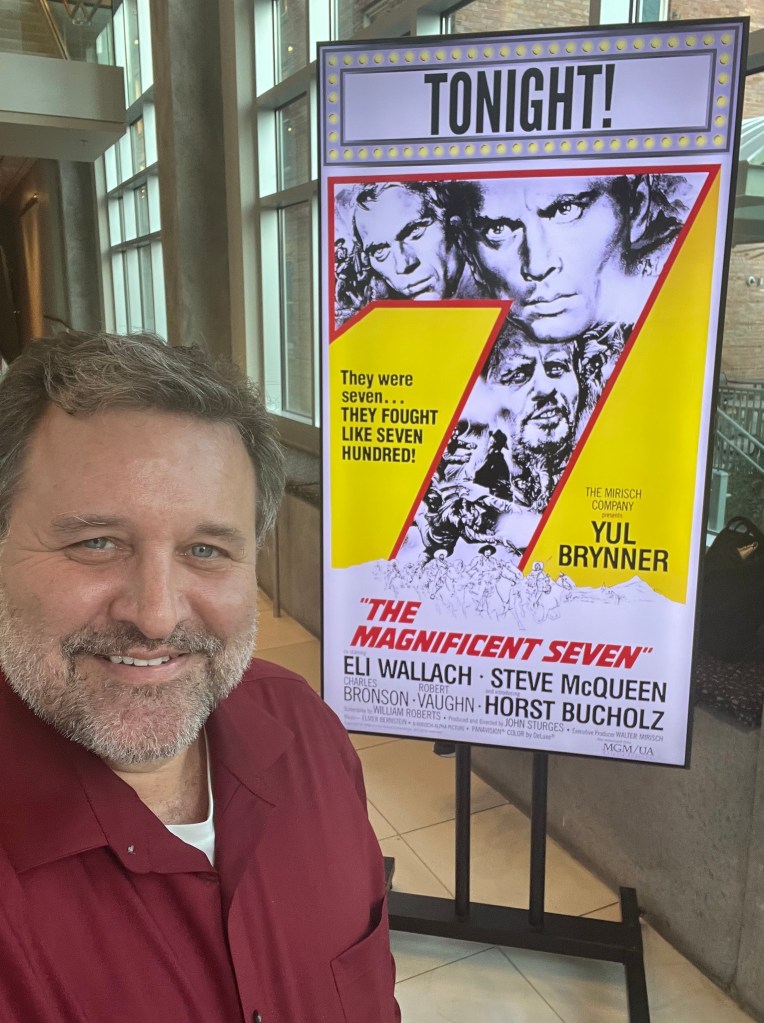
In 2025, THE MAGNIFICENT SEVEN celebrated its 65th anniversary, with many theaters around the country screening the film again. I was lucky enough to catch one of those screenings at a theater in downtown Little Rock. It was a wonderful night at the movies. Today, on what would have been his 116th Birthday, I celebrate Director John Sturges and this great film that has meant so much to me!
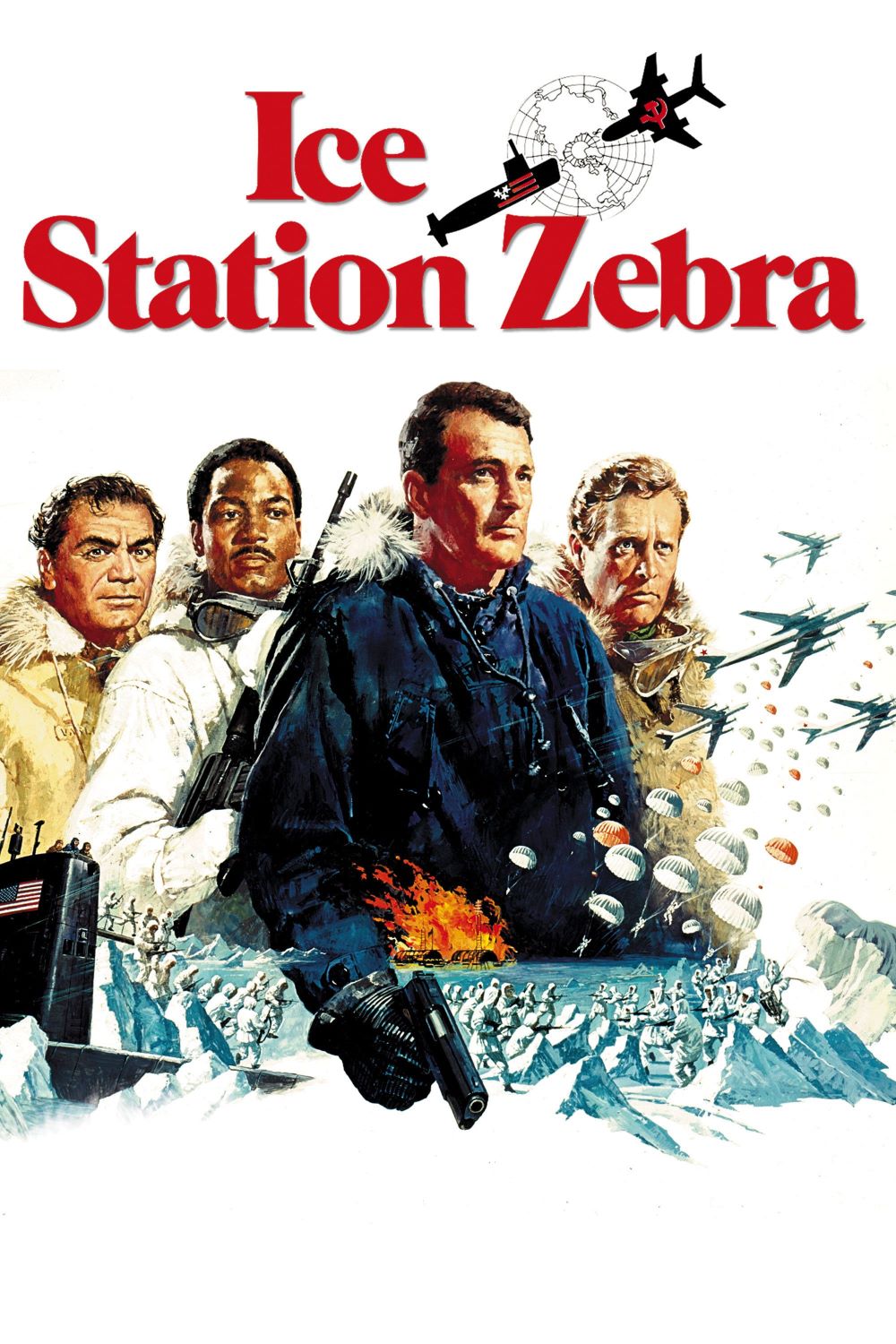
Ice Station Zebra, directed by John Sturges in 1968, slides into guilty pleasure territory like a submarine slipping under polar ice—full of big Cold War ambitions, shadowy spy games, and submarine peril that tease something epic, but so loaded with pacing hiccups, studio shortcuts, and earnest overreach that it ends up a lopsided, lovably messy ride. Sturges had already cemented his rep with crowd-roaring hits like The Magnificent Seven, where a ragtag posse of gunslingers delivered razor-sharp tension and quotable showdowns, or The Great Escape, a WWII breakout yarn crackling with clever schemes, sweaty escapes, and Steve McQueen’s motorcycle glory. Those films moved like a well-oiled engine, every scene stacking stakes and character beats into unforgettable momentum. By contrast, Ice Station Zebra feels like Sturges chasing that same high-wire ensemble vibe—a U.S. nuclear sub, the USS Tigerfish, barreling toward a trashed Arctic outpost—but bloating into a 148-minute sprawl that swaps tight plotting for endless red-lit corridor glares and withheld mission secrets. It’s not in the same league as his earlier triumphs, lacking their propulsive drive and lived-in grit, yet that very shortfall turns it into quirky comfort viewing for fans who dig flawed ’60s spectacle.
The setup hooks you quick: Commander James Ferraday, Rock Hudson’s square-jawed everyman at the helm, gets tapped for a hush-hush run to Ice Station Zebra after a satellite supposedly carrying spy photos crashes nearby. No full briefing for him, just orders to play it cool while three mystery passengers board—Mr. Jones, a buttoned-up British agent with evasive smirks; Boris Vaslov, Ernest Borgnine’s barrel-chested Russian turncoat oozing fake bonhomie; and Captain Anders, Jim Brown’s steely Marine barking orders over a squad of jarheads. As the Tigerfish dives under thickening ice floes, the sub’s innards come alive with flickering sonar pings, steam-hissing valves, and crewmen hunched over gauges in perpetual sweat. It’s claustrophobic gold at first, the hull creaking like it’s got a bad case of frostbite, echoing the trapped dread Sturges nailed in his POW camp classic but without the same spark of rebellion. Then sabotage strikes—a flooded missile bay, a wild plunge toward crush depth—and fingers start pointing. Who tampered with the ballast? Jones with his locked trunk of gadgets? Vaslov’s too-friendly vodka toasts? The Marines itching for a fight? The scene builds real sweat, divers suiting up in the nick of time, but Sturges lets the fallout drag, turning interrogation into a tea party of suspicions rather than the cutthroat blame game his best films thrived on.
These early stumbles set the tone for a film that’s promising yet perpetually off-kilter, far from the seamless revenge rhythm of The Magnificent Seven‘s dusty trails. Production fingerprints show everywhere: rumors swirl of Navy brass forcing script tweaks to glorify their boats, last-minute casting shifts from bigger names to Hudson, and a roadshow rollout with overture, intermission, and 70mm pomp that screams overambition. The Arctic plunge delivers tense highlights—the sub ramming upward through ice chunks like a whale breaching, sparks flying from shorted panels, crew barking damage reports—but lulls follow with tech jargon dumps and characters circling motives without committing to conflict. Hudson anchors it all with unflappable poise, barking commands like a TV dad in a crisis, but he lacks McQueen’s sly charisma or Yul Brynner’s brooding fire. Borgnine hams it up as Vaslov, his accent flipping from gravelly growl to vaudeville schtick during mess-hall ribbing, while McGoohan brings the sharpest edge as Jones, his dry barbs hinting at deeper layers. Brown’s Anders gets muscle but little nuance, leading a Marine crew that feels like stock tough guys waiting for their cue.
Pushing topside, the flaws bloom into full charm. The ice cap arrival unfolds in sweeping widescreen vistas—endless white expanses, howling gales whipping snow devils—but close-quarters betray the soundstage: actors plodding through “blizzards” in lightweight jackets, no puffing breath in the deep freeze, sets that wobble if you squint. It’s the kind of earnest cheesiness that sinks modern blockbusters but endears this relic, especially when the station siege erupts. Soviets drop from the sky in parachutes like deadly snowflakes, scouring the charred ruins for a buried film capsule packed with NATO missile coords. Americans fan out in white camo, trading potshots amid smoke grenades and collapsing tunnels, loyalties cracking as Vaslov’s true colors flash. Ferraday’s cool bluff seals a three-way stalemate, denying everyone the prize in a nod to mutually assured secrets. Michel Legrand’s score surges here, horns blaring over the chaos like a war drum, giving Sturges’ action chops a late workout. Yet even this payoff sprawls, talky standoffs eating screen time where his peak films would’ve sprinted to the finish.
What seals Ice Station Zebra‘s guilty pleasure status is embracing its dated quirks as features, not bugs—hammy all-male bravado, Cold War jitters turned quaint, plot gaps you could park a destroyer in. Sturges conjures submerged panic and frosty fireworks that nod to his glory days, the sub’s practical effects holding up better than some CGI today, but without the narrative steel of The Great Escape‘s tunnel triumphs or The Magnificent Seven‘s mythic standoffs, it coasts on atmosphere over precision. Clocking 148 minutes, it tests patience with filler like extended sail sequences and coy reveals, yet rewards surrender: grin at Borgnine’s bear hugs masking menace, chuckle at the Navy polish glossing gritty potential, savor the sheer balls of staging Arctic Armageddon on a backlot. Howard Hughes reportedly looped it endlessly in his casino screening rooms, and you get why—it’s hypnotic in its wonkiness, a time capsule of late-’60s Hollywood flexing before New Wave grit crashed the party.
Pop this on a stormy night with cocoa and zero expectations, and Ice Station Zebra shines as cozy flawed fun. Sturges’ touch keeps the chills coming amid the clunkers, delivering submarine squeezes, betrayals under the aurora, and a finale with enough brinkmanship bang to forgive the bloat. It’s no peer to his earlier masterpieces, more a quirky footnote, but that’s the hook: imperfect promise wrapped in icy spectacle, begging a rewatch to spot every goofy grace note. For ’60s thriller buffs, submarine nuts, or anyone needing a break from slick reboots, it’s a frosty, flawed feast worth the dive.
1972’s JoeKidd opens with the title character (played by Clint Eastwood) in jail. Joe is a New Mexico rancher and apparently, someone with a long history of getting in trouble with the law. This time, he’s been arrested for poaching and disturbing the peace. Given a choice between a fine and ten days in jail, Joe goes for the ten days. Cowardly Sheriff Mitchell (Gregory Walcott) says he’s going to put Joe to work. Joe Kidd snarls in response.
However, that’s before Luis Chama (John Saxon), a Mexican revolutionary, raids the courthouse and demands that all of his people’s ancestral land be returned to them. Local landowner Frank Harlan (Robert Duvall) forms a posse to track Chama down. Joe says that he has nothing against Chama but that changes once he discovers that Chama raided his ranch and beat up one of his ranchhands. Joe joins the posse but he soon discovers that Harlan and his men are sadists who are more interested in killing Mexicans than actually capturing Chama.
I was actually pretty excited about watching JoeKidd. Clint Eastwood, Robert Duvall, and John Saxon, three of my favorite actors in the same movie! How couldn’t I be excited? Unfortunately, neither Duvall nor Saxon are at their best in this film. Frank Harlan is a one-dimensional villain and Duvall doesn’t make much of an effort to bring any sort of unexpected nuance to the character. Duvall doesn’t give a bad performance but it’s hard not to feel that Harlan is a character who could have been played by any forty-something actor. It feels like waste to cast such a good actor in such a thin role. (Add to that, I prefer Duvall when he plays a good guy as opposed to when he plays a bad guy.) As for Saxon, this is probably one of his worst performances but his character is also rather underwritten and the film can’t seem to decide if it wants the viewer to be on his side or not. Saxon delivers his lines in an exaggerated Mexican accent that makes it difficult to take Louis Chama seriously. Gregory Sierra would have made a good Louis Chama but Saxon just seems miscast.
Fortunately, Clint Eastwood is always a badass, even in an uneven film like this. Eastwood is at his best in the early scenes, when he’s grouchy and hungover and annoyed at finding himself in the jail. He is believably outraged by Harlan’s tactics and, in typical Eastwood fashion, he delivers every pithy one-liner with just enough style to keep things interesting. That said, Eastwood is let down by a script that never really makes it clear why Joe Kidd stays with the posse once it becomes clear that he’s traveling with a bunch of sociopaths. Joe’s motivations are never really clear. In the end, he seems like he goes through a lot of trouble to protect his farmland and get revenge for one of his ranch hands (who is just beaten up), just to then desert it all once all the shooting is over.
That said, JoeKidd is a gorgeous film to look at and Joe makes creative use of a steam engine. This isn’t the film to show anyone who isn’t already an Eastwood fan. But, for those of us who are already fans of Clint, it’s enjoyable to watch him snarl, even if it is in a lesser film.
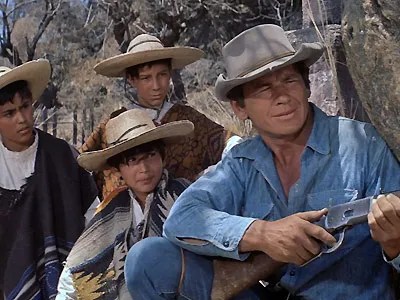
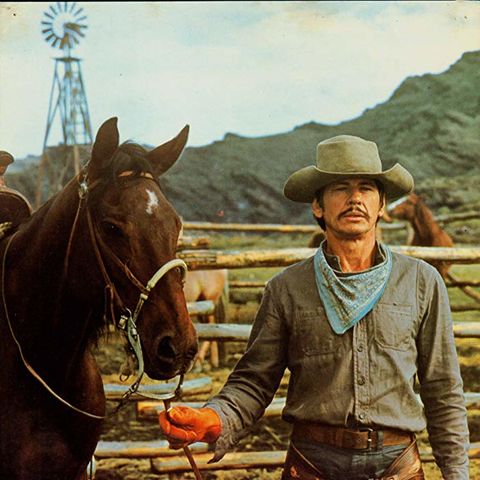
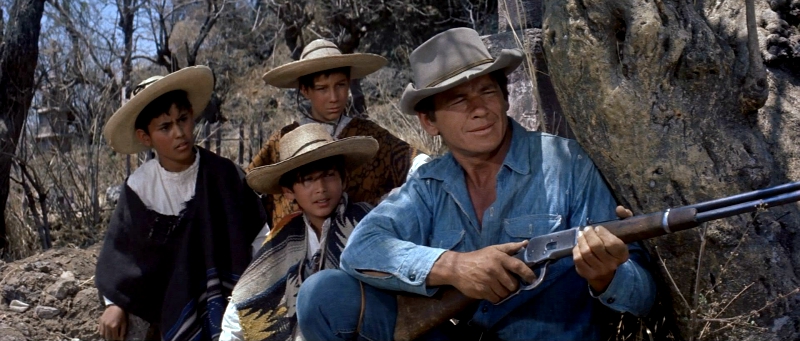
Director John Sturges was born on January 3rd, 1910. He directed some of my favorite movies, and many of them starred my movie hero, Charles Bronson. The picture above is from 1973’s CHINO!
Charles Bronson’s second role in a film was in Sturges’ THE PEOPLE AGAINST O’HARA from 1951, starring Spencer Tracy. The picture below isn’t a very good picture as Bronson was only in one scene. Can you spot Bronson??
In 1959, Sturges would direct Charles Bronson in NEVER SO FEW, which co-starred Frank Sinatra and Steve McQueen.
Just a year later in 1960, Sturges would direct Bronson and an all star cast that included Yul Brynner, Steve McQueen, James Coburn and Robert Vaughn in THE MAGNIFICENT SEVEN, a remade of the Akira Kurosawa classic THE SEVEN SAMURAI. Bronson’s role as Bernardo O’Reilly is one of the best in the entire film.
John Sturges would direct Charles Bronson again in 1963 in the classic film THE GREAT ESCAPE, which also starred Richard Attenborough, Steve McQueen, James Garner, James Coburn and Donald Pleasence. Charles Bronson drew on his experience in the coal mines of Pennsylvania when he played “The Tunnel King” in the classic World War II film. Charles Bronson is one of the characters who actually escapes, which made me very happy!
John Sturges would direct Charles Bronson one more time in the underrated western from 1973, CHINO (pictured at the top). Sturges was a phenomenal director, and Charles Bronson was in some of his very best work! As Charles Bronson’s biggest fan, Sturges will always be one of my favorite directors!!
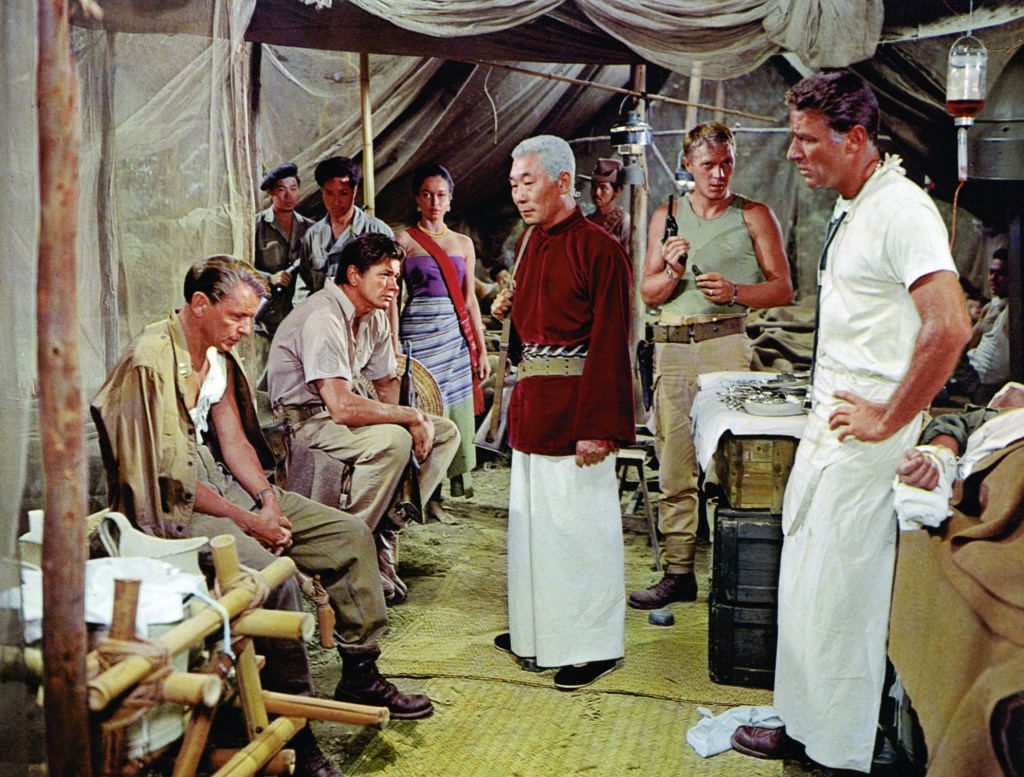
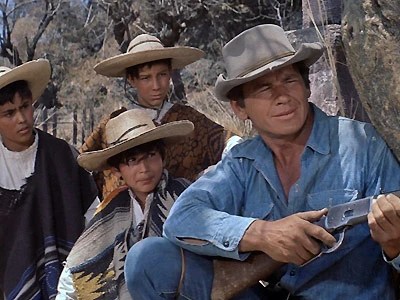
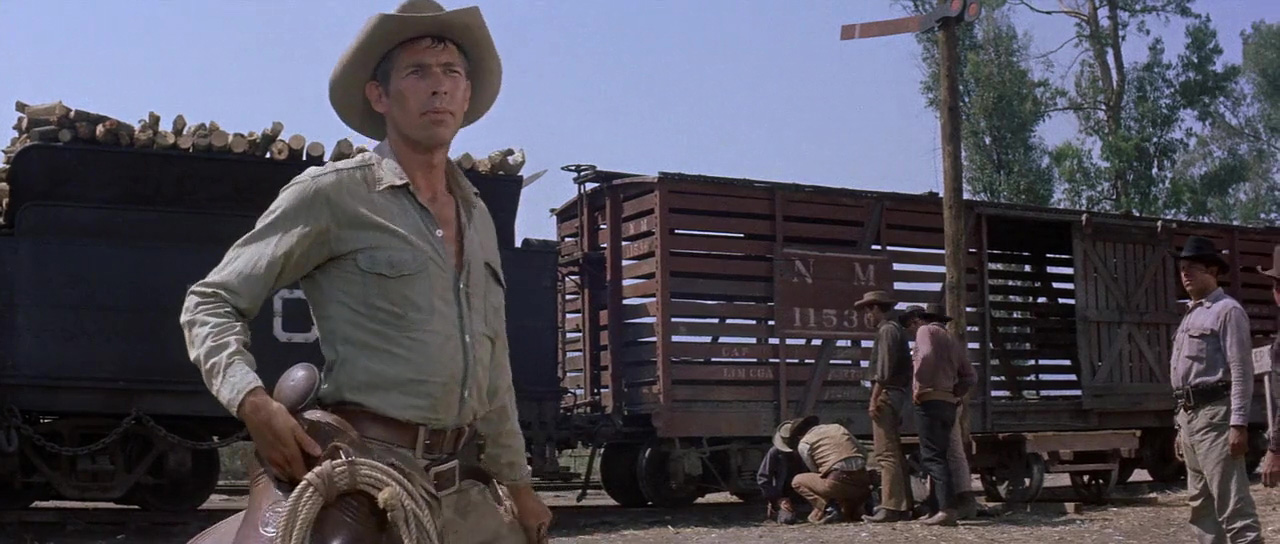
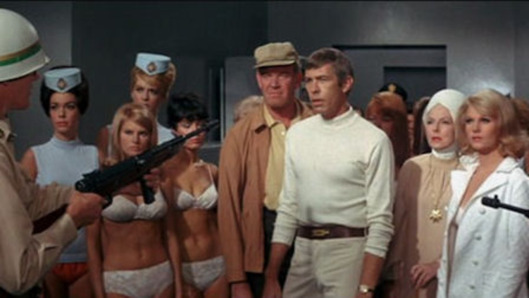
4 Shots From 4 Films is just what it says it is, 4 shots from 4 of our favorite films. As opposed to the reviews and recaps that we usually post, 4 Shots From 4 Films lets the visuals do the talking!
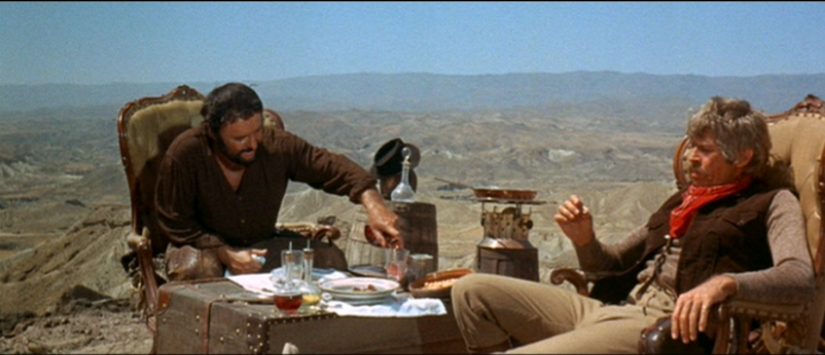
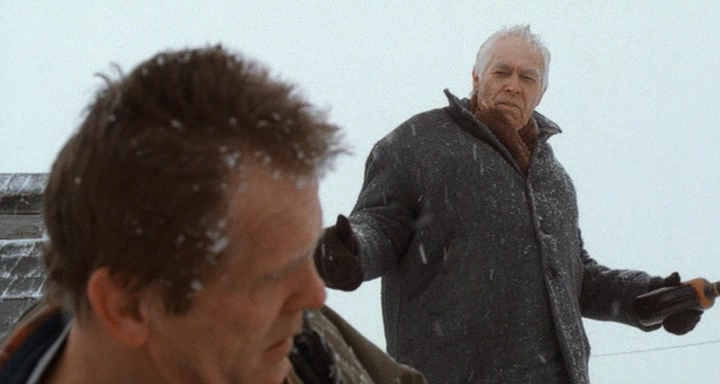
Whether he was appearing in a western, a spy film, a war film, a comedy, or a dark drama, James Coburn was one of the coolest and most underapperciated actors around. He made bad films tolerable and good films even better. Regardless of the role, Coburn brought his own unique style to each and every performance. He was born 92 years ago today in Nebraska so here are just four of the films from his legendary career.
4 Shots From 4 Films
The Magnificent Seven (1960, directed by John Sturges)
In Like Flint (1967, directed by Gordon Douglas)
A Fistful of Dynamite (1971, directed by Sergio Leone)
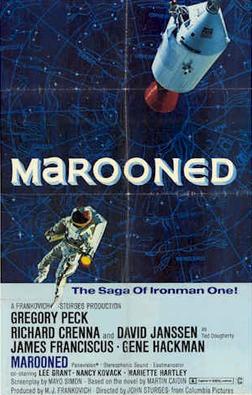
Imagine The Martian or Apollo 13 without any humor or narrative momentum and you’ve got an idea what Marooned is like.
Three American astronauts (played by Richard Crenna, Gene Hackman, and James Franciscus) are returning to Earth after serving on an experimental space station when the engine to their spacecraft fails. Now stuck in orbit around the Earth, they only have two days before they run out of oxygen. While flight commander Crenna tries to keep everyone calm and make sure that all the proper procedures are followed, Gene Hackman yells at NASA and demands to be rescued.
Down on Earth, the head of NASA (Gregory Peck) says that there’s nothing that can be done. There’s no way to get a rescue mission set up quickly enough to save the lives of the astronauts. Both the President and David Janssen disagree with him. Janssen demands to be sent into space immediately, regardless of the dangers, so that he can bring America’s astronauts home.
Marooned is a painfully slow movie that went into production at the height of the space race and which was released just a few weeks before the first successful moon mission. Because it was made at a time when there were still many who claimed that NASA was a waste of money, the movie goes out of its way to explain that, even though the astronauts are probably going to die in space, NASA is in no way to blame. Richard Crenna absolves NASA of blame after being told that a rescue mission isn’t feasible. Gregory Peck holds a press conference, where he gives a lengthy speech about why space exploration is still important. The movie is very detailed in showing that NASA is staffed by personality-free professionals, which might have boosted confidence in NASA but which also leads to a dull story. You’ll notice that I haven’t referred to anyone in this film by the names of their characters. That’s because their names don’t matter because, other than Gene Hackman and David Janssen, none of them is really distinguished by any sort of identifiable personality. Hackman chews the scenery while Janssen plays another surly character who seems like he has a permanent hangover. I wouldn’t trust Janssen to pilot a spaceship.
Marooned won an Oscar for its Special Effects, which were probably impressive back in 1969 but which are dull by modern standards. Winning that Oscar meant that Marooned would eventually earn the distinction of being the only Oscar winner to be featured on Mystery Science Theater 3000. On MST 3K, it aired under the title Space Travelers, which is a perfectly generic name for a perfectly generic film.
There’s a large hue and cry about the upcoming remake of THE MAGNIFICENT SEVEN (and remakes in general) among classic film fans. “How dare they”, it kind of goes, “Why, that’s blasphemy!”. The truth is, Hollywood’s been cannibalizing itself since almost the beginning, and remakes have long been a staple of filmmakers. THE MAGNIFICENT SEVEN is a remake of Akira Kurasawa’s Japanese film SEVEN SAMAURI, moved to the American west by producer/director John Sturges . And while quite frankly most remakes can’t hold a candle to the originals, this 1960 action epic can stand on it’s own as one of the great Western adventures.
Sturges assembled a macho cast to tell the tale of bandits terrorizing a small Mexican village, and the seven hired guns who take on the job of defending them. Top billed is Yul Brynner as Chris, the black clad gunslinger who puts together the crew. First among them is
I think it’s becoming a sort of unofficial tradition to celebrate a particular film legend’s birthday using the 4 Shots From 4 Films series as platform to showcase these individuals best and lesser-known films.
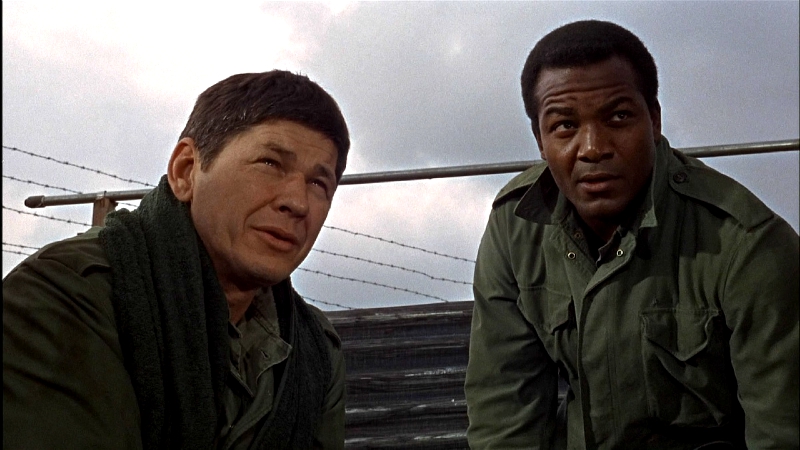
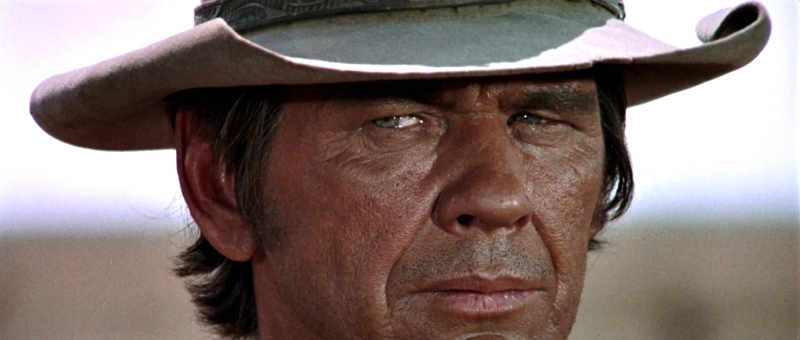
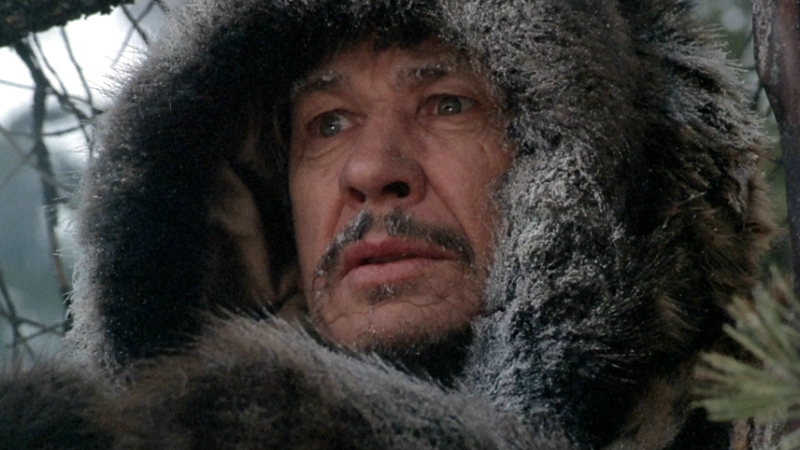
Today, we focus and celebrate what would’ve been the 93rd birthday of one Charles Dennis Buchinsky. That name may not resonate to the csual film fans, but I’m sure his chosen professional moniker will: Charles Bronson.
Charles Bronson was part of that group of actors during the 60’s and 70’s who epitomized the macho and badass personality on the big-screen. Bronson’s legacy has lived on through such classic films as The Magnificent Seven, The Dirty Dozen and Once Upon A Time In America right up to his more lesser-known films such as Hard Times, Telefon and Death Hunt.
4 shots from 4 films
The Magnificent Seven (dir. by John Sturges)
The Dirty Dozen (dir. by Robert Aldrich)
Once Upon A Time In the West (dir. by Sergio Leone)
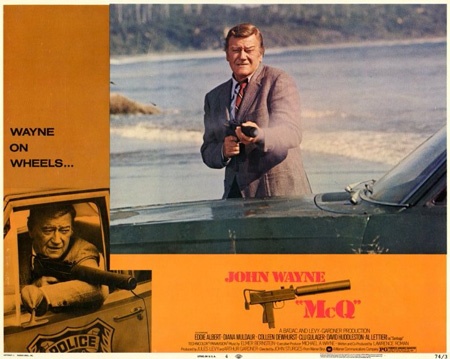
John Wayne didn’t get off his horse very often in the latter part of his career. The Duke hadn’t done a non-Western since 1969’s HELLFIGHTERS, but cop pictures were in style in the early 70s due to the success of movies like THE FRENCH CONNECTION and DIRTY HARRY. Wayne was actually offered the part of Dirty Harry Callahan and turned it down. But in 1974, Big John traded in his horse for a Pontiac Firebird in the action packed MCQ, directed by veteran John Sturges (GUNFIGHT AT THE OK CORRAL, THE MAGNIFICENT SEVEN, THE GREAT ESCAPE).
Wayne plays tough cop Lon McQ, who quits the force to investigate the murder of his former partner. He gets tangled up with drug dealers and corrupt officials, car chases and shootouts. Sound formulaic? It is, but the action scenes make up for a lame script. Duke basically plays the same character he did in most all his films, tough but tender, fair but firm. It’s kind of jarring to see Wayne in his (pretty bad) hairpiece instead of the usual cowboy hat, and tooling around the streets of Seattle in a muscle car rather than the dusty trail on his horse. He’s surrounded by a supporting cast full of familiar faces (Eddie Albert, Diana Muldaur, Colleen Dewhurst, Al Lettieri, David Huttleston, Clu Gulager), all of whom do their best with the clichéd script. MCQ plays like a TV movie of the week, which isn’t necessarily a bad thing, and fans of 70s action flicks will dig it.
John Wayne only made three more films after MCQ, including another cop movie, BRANNIGAN, and his swan song, 1976’s THE SHOOTIST, before succumbing to cancer in 1979. The Duke made much better movies then MCQ, but for a look at the star without his spurs and six-gun, it’s definitely worth watching.
(This post originally appeared, in slightly altered form, on the 2015 TCM Summer of the Stars Blogathon, hosted by Journeys in Classic Film)





 Through the Shattered Lens