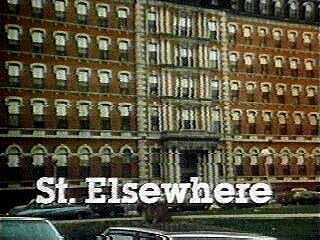
Retro Television Review: St. Elsewhere 3.11 “Homecoming”


Welcome to Retro Television Reviews, a feature where we review some of our favorite and least favorite shows of the past! On Fridays, I will be reviewing St. Elsewhere, a medical show which ran on NBC from 1982 to 1988.  The show can be found on Daily Motion.
This week, the heartbreak continues!

Episode 3.11 “Homecoming”

(Dir by David Anspaugh, originally aired on December 5th, 1984)

What a depressing episode!

Actually, it’s not totally depressing.  Dr. Elliot Axelrod (Stephen Furst) survives his first night as the attending-on-duty and he even convinces cranky old Mrs. Hufnagle (Florence Halop) to go back to her room.  He also handles things when a patient collapses in the hallway.  One can be sure that Elliot will be given absolutely no praise for his good work because he never is.  But at least, he was there and he proved himself to be more competent than anyone gives him credit for being.

Now, for the depressing stuff:

Nurse Rosenthal is continuing her affair with Richard Clarendon.  This wasn’t depressing because of anything that happened in this episode.  Instead, it’s just depressing that any time was devoted to these two boring characters.

After her apartment is broken into while she’s in the shower, Clancy (Helen Hunt) moves in with Jack.  Jack and Clancy make for a cute couple but, watching this episode, it’s easy to see that their relationship is doomed. Clancy is young and enthusiastic.  Jack is young but he moves like an old man and he’s already been through a lifetime’s worth of tragedy.  Sadly, Clancy living with Jack does not last longer than one night.  Clancy says that Jack acts like he’s offended by having her stuff in his apartment and she’s right.  Jack is still mourning his wife and not ready to live with anyone.

Lois Wegener (Mimi Kennedy) comes home from being out of town and discovers that her husband, Andrew (John Schuck) is becoming progressively weaker from the experimental bone marrow treatment that he’s going through in an attempt to save the life of their daughter (Brandy Gold).  Everyone at the hospital is impressed with Andrew’s courage but it’s obvious to me that this is not going to have a happy ending.

Kathy Martin is still in the psych ward.  During this episode, she gives Fiscus the note that Shirley Daniels gave her after Shirley shot and killed Peter White.

And finally, it wouldn’t be a depressing episode without a Westphall storyline.  Westphall’s daughter, Lizzie (Dana Short), comes home from college for the weekend and, without asking Westphall ahead of time, she brings along her new boyfriend, Rick (Casey Seimaszko).  Lizzie assumes that Rick will be sleeping with her in her room.  Westphall is not thrilled to hear about that.  (It doesn’t help that Rick isn’t wearing a shirt when he and Westphall first meet.)  Lizzie gets angry.  Westphall points out that his dead wife would not have approved.  Lizzie argues that she is now an adult and can do whatever she wants.

And you know what?  I am totally on Westphall’s side here.  It’s his house!  Lizzie isn’t the one paying the bills.  If Westphall doesn’t want Rick sleeping in her room (and, I might add, there are other rooms in the house where Rick could sleep), then Rick doesn’t sleep in her room.  When I was younger, I probably would have been on Lizzie’s side but now that I’ve gotten older, I see Westphall’s point and Lizzie comes across as being a spoiled brat.  I mean, if she wants to stay in the same room as Rick, they can get a motel room.  How expensive could one be in 1984?  This episode ends with Lizzie telling her father that she’s leaving.  “Lizzie!” Westphall says but she’s already gone.

See what I mean?  This was a depressing episode, even by St. Elsewhere standards.  That said, it was also a good episode.  Ed Flanders, David Morse, Helen Hunt, Stephen Furst, Mimi Kennedy, they all gave wonderfully empathetic performances.  Your heart may hurt for them but you can’t wait to see what happens next.  Sometimes, life is depressing but, like the characters on this show, you have to moving forward.
 

Retro Television Review: St. Elsewhere 3.10 “Girls Just Want To Have Fun”


Welcome to Retro Television Reviews, a feature where we review some of our favorite and least favorite shows of the past! On Fridays, I will be reviewing St. Elsewhere, a medical show which ran on NBC from 1982 to 1988.  The show can be found on Daily Motion.

This episode proves that Dr. Cavanero is the worst.

Episode 3.10 “Girls Just Want To Have Fun”

(Dir by Bruce Paltrow, originally aired on November 28th, 1984)

The struggle is real.

Seriously, I am thankful that someone uploaded St. Elsewhere to Daily Motion.  With the show no longer on Hulu and Prime only having the first season available, Daily Motion is pretty much the only place where I can stream the show.  That said, the sound quality is not great.  The sound quality wasn’t particularly good when the show was on Hulu either but at least then I could turn on the captions.  The Daily Motion uploads don’t have that option.  I had to strain to hear the dialogue and, as a result, this review is not going to be as in-depth as it could be.

What I can tell you is that Dr. Cavanero is now one of the least sympathetic characters that I have ever seen on a television show.  Last week, Dr. Christine Holz (Caroline McWilliams) told Cavanero that she was a lesbian.  This week, Cavanero blabbed that information around the hospital, leading to a lot of homophobic comments from certain members of the stuff.  (Not surprisingly, Victor Ehrlich was there to say something stupid.)  Cavenero admitted to Christine that she found Christine’s lifestyle to be “unnatural.”  Christine smiled sadly and left Cavanero’s apartment and left the show.  Keep in mind, Dr. Holz was portrayed as being a brilliant surgeon and bone marrow expert.  It probably would have been good to keep her around the hospital for a little while but nope.  Sorry.  Dr. Cavanero — who really hasn’t done anything of note since the first season — felt uncomfortable.

(Originally, Christine and Cavanero were supposed to have a romantic relationship but Cynthia Sikes, the actress playing Cavavero, objected to the storyline.  As a result, the story was rewritten and perhaps it’s not a coincidence that Cavanero comes across as being a bit of a homophobe.)

Meanwhile, Dr. Chandler was concerned when he discovered that a neighborhood woman (Beah Richards) was practicing medicine out of her apartment.  This storyline at least gave Denzel Washington more to do than usual, which was good.  St. Elsewhere, at least so far, has often tended to underuse both Chandler as a character and Washington as an actor.

Jack’s friend (John Schuck) insisted on doing an experimental kidney procedure to try to save the life of his daughter (Brandy Gold) and Dr. Auschlander finally gave his approval for it to be done.  I would say that was a good thing except for the fact that Jack’s storylines hardly ever have a happy ending.  There’s a reason why Morrison is the most depressed resident in the hospital.

Nurse Rosenthal continued her affair with Richard Clarendon, even though Richard’s wife (Beverly Sanders) is now working at the hospital.  Wow, that’s going to be awkward.  In fact, I hope it’s really awkward.  I’m tired of Nurse Rosenthal and her holier-than-thou attitude.

Dr. Craig testified at a city council hearing.  The poor sound quality kept me from fully understanding what the hearing was about but at Dr. Craig told everyone off.  It’s always fun to watch William Daniels tell people off.

Here’s hoping the sound will be a bit less muddy next week!


Retro Television Review: St. Elsewhere 3.9 “Up On The Roof”


Welcome to Retro Television Reviews, a feature where we review some of our favorite and least favorite shows of the past! On Fridays, I will be reviewing St. Elsewhere, a medical show which ran on NBC from 1982 to 1988.  The show can be found on Daily Motion.

This week, an arrest is made.

Episode 3.9 “Up On The Roof”

(Dir by Eric Laneuville, originally aired on November 21st, 1984)

It’s another busy day at St. Eligius.

  • The last of the firemen (Stephen Elliott) is finally sent home.  At first, he’s bitter about all of the skin grafts and all the other work that Dr. Caldwell did on him.  But then his grandkids come in the hospital and room and shout, “Grandpa!”  And then he steps outside and is greeted by all the other firemen.  He leaves in a fire truck and Dr. Caldwell — the only angst-free doctor at St. Eligius — smiles and waves.  Finally, someone on this show gets a happy ending.
  • Ms. Hufnagel continues to get on everyone’s nerves with her constant complaints.  Dr. Fiscus dumps her on Dr. Axelrod.  While the show seems to want us to be as annoyed with Ms. Hufnagel as everyone else, I have to admit that I feel sorry for her.  Does she complain a lot?  Yes, she does.  But being in a hospital can really be scary.  I complained a lot whenever I was rushed to the ER because of my asthma.  I complained a lot when my mom was in the hospital.  I complained a lot when my dad was in the hospital.  I complained a lot when my aunt was in the hospital.  Sometimes, complaining is the only comfort you have.
  • Dr. Morrison is upset when a friend (John Schuck) is told that his daughter cannot be treated with an experimental dialysis machine.
  • Nurse Rosenthal continues to have an affair with Richard Clarendon, the labor negotiator.
  • Dr. Christine Holz (Caroline McWilliams) comes to the hospital to perform a bone marrow transplant.  Dr. Annie Cavanero invites Dr. Holz to come to her place for dinner.  Cavanero is shocked when Dr. Holz reveals that she’s a lesbian and the viewer is once again reminded that this show aired in the mid-80s.
  • According to what I’ve read online, the original plan was for Dr. Holz to become Cavanero’s romantic partner but Cynthia Sikes refused to kiss another woman onscreen.  This led to the storyline being hastily rewritten and it apparently also led to Sikes being fired from the show at the end of the third season.
  • Kathy Martin is still in the psych ward.  When Detective Alex MacGallen (Charles Lanyer) attempts to question her about where she was when Peter White was shot, he is informed by Kathy’s doctor that Kathy has an alibi.  Later, Shirley comes to the psych ward and slips Kathy a letter.
  • Shirley has been hiding the gun that she used to shoot Peter all over the hospital.  However, when the detective finally confronts her and reveals that he knows that she killed Peter, Shirley pulls the gun on him and then run up to the rooftop.
  • On the roof, Dr. Westphall and Jack take their turns trying to convince Shirley to surrender to the police.  After Shirley confesses and then demands to know why Jack didn’t make more of an effort to stop Peter, Shirley drops her gun and is taken into custody.

This was a depressing episode, even by the standards of St. Elsewhere.  Shirley has always been one of my favorite characters and I hate the idea that she’s now going to go to prison for killing Dr. White.  From a narrative point of view, someone had to shoot Peter.  That was really the only way his story could end.  Personally, I think it would have made more sense for Dr. Cavanero to be the shooter that Shirley.  I mean, if Cavanero was going to be written off the show anyway, killing Dr. White would have given her a decent exit.

Next week, I’m sure something else depressing will happen.  We’ll see!

Horror On TV: The Halloween That Almost Wasn’t (dir by Bruce Bilson)


Oh no!  Halloween might be canceled because people just aren’t scared of the old monsters!  Dracula (Judd Hirsch) calls all of the classic creatures to a meeting in his castle (where they all happen to be freeloading) and give them an ultimatum.  Be more scary!  It turns out to be easier said than done.

This originally aired in 1979 but, for people of a certain age, it achieved a certain immortality thanks to regular airings on the Disney Channel.  It’s a cute show.  It might seem a little bit corny today but that’s a large part of its appeal.  It’s a reminder of a more innocent time.

Warren the Werewolf, by the way, was named after Warren “Werewolves of London” Zevon.

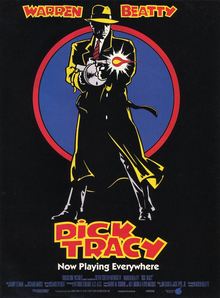
Dick Tracy (1990, directed by Warren Beatty)


The year is 1937 and “Big Boy” Caprice (Al Pacino) and his gang of flamboyant and often disfigured criminals are trying to take over the rackets.  Standing in their way is ace detective Dick Tracy (Warren Beatty), the yellow trench-wearing defender of the law.  Tracy is not only looking to take down Caprice but he and Tess Trueheart (Glenne Headly) are currently the guardians of The Kid (Charlie Korsmo), a young street kid who witnessed one of Caprice’s worst crimes.  Tracy’s investigation leads him through a rogue’s gallery of criminals and also involves Breathless Mahoney (Madonna), who has witnessed many of Caprice’s crimes but who also wants to steal Tracy’s heart from Tess.

Based on the long-running comic strip, Dick Tracy was a labor of love on the part of Warren Beatty.  Not only starring but also directing, Tracy made a film that stayed true to the look and the feel of the original comic strip (the film’s visual palette was limited to just seven colors) while also including an all-star cast the featured Madonna is an attempt to appeal to a younger audience who had probably never even heard of Dick Tracy.  When Dick Tracy was released, the majority of the publicity centered around Madonna’s participation in the film and the fact that she was dating Beatty at the time.  Madonna is actually probably the weakest element of the film.  More of a personality than an actress, Madonna is always Madonna no matter who she is playing and, in a film full of famous actors managing to be convincing as the members of Dick Tracy’s rogue gallery, Madonna feels out of place.  Michelle Pfeiffer would have been the ideal Breathless Mahoney.

It doesn’t matter, though, because the rest of the film is great.  It’s one of the few comic book films of the 90s to really hold up, mostly due to Beatty’s obvious enthusiasm for the material and the performances of everyone in the supporting cast who was not named Madonna.  Al Pacino received an Oscar nomination for playing Big Boy Caprice but equally good are Dustin Hoffman as Mumbles, William Forsythe as Flaptop, R.G. Armstong as Pruneface, and Henry Silva as Influence.  These actors all create memorable characters, even while acting under a ton of very convincing makeup.  I also liked Dick Van Dyke as the corrupt District Attorney.  Beatty knew audience would be shocked to see Van Dyke not playing a hero and both he and Van Dyke play it up for all its worth.  Beatty embraces the comic strip’s campiness while still remaining respectful to its style and the combination of Danny Elfman’s music and Stephen Sondheim’s songs provide just the right score for Dick Tracy’s adventures.  The film can be surprisingly violent at times but the same was often said about the Dick Tracy comic strip.  It wasn’t two-way wrist radios and trips to the Moon.  Dick Tracy also dealt with the most ruthless and bloodthirsty gangsters his city had to offer.

Dick Tracy was considered to be a box office disappointment when it was originally released.  (Again, you have to wonder if Beatty overestimated how many fans Dick Tracy had in 1990.)  But it holds up well and is still more entertaining than several of the more recent comic book movies that have been released.

Film Review: McCabe & Mrs. Miller (dir by Robert Altman)


First released in 1971, McCabe & Mrs. Miller takes place in the town of Presbyterian Church at the turn of the 19th Century.

Presbyterian Church is a mining town in Washington State.  When we first see the town, there’s not much to it.  The town is actually named after its only substantial building and the residents refer to the various parts of the town as either being on the right side or the left side of the church.  The rest of the town is half-constructed and appears to be covered in a permanent layer of grime.  This is perhaps the least romantic town to ever appear in a western and it is populated largely by lazy and bored men who pass the time gambling and waiting for something better to come along.

When a gambler who says that he is named McCabe (Warren Beatty) rides into town, it causes a flurry of excitement.  The man is well-dressed and well-spoken and it’s assumed that he must be someone important.  Soon a rumor spreads that McCabe is an infamous gunfighter named Pudgy McCabe.  Pudgy McCabe is famous for having used a derringer to shoot a man named Atwater.  No one is really sure who Atwater was or why he was shot but everyone agrees that it was impressive.

McCabe proves himself to be an entrepreneur.  He settles down in Presbyterian Church and establishes himself as the town’s pimp.  Soon, he is joined by a cockney madam names Mrs. Miller (Julie Christie).  The two of them go into business together and soon, Presbyterian Church has its own very popular bordello.  Sex sells and Presbyterian Church becomes a boomtown.  It attracts enough attention that two agents of a robber baron approach McCabe and offer to buy him out.  McCabe refuses, thinking that he’ll get more money if he holds out.  Mrs. Miller informs him that the men that he’s dealing with don’t offer to pay more money.  Instead, they just kill anyone who refuses their initial offer.

Three gunmen do eventually show up at Presbyterian Church and we do eventually get an answer to the question of whether or not McCabe killed Atwater or if he’s just someone who has borrowed someone else’s legend.  The final gunfight occurs as snow falls on the town and the townspeople desperately try to put out a fire at the church.  No one really notices the fact that McCabe is fighting for his life at the time and, as befits a revisionist western, there’s nothing romantic or dignified about the film’s violence.  McCabe is not above shooting a man in the back.  The killers are not above tricking an innocent cowboy (poor Keith Carradine) into reaching for his gun so that they’ll have an excuse so gun him down.  McCabe may be responsible for making Presbyterian Church into a boomtown but no one is willing to come to his aid.  The lawyer (William Devane) that McCabe approaches is more interested in promoting his political career than actually getting personally involved in the situation.  Mrs. Miller, a businesswoman first, smokes in an opium den with an air of detachment while the snow falls outside.

It’s a dark story with moments of sardonic humor.  It’s also one of director Robert Altman’s best.  The story of McCabe and Mrs. Miller and the three gunmen is far less important than the film’s portrayal of community growing and changing.  Featuring an ensemble cast and Altman’s trademark overlapping dialogue, McCabe & Mrs. Miller puts the viewer right in the heart of Presbyterian Church.  There are usually several stories playing out at once and it’s often up to the viewer to decide which one that they want to follow.  Yes, the film is about Warren Beatty’s slick but somewhat befuddled McCabe and Julie Christie’s cynical Mrs. Miller.  But it’s just as much about Keith Carradine’s Cowboy and Rene Auberjonois’s innkeeper.  Corey Fischer, Michael Murphy, John Schuck, Shelley Duvall, Bert Remsen, and a host of other Altman mainstays all have roles as the people who briefly come into the orbit of either McCabe or Mrs. Miller.  Every character has a life and a story of their own.  McCabe & Mrs. Miller is a film that feels as if it is truly alive.

As with many of Altman’s films, McCabe & Mrs. Miller was not fully appreciated when initially released.  The intentionally muddy look and the overlapping dialogue left some critics confused and the film’s status as a western that refused to play by the rules of the genre presented a challenge to audience members who may have just wanted to see Warren Beatty fall in love with Julie Christie and save the town.  But the film has endured and is now recognized as one of the best of the 70s.

Icarus File No. 18: Brewster McCloud (dir by Robert Altman)


First released in 1970, Brewster McCloud takes place in Houston.

A series of murders have occurred in the city.  The victims have all been older authority figures, like decrepit landlord Abraham Wright (Stacy Keach, under a ton of old age makeup) or demanding society matron Daphne Heap (Margaret Hamilton, who decades earlier had played The Wicked Witch in The Wizard Of Oz).  The victims all appear to have been killed by strangulation and all of them are covered in bird droppings.  Perplexed, the Houston authorities call in Detective Frank Shaft (Michael Murphy) from San Francisco.  Shaft only wears turtlenecks and he has piercing blue eyes.  He looks like the type of guy you would call to solve a mystery like this one.  It’s only later in the film that we discover his blue eyes are due to the contact lenses that he’s wearing.  Frank Shaft is someone who very much understands the importance of appearance.  As one detective puts it, when it comes to Shaft’s reputation, “The Santa Barbara Strangler turned himself in to him.  He must have really trusted him.”

Perhaps the murders are connected to Brewster McCloud (Bud Cort), who lives in a bunker underneath the Astrodome and who seems to be fascinated with birds.  Brewster dreams of being able to fly just like a bird and he’s spent quite some time building himself a set of artificial wings.  A mysterious woman (Sally Kellerman) who wears only a trenchcoat and who has scars on her shoulder blades that would seem to indicate that she once had wings continually visits Brewster and encourages him to pursue his dream.  However, she warns him that he will only be able to fly as long as he remains a virgin.  If he ever has sex, he will crash to the ground.

Brewster thinks that he can handle that.  Then he meets a tour guide named Suzanne Davis (Shelley Duvall, in her film debut) and things start to change….

Brewster McCloud is a curious film.  The story is regularly interrupted by a disheveled lecturer (Rene Auberjonois) who is very much into birds and who, over the course of the film, starts to more and more resemble a bird himself.  The film is full of bird-related puns and there are moments when the characters seem to understand that they’re in a movie.  Frank Shaft dresses like Steve McQueen in Bullitt and his blue contact lenses feel like his attempt to conform to the typical image of a movie hero.  (A lengthy car chase also feels like a parody of Bullitt’s famous chase scene.)  When the old woman played by Margaret Hamilton dies, the camera reveals that she’s wearing ruby slippers and a snippet of Somewhere Over The Rainbow is heard.  As played by Bud Cort, Brewster is the perfect stand-in for the lost youth of middle class America.  He knows that he’s rebelling against something but he doesn’t seem to be quite sure what.  Brewster, like many idealists, is eventually distracted by his own desires and his once earnest plans come cashing down.  Brewster becomes an Icarus figure in perhaps the most literal way possible, even if he doesn’t come anywhere close to reaching the sun.  As with many of Altman’s films, Brewster McCloud is occasionally a bit too esoteric for its own good but it’s always watchable and it always engages with the mind of the viewer.  One gets the feeling that many of the film’s mysteries are not necessarily meant to be solved.  (Altman often said his best films were based on dreams and, as such, used dream logic.)  With its mix of plain-spoken establishmentarians and quirky misfits, Brewster McCloud is not only a classic counterculture film but it’s also a portrait of Texas on the crossroads between the cultures of the past and the future.

Though it baffled critics when it was released, Brewster McCloud has gone on to become a cult film.  It’s a bit of a like-it-or-hate-it type of film.  I like it, even if I find it to be a bit too self-indulgent to truly love.  Quentin Tarantino, for his part, hates it.  Brewster McCloud was released in 1970, the same year as Altman’s Oscar-nominated M*A*S*H.  (Both films have quite a few cast members in common.)  Needless to say, the cheerfully and almost defiantly odd Brewster McCloud was pretty much ignored by the Academy.

Previous Icarus Files:

  1. Cloud Atlas
  2. Maximum Overdrive
  3. Glass
  4. Captive State
  5. Mother!
  6. The Man Who Killed Don Quixote
  7. Last Days
  8. Plan 9 From Outer Space
  9. The Last Movie
  10. 88
  11. The Bonfire of the Vanities
  12. Birdemic
  13. Birdemic 2: The Resurrection 
  14. Last Exit To Brooklyn
  15. Glen or Glenda
  16. The Assassination of Trotsky
  17. Che!

Bonus Horror On TV: The Halloween That Almost Wasn’t (dir by Bruce Bilson)


Oh no!  Halloween might be canceled because people just aren’t scared of the old monsters!  Dracula (Judd Hirsch) calls all of the classic creatures to a meeting in his castle (where they all happen to be freeloading) and give them an ultimatum.  Be more scary!  It turns out to be easier said than done.

This originally aired in 1979 but, for people of a certain age, it achieved a certain immortality thanks to regular airings on the Disney Channel.  It’s a cute show.  It might seem a little bit corny today but that’s a large part of its appeal.  It’s a reminder of a more innocent time.

Warren the Werewolf, by the way, was named after Warren “Werewolves of London” Zevon.

Retro Television Reviews: Fantasy Island 3.16 “Rogues and Riches/Stark Terror”


Welcome to Retro Television Reviews, a feature where we review some of our favorite and least favorite shows of the past!  On Tuesdays, I will be reviewing the original Fantasy Island, which ran on ABC from 1977 to 1986.  Almost entire show is currently streaming is on Youtube!

Smiles, everyone!  Smiles!

Episode 3.16 “Rogues and Riches/Stark Terror”

(Dir by Cliff Bole, originally aired on January 19th, 1980)

Our latest weekend on Fantasy Island is both strange and entertaining!

Attorney Mark Hendicks (John Schuck) comes to the Island with a briefcase full of papers.  He’s searching for his former law partner, Pete Gilbert (singer Robert Goulet).  Years ago, Pete came to Fantasy Island with a simple fantasy.  He wanted to be an 18th century British outlaw.  However, Pete had so much fun in the past that he decided that he never wanted to leave.  Mark needs to get Pete’s signature on some official forms so that Mark can sell some land that he and Pete bought before Pete’s fateful trip to the Island.

Mr. Roarke explains to Mark what’s going on with Pete and Mark is surprisingly accepting of Roarke’s explanation.  Roarke drives Mark out to a bridge.  He tells Mark that crossing the bridge will transport Mark to Pete’s fantasy.  Mark crosses the bridge and immediately sees Pete being chased by a bunch of British soldiers.  Pete is having a grand ol’ time in the 18th century but he’s more than willing to take some time out from plundering so that he can sign the papers so that will allow Mark to become a millionaire once he returns to the present.  However, after a dinner scene that is basically lifted shot-for-shot from Tom Jones, Mark falls in love with Margaret Winston (Dolly Read), the wife of sword-wielding Judge Winston (Alan Hale, Jr).  Mark is tempted to remain in the past but, in the end, he decides that his place is in the present.  Fortunately, it turns out that Margaret was having a fantasy of her own and she and Mark leave the Island together.

While that silly but enjoyable fantasy plays out out, Amy Marson (Melissa Sue Anderson) searches for the solution to a mystery that was so traumatic that it caused her to lose her ability to speak.  Amy’s mother (Elinor Donahue) died in front of her and Amy hopes to discover not only who killed her mother but also to recover her ability to speak.  This leads to Amy visiting the lighthouse where she grew up and having a reunion with the kindly lighthouse keeper, Joshua Templar (Michael Constantine).  Amy’s flashbacks lead her to the solution to the mystery of her mom’s death and also to Joshua’s secret son (David Drucker).

This storyline, much like last week’s battle against Elizabeth Bathory, was enjoyably creepy and it featured good performances from Anderson, Constantine, Donahue, and Drucker.  In the best tradition of Fantasy Island, the storyline was both macabre and also rather life-affirming.  Fantasy Island was always at its best when it revealed the hidden humanity at the heart of each fantasy.  Amy learns the truth of her mother’s death and she regains her ability to speak.  Tattoo tells her that she has a beautiful voice.  Awwwwww!

This was a great weekend on Fantasy Island!

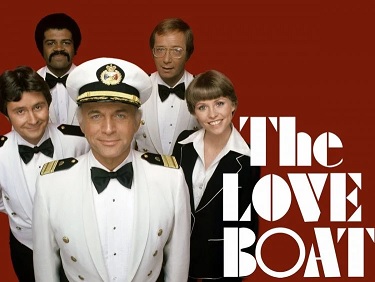
Retro Television Reviews: The Love Boat 1.15 & 1.16 “The Eyes of Love / Masquerade / Hollywood Royalty / The Caper: Parts 1 & 2”


Welcome to Retro Television Reviews, a feature where we review some of our favorite and least favorite shows of the past!  On Wednesdays, I will be reviewing the original Love Boat, which aired on ABC from 1977 to 1986!  The series can be streamed on Paramount Plus!

This week’s episode of The Love Boat is one of historical value so let’s climb aboard and get to it!

Episodes 1.15 & 1.16 “The Eyes of Love / Masquerade / Hollywood Royalty / The Caper: Parts 1 & 2”

(Dir by Allen Baron, originally aired on January 21st, 1978)

This is an important episode for two reasons.

First off, this episode marked the first time that the opening credits featured video of the guest stars along with their names.  This was the only time that this was done during the first season, though it would become a regular feature of the show from the second season forward.

Secondly, excluding the three pilot films that aired before the series was ordered, this was the first super-sized two hour episode of The Love Boat.  This episode is split into two parts when it airs in syndication, which is why it’s listed as being the 15th and the 16th episode of The Love Boat

Oddly enough, despite all of that, it’s pretty much a standard episode.  Usually, whenever a TV shows airs an extra-long episode, it’s because some important event is occurring.  Usually, either someone’s getting married or someone’s leaving the show or maybe an actor died and the show needs an extra hour to pay tribute to them.  In this case, though, it’s just a typical cruise of the love boat, complete with three separate stories and a lot of time spent looking at the ocean.

For instance, Roz Rogers (Michele Lee) and Bill Teague (Fernado Lamas) are a famous and glamorous Hollywood couple who book a voyage and who are followed all the way to the dock by the paparazzi.  As quickly becomes clear, Bill and Roz’s relationship is not as perfect as the world believes.  Still, Bill is convinced that their relationship can be fixed by Roz co-starring in an old-fashioned adventure film that he wrote.  Along with having written the script, Bill hopes to direct, produce, and star in it.  Roz is a bit skeptical but fear not, everything works out in the end and she finally convinces Bill that she loves him for him and not because he’s a star.

Roz boards the boat with not just Bill’s script but also a large and valuable diamond.  A group of jewelry thieves follow her onto the boat, hoping to steal the diamond for themselves.  Vernon (Howard Gould) is the arrogant leader of the group.  Taffy (Karen Valentine) distracts Gopher, Doc, and the Captain by flirting with them.  Elwood (Larry Storch) is the group’s technician.  And Ox (John Schuck) is the muscle who tends to take things literally.  When the first attempt to steal the jewel fails, Vernon disguises himself as Captain Stubing and Gavin MacLeod gets a chance to do something more than just look slightly annoyed by the crew.  To be honest, I actually enjoyed the jewelry theft subplot far more than I was expecting.  Gould, Valentine, Storch, and Schuck all seemed to be having fun playing off of each other.  Plus, the whole story ended with a nice little twist that James Cameron would later use in Titanic.

(No, the Love Boat does not sink.)

While this is going on, a blind girl named Jenny (Stephanie Zimbalist) is stunned to discover that one of her former classmates, Steve (Desi Arnaz, Jr.), is also on the boat.  Jenny and Steve fall in love but Steve has recently gotten back his sight and Jenny worries that he won’t want to spend the rest of his life with someone who can’t see.  Fortunately, it turns out that Jenny’s wrong.

Finally, Alan (Dan Rowan) is horrified to discover that not only are both his wife (Juliet Mills) and his mistress (Adrienne Barbeau) on the cruise together but that they’ve become friends.  Alan was an adulterous jerk so it was pretty difficult to really care about this story.  

Again, it was pretty much a typical episode of The Love Boat, despite the extra length and the inclusion of a masquerade ball during the episode’s 2nd hour.  That said, the thieves were funnier than they had any right to be and the Jenny/Steve storyline was sweet.  The ocean scenery was lovely.  That’s really all I ask from The Love Boat.  This episode delivered.