Review: Wake Up Dead Man (dir. by Rian Johnson)


“Grace isn’t cheap. It’s bought with blood and fire, not your weak-kneed handshakes with sin.” Monsignor Jefferson Wicks

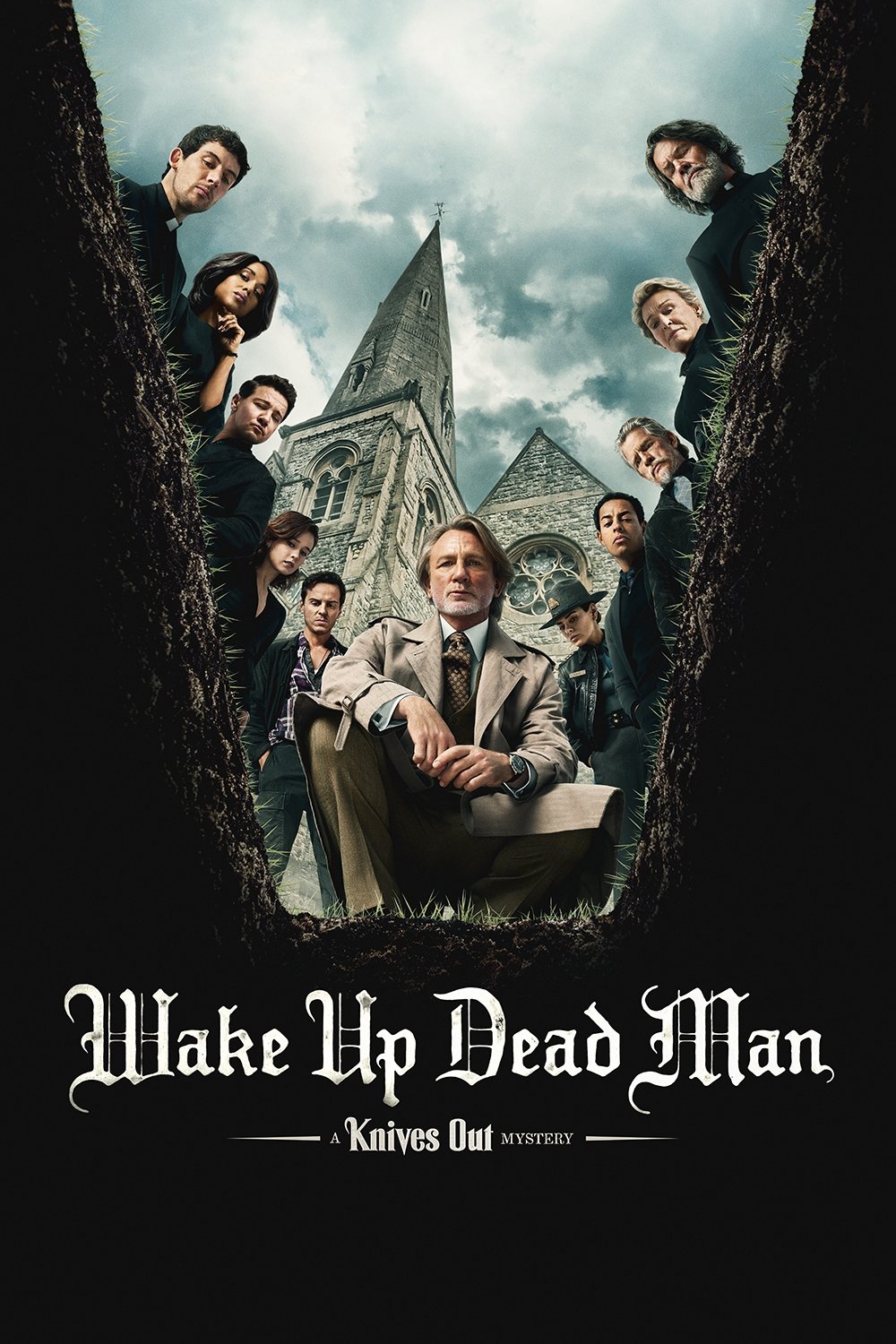
Wake Up Dead Man: A Knives Out Mystery is Rian Johnson’s latest entry in his whodunit series. It reunites Daniel Craig with his charismatic detective Benoit Blanc. The film trades the intimate family drama of the first movie and the over-the-top glamour of the second for a tense, small-town tale of faith, secrets, and an impossible crime at a rural church. It’s an ambitious evolution. Yet it doesn’t always land every punch in the trilogy.

To appreciate where this fits, glance back at the predecessors. The original Knives Out from 2019 burst onto the scene. It updated classic mystery tropes cleverly. The story centered on the death of a wealthy author. The dysfunctional Thrombey family circled like vultures over his estate. Blanc’s folksy charm cut through the lies with surgical precision. He delivered razor-sharp twists. His commentary bit into privilege and entitlement. All this wrapped in a snug, stage-play setup. It felt like a modern And Then There Were None. Every character popped—from Chris Evans’ smirking man-child to Ana de Armas’ wide-eyed nurse. The script’s misdirections kept you guessing until the final gut-punch reveal. It was tight, surprising, and endlessly rewatchable. Humor, heart, and social satire blended into a perfect whodunit package.

Glass Onion: A Knives Out Mystery followed in 2022. It cranked up the scale dramatically. A billionaire’s private island became the playground. A squad of self-important influencers played at being geniuses. The satire shifted gears. It skewered tech elites and performative allyship. Bigger laughs came from set pieces like the glass onion puzzle. Wilder ensemble clashes featured Edward Norton’s bumbling Miles Bron. Blanc unraveled the chaos with gleeful theatricality. Sure, it leaned heavier into farce than the original’s grounded tension. But those oh-so-satisfying reveals kept the momentum roaring. Janelle Monáe’s layered turn helped too. Each film stands alone as a self-contained puzzle. Yet they build Blanc’s legend incrementally. They refresh the murder-mystery playbook. Johnson’s signature flair nods to Agatha Christie roots.

Wake Up Dead Man arrives a few years after those events. Blanc looks more rumpled—bearded and brooding. He carries the visible weight of prior investigations. These have chipped away at his unflappable facade. Detective Benoit Blanc dives into a fresh case. It orbits a magnetic priest, Monsignor Jefferson Wicks. His tight-knit parish sits at Our Lady of Perpetual Fortitude. This is a fading rural church in snow-dusted upstate New York. A baffling death strikes right in the middle of services. It’s a stabbing during a Good Friday ritual. The congregation watches it unfold. It’s framed as an impossible crime with no clear entry or escape. Blanc must sift through hidden motives. He navigates frayed bonds and simmering tensions in the flock. His goal is to expose the culprit. Young assistant priest Rev. Jud Duplenticy becomes an unlikely ally.

Josh O’Connor stands out as Jud. He’s the earnest, ex-boxer priest. He brings raw vulnerability and quiet intensity. This grounds the film’s more outlandish elements. The powerhouse lineup fuels suspicion and sparks. Josh Brolin plays the commanding, domineering Wicks. His sermons blend fire-and-brimstone charisma with manipulative control. Glenn Close is the loyal church pillar Martha Delacroix. She’s his steely right-hand woman. She hides decades of devotion and resentment. Mila Kunis is police chief Geraldine Scott. She’s tough and skeptical but out of her depth. Jeremy Renner plays local doc Dr. Nat Sharp. His bedside manner conceals shadier dealings. Kerry Washington is attorney Vera Draven. She’s sharp-tongued and protective. Thomas Haden Church is reserved groundskeeper Samson Holt. He observes everything with cryptic folksiness. Andrew Scott plays best-selling author Lee Ross. He peddles scandalous exposes on the parish. Cailee Spaeny is the disabled former concert cellist Simone Vivane. Her ethereal presence masks deeper pain. Daryl McCormack is aspiring politician Cy Draven. He’s ambitious and entangled in family webs. Noah Segan pops up as sleazy Nikolai. It’s a fun callback to his earlier roles. This adds series continuity without stealing focus. The ensemble ignites every scene. Clashing agendas and barbed dialogue keep the paranoia boiling.

This installment carves its own distinct path. It embraces a darker, more introspective tone. Think faith-versus-reason noir laced with locked-room impossibility. The setting is a snow-dusted upstate New York parish. This contrasts the polished puzzle-box feel of the originals. The church throbs with simmering divisions. They feel palpably real. Fiery sermons alienate younger parishioners. They drive attendance into the dirt. Whispers hint at buried family fortunes. These tie to the church’s crumbling foundations. Rituals mask exploitation, abuse of power, and grudges. All hide under a veneer of piety.

Cinematographer Steve Yedlin works masterfully. He captures stark contrasts. Candlelit services flicker against vaulted ceilings. Shadowy mausoleums hide grisly secrets. Fog-shrouded grounds host midnight confessions that turn sinister. A cold, wintry palette amplifies isolation. Nathan Johnson’s score blends ominous orchestral swells. It adds subtle choral hints and dissonant organ tones. This creates a haunting vibe. It underscores spiritual unease without overpowering dialogue. Blanc prowls with trademark wit and theatrical flourishes. But a deeper layer emerges. He grapples with existential questions. These involve belief, deception, and waking from illusions. The title ties in directly. It calls amid apparent miracles, staged resurrections, and devilish symbolism. This blurs divine intervention and human malice.

The storyline thrives on classic misdirection. It piles on clues like a stolen devil’s-head knife from the altar. Vanished evidence dissolves in acid. Eerie occurrences hint at the otherworldly. Ghostly apparitions and bleeding statues appear. Then it snaps back to human frailty and greed. The film peels back the parish’s seedy underbelly. Hypocrisy rules the pulpit. Opportunism infects the flock. Buried sins span generations. It avoids preachiness or heavy-handedness. Instead, it fuels interpersonal fireworks. These erupt in confessionals, potlucks gone wrong, and heated vestry arguments.

Highlights abound. Blanc holds probing chats during tense masses. A single hymn masks frantic whispers. Late-night graveyard prowls use flashlights. They reveal half-buried scandals. A pulse-pounding chase winds through labyrinthine catacombs. Jud’s raw confession scenes blend vulnerability with defiance. The unmaskings cascade like dominoes. They form a brilliantly orchestrated finale. This echoes the first film’s precision. But it adds emotional stakes. Themes of redemption, forgiveness, and blind faith’s cost hit hard. They linger longer.

Flaws exist. The runtime stretches past two hours, leading to noticeable drag in the back half where explanatory flashbacks overstay their welcome and blunt the mounting tension. The crowded suspect list feels star-studded to a fault, with the expanded cast and their distinct personalities—from Renner’s oily doc to Washington’s sharp lawyer—often coming across more as a parade of familiar cameos than fully fleshed-out suspects. This dilutes the razor-sharp individual motivations that made the earlier entries so airtight, as some characters blend into the background despite the name recognition.

Craig remains the beating heart. He refines Blanc into a weary yet unbreakable warrior. Twinkling eyes hide hard-earned cynicism and quiet scars. This bridges the series’ growth perfectly. He evolves from wide-eyed newcomer to seasoned truth-seeker. Notably, his performance dials back bombastic Foghorn Leghorn bluster. It drops the scenery-chewing antics from Glass Onion. Instead, it opts for nuanced eccentricities. Subtle drawl inflections shift from playful to piercing. Haunted pauses carry unspoken regrets. Layered glances reveal a detective worn by deceptions. He keeps infectious charm and deductive brilliance.

He bounces off O’Connor’s conflicted priest. Their electric, buddy-cop chemistry grounds the mystery. It adds human connection amid supernatural tinges. Brolin chews scenery as tyrannical Wicks. His booming voice and piercing stare dominate. Close brings steely devotion to Martha. She layers quiet menace under pious smiles. The ensemble delivers scene-stealing turns. Renner’s oily doc has subtle tics. Washington’s lawyer cuts through BS like a blade. Church’s groundskeeper drops cryptic wisdom. Spaeny’s cellist haunts the score. The group dynamic crackles. Suspicion, snark, and alliances build tension. It doesn’t fully match Knives Out‘s intimacy. Nor does it rival Glass Onion‘s ego clashes. Raw charisma and sharp writing carry it far. Tighter arcs would elevate it further.

Behind the camera, Johnson amps visual and thematic style. It reflects the trilogy’s arc masterfully. The debut had cozy, rain-lashed Thrombey manor confines. The sequel brought flashy, tropical island excess. This film offers brooding parish grit. Sacred spaces twist into battlegrounds. Production design captures ecclesiastical opulence turned sinister. Vibrant stained glass casts blood-red shadows. Ancient relics whisper curses. Fog-shrouded grounds pulse with menace. It avoids campy parody. The balance feels reverent yet unsettling.

Dialogue pops with Blanc’s poetic rants. Extended musings explore faith’s illusions. They mirror “dead men walking” through empty rituals. This weaves personal growth into procedural beats. It never halts the pace. Screenplay-wise, it remixes boldly. It expands from domestic squabbles to global posers. Now it targets a fractured flock in dogma and greed. Subtle nods hint at Blanc’s odyssey. No direct sequel hook burdens it. No franchise baggage weighs it down.

In the end, Wake Up Dead Man solidifies the saga. It spins timeless whodunits freshly and vitally. Each outing sharpens the social knife. Targets evolve—from greedy kin to tycoons to holy hypocrites wielding faith. Pacing hiccups hit the bloated third act. The overwhelming ensemble poses challenges. Still, it grabs from the opening sermon-gone-wrong. It rewards with twists, depth, and a hopeful close. This lingers like a benediction. Devotees find layers to chew. Mystery fans geek over mechanics. Newcomers benefit from earlier starts. But this standalone shines. Johnson’s vision evolves fearlessly. Craig’s magnetism deepens. The door cracks for more mayhem. Pop the popcorn. Dim the lights. Let confessions begin.

Wake Up Dead Man: A Knives Out Mystery Trailer


Wake Up Dead Man: A Knives Out Mystery is the third movie in Rian Johnson’s fun and twisty murder mystery series. Daniel Craig is back as the sharp detective Benoit Blanc, who’s got his work cut out for him with a seemingly impossible case this time. The movie is set in a small-town church with some pretty creepy secrets, and Blanc teams up with a young priest to crack the case. The cast is packed with great talent like Josh O’Connor, Glenn Close, Josh Brolin, Mila Kunis, Jeremy Renner, and Kerry Washington, so there’s a lot of star power mixed with sharp writing and those clever twists Johnson’s known for.

The movie mixes mystery, drama, and a bit of dark humor while diving into themes like faith, secrets, and lies. Benoit Blanc has to navigate a tangled web of hidden motives and dark pasts—all wrapped in the spooky atmosphere of the church and its community.

It’s dropping in theaters on November 26, 2025, and then hitting Netflix worldwide on December 12, so it’s definitely one to keep an eye out for whether you’re already a fan or just love a good whodunnit.

October True Crime: Dahmer (dir by David Jacobson)


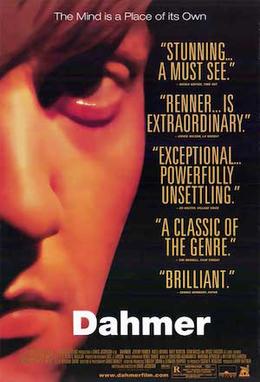
2002’s Dahmer opens in a chocolate factory.  As the opening credits role, the camera lingers over the machinery effectively pouring, molding, and wrapping chocolate.  Much like the human body, the machines are set to do everything efficiently and automatically.  The only reason anyone works at the factory is to keep an eye on the machines and to make sure that they don’t break down.

A new worker at the factory is introduced to a veteran of the machines, a friendly guy named Jeffrey (Jeremy Renner, in his first starring role).  Jeffrey shows the new guy how the machines work and he flashes a somewhat friendly smile.  He seems like a nice enough human being.

But, of course, we know different.  We know what the title of this film is and, therefore, we know that the smiling man at the factory is also an infamous serial killer and cannibal named Jeffrey Dahmer.  We know enough to be nervous when, in the very next scene, Dahmer is in a department store and asking a young man (Dion Basco) if he wants to come back to Dahmer’s apartment so that Dahmer can take some pictures of him.  The man agrees and we watch as Dahmer drugs the man and then drills into the man’s head.  When the man, in a dazed state, manages to get out of the apartment, the police respond by returning him to Dahmer.

The film flashes back and fourth, between Dahmer’s life as an alcoholic cannibal in Minneapolis and his adolescence as a gay teenager from a dysfunctional family.  In the past, Dahmer steals a mannequin from a department store, tries to hide his homicidal urges from his confused, if well-meaning, father (Bruce Davison), and picks up the hitchhiker who will become his first victim.  In the present, Dahmer invites a man named Rodney (Artel Great) back to his apartment but, instead of automatically killing him, Dahmer instead talks to him about being alienated and shunned by society, almost as if Dahmer is trying to justify his own abhorrent actions to a future victim.  Rodney proves to be a bit more intuitive than Dahmer realized.

In many ways, the structure is similar to Ryan Murphy’s recently Netflix miniseries about Dahmer.  Many of the same incidents are detailed, including the time that Dahmer’s father demanded to see what Dahmer was hiding in a box.  Of course, Dahmer manages to tell the complete story in under two hours while Murphy, for some reason, dragged things out to ten episodes.  If Murphy’s miniseries sometimes came dangerously close to making excuses for Dahmer’s crime, David Jacobson’s film leaves us with no doubt that Jeffrey Dahmer was a monster.  In the film, Dahmer spends his time with Rodney trying to justify his anger and his murderous impulses, just for Rodney to continually shoot him down.  If Murphy’s miniseries often seemed to be too stylized for its own good, Jacobson’s film is directed in a near-documentary fashion, with the grainy and harsh images creating a pervasive atmosphere of evil.  The film may explain the motives behind Dahmer’s crimes but it never attempts to excuse them.

Of course, today, Dahmer is mostly known for being an early film of Jeremy Renner’s.  This was Renner’s first starring role and he received an Independent Spirit nomination for his performance here.  (As well, Kathryn Bigelow cast Renner in The Hurt Locker on the basis of his performance.)  Renner gives a haunting and frightening peformance, playing Dahmer as someone who suspects that his murderous impulses are wrong but who has given up trying to control them.  As played by Renner, Dahmer is friendly and good-looking enough that one can understand why people were willing to go back to his apartment but, at the same time, there’s always something a bit off about him.  Even when he’s surrounded by people, Renner plays Dahmer as someone who knows that he’s destined to be forever alone.

Dahmer is a haunting portrayal of evil.

Music Video of the Day: Best Part of Me by Jeremy Renner (2020, dir by Josh Close)


As I sit here typing this, at 9 a.m. on Monday, Jeremy Renner is currently in the hospital.  Most reports state that he is in critical but stable condition as the result of an accident involving a snow plow.  That’s pretty much all the details that anyone has right now.  Hopefully, by the time this pots goes live, his condition will have improved.  My thoughts are with him and his family.

Hailee Steinfeld and Jeremy Renner hit their marks in the Hawkeye Trailer


Hawkeye finds Clint Barton (Jeremy Renner) back in the spotlight when a vigilante similar to the Ronin appears in NYC. This leads him to Kate Bishop (Hailee Steinfeld, Bumblebee), an archer who’s just as good as our Avenger. What she’s into, we don’t know, but it makes for an excellent team up. The show bridges the character we know with the 2005 comic counterpart (with some changes to tie things into the current Marvel Cinematic Universe). With a Christmas setting, part of me hoped that Shane Black had a hand in it some where. Not to worry, as Mad Men and Bridgerton writer/producer Jonathan Igla is the showrunner here.

Hawkeye also stars Brian d’Arcy James (Spotlight), Vera Farmiga (The Conjuring), Zahn McClarnon (Doctor Sleep), Ava Russo (Avengers: Endgame), and Florence Pugh (Black Widow).

Hawkeye premieres on Disney Plus on November 24th.

Film Review: Avengers: Endgame (dir by the Russo Brothers)


(Minor Spoilers Below!  Read at your own risk.)

So, how long does the no spoiler rule for Avengers: Endgame apply?  There’s so much that I want to say about this film but I know that I shouldn’t because, even though it had a monstrous opening weekend, there are still people out there who have not had a chance to see the film.  And while this review will have minor spoilers because, otherwise, it would be impossible to write, I’m not going to share any of the major twists or turns.

I will say this.  I saw Avengers: Endgame last night and it left me exhausted, angry, sad, exhilarated, and entertained.  It’s a gigantic film, with a plot that’s as messy and incident-filled as the cinematic universe in which it takes place.  More than just being a sequel or just the latest installment in one of the biggest franchises in cinematic history, Avengers: Endgame is a monument to the limitless depths of the human imagination.  It’s a pop cultural masterpiece, one that will make you laugh and make you cheer and, in the end, make you cry.  It’s a comic book film with unexpected emotional depth and an ending that will bring a tear to the eye of even the toughest cynic.  By all logic, Avengers: Endgame is the type of film that should collapse under its own weight but instead, it’s a film that thrives on its own epic scope.  It’s a three-hour film that’s never less than enthralling.  Even more importantly, it’s a gift to all of us who have spent the last ten years exploring the Marvel Cinematic Universe.

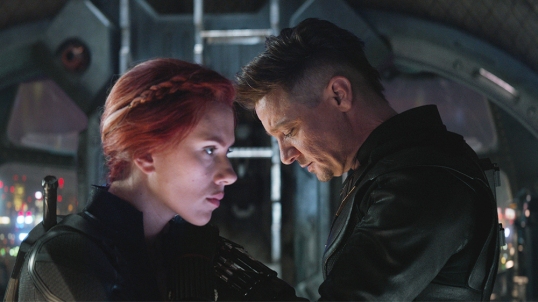
The film itself starts almost immediately after the “Snap” that ended Avengers: Infinity War and we watch as Clint Barton (Jeremy Renner, returning to the franchise after being absent in the previous film) finds himself powerless to keep his family from disintegrating.  After often being dismissed as the Avengers’s weak link, both Clint Barton and Jeremy Renner come into their own in the film.  As one of two members of the Avengers who does not have super powers, Clint serves as a everyperson character.  He’s a reminder that there’s more at stake in Endgame than just the wounded pride of a few super heroes.  When Thanos wiped out half the universe, he didn’t just wipe out Spider-Man, Doctor Strange, and Groot.  He also left very real wounds that will never be healed.

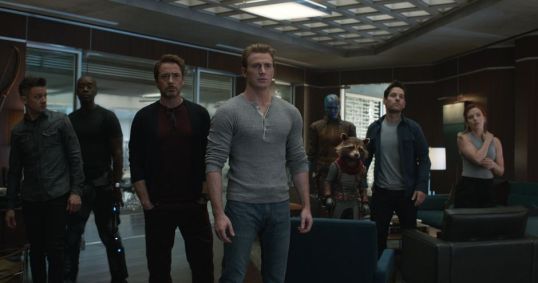
When the film jumps forward by five yeas, we discover that the world is now a much darker place.  When we see New York, the once vibrant city is now gray and deserted.  Our surviving heroes have all dealt with the Snap in their own way.  Clint is now a vigilante, killing anyone who he feels should have been wiped out by Thanos but wasn’t.  Thor (Chris Hemsworth) drinks and eats and feels sorry for himself.  Captain America (Chris Evans) attends support groups and, in one nicely done scene, listens as a man talks about his fear of entering into his first real relationship in the years since “the Snap.”  Tony Stark (Robert Downey, Jr.) is living as a recluse and is still blaming himself.  Hulk (Mark Ruffalo) is now an avuncular, huge, and very green scientist.  Only Natasha (Scarlett Johansson) remains convinced that the Snap can somehow be undone.  She’s right, of course.  But doing so will involve some unexpected sacrifices and a lot of time travel….

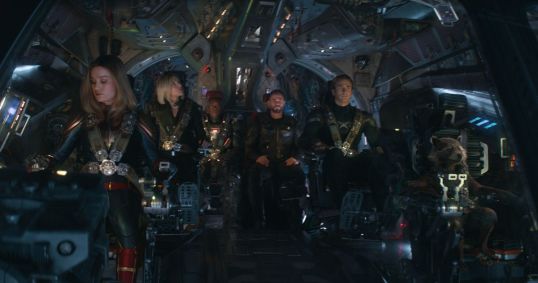
And that’s as much as I can tell you, other than to say that the film takes full advantage of both the time travel aspects (yes, there are plenty of Back to the Future jokes) and its high-powered cast.  With our heroes — which, along with the usual Avengers, also include Ant-Man (Paul Rudd) and Rocket Racoon (Bradley Cooper) — hopping through time and space, we get a chance to revisit several of the films that led up to Endgame and it’s a thousand times more effective than it has any right to be.  Yes, one could argue that the cameos from Robert Redford, Tom Hiddleston, Hayley Atwell, and others were essentially fan service but so what?  The fans have certainly earned it and the MCU has earned the chance to take a look back at what it once was and what it has since become.

Indeed, Avengers: Endgame would not work as well as it does if it hadn’t been preceded by 21 entertaining and memorable movies.  It’s not just that the MCU feels like a universe that it as alive as our own, one that is full of wonder, mystery, sadness, and love.  It’s also that we’ve spent ten years getting to know these characters and, as a result, many of them are much more than just “super heroes” to us.  When Tony Stark and Captain America argue over whether it’s even worth trying to undo the Snap, it’s an effective scene because we know the long and complicated history of their relationship.  When the Avengers mourn, we mourn with them because we know their pain.  We’ve shared their triumphs and their failures.  Tony Stark may be a guy in an iron suit but he’s also a man struggling with his own demons and guilt.  Steve Rogers may be a nearly 100 year-old super solider but he’s also every single person who has struggled to make the world a better place.  As strange as it may be to say about characters known as Iron Man, Captain America, and the Black Widow, we feel like we know each and every one of them.  We care about them.

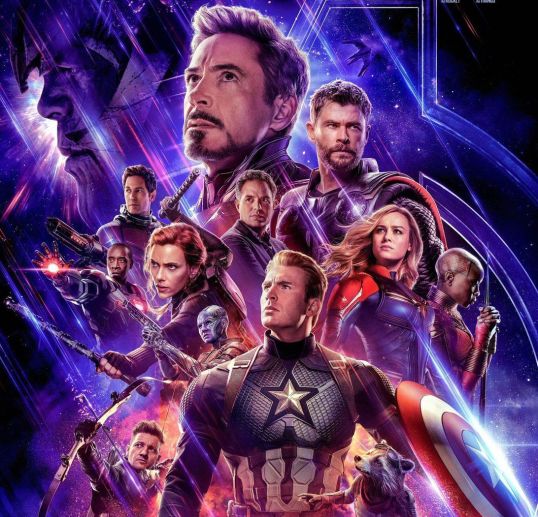
Needless to say, the cast is huge and one of the great things about the film is that previously underused or underestimated performers — like Jeremy Renner, Scarlett Johansson, Paul Rudd, Don Cheadle, and Karen Gillan — all finally get a chance to shine.  As always, the heart of the film belongs to Chris Evans while Robert Downey, Jr. provides just enough cynicism to keep things from getting to superficially idealistic.  Chris Hemsworth and Mark Ruffalo get most of the film’s big laughs, each playing their borderline ludicrous characters with just the right combination of sincerity and humor.  Of course, Josh Brolin is back as well and he’s still perfectly evil and arrogant as Thanos.  But whereas Thanos was the focus of Infinity War, Endgame focuses on the heroes.  If Infinity War acknowledged that evil can triumph, Endgame celebrates the fact that good never surrenders.

As Endgame came to an end, I did find myself wondering what the future is going to hold for the MCU.  A part of me wonders how they’re going to top the past ten years or if it’s even possible to do so.  Several mainstays of the MCU say goodbye during Endgame and it’s hard to imagine the future films without their presence.  It’s been hinted that Captain Marvel is going to be one of the characters holding the next phase of the  MCU together and, fortunately, Brie Larson is a quite a bit better in Endgame than she was in her previous MCU film.  Hopefully, regardless of what happens in the future, Marvel and Disney will continue to entrust their characters to good directors, like the Russo Brothers, James Gunn, and Taika Waititi.  (Wisely, Disney reversed themselves and rehired James Gunn for the next Guardians of the Galaxy film.  Of course, Gunn never should have been fired in the first place….)

And that’s really all I can say about Avengers: Endgame right now, other than to recommend that you see it.  In fact, everyone in the world needs to hurry up and see it so we can finally start talking about the film without having to post spoiler warnings!

For now, I’ll just say that Avengers: Endgame is a powerful, emotional, and entertaining conclusion to one of the greatest cinematic sagas ever.

“Whatever it takes, I know I can make it through” Here’s the new trailer for Avengers: Endgame!


So, I just watched the latest trailer for Avengers: Endgame.  Here are a few of my initial thoughts:

First off, people always make jokes about how, while Thor’s a God and Captain America is basically 100 years old but still looks like Chris Evans, Jeremy Renner pretty much only brings a bow and arrow to the fight.  But you know what?  I was really happy to see Renner return, even if he does have a questionable haircut.  And I was even more happy to see that, after being underused in the previous Avengers film, it looks like Scarlett Johannson has got a decent role.

Plus, for at least some of the film, Scarlett’s a redhead again!

I loved the trailer’s use of black-and-white.  It added a sense of tragic grandeur to the whole thing.

I’m still traumatized by the end of the Infinity Wars.  Yeah, I know that everyone will probably be resurrected and that there’s no way they’d ever kill off Spider-Man for real but seriously, that was hella depressing!  “Mr. Stark, I don’t feel so good….” AGCK!

Captain Marvel shows up at the end and gets Thor’s seal of approval.  One wonder if they waited to see this weekend’s box office numbers before deciding to include that scene at the end.

Speaking of which — where’s my review of Captain Marvel?  I saw it earlier this week.  I’ll be posting it soon.

It’s hard not to notice that Thanos wasn’t in this trailer.  Of course, we did see him in the previous teaser.

Finally, I love the fact that Avengers: Endgame and Degrassi share the same tag line.  “Whatever it takes!”

Here’s the latest trailer for Avengers: Endgame!


Book Review: Need To Know by Karen Cleveland


How well do you know the people you love?

That’s the question that’s at the heart of Need to Know, the debut novel of Karen Cleveland.

When we first Vivian Miller, the main character and narrator of Need to Know, she has a life that, on the surface, many would envy.  She has four children, a nice house in the suburbs of D.C., and a handsome and charming husband named Matt.  Of course, there are problems.  Money’s tight.  One of her children has a heart defect, one that will undoubtedly require surgery in the future.  Honestly, Vivian would be happy to stay home and spend all of her time taking care of the children but, as Matt always reminds her, they need the money that her job brings in.

Vivian works for the CIA.  She’s an analyst and, as glamorous as working in intelligence might sound, her job basically involves spending a lot of time in the office, searching through the computers of suspected Russian agents.  For instance, there’s the mysterious Yury.  When Vivian searches through Yury’s files, she comes across a folder that is labeled “Friends.”  Inside the folder are five pictures of five people who might or might not be working for the Russians.

Four of the pictures are of total strangers.

The fifth picture is of Matt.

If nothing else, Need to Know is a book that will keep you guessing.  Is Matt a Russian agent or was his picture placed in the folder just to compromise Vivian’s position with the CIA?  Has Matt spent ten years being a perfect and supportive husband or was he actually a passive aggressive manipulator?  What do the Russians want and how far are they willing to go to get it?  And, even more importantly, how far is Vivian willing to go to protect her children?

Need to Know is a strong debut novel, a perfectly paced thriller that will take consistently take you by surprise.  Karen Cleveland is a former CIA analyst herself and she puts that background to good use in Need to Know, supplying a lot of interesting details that you wouldn’t get from a book written by … well, by someone like me, whose national security expertise is pretty much limited to what I’ve seen in the movies.

(Speaking of movies, apparently Charlize Theron will be producing and starring in the film version of Need to Know.  Personally, the entire time I was reading the novel, I pictured Naomi Watts as Vivian, Jeremy Renner as Matt, and Richard Jenkins as Vivian’s boss, Peter.)

I did have a few issues with the final few chapters of the book.  Though it didn’t effect my overall enjoyment of the novel, I would have liked a stronger ending.  That said, the ending does potentially leave room for a sequel and I will definitely be reading the next book that Karen Cleveland writes!

If you’re in the mood for a good and intelligent spy thriller, Need to Know is definitely one to check out.

Belatedly, Here Are The Nominations of the North Texas Film Critics!


Two days ago, the North Texas Film Critics Association announced their nominations for the best of 2017!

On twitter, there’s been a lot of speculation as to why the NTFCA totally snubbed Call Me By Your Name in their nominations.  Hilariously, some people — all from out-of-state, of course — are assuming that the NTFCA must be made up of evangelical, right-wingers because it’s a Texas organization.  Seriously, those people have no idea how left-wing most members of the Texas media are.  Texas may be a Republican state but most of our native film critics are somewhere to the left of Bernie Sanders.

Anyway, here are the nominees:

BEST PICTURE
“Baby Driver”
“The Big Sick”
“Dunkirk”
“Get Out”
“The Florida Project”
“Lady Bird”
“Logan”
“The Post”
“The Shape of Water”
“Three Billboards Outside Ebbing, Missouri”

BEST ACTOR
James Franco, “The Disaster Artist”
Jake Gyllenhaal, “Stronger”
Tom Hanks, “The Post”
Hugh Jackman, “Logan”
Daniel Kaluuya, “Get Out”
James McAvoy, “Split”
Kumail Nanijiani, “The Big Sick”
Gary Oldman, “Darkest Hour”
Robert Pattinson, “Good Time”
Jeremy Renner, “Wind River”
Andy Serkis, “War for the Planet of the Apes”

BEST ACTRESS
Jessica Chastain, “Molly’s Game”
Judi Dench, “Victoria & Abdul”
Gal Gadot, “Wonder Woman”
Jennifer Lawrence, “mother!”
Frances McDormand, “Three Billboards Outside Ebbing, Missouri”
Brooklynn Prince, “The Florida Project”
Margot Robbie, “I, Tonya”
Saoirse Ronan, “Lady Bird”
Emma Stone, “Battle of the Sexes”
Meryl Streep, “The Post”

BEST SUPPORTING ACTRESS
Mary J. Blige, “Mudbound”
Holly Hunter, “The Big Sick”
Allison Janney, “I, Tonya”
Nicole Kidman, “The Killing of a Sacred Deer”
Tatiana Maslany, “Stronger”
Laurie Metcalf, “Lady Bird”
Octavia Spencer, “The Shape of Water”
Tilda Swinton, “Okja”
Kristin Scott Thomas, “Darkest Hour”
Bria Vinaite, “The Florida Project”
Allison Williams, “Get Out”

BEST SUPPORTING ACTOR
Steve Carell, “Battle of the Sexes”
Daniel Craig, “Logan Lucky”
Bryan Cranston, “Last Flag Flying”
Willem Dafoe, “The Florida Project”
Idris Elba, “Molly’s Game”
Will Poulter, “Detroit”
Sam Rockwell, “Three Billboards Outside Ebbing, Missouri”
Ray Romano, “The Big Sick”
Mark Rylance, “Dunkirk”
Patrick Stewart, “Logan”

BEST DIRECTOR
Sean Baker, “The Florida Project”
Guillermo del Toro, “The Shape of Water”
Greta Gerwig, “Lady Bird”
Patty Jenkins, “Wonder Woman”
Christopher Nolan, “Dunkirk”
Jordan Peele, “Get Out”
Steven Spielberg, “The Post”
Aaron Sorkin, “Molly’s Game”
Denis Villeneuve, “Blade Runner 2049”
Joe Wright, “Darkest Hour”

BEST CINEMATOGRAPHY
Thimios Bakatakis, “The Killing of a Sacred Deer”
Roger Deakins, “Blade Runner 2049”
Hoyte Van Hoytema, “Dunkirk”
Matthew Jensen, “Wonder Woman”
Dan Laustsen, “The Shape of Water”
Janusz Kaminski, “The Post”
Michael Seresin, “War for the Planet of the Apes”

BEST FOREIGN LANGUAGE FILM
“First They Killed My Father”
“In the Fade”
“Menashe”
“Raw”
“The Square”

BEST DOCUMENTARY
“Abacus: Small Enough to Jail”
“Chasing Coral”
“City of Ghosts”
“Cries from Syria”
“An Inconvenient Sequel: Truth to Power”
“Jane”
“Step”

BEST ANIMATED FEATURE
“The Breadwinner”
“Cars 3”
“Coco”
“Despicable Me 3:
“The LEGO Batman Movie”
“Loving Vincent”

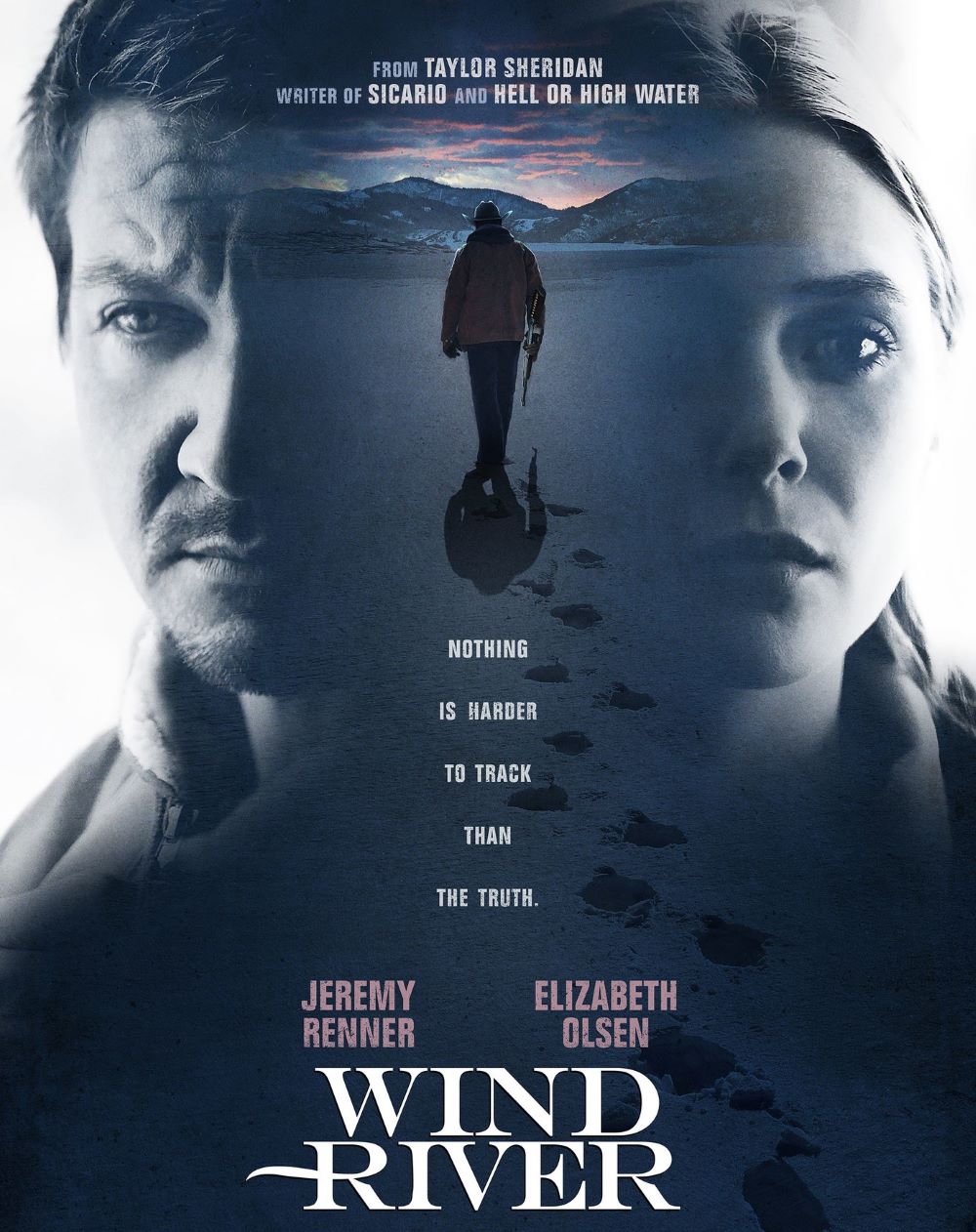
Here’s The Trailer for Wind River!


Here’s the trailer for Wind River, a crime thriller that has gotten good reviews at both Sundance and Cannes.

Here are a few things to know about Wind River:

First off, a lot of people are pointing out that it stars two members of the MCU, Jeremy Renner and Elizabeth Olsen.  At this point, however, the MCU is so big — with the movies and Netflix and the tv shows — that it’s hard to think of a recent or upcomng film that doesn’t feature at least one actor from the MCU.  At this point, MCU actors running into each other in non-MCU movies is no longer as big a surprise as it may have once been.  It’s kind of unavoidable.

For me, the most intriguing thing about Wind River is that it is the directorial debut of Taylor Sheridan, who previously wrote the amazing screenplays for both Sicario and Hell or High Water.  I’ll be curious to see if Sheridan is as good and unpredictable a director as he is a writer.

Here’s the trailer!