Shattered Politics #79: Man of the Year (dir by Barry Levinson)


Man_of_The_Year_(2006_film)

The 2006 comedy Man of the Year is a difficult film to review.  Some of that is because it’s not that interesting of a film.  It’s simplistic and predictable.  In fact, the only reason that I’m reviewing this film for Shattered Politics is because I needed an example of a bad, mainstream political film.

However, that’s not the only reason why it’s difficult to write about Man of the Year.  The bigger reason is that Man Of The Year stars Robin Williams and, in many ways, it’s typical of one of his later lesser films.  After his tragic death, it’s even harder to watch Robin Williams waste his talents in a bad film.

And, make no mistake about it, Man of the Year is a bad film.

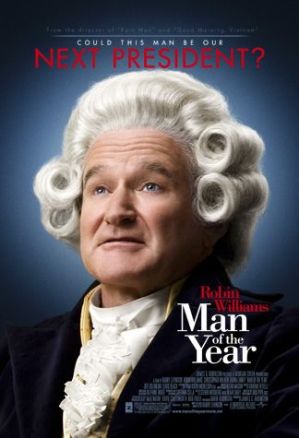
Robin Williams plays Tom Dobbs.  Dobbs, we are told, is the most famous political commentator in America.  Watching the film, it’s obvious that Dobbs is meant to be the film’s equivalent of Jon Stewart and Stephen Colbert.  However, the difference is that Stewart and Colbert are both obviously liberal whereas, from what little we see of Tom Dobbs show, Dobbs doesn’t appear to have any positions beyond the few vague platitudes that pass for political thinking in most mainstream films.  Dobbs is against special interests.  He’s against career politicians.  He’s against … well, he’s against everything that most people are against and for everything that most people are for.  About the closest that Tom Dobbs come to being edgy is when he makes a stupid joke about Pope Benedict being German.

Anyway, Dobbs is recruited to run for President and he manages to get on the ballot in 13 states!  And he’s even doing well because, apparently in this film’s version of reality, Catholic voters have no problem supporting someone who makes fun of Pope Benedict for being German.  And he’s even invited to take part in a presidential debate.  When asked his first question in the debate, Dobbs starts talking and, because he’s being played by Robin Williams, he doesn’t stop.  The debate spirals out-of-control.  Dobbs goes on and on about the state of America, all the while assuming weird accents and slipping in and out of different personalities.

“Oh my God,” I thought, “he’s had a nervous breakdown.”

Except, of course, he hasn’t.  And, since this is a movie, everyone in America loves his performance.  On election night, Tom Dobbs apparently wins all 13 of his states and he’s elected President!

Except, of course, he hasn’t been.  It turns out there was an error with the voting machines.  Eleanor Green (Laura Linney), who works at the company that built the machines, figures out what happened.  In order to keep her from revealing the truth, the company drugs her and attempts to destroy her credibility and…

Wait, this is a Robin Williams comedy, isn’t it?  Well, it is and it isn’t.  Half of the film is devoted to Tom Dobbs saying things that are supposed to be funny but the other half deals with Eleanor trying to expose a giant cover-up without getting killed.  Director Barry Levinson can’t seem to figure out whether his film is supposed to be an unfunny comedy or a boring drama.  So, he tries to do both and … well, taken by that criteria, the film actually works.  If Levinson set out to be unfunny and boring, he succeeded.

One of the biggest dangers of making a film about a comedian is that, for the film to work, you have to believe that people would actually find the comedian to be funny.  When the jokes aren’t funny, it doesn’t matter how many reaction shots of people laughing that you stuff into the film.  Man of the Year is full of reaction shots.  During the debate, we continually see Eleanor’s teenage son laughing.  (How many teenagers, other than the weird ones and the ones assigned to do so for homework, actually watch a presidential debate?)  During one particularly painful moment, Tom starts rambling while traveling on the campaign bus and we are subjected to countless reaction shots of Christopher Walken and Lewis Black laughing so hard that they look like they might faint from exhaustion.

The problem is that it’s rare that a few hundred people will all start laughing and stop laughing at the exact same time.  Whenever you listen to a truly good comedian, you always hear a few giggles that indicate that at least a few audience members are still thinking about the last joke or else that they’re anticipating the next joke.  Often times, when a comedian says something especially funny or unexpected, you don’t even hear laughter.  You might hear a gasp of shock.  You might hear tittering.  You might hear applause.  You might hear someone shouting like they’re at a sporting event.

What I’m saying is that everyone reacts to humor in their own individual way.  Everyone has a laugh of their very own.  Uniform laughter, like the laughter in Man of the Year, sounds fake because it is fake.

Add to that, nothing that Tom Dobbs says is particularly funny.

So, no — don’t watch Man of the Year.  Watch Dead Poets Society.  Watch Good Will Hunting or Awakenings.  You could even watch Cadillac Man!  But don’t watch Man of the Year.

Shattered Politics #38: Nashville (dir by Robert Altman)


Nashville-Cover

“Oh we must be doin’ somethin right to last 200 years…”

— Haven Hamilton (Henry Gibson) in Nashville (1975)

The 1975 Best Picture nominee Nashville is the epitome of an ensemble film.  It follows 24 characters as they spend five days wandering around Nashville, Tennessee.  Some of them are country music superstars, some of them are groupies, some of them are singers looking for a first break, and at least one of them is an assassin.  The one thing that they all have in common is that they’re lost in America.  Released barely a year after the resignation of Richard Nixon and at a time when Americans were still struggling to come to terms with the turmoil of the 60s, Nashville is a film that asks whether or not America’s best days are behind it and seems to be saying that they may very well be.  (That’s a question that’s still being asked today in 2015.)  It’s appropriate, therefore, that Nashville both takes place in and is named after a city that everyone associates with perhaps the most stereotypically American genre of music that there is.

Nashville follows 24 characters, some of whom are more interesting than others.  For five days, these characters wander around town, occasionally noticing each other but far more often failing to make any sort of connection.

Haven Hamilton (Henry Gibson) is a veteran star, a somewhat comical character who sings vapid songs about home and family and who smiles for the public while privately revealing himself to be petty and vain.  His son, Bud (Dave Peel), is a Harvard graduate who acts as his father’s business manager.  Oddly enough, Haven is an unlikable character until the end of the film when he suddenly reveals himself to be one of the few characters strong enough to keep Nashville for descending into chaos.  Meanwhile, Bud seems to be a nice and modest guy until he takes part in humiliating another character.

Haven’s lover is Lady Pearl (Barbara Baxley), who owns a nightclub and spends most of the film drinking.  Much like Haven, she starts out as a vaguely comical character until she finally gets a chance to reveal her true self.  In Pearl’s case, it comes when she delivers a bitter monologue about volunteering for Bobby Kennedy’s presidential campaign.

Haven’s lawyer is Delbert Reece (Ned Beatty), an obsequies good old boy who is married to gospel singer Linnea (Lily Tomlin).  They have two deaf children.  Linnea has learned sign language.  Delbert has not.  Over the course of the film, both Delbert and Linnea will be tempted to cheat.  Only one of them actually will.

And then there’s Barbara Jean (Ronee Blakley), a mentally unstable singer who has come to Nashville with her manipulative husband/manager, Barnett (Allen Garfield).  Almost every character in the film wants something from Barbara Jean.  A mostly silent Vietnam veteran named Kelly (Scott Glenn) claims that his mother knows Barbara Jean.  A nerdy guy named Kenny (David Hayward) comes to Nashville just to see her perform.

Both Kelly and Kenny end up getting to know Mr. Green (Keenan Wynn), a rare Nashville resident who doesn’t seem to care about music.  However, Mr. Green’s spacey niece, L.A. Joan (Shelly Duvall), is obsessed with having sex with as many musicians as possible.

Among those being targeted by L.A. Joan is Tom Frank (Keith Carradine), one-third of the folk trio Bill, Mary, and Tom.  Unknown to Bill (Allan F. Nicholls), Tom is sleeping with Bill’s wife, Mary (Cristina Raines).  Unknown to Mary, Tom is sleeping with almost every other woman in Nashville as well.  When Tom takes to the stage at Pearl’s nightclub and sings a song called I’m Easy, the audience is full of women who think that he’s specifically singing to them.

Another one of Tom’s songs, the appropriately titled “It Don’t Worry Me,” is frequently sung by Albuquerque (Barbara Harris), who spend the entire film trying to get discovered while hiding out from her much older husband, Star (Bert Remsen).

Another aspiring star is Sulleen Grey (Gwen Welles), who is a tone deaf waitress who suffers the film’s greatest humiliation when she agrees to perform at a political fund raiser without understanding that she’s expected to strip while singing.  Trying to look after Sulleen is Wade (Robert DoQui), who has just been released from prison.

And then there’s the loners, the characters who tend to pop up almost randomly.  Norman (David Arkin) is a limo driver who, like everyone else in Nashville, wants to be a star.  The hilariously bitchy Connie White (Karen Black) and the bland Tommy Brown (Timothy Brown) already are stars.  (The character of Tommy Brown is one of Nashville’s oddities.  He’s listed, in the credits, as being a major character but he only appears in a few scenes and never really gets a storyline of his own.)  There’s the Tricycle Man (Jeff Goldblum), a silent magician who mysteriously appears and disappears throughout the film.

And, finally, there’s Opal (Geraldine Chaplin), an apparently crazed woman who is wandering around Nashville and pretending to be a reporter for the BBC.  (It’s never specifically stated that Opal is a fake but it’s fairly obvious that she is.)  How you feel about the character of Opal will probably determine how you feel about Nashville as a whole.  If you find Opal to be a heavy-handed caricature, you’ll probably feel the same way about the rest of the film.  If you find the character of Opal to be genuinely amusing with her increasingly pretentious musings, you’ll probably enjoy Nashville.

There is one more very important character in Nashville.  He’s the character who literally holds the film together.  He’s also the reason why I’m including Nashville in this series of reviews about political films.  That character is named Hal Phillip Walker and, though he’s never actually seen in the film, he’s still the driving force behind most of what happens.  Walker is a third-party presidential candidate, a man who seems to be universally admired despite the fact that his campaign appears to just be a collection of vapid platitudes.  Walker’s campaign manager, John Triplette (Michael Murphy), comes to Nashville and sets up the Walker For President rally.  That’s where Nashville reaches its violent and not-all-together optimistic climax.

Reportedly, Nashville is a favorite film of Paul Thomas Anderson’s and you can see the influence of Nashville in many of Anderson’s films, from the large ensemble to the moments of bizarre humor to the refusal to pass judgement on any of the characters to the inevitable violence that ends the film.  Also, much like Anderson’s films, Nashville seems to be a film that was specifically made to divide audiences.  You’re either going to think that Nashville is a brilliantly satirical piece of Americana or you’re going to think it’s a self-indulgent and self-important mess.

As for me, I think it’s great and I think that, after you watch it, you should track down and read Jan Stuart’s The Nashville Chronicles: The Making of Robert Altman’s Masterpiece.  It’s the perfect companion for a great film.


A Few Very Late Thoughts On Wes Anderson’s The Grand Budapest Hotel


grand-budapest-hotel

It took me a while to come around to appreciating The Grand Budapest Hotel.

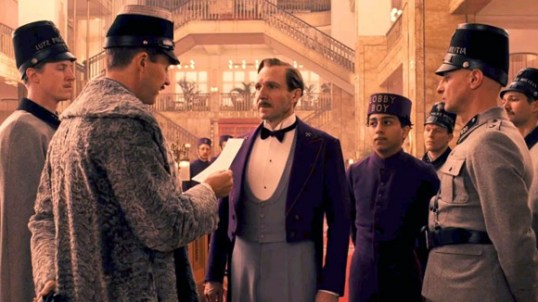
When I first saw Wes Anderson’s latest film, way back in March, I have to admit that I was somehow both impressed and disappointed.  The film’s virtues were obvious.  Ralph Fiennes gave a brilliant lead performance as Gustave, the courtly and womanizing concierge of the Grand Budapest Hotel.  As played by Fiennes, Gustave came to represent a certain type of old world elegance that, I’m assuming, died out long before I was born.  As is typical of Anderson’s film, The Grand Budapest Hotel was visual delight.  Even when the film’s convoluted storyline occasionally grew self-indulgent, The Grand Budapest Hotel was always interesting and fun to watch.

At the same time, I had some issues with The Grand Budapest Hotel.

One of the major ones — and I will admit right now that this will seem minor to some of you — is that halfway through the film, a cat is killed.  The evil Dimitri Desgoffe von Taxis (Adrien Brody) is attempting to intimidate a nervous lawyer, Kovacs (Jeff Goldblum).  Kovacs’s owns a cat and, at one point, Dimitri’s henchman, Jopling (Willem DaFoe), tosses the cat out of a window.  Kovacs runs to window and sees his dead cat splattered on the sidewalk below…

And this is when the audience in the theater laughed and I got very angry.

To me, there was nothing funny about killing that man’s cat.  But the more I’ve thought about it, the more that I’ve come to realize that my reaction had more to do with the audience than the film.  The film was not saying that the cat’s death was funny.  The film was saying that Dimitri and Jopling were evil and dangerous, as their actions throughout the film would demonstrate.  It was the audience that decided, since Grand Budapest Hotel is full of funny moments and has the off-center style that one has come to expect from Wes Anderson, that meant every scene in the film was meant to be played strictly for laughs.  The fact of the matter is that a typical Wes Anderson film will always attract a certain type of hipster douchebag.  They were the ones who loudly laughed, mostly because they had spent the entire movie laughing loudly in order to make sure that everyone around them understood that they were in on the joke.

But that’s not the fault of the film.  Despite what you may have heard and what the Golden Globes would have you believe, The Grand Budapest Hotel is not a comedy.  For all the deliberately funny and quirky moments, The Grand Budapest Hotel is actually a very serious film.  For all of the slapstick and for all of Ralph Fiennes’s snarky line readings, The Grand Budapest Hotel ultimately ends on a note of deep melancholy.

When I first saw The Grand Budapest Hotel, it seemed like it was almost too quirky for its own good.  And, to be honest, I could still have done without some of Anderson’s more self-indulgent touches.  The sequence at the end, where Gustave, who has been framed for murder, gets help from a series of his fellow hotel concierges started out funny but, as everyone from Bill Murray to Owen Wilson put in an appearance, it started to feel less like the story of Gustave and more like the story of all of Wes Anderson’s famous friends.

However, the more I’ve thought about it (and The Grand Budapest Hotel is a film that I’ve thought about a lot over the past year), the more I’ve realized that the quirkiness is only a problem if you made the mistake of thinking that the film is meant to be taken literally.

The more I thought about it, the more obvious it became that the most important scenes in The Grand Budapest Hotel were to be found at the beginning and the end of the film.

The film opens with a teenage girl sitting in front of the grave of a great author.  She opens a book and starts to read.

As soon as the girl starts to read, we flashback 29 years to 1985 where the author (Tom Wilkinson) sits behind his office desk and starts to talk about the time that he visited the Grand Budapest Hotel.  

We flashback again to 1969, where we see how the author (now played by Jude Law) met the owner of the Grand Budapest Hotel, a man named Zero (played by F. Murray Abraham).  Over dinner, Zero tells the author the story of how he first came to the Grand Budapest and how he eventually came to own the hotel.

And again, we go back in time, this time to 1932.  We see how the young Zero (Tony Revolori) first met and came to be the protegé of Gustave (Ralph Fiennes).  We see how Gustave taught Zero how to be the perfect concierge.  Eventually, Gustave would be framed for murdering a guest, Zero would meet and fall in love with Agatha (Saoirse Ronan), and then Zubrowska (the fictional Eastern European country in which this all takes place) would be taken over by fascists who would eventually claim the hotel as their own.

After the story of Gustave, Zero, and Agatha has been told, we suddenly flash forward to the author talking to Zero and then to the old author telling the story to his grandson and then finally back to the teenage reader sitting in the cemetery.

In other words, the Grand Budapest Hotel may be the story of Zero but we’re experiencing it through the memories of the author as visualized by the reader.  Gustave, Zero, and the entire Grand Budapest Hotel are not just parts of a story.  Instead, they become symbols of an old way of life that, though it may have been lost, still exists in the memories of old travelers like the author and the imaginations of young readers like the girl in the cemetery.

As I said at the start of this, I was vaguely disappointed with The Grand Budapest Hotel when I first saw it but, perhaps more than any other movie that I saw last year, this has been a film that I haven’t been able to get out of my mind.  Having recently rewatched the film on HBO, I can also attest that both The Grand Budapest Hotel and Ralph Fiennes’s performance not only hold up on a second viewing but improve as well.

I still stand by some of my original criticisms of The Grand Budapest Hotel.  I still wish that cat had not been thrown out the window, even though I now understand that Anderson’s main intent was to show the evil of Dimitri and Jopling.  And I still find some of the cameos to be jarring, precisely because they take us out of the world of the film.

But you know what?

Despite those flaws, The Grand Budapest Hotel is still a unique and intriguing film.  When I sat down tonight and made out my list of my top 26 films of 2014, I was not surprised that Grand Budapest Hotel made the list.  But I was a little bit surprised at how high I ended up ranking it.

But then I thought about it and it all made sense.

The-Grand-Budapest-Hotel-580