Film Review: Tucker: The Man and His Dream (by Francis Ford Coppola)


First released in 1988, Tucker: The Man and His Dream is a biopic about Preston Tucker.

Tucker was an engineer in Detroit who went from designing vehicles for the Army during World War II to trying to launch his own car company.  His ideas for an automobile don’t sound particularly radical today.  He wanted every car to have seat belts.  He wanted a windshield that popped out as a safety precaution.  He want brake pads and he also wanted a car that looked sleek and aerodynamic, as opposed to the old boxy cars that were being pushed out be Detroit.  He wanted a car that got good mileage and he wanted one that could be taken just about anywhere.  Unfortunately, Tucker’s dreams were cut short when he was indicted for stock fraud, a prosecution that most people agree was a frame-up on behalf of the Big Three auto makers.  Tucker was eventually acquitted but his car company went out of business.  Of the 50 cars that Tucker did produce, 48 of them were still on the road and being driven forty years later.

The film stars Jeff Bridges as Preston Tucker, Joan Allen as his wife, Christian Slater and Corin Nemec as two of his sons, Lloyd Bridges as the senator who tried to take Tucker down, Martin Landau as Tucker’s business partner, and Dean Stockwell as Howard Hughes, who shows up for a few minutes to encourage Tucker to follow his dreams regardless of how much the government tries to stop him.  One gets the feeling that the film was a personal one for director Francis Ford Coppola, a filmmaker who has pretty much spent his entire career fighting with studios while trying to bring his vision to the screen.  Tucker fought for seat belts.  Coppola fought for a mix of color and black-and-white in Rumble Fish.  Tucker stood up for his business partner.  Francis Ford Coppola stood up for Al Pacino when no one else could envision him as Michael Corleone.  As is the case with many of Coppola’s films, Tucker: The Man And His Dream is a film that Coppola spent years trying to get made.  It was the film that Coppola originally intended to be the follow-up to The Godfather, with Marlon Brando projected for the lead role of Tucker.  After watching the Tucker, it’s hard not to feel that it worked out for the best that Coppola was not able to make the film in 1973.  It’s impossible to imagine anyone other than Jeff Bridges in the role of Preston Tucker.

“Chase that tiger….chase that tiger….chase that tiger….” It’s a song that Tucker sings constantly throughout the film as the camera spins around him and how you react to Tucker: The Man And His Dream will largely depend on how tolerant you are of Coppola’s stylistic flourishes.  Coppola directs the film as a combination of Disney fairy tale and film noir.  The opening of the film, with Tucker running around in almost a manic state and excitedly telling everyone about his plans, is presented with vibrant colors and frequent smiles and an almost overwhelming air of cheerful optimism.  As the film progresses and Tucker finds himself being targeted by both the government and the other auto companies, the film gets darker and the viewer starts to notice more and more shadows in the background.  The moments of humor become less and less and there’s a heart-breaking moment where Martin Landau, in one of his best performances, reveals just how far the government will go to take down Tucker’s company.  But, in the end, Tucker refuses to surrender and Jeff Bridges’s charming smile continues to fill the viewer with hope.  The film becomes about more than just cars.  It’s a film that celebrates all of the innovators who are willing to defy the establishment.

There’s a tendency to dismiss the majority of Coppola’s post-Apocalypse Now films.  However, Tucker: The Man And His Dream is a later Coppola film that deserves to be remembered.
Here Are The Independent Spirit Nominations!


Today, most awards watchers will be devoting most of their attention to the National Board of Review and the American Film Institute.  That said, the Independent Spirit nominations were still announced earlier today and Anora had a strong showing.  Meanwhile, The Brutalist, which did so well with the New York Film Critics Circle, picked up a nomination for Best Director but not Best Picture.

Here are the Spirit Nominations.  While looking at the nominations, keep in mind that a lot of potential Oscar nominees were not eligible for a nomination.  As a result, the Spirit nominations aren’t exactly the strongest predictive tool when it comes to guessing what will eventually be nominated by the Academy.

Still, it never hurts to be mentioned!

Best Feature

Anora
Producers: Sean Baker, Alex Coco, Samantha Quan

I Saw the TV Glow
Producers: Ali Herting, Sam Intili, Dave McCary, Emma Stone, Sarah Winshall

Nickel Boys
Producers: Joslyn Barnes, Dede Gardner, Jeremy Kleiner, David Levine

Sing Sing
Producers: Clint Bentley, Greg Kwedar, Monique Walton

The Substance
Producers: Tim Bevan, Coralie Fargeat, Eric Fellner

Best First Feature

Dìdi
Director/Producer: Sean Wang
Producers: Valerie Bush, Carlos López Estrada, Josh Peters

In the Summers

Director: Alessandra Lacorazza Samudio
Producers: Janek Ambros, Lynette Coll, Alexander Dinelaris, Cynthia Fernandez De La Cruz, Cristóbal Güell, Sergio Alberto Lira, Rob Quadrino, Jan Suter, Daniel Tantalean, Nando Vila, Slava Vladimirov, Stephanie Yankwitt

Janet Planet
Director/Producer: Annie Baker
Producers: Andrew Goldman, Dan Janvey, Derrick Tseng

The Piano Lesson
Director: Malcolm Washington
Producers: Todd Black, Denzel Washington

Problemista
Director/Producer: Julio Torres
Producers: Ali Herting, Dave McCary, Emma Stone

John Cassavetes Award

Given to the best feature made for under $1,000,000

Big Boys
Writer/Director/Producer: Corey Sherman
Producer: Allison Tate

Ghostlight
Writer/Director: Kelly O’Sullivan
Director/Producer: Alex Thompson
Producers: Pierce Cravens, Ian Keiser, Chelsea Krant, Eddie Linker, Alex Wilson

Girls Will Be Girls
Writer/Director/Producer: Shuchi Talati
Producers: Richa Chadha, Claire Chassagne

Jazzy
Writer/Director/Producer: Morrisa Maltz
Writer/Producer: Lainey Shangreaux
Writers: Andrew Hajek, Vanara Taing
Producers: Miranda Bailey, Tommy Heitkamp, John Way, Natalie Whalen, Elliott Whitton

The People’s Joker
Writer/Director: Vera Drew
Writer: Bri LeRose
Producer: Joey Lyons

BEST DIRECTOR

Ali Abbasi
The Apprentice

Sean Baker
Anora

Brady Corbet
The Brutalist

Alonso Ruizpalacios
La Cocina

Jane Schoenbrun
I Saw the TV Glow

BEST SCREENPLAY

Scott Beck, Bryan Woods
Heretic

Jesse Eisenberg
A Real Pain

Megan Park
My Old Ass

Aaron Schimberg
A Different Man

Jane Schoenbrun
I Saw the TV Glow

BEST FIRST SCREENPLAY

Joanna Arnow
The Feeling That the Time for Doing Something Has Passed

Annie Baker
Janet Planet

India Donaldson
Good One

Julio Torres
Problemista

Sean Wang
Dìdi

BEST LEAD PERFORMANCE

Amy Adams
Nightbitch

Ryan Destiny
The Fire Inside

Colman Domingo
Sing Sing

Keith Kupferer
Ghostlight

Mikey Madison
Anora

Demi Moore
The Substance

Hunter Schafer
Cuckoo

Justice Smith
I Saw the TV Glow

June Squibb
Thelma

Sebastian Stan
The Apprentice

BEST SUPPORTING PERFORMANCE

Yura Borisov
Anora

Joan Chen
Dìdi

Kieran Culkin
A Real Pain

Danielle Deadwyler
The Piano Lesson

Carol Kane
Between the Temples

Karren Karagulian
Anora

Kani Kusruti
Girls Will Be Girls

Brigette Lundy-Paine
I Saw the TV Glow

Clarence “Divine Eye” Maclin
Sing Sing

Adam Pearson
A Different Man

BEST BREAKTHROUGH PERFORMANCE

Isaac Krasner
Big Boys

Katy O’Brian
Love Lies Bleeding

Mason Alexander Park
National Anthem

René Pérez Joglar
In the Summers

Maisy Stella
My Old Ass

BEST CINEMATOGRAPHY

Dinh Duy Hung
Inside the Yellow Cocoon Shell

Jomo Fray
Nickel Boys

Maria von Hausswolff
Janet Planet

Juan Pablo Ramírez
La Cocina

Rina Yang
The Fire Inside

 BEST EDITING

Laura Colwell, Vanara Taing
Jazzy

Olivier Bugge Coutté, Olivia Neergaard-Holm
The Apprentice

Anne McCabe
Nightbitch

Hansjörg Weissbrich
September 5

Arielle Zakowski
Dìdi

ROBERT ALTMAN AWARD – Given to one film’s director, casting director, and ensemble cast

His Three Daughters
Director: Azazel Jacobs
Casting Director: Nicole Arbusto
Ensemble Cast: Jovan Adepo, Jasmine Bracey, Carrie Coon, Jose Febus, Rudy Galvan, Natasha Lyonne, Elizabeth Olsen, Randy Ramos Jr., Jay O. Sanders

BEST DOCUMENTARY (Award given to the director and producer)

Gaucho Gaucho
Directors/Producers: Michael Dweck, Gregory Kershaw
Producers: Christos Konstantakopoulos, Cameron O’Reilly, Matthew Perniciaro

Hummingbirds
Directors: Silvia Del Carmen Castaños, Estefanía “Beba” Contreras
Co-Directors/Producers: Miguel Drake-McLaughlin, Diane Ng, Ana Rodriguez-Falco, Jillian Schlesinger
Producers: Leslie Benavides, Rivkah Beth Medow

No Other Land
Directors/Producers: Yuval Abraham, Basel Adra, Hamdan Ballal, Rachel Szor
Producers: Fabien Greenberg, Bård Kjøge Rønning

Patrice: The Movie
Director: Ted Passon
Producers: Kyla Harris, Innbo Shim, Emily Spivack

Soundtrack to a Coup d’Etat
Director: Johan Grimonprez
Producers: Rémi Grellety, Daan Milius

 BEST INTERNATIONAL FILM (Award given to the director)

All We Imagine as Light
France, India, Netherlands, Luxembourg
Director: Payal Kapadia

Black Dog
China
Director: Guan Hu

Flow
Latvia, France, Belgium
Director: Gints Zilbalodis

Green Border
Poland, France, Czech Republic, Belgium
Director: Agnieszka Holland

Hard Truths
United Kingdom
Director: Mike Leigh

PRODUCERS AWARD  presented by Bulleit Frontier Whiskey – The Producers Award, now in its 28th year, honors emerging producers who, despite highly limited resources, demonstrate the creativity, tenacity, and vision required to produce quality independent films.

Alex Coco

Sarah Winshall

Zoë Worth

 SOMEONE TO WATCH AWARD  – The Someone to Watch Award, now in its 31st year, recognizes a talented filmmaker of singular vision who has not yet received appropriate recognition.

Nicholas Colia
Director of Griffin in Summer

Sarah Friedland
Director of Familiar Touch

Pham Thien An
Director of Inside the Yellow Cocoon Shell

TRUER THAN FICTION AWARD – The Truer Than Fiction Award, now in its 30th year, is presented to an emerging director of non-fiction features who has not yet received significant recognition.

Julian Brave NoiseCat, Emily Kassie
Directors of Sugarcane

Carla Gutiérrez
Director of Frida

Rachel Elizabeth Seed
Director of A Photographic Memory

Retro Television Review: Miami Vice 1.17 “The Maze”


Welcome to Retro Television Reviews, a feature where we review some of our favorite and least favorite shows of the past!  On Mondays, I will be reviewing Miami Vice, which ran on NBC from 1984 to 1989.  The entire show is currently streaming on Tubi!

It was not easy but I managed to rouse myself from my sickbed long enough to stumble into my home office so I could watch and review this week’s episode of Miami Vice!

Episode 1.17 “The Maze”

(Dir by Tim Zinnemann, originally aired on February 22nd, 1985)

This episode of Miami Vice gets off to a good start, with an exciting and, even by the standards of today, surprisingly violent shoot-out in downtown Miami.  The shoot-out leaves one cop dead, one partner embittered, and Crockett and Tubbs looking for the perpetrators, the Escobars.  As Tubbs explains it, the Escobars were strictly small-timers but it appears that they’ve recently gotten out of prison and now they are trying to make a name for themselves in Miami.

The search for the Escobars leads Crockett and Tubbs to a seemingly abandoned apartment building that has been nicknamed “The Maze.”  The Escobars have taken over the building and now, the handful of people who were previously living in the Maze are virtual hostages.  With the police surrounding the Maze, Tubbs decides to go undercover as a drifter who just happens to drop by the Maze in search of a place to stay.  Of course, no sooner has Tubbs entered into the Maze then a renegade cop named Duryea (Jay O. Sanders) decides to rush the building himself and the police are forced to reveal themselves.  Realizing that they’re surrounded, the Escobars demand a helicopter to the Bahamas and $10,000.  (Personally, I think they should have just asked for the helicopter.  People will give up helicopters much quicker than money.)  They hold every person in the building hostage, including Tubbs.

As I previously mentioned while reviewing T and T, I’m not a fan of shows that center around hostage situations, largely because they almost always end up being dramatically inert.  There’s only so many times that you can watch a sweaty criminal demand a helicopter before you get bored with listening to him.  That is certainly the case here.  The show gets off to a good start and even the scenes with Tubbs breaking into the Maze and pretending to be a Jamaican drifter had some flair to them.  But once the tense hostage situation started up, I got bored.  I appreciated the fact that the Escobars, as opposes to being hardened criminals, were really just as scared as the people they were holding hostage but otherwise, this episode was just a bit too slow for me.

That said, this episode does feature Breakin 2‘s Adolfo ‘Shabba-Doo’ Quinones as a dancing informant, early performances from Joe Morton and Ving Rahmes, and a really cool moment where Tubbs smirks and says, “Nobody’s going to the Bahamas.”  Even a lesser episode of Miami Vice still had style to burn.

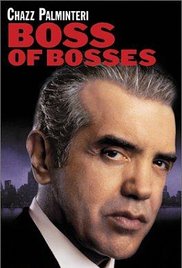
A Movie A Day #29: Boss of Bosses (2001, directed by Dwight H. Little)


bossWho was the boss of bosses?  According to this movie, he was Paul Castellano.  A cousin-by-marriage to the notorious crime boss Carlo Gambino, Castellano grew up in New York City and first became a made man in the 1930s.  After four decades of loyal service, Castellano succeeded Carlo as the boss of the Gambino Crime Family.  As portrayed in this movie, Castellano attempted to keep the Gambinos out of the drug trade and tried to steer both his biological and his crime family into legitimate businesses.  However, not everyone appreciated Castellano’s vision of the future and, in 1985, he was assassinated on the orders of his eventual successor, John Gotti.
Considering that this biopic was made for TNT and was directed by Dwight H. Little (who was best known for directing films like Halloween 4 and Free Willy 2), it’s probably not surprising that not a single mob cliché goes unturned in Boss of Bosses.  At first, I had a hard time accepting Chazz Palminteri as Castellano because Palminteri sounded exactly like Joe Mantegna voicing Fat Tony on The Simpsons.  Once I got over the vocal similarities, I saw that Palminteri was actually giving a very good, noncartoonish performance as Castellano but the film itself never convinces us that Castellano was anything more than a forgettable placeholder between the reigns of the legendary Gambino and the flamboyant Gotti.

Boss of Bosses, which is also known as Godfather of New York, is currently available on YouTube.

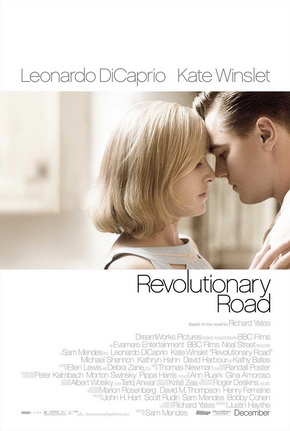
Embracing the Melodrama Part II #115: Revolutionary Road (dir by Sam Mendes)


Revolutionary_roadI have such mixed feelings about the 2008 film Revolutionary Road.

As you may remember, Revolutionary Road got a lot of attention because it reunited the Titanic lovers, Kate Winslet and Leonardo DiCaprio.  In Revolutionary Road, they would be playing the type of married couple that we all know Jack and Rose would have become if the boat hadn’t hit that iceberg.

Revolutionary Road also got a lot of attention because it was directed by Sam Mendes and it was a return to the “suburbs-as-Hell” genre of filmmaking that won Mendes an undeserved Oscar for his work on American Beauty.

And finally, Revolutionary Road was based on a 1961 novel by Richard Yates that had originally been declared to be unfilmmable.  After decades of being optioned and then abandoned, Revolutionary Road was finally coming to the screen.

With all that in mind, a lot of critics expected that Revolutionary Road would be one of the best films of the year.  When the film itself was finally released, there were a few ecstatic reviews.  There were predictions of Oscar glory.  But, for the most part, both audiences and critics had a somewhat muted reaction.  The film itself simply did not live up to all of the build up.

That said, Kate Winslet gave a great performance.  In the role of aspiring actress-turned-housewife-turned-prisoner April, Winslet gives a fierce and tragic performance.  The film revolves around April’s struggle to live her own life and pursue her own ambitions in a world that continually tells her that she should simply be happy and content to have a husband, two children, and a house in the suburbs.  When April describes her life as being full of “hopeless emptiness,” we all know exactly what she’s talking about.

Leonardo DiCaprio was a bit less convincing as her husband, Frank.  Then again, that’s not really a surprise.  DiCaprio is always at his worse whenever he has to play a “normal” character.  His screen presence is too off-center for him to be believable as a suburban conformist.  It was obviously good publicity to reunite DiCaprio and Winslet but that doesn’t change the fact that Leo is totally miscast.  Whenever Frank and April fight, Kate Winslet seems to be screaming from her very soul while DiCaprio is just shrill.  Admittedly, Frank is meant to be a shallow character but that doesn’t justify a shallow performance.

Throughout the film, Frank and April are constantly nagged by their real estate agent, Helen Givings (Kathy Bates).  Whenever Helen drops by the house, she goes “Yoo hoo!” in the shrillest way possible and the audiences is reminded that Sam Mendes is not a particularly subtle director.  That willingness to go over-the-top made him the perfect director for Skyfall but, in both American Beauty and this film, it just leads to some talented actors giving very bad performances.

Helen’s son, John (Michael Shannon), has one of those cinematic mental illnesses, the type that gives him the power to explicitly state each scene’s subtext.  John is also one of those overly theatrical characters who works a lot better as a literary conceit than as an actual character.

And really, I guess that sums up why I have never liked Revolutionary Road as much as I wanted to.  The film works whenever it focuses on Kate Winslet, precisely because she gives such a heartfelt and naturalistic performance.  However, at the same time, Winslet is so good that she exposes how artificial and theatrical the rest of the film is.  If only the rest of the production had followed Winslet’s lead, Revolutionary Road could have been something great.

For all the pre-release Oscar hype, Revolutionary Road was largely ignored when it came to the Academy Awards.  Michael Shannon received a surprise nomination for best supporting actor but otherwise, the film was snubbed.  Kate Winslet, however, did finally win an Oscar that year when she picked up the Best Actress award for her performance in The Reader.

44 Days of Paranoia #6: JFK (dir by Oliver Stone)


JFK-John-F-Kennedy-DVD-Yon-OLIVER-STONE__76044126_0When I first decided to do this series of reviews of conspiracy-themed films, I knew that I would eventually have to review the 1991 Oliver Stone film JFK.

JFK is one of those films that continues to divide audiences.  Those who think that John F. Kennedy was killed by a conspiracy tend to love this film and are given to describing JFK as being “one of the most important films ever made.”  Those who believe that Lee Harvey Oswald was the lone assassin dismiss Stone’s film as being left-wing propaganda.  Just check out  the message board at the imdb if you need evidence of just how worked up people get over this film and its subject matter.

It seems that very few of the people who criticize or praise JFK ever review it as a work of cinema.  Instead, they focus on the film’s politics.  If I criticize the film for wasting the talents of Sissy Spacek or featuring one of Kevin Costner’s least interesting performances then I’m running the risk of having to deal with angry conspiracy theorists telling me that I need to open my eyes to the reality of American history.  On the other hand, if I praise Tommy Lee Jones’s wonderfully decadent turn as one of the film’s conspirators, chances are that someone is going to accuse me of being a naive leftist.

Then again, perhaps that reaction is to be expected.  Oliver Stone is one of our most political and least subtle filmmakers.  His movies are specifically designed to challenge the status quo.  For that reason, it’s not surprising to discover that Stone considers JFK to be the best of all of his films.

JFK is based (rather loosely, some claim) on the true story of New Orleans District Attorney Jim Garrison (played by Kevin Costner) and how, in 1967, he charged businessman Clay Shaw (played by Tommy Lee Jones) with being a part of a conspiracy to kill John F. Kennedy.  Shaw was eventually acquitted and both Jim Garrison and his investigation remain controversial to this day.

JFK courts controversy immediately with its portrayal of Jim Garrison.  I’ve read several accounts of the Garrison investigation and the one thing that they all seem to agree on is that Jim Garrison was a flamboyant, bigger-than-life figure who enjoyed publicity.  Even among those who believe that Garrison uncovered some valuable evidence as a result of his investigation, there is a good deal of ambiguity about Garrison’s motives.  However, in Stone’s film, Jim Garrison is played by Kevin Costner and is portrayed as being an incorruptible, all-American idealist.  It’s not that Costner gives a bad performance.  Instead, it’s just a rather uninteresting one, especially when one compares Costner’s Garrison to some of the stories about the real-life Garrison.

However, as the film unfolds, it becomes obvious that Stone is using Costner’s blandness to the film’s advantage.  Over the course of three hours, JFK slowly peels back layers of secrecy and cover-ups and reveals the shadow world that, according to Stone, lurks underneath everyday reality.  Costner’s Garrison might not be interesting but he is a stable presence.  He anchors the film, giving us someone to relate to while the film itself grows more and more bizarre.

While Costner’s might give the least interesting performance of his career in this film, the same cannot be said of the rest of the cast.  JFK is full of familiar faces, many of whom are only on-screen for a few minutes but all of which play an important role in creating Stone’s shadow universe.  Kevin Bacon, Gary Oldman, Joe Pesci, Michael Rooker, Donald Sutherland, and Tommy Lee Jones; they all have small roles but every single one of them makes an undeniable impression.  Whether you agree with the film’s conclusions are not, it’s impossible not to enjoy JFK for the chance to spot a bunch of familiar faces giving memorably bizarre performances.

But ultimately, its impossible to review JFK without considering the film’s conclusions.  JFK makes the case that John F. Kennedy was killed as the result of a massive right-wing conspiracy that involved the military, business interests, the CIA, the FBI, anti-Castro Cubans, and the mafia.  By the end of the film, the question becomes less who killed JFK and more who didn’t kill JFK.

Myself, I’m not going to claim to be enough of an expert on the Kennedy assassination to argue whether JFK is accurate or if it’s just propaganda.  However, as a film reviewer, I can say that it’s a very well-made and powerful film but it’s also one of those films that works better the first time you see it than the second time.

The first time you see it, the film overwhelms you.  It leaves you convinced that yes, there was a conspiracy and yes, everyone was involved and yes, Jim Garrison was right!  It convinces you so thoroughly that you end up using exclamation points, just to make sure everyone knows how convinced you are.

However, with each subsequent time that you view JFK, you became a bit more aware of just how manipulative and one-sided it truly is.  You become a bit more aware of the technique underneath the outrage and, if you’re a smart film watcher, you remember that JFK is a recreation as opposed to being a historical document.  You become more and more aware that Stone approached the material with a destination in mind and, like any good director, he has specifically shaped the material to make sure that you reach that destination at the end of the journey.

That was certainly my experience with JFK.  I first saw it in high school and it convinced me that JFK was the victim of a conspiracy.  Then, when I was in college, I watched it for a second time and, though I still believed the film’s conclusions, I also found myself much more aware of how the film’s length and Stone’s direction were designed to beat the audience into submission.  When I saw the film a third time, I found myself resenting the film’s manipulative nature and, as a result, I found it a lot more difficult to accept Stone’s conclusions.

However, when I rewatched the film last night for this review, I was surprised to discover that JFK actually holds up pretty well.  It’s still way too long (and, unlike a lot of other reviewers, I am not impressed by the droning speech that Costner delivers at the end of film) and Stone’s lack of subtlety does backfire on a few occasions.  However, perhaps because I was finally watching the film as entertainment as opposed to judging the film on its political or historical merits, I discovered that JFK is a watchable and entertaining film, one that does a pretty good job of making Stone’s case.  If nothing else, it’s worth watching just for the chance to see the wonderfully snarky performances of Tommy Lee Jones, Kevin Bacon, and Gary Oldman.

Perhaps the best thing that I can say about JFK is that its the type of film that will inspire smart people to do their own research and come to their own conclusions, which may or may not be the same conclusions that Oliver Stone reaches.

And, honestly, isn’t that the most that we can ask of any film?

JFK

Trailer: Green Lantern (2nd Official Trailer)


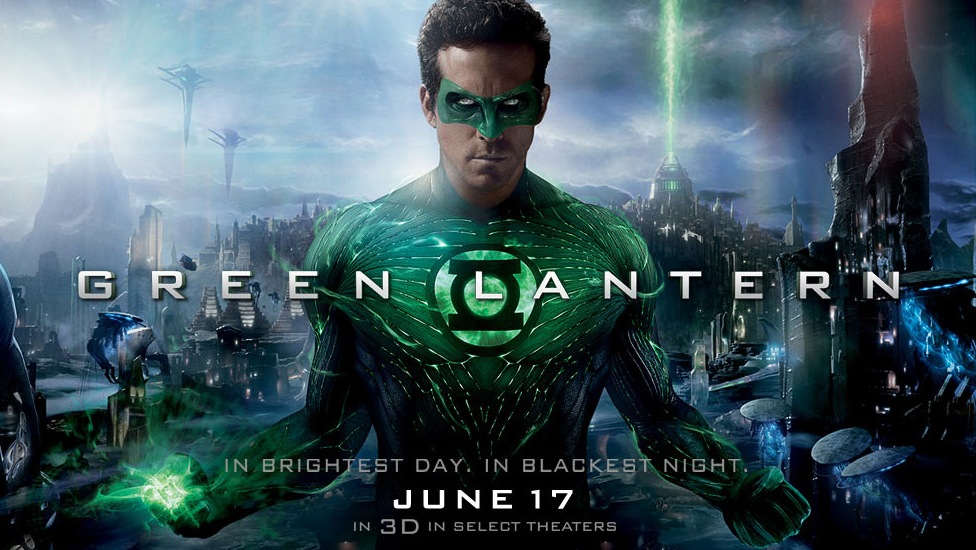
The WonderCon 2011 exclusive trailer and footage was a major step in creating major buzz and hype for Warner Brothers’ and DC Entertainment upcoming superhero film Green Lantern. With just a little over a month left before the film premieres the second (most likely the final trailer for the film) trailer has been released and whatever doubts early marketing and ads the film seemed to give rise to have gone away with this final release.

Green Lantern is sort of the Iron Man of the DC Comics pantheon in that he’s one of the more powerful characters in that universe, but he never got to the level of iconic status as Superman and Batman. There’s a reason why the only DC comic characters to have sustained any sort of film franchise have been Superman and Batman. The Green Lantern character was never about fighting evil on Earth. His fight was always on a much more cosmic-scale and this trailer shows that the danger in the Green Lantern is cosmic in scale even. The last superhero to attempt such a concept story-wise was the Fantastic Four sequel with Silver Surfer and Galactus. That didn’t turn out as well as many hoped it would. Here’s to hoping that Green Lantern will succeed where the Fantastic Four sequel failed.

Green Lantern is set for a June 17, 2011 release. It will come out in both 2D and 3D (RealD and IMAX 3D).

Green Lantern: WonderCon Exclusive Footage


I posted just recently that Warner Brothers and DC Entertainment had been dropping the ball when it came to promoting their upcoming superhero action-adventure film slated for this summer blockbuster season. Green Lantern had its first teaser released around November of 2010 and the reception to that trailer was lukewarm at best and dismissal of the film at it’s most vocal.

It’s been almost 4 months since that disastrous attempt at promoting what would be Warner Brothers’ biggest film of the 2011. It looks like Warner Brothers and those in charge of promoting their films may have just learned a valuable lesson in releasing promotion materials when footage needed to spice it up for the target audience is not ready.

WonderCon 2011 at San Francisco has become Green Lantern central as the studios in charge of the film have released not just a kickass official theatrical poster for the film, but a 9-minute sizzle reel for those lucky enough to get a seat in the film’s panel at the Esplanade Ballroom at Moscone Center South. For those who weren’t able to see that 9-min footage the people at Warner Brothers have been gracious enough to release an abridged 4min and 3 second version into the interwebs for everyone to witness.

Even just looking at this abridged version of the WonderCon-exclusive footage has helped in dispelling much of my apprehension towards the success and workability of this film as a live-action blockbuster. The footage goes a long way in setting the tone of the film. Green Lantern has always been part of the cosmic tapestry of the overall DC Universe and the filmmakers seem to have found a way to show that epic cosmic side of the character and do it without making it look cheesy (though some of the CGI effects on the non-human members of the Green Lantern Corps could still use much tuning up).

Except for the part where Jordan is trying to figure out the Green Lantern oath in his living room the footage seems very serious in tone with little comedic beats like the teaser. I would hope that the film does have some comedic beats to it since this is Ryan Reynolds and early Hal Jordan wasn’t always the serious, gloomy gus he turned out later on in his Green Lantern run.

Green Lantern is slated for a June 17, 2011 release.