“You know how to whistle, don’t you”
From 1944’s To Have And Have Not.
RIP, Lauren Bacall.
“You know how to whistle, don’t you”
From 1944’s To Have And Have Not.
RIP, Lauren Bacall.
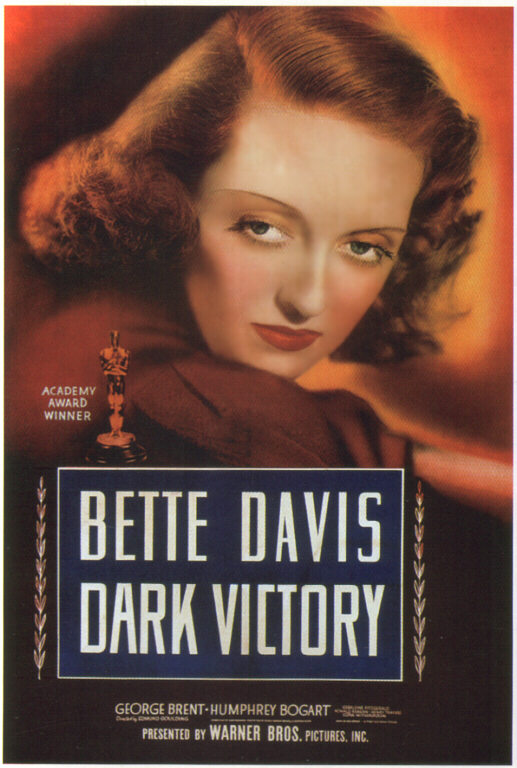
For our next melodrama, we take a look at the 1939 best picture nominee, Dark Victory.
Well, with a name like Dark Victory, you can probably guess that the story told be this film isn’t going to be a cheerful one. Bette Davis plays Judith Taherne, a spoiled and self-centered socialite whose life revolves around hanging out with her constantly inebriated friends (one of whom is played by future President Ronald Reagan) and riding horses. When Judith starts to suffer from double vision and headaches, she initially ignores the problem but, as her condition worsens, she finally agrees to see a doctor.
Well, as you can probably guess, the news is not good. Dr. Parsons (Henry Travers, who is best known to us classic film lovers as Clarence Oddbody, the angel from It’s A Wonderful Life) refers her to Dr. Steele (George Brent), a brilliant neurosurgeon. At first, Steele is reluctant to treat Judith. He, after all, had been planning on giving up his New York medical practice so he can move to Vermont and spend his time doing research. Judith, for her part, resents having to see him and treats him rudely. However, when Dr. Steele discovers that Judith has a malignant brain tumor, he decides to put off moving to Vermont so that he can treat her (and, needless to say, fall in love with her as well).
After getting Judith to agree to surgery to remove the tumor, Steele discovers that the entire tumor cannot be removed and that Judith has only a few months to live. Though Judith won’t feel any pain, she will die shortly after experiencing total blindness. Hoping to make Judith’s last few days pleasant, Dr. Steele tells her that the surgery was a complete success and he also conspires with Judith’s loyal secretary, Ann (Geraldine Fitzgerald), to not allow Judith to find out about her terminal condition.
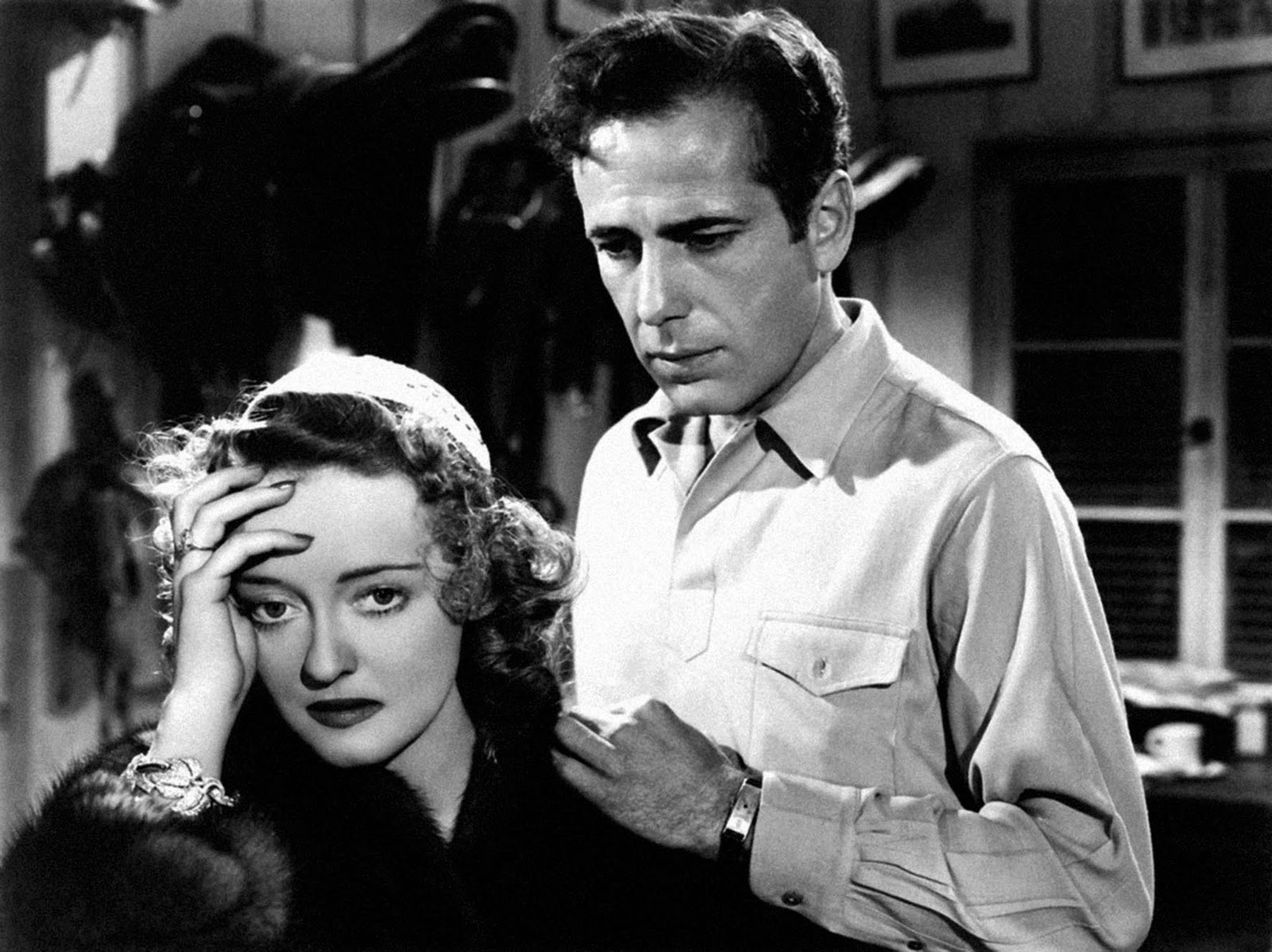
Steele also asks Judith to marry him and move to Vermont with him. Judith agrees but, when she discovers Steele and Ann’s deception, she breaks off the engagement and returns to her decadent and wild ways. Can her Irish stablehand (played by Humphrey Bogart) talk some sense into Judith before it’s too late?
If you want to nitpick, you certainly could do that with a film like Dark Victory. Yes, the film is predictable and yes, Humphrey Bogart is a bit miscast and yes, this film probably did set a precedent for movies about independent women being both punished and redeemed by terminal illness. Nitpick away but none of it really matters because Dark Victory works almost despite itself.
Whatever flaws the film may have, it also has Bette Davis delivering one of her best performances and making even the most overdramatic of events feel plausible and real. Bette Davis gives a performance that runs the gamut from A to Z and then keeps running until it discovers letters that you didn’t even know existed. (Okay, I didn’t come up with that description on my own. A reviewer named DJ Kent said it on the IMDB but it was such a perfect description for what Bette Davis does here that I simply had to repeat it.) Dark Victory is often described as being a “tear jerker” and, by the end of the film, I was in tears. If even as lively and strong a character as Judith Taherne can’t beat death, what hope do the rest of us have?
But, at the same time, the film is not just about the dark. There’s also a victory to be found in the darkness and that victory comes from the fact that even if Judith can’t beat death, she can at least face it under her own terms. By the end of the film, you’re sad because Judith is going to eventually die but you’re also happy because she lived.
So, guess what I did this morning? That’s right — I put on a blindfold, a stumbled over to my ever-growing Blu-ray, DVD, and even VHS collection and I randomly selected 12 films!
Why did I do this?
I did it so you, the beloved readers of Through the Shattered Lens, could once again have a chance to tell me what to do. At the end of this post, you’ll find a poll. Hopefully, between now and next Monday (that’s March 24th), a few of you will take the time to vote for which of these 12 films I should watch and review. I will then watch the winner on Tuesday and post my review on Wednesday night. In short, I’m putting the power to dominate in your hands. Just remember: with great power comes great … well, you know how it goes.
Here are the 12 films that I randomly selected this morning:
The Baader Meinhof Complex (2008) — This German film was nominated for Best Foreign Language Film. It tells the true life story of the left-wing German terrorist group, The RAF.
The Cat’s Meow (2001) — From director Peter Bogdonavich, this film speculates about the events that led to the shooting of silent film director Thomas H. Ince. Starring Kirsten Dunst as Marion Davies, Edward Herrmann as William Randolph Hearst, and Eddie Izzard as Charlie Chaplin.
Heavenly Creatures (1994) — The close relationship between two teenage girls (Melanie Lynesky and Kate Winslet) leads to both a vibrant fantasy world and real-life murder. Directed by Peter Jackson.
In A Lonely Place (1950) — In this film noir from director Nicholas Ray, Humphrey Bogart plays a screenwriter who may (or may not) be a murderer.
Liquid Sky (1983) — In this low-budget, independent science fiction film, an alien lands in New York and soon several members of the city’s underground art scene are vaporized. Not surprisingly, it all has to do with heroin.
Made in Britain (1983) — A very young Tim Roth makes his debut in this British film. Roth plays Trevor, a Neo-Nazi who — despite being intelligent and charismatic — also seems to be intent on destroying himself and everything that he sees.
Much Ado About Nothing (2013) — In between The Avengers and Agents of SHIELD, Joss Whedon found the time to direct this adaptation of Shakespeare’s play.
Peyton Place (1957) — In this Oscar-nominated film, the sordid secrets of an outwardly idyllic New England town are exposed.
Pretty Poison (1968) — Having just been released from a mental institution, Dennis (Anthony Perkins) finds himself involved with teenager Sue Anne (Tuesday Weld), who — despite her wholesome appearance — is actually psychotic.
Troll 2 (1990) — A family moves to Nilbog, a small town that is populated by vegetarian goblins. This movie is widely considered to be one of the worst ever made.
Walkabout (1971) — In this visually stunning Nicolas Roeg film, a teenage girl and her younger brother find themselves stranded and left for dead in the Australian outback. They try to survive with the help of an Aborigine.
Zabriskie Point (1970) — In this 1970 film, the great Italian director Michelangelo Antonioni takes a look at the 60s counter-culture. Airplanes are stolen, buildings explode, and orgies magically materialize in the middle of the desert.
The poll will be open until Monday, March 24th.
Happy voting!

Will make it short but sweet. Happy Valentines from everyone here at Through the Shattered Lens.
What better way to celebrate today than with one of the most romantic scenes in cinematic history. Classic romance for a classy time.
HAPPY VALENTINES DAY!
Originally released in 1937, Dead End is a gangster film with social conscience. Based on a Broadway play and featuring a screenplay by the iconic progressive writer Lillian Hellman, Dead End is a crime film that’s more interested in the root causes of crime than in crime itself.
Dead End takes place over the course of one day in the slums of New York City. While tenement children spend their time swimming in the East River and idealizing gangsters, wealthy people live in high-rise apartments and depend on the police and their doorman (played, naturally enough, by Ward Bond) to keep them protected from the poor people living next door.
Among the poor is Drina (Sylvia Sidney), who divides her time between marching on a picket line and trying to keep her younger brother Tommy (Billy Halop) from hanging out with the local street gang, the Dead End Kids (Huntz Hall, Bernard Punsly, Leo Gorcey, and Gabriel Dell). Drina’s childhood friend is Dave (Joel McCrea), an idealistic architect who is having an affair with a rich man’s mistress (Wendy Barrie).
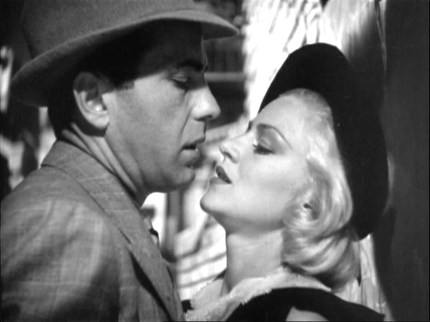
Complicating things is the arrival of Baby Face Martin (Humphrey Bogart). Like Dave, Martin grew up in the slums. However, while Dave is trying to escape by making an honest living, Martin has already escaped by choosing a life of crime. Now, he’s viewed as a hero by Tommy and his friends and with wariness by Dave and Drina who know that Martin’s presence will eventually lead to the police invading their home. Martin, however, is more concerned with seeing his mother (Marjorie Main) and his ex-girlfriend (Clare Trevor), who has become a prostitute and is suffering from syphilis.
For a film that was made close to 80 years ago, Dead End holds up pretty well. Is this because it’s a brilliant film or just because the connection between poverty and crime has remained one of the constants of human history? It’s probably a combination of both. Considering that Dead End was filmed on a Hollywood backlot, it’s a surprisingly gritty and realistic film that only occasionally feels a bit stagey. The film’s entire cast does a good job of bringing this particular dead end to life, though the obvious star of the film is Humphrey Bogart. As played by Bogart, Baby Face Martin is both sympathetic and despicable, the epitome of the potential that can be found and wasted in any American city.
Dead End was nominated for best picture but lost to The Life of Emile Zola. The film also received a much deserved nomination for best art design but lost to Lost Horizon while Clare Trevor lost the race for best supporting actress to Alice Brady, who won for In Old Chicago. Perhaps most surprisingly of all, Humphrey Bogart did not even receive a nomination for his excellent work in Dead End. Meanwhile, the film’s tough gang of street kids proved to be so popular that they, as a group, were cast in several other films. Originally credited as the Dead End Kids (and later known as the Bowery Boys), they ended up making a total of 89 films together. With the possible exception of Angels With Dirty Faces, none of those films are as highly regarded as Dead End.

