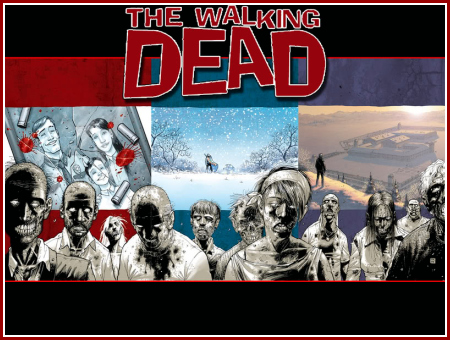
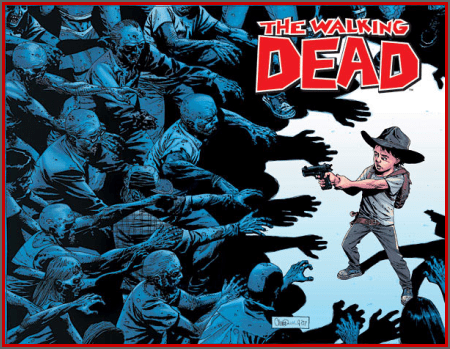
Just in from Variety is the news that cable channel AMC has greenlit the pilot for the Frank Darabont and Gale Anne Hurd produced adaptation of Robert Kirkman’s critically-acclaimed and popular zombie comic book series, The Walking Dead. The news in early 2009 that Darabont, Hurd and Kirkman have come to an agreement to pitch the series adaptation to AMC (home of Mad Men and Breaking Bad) was one of the big news for comic book fans and the industry.
The Walking Dead is about a band of survivors in a world which has undergone and succumbed to a zombie apocalypse. Police Officer Rick Grimes leads this band of people in search of a safe haven from the uncounted zombies which now roam the devastated American landscape. Author Robert Kirkman has written just under 70 issues of this on-going series, so far. Cast for the series have changed on a regular basis to illustrate the extreme danger of this new post-apocalyptic landscape. The danger doesn’t just come from the roaming undead but from other survivors as well as rules of civilization and society have crumbled away to be replaced by rules of survival.
The series is known for some exceptional writing with heavy emphasis on character dynamics and interactions. While the series does have zombies in it the highlight of every issue for fans and critics alike is Kirkman’s ability to posit moral situations on the survivors which sometimes doesn’t get the kind of answer we’re used to in our protagonists. I think this is what has drawn Frank Darabont and Gale Anne Hurd to the property. Kirkman has taken the societal commentaries inherent in all the great zombie films and stories and has created a series around it. As one guest commentator for one of the trade paperbacks have said about The Walking Dead, “The series picks up after the end credits have started in a George Romero zombie movie.”
With the pilot now greenlit by AMC the inevitable casting call rumors will start to ramp up. Fans of the series are some of the most loyal and have been talking of dream casting the series for years. I’m sure those dream castings will get brought back out into the light with fans arguing if actors chosen for the role are the right ones or not. The one thing this news doesn’t say is how much will AMC allow in terms of violence shown. The Walking Dead is not a superhero series with over-the-top violence. It’s violence is similar to Romero’s zombie films in that they’re brutal and extremely gory. While I can understand that some of the more extreme scenes in the film could be shortened and inferred, I do hope that AMC will allow for most of the brutality in the series to remain intact since they help in creating the tone for the series.
Now, all that’s left is the waiting game and wonderings of when the pilot will air on AMC.
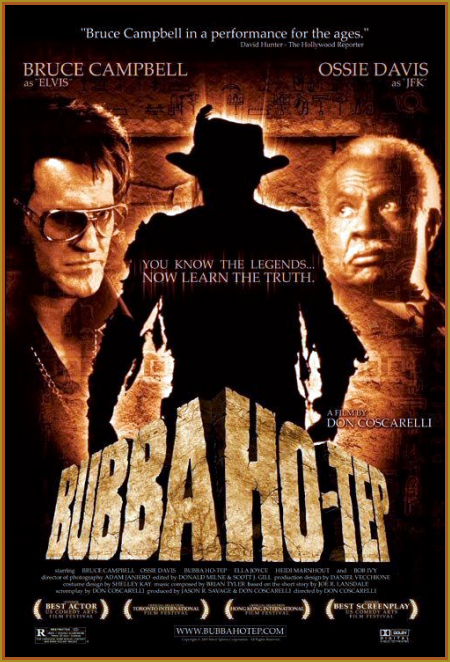
Bubba Ho-Tep was one of those film projects which just screamed out “can’t lose” the moment it the people who were going to be attached to it were announced. I mean for people who grew up watching horror movies and other such fun things during the 80’s would know of the name Don Coscarelli. His Phantasm franchise scared and creeped out a large number of young kids and teenagers as they grew up during the 1980’s. Author Joe R. Landale is not as well-known for the unread but he also brings big smiles to people who also like their stories to be full of quirky humor, dry sarcastic wit in addition to pulp-style horror and thrills. But the major coup this film had which made all genre fans suddenly smile and grin like fools has to be hearing that genre-veteran and B-movie extraordinaire Bruce Campbell taking on the role of an aging Elvis Presley.
The movie was released in very limited screens in the summer of 2002. In fact, the movie really only got shown during the summer genre film festivals which dealt with genre movies like horror, sci-fi and other so-called low-brow genre projects which the more elitist film goers tend to shun. Luckily I wasn’t too elitist enough to be able to find Bubba Ho-Tep playing in the San Francisco Film Festival. To say that what I saw was pure cheesy fun would do the film a disservice. While it’s true that the film had it’s moment of horror, I mean it is a movie about a soul-sucking Egyptian Mummy let-loose in a Texas retirement home. What I was surprised to see as I watched through Bubba Ho-Tep was just how much more than a cheesy B-movie horror flick it turned out to be.
The film pretty much brings up the scenario of how it would be if the real Elvis Presley was still alive, in his 70’s and wasting away in a Texas retirement home. That the Elvis Presley who passed away sitting on a toilet at Graceland was actually an impostor who switched places with the real Elvis after the genuine article decided all the fame, groupies and excessiveness of being The King was just too much and wanted a break from it all. So, the real Elvis lost his chance to switch back with his double and thus ended up forgotten in a Texas retirement home where the employees and caregiver treat him like a child and don’t believe him when he tells them he is the real deal. To make matters worse he now has to deal with a cowboy hat and boots wearing Egyptian mummy whose sole source of nourishment are the souls of the old retirees who inhabit the retirement home. The way the mummy sucks the souls from its victims become a running joke within the film. Let’s just say it doesn’t try sucking the souls out through the old folks’ mouth or nose.
Bruce Campbell has always been a mainstay of the B-movie scene. His popularity as being “The Man” who has inhabited such iconic cult characters such as Ashley “Ash” Williams of Evil Dead fame has made him a well-known actor to genre fans everywhere. Campbell could’ve easily hammed it up in the role of the aging Elvis Presley in Bubba Ho-Tep. No one would’ve faulted him for such an over-the-top performance, but instead of going that route he instead plays the role with such an understated and subtle style which made the character more human and sympathetic. Campbell’s nuanced performance also turned a horror-comedy into something more sentimental and sad. Bubba Ho-Tep had turned into a horror-comedy which had a unique and sympathetic look at how the elderly have been treated and seen more as nuisances and less than human. It doesn’t help that their cries for help once the mummy targets them for feeding fall on deaf ears as those hired to help them consider their pleas as the senile ramblings of someone whose mental facilities have long left them.
Campbell’s performance as “The King” was supported quite well by the great, late Ossie Davis whose role as an elderly black man who thinks he’s John F. Kennedy brings new meaning to the film cliche: buddy movie. Davis’ character truly believes that he was and is President Kennedy who was turned black through some conspiracy by Lyndon B. Johnson to save his life. At first, we the audience are in on the joke but due to Davis’ wonderful performance we begin to believe that he may be right. If cowboy-attired Egyptian mummies and an aging Elvis look real why not him. The interplay between Campbell and Davis makes for some great acting and comedy. Without these two men the film would’ve been relegated to the direct-to-video level of filmmaking. Instead what we get is a wonderfully crafted film which despite its pedigree still became one of the better films of 2002.
Don Coscarelli does a fine job of balancing the scenes of comedy and horror with poignancy without ending up with a film that’s too maudlin for its own good. It’s a good sign that one of the 80’s master genre directors has found a nice project to show that he hasn’t lost the edge and skill when it comes to making genre movies. He has also shown with Bubba Ho-Tep that one can have a horror-comedy without drowning it in gore (which this movie had a surprisingly little of) and juvenile slapstick. Even joke sequences involving aging Elvis’ penis with it’s unidentifiable growth made for genuine laughs instead of laugh for laughs sake. The same goes for the double entendre from JFK involving his Ding Dong snack. I think with anyone else at the helm of this picture the movie would’ve fallen either too much into gorehound territory on one side or inane slapstick comedy on the other end.
In the end, Bubba Ho-Tep was one of those rare little genre gems which transcends its genre pedigree and beginnings without meaning to. Like I said with the convergence of Coscarelli, Lansdale, and Campbell making the project happen this was one little movie that was bound to not fail. I highly recommend this movie to anyone who hasn’t seen it. Despite it’s silly sounding title the movie is more than just the sum of its cover.
I must say that one thing which I find both great and awful about zombie films is how easy they are to make. When a great storyteller and/or filmmaker gets a hold of one they usually end up being some of the best allegorical horror stories and films out there. Now, those kinds are far and few to be read and seen. Most of the time anyone with a camera thinks they can make a zombie flick better than the next person. I see this as the film version of the so-called “The Next Great American Novel.” In the end, what they end up doing looks like something even the Mystery Science Theater 3000 guys wouldn’t find funny to even watch.
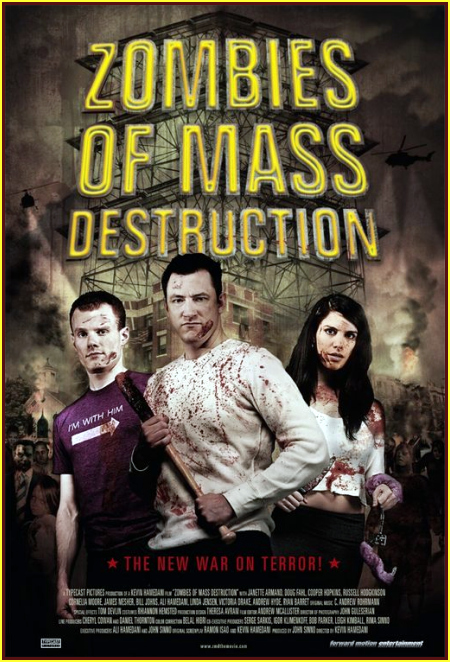
I’m not sure where Kevin Hamedani’s zombie flick or as he calls it, Zombies of Mass Destruction, stand on the good to awful meter. I will say that watching the trailer for this zombie flick, chosen to be part of After Dark Horrorfest’s latest 8 Films To Die For series, looks like it’s awful but with enough laughs to make it a fun flick. There’s one line in the trailer that just got me busting out laughing and it arrives at the 1:19 mark. There’s even a subtle crack at the Twilight team right at the end.
I definitely will be watching this once I can find a dvd of it. LOL.
I just came across this little piece of very creative writing. Let’s just say that it puts a nice take on the ending to John Carpenter’s The Thing. This short story definitely could be made into a very great short film. In the film we always thought the Thing was evil, but what if we actually got to see inside it’s mind and learned its motivations.
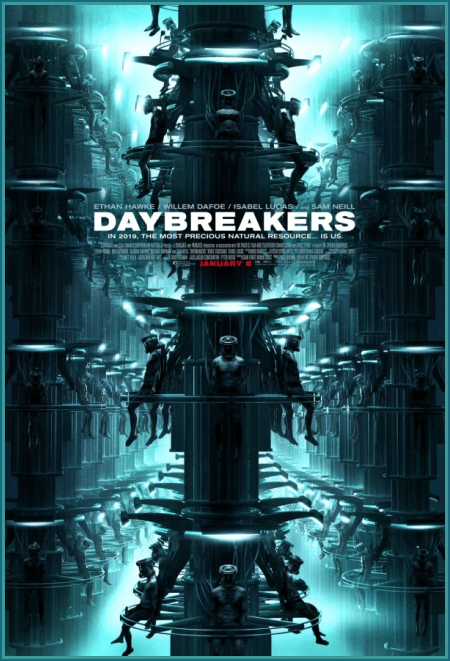
In 2003 there was this little zombie flick from Down Under which flew under the radar of most film-goers, but definitely not of horror fans everywhere. The name of this film was Undead and while the film was a nice little genre mash-up of a romp it showed just how new to feature-lenght filmmaking it’s brother directors were. The Sprierig Brothers’ film seemed to have done well enough in the box-office and in the dvd market that they were soon offered by genre studio Lionsgate to make another film from their very own script. It was a vampire story which once again shows the brothers’ penchant for culling a story of different genres to create something familiar but with some originality peppered throughout. With a reported budget of $20-21million dollars, the finished product of Daybreakers arrives in the theaters in the early going of 2010 as a nice, albeit very flawed, change of pace from the so-called “Twilight”-style of vampire films.
The Spierig Brothers have set their vampire film in the near future of 2019 where it’s been 10 years since an unnamed vampiric virus has turned most of the world’s population into vampires. It is in the early 20-30 minutes of the film where Daybreakers really showed some genuine new blood (pardon the pun) in the vampire film genre. We’re shown a world which has adjusted to the turning of society from a human one to a vampiric one. While society has turned it’s people still clung to old habits they practiced when still human.
Schools are still in session but instead of morning and afternoon they’re now held at night. There’s still coffee stands for business people to get their cup of joe, but now spiked with real human blood. Even corporations have adjusted from their former human interests to one much closer to their new existence. Blood has become a rare commodity and traded as such on the world markets. One could see the filmmakers attempt to allegorize mankind’s addiction to oil and it’s finite supply to this new society’s need to harvest fresh human blood from human’s captured and turned into living blood banks. But like all precious natural resource this blood supply has begun to run low thus threatening not just the survival of a human race close to extinction, but damning those who turned into vampires into something mutated by blood-deprivation.
While the story had some definite merits to them. From the world-building by the Brothers to try and make the audience invest some interest in the film right down to the very Rated-R violence sorely lacking in most vampire films nowadays. Still with those to help garner interest in the audience, Daybreakers manages to make too many misses to the hits which tried to keep the audience’s attention.
Most filmmakers have a tendency to spell out to the audience what they’re watching. The skill to show rather than tell the film is a skill very rare in most filmmakers which is probably why we have many average-to-good ones and very rare great ones. The Spierig Brothers tried to show rather than tell, but they seem to have went a bit extreme in trying to show the story and forgot to add a semblance of a tight screenplay. The dialogue wasn’t bad, but what little there was seemed disjointed and almost tossed in to add a semblance of an explanation to what was happening. Characters and motivations were handled as if the audience should automatically understand when at times it just seemed like they came out of nowhere and were suddenly important to what was occurring on the screen. One particular character, who gets billing on the Daybreakers ad-campaign one-sheets, gets a mention in a passing bit of dialogue between two main characters and appears midway in the film only to be used as a plot-device to show how evil and heartless the main antagonist was. This is twice in less than a year where Isabel Lucas’ character gets this treatment. It happens more than once and shows just how much more work could’ve been done to the screenplay to really advance the original ideas the brothers wanted to film.
As with most films with a less-than-stellar screenplay the actors cast to act it out need to work double-time to salvage something very good to be presented in the final cut of the film. I couldn’t honestly say that there were any bad performances from all involved. While the overall acting performance from the cast wasn’t awful, or even bad, there was a sense of disinterest from several of the main characters which didn’t really help in trying to explain the motivations of why they did what they did on-screen. Ethan Hawke as Dr. Edward Dalton (vampire hematologist working on a blood substitute) almost sleepwalks through the entire film. We know soon enough that he hates being a vampire and won’t touch human blood, but he brings little life to his character and most of the cast do as well. It’s almost as if they couldn’t decide how seriously they should take the story they were filming and end up being one-note in the process. The only two actors who seem to realize the ridiculous, albeit fun premise, of the story was Sam Neill as head of the corporation providing human blood to the vampire population and Willem Dafoe as the human with a past secret who holds the key to finding a cure to vampirism.
Neill plays Charles Bromley with a certain amount of oily, snake-like panache we like to equate with captains of industries willing to sacrifice their own blood if it means turning a profit. He doesn’t stay immune from the script’s flaw, but he gamely trudges on to try and fully realize a well-rounded character. We could see why he does what he does even though we probably won’t agree with them. Willem Dafoe as the other bright star in an otherwise one-note character really got the best bits of dialogue in the film. His Lionel “Elvis” Cormac scene-chews through every second he’s on the screen. Dafoe’s own quirkiness and brand of craziness salvages from Daybreakers a semblance of a fun time.
I would say that despite the many flaws from the script and how it affected the performances of most of the cast in the end this was still a vampire film and a gruesome one at that. The year’s since Undead and the upping of a budget for this film hasn’t dulled the gorehound in the Spierig Brothers. Daybreakers was definitely not Twilight in every drop of blood in its celluloid veins. Blood really flows in this film and they flow a-plenty. The brothers don’t just stop in blood being spilled. He has the red liquid sprayed as if from intense pressure. But in addition to that particular brand of red nasty they add a bit of the zombie influence in the film as limbs are ripped asunder, heads torn off and flesh bitten and chewed on. This awesome display of gore and grue was a great cure for a case of the Twilight bug. It was in the last reel where the brothers ramp up the vampire violence where I truly felt like they were in their element. Maybe this was the film they should’ve gone for instead of trying to add some societal undertone to the film. Not every vampire film has to be an arthouse darling like Let the Right One In. Sometimes a filmmaker needs to realize their limitations as storyteller and stick to what they do best.
In the end, Daybreakers was definitely a missed opportunity to showcase a new fresh take on a horror genre being diluted by PG and ten-marketing sensibilities. It was a film with some very new ideas to add fresh blood in a staid vampire genre but these early hits were soon to be hampered by a weak screenplay and a cast that seemed truly disinterested in giving a spirited performance with a couple of exceptions. The film does salvages a bit of fun which made me enjoy enough of the film. The brothers take of their gloves in the final reel as the gore and violence almost reaches fun, goofy territory. It was this final reel which made me wish that Spierig Brothers had concentrated on right from the start. It definitely would’ve cut down the film into a much leaner and faster-paced film and maybe, just maybe, got everyone else to have fun on-screen the way Sam Neill and Willem Dafoe seemed to be having. The Spierig Brother definitely have a sense of style when it comes to horror, but they still have some ways to go before they could truly say that they’ve arrived as fully-rounded filmmakers.
Zombies have either oversaturated pop-culture and media or there’s just not been many good entertainment examples with zombies in it. Most zombies films usually end up taking the direct-to-video route or, even worse, the direct-to-cable path. The very good films about zombies are very limited in numbers. For every Shaun of the Dead we get truly awful examples like Zombie Wars, Automaton Transfusion and the Day of the Dead remake. I blame this flood of bad zombie films on what makes the zombie such an interesting monster for filmmakers to use: they’re a blank slate. The zombie as envisioned by Romero are quite young in comparison to other monsters of film. They do not have the culturual and mythical history of vampires and werewolves.
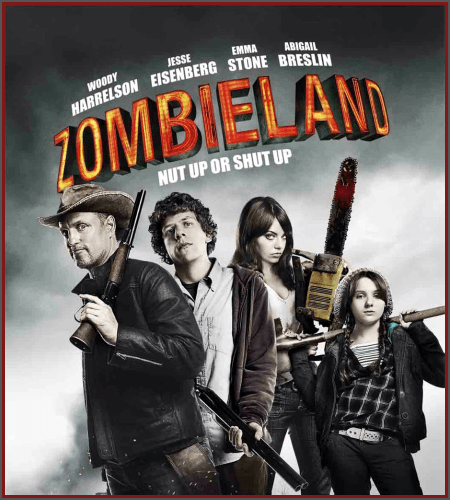
Zombie films are easy to make thus we get every amateur filmmaker thinking they’re the next Romero, pick up a digital camera and attempt to make the next zombie c!assic. What we get instead are dregs which give the genre a bad name. It is a breath of fresh air that Ruben Fleischer (using a screenplay penned by Rhett Reese and Paul Wernick) has made a zombie film which deserves to be seen in a theater and not on video or cable. Zombieland is a fun and hilarious romp which succeeds in delivering what it’s preceding hype had promised and ends up being a very good film despite first-time jitters from a first-time filmmaker.
Zombieland makes no bones about what it’s about right from the get-go. This is not a film where the audience watches the world fight for its existence against the growing undead. No, this film drops the audience to a world that’s beyond gone to hell and one that now belongs to the zombies which explains the title. We’re quickly introduced to the rules which now governs this new world. With narration from the film’s first lead (played by Jesse Eisenberg) we learn the so-called “rules” of how to survive zombieland. There’s a funny and inventive use of on-screen reminders of these rules throughout the film which looks similar to the captions Youtube uploaders add to their videos. The film quickly introduces Columbus’ (the film’s narrator) soon-to-be partner-in-survival. Where Columbus is quite obsessive-compulsive and more than just a touch cowardly Tallahassee (in a hilarious turn by Woody Harrelson) is the reckless, A-type personality and more than the opposite of Columbus. These two unlikely pair soon meet up with a pair of sisters who also happens to be veteran grifters who, on more than one occassion, give our hapless duo trouble in their journey through a devastated landscape.
The film has been called a zombie comedy and will be compared to the successful British zombie-comedy, Shaun of the Dead. While some are not wrong to compare Fleischer’s film to Wright’s the comparison really ends at both being zombie-comedies. While Wright’s film was a zombie film with comedic aspects mixed in it was first and foremost a horror film. Zombieland is the opposite and the way it starts, unfolds and finishes it’s really a comedy road trip like the National Lampoon Vacation films but this time with zombies instead of in-bred relatives, clueless motorists and tourist-traps. The film is quite funny froom beginning to end with the funniest and most hilarious being a surprise cameo of a well-known comedic actor playing himself right around the beginning of the second-half. This sequence got the most laughs and cleverly played up this actor’s particular quirks. Most of the comedy and gags in the film comes courtesy of the aforementioned rules and the interaction between the characters of Columbus, Tallahassee and the two con sisters, Wichita and Little Rock (they use the city of their origins for names throughout the film).
While the film’s story is quite basic what Fleischer and his small cast were able to do with them they did well. There really wasn’t a false note in any of the actors’ performances. Eisenberg and Harrelson played off each other well right from the time the two meet. Emma Stone as the punk-rock older sister Wichita to the younger Little Rock played by wunderkind child actor Abigail Breslin (girl has a future beyond her child role past). The road-trip of a story even has its own little quirks from Tallahassee’s irreverent quest for the final stock of Twinkies to the sisters’ goal of reaching the West Coast and an amusement park called Pacific Playland rumored to be free of the zombie menace.
Zombieland is not without its flaws. Some of the editing in the climacting reel of the film was to uneven at times. There were instances when the film was close to being bogged down but fortunately it never came to that end. The violence and gore in the film wasn’t as high as one would think for a film about zombies that have literally devoured the world. One could almost sense that the filmmakers were hedging their bet when it came to the grue and violence. It seemed as if they were being overly cautious about trying to get an R-rating instead of an NC-17. The film barely makes it past the PG-13 territory. While these flaws could be attributed to jitters and a somewhat unsure first-time director in the overall execution of the film all involved did very well in sticking to the plan.
Even the look of the film makes it seem more big-budgeted than it really was (rumored to be between 9-10 million). Most filmmakers with years to decades of experience make a mess of trying to shot a film fully inn HD using HD-cameras, but Fleischer and his cinematographer Michael Bonvillain acquit themselves in their use of Sony’s Gensis HD camera. The film looks crisp and clear, but without the glaring rough edges HD sometimes gives a film. The use of the Genesis camera makes possible the well-done intro sequence done in slo-mo to the tune of Metallica’s “For Whom the Bell Tolls”.
Zombieland is a good start to what could be a very promising career for one Ruben Fleischer. There’s skill in his work on this film despite some nitpicks that could be seen as flaws. The film in the end was very funny and fun to watch from start to end. While to story was very simplified (this probably helped in minimizing the pitfalls Fleischer had to avoid in his first major film production) with characters that was fleshed out just enough for the audience to connect with the final product delivered on the hypse which preceded this film. Zombie film fans would get a huge laugh and kick out of this very quick under-90 minute production while even those who are not into zombies much would still find themselves laughing and being entertained. Zombieland may not be scary in comparison to some of the great zombie films of past but it more than makes up for that with energy, life and a genius of a cameo scene that would be the talk of the town.
The first decade of the new millenium found me in a weird place when it came to one of my big hobbies after high school. From 1989 all the way through the 90’s I was a major comic book reader and collector. I would say that I wouldn’t deny the charge that I might have helped the so-called “comic book speculator era” rise to the forefront of the hobby. Artists like Jim Lee, Whilce Portacio, Todd McFarlane were like rock stars in that era and their titles would fly off the shelves the moment they came out. I and others would buy multiple copies, carefully board and bagged them (but also read them) and wait for their price to go up.
Some titles did go up in price and were sold for a profit thus feeding the notion that I could make a lot of money off of these comic books. I was one of the early adopters of the independent titles which really fed the speculator market. First there was buying up all the early Evil Ernie issues before most of the public got wind of just how awesome (and limited their printing were) then doing the same for William Tucci’s Shi title which I must say really defined a speculator’s dream title. It had buzz to it due to the bad girl art, the story was not bad and had an exotic taste to it and, best of all, the printing on the title character’s first appearance was practically non-existent.
By the time the speculator’s market finally burst it’s bubble and dragged the comic book industry down with it I was pretty much burnt-out on comic books. I still read them and bought the titles whcih caught my eye, but the days of buying every issue of most every title from Marvel/DC/Image were done with. I even stopped buying and reading them in the beginning of the 2000’s. The industry was in a creative rut in the early years of the new decade. While superhero titles were floundering and publishers (small and medium ones) were declaring bankruptcy and selling off properties to the highest bidder a curious thing happened. I got back into comic books and it wasn’t the hero titles which drew me back in but the mature, independent titles from Vertigo, Dark Horse, Image and small-indie publishers.
This was a very good thing since I missed having the books in my hands. I wasn’t buying them now to collect but to read. I still handled them with kid gloves but I wasn’t worried about whether they would turn me a profit anymore. So, for most of the decade I was an indie-fool who pretty much avoided most the titles from Marvel/DC. While I still read some titles from the two main comic book houses it wasn’t on the same level pre-2000’s.
Below is the list of the 10 titles that were my favorite of the decade. Some were considered the best of the decade and some just my favorite because they spoke to me as a reader. This time they will be in order of importance unlike my previous Best/Fave lists.
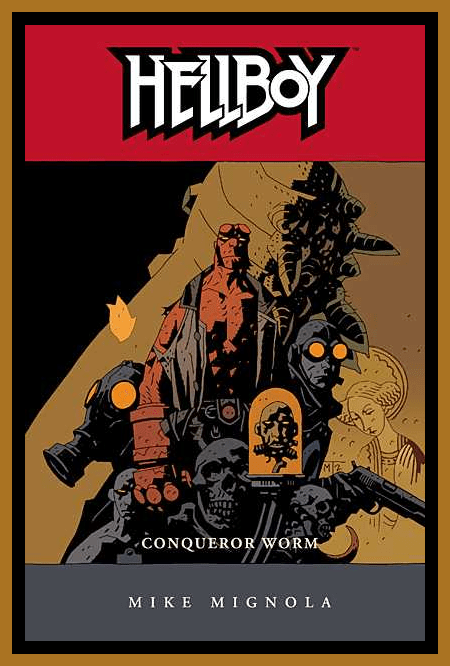
10. Hellboy by Mike Mignola (Dark Horse Comics)
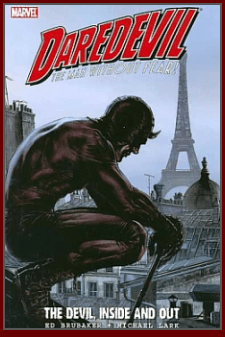
9. Daredevil by Brian Michael Bendis/Ed Brubaker (Marvel Comics)
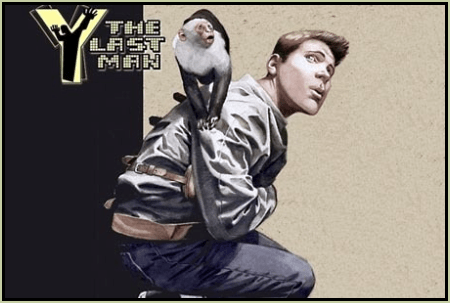
8. Y: The Last Man by Brian K. Vaughn (Vertigo)
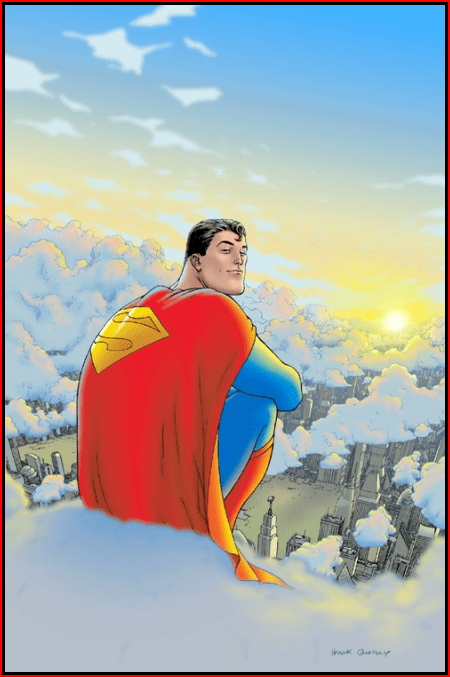
7. All-Star Superman by Grant Morrison (DC Comics)
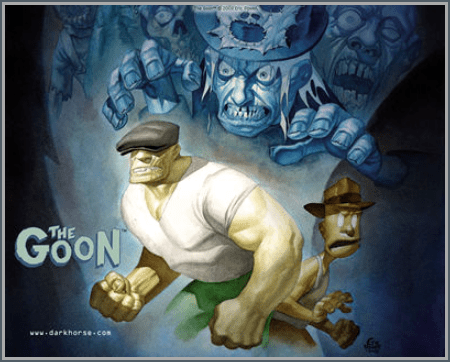
6. The Goon by Eric Powell (Dark Horse Comics)
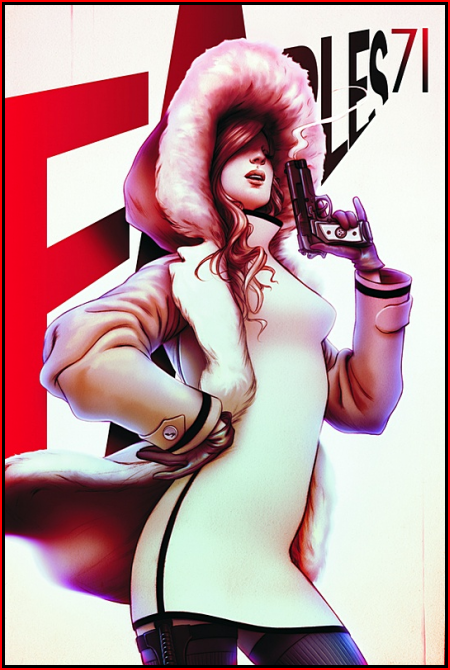
5. Fables by Bill Willingham (Vertigo)
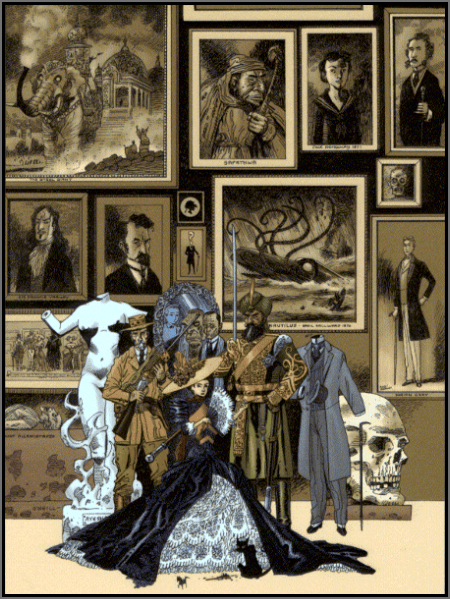
4. The League of Extraordinary Gentlemen by Alan Moore (America’s Best Comics)
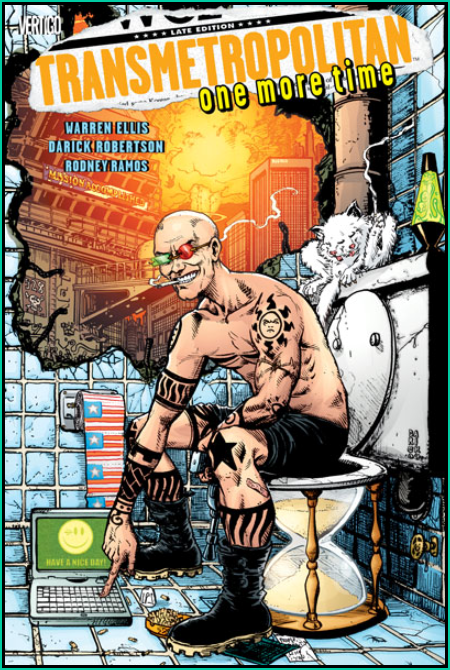
3. Transmetropolitan by Warren Ellis (Vertigo)
2. The Walking Dead by Robert Kirkman (Image Comics)
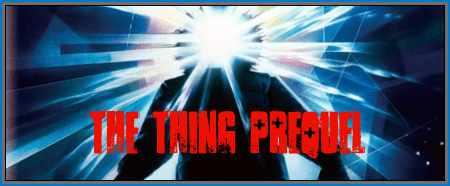
John Carpenter’s The Thing is one of my favorite films ever made and I consider it one of the best sci-fi horror ever put on celluloid. There’s been talk for years of making a sequel to the 1982 film. While nothing ever came of it outside of some very well-done and well-written Dark Horse Comics were issued and set after the events of the first film. SciFi Channel even had a tentative plan to film a 4-hour miniseries sequel, but after many delays and obstacles to getting the pre-production beyond the concept stage the plan was dropped.
In the beginning of the new millenium Ron D. Moore of Star Trek and Battlestar Galactica (reboot) fame wrote a script which would take place prior to the evtns of the first film. This prequel would tell the story of how the “the Thing” was first discovered by the Norwegian team on Antarctica and the subsequent incidents which would lead into and tie with Carpenter’s film.
I am quite excited that the prequel is going to finally start filming this March and into June. The same studio which financed and released two excellent horror films in the past 10 years (James Gunn’s Slither and Zack Snyder’s Dawn of the Dead remake), Strike Entertainment, will also be the one responsible for this prequel. Matthijs van Heijninjen will be directing the film from Ron D. Moore’s scriptment with rewrite work from Eric Heisserer.
The question, I am sure fans will have, is will the filmmakers go full on digital, traditional practical effects or a combination of both. If they even go with option 2 or 3 they definitely need to bring in Rob Bottin and Stan Winston’s Effects House to either consult or handle the FX work. Bottin should just be made part of the crew just because he’s Rob Bottin and The Thing was as much his film as Carpenter’s.
Here’s to hoping Heijningen and Heisserer don’t fuck this prequel up.
I am what one would call an aficionado of all things zombie. The subject has been an interest of mine since I saw my very first true zombie film: Night of the Living Dead. Romero’s seminal work made such an impact in my young mind that, despite the primal sensation of fear I felt while watching it, my curiosity and imagination won out. I was stilled scared shitless for the next couple weeks once night arrived, but it didn’t stop me from thinking about it then letting my young mind start thinking of what I would do if put in a similar situation. It’s almost two decades since that moment and I still think about such things whenever the topic turns to things zombies.
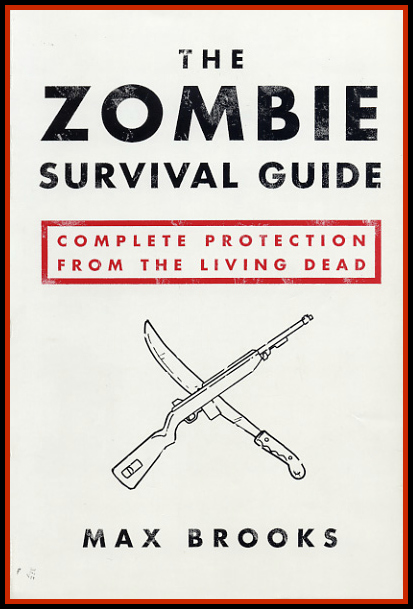
I first came across Max Brooks’ book when I was browsing the web and decided to check out a site a fellow zombie-fan had recommended I visit: HomePageoftheDead.com. It was my first time visiting the site and right from the beginning I saw a link that had Brooks’ book title on it. I clicked it to see what it was all about. Lo and behold it was a for real survival guide on what to do if and when a zombie outbreak ever occurred. I knew it was one of those satire, gag books taking a ludicrous, albeit funny situation and writing a faux-serious work of instructions and guidelines around it. It didn’t take me long to check if Amazon had the book for sale and it did to my surprise. The moment I received the book I sat down and read it from beginning to end in a day’s time.
Max Brooks’ experience as a comic staff writer for Saturday Night Live and being Mel Brooks’ son probably helped in keeping the book from being too campy and also overly serious. Brooks’ hit the right balance of seriousness and yet giving every procedural instructions on how to survive and the optimal way of surviving a darkly black comedic tone to it all. Part of me was thoroughly amused and even laughed out loud a few times as I read through the guide, but part of me also felt a bit of dread in how real his descriptions were and how much common sense his survival guide had for the reader to take note of. I thought the final chapter describing documented reports of zombie outbreaks throughout man’s history was especially well-done. It sure made some of the darker moments in man’s history take on a much more horrifying note.
Max Brooks’ Zombie Survival Guide has been a great addition to my collection of dvds, comics and novels about the zombie subgenre. It also helped continue my on-going interest in the what-if scenarios of such an event from ever happening. His writing balances both satire and horror and the book is much better than it should be because of it. Being a zombie aficionado I would highly recommend this to like-minded readers and would gradually introduce it to those who have no notion of such a topic. One never knows when the fantastic suddenly becomes horrifyingly real. When and if it ever does happen, I know this book will have served me and mine well.
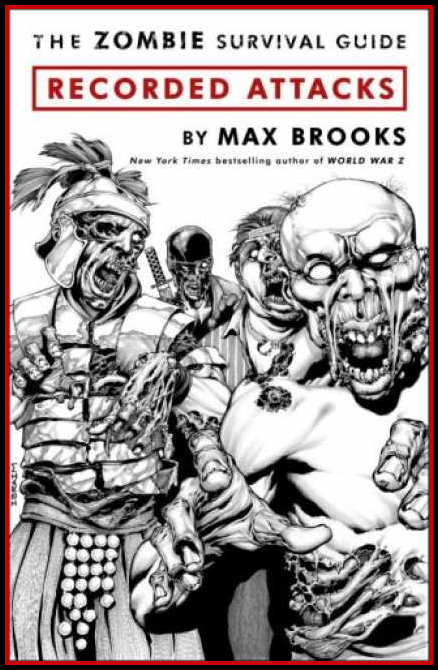
I would also like to point out that in addition to this book is a companion volume released by the comic book publisher, Avatar Press which takes those so-called historical accounts of zombie outbreak incidents and creates a graphic novel out of it. Again, Max Brooks has a hand in writing this book. He took some of the longer entries in the survival guide’s last chapter and rewrites them to better fit the comic book format.
The artwork by Ibraim Roberson for The Zombie Survival Guide: Recorded Attacks are some of the finest black & white inks I’ve seen and definitely one of the best zombie artwork. Roberson really captures the grotesque and hungry nature of the undead as Brooks’ describes them. Even though there’s no color involved in all the visuals it still doesn’t diminish the scenes of gore. I think it actually makes the scenes even more effective as the reader imagines the colors being there while reading them. There was no need to add to the shock value when it was already shocking.
While I wish they could’ve included every historical entry from The Zombie Survival Guide in this graphic novel I understand that to do so would mean a book at least over a hundred pages or more in size. Maybe there’ll be a plan to make a second volume if this first one sells well. Fans of Max Brooks’ guide can only hope that this indeed is what he and Avatar Press have in mind. Despite not having everything I expected it to the graphic novel was still a find companion piece to Brooks’ Zombie Survival Guide with some of the best looking zombie artwork outside of The Walking Dead‘s Tony Moore and Charlie Adlard.
The Aught’s, as some people have come to call this decade about to end, was actually a pretty good decade in terms of the amount of quality horror that showed up on the big-screen. We had some channeling the nastiness of the 70’s exploitation era while a couple ushered in this decade’s era of the so-called “torture porn.” There were more than just a few remakes of past horror films. Most of these remakes were quite awful compared to the original, but more than a few managed to end being good and held their own against the original.
Some of the titles I will list will eschew gore and the shock scares for a more subtle and atmospheric approach. More than a few straddled not just horror but other genres like comedy, drama and sci-fi. If there was one major observation I was able to make, when collating what I thought was the 20 best horror films of the decade, it was that the Foreign studios really came into the decade with a vengeance.
While I consider these horror films on this list as “the best of…” it is still my opinion and I am sure there will be people who will disagree, but even if people do not agree with all my choices it would be hard to dispute any of them as not being good to great in their own way. Like my similar Sci-Fi list this one will be numbered but only for organizational sake and doesn’t determine which film is better than rest. They’re all equal in my eyes.
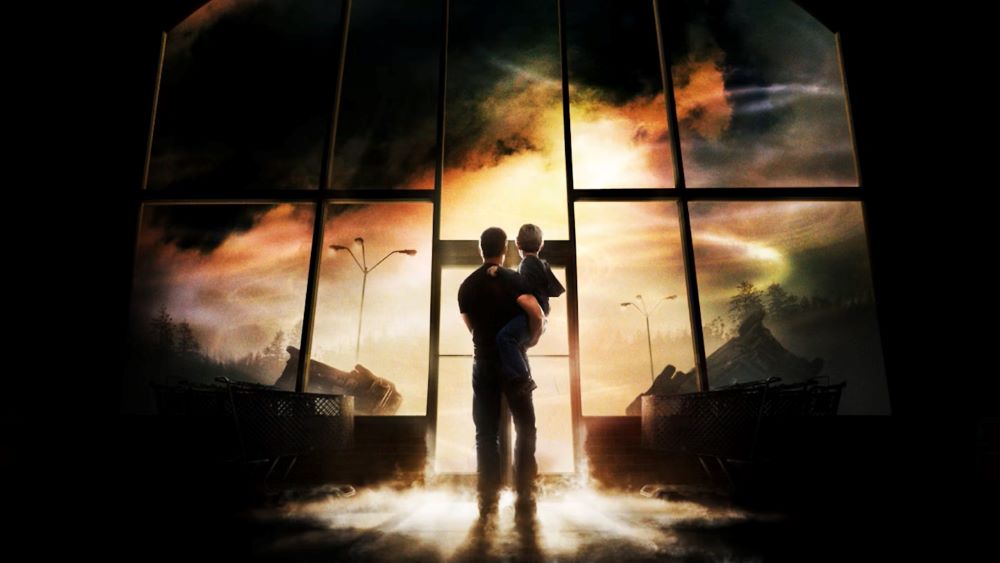
The Mist (dir. Frank Darabont)
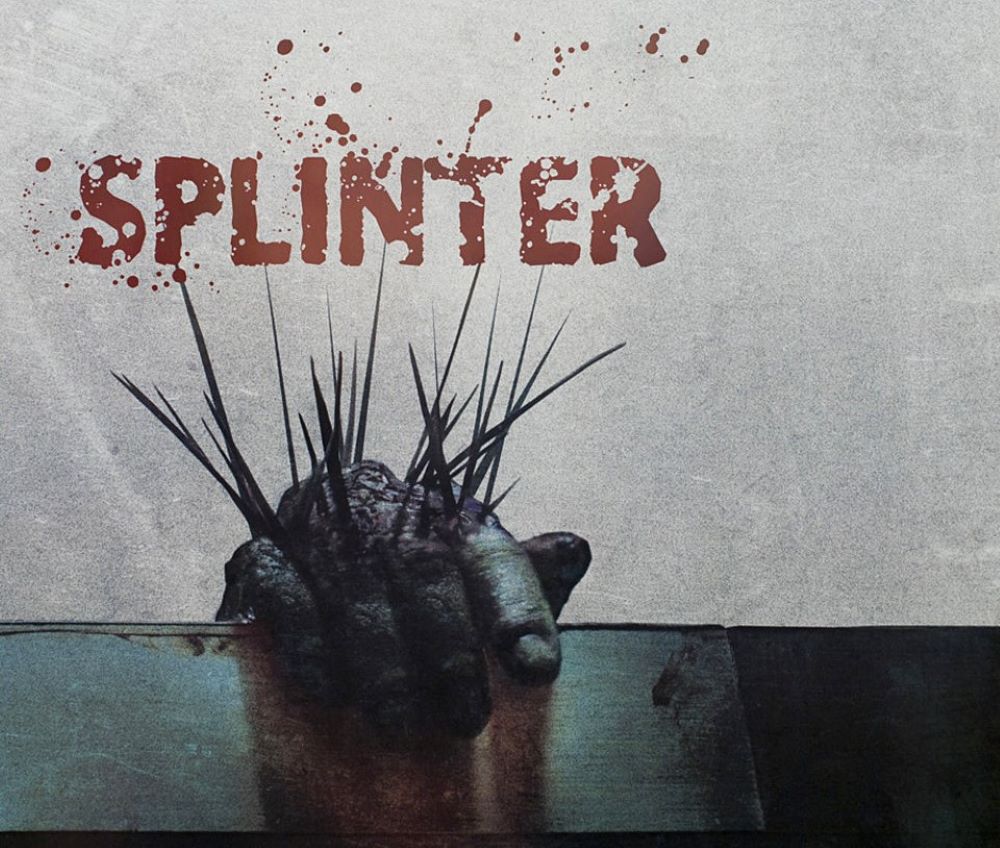
Splinter (dir. Toby Wilkins)
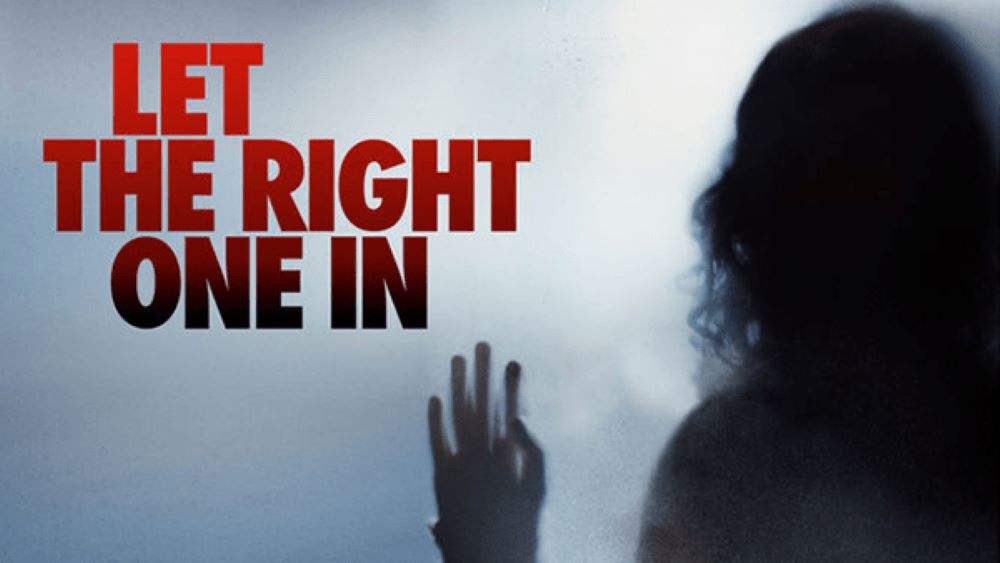
Let the Right One In (dir. Tomas Alfredson)
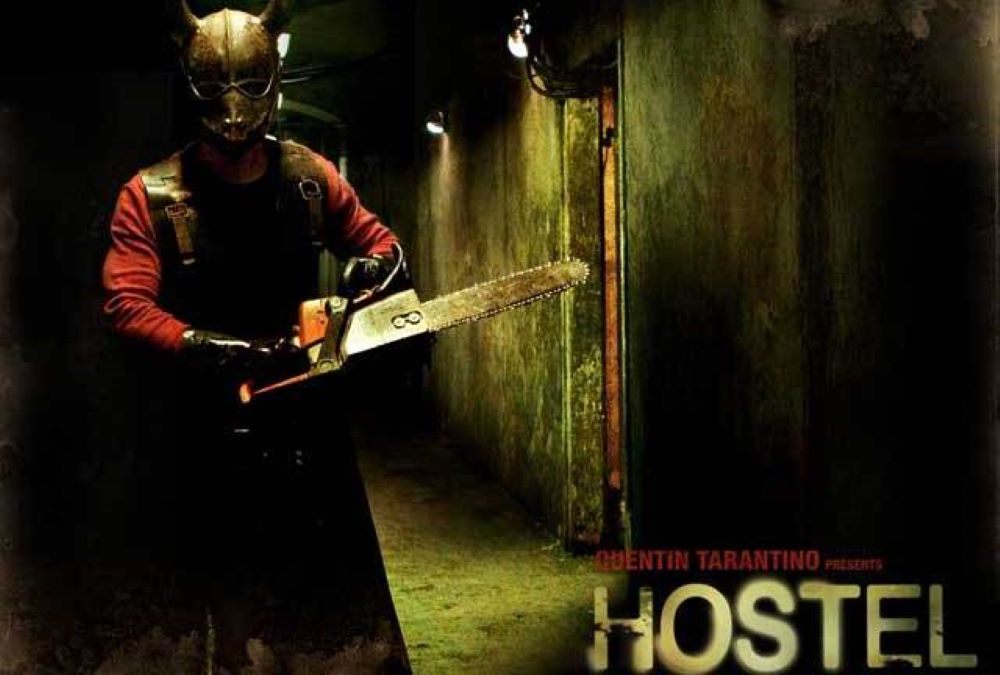
Hostel (dir. Eli Roth)
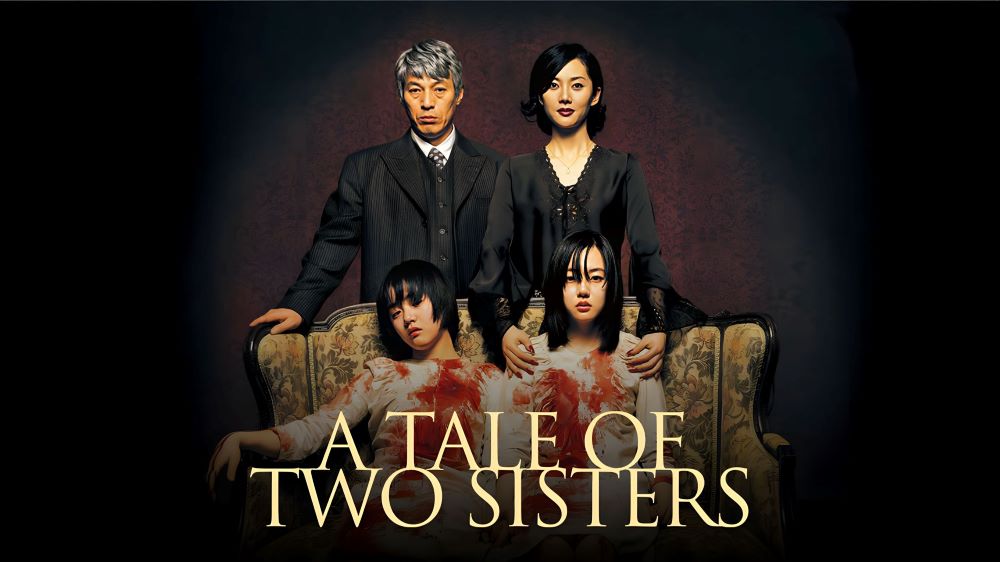
A Tale of Two Sisters (Kim Ji-woon)
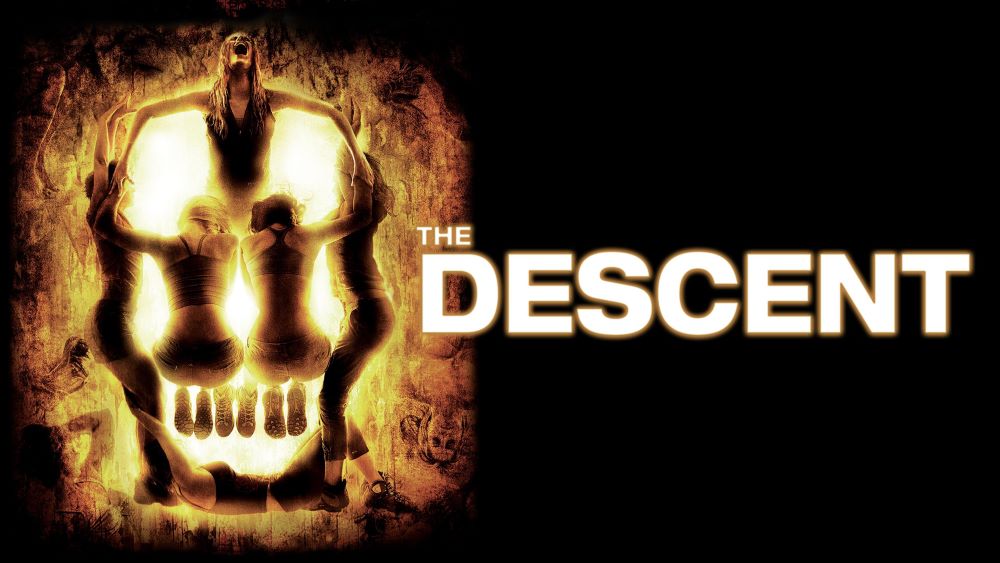
The Descent (dir. Neil Marshall)
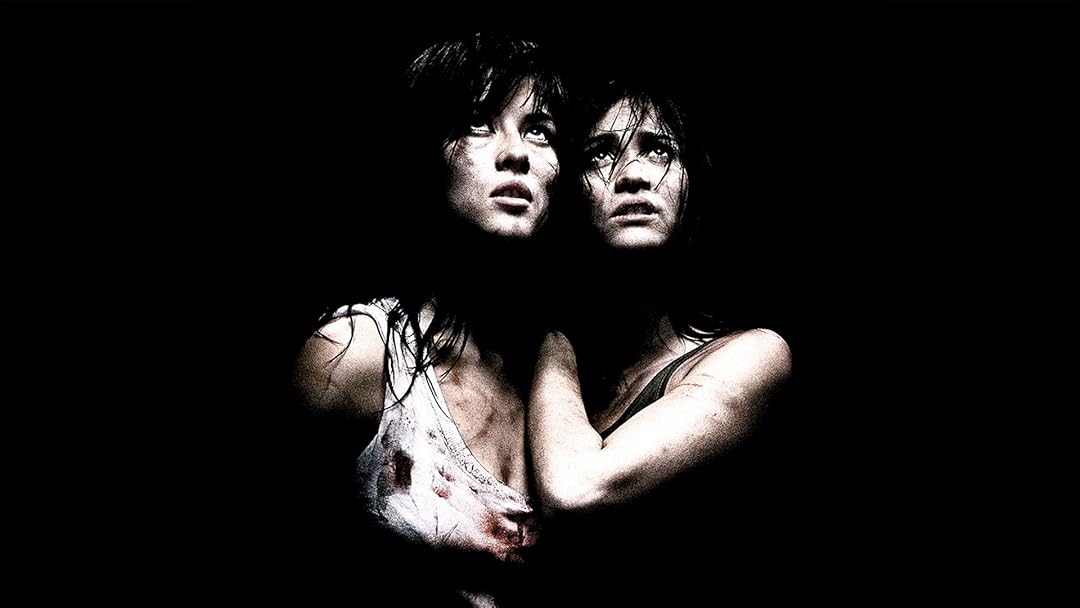
Martyrs (dir. Pascal Laugier)
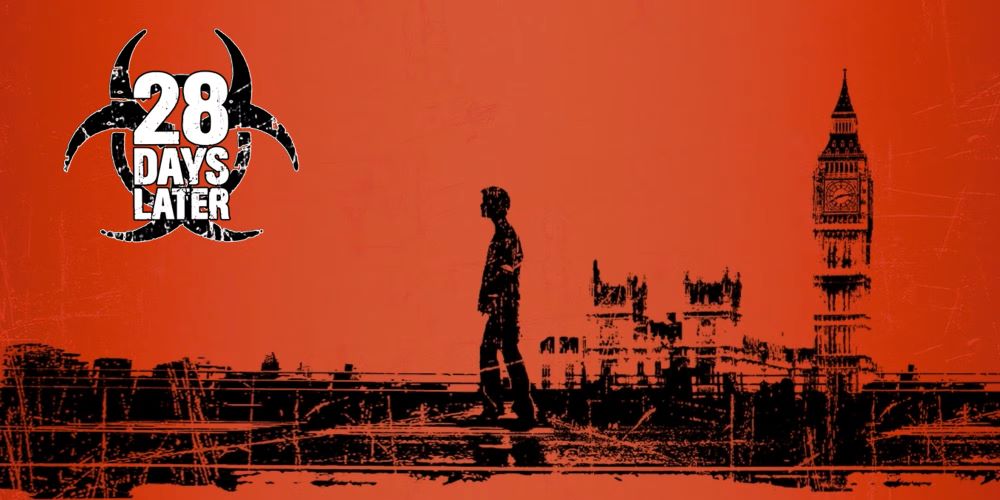
28 Days Later… (dir. Danny Boyle)
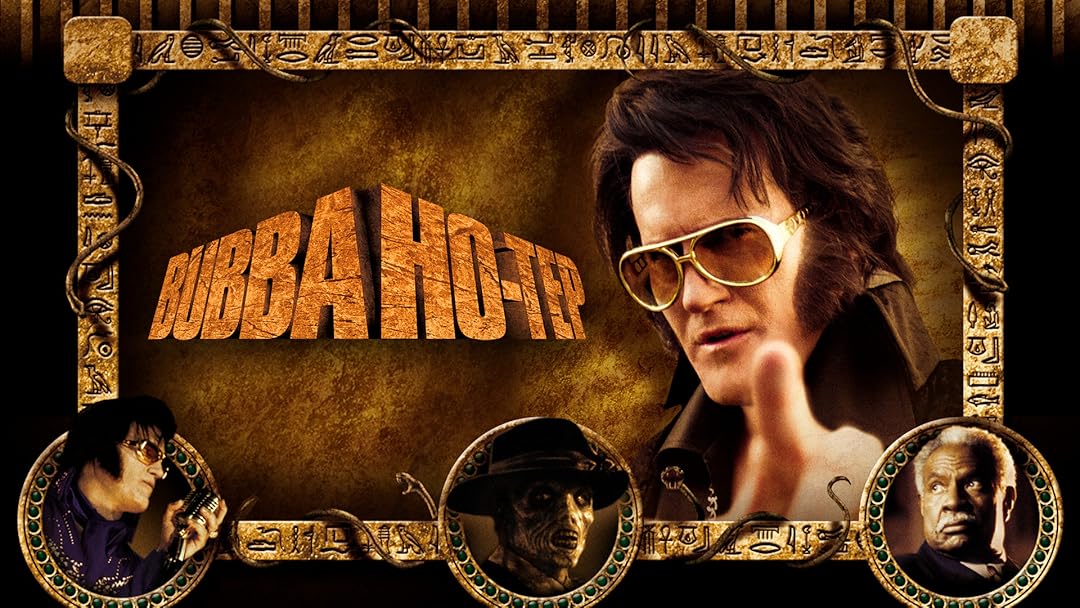
Bubba Ho-Tep (dir. Don Coscarelli)
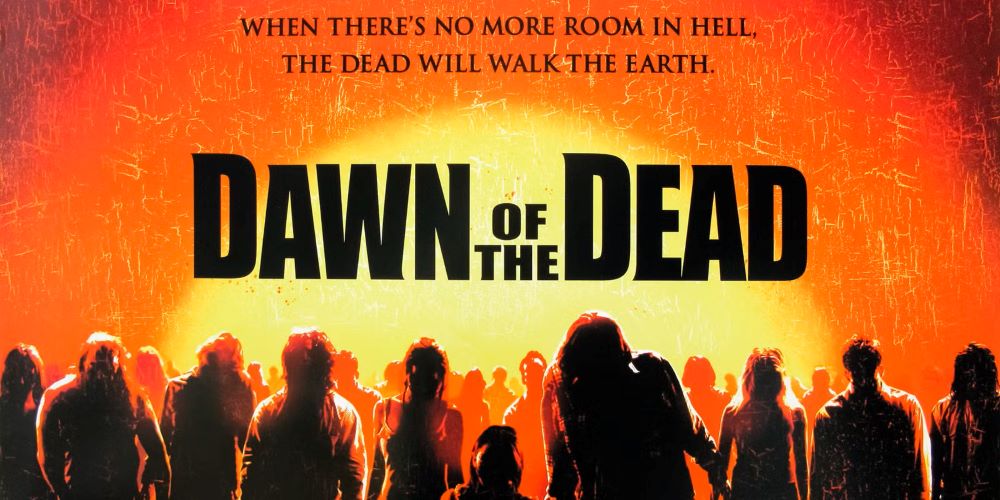
Dawn of the Dead (dir. Zack Snyder)
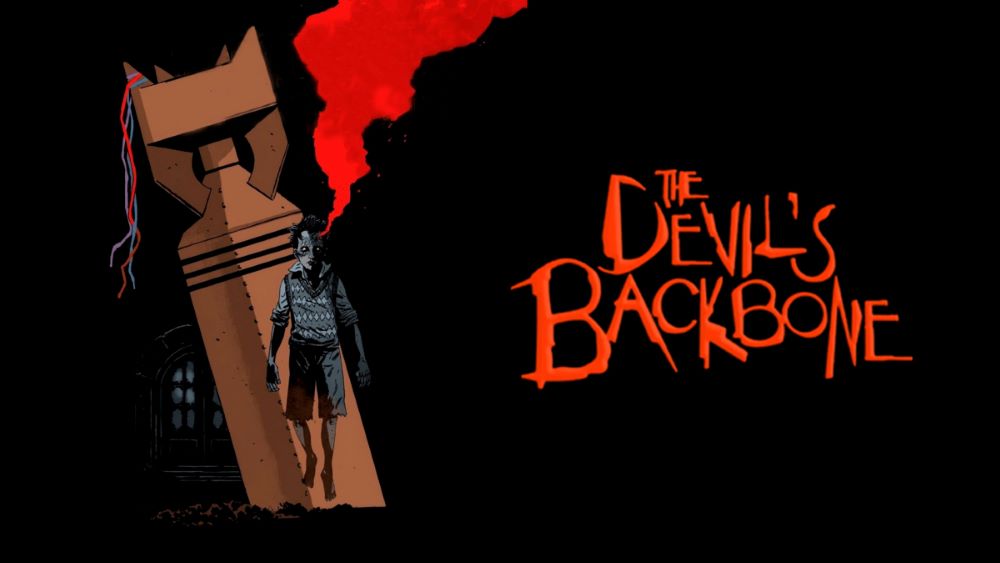
The Devil’s Backbone (Guillermo del Toro)
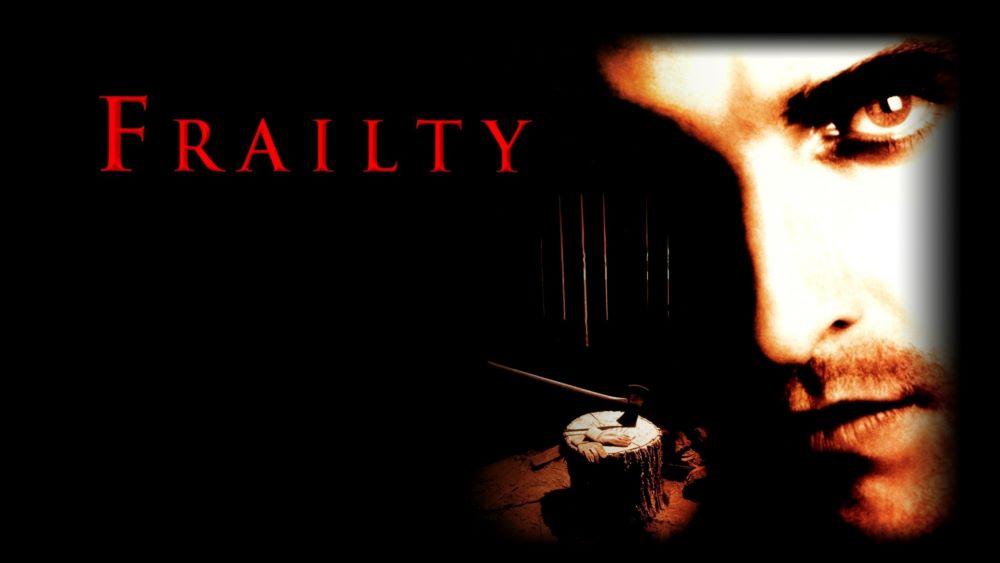
Frailty (dir. Bill Paxton)
Kairo (dir. Kiyoshi Kurosawa)
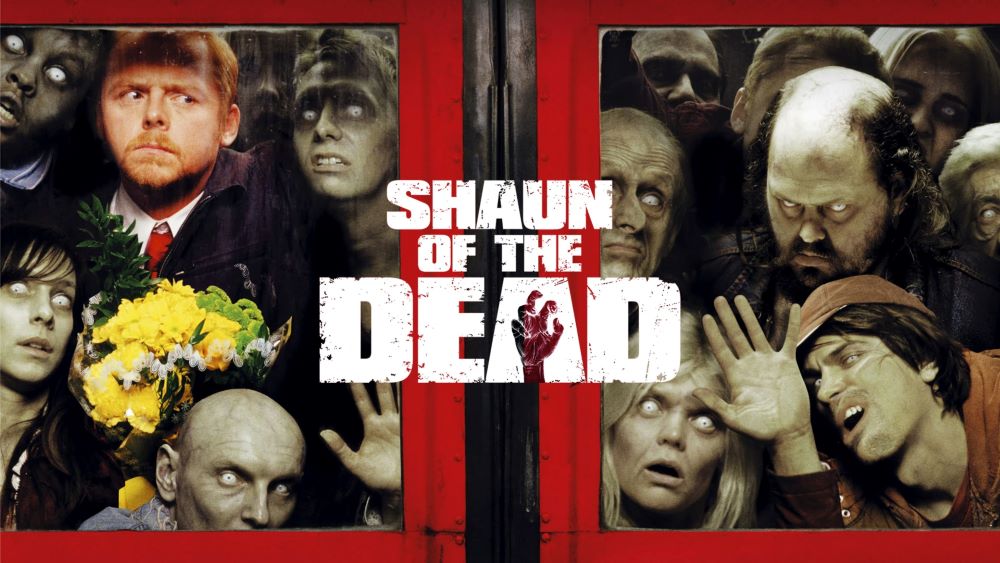
Shaun of the Dead (dir. Edgar Wright)
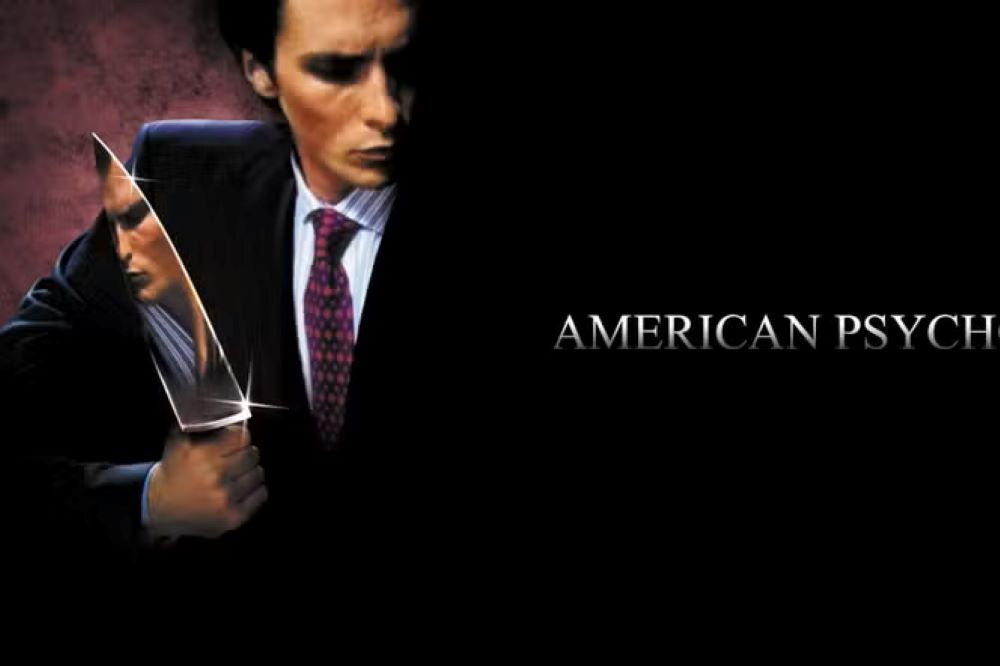
American Psycho (dir. Mary Harron)
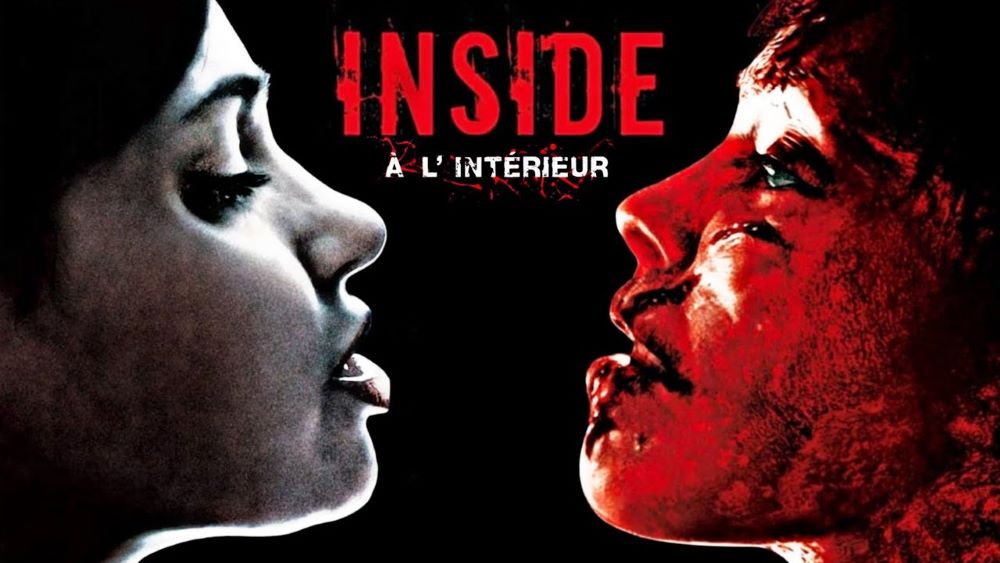
Inside (dir. Alexandre Bustillo & Julien Mary)
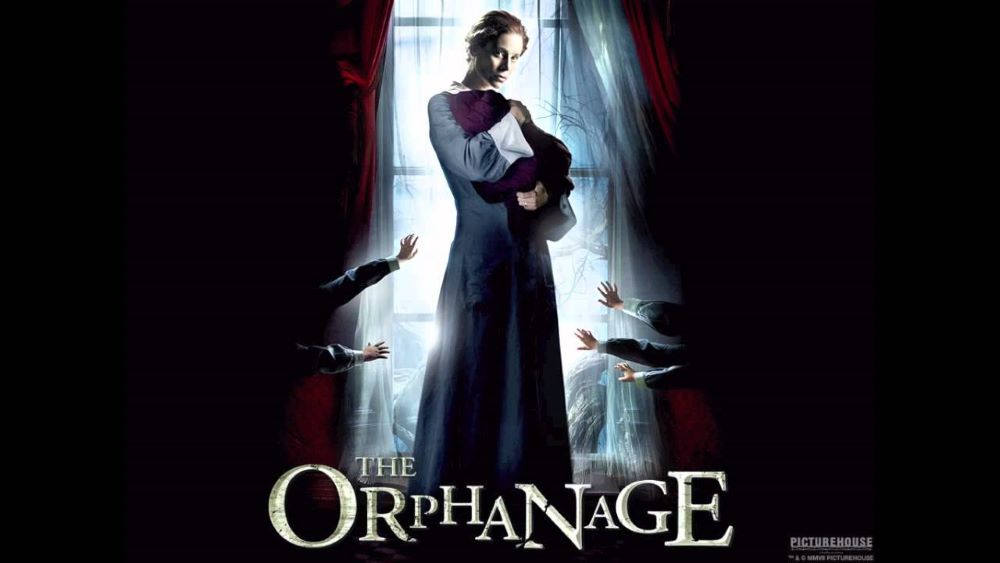
The Orphanage (dir. Juan Antonio Bayona)
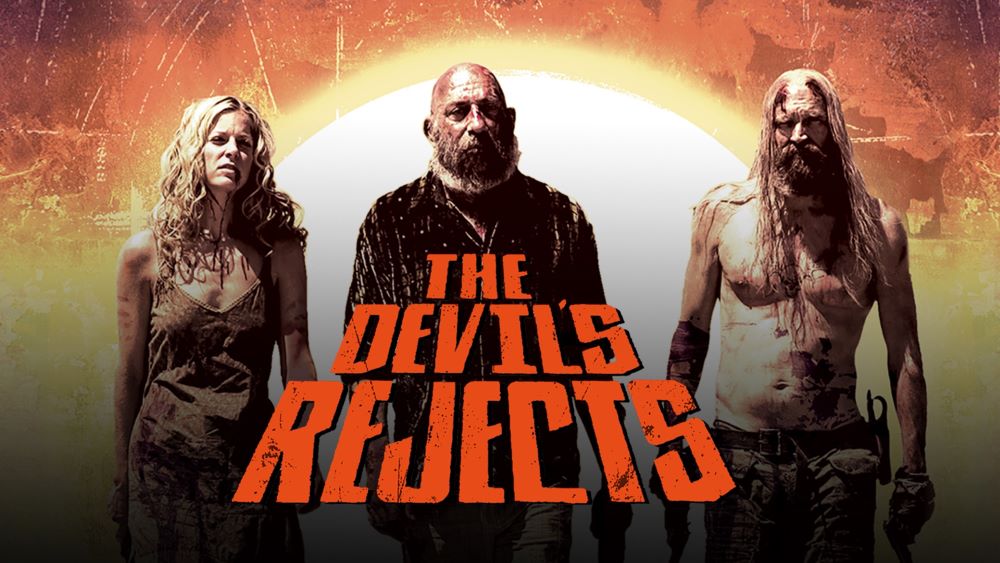
The Devil’s Rejects (dir. Rob Zombie)
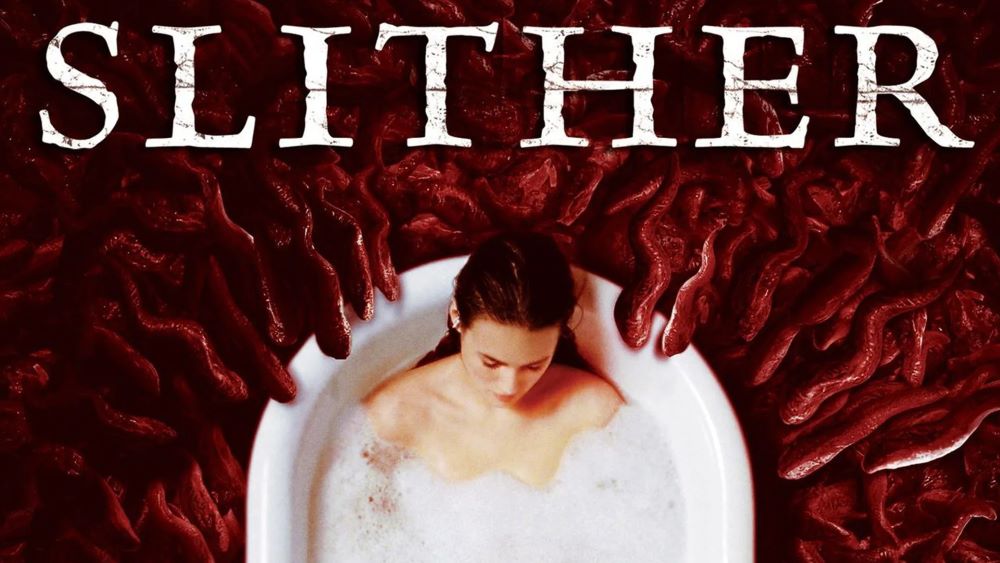
Slither (dir. James Gunn)
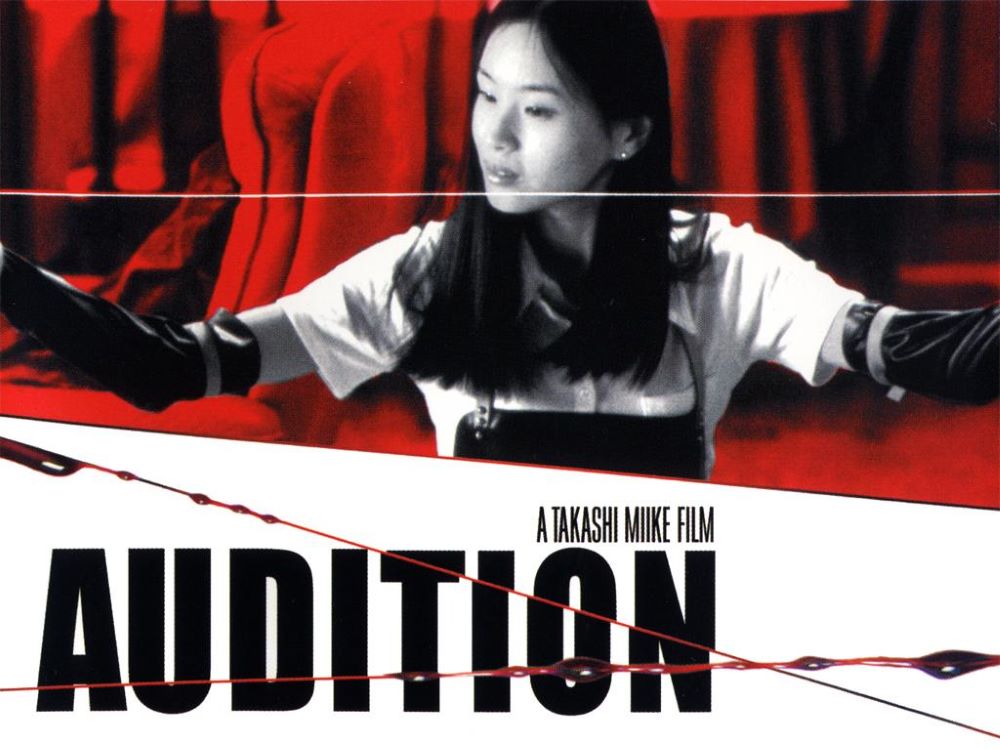
Audition (dir. Takashi Miike)
Honorable Mentions: Saw, Haute Tension, Drag Me To Hell, Trick ‘r Treat, Dog Soldiers, Ju-On, May, Midnight Meat Train, The Ruins, Jeepers Creepers, Ginger Snaps, Funny Games (remake), Shutter, Frontier(s), Behind the Mask: The Rise of Leslie Vernon…just to name a few.