Horror Film Review: The Watcher (dir by Joe Charbanic)


Released in 2000, The Watcher is one of those movies where a burned out FBI Agent finds himself locked in a game of cat-and-mouse with an overly verbose serial killer. The FBI agent doesn’t want to get involved and is struggling with a drug addiction. (It’s always either drugs or a wife who doesn’t feel like she knows him anymore.) The serial killer is surprisingly intelligent and well-spoken, despite the fact that most real-life serial killers are only a step or two away from blowing themselves up in a meth lab. Movies love the idea of a witty sociopath but it rarely happens in real life.

Anyway, you get the point. Probably just from reading the previous paragraph, you already know everything that happens in The Watcher. There’s not a single moment in this movie that will take you by surprise. In fact, this movie is so full of clichés that, when I watched it, I actually got mad at the film’s characters for not being able to figure out that they were all just characters in a predictable serial killer film. Seriously, if I woke up and discovered that I was only a character in a movie, I imagine that I would devote at least a few minutes to having an existential crisis. There is also a lot of random slow motion in this movie. The slow motion doesn’t create suspense or generate thrills or anything like that. It’s just kind of there.

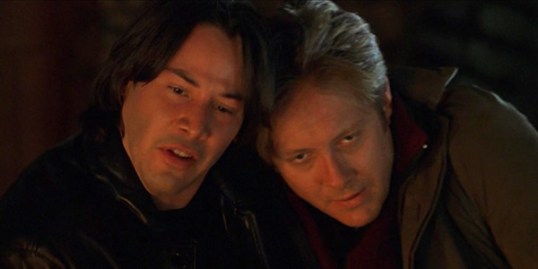
Really, the only interesting thing about The Watcher is the cast. For a movie like this, it has a surprisingly good cast. James Spader plays the FBI agent. Marisa Tomei plays the agent’s therapist. (She’s also the only female character to have more than 10 lines in the entire movie. To be honest, it’s a role that anyone could have played but Tomei does her best with what she’s been given.) The serial killer, who is named David Allen Griffen because all serial killers have three names, is played by Keanu Reeves.

Keanu as a serial killer is strange casting. For the most part, Keanu’s appeal has always been that he comes across like someone who, to quote Mother Bates, wouldn’t hurt a fly. Keanu flashes his charming smile and speaks politely with his future victims and, at no point, does he make much of an effort to be a believable killer. Some of that may be because Keanu apparently didn’t want to do the film. Keanu has always said that one of his assistants forged his name on a contract, legally obligating Keanu to appear in this movie. That’s a strange story. When you hear it, you think to yourself, “This the type of thing that could only happen to Keanu Reeves.”

For more than Keanu, James Spader is convincing in his role. Spader spends the entire movie looking like 1) he’s going through massive drug withdrawal and 2) like he’s on the verge of losing his mind. So much of acting is expressed through the eyes and, throughout this movie, Spader’s eyes are bloodshot and exhausted. It’s a superior piece of acting and it’s hard not to feel that it’s probably more than this movie deserved.
Horror on the Lens: Nosferatu (dir by F.W. Murnau)


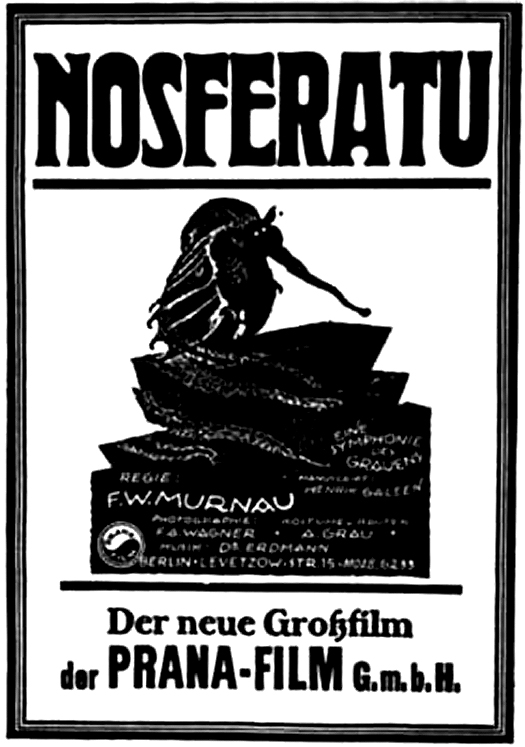
Today’s Horror on the Lens is a classic film that really needs no introduction!  Released in 1922, the German silent film Nosferatu remains one of the greatest vampire films ever made.  It’s a film that we share every October and I’m happy to do so again this year!

Enjoy!

Horror on TV: Circle of Fear 1.17 “Doorway to Death” (dir by Daryl Duke)


Tonight, on Circle of Fear, bratty Robert (played by Leif Garrett) discovers that an upstairs door in his family’s new apartment building leads to someplace very unexpected.  His older sister, Peggy (Susan Dey), doesn’t believe him but she soon learns the error of her ways.  

This episode is really creepy and atmospheric and I don’t want to spoil too much of it.  It was written by Jimmy Sangster, who also did several Hammer films, and it was directed by Daryl Duke.  To be honest, this episode reminds me of the episode of Lost where Jack stumbles across the ghosts of Ben’s parents outside of the cabin.  It has a similar, dream-like feel to it.

The episode originally aired on January 26th, 1973.

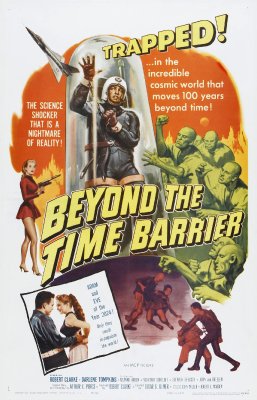
The TSL’s Horror Grindhouse: Beyond The Time Barrier (dir by Edgar G. Ulmer)


This 1960 film tells the story of Bill Allison (Robert Clarke), an air force test pilot who flies his test craft into space and then returns to discover that Earth has totally changed!

The Air Force base where he previously worked is now deserted and desolate.  After he’s captured by a group of silent soldiers, Allison is taken to an underground city known as the Citadel.  He meets the head of the city, an older man known as The Supreme (Vladimer Sokoloff).  The Supreme explains that only he and his second-in-command, The Captain (Red Morgan), can speak and hear.  The rest of humanity communicates through telepathy.  Though the Supreme’s granddaughter, Princess Trirene (Darlene Tompkins), telepathically insists that Allison is not a threat, the Supreme and the Captain still exile him to live with a bunch of angry, bald mutants who are determined to destroy the city.  Allison meets three other exiles and discovers that they too are time travelers.  The scientists explains that Bill has found himself in the far future.  The year is no longer 1960.  No, the year is …. 2024!

OH MY GOD, WE’VE ONLY GOT TWO YEARS LEFT!

Actually, we’ve probably got less than two years left.  This is October and the film appears to be taking place in the summer so we’ve probably only got 18 months to go!

(Cue Jennifer Lawrence: “We’re all gonna die!”  Cue Leonardo Di Caprio: “I’m so scared!”  Okay, tell them both to shut up now.)

Anyway, Allison assumes that society must have collapsed due to a global war but the scientists explain that the first manned spacetrip to the moon actually ushered in an era of peace.  (Wow, how did I miss this?)  In fact, humans had colonized the Moon, Mars, and Venus by 1970.  (Woo hoo!  Yay, humanity!)  However, years of nuclear testing had weakened the Earth’s atmosphere and, in 1971, the planet was bombarded by cosmic rays.  (Uh oh….)  Humanity was forced to move into underground cities.  Some of them developed telepathy and became super advanced.  Others became bald mutants.  Unfortunately, everyone is now sterile and the Supreme probably expects Allison to impregnate Trirene and do his part to repopulate the planet.

On the one hand, Allison and Trirene are falling in love.  Allison is handsome and strong.  Trirene has pretty hair and is the only citizen of the Citadel who gets to wear anything flattering.  They’re a cute couple.  On the other hand, if Allison sticks around the repopulate the planet, he’ll never be able to go back to his present and warn everyone about the upcoming cosmic ray plague.  Plus, it soon becomes clear that the scientists have an agenda of their own.  Allison finds himself torn between the two factions trying to control the Citadel.

Made for next to no money and filmed at Fair Park in Dallas, Beyond The Time Barrier is a surprisingly good film.  It was directed by Edgar G. Ulmer, an Austrian director who started out as an associate of Fritz Lang’s and who followed Lang to the United States.  Ulmer made films for the Poverty Row studios and he was a master of creating atmosphere on a budget.  He was one of the pioneers of film noir and he brought that same style to his horror and sci-fi films.  As envisioned by Ulmer in Beyond The Time Barrier, the future is full of menacing shadows, dangerous con artists, and untrustworthy authority figures.  It’s a fatalistic film, one that ends on a surprisingly downbeat note.  Even if Allison can save humanity, will it really be worth all the trouble?  Much like Detour, Ulmer’s best-known film, Beyond The Time Barrier plays out like a deliberately-paced dream, full of surreal moments and ominous atmosphere.

Beyond The Time Barrier is available on YouTube and Prime.  Watch it now before we have to go underground.

Great Moments In Comic Book History #29: A Vampire Stalks The Night


Now that we are halfway to October, I decided to share my personal favorite cover from The Tomb of Dracula.

The Tomb of Dracula was a comic book that ran for 70 issues, from 1972 to 1979. It was published by Marvel and it’s generally considered to be one of the best of the horror comics. It was also the first comic book to feature the character of Blade, who was later brought to life by Wesley Snipes in one of the first successful films to be based on a Marvel comic.

I’m a Tomb of Dracula fan and a collector. I’ve got nearly every issue of Tomb of Dracula and it’s companion magazine, Dracula Lives. Below is my favorite cover:

Great Moments In Television History #25: Vincent Price Meets The Muppets


In 1977, during the 16th episode of The Muppet Show, Kermit The Frog got a chance to interview Vincent Price and show off his vampire moves.  Later, no worse for wear, Vincent joined with the Muppets to sing a song.

I’m surprised that this episode was aired on January 16th, 1977 and not during October.

Here is the scene that lives forever in meme form:

Previous Moments In Television History:

  1. Planet of the Apes The TV Series
  2. Lonely Water
  3. Ghostwatch Traumatizes The UK
  4. Frasier Meets The Candidate
  5. The Autons Terrify The UK
  6. Freedom’s Last Stand
  7. Bing Crosby and David Bowie Share A Duet
  8. Apaches Traumatizes the UK
  9. Doctor Who Begins Its 100th Serial
  10. First Night 2013 With Jamie Kennedy
  11. Elvis Sings With Sinatra
  12. NBC Airs Their First Football Game
  13. The A-Team Premieres
  14. The Birth of Dr. Johnny Fever
  15. The Second NFL Pro Bowl Is Broadcast
  16. Maude Flanders Gets Hit By A T-Shirt Cannon
  17. Charles Rocket Nearly Ends SNL
  18. Frank Sinatra Wins An Oscar
  19. CHiPs Skates With The Stars
  20. Eisenhower In Color
  21. The Origin of Spider-Man
  22. Steve Martin’s Saturday Night Live Holiday Wish List
  23. Barnabas Collins Is Freed From His Coffin
  24. Siskel and Ebert Recommend Horror Films

RUN! Short Film Review by Case Wright


Normally, I would have all kinds of tags about the filmmaker and actors, but I can’t find any. There are far too many “RUNS!”. I didn’t know that the horror short of “a woman being chased while jogging with her headphones on” wasn’t as much of a subgenre as much as it was a meme.

Not to say that running alone with your headphones on is not an extremely dangerous activity- IT IS! However, do we really need 30+ shorts of this same thing?

HOW ABOUT NO?

They were trying to be funny, but they ended up being kinda scary. I know they didn’t mean to do it, but it failed up. I was unsettled by it. It’s also possible that I’m burned out from too many Alex Magana films and by studying this all day:

Yes, I know to solve this… mostly. Slow down ladies, there’s enough Case for everyone.

I know many of you are thinking: sure steam generators are hot and sexy and all, but we’re here for the short-film review and now I’m all sweaty. Fine, I’m here for it.

This film creeped me out because it’s too much like real life. When I moved across the country, I was alone except for my cat- Love you, wherever you are. I would see signs in Montana- Next Services 250 Miles. I realized that if my truck broke down, I’d die here or if some psycho disabled my vehicle, I’d be lost forever and ever. The actress’ vulnerable got to me. I mean Without a Trace had 9 Seasons – that’s According to Jim territory. Point is, we’re not as safe as we want to believe that we are. We could vanish. We are at the mercy of the social contract, but not everyone is a party to it.

This short tapped into that. It failed, but it did fail up.

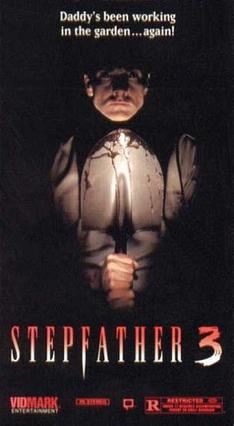
Stepfather III (1992, directed by Guy Magar)


As if Stepfather II was not bad enough on its own, 1992 saw the release of Stepfather III.

Once again, Jerry Blake/Gene Clifford manages to survive being mortally wounded at the end of the previous film.  After he recovers, he is sent to the exact same institution that he previously escaped from.  Guess what happens?  He escapes again!  Now using the name Keith, he marries Christine Davis (Priscilla Barnes) and become stepfather to her son, Andy (David Tom).  Andy is in a wheelchair.  Keith is convinced that Andy is faking his condition and keeps calling him “slugger.”  When Andy doesn’t respond, Keith prepares to move on to another single mother (Season Hubley).  But, before he can move on, Keith needs to take care of his current family.  Good thing that he has a woodchipper.

Terry O’Quinn did not return for Stepfather III.  The Stepfather is played by Robert Wightman, who looked and sounded nothing like Terry O’Quinn.  The film tries to explain it away by saying that the Stepfather got plastic surgery after he escaped from the institution but, unless the plastic surgeon was God, there’s no way that Jerry/Gene could ever have become Keith.

Stepfather III goes through the motions and even repeats the first film’s “buckle up for safety” gag.  By repeating all of the key scenes from the first (and even the second) movie, the third movie only succeeds in reminding us that The Stepfather doesn’t work without Terry O’Quinn’s performance and Joseph Ruben’s intelligent direction.  Keith becomes a standard movie slasher with a wood chipper.  He does inspire Andy to get out of his wheelchair, in a scene that will inspire more laughter than cheers.

One positive note: Season Hubley is in this movie!  Much as with Jill Schoelen in the first movie and Meg Foster in Stepfather II, this franchise had a way of attracting actresses who deserved better.

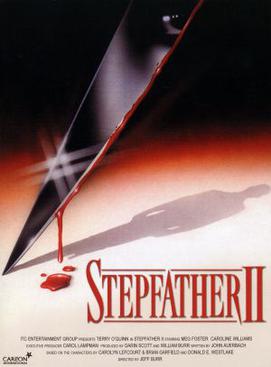
The Stepfather II: Make Room For Daddy (1989, directed by Jeff Burr)


Remember how, at the end of the first Stepfather film, Jerry Blake (played, in a classic horror performance, by Terry O’Quinn), was killed by the family that he was planning on murdering for not living up to his expectations?

It turns out that he wasn’t dead after all.  He was shot.  He was stabbed in the back.  Somehow, he wasn’t killed.  Also, despite being a mass murderer, he was sent to a mental institution where the security is so lackadaisical that he manages to murder a psychologist and a guard and then escape once again.

Taking on the name of Gene Clifford and passing himself off as a family therapist, the Stepfather continues his search for the perfect family.  He meets and becomes engaged to Carol (Meg Foster), who doesn’t find it weird that Gene is always whistling Camden Races.  Before he can marry Carol, Gene is going to need to dispose of her ex-husband and her best friend.  And, of course, Carol and her son Todd (Jonathan Brandis) are going to have to live up to Gene’s ideal of the perfect American family.

This is a disposable sequel, which eliminates all of the humor of the first film and just turns Jerry/Gene into another generic slasher.  The strength of the first film was that Jerry seemed likable up until the moment that his idealized vision of the perfect family was threatened.  Then he snapped and ended up in the basement, ranting and raving.  In Stepfather II, Gene is obviously dangerous from the start and a lot less interesting.  The movie is unfortunate and unnecessary and even Terry O’Quinn seems to be bored.  Give the film some credit, though, for giving Meg Foster a sympathetic role.  Gene may be crazy but no one could blame him for falling for Carol.  How could anyone resist those eyes?