Two of my favorite films of all-time happen to be very similar. In fact, one could say that they’re pretty much the same films. I’m talking about Akira Kurosawa’s Seven Samurai and it’s Western-remake by John Sturges, The Magnificent Seven. Kurosawa’s film is one of the greatest films of all-time and it’s no wonder that many have taken the film’s story of the downtrodden hiring a band of misfits, rogues, but still honorable men to help them fight against huge odds.
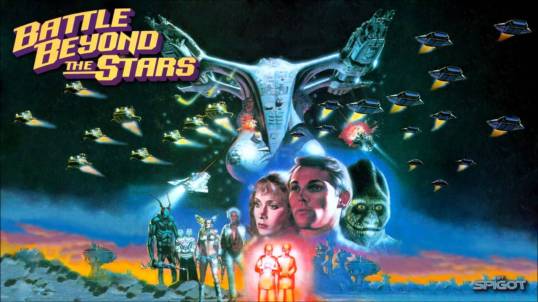
One such film that tries to add onto Kurosawa film’s legacy was the Roger Corman-produced scifi-adventure film Battle Beyond the Stars. This 1980 film was one of Corman’s many attempts to cash-in on the Star Wars phenomena, but in his usual low-budget style.
For a low-budget scifi film, Battle Beyond the Stars happened to have quite a cast one doesn’t usually see in such productions. While it had such grindhouse and exploitation regulars as John Saxon and Sybil Danning, it also starred the wholesome Richard Thomas from The Waltons and George Peppard (who would later become famous with a new generation as Hannibal Smith of The A-Team). The film would be directed by Jimmy T. Murakami, but from watching the film one could see Corman’s fingerprints all over the production from the script which was pretty lean and cut to the basic outline of Kurosawa’s original film. There’s not much fluff to bog down the pacing of the film.
This film has always been a guilty pleasure of mine because it so resemble Seven Samurai and The Magificent Seven, but adds in it’s own unique style and look to a well-worn and well-trodden plot. It was much later that I found out that James Cameron had a major hand in the special effects work in the film. Think about that for a moment. The self-proclaimed “King of the World” who literally breaks film budget records every time he begins work on a film did FX work on battle Beyond the Stars whose effects budget probably wouldn’t buy a day’s worth of crafts table eating for his most modestly budgeted films.
Lisa Marie always loved to say that grindhouse and exploitation films are some of most honest films out there. There’s no bullshit to what we see on the screen. It’s filmmakers forced to be daring and inventive because the lack of resources forces them to think outside the box. Battle Beyond the Stars might be seen as a mediocre attempt to cash-in on a scifi cultural phenomena, but it does so with a go for broke mentality that makes it such a fun film to watch. It’s not the greatest thing Corman has ever produced and some would even call it a very bad film, but once one looked past it’s rough and flawed surface then one could see a gem in the rough hidden beneath.
Oh, this remake of the remake of the original also happened to star one Robert Vaughn who was one of original Magnificent Seven.
Tonight was the season finale of Game of Thrones season 4. It was another great piece of storytelling that managed to juggle several subplots and giving each one their own time to shine.
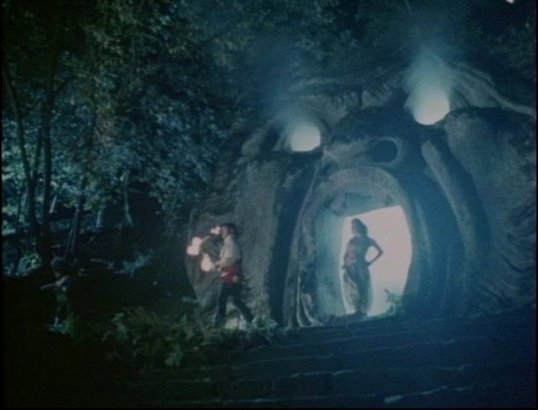
The latest “Guilty Pleasure” is the 1980 epically mind-numbing fantasy film Hawk the Slayer starring the great Jack Palance in the the villainous role of Voltan the evil elder brother to the film’s title character, Hawk the Slayer. This film is in the other side of the quality spectrum of tonight’s Game of Thrones season finale.
Hawk the Slayer was part of the 80’s flood of sword and sorcery films that included such titles as Conan the Barbarian, Beastmaster and Ladyhawke. To say that this film was bad would be an understatement. Yet, I’m quite drawn to it whenever I see it on TV. In fact, it was on syndication that I first saw this when I was just a wee lad. I might have been around 9 or 10 when I came across it halfway through.
Maybe it was the fact that I was just discovering Advanced Dungeons & Dragons, but this film spoke to me. It had that timeless story of brother against brother. The evil tyrant with legions of evil ne’er do wells against a small band of class-specific heroes and rogues. I mean this had it all. We had the hero of the film who I would probably place in the swordsman class. Then we had Ranulf with his repeating crossbow that would be the band’s rogue. Of course, there’s Gort the giant with his mighty hammer and Baldin the dwarf skilled in the art of the whip. But the one character that really shouted RPG for me throughout this film was Crow the Elf who could fire his bow as fast as any machine gun I’ve ever seen.
I think it’s very awfulness is why I keep returning to it whenever I see it on TV. The acting is atrocious with special effects that even in 1980 would be seen as laughable. The characters themselves were so one-note that one wonders if the person who wrote the screenplay was actually a trained monkey. Yet, the film was fun for all those reasons. It’s one of those titles that one would express as being so bad it’s good. Even now, with childhood several decades past, I still enjoy watching Hawk the Slayer and always wonder when they plan to get the sequel set-up and made.
Oh, the synth-heavy disco-fantasy-western soundtrack was also something to behold.
With the release of the new American reboot/remake/sequel of the classic 1954 Godzilla by Ishirō Honda, I thought it was high time I shared one of my guiltiest of all film pleasures growing up.
Godzilla and everything kaiju I ate up as a wee lad growing up during the 80’s. There really wasn’t anything on Saturday morning and afternoon tv other than reruns of badly dubbed Japanese monsters flicks and anime. One such film was Ishirō Honda’s very own King Kong vs. Godzilla. Yes, you read that correctly. The King of All Monsters fought the Eight Wonder of the World to decide once and for all who was the greatest giant monster of all-time.
The film itself wasn’t that great when I look back on it. Hell, even I had a sort of understanding even as an 8-year old kid that King Kong vs. Godzilla was a pretty bad film, but I still had a blast watching it. The film lacked in coherent storyline and important themes of man vs. nature and the psychological impact of the two atomic bombings of the US on Japan to end World War II wasn’t at all evident in this monster mash-up.
What the film had was King Kong fighting Godzilla. It was like watching two of the greatest icons of youths of my generation duking it out for our pleasure. It didn’t need to have a story or worry about whether it’s depiction of the natives on King Kong’s island was even remotely racist (it was so racist). All it needed to do was show everyone the very fight they’ve been waiting for. Fans of both monster wouldn’t have to wait forever to see the fight happen. This wasn’t going to be a dream fight never to happen like Mayweather vs. Pacquiao.
So, while King Kong vs. Godzilla was never one of the good entries in the Godzilla filmography (I think it was probably the worst) it more than made up for being one of the most campiest and entertaining entries in the Big Guy’s decades long history.
If there ever was a film from my youth that needs to be remade it would be King Kong vs. Godzilla and only Guillermo Del Toro should be chosen to direct it.
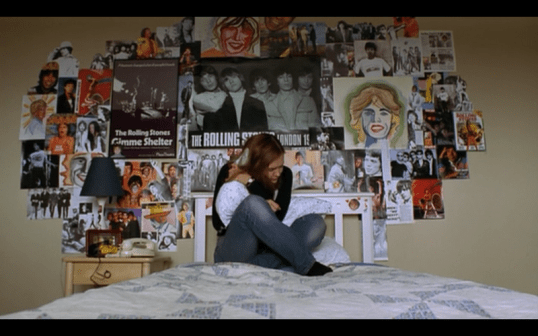
If you’ve watched Encore over the last few month, you may have come across a 2001 film called Tart. I did and, despite some pretty glaring flaws, I enjoyed the film. However, I then checked out a few of the reviews that have been posted online and I discovered that I may very well be the only person in the world who doesn’t hate this movie.
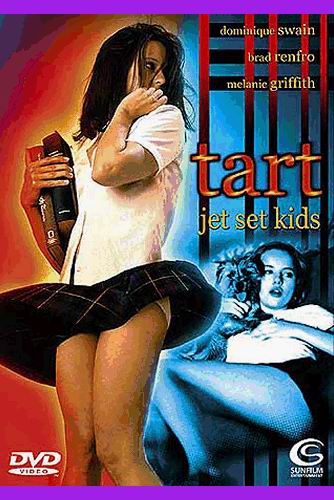
Tart is a coming-of-age story. Teenage Cat (Dominique Swain) lives in Manhattan with her divorced mother and her bratty younger brother. Cat attends an exclusive private school with her best friend Delilah (Bijou Phillips) and has a huge crush on William (Brad Renfro). After Delilah is expelled from school, Cat befriends the snobby Gracie (Mischa Barton) and starts to reinvent herself as one of the popular kids. Along with being popular comes drugs, sex, and, eventually, violence.
There’s no telling how many dirty old men were shocked to discover that DVD cover art is often misleading.
I will be the first to admit that a lot of the negative criticism of Tart is justified.
Is the film largely plotless? It is indeed but so is life.
Are all of the film’s adults presented as being one-dimensional jerks? Yes but then again, we are seeing them and their actions through the eyes of a teenage girl and, when you’re a teenager, most adults do seem to be jerks.
Does the film get a bit heavy-handed when it comes to dealing with casual anti-Semitism? It sure does but then again, anyone who thinks that anti-Semitism isn’t on the rise in this country obviously hasn’t been paying attention to the news.
Does the film’s melodramatic conclusion seem to come out of nowhere? Yes, it does. However, when you’re a teenager, everything eventually becomes a melodrama.
Does Brad Renfro seem to spend the entire film wishing he was somewhere else? Yes, he does. In many ways, his performance is painful to watch, both because his character is fighting the same battle with drugs that would ultimately cost Brad his life and the fact that he doesn’t appear to be all that invested in his performance. Watching the film, you’re struck by just how detached Renfro is from the material. It’s easy to criticize the lack of chemistry between Brad Renfro and Dominique Swain but then again, who hasn’t had a crush on a self-destructive bad boy? Who hasn’t thought that she — and she alone — could see something hidden away inside a damaged soul that only she could understand? Who hasn’t dreamed of understanding (and saving) an enigma? Sometimes, detachment is the ultimate aphrodisiac.
Does Bijou Phillips play the same role that she seems to play every time she shows up on screen? Yes, she is playing another wild best friend here but then again, she plays the role well and who hasn’t had a friend who refused to conform?
Does Mischa Barton give a rather broad and over-the-top performance in this film? Yes, she does but then again …. well, sorry. I can’t really think of any way to turn that into a positive.
Shoplifting is fun!
And yet, despite all of the film’s many flaws, I couldn’t dislike Tart. Tart is one of those films that totally misses the big picture and but manages to get so many of the small details right that I couldn’t help but relate to Dominique Swain’s character.
It was the little scenes that worked for me, like the scene where Cat shoplifts for the first time and runs out of the store knowing she’s done something wrong and yet still feeling exhilarated to have gotten away with something or the painfully (for this viewer, at least) accurate scenes of Cat waiting for her father to call on her birthday and then spitefully lashing out at her mother when he doesn’t. I’ve had best friends like Delilah and it was impossible for me not to wince a little at the scenes where Cat and Delilah argue over Cat’s new friends because, seriously, I’ve been there. Even the scene during the opening credits, in which Cat’s skirt is blown upward just as she happens to walk by the boy she likes, felt painfully familiar. Who hasn’t been embarrassed in front of a crush?
It’s the little details that allowed me to relate to this massively flawed film. It’s the little details that make Tart a guilty pleasure.
Since I realized I wasn’t going to get any sleep, I decided I might as well watch a random movie via Encore On Demand. That movie turned out to be Class, a dramedy from 1983. (I love dramedies, especially when I’ve got insomnia.) I just finished watching it about 30 minutes ago and what can I say? If there’s any film that deserves to be known as a guilty pleasure, it’s Class.
Class tells the story of two prep school roommates. Skip (Rob Lowe) is rich and spoiled. Jonathan (Andrew McCarthy) is poor but brilliant. As the result of getting a perfect score on his SAT, Jonathan has already received a scholarship to Harvard. Their friendship gets off on a rocky start. Skip locks Jonathan outside while Jonathan is wearing black lingerie. Jonathan responds with a fake suicide. (Boys are so weird.) Not surprisingly, Jonathan and Skip become best friends and even share their darkest secrets. Skip admits to killing a man. Jonathan confesses to cheating on his SAT. One of the two friends is lying. Try to guess which one.
When Skip also discovers that Jonathan is a virgin, Skip makes it his mission to help his friend get laid. Skip pays for Jonathan to spend a weekend in Chicago. While there, Jonathan meets an older woman named Ellen (Jacqueline Bisset). Soon, Jonathan and Ellen are having a torrid affair.
Once Christmas break arrives, Skip takes Jonathan home with him. Jonathan meets Skip’s parents. Guess who turns out to be Skip’s mom.
Meanwhile, an officious investigator (Stuart Margolin) has shown up on campus. What is he investigating? SAT fraud, of course.
Class is a weirdly disjointed movie. On the one hand, it attempts to tell a rather melancholic coming-of-age tale, in which a naive young man learns about love from a beautiful but sad older woman. (This part of the film perhaps would have been more effective if there had been a single spark of chemistry between Andrew McCarthy and Jacqueline Bisset.) On the other hand, it also wants to be a heartfelt comedy about two best friends who come from opposite worlds. And then, on the third hand (that’s right — this movie has three hands!), it wants to be a raunchy teen comedy, complete with a stuffy headmaster, misogynistic dialogue, gratuitous nudity, and a lengthy scene where all of the students attempt to get rid of all of their weed and pills because they’ve been incorrectly told that there’s a narc on campus. That’s three different movies being crammed into a 90-minute film. Not surprisingly, the end result is an uneven mishmash of different themes and styles.
And yet, as uneven as the film may be, I still enjoyed it. As I watched, I knew that I should have been far more critical and nitpicky about the film’s many flaws but the movie itself is just so damn likable that I found myself enjoying it despite myself. Ultimately — like many guilty pleasures — Class is a film that is best appreciated as a portrait of the time it was made. Everything from the questionable fashion choices of the characters to the film’s not-so-subtle celebration of wealth and narcissism, serves to remind the viewer that Class was made in the 80s.
Finally, Class should be seen just for its cast. It’s undeniably odd to see an impossibly young and goofy-looking John Cusack making his film debut here as a rather snotty student named Roscoe. While Andrew McCarthy doesn’t have much chemistry with Jacqueline Bisset, he still gives a good performance and is simply adorable with his messy hair and glasses. And finally, who can resist young Rob Lowe, who was just as handsome in Class as he would be 30 years later in Parks and Recreation?
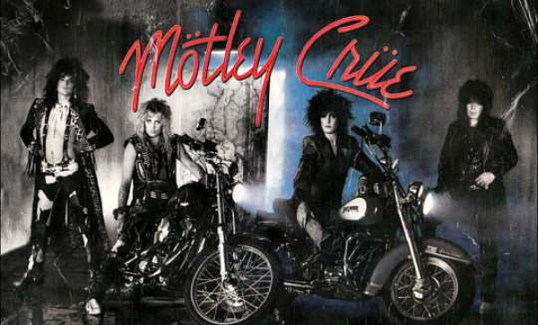
For some this is the height of hair metal at it’s raunchy. Some even call this song one of the best metal songs out there (though that’s stretching the term metal like it was Plastic-Man). I, for one, call this one of the guiltiest pleasures to come out of the hair metal scene of the 1980’s.
I’ll just let the lyrics speak to the cheesetastic and raunchirific pleasure this song was and remains (especially in strip clubs) to this very day.
Girls, Girls, Girls
Friday night and I need a fight My motorcycle and a switchblade knife Handful of grease in my hair feels right But what I need to make me tight are those
Girls, girls, girls Long legs and burgundy lips Girls, girls, girls Dancin’ down on Sunset Strip Girls, girls, girls Red lips, fingertips
Trick or treat, sweet to eat On Halloween and New Year’s Eve Yankee girls, you just can’t be beat But you’re the best when you’re off your feet
Girls, girls, girls At the Dollhouse in Fort Lauderdale Girls, girls, girls Rocking in Atlanta at Tattletails Girls, girls, girls Raising hell at the Seventh Veil
Have you read the news In the Soho Tribune? Ya know she did me Well, then she broke my heart
I’m such a good good boy I just need a new toy I tell you what, girl Dance for me I’ll keep you overemployed Just tell me a story You know the one I mean
Crazy Horse, Paris, France Forgot the names, remember romance I got the photos, a ménage à trois Musta broke those French’s laws with those
Girls, girls, girls At the Body Shop and the Marble Arch Girls, girls, girls Tropicana’s where I lost my heart Girls, girls, girls
Vince: Hey Tommy, check that out, man!
Tommy: What Vince? Where?
Vince: Right there, man! Hey baby, you wanna go somewhere?
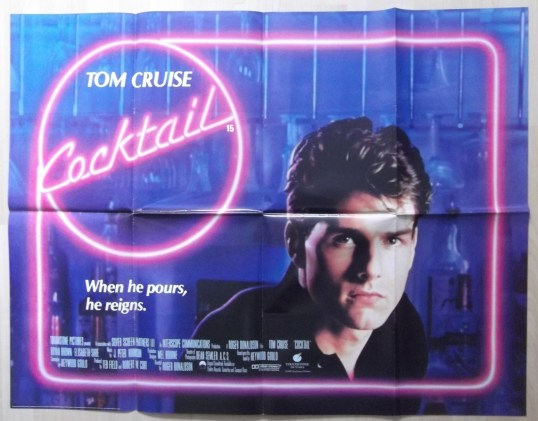
For the past two months or so, Cocktail, a 1988 film that stars Tom Cruise as a bartender with big dreams, has been on an almost daily cable rotation. A few nights ago, my sister Megan and I sat down and watched the film from beginning to end and we laughed ourselves silly.
Seriously, if there’s ever been a film that deserves to be known as a guilty pleasure, it’s Cocktail.
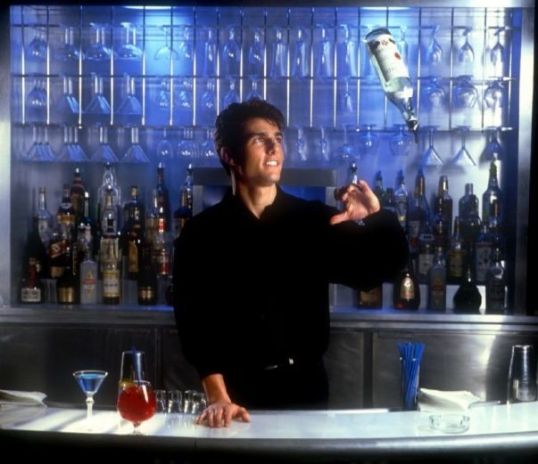
Cocktail tells the story of Brian Flanagan (Tom Cruise), an apparent sociopath who, having just gotten out of the army, is now determined to become a millionaire. During the day, he takes business classes but at night, he and his mentor Doug (Bryan Brown) are dancing bartenders. While customers wait for drinks, Brian and Doug do the hippy hippy shake and toss bottles up in the air. The crowd loves them and Doug educates Brian on how to be a cynical, opportunistic bastard. (Myself, I didn’t think Brian needed any lessons but the film insists that he did.)
When Brian and Doug get into a fight over Gina Gershon, Brian ends up in Jamaica where he eventually meets both Jordan (Elisabeth Shue) and Bonnie (Lisa Banes) and has to choose between love and money. (Guess which one he goes for…) Gee, if only there was a way that Brian could get both love and money…
Why is Cocktail such a guilty pleasure? Just consider the following:
1. Cocktail is an example of one of my favorite guilty pleasure genres. It’s a film that attempts to give an almost religious significance to a profession or activity that, in the grand scheme of things, just isn’t that important. Hence, Tom Cruise and Bryan Brown aren’t just bartenders. No, instead, they are the linchpin that New York nightlight revolves around. If not for the talents of Cruise and Brown, we’re told, thousands of people wouldn’t have a good night. And then who knows what might happen. They might go to a different bar and they might get served by less rhythmic bartenders. Chaos and anarchy might be break out. The living would envy the dead. Fortunately, the super bartenders are there to save the day. (Just consider the film’s tagline: “When he pours, he reigns!” Really?)
2. In the pivotal role of Brian Flanagan, Tom Cruise gives a performance that seems to hint that the character might be a sociopath. Whenever he speaks to anyone, he flashes the same dazzling but ultimately empty smile. Whenever he feels that anyone is failing to treat him with the respect that he deserves, he responds with child-like violence. When he drags Elisabeth Shue out of her apartment, he looks over at Shue’s father and snaps, “It didn’t have to be like this!” It’s a line that makes next to no sense unless you consider that Brian is a pathological narcissist who is incapable of empathy. “It didn’t have to be like this,” Brian is saying, “except you dared to question me so now I’m going to kidnap your daughter…”
3. In the role of Doug, Brian’s mentor, Bryan Brown gives perhaps one of the most openly cynical performances in film history. While everyone else is earnestly reciting the script’s platitudes and trying their best to sound sincere, Brown delivers every line with a hint of resignation and an ironic twinkle in his eye. It’s as if Brown is letting us know that, of the entire cast, he alone knows how bad this film is and he’s inviting us to share in his embarrassment. But Bryan Brown need not worry! The movie may be bad but it’s also a lot of fun.
4. Brian and Doug become New York nightlife sensations by doing an elaborately choreographed dance as they mix their drinks. The other people in the bar absolutely love this, despite the fact that it seems like all the dancing would mean that it would take forever for anyone to actually get a drink.
5. While bartending, Brian also takes a business class that is taught by one of those insanely elitist professors who always seem to show up in movies like this. When he returns student papers, he doesn’t just pass them out. Instead, he literally tosses them at the students while offering up a few pithy words of dismissal. Seriously, this guy has to be the worst teacher ever. No wonder Brian would rather be a bartender than a student!
6. After having a fight with Doug, Brian somehow ends up working as a bartender in Jamaica where he suddenly starts speaking with a very fake Irish accent. The Jamaica scenes serve to remind us that — despite the fact his great-great-great grandfather did come from Dublin — Tom Cruise is one of the least convincing Irishmen in the history of film.
7. In Jamaica, Brian meets and falls in love with Jordan (Elisabeth Shue) but, because he’s a sociopath, Brian cheats on her with Bonnie (Lisa Banes), who is a wealthy TV executive. Bonnie brings Brian back to New York with her but, unfortunately, it turns out that Bonnie and Brian don’t have much in common beyond Bonnie wanting a young lover, Brian being young, Brian wanting a rich woman to take care of him, and Bonnie being rich. What’s particularly interesting about these scenes is that the film doesn’t seem to understand that Brian is essentially coming across like the world’s biggest asshole here. I think we’re meant to feel sorry for him but all we can really think about is how Bonnie could do so much better.
8. Around this time, Bonnie drags Brian to a museum where Brian ends up getting into a physical altercation with a condescending artist. It’s at this point that the audience is justified in wondering if Brian has ever met anyone who didn’t eventually end up taking a swing at.
9. But guess what! It turns out that not only does Jordan live in New York but she’s actually rich as well! And she’s willing to forgive Brian for being a sociopathic jerk. Unfortunately, Jordan’s father objects to his daughter running off with a sociopathic bartender so Brian — as usual — reacts by beating up a doorman and then literally dragging Jordan out of her apartment. One scene later and Brian and Jordan are suddenly married and Brian owns a bar of his own. Where did Brian get the money to open up his own bar? Who knows!? At this point, all that’s important is that the movie is nearly over and, in order for there to be a happy ending, Brian must both be married and a bar owner. That seems to be the film’s message: “Just stay alive for two hours and the film’s script will be obligated to give you a happy ending whether it makes sense or not.”
10. Brian is not only a bartender, he’s a poet! And, amazingly enough, bar patrons are willing to put aside their desire to get a drink so they can listen to their bartender recite poems like this:
” I am the last barman poet / I see America drinking the fabulous cocktails I make / Americans getting stinky on something I stir or shake / The sex on the beach / The schnapps made from peach / The velvet hammer / The Alabama slammer. / I make things with juice and froth / The pink squirrel / The three-toed sloth. / I make drinks so sweet and snazzy / The iced tea / The kamakazi / The orgasm / The death spasm / The Singapore sling / The dingaling. / America you’ve just been devoted to every flavor I got / But if you want to got loaded / Why don’t you just order a shot? / Bar is open.”
Seriously, how can you not enjoy a film like Cocktail? It’s just so totally ludicrous and melodramatic and, best of all, it seems to have absolutely no idea just how over-the-top and silly it really is. Both Tom Cruise and Elisabeth Shue seem to take their roles so seriously that you seriously have to wonder what film they thought they were making.
After I wrote my review of Horror of Dracula, I started thinking about all of the cinematic bad boys that I have known and loved. There’s just something undeniably exciting about having a good-looking psycho obsessing over you!
That leads us to today’s guilty pleasure. First released in 1996 and a mainstay on cable, Fear is one of the ultimate bad boy psycho films.
Fear tells the story of what happens when 16 year-old Nicole (played by Reese Witherspoon) meets and falls for David (Mark Wahlberg), a polite young man who happens to be crazy.
The first half of the film actually makes a pretty good case for hooking up with a bad boy. David treats Nicole like a princess, encourages her to break curfew, fingerfucks her on a roller coaster in a scene that makes fingerfucking seem as romantic as anything you’ll find in a Nicholas Sparks novel, and finally sneaks into her house so he can take her virginity.
These scenes capture the appeal of a bad boy — the feeling of danger, the thrill of rebellion, and, most poignantly, that feeling that only you can truly understand what a prince you have discovered. Witherspoon and Wahlberg are especially good in these scenes, with Witherspoon perfectly capturing the wide-eyed thrill of being in love while Wahlberg is the epitome of every guy in high school that I should not have dated but did.
There’s one small moment that hints at what is going to come. While talking to Nicole’s dad, Steven (played, with characteristic intensity, by William Petersen), David orders Nicole to get him a drink, causing the overprotective Stephen to glance up with a look of sudden suspicion. It’s a well-acted and subtle scene, one that will feel painfully real to anyone who has ever been in a similar situation.
It’s shortly after that scene that the entire film basically goes crazy.
After David catches Nicole’s best friend giving her an innocent hug, David responds by going crazy and beating him up. Nicole dumps David but then, largely as a response to her father being overprotective, she decides to give him a second chance.
Steven confronts David and orders him to stay away from his daughter. In an oddly hilarious scene, David responded by robotically beating his chest until he’s apparently covered with bruises. It’s a totally over-the-top scene that pretty much lets us know that Fear is no longer interested in being a realistic portrait of a naive girl dating an abusive guy.
Suddenly, we discover that David isn’t just a jerk with anger issues. Instead, he’s some sort of teenage crime lord, who lives in a dilapidated mansion with his equally low-life friends. While Nicole is busy writing Nicole Luvs David on her notebook, David is selling crack and having sex with her best friend Margo (played by, believe it or not, Alyssa Milano).
But that’s not all! When Nicole dumps David for a second time, David responds by tattooing her name on his chest and then gathering together his minions so that they can lay siege to Steven’s mountainside home.
“Don’t worry,” Steven tells his wife (Amy Brenneman), “I’m not going to let anyone get in here.”
And so, in that moment, Fear goes from being every girl’s fantasy of finding her misunderstood prince to being every parent’s fantasy — not only is Steven proven right about his daughter’s boyfriend but he also gets to kick his ass.
Watching Fear is an odd experience. The film starts out being romantic, well-acted, and, at times, even achingly poignant until, suddenly, it turns into one of the most over-the-top home invasion films ever made. It makes for an oddly schizophrenic viewing experience and it also makes this film into a true guilty pleasure.
Last year, I was doing a search for dance scenes on YouTube and I came across a handful of scenes from a film called Lambada. The scenes all had an undeniably cheap look to them and featured a rather stiff dancer who was wearing one dangling earring. The scenes were so memorably bad that I promised myself that, if I ever got the chance, I would watch this Lambada.
Well, I got that chance last night when Lambada turned up on NUVOtv. I forced my BFF Evelyn to watch the movie with me because I thought I might want to use the movie for one of my What Evelyn and Lisa Watched Last Night reviews. However, as we watched Lambada, I realized that the only way to review this movie was to consider it as a guilty pleasure.
First released way back in 1990, Lambada tells the story of Mr. Laird (J. Eddie Peck), an idealistic math teacher in Beverly Hills by day and a sexy dancer at night. Did I mention that when Mr. Laird dances, he calls himself Blade? Because he so does!
However, Blade isn’t just dancing for fun or to deal with what appears to be a split personality. Instead, he uses dance skills to impress the poor kids at the clubs so that he can then lure them into a backroom where he helps them prepare to take the GED.
He’s a dancer with a conscience and who doesn’t love that, right?
However, eventually Mr. Laird is spotted dancing by Sandy (Melora Hardin, a decade and a half before playing Jan on The Office), one of his students from Beverly Hills. When he doesn’t respond to her crush, she reveals his secret and — for reasons that are never quite clear — this puts his job in jeopardy.
Why did Lambada turn out to be such a guilty pleasure?
Just consider the following:
1) Cast in the key role of “Blade” Laird, J. Eddie Peck looks good but gives a performance that almost epitomizes the concept of anti-charisma. When he’s teaching in Beverly Hills, he wears sexy glasses. When he’s dancing in the barrio, he loses the glasses and instead wears one dangling earring. When a female student in Beverly Hills hits on him, he awkwardly smiles. When he dances, he moves so stiffly that he resembles a mannequin on a treadmill. That’s about the extent of Peck’s performance.
2) Melora Hardin, on the other hand, is completely natural and likable in the role of Sandy but, even though this film was made 16 years before the premiere of the Office, Hardin has already picked up a lot of the techniques that she would use to make Jan Levinson-Gould such a memorable character. Every time that Sandy smiles nervously or looks annoyed by another character, it’s impossible not to be reminded of Jan struggling to manage Michael Scott. As Nathan Rabin pointed out in his review of this film over at the A.V. Club, Lambada really does feel like Jan Levinson: The Early Years.
3) If Lambada was made today, it would be called Twerking and, while watching, it was hard not to imagine Melora Hardin chasing J. Eddie Peck with a big foam finger.
4) An aggressively forgettable song called Set The Night On Fire is played about a hundred times over the course of the film. The song is so generic and forced, and everyone in the film has to pretend to be so in love with it, that it becomes oddly fascinating.
5) The club that Blade dances at has an upside down police car hanging from the ceiling. The club, itself, gives off a definite human trafficking vibe but that police car is pretty neat.
6) One of Mr. Laird’s Beverly Hills students is named Egghead. Naturally, he’s the smartest student and he’s obsessed with computers. Evelyn and I both found ourselves wondering if Egghead was just a nickname or if his parents actually named him that in order to force him to grow up to be intelligent. (Even Mr. Laird calls him Egghead, which — if that’s not the student’s name — seems a bit unprofessional for a teacher.) It may not sound like much but it provided us with hours of amusement.
7) There’s a scene where Egghead uses his computer to inspire an entire classroom to spontaneously start dancing. What makes this scene especially memorable is that the computer dances along with them.
8) Whenever Blade is teaching his GED class, the students respond to almost everything he says by cheering. If nothing else, I’m sure many teachers have fantasized about being as irrationally loved by their students as Blade.
9) Eventually, Blade’s GED students compete with the Beverly Hills students. No, it’s not a dance-off. It’s a math-off! That’s right — they’re competing to see who can correctly answer the most math questions. And, believe it or not, the future of Blade’s career depends on whether or not his GED students can win. Apparently, this is how the California educational system worked back in 1990.
10) Finally, the ultimate reason that Lambada is a guilty pleasure is because — regardless of how silly and ludicrous the film may seem to us today — it was actually produced and released into theaters. That means that, somewhere out there, there are people who actually paid money to see this movie. They may not admit it but they’re out there.
Sometimes a really bad film just does enough to push my buttons to actually make me like it. One such film was 2009’s scifi=thriller Pandorum.
The film was one of those that had some hype behind it prior to the film’s release. It had a nice marketing angle which included some very disturbing biomechanical imagery that harkened back to classic H.R. Giger artwork from both Alien and Dune. The film even had an interesting premise which was about a mental affliction caused by long exposure to space travel called “Pandorum”.
When the film finally came out to say that it bombed would be quite an understatement. While the ideas behind the film were interesting enough the overall execution of said ideas were haphazard at best and unimaginative at it’s worst. There’s nothing worst than a B-movie trying to stand out from the dregs and failing because it’s dull and boring. Yet, despite all that I’ve been fascinated by Pandorum ever since I’ve caught it on video.
German director Christian Alvart might be lacking some style in his direction of the film, but the cast itself manages to work their damnedest to make the film work. Ben Foster does his usual twitching performance where we don’t know if he’s about to go psycho on everyone around him or just curl up in the corner and start sobbing like a newborn. Dennis Quaid chews the scenery so much in every scene he’s in that his work in the film almost comes off as performance art.
Even the idea that people who were gentically-enhanced to adapt and evolve to their surroundings was a new one. The film even goes further by making the foundation of rapid evolution come from the ship itself. All the cannibalism involved just added that grindhouse touch to the proceedings.
The one thing that really brings me back to watching this film as one of my many guilty pleasure’s was this was the first film that introduced the world to Antje Traue. She’s better known as one of the few good things to come out of Man of Steel. Even in this first feature film for Antje Traue we already see examples of how much a badass she can be. It’s a shame that the film around her wasn’t better.
Pandorum never improves with each repeat viewing, but it doesn’t get worst either. It just straddles that fine line where one or two things changed for the better would’ve made it a good film. But for the life of me I have no idea why I like it and continue to watch it. Sometimes even bad films will push enough of the requisite buttons for people to like it and this film certainly pushed the right ones from me.