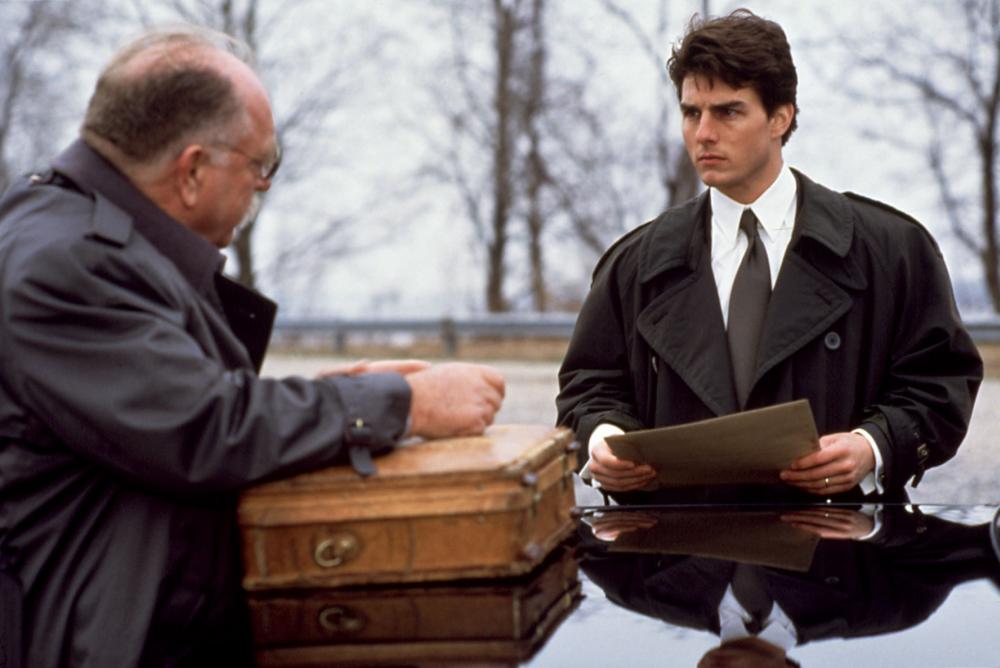
Brad reviews THE FIRM (1993), starring Tom Cruise!


In honor of Tom Cruise’s 63rd birthday, I decided to watch THE FIRM, which is based on the 1991 novel from author John Grisham. Cruise stars as the brilliant Harvard law graduate Mitch McBride, who convinces his wife Abby (Jeanne Tripplehorn) to move to Memphis, TN, so he can join the prestigious Memphis law firm of Bendini, Lambert & Locke. With the help of his veteran mentor Avery Tolar (Gene Hackman), Mitch seems to be excelling at his job, and everything is just so perfect. Unfortunately, the good times don’t last as Mitch starts to notice some suspicious stuff going on with the firm, beginning with the mysterious deaths of two of his fellow attorneys. He’s soon approached by FBI agents, led by Wayne Tarrance (Ed Harris), who tell him that there are nefarious deeds taking place at the firm, including the laundering of money for the Chicago mob. When Mitch starts questioning the activities of the firm, he finds himself the subject of blackmail and intimidation from the firm’s security officer William Devasher (Wilford Brimley) because the firm will do anything to protect its secrets. Mitch is soon caught between betraying his corrupt employers, who are threatening to kill him, and the FBI, who is pressuring him to expose the firm’s criminal activities. Not wanting to lose his life, go to jail, or get disbarred, Mitch devises an extremely risky plan to outsmart the firm and the FBI, but is even he brilliant enough to pull this one off?!

Back in the early 90’s, it seemed that every other movie being released was adapted from a John Grisham novel, and the very first of those adaptations was THE FIRM in 1993. Extremely successful at the box office, THE FIRM grossed over $270 million worldwide, setting the stage for five new movies based on Grisham novels over the next five years. THE FIRM was not only financially successful, it’s also an extremely effective movie that showcases a 30-year-old Tom Cruise at his very best. Director Sydney Pollack crafted a creepy and paranoid thriller, using a slow-burn buildup that relies on Cruise’s ability to believably go from naïve and starstruck at the beginning, to scared and desperate during the middle portion of the film, and ultimately to resourceful and intelligent at the end, as he navigates the dangerous situations he finds himself in. It’s a dynamic, intense performance, and even with a huge supporting cast of excellent actors around him, Cruise dominates every frame of this film. Other performances that stand out to me are Jeanne Tripplehorn as Mitch’s wife Abby, Wilford Brimley as the firm’s enforcer, Gary Busey and Holly Hunter as a private investigator and his administrative assistant from Little Rock, and David Strathairn as Mitch’s jailbird brother in Arkansas. Gene Hackman is good in his role as Mitch’s corrupted mentor Avery Tolar, but his character is not one of my favorites from the legendary actor. His character has accepted his corruption and learned to cope with it over the years through alcohol and womanizing, just so he can keep making the money. He knows better and that’s the part that ultimately makes him the most pathetic. Ed Harris is also good in the film as the FBI Agent, but his character is kind of an asshole, and it’s fun to see Mitch outsmart him.

I also like the Memphis, Tennessee locations showcased in THE FIRM, locations that I’ve been to many times, such as Beale Street, Mud Island, and The Peabody Hotel. Early in the movie, Cruise’s character flips right along with the “Beale Street flippers,” popular Beale Street entertainers who perform nightly for tips. I’ve given them some of my cash over the years! And the chase sequence that starts at Mud Island and spills over into downtown Memphis is one of the most exciting parts of the movie. My home state of Arkansas even gets in on the action when Mitch meets FBI agent Wayne Tarrance at the Southland Greyhound Park located in West Memphis, Arkansas. The greyhound race track no longer exists at that location, as the final dog race was held on December 31, 2022. The site has now become the Southland Casino, one of three operating casinos in Arkansas, with the other two being the Oaklawn Casino in Hot Springs and The Saracen Casino in Pine Bluff. I also like the fact that the sleazy private investigator, played by Gary Busey, is from Little Rock, Arkansas. I commute to Little Rock daily to work at my accounting and tax firm, and it’s fun imagining that there could be an “Eddie Lomax” somewhere around here.

THE FIRM may not be a perfect film… some fat could have been trimmed out as it runs for over two and a half hours, a lot of time for a “thriller;” and while effective on paper, I also can’t help but wonder if the resolution would have worked quite as well in real life as it’s portrayed in the film. I still love the movie and consider it to be one of Tom Cruise’s best. I revisit it quite often, and I’m glad his birthday gave me another excuse to watch it again today!
Guilty Pleasure No. 81: The Replacements (dir by Howard Deutch)


2000’s The Replacements finds America in crisis!

With the season already underway, football players are going on strike!  They want better contracts.  They want more money.  They want …. well, they want a lot of stuff.  Meanwhile, the fans just want to know who is going to make the playoffs.  There are only four games left in the season and the Washington Sentinels need to win three of them to make it into the playoffs.  The owner of the team (Jack Warden) recruits burned-out coach McGinty (Gene Hackman) to take over a team that will  be made up of replacement players.  McGinty says that he wants to pick his own players and he doesn’t want any interference from the team’s owner.  Anyone want to guess how long that’s going to last?

McGinty’s team is made up of the usual collection of quirky misfits who show up in movies like this.  Tight End Brian Murphy (David Denman, who later played Roy on The Office) is deaf.  One of the offensive linemen is a former SUMO wrestler.  Orlando Jones plays a receiver who has a day job at a grocery store.  The kicker (Rhys Ifan) is a Welsh soccer player.  (Okay, a footballer, I don’t care, call it whatever you want.)  Jon Favreau plays a berserk defender who is a member of the police force.  Leading them on the field is Shane Falco (Keanu Reeves), a quarterback with a confidence problem.  Cheering for them from the sidelines and falling in love with Shane is bar owner-turned-head-cheerleader Annabelle (Brooke Langton).  Backing up Annabelle is a cheer squad made up of former strippers, the better to distract the other teams.

It’s not often you see a film where the heroes cross a picket line but that’s what happens with The Replacements.  Then again, it’s not like the folks on strike are driving trucks or unloading freight for a living.  They’re multi-millionaires who want even more money and don’t even care about whether the team wins or loses.  When the replacement players actually start to win games and become beloved in the city, the striking players react by starting a bar brawl.  In the end, striking quarterback Eddie Martell (Brett Cullen) doesn’t even stick with his principles.  He crosses the picket line and creates a quarterback controversy, just in time for the last game of the season.

The Replacements is thoroughly predictable but also very likable.  The cast gels nicely, with Hackman especially standing out as the gruff but caring coach.  Keanu Reeves is not totally believable as a quarterback with a confidence problem.  You take one look at Reeves and you don’t believe he’s had an insecure day in his life.  But, as an actor, he’s so likable that it doesn’t matter.  The same goes for the entire cast, whether they’re on the playing field or singing I Will Survive in jail.  I don’t particularly care much about football but I did enjoy The Replacements.

Previous Guilty Pleasures

  1. Half-Baked
  2. Save The Last Dance
  3. Every Rose Has Its Thorns
  4. The Jeremy Kyle Show
  5. Invasion USA
  6. The Golden Child
  7. Final Destination 2
  8. Paparazzi
  9. The Principal
  10. The Substitute
  11. Terror In The Family
  12. Pandorum
  13. Lambada
  14. Fear
  15. Cocktail
  16. Keep Off The Grass
  17. Girls, Girls, Girls
  18. Class
  19. Tart
  20. King Kong vs. Godzilla
  21. Hawk the Slayer
  22. Battle Beyond the Stars
  23. Meridian
  24. Walk of Shame
  25. From Justin To Kelly
  26. Project Greenlight
  27. Sex Decoy: Love Stings
  28. Swimfan
  29. On the Line
  30. Wolfen
  31. Hail Caesar!
  32. It’s So Cold In The D
  33. In the Mix
  34. Healed By Grace
  35. Valley of the Dolls
  36. The Legend of Billie Jean
  37. Death Wish
  38. Shipping Wars
  39. Ghost Whisperer
  40. Parking Wars
  41. The Dead Are After Me
  42. Harper’s Island
  43. The Resurrection of Gavin Stone
  44. Paranormal State
  45. Utopia
  46. Bar Rescue
  47. The Powers of Matthew Star
  48. Spiker
  49. Heavenly Bodies
  50. Maid in Manhattan
  51. Rage and Honor
  52. Saved By The Bell 3. 21 “No Hope With Dope”
  53. Happy Gilmore
  54. Solarbabies
  55. The Dawn of Correction
  56. Once You Understand
  57. The Voyeurs 
  58. Robot Jox
  59. Teen Wolf
  60. The Running Man
  61. Double Dragon
  62. Backtrack
  63. Julie and Jack
  64. Karate Warrior
  65. Invaders From Mars
  66. Cloverfield
  67. Aerobicide 
  68. Blood Harvest
  69. Shocking Dark
  70. Face The Truth
  71. Submerged
  72. The Canyons
  73. Days of Thunder
  74. Van Helsing
  75. The Night Comes for Us
  76. Code of Silence
  77. Captain Ron
  78. Armageddon
  79. Kate’s Secret
  80. Point Break

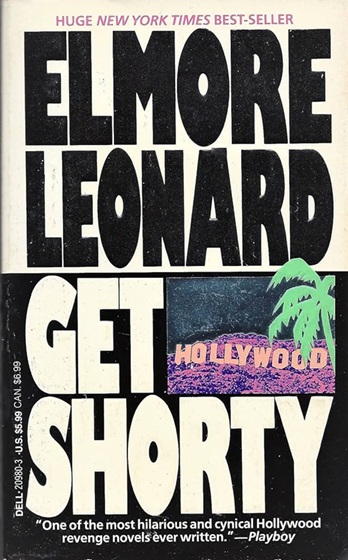
Book and Film Review: Get Shorty (by Elmore Leonard and dir by Barry Sonnenfeld)


In 1995’s Get Shorty, John Travolta stars as Chili Palmer.

Chili is a loan shark for the mob, an effortlessly cool guy who lives in Miami and who loves to watch old movies.  Chili may work for the Mafia and he may make his living by intimidating people but he doesn’t seem like such a bad guy, especially when compared to someone like Ray “Bones” Barboni (Dennis Farina).  Bones is an uncouth and rather stupid gangster who steals Chili’s leather jacket from a restaurant.  Chili reacts by breaking Bones’s nose with just one punch.  Bones reacts by trying to shoot Chili but instead, he gets shot by Chili himself.  (The bullet only grazes his forehead.)  Chili can do all this because he’s protected by Momo (Ron Karasbatsos) but, after Momo drops dead after having to walk up several flights of stairs just to then be given a surprise birthday party, Chili suddenly finds himself working for Bones.  (This all happens in the first few minutes of this perfectly paced film.)

Bones, eager to humiliate Chili, sends him to Vegas to collect on a debt owed by a dry cleaner named Leo (David Paymer).  Leo is thought to be dead but Bones wants to collect the money from Leo’s widow.  It’s not the sort of thing that Chili likes to do so instead, he ends up going to Hollywood to collect a debt from B-movie director Harry Zimm (Gene Hackman).  Chili  happens to like Harry’s movies.  He also likes Harry’s current girlfriend and frequent co-star, actress Karen Flores (Rene Russo).

Chili ends up in Hollywood, a town where everyone has some sort of hustle going.  Chili finds himself dealing with drug dealers (Delroy Lindo), egocentric film stars (Danny DeVito), stuntmen-turned-criminals (James Gandolfini), and the widow (Bette Midler) of a screenwriter.  Chili also finds himself looking to escape from the debt collection business by becoming a film producer.  Harry has a script that he wants to make.  Chili proposes a film based on the story of Leo the dry cleaner.  Danny DeVito’s Martin Weir wants to be a “shylock” in a movie just so he can show off his intimidating stare.  (“Is this where I do the look?” he asks while listening to the pitch.)  Get Shorty is a whip-smart satire of Hollywood, one in which the gangsters want to be film people and all of the film people want to be gangsters.  It features wonderful performances from the entire cast, with Travolta epitomizing cool confidence as Chili Palmer.  Hackman, Russo, DeVito, Gandolfini, and Lindo are all excellent in their supporting roles but I have to admit my favorite performance in the film is probably given by Dennis Farina, who turns Bones Barnobi into a very believable (and a believably dangerous) buffoon.

Get Shorty is based on a book by Elmore Leonard.  First published in 1990, the book is a quick and entertaining read, one that reminds us that Leonard was one of the best “genre” writers of his time.  When I read that book, I was surprised to see how closely the movie stuck to the book’s plot.  Much of the film’s dialogue is right there in the book.  It’s a book that practically shouts, “Turn me into a movie!” and fortunately, director Barry Sonnenfeld did just that.

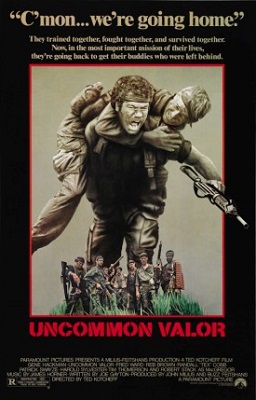
Uncommon Valor (1983, directed by Ted Kotcheff)


Retired Marine Colonel Jason Rhodes (Gene Hackman) and oilman Harry MacGregor (Robert Stack) share a tragic bonf.  Both of them have sons that served in Vietnam and are listed as being MIA.  Believing that their sons are still being secretly held in a POW camp in Loas, Rhodes and MacGregor put together a team to sneak into Southeast Asia and rescue them.

With MacGregor supplying the money and Rhodes leading the mission, the team includes Blaster (Red Brown), Wilkes (Fred Ward), Sailor (Randall “Tex” Cobb), and Charts (Tim Thomerson), all of whom served with Rhodes’s son.  Also joining in his helicopter pilot Curtis Johnson (Harold Sylvester) and former Marine Kevin Scott (Patrick Swayze), whose father was also listed as being MIA in Vietnam.  After a rough start, the group comes together and head into Laos to bring the prisoners home!

Uncommon Valor is one of the many movies released in the 80s in which Vietnam vets returned to Asia and rescued those who were left behind.  In the 80s, there was a very strong belief amongst many Americans that soldiers were still being held prisoner in Vietnam, Cambodia, and Laos and Hollywood was quick to take advantage of it.  The box office success of Uncommon Valor set the stage for films like Rambo and Missing In Action, film in which America got the victory that it had been denied in real life.

What set Uncommon Valor apart from the films that followed was the cast.  Not surprisingly, Gene Hackman brings a lot more feeling and nuance to his performance as the obsesses Col. Rhodes than Sylvester Stallone and Chuck Norris brought to their trips to Vietnam.  The film surrounds Hackman with a quirky supporting cast, all of whom represent different feelings about and reactions to the war in Vietnam.  Fred Ward’s character suffers from PTSD.  Randall “Tex” Cobb, not surprisingly, is a wild man.  Patrick Swayze’s character is trying to make the father he’ll never know proud.  Robert Stack and Gene Hackman represent the older generation, still trying to come to terms with everything that was lost in Vietnam and still mourning their sons.  The raid on the POW camp is exciting but it doesn’t feature the type of superhuman action that’s present in other POW-rescue films.  Col. Rhodes and his soldiers are ordinary men.  Not all of them survive and not all of them get what they want.

Uncommon Valor started out as a screenplay from Wings Hauser, though he’s not present in the cast of the final film and he was only given a “story” credit.  John Milius served as producer. Director Ted Kotcheff is best-known for First Blood, another action film about America’s struggle to come to terms with the Vietnam War.

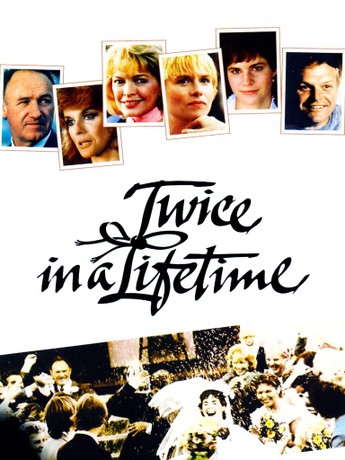
Twice In A Lifetime (1985, dir by Bud Yorkin)


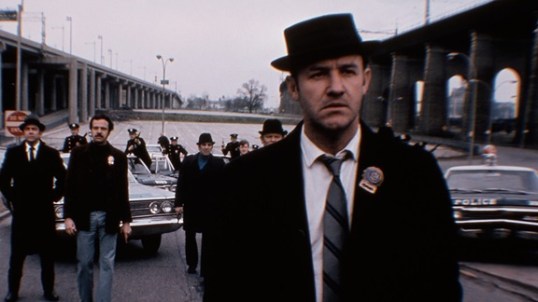
Today, for obvious and tragic reasons, people everywhere have been thinking about their favorite Gene Hackman performances.  Hackman was an actor who always brought his all, even when he was appearing in a lesser film.  I think you could ask five different people for their five favorite Hackman performances and they would all give five different answers.  His performance as Lex Luthor in Superman and Superman II has always been one of my favorites.  Others will undoubtedly cite his award-winning performance as Popeye Doyle in The French Connection or his great work as Norman Dale in Hoosiers or his work in classic neo-noirs like The Conversation and Night Moves.  Let’s not forget his most unexpectedly great turn, as the blind man in Young Frankenstein.  Hackman gave so many great performances that some of them were for films that are not even remembered today.

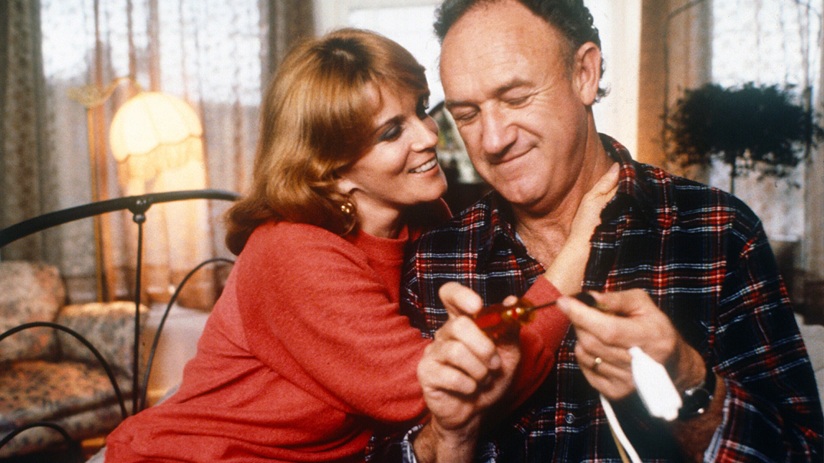
Twice In A Lifetime is one of those forgotten films but I think it features one of Hackman’s best performances.  He plays Harry Mackenzie, a steelworker who is married to Kate (Ellen Burstyn, made up to look frumpy) and who has two daughters (Amy Madigan and Ally Sheedy).  Harry is the type of everyman that Hackman excelled at playing.  He’s a hard worker, a good family man, and a good friend.  What no one, not even Harry realizes, is that he’s also having a midlife crisis.  On his 50th birthday, he goes out to the neighborhood bar with his buddies and falls for the new barmaid, Audrey (Ann-Margaret).  Harry ends up leaving his wife for Audrey, pursuing the spark that his marriage no longer gives him.  The movie follows Harry and Kate and their daughters as they adjust to their new lives and they plan for the younger daughter’s wedding.

Twice In A Lifetime was one of many 80s films that dealt with divorce and it has the same flaws that afflicted many of them.  These films, which were often made by middle-aged directors who had just gone through their own divorces, rarely played fair when it came to depicting why the marriage failed.  Twice In A Lifetime stacks the odds in Harry’s favor just by suggesting that Ann-Margaret would end up working at a bar frequented by steelworkers.  Harry has to choose between his plain and boring wife and Ann-Margaret.  That’s going to be a difficult choice!  The twist that Harry’s decision was ultimately the right thing for Kate doesn’t feel earned.

But damn if Gene Hackman isn’t great in this film.  Even though he was one of the most recognizable actors in the movie, Hackman is totally believable as both a steelworker and a man who worries that he’s destroyed his family.  It’s not just one moment or scene that makes this a great performance.  It’s the entire performance as a whole, with Hackman portraying all of Harry’s conflicted emotions both before and after leaving his family.  Hackman gives a performance that is more honest than the film’s script or direction.  The movie believes Harry did the right thing but Hackman shows us that Harry himself isn’t so sure.  Hackman captures the middle-aged malaise of a man wondering if his life is as good as it gets.  When the movie works, it is almost totally due to the emotional authenticity of Hackman’s performance.  Twice in a Lifetime may be a forgotten film but it’s also proof of how great an actor Gene Hackman really was.  There will never be another one like him.

Gene Hackman Has Passed Away


Gene Hackman has passed away.  He was 95 and reportedly found dead in his Santa Fe home, along with his wife and dog.  That’s what the authorities are saying.  They also say there’s no sign of foul play.  I’m sure there will be a lot of online speculation about what that all means.  That’s the way of the world nowadays and it’s a shame.

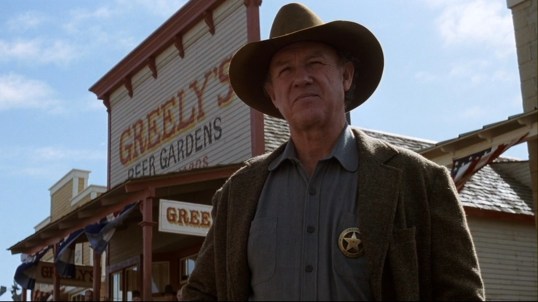
Gene Hackman was one of the greats.  He went into acting after a stint in the Marines and, according to most accounts and his own interviews, he never lost that grit and that expectation of professionalism from everyone he worked with.  A former roommate of Robert Duvall’s, a close friend of Dustin Hoffman’s (from the days when they were both unknown stage actors), Hackman went from doing episodic television to becoming one of our best film actors.  He was hardly a traditional leading man but his talent was undeniable.  His Popeye Doyle was the classic eccentric cop.  His Lex Luthor was a great comedic villain while his performance as Little Bill Daggett in Unforgiven proved to be the perfect portrayal of the authoritarian impulse. Interestingly enough, he was reportedly set to make his directorial debut with The Silence of the Lambs but he withdrew from the project, saying he didn’t like the violence.  (Reports vary on whether he would have also played Lecter or Jack Crawford.)  Hackman was a liberal but of the old-fashioned, blue collar variety.  He once said starring in The French Connection changed his whole view of policing.  It takes courage to admit to having changed your mind on anything.  It’s not something that a lot of celebs have the guts to do anymore.

I’ve always respected that Hackman retired under his own terms.  Faced with spending the latter part of his career appearing in movies like Welcome to Mooseport, he said, “I’m done.”  Someone would have to be the once great star who humiliated himself by taking the lead role in Dirty Grandpa but it wasn’t going to be Gene Hackman.

Gene Hackman, RIP.  He had a great career and gave us many great performances and that’s all we can really ask of an actor.

EUREKA (1983) – Gene Hackman strikes gold and tries to strike Rutger Hauer with a meat cleaver in the same move!


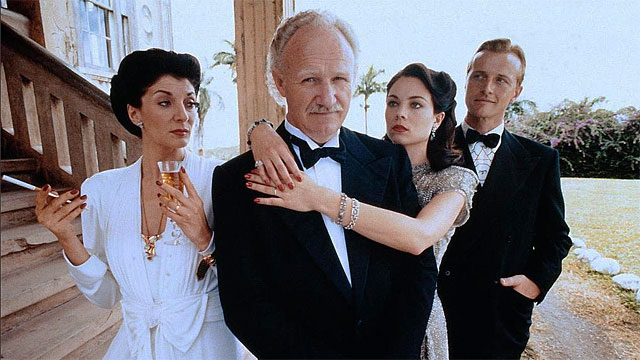
I’ve been thinking a lot about Gene Hackman as he recently celebrated his 95th birthday. He’s an incredible actor who has been a part of my life since I first really discovered my love of movies beginning in the mid-80’s. I’ve also been writing about Rutger Hauer every Sunday here on the Shattered Lens. Hackman and Hauer made a movie together back in 1983 called EUREKA, and to be honest, I almost forgot about it. It’s a movie I watched a long time ago and hadn’t watched again until today. It seemed like the perfect time for a revisit.

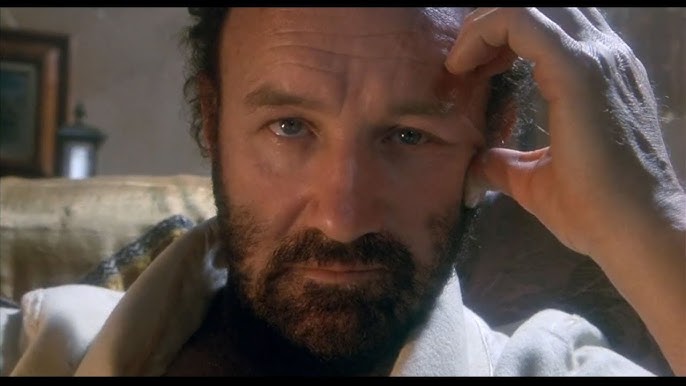
EUREKA opens with a stunning aerial shot that descends upon obsessed gold prospector Jack McCann (Gene Hackman) who’s fighting with a man on a snow-covered mountain in the Yukon territory. The man has asked Jack to partner with him in their search for gold, and Jack makes it clear that he will never “make a nickel on another man’s sweat.” Next, we see Jack as he’s walking through a nearly deserted town. In another unforgettable shot, Jack watches a man, who’s clearly gone mad, commit suicide just outside of the local “Claims office.” Before watching again today, that was the only scene that I could remember from my initial viewings of the film so many years ago. Next, we see Jack lying down below a tree at night, in windy, frigid temperatures, just about to freeze to death. Three hungry wolves have even approached ready for dinner. And this is where things get strange. Out of the blue, this clairvoyant madam (Helena Kallianiotes) from a local brothel sees him in her crystal ball, as a mysterious stone falls right next to him, starting a fire that warms him and drives away the wolves. He goes to see the madam at the brothel where she tells him that he will strike gold, but he “will be alone now.” Jack leaves the next morning and finds gold, rivers of gold. It’s another stunning sequence showing the obsessed man, who’s been searching for gold for 15 long and hard years, finally finding the object of his obsession. 

Cut to 20 years in the future, where Jack is now the richest man on earth, living on his own Caribbean island. It also appears he may also be the unhappiest man on earth. He has all the money in the world, but there is no peace in his heart or soul. His wife Helen (Jane Lapotaire), who he was once deeply in love with, is now detached and addicted to alcohol. His daughter Tracy (Theresa Russell) has fallen in love and married Claude Maillot Van Horn (Rutger Hauer). Jack cannot stand Claude as he suspects that he seduced and married Tracy so he could get to his money. His best friend Charles (Ed Lauter) has somehow gotten mixed in with Miami mobsters, led by a guy named Mayakofsky (Joe Pesci) and his lawyer Aurelio D’Amato (Mickey Rourke), who want to force Jack to sell them land on his island so they can build a casino. Jack feels like everybody just wants a piece of him and his money. He has lost the joy in his life. The rest of the film plays out against this backdrop as Jack tries to separate Tracy from Claude, and as the mobsters try to force Jack to sell to them by any means necessary.

EUREKA is not a film that everyone will love, but I enjoyed watching it again after so many years. Director Nicolas Roeg, who also directed PERFORMANCE (1970), DON’T LOOK NOW (1973) and FULL BODY MASSAGE (1995), creates some truly amazing and brutal images that once seen are not easily forgotten. The scene where Jack McCann finds his huge vein of gold is so beautiful, but there are alternatively horrific scenes of brutal violence that play out almost to the point of overkill. The movie also takes some surprising twists and turns in the third act that you may not see coming. I always like it when a movie surprises me. It’s a melodramatic film that doesn’t have a lot of likable characters, but with a cast this good, I’m willing to go along with the filmmakers. In addition to the excellent work of Gene Hackman and Rutger Hauer, Theresa Russell has the important role as the daughter stuck between the man she loves and the dad who adores her. Her acting style exemplifies the melodrama of Roeg’s vision, so it works well in the context of this film. Jane Lapotaire has a couple of strong moments as Hackman’s alcoholic wife who yearns for days long gone when they were so in love. We were quite spoiled in the early 80’s when a movie could round out its already impressive cast with actors like Joe Pesci, Mickey Rourke, Ed Lauter, Corin Redgrave and Joe Spinell.

Nicolas Roeg appears to be trying to make deep statements about the meaning of life in EUREKA. I’m not a person who generally consumes films for deep meaning, but I thought it might be fun to at least take a surface-level view of some of the items I noticed while watching the movie. Jack spouts a lot of profound things throughout the movie, things that he feels describe him as a person. I mentioned one earlier when Jack tells the competing prospector prior to finding gold that, “I’ll never make a nickel off of another man’s sweat.” He will continue to use this saying throughout the film, even after he’s a rich, jaded, older man. The truth is that he would not have found the gold without the help of the clairvoyant madam, with her even passing away right after he hits the jackpot. In another scene at an extremely awkward dinner party, Jack tells his guests that the only rule that matters is the Golden Rule, “Do unto others as you would have them do unto you.” While I agree with the importance of this rule, Jack does not seem to follow the Golden Rule in any way that helps others or gives him any sense of peace or connection. Jack does not seem to understand the contradictions in his use of these phrases as played out in his own life, but I also think that his lack of understanding helps to illustrate a truth that plays out at times in many of our own lives. So often we’ll claim certain beliefs and values, but our lives as lived will be much more complex and often hypocritical. We can see them in Jack, but can we always see them in ourselves?

EUREKA also seems to be a movie that’s open to different interpretations based on who’s viewing the movie and where they are in life at that specific time. In a moment of clarity with his wife, Jack seems to recognize the hypocrisy in his life when he tells her “I once had it all… now I just have everything.” Jack is finally reflecting on the important things in his life, rather than dwelling on his current distrust of everyone around him. This final quote got me to thinking about my own life and just how different I am as a man in my early 50’s compared that naïve 20-year-old who first watched this film. I didn’t know what it was like to chase my dreams, catch them, and then try to figure out how to keep striving with a purpose. I didn’t know what it was like to be married with the responsibility of loving my wife and genuinely caring about her needs, through both the good times and the bad times. I didn’t know what it was like to be a dad who wanted nothing but true happiness for his children. Jack has lived through these specific opportunities in life, and we can see how he’s dealt with them. Each of these things have now played out in my own life. There have been times that I’ve failed, and there have been times that I’ve succeeded. I just keep reminding myself to try to focus on the things that matter and not get distracted by the things that don’t. Even now, it’s not always easy to do.    

I’ve included the trailer for EUREKA below:

Scenes That I Love: The Nightmare From The Conversation


Today, we wish a happy 95th birthday to the great actor-turned-writer Gene Hackman!

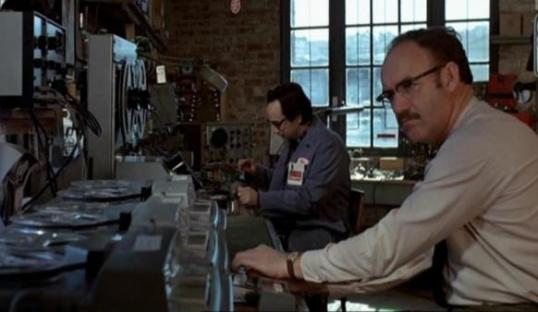
Today’s scene that I love comes from one of Hackman’s best films, 1974’s The Conversation.  In this scene, Hackman’s surveillance expert has a nightmare inspired by his fear that his latest job may cause two people to be murdered.  Hackman won two Oscars over the course of his career and was nominated several times.  The fact that he was not nominated for The Conversation was a huge oversight on the part of the Academy.

Happy 95th Birthday to Gene Hackman! And some personal info about HOOSIERS (1986)! 


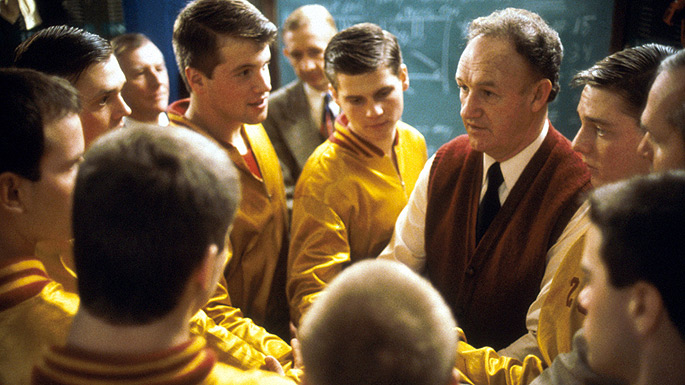
Gene Hackman is a tremendous, multiple Oscar winning actor who has been in some of the best movies ever made. Of all that great work, the movie that means the most to me is HOOSIERS (1986). If you don’t believe me, just go ahead and follow me on X. I’m easy to find. My handle is @Hoosiers1986. I’ve shared before that my dad was a high school basketball coach at small schools here in Arkansas that weren’t much different from the one in Hickory, IN depicted in the film. Growing up in the Crain household, basketball was my life and my dad and HOOSIERS have always been such inspirations to me. 

On his 95th birthday, I wanted to share this video I found of Hackman discussing his role as Coach Norman Dale in HOOSIERS, which includes clips from behind the scenes and of the film itself. I had never seen this material before so I found it especially interesting. He tells a really special story about a lady he met while on location. It was quite touching. Happy Birthday, Mr. Hackman! Enjoy!

Lisa Marie Reviews An Oscar Nominee: Reds (dir by Warren Beatty)


In the 1981 film Reds, Warren Beatty plays Jack Reed, the radical journalist who, at the turn of the century, wrote one of the first non-fiction books about Russia’s communist revolution and then went on to work as a propagandist for the communists before becoming disillusioned with the new Russian government and then promptly dying at the age of 32.

Diane Keaton plays Louise Bryant, the feminist writer who became Reed’s lover and eventually his wife.  Louise found fame as one of the first female war correspondents but then she also found infamy when she was called before a Congressional committee and accused of being a subversive.

Jack Nicholson plays Eugene O’Neill, the playwright who was a friend of both Reed and Bryant’s and who had a brief affair with Bryant while Reed was off covering labor strikes and the 1916 Democratic Convention.

Lastly, Maureen Stapleton plays Emma Goldman, the anarchist leader who was kicked out of the country after one of her stupid little dumbass followers assassinated President McKinley.  (Seriously, don’t get me started on that little jerk Leon Czolgosz.)

Together …. well, I was going to say that they solve crimes but that joke is perhaps a bit too flippant for a review of RedsReds is a big serious film about the left-wing activists at the turn of the century, one in which the characters move from one labor riot to another and generally live the life of wealthy bohemians.  Reed spends the film promoting communism, just to be terribly disillusioned when the communists actually come to power in Russia.  For a history nerd like me, the film is interesting.  For those who are not quite as obsessed with history, the film is extremely long and the scenes of Reed and Bryant’s domestic dramas often feel a bit predictable, especially when they’re taking place against such a large international tableaux.  At its best, the film is almost a Rorschach test for how the viewer feels about political and labor activists.  Do you look at Jack Reed and Louise Bryant and see two inspiring warriors for the cause or do you see two wealthy people playing at being revolutionaries?

Reds was a film that Warren Beatty spent close to 20 years trying to make, despite the fact that the heads of the Hollywood studios all told him that audiences would never show up for an epic film about a bunch of wealthy communists.  (The heads of the studio turned out to be correct, as the film was critically acclaimed but hardly a success at the box office.)  It was only after the success of the 1978, Beatty-directed best picture nominee Heaven Can Wait that Beatty was finally able to get financing for his dream project.  He ended up directing, producing, and writing the film himself and he cast his friend Jack Nicholson as O’Neill and his then-romantic partner Diane Keaton as Louise Bryant.  (Gene Hackman, Beatty’s Bonnie and Clyde co-star, shows up briefly as one of Reed’s editors.)  One left-wing generation’s tribute to an early left-wing generation, Reds is fully a Warren Beatty production and, for his efforts, Beatty was honored with the Oscar for Best Director.  That said, the Reds lost the award for Best Picture to another historical epic, Chariots of Fire.  Chariots of Fire featured no communists and did quite well at the box office.

The film is good but a bit uneven, especially towards the end when we suddenly get scenes of Louise Bryant trudging through Finland as she attempts to make it to Russia to be reunited with Reed.  The film actually works best when it features interviews with people who were actual contemporaries of Reed and Bryant and who share their own memoires of the time.  In fact, the interviews work almost too well.  The “witnesses,” as the film refers to them, paint such a vivid picture of the Reed, Bryant, and turn of the century America that Beatty’s attempt to cinematically recreate history often can’t compete.  One can’t help but feel that Beatty perhaps should have just made a documentary instead of a narrative film.

(Interestingly enough, many of the witnesses were people who were sympathetic to Reed’s politics in at the start of the century but then moved much more to the right as the years passed.  Reed’s friend and college roommate, Hamilton Fish, went on to become a prominent Republican congressman and a prominent critics of FDR.)

That said, Jack Nicholson gives a fantastic performance as Eugene O’Neill, adding some much needed cynicism to the film’s portrayal of Reed and Bryant’s idealism.  Keaton and Beatty sometime both seem to be struggling to escape their own well-worn personas as Bryant and Reed but Beatty does really sell Reed’s eventually disillusionment with Russia and the scene where he finally tells off his Russian handler made me want to cheer.  Fans of great character acting will want to keep an eye out for everyone from Paul Sorvino to William Daniels to Edward Herrmann to M. Emmet Walsh and IanWolfe, all popping up in small roles.

Reds is not a perfect film but, as a lover of history, I enjoyed it.