Lisa Reviews An Oscar Nominee: All That Jazz (dir by Bob Fosse)


“Bye bye life….

Bye bye happiness….

Hello loneliness….

I think I’m going to die….”

So sings Joe Gideon (Roy Scheider) at the end of the 1979 film, All That Jazz.  And he’s right!  It’s hardly a spoiler to tell you that All That Jazz ends with Joe Gideon in a body bag.  It’s not just that Gideon spends a good deal of the film flirting with the Angel of the Death (Jessica Lange).  It’s also that, by the time the film ends, we’ve spent a little over two hours watching Joe engage in non-stop self-destruction.  Joe is a director and a choreographer who is so in love with both death and show business that his greatest triumph comes from choreographing his own death.

Joe wakes up every morning, pops a handful of pills, stares at himself in the mirror and says, “It’s showtime!”  He spends his day choreographing a Broadway play.  He spends his nights editing his latest film, a biopic about Lenny Bruce called The Stand-Up.  He’s particularly obsessed with a long monologue that Lenny (played by Cliff Gorman) delivers about the inevitability of death.  When he’s not choreographing or editing, he’s smoking, drinking, and cheating on his girlfriend (Ann Reinking).  It’s obvious that he’s still in love with his ex-wife (Leland Palmer) and that she loves him too but she’s also too smart to allow herself to get fully sucked back into his self-destructive orbit.  He loves his daughter (Erzsébet Földi) and yet still ignores her when she begs him not to die.
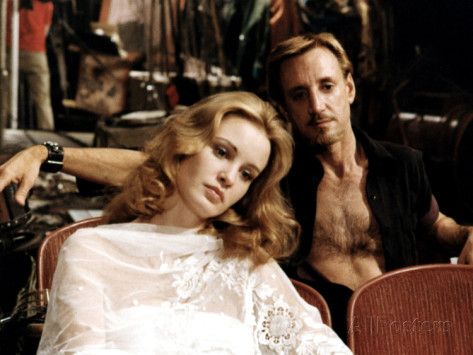
Joe and the Angel of Death

When Joe has a heart attack and ends up in the hospital, he doesn’t change his behavior.  Instead, he and the Angel of Death take a look back at his youth, which was spent hanging out in strip clubs and desperately trying to become a star.  Joe Gideon, we see, has always know that he’s going to die early so he’s pushed himself to accomplish everything that he can in what little time he has.

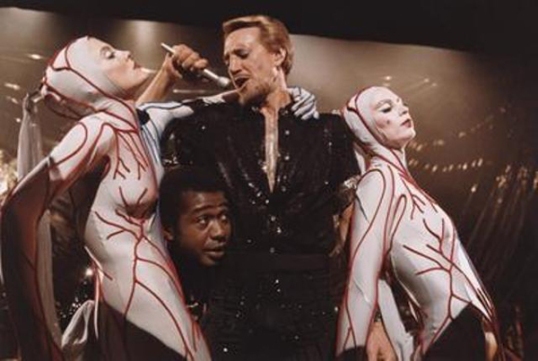
As a result of his drive and his refusal to love anyone but himself, Gideon is widely recognized as being an artistic genius.  However, as O’Connor Flood (Ben Vereen, essentially playing Sammy Davis, Jr.) puts it, “This cat allowed himself to be adored, but not loved. And his success in show business was matched by failure in his personal relationship bag, now – that’s where he really bombed. And he came to believe that show business, work, love, his whole life, even himself and all that jazz, was bullshit. He became numero uno game player – uh, to the point where he didn’t know where the games ended, and the reality began. Like, for this cat, the only reality – is death, man. Ladies and gentlemen, let me lay on you a so-so entertainer, not much of a humanitarian, and this cat was never nobody’s friend. In his final appearance on the great stage of life – uh, you can applaud if you want to – Mr. Joe Gideon!”

Now, of course, Connor doesn’t really say all that.  Gideon just imagines Connor saying that before the two of them launch into the film’s final musical number, Bye Bye Life.  It should be a totally depressing moment but actually, it’s exhilarating to watch.  It’s totally over-the-top, self-indulgent, and equally parts sincere and cynical.  It’s a Bob Fosse production all the way and, as a result, All that Jazz is probably about as fun as a movie about the death of a pathological narcissist can be.  This is a film that will not only leave you thinking about mortality but it will also make you dance.
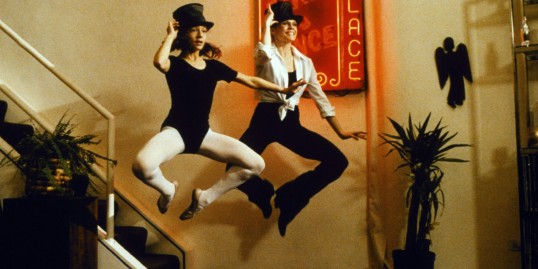
All That Jazz was Bob Fosse’s next-to-last film (he followed it up with the even darker Star 80) and it’s also his most openly autobiography.  Roy Scheider may be playing Joe Gideon but he’s made-up to look exactly like Bob Fosse.  Like Joe Gideon, Bob Fosse had a heart attack while trying to direct a Broadway show and a film at the same time.  Gideon’s girlfriend is played by Fosse’s real-life girlfriend.  The character of Gideon’s ex-wife is clearly meant to be a stand-in for Gwen Verdon, Fosse’s real-life ex-wife.  When the film’s venal Broadway producers make plans to replace the incapacitated Gideon, Fosse is obviously getting back at some of the producers that he had to deal with while putting together Chicago.  It’s a confessional film, one in which Fosse admits to his faults while also reminding you of his talent.  Thank God for that talent, too.  All that Jazz is self-indulgent but you simply can’t look away.
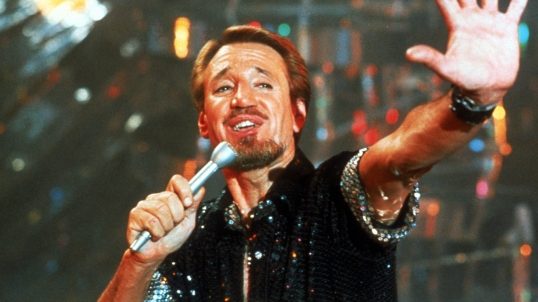
It helps that Gideon is played by Roy Scheider.  Originally, Scheider’s Jaws co-star Richard Dreyfuss was cast in the role but he left during rehearsals.  Dreyfuss, talented actor that he was, would have been all-wrong for the role of Gideon.  One can imagine a hyperactive Dreyfuss playing Gideon but one can’t imagine actually feeling much sympathy for him.  Scheider, on the other hand, brings a world-weary self-awareness to the role.  He plays Gideon as a man who loves his talent but who hates himself.  Scheider’s Joe Gideon is under no illusions about who he is or how people feel about him.  When Fosse’s own instincts threatens to make the film unbearably pretentious, Scheider’s down-to-Earth screen presence keeps things grounded.

I love All That Jazz.  (Admittedly, a good deal of that love is probably connected to my own dance background.  I’ve known my share of aspiring Joe Gideons, even if none of them had his — or Bob Fosse’s — talent or drive.)  It’s not for everyone, of course.  Any musical that features actual footage of open heart surgery is going to have its detractors.  For the record, Stanley Kubrick called All That Jazz “the best film I think I’ve ever seen.”  It won the Palme d’Or at Cannes and it was nominated for Best Picture, though it ultimately lost to the far more conventional Kramer vs. Kramer.

All that Jazz would be the last of Fosse’s film to receive a best picture nomination.  (Fosse directed five features.  3 of them were nominated for Best Picture, with the other two being Cabaret and Lenny.)  8 years after filming his cinematic doppelganger dying during heart surgery, Fosse would die of a heart attack.  Gwen Verdon was at his side.
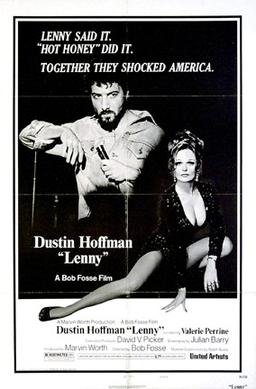
Lisa Reviews An Oscar Nominee: Lenny (dir by Bob Fosse)


Yes, it’s true.  Long before the creator of The Marvelous Mrs. Maisel was even born, Lenny Bruce was a real comedian who was challenging the status quo and going to jail for using words in his routine that were, at the time, considered to be so obscene that they couldn’t even be uttered in public.  Today, of course, we hear those words and they’re so commonplace that we barely even notice.  But, in the 50s and the early 60s, it was not uncommon for Lenny Bruce to get arrested in the middle of his act.  Club owners could literally be fined for allowing Lenny Bruce to perform on their stage.  At the height of his fame, it was a struggle for Lenny to find anyone willing to even consider booking him.

Whether it was his intention or not, Lenny Bruce became one of the first great warriors for the 1st amendment.  It made him famous and a hero to many.  Many people also believe that the pressure of being under constant legal threat led to his death from a drug overdose in 1966.  Lenny Bruce was only 40 years old when he died but he inspired generations of comedians who came after him.  It can be argued that modern comedy started with Lenny Bruce.

Directed by Bob Fosse and based on a play by Julian Barry, 1974’s Lenny takes a look at Lenny Bruce’s life, comedy, legal battles, and eventual death.  As he would later do in the thematically similar Star 80, Fosse takes a mockumentary approach to telling his story.  Clips of Lenny Bruce (played by Dustin Hoffman) performing are mixed in with “interviews” with actors playing the people who knew him while he was alive.  Because the story is told out of chronological order, scenes of a young and enthusiastic Lenny are often immediately followed by scenes of a burned-out and bitter Lenny reading from the transcripts of his trial during his stand-up.  Fosse never forgets to show us the audience listening as Lenny does his act.  Most of them laugh at Bruce’s increasingly outrageous comments but, to his credit, Fosse never hesitates to show us the people who aren’t laughing.  Lenny Bruce, the film tells us, was too honest to ever be universally embraced.

The film doesn’t hesitate to portray Lenny Bruce’s dark side.  For much of the film, Lenny is not exactly a likable character.  Even before his first arrest, Lenny comes across as being a narcissist who is cruelly manipulative of his first wife, stripper Honey Harlow (Valerine Perrine).  As opposed to the somewhat dashing Lenny of The Marvelous Mrs. Maisel, Dustin Hoffman’s Lenny Bruce comes across as someone who you would not necessarily want to be left alone with.  The film’s Lenny is a hero on stage and frequently a hypocrite in his private life but that seems to be the point of the movie.  Lenny argues that one of the reasons why Lenny Bruce could so perfectly call out society for being fucked up was because he was pretty fucked up himself.

As with all of his films, Lenny is as much about Bob Fosse as it is about Lenny Bruce.  As a director, Fosse often seems to be more interested in Bruce’s early days, when he was performing in low-rent strip clubs and trying to impress aging vaudevillians, than in Bruce’s later days as a celebrity.  (The world in which the young Lenny Bruce struggled was a world that Fosse knew well and its aesthetic was one to which he frequently returned in his films and stage productions.)  It’s also easy to see parallels between Lenny’s uneasy relationship with Honey and Bob Fosse’s own legendary partnership with Gwen Verdon.  The film’s grainy black-and-white cinematography captures not only the rough edges of Lenny’s life but also perhaps Fosse’s as well.  Just as Lenny Bruce performed confessional stand-up comedy, Lenny feels like confessional filmmaking.

Of course, it’s not always a pleasant film to watch.  Dustin Hoffman does a very good job of capturing Lenny Bruce’s drive but he doesn’t really have the natural comedic timing necessary to be totally convincing as a stand-up comedian.  (The film sometimes seems to forget that, as much as Lenny Bruce was admired for his first amendment activism, he was also considered to be a very funny stand-up.)  Still, it’s a valuable film to watch.  It’s a document of history, a reminder of a time when you actually could get arrested for saying the “wrong” thing.  Some people would say that we’re returning to those times and it’s easy to imagine that the real Lenny Bruce (as opposed to the idealized version of him) would not be welcome to perform on most college campuses today.  One can only imagine how modern audiences would react to a part of Lenny’s stand-up where he repeats several racial slurs over and over again.  (If Lenny Bruce had lived to get a twitter account, he would be getting cancelled every week.)  Lenny‘s vehement celebration of freedom of speech is probably more relevant in 2020 than it was in even 1974.

Lenny received several Oscar nominations, including best picture.  However, 1974 was also the year of both The Godfather, Part II and Chinatown so Lenny failed to win a single Oscar.

(Interestingly enough, Fosse’s previous film, Cabaret, was also prevented from winning the award for best picture by the first Godfather, though Fosse did win best director over Francis Ford Coppola.  Five years after the release of Lenny, Fosse would make All That Jazz, which was partially based on his own health struggles that he suffered with during the filming Lenny.  In All That Jazz, Cliff Gorman — who starred in the stage production of Lenny — is frequently heard reciting a Lenny Bruce-style monologue about death.  Fosse’s All That Jazz would again compete with a Francis Ford Coppola production at the Oscars.  However, Kramer vs Kramer — starring Lenny‘s Dustin Hoffman — defeated both All That Jazz and Apocalypse Now for the big prize.  22 years later, Chicago, which was based on Fosse’s legendary stage production and which featuring the song that gave All That Jazz it’s name — would itself win best picture.)

About Last Night: A Few Thoughts on the Golden Globes


Watching the Golden Globes is always an odd experience.

First off, there’s the mix of TV awards with movie awards.  For someone like me, who spends most of January thinking about the Oscars, it’s always somewhat annoying to have to sit through all of the television awards before even getting to the first film award.  The Emmys are over so it’s not like winning a Golden Globe is going to give Chernobyl or Fleabag the boost necessary to win a real award.

(Especially since those two shows already deservedly cleaned up at the Emmys….)

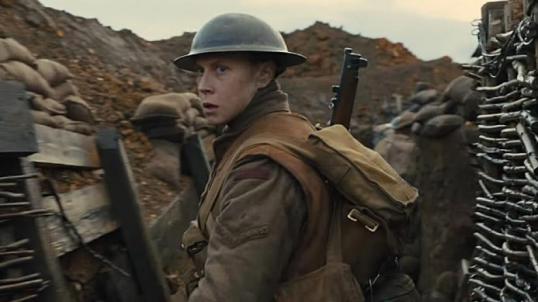
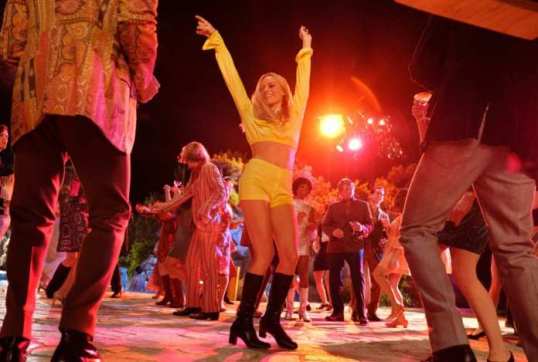
When it comes to the Globes, we care about the movies.  I was happy with the majority of the film awards.  I was especially happy to see the underrated Missing Link pick up the award for Best Animated Film.  I was glad that Once Upon A Time In Hollywood was named Best Comedy, even though I think it’s debatable whether or not the film was actually a comedy.  I’m sorry Eddie Murphy didn’t win for Dolemite Is My Name but, at the same time, Taron Egerton gave an outstanding performance in Rocketman.  I haven’t seen 1917 yet so I’m not going to comment on whether it should have won Best Drama or whether Sam Mendes deserved to defeat Scorsese and Tarantino.  That said, upset victories are always fun.

Of course, this morning, most of the Golden Globe coverage is not centered on 1917 defeating both The Irishman and Marriage Story for Best Drama.  Instead, almost everyone is talking about Ricky Gervais.  It says something about the vapidness of pop cultural criticism in the age of social media that Gervais was apparently “too mean” for some people.

When it comes to a show like the Golden Globes, the host sets the tone.  For instance, when Tina Fey and Amy Poehler hosted, they set a tone that basically said: “Look at us and all of our famous friends!”  It’s a friendly tone where everyone tells everyone else how great they are.  When Ricky Gervais hosts, the tone of the evening is usually a lot more awkward because no one is quite sure what Gervais is going to say and, being the Brit who created The Office, it’s not like Gervais is going to suffer if no one in Hollywood ever returns another one of his calls.  Both approaches have their strengths and their weaknesses.  There have been some years when I’ve been in the mood for the Fey/Poehler approach.  This year, with its promise of 11 months of wealthy celebrities trying to tell everyone else how to vote and probably getting angry because people in Iowa don’t care about funding Amtrak, I was in the mood for someone willing to shake things up and say, “Get over yourselves.”  In other words, I was in the mood for RIcky Gervais.

During Gervais’s opening monologue, he touched on several topics that everyone should have known he was going to touch on.  He said that Epstein didn’t kill himself and then accused everyone in the room of being his friend.  He told the assembled that Ronan Farrow was coming for all of them.  He told everyone that no one wanted to hear their political opinions because they had no idea what it was like to live in the real world and that they had less schooling than Greta Thunberg.

And whether you think any of that is funny or not is up to you.  Humor is subjective.  Personally, I think that the most important thing that a comedian can do is ridicule people who think that they’re above ridicule.  I also think that any belief or ideology that’s worth anything will be able to survive being the subject of a joke.  Many of my followers on twitter were not amused that Ricky Gervais made a joke about Greta Thunberg but so what?  If what she’s doing is truly worthwhile, it’ll be able to survive someone making a joke about her skipping school.

Besides, Gervais made a few good points.  Jeffrey Epstein didn’t kill himself and a lot of famous people did hang out with him, even after he was first arrested.  The majority of Hollywood did work with Harvey Weinstein, even though apparently his behavior wasn’t exactly a secet.  There are many self-proclaimed “woke” celebrities who do work for terrible companies.  (And let’s not even get into the people who refuse to criticize China.)  And when it comes to politics, Patricia Arquette proved Gervais’s point to be correct during her acceptance speech.

(The audience, I noticed, was surprisingly lukewarm to Arquette’s anti-war speech.  There was some applause but still, one got the feeling that the room’s reaction was largely, “Oh God, Patricia’s talking politics again.”  Personally, I was more impressed with Joaquin Phoenix’s speech, if just because it may have been inarticulate but it was also sincere.  Of course, as soon as he said that celebs didn’t need private jets, the music started.)

Good points or not, you could tell that the audience was often not sure how to react to Gervais’s comments.  Tom Hanks looked shocked, though I think that has more to do with Hanks being the most impossibly wholesome film star working today than with what Gervais saying.  (Seriously, if anything bad ever comes out about Tom Hanks, my entire belief system will crash.)  Others, though, had that “OMG — WHAT’S HAPPENING!?” look on their face.  It reminded me a bit of the 2013 Country Music Awards, when Carrie Underwood made a joke about the Obamacare website crashing and the audience clearly didn’t know whether or not it was safe to laugh.

(Of course, the same people who loved it when the CMAs made fun of Obamacare weren’t amused when future ceremonies featured jokes about Trump.  So often, people’s attitude towards humor seems to be, “I love it when you make jokes about the other side but if you make a joke about me, you’re the worst person who ever lived.”  Eventually, Gervais will tweet out an anti-Trump joke and the people who love him now will suddenly hate him and the people who currently hate him will go back to retweeting him.  What a vapid time to be alive.)

Anyway, last night’s Golden Globes ceremony was a typical awards show ceremony and no one will remember a thing about it in a week.  The Globes are pretty much there to tide us over until the Oscar nominations are announced.  They did their job and life goes on.

Here Are Your 2019 Golden Globe Winners!


Best Actor, TV Musical or Comedy — Ramy Youssef in Ramy

Best Actor, Limited Series or TV Movie — Russell Crowe in The Loudest Voice

Best Supporting Actor, Series, Limited Series, or TV Movie — Stellan Skarsgard, Chernobyl

Best TV Series, Drama — Succession

Best Actress, TV Musical or Comedy — Phoebe Waller-Bridge, Fleabag

Best Foreign Language Film — Parasite

Best Actor, TV Series Drama — Brian Cox, Succession

Best Screenplay, Motion Picture — Quentin Tarantino, Once Upon A Time In Hollywood

Best Motion Picture, Animated — Missing Link

Best Supporting Actress, Film — Laura Dern in Marriage Story

Best TV Series, Musical or Comedy — Fleabag

Best Original Song, Motion Picture — “I’m Gonna Love Me Again” from Rocketman

Best Supporting Actress, Series, Limited Series. or TV Movie — Patricia Arquette in The Act

Best Actress, TV Series, Drama — Olivia Colman in The Crown

Best Director, Motion Picture — Sam Mendes, 1917

Best Actress, Limited Series or TV Movie — Michelle WIlliams in Fosse/Verdon

Best Limited Series or TV Movie — Chernobyl

Best Original Score, Motion Picture — Joker

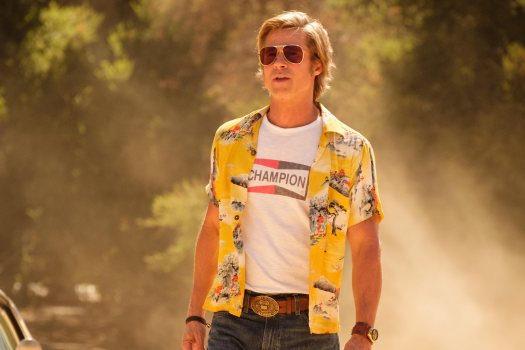
Best Supporting Actor, Motion Picture — Brad Pitt, Once Upon A Time In Hollywood

Best Actor, Comedy Motion Picture — Taron Egerton, Rocketman

Best Actress, Comedy, Motion Picture — Awkwafina, The Farewell

Best Motion Picture, Comedy or Musical — Once Upon A Time In Hollywood

Best Actor, Drama, Motion Picture — Joaquin Phoenix in Joker

Best Actress, Drama, Motion Picture — Renee Zellweger in Judy

Best Motion Picture, Drama — 1917


Lisa Reviews An Oscar Nominee: A Star Is Born (dir by Bradley Cooper)


Happy birthday, Bradley Cooper!

Bradley Cooper is 45 years old today.  With all the recent talk about how people’s lives have changed over the past decade, let’s take a minute to appreciate just how spectacularly things have gone for Bradley Cooper, career-wise.  Ten years ago, Bradley Cooper was probably best-known for playing the smarmiest member of The Hangover‘s quartet of friends.  Now, Cooper is known for not only being one of the best actors working today but also for making an acclaimed directorial debut with the 2018 Best Picture nominee, A Star Is Born.

Cooper not only directed A Star is Born but he also starred in it.  He played Jackson Maine, a country musician who has been drinking for as long as he can remember.  He used to drink with his father and when his father died, Jackson continued to drink alone.  (At one point, Jackson says that he was a teenager when his father died.)  Managed by his older brother, Bobby (Sam Elliott), Jackson became a star but his career has been in decline for a while.  For all of his talent and for all of his belief that he has something worth saying, Jackson is drinking his life away.  He stumbles from show to show and is often dependent upon Bobby to tell him what he missed while he was blacked out.

When Jackson stumbles into a drag bar and sees Ally (Lady Gaga, making her film debut) singing a song by Edith Piaf, he is immediately captivated by her talent.  Ally, whose father (Andrew Dice Clay) is a limo driver who once aspired to be bigger than Sinatra, is at first weary of Jackson but he wins her over.  After she punches a drunk and he takes her to a grocery store to construct a makeshift cast for her hand, she sings a song that she wrote and Jackson decides to take her on tour.  Soon, they’re in love and, before you know it, they’re married!

Unfortunately, Jackson’s alcoholism threatens both their happiness and their future.  While Ally’s star rises, his continues to dim.  Will Ally sacrifice her career for Jackson or will Jackson sacrifice his life for Ally?

It’s a familiar story, one that’s been told many times.  The first version was 1932’s What Price Hollywood, which featured aspiring actress Constance Bennett falling in love with an alcoholic director played by Lowell Sherman.  In 1937, What Price Hollywood? was unofficially remade as A Star Is Born, with Janet Gaynor as Esther, the actress who falls in love with faded matinee idol, Norman Maine (Fredric March).  The next version came out in 1954 and featured Judy Garland as Esther and James Mason as Norman.  Significantly, the 1954 version added music to the plot, with Judy Garland singing The Man That Got Away.  

In 1976, the story was told a third time.  This version of A Star is Born starred Barbra Streisand as singer Esther Hoffman and Kris Kristofferson as a self-destructive rock star named John Norman Howard.  The 1976 version was terrible, largely because there was zero chemistry between Streisand and Kristofferson.  And yet, one gets the feeling that the 1976 version is the one that had the most influence on the 2018 version.  Not only does Bradley Cooper’s version of A Star Is Born make the story about aspiring singers but one gets the feeling that Cooper watched the 1976 version, saw the lack of chemistry between Kristofferson and Streisand, and said, “There’s no way that’s going to happen in my movie!”

Indeed, it’s the chemistry between Bradley Cooper and Lady Gaga that makes the latest version of A Star Is Born so compulsively watchable.  I mean, we already know the story.  From the minute that Jackson and Ally meet for the first time, we know what’s going to happen.  But Cooper and Lady Gaga have got such an amazing chemistry, that it almost doesn’t matter whether the movie surprises us or not.  There’s a scene where Ally says that she’s always been told that her nose is too big and Jackson responds by nonchalantly touching her nose and, with that one simple and very naturalistic gesture, the film convinces us that Jackson and Ally are meant to be together, even if just for a while.  It also makes it all the more upsetting when a drunk and jealous Jackson later uses Ally’s insecurities against her.

(Of course, I should admit that I’ve always been insecure about my own nose so, at that moment, I totally understood what Ally was feeling.)

It’s an unabashedly romantic and sentimental film but it works because, as a director, Cooper brings just enough of an edge to the story.  Cooper, who has been sober since 2004, has been open about his past struggle with alcoholism and, as both an actor and director, he’s smart enough not to romanticize Jackson’s addictions.  In many ways, Jackson Maine is a pain in the ass to be around.  We watch as he goes from being a fun drunk to a sad drunk to a mean drunk, all the while lashing out at anyone who gets too close to him.  At the same time, Cooper also captures the spark of genius and the hints of inner goodness that would explain why he is never totally rejected by those that he’s hurt.  Cooper offers up hints of who Jackson could have been if he hadn’t surrendered to pain and addiction.  We understand why Ally and Bobby stick with him, even if we wouldn’t blame either one of them if they refused to have anything more to do with him.

Lady Gaga, meanwhile, gives a performance is that is down-to-Earth and instantly relatable.  Anyone who has ever been insecure or who has ever felt as if she was being punished for being independent or thinking for herself will understand what Ally’s going through.  At some point, we’ve all been Ally and we’ve all had a Jackson Maine in our lives.  Sadly, these stories rarely have happy endings.

For most of 2018, it was assumed that A Star Is Born would be the film to beat at the Oscars.  While it was eventually nominated for 8 Oscars, Bradley Cooper did not receive a nomination for Best Director.  (Cooper, Lady Gaga, and Sam Elliott were all nominated in the acting categories.)  In the end, Green Book won Best Picture while A Star Is Born only won one award, for Best Original Song.

Of course, Bradley Cooper and Lady Gaga’s performance of that song was perhaps the highlight of the entire Oscar ceremony.

That’s the power of good chemistry.


The National Society of Film Critics Honors Parasite and Little Women!


Yesterday, the National Society of Film Critics announced their picks for the best of 2019!

Now, it’s not really a surprise that Parasite won best picture because Parasite has been popular with the critic groups this season.  For me, what’s more significant is just how well Little Women did, coming in second for Best Picture and winning Best Director for Greta Gerwig.  Could this be evidence of a late surge in momentum for Little Women?  Or is it just of one those quirks of the awards season?  There’s always a tendency to read too much into the results of these contests, especially when the guilds are usually the best precursor to go with.

Anyway, here are the NSFC winners!

2019 NSFC Winners:

Best Picture: PARASITE (44 points)
Runners-up: LITTLE WOMEN (27 points); ONCE UPON A TIME… IN HOLLYWOOD (22 points)

Best Actor: Antonio Banderas, PAIN AND GLORY (69 points)
Runners-up: Adam Driver, MARRIAGE STORY (43 points); Adam Sandler, UNCUT GEMS (41 points)

Best Actress: Mary Kay Place, DIANE (40 points)
Runners-up: Zhao Tao, ASH IS PUREST WHITE (28 points) Florence Pugh, MIDSOMMAR (25 points)

Best Supporting Actor: Brad Pitt, ONCE UPON A TIME… IN HOLLYWOOD (64 points)
Runners-up: Joe Pesci, THE IRISHMAN (30 points) Wesley Snipes, DOLEMITE IS MY NAME and Song Kang Ho, PARASITE (18 points each)

Best Supporting Actress: Laura Dern, MARRIAGE STORY and LITTLE WOMEN (57 points)
Runners-up: Florence Pugh, LITTLE WOMEN (44 points) Jennifer Lopez, HUSTLERS (26 points)

Best Director: Greta Gerwig, LITTLE WOMEN (39 points)
Runners-up: Bong Joon Ho, PARASITE (36 points); Martin Scorsese, THE IRISHMAN (31 points)

Best Screenplay: Bong Joon Ho and Han Jin Won, PARASITE (37 points)
Runners-up: Quentin Tarantino, ONCE UPON A TIME… IN HOLLYWOOD (34 points); Greta Gerwig, LITTLE WOMEN (33 points)

Best Cinematography: Claire Mathon, PORTRAIT OF A LADY ON FIRE and ATLANTICS (41 points)
Runners-up: Robert Richardson, ONCE UPON A TIME… IN HOLLYWOOD (29 points); Yorick Le Saux, LITTLE WOMEN (22 points)

Lisa Reviews An Oscar Nominee: The Barretts of Wimpole Street (dir by Sidney Franklin)


The 1934 best picture nominee, The Barretts of Wimpole Street, takes place largely in one room.

That room is a bedroom located in a mansion that sits on Wimpole Street in London.  The room is occupied by Elizabeth (Norma Shearer), a sickly woman who has spent years in bed and who is barely able to walk.  She is the eldest of 11 siblings and all of them live in the house together, under the watchful eye of their tyrannical father, Edward (Charles Laughton).  Edward has forbidden any of his children from ever leaving home.  None of them are to get married.  In fact, none of them are to have even a relationship.  Even when he hears that a trip to Italy could actually improve Elizabeth’s health, he sternly forbids her from leaving.  Edward is obsessed with sin.  As he explains it, he was once a sinner himself.  In fact, he was such a sinner that he sometimes lost control of himself.  Now that he’s a father and a widower, Edward deals with his less savory impulses through constant prayer and he’s determined to never allow his children to fall into sin as well.

Despite her father’s attempts to keep her isolated from the outisde world, Elizabeth has managed to find an escape.  She’s a poet and her words have won her admirers from around world.  One of those admirers is another poet, a young man named Robert (Fredric March), who frequently writes her letters about his love of her work.  One day, in the middle of a snowfall, Robert shows up at the house on Wimpole Street and requests to see Elizabeth.  Robert tells her that her poetry has not only inspired him but it has also caused him to fall in love with her.  When Elizabeth explains that she is dying and cannot leave the bedroom, Robert says that she’s going to live forever.  After Robert leaves, Elizabeth manages to stand and, for the first time in years, walks over to the window to watch as he departs.

Sounds like a perfect love story, right?  Well, there’s a problem.  Edward has absolutely no intention of allowing Elizabeth to leave the house, regardless of how much her health improves after her initial meeting with Robert.  He is determined to keep her in that bedroom and, this being a pre-code film, it becomes obvious that there’s more to Edward’s behavior than just being an overprotective father.  Though the dialogue may be euphemistic, Edward’s incestuous desires are plain to see.  It’s there every time that he leers as his daughters while also saying that he’ll be sure to pray for their souls.  It’s there in the film’s final moments, when Edward makes a request that’s so dark and cruel that it will take even a modern audience by surprise.  Charles Laughton played a lot of villains over the course of his long career but Edward is perhaps the most monstrous.

As a film, The Barretts of Wimpole Street is undeniably stagy and it’s a bit overlong as well.  Charles Laughton so dominates the film with menace that he threatens to overshadow not just March and Shearer but also Maureen O’Sullivan, who plays one of Elizabeth’s sisters.  But no matter!  I absolutely love The Barretts of Wimpole Street.  The house is gorgeous, the plot is wonderfully melodramatic, and Shearer and March both have a wonderful chemistry.  You can debate whether or not March and Shearer are credible as poets but, ultimately, what matters more is that they are totally believable as soul mates.  From the minute they first meet, you simply buy them as a couple that is meant to be.  Robert’s earnestness is perfectly matched with Elizabeth’s growing strength and it’s impossible not to cheer at least a little when Elizabeth first manages to walk down a staircase without collapsing.

Of course, as any student of literature should be aware, Robert is Robert Browning and Elizabeth is Elizabeth Barrett.  In real life, Robert Browning did arrange a meeting with Elizabeth after having read her poetry and, as well, it’s been said that Elizabeth’s father did not approve of her relationship with Robert.  It’s also apparently true that Edward actually did disinherit any of his children who married.  As for the other details of Edward’s depiction in The Barretts of Wimpole Street, it’s unknown how close to the truth Laughton’s performance may have been.

The Barretts of Wimpole Street is a wonderful historical romance.  It was Oscar-nominated for best picture, though it lost to a far different romance, It Happened One Night.

Lisa Reviews An Oscar Nominee: Hope and Glory (dir by John Boorman)


The world is at war and a child is having the adventure of a lifetime.

That’s the idea behind the 1987 best picture nominee, Hope and Glory.  Taking place at the start of World War II, Hope and Glory shows us the Blitz through the eyes of ten year-old Billy Rowan (Sebastian Rice-Edwards).  The world around Billy is on that is full of destruction, death, and often surreal imagery.  It’s a world where school children wear gas masks and the nights are full of explosions and shaking walls.  In the morning, everyone steps outside to see whose house has been destroyed.

Billy’s father, Clive (David Hayman), joins the army, leaving his wife Grace (Sarah Miles) to look after the Billy, Susie (Gerladine Muir), and their rebellious older sister, Dawn (Sammi Davis).  While Dawn falls in love with a Canadian soldier (Jean-Marc Barr) and Grace is tempted to have an affair with her husband’s best friend, Mac (Derrick O’Connor), Billy spends his days exploring the ruins of London and collecting scrap metal.  He and his friends loot bombed-out houses for all that they can find.  When they hear that Pauline’s (Sara Langton) mother was killed in the bombing, they blithely ask her if it’s true.  And while Billy eventually comes to better appreciate the reality of what’s happening around him, the rest of his friends remain cheerfully unconcerned.  “Thank you, Adolf!” one yells to the sky after learning that their school has been bombed.

Hope and Glory is a comedy but it has a very serious core.  Even while we’re watching Billy having his adventures, we’re very aware of what’s happening in the background.  For that matter, so is Billy, even if he doesn’t always immediately understand what he’s seeing or hearing.  Billy may be confused as to why Grace and Dawn have such a strained relationship but, for the observant viewer, the clues are there in every tense line of dialogue, awkward silence, and sidelong glance.  One of the film’s best scenes features Billy pretending to be asleep while listening to Grace and Mac talking about their past together.  As they speak, it becomes obvious that Grace may have married Clive but she’s always loved Mac.  Marrying Clive allowed her to have a family and a home, both of which now seem as if they could all just instantly disappear depending on where the bombs randomly land.  It’s a sweet but rather sad scene, one that’s perfectly played by both Sarah Miles and Derrick O’Connor.

I cried a lot while watching Hope and Glory.  I cried when Clive told his family that he was leaving.  I cried when Billy was forced to confront the reality of war.  I even teared up when Billy, while cheerfully exploring the ruins of a house, caught sight of the house’s former inhabitant watching him with a shell-shocked expression on her face.  But it’s also a very funny film.  About halfway through, Billy’s grandfather (Ian Bannen) shows up and he’s a wonderfully cantankerous and proudly contrary character.  It was also hard not to like little Roger (Nicky Taylor), the pint-sized leader of the gang who swaggers like a mini-James Cagney and delivers his lines with a rat-a-tat combination of innocence and jerkiness.

Not surprisingly, Hope and Glory was autobiographical.  Director John Boorman based this film on his childhood and Hope and Glory is sweetly touching in the way that only a story that comes from the heart can be.  This deeply moving and very funny film was nominated for best picture but it lost to The Last Emperor.

Here Are The Nominations of the Georgia Film Critics Association!


Winners will be announced on January 11th!

PICTURE:
1917
The Farewell
Ford v Ferrari
A Hidden Life
The Irishman
Little Women
Marriage Story
Once Upon a Time… in Hollywood
Parasite
Uncut Gems

DIRECTOR:
Sam Mendes – 1917
Martin Scorsese – The Irishman
Quentin Tarantino – Once Upon a Time… in Hollywood
Bong Joon-ho – Parasite
Benny Safide & Josh Safdie – Uncut Gems

ACTOR:
Antonio Banderas, Pain and Glory
Leonardo DiCaprio, Once Upon a Time… in Hollywood
Adam Driver, Marriage Story
Joaquin Phoenix, Joker
Adam Sandler, Uncut Gems

ACTRESS:
Awkwafina, The Farewell
Scarlett Johansson, Marriage Story
Lupita Nyong’o, Us
Saoirse Ronan, Little Women
Renee Zellweger, Judy

SUPPORTING ACTOR:
Willem Dafoe, The Lighthouse
Tom Hanks, A Beautiful Day in the Neighborhood
Al Pacino, The Irishman
Joe Pesci, The Irisman
Brad Pitt, Once Upon a Time… in Hollywood

SUPPORTING ACTRESS:
Kathy Bates, Richard Jewell
Laura Dern, Marriage Story
Jennifer Lopez, Hustlers
Florence Pugh, Little Women
Margot Robbie, Once Upon a Time… in Hollywood
Shuzhen Zhou, The Farewell

ORIGINAL SCREENPLAY;
The Farewell – Lulu Wang
Knives Out – Rian Johnson
Marriage Story – Noah Baumbach
Once Upon a Time… in Hollywood – Quentin Tarantino
Parasite – Bong Joon-ho & Han Jin-won

ADAPTED SCREENPLAY:
Hustlers – Lorene Scafaria
The Irishman – Steven Zaillian
Jojo Rabbit – Taika Waititi
Joker – Scott Silver & Todd Phillips
Little Women – Greta Gerwig

CINEMATOGRAPHY:
1917
Ad Astra
A Hidden Life
The Lighthouse
Once Upon a Time… in Hollywood
Portrait of a Lady on Fire

PRODUCTION DESIGN:
1917
The Lighthouse
Little Women
Once Upon a Time… in Hollywood
Parasite

ORIGINAL SCORE:
1917 – Thomas Newman
Joker – Hildur Guðnadóttir
Little Women – Alexandre Desplat
Parasite – Jung Jae-il
Uncut Gems – Daniel Lopatin
Us – Michael Abels

ORIGINAL SONG:
“Glasgow (No Place Like Home)” from Wild Rose
“A Glass of Soju” from Parasite
“(I’m Gonna) Love Me Again” from Rocketman
“Into the Unknown” from Frozen II
“Stand Up” from Harriet

ENSEMBLE:
The Irishman
Knives Out
Little Women
Once Upon a Time… in Hollywood
Parasite

FOREIGN LANGUAGE FILM:
The Farewell
Long Day’s Journey Into Night
Pain and Glory
Parasite
Portrait of a Lady on Fire

BREAKTHROUGH AWARD:
Ana de Armas
Awkwafina
Julia Fox
Kelvin Harrison Jr.
George McKay
Florence Pugh
Taylor Russell

ANIMATED FILM:
Frozen II
How to Train Your Dragon: The Hidden World
I Lost My Body
Missing Link
Toy Story 4

DOCUMENTARY:
American Factory
Apollo 11
The Biggest Little Farm
Honeyland
Love, Antosha
Midnight Family

Here Are The 2019 Dorian Award nominations!


GALECA, the Society of LGBTQ Entertainment Critics, have announced their nominations for the best of 2019!

And here they are:

FILM

Film of the Year
Hustlers
Little Women
Once Upon a Time in Hollywood
Pain and Glory
Parasite
Portrait of a Lady on Fire

Director of the Year
Pedro Almodovar, Pain and Glory
Greta Gerwig, Little Women
Bong Joon-ho, Parasite
Sam Mendes, 1917
Celine Sciamma, Portrait of a Lady on Fire

Film Performance of the Year — Actress
Awkwafina, The Farewell
Scarlett Johansson, Marriage Story
Lupita Nyong’o, Us
Alfre Woodard, Clemency
Renee Zellweger, Judy

Film Performance of the Year — Actor
Antonio Banderas, Pain and Glory
Adam Driver, Marriage Story
Adam Sandler, Uncut Gems
Joaquin Phoenix, Joker
Taron Egerton, Rocketman

Supporting Film Performance of the Year — Actress
Laura Dern, Marriage Story
Florence Pugh, Little Women
Jennifer Lopez, Hustlers
Margot Robbie, Bombshell
Zhao Shuzhen, The Farewell

Supporting Film Performance of the Year — Actor
Tom Hanks, A Beautiful Day In The Neighborhood
Al Pacino, The Irishman
Joe Pesci, The Irishman
Brad Pitt, Once Upon a Time in Hollywood
Song Kang-ho, Parasite

LGBTQ Film of the Year
Booksmart
End of the Century
Pain and Glory
Portrait of a Lady on Fire
Rocketman

Foreign Language Film of the Year
Atlantics
Pain and Glory
Parasite
Portrait of a Lady on Fire
The Farewell

Screenplay of the Year
Noah Baumbach, Marriage Story
Bong Joon-ho, Han Jin-won, Parasite
Greta Gerwig, Little Women
Céline Sciamma, Portrait of a Lady on Fire
Rian Johnson, Knives Out

Documentary of the Year (theatrical release, TV airing or DVD release)
American Factory
Apollo 11
For Sama
Honeyland
One Child Nation

LGBTQ Documentary of the Year
Circus of Books
Gay Chorus Deep South
The Gospel of Eureka
5B
Scream, Queen! My Nightmare on Elm Street

Visually Striking Film of the Year (honoring a production of stunning beauty, from art direction to cinematography)
Midsommar
1917
The Lighthouse
Parasite
Portrait of a Lady on Fire

Unsung Film of the Year
Booksmart
Her Smell
Gloria Bell
The Last Black Man in San Francisco
Waves

Campy Film of the Year
Cats
Greta
Knives Out
Ma
Serenity

TELEVISION

TV Drama of the Year
Chernobyl
Euphoria
Pose
Succession
Unbelievable

TV Comedy of the Year
Fleabag
The Other Two
Pen15
Russian Doll
Schitt’s Creek

TV Performance of the Year — Actress
Natasha Lyonne, Russian Doll
Catherine O’Hara, Schitt’s Creek
Mj Rodriguez, Pose
Phoebe Waller-Bridge, Fleabag
Michelle Williams, Fosse Verdon

TV Performance of the Year — Actor
Bill Hader, Barry
Dan Levy, Schitt’s Creek
Jharrel Jerome, When They See Us
Billy Porter, Pose
Jeremy Strong, Succession

TV Current Affairs Show of the Year
Full Frontal with Samantha Bee
The Rachel Maddow Show
Last Week Tonight with John Oliver
The Late Show with Stephen Colbert
Leaving Neverland

TV Musical Performance of the Year
Bradley Cooper, Lady Gaga, “Shallow,” The 91st Academy Awards
Lizzo, “Truth Hurts,” VMAs 2019
Megan Mullally, “The Man That Got Way,” Will & Grace
Annie Murphy, “A Little Bit Alexis,” Schitt’s Creek
Michelle Williams, “Who’s Got the Pain?,” Fosse/Verdon

LGBTQ TV Show of the Year
Euphoria
The Other Two
Pose
Schitt’s Creek
Tales of the City

Unsung TV Show of the Year
Gentleman Jack
On Becoming a God in Central Florida
The Other Two
PEN15
Years and Years

Campy TV Show of the Year
American Horror Story 1984
Big Little Lies
RuPaul’s Drag Race
The Politician
Riverdale

We’re Wilde About You! Rising Star of the Year
Roman Griffin Davis
Kaitlyn Dever
Beanie Feldstein
Florence Pugh
Hunter Schafer

Wilde Wit of the Year (Honoring a performer, writer or commentator whose observations both challenge and amuse)
Dan Levy
Billy Porter
Randy Rainbow
Taika Waititi
Phoebe Waller-Bridge

Wilde Artist of the Decade (Special accolade)
Lady Gaga
Greta Gerwig
Ryan Murphy
Billy Porter
Phoebe Waller-Bridge

The winners will be announced on January 9th!

(h/t to Awards Watch)