18 Days of Paranoia #14: The Organization (dir by Don Medford)


Sidney Poitier played Detective Virgil Tibbs for the third and final time in the 1970 film, The Organization.

This time, Virgil is investigating a murder at an office building in San Francisco.  It’s a very odd murder, in that an executive was shot, a security guard was bludgeoned, and even though it looks like there was a robbery taking place, nothing appears to have actually been stolen.  Since neither the company nor the executive were believed to be involved in anything shady, Virgil finds himself perplexed as to why any of this has happened at all.

Fortunately, the local urban revolutionaries are here to help!  They contact Virgil and Virgil reluctantly agrees to meet with the group, which is made up of the usual collection of angry 1970s activists — i.e., a dissident preacher, a reformed drug dealer, a guy who won’t stop yelling, and a woman who is obviously going to be killed before the movie is over.  The revolutionaries explain that they were the ones who broke into the office but they also say that they didn’t kill anyone.  Instead, they broke into the office because they wanted the police to investigate the break-in and discover that the company was a front for a bunch of drug dealers.  “The Organization” is flooding poor and minority neighborhoods with heroin and the revolutionaries want to stop them.  In fact, the revolutionaries have stolen four million dollars worth of heroin.  Now, they want Virgil to help them.

Even though Virgil is sympathetic to the revolutionaries, he’s still a cop and he can’t get directly involved with illegal activities.  Instead, he agrees to not arrest the revolutionaries and to continue his investigation, in the hope of bringing down the Organization.  It’s not going to be easy, of course.  There’s evidence that the Organization may even have agents inside the San Francisco police department.

As far as the Virgil Tibbs movies are concerned, The Organization is slightly better than They Call Me Mister Tibbs! but it’s nowhere near as good as the one that started it all, In The Heat of the Night.  Probably the biggest flaw with The Organization is that Virgil has to share the spotlight with the revolutionaries.  With the exception of Raul Julia (who plays a former drug dealer named Juan), none of the revolutionaries are particularly memorable characters and their plan for taking down The Organization is so unnecessarily convoluted that it’s hard to believe that Virgil would go along with it.

On the plus side, The Organization works fairly well as a conspiracy thriller.  It does manage to create a consistent atmosphere of unease and mistrust.  This is one of those films where people are constantly getting shot by unseen gunmen mere minutes after getting arrested and the fact that even cool and in-control Virgil Tibbs can’t save them does a lot towards creating a nice sense of paranoia.  The films end on perhaps the most downbeat note of all of the Virgil Tibbs movies, suggesting that, in the end, everything we’ve just watched was for nothing.


Other Entries In The 18 Days Of Paranoia:

  1. The Flight That Disappeared
  2. The Humanity Bureau
  3. The Private Files of J. Edgar Hoover
  4. The Falcon and the Snowman
  5. New World Order
  6. Scandal Sheet
  7. Cuban Rebel Girls
  8. The French Connection II
  9. Blunt: The Fourth Man 
  10. The Quiller Memorandum
  11. Betrayed
  12. Best Seller
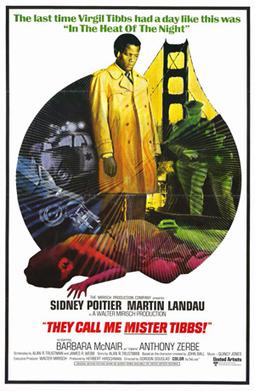
  13. They Call Me Mister Tibbs
 

18 Days of Paranoia #13: They Call Me Mister Tibbs! (dir by Gordon Douglas)


The 1970 police procedural, They Call Me Mister Tibbs!, opens with a murder in San Francisco.

A prostitute has been found dead in a sleazy apartment building and, according to witnesses, she was visited, shortly before her death, by the Reverend Logan Sharpe (Martin Landau).  Rev. Sharpe is a prominent civic leader, an outspoken liberal who is a friend of the civil rights movement.  Sharpe is currently at the forefront of a campaign to pass a city referendum that will add a “mini city hall” to every neighborhood and will help to fight against the gentrification of San Francisco.  If Sharpe’s guilty, it will mean the death of the referendum.

Despite the fact that there’s a ton of evidence piling up against him and he kind of comes across as being a little bit creepy (he is, after all, played by Martin Landau), Rev. Sharpe insists that he’s innocent.  Yes, he’s been visiting prostitutes but he’s not a client.  No, of course not!  Instead, Sharpe explains that he’s simply counseling them and praying for their souls.  In fact, as far as Sharpe is concerned, this whole thing is just an attempt by the establishment to discredit his efforts to help the poor and underprivileged.

Heading up the investigation is a friend and supporter of Sharpe’s, Detective Virgil Tibbs (Sidney Poitier).  That may seem like a good thing for Sharpe, except for the fact that Tibbs is an honest cop and he’s not the type to let friendship stand in the way of doing a thorough investigation.  Tibbs admits that he supports Sharpe’s campaign and he wants the reverend to be innocent.  But Tibbs is all about justice.  Whether it’s teaching his son an important lesson about smoking or tracking down a potential serial killer, Virgil Tibbs is always going to do the right thing.

There are other suspects, all of whom are played by suitably sinister character actors.  Anthony Zerbe plays a criminal who lived near the prostitute.  Ed Asner plays her landlord, who may have also been her pimp.  Is Sharpe being set up by the powers that be or is Tibbs going to have to arrest a man whom he admires?

They Call Me Mister Tibbs! was the second film in which Sidney Poitier played Virgil Tibbs.  The first time he played the role was in 1967, when he co-starred with Rod Steiger in the Oscar-winning In The Heat of the Night.  In that film, Poitier was a Philadelphia cop in the deep south who had to work with a redneck sheriff.  In They Call Me Mister Tibbs!, Virgil is now working in San Francisco and he has to work the case on his own.

They Call Me Mister Tibbs! is a far more conventional film than In The Heat of the Night.  Whereas In The Heat of the Night had a wonderful sense of place and atmosphere, They Call Me Mister Tibbs! could just as easily have taken place in Los Angeles, Phoenix, or even Philadelphia.  With the exception of some slight profanity, They Call Me Mister Tibbs! feels more like a pilot for a TV show than an actual feature film.  Perhaps the biggest problem with the film is that there’s no real surprises to be found within the film.  You’ll guess who the murderer is within the first 10 minutes of the film and you’ll probably even guess how the movie will eventually end.

On the plus side, just as he did in In The Heat of the Night, Sidney Poitier brings a lot of natural authority to the role of Virgil Tibbs.  He’s actually allowed to show a sense of humor in this film, which is something that the character (understandably) couldn’t do while he was surrounded by bigots and rednecks during his previous adventure.  Virgil gets a few family scenes, where we watch him interact with his wife and his children.  The scenes feel out of place but, at the same time, Poitier plays them well.

With Sharpe attempting to get his referendum passed and the possibility that riots could break out if Sharpe is indeed guilty of murder, there’s a slight political subtext to They Call Me Mister Tibbs!  Sharpe’s argument that he was being set up by the establishment undoubtedly carried a lot of weight in 1970.  Still, this is ultimately a shallow (if adequately entertaining) film that, for the most part, is only made memorable by Poitier’s commanding performance.

Other Entries In The 18 Days Of Paranoia:

  1. The Flight That Disappeared
  2. The Humanity Bureau
  3. The Private Files of J. Edgar Hoover
  4. The Falcon and the Snowman
  5. New World Order
  6. Scandal Sheet
  7. Cuban Rebel Girls
  8. The French Connection II
  9. Blunt: The Fourth Man 
  10. The Quiller Memorandum
  11. Betrayed
  12. Best Seller

18 Days of Paranoia #12: Best Seller (dir by John Flynn)


The 1987 film, Best Seller, tells the story of two men, both equally capable of violence but with two very different moral codes.

Dennis Meechum (Brian Dennehy) is a cop who also writes true crime.  In the early 70s, he was the one of several cops who were attacked by a group of gunmen who were all wearing Richard Nixon masks.  Though he was shot, Meechum survived and he even managed to stab one his assailants.  15 years later, Meechum is still haunted by the incident.  Meechum is a brawler who doesn’t have much time for nonsense but he also has a strong moral code (or so he thinks).

Cleve (James Woods) talks fast and always seems like he’s a little bit nervous.  He has a quick smile and a joke for almost every occasion.  He’s also a professional assassin, a sociopath who is very interested in Dennis.  Cleve has spent the majority of his life working for a powerful businessman named David Madlock (Paul Shenar) but he’s recently been laid off.  Cleve wants revenge and he thinks that Dennis can help him get it.

Together …. THEY FIGHT CRIME!

Well, actually, they kind of do.  Madlock’s done a lot of illegal stuff and Cleve and Dennis are exposing him, his crooked corporation, and all of his powerful connections.  However, what Cleve really wants is for Dennis to write a best seller about his life.  Cleve wants Dennis to write his story and most importantly, he wants Dennis to make him the hero.  Dennis is still a cop and says that once all this is over, he’s going to have to arrest Cleve.  Of course, eventually, he discovers that Cleve was the man who shot him 15 years earlier.  At that point, Dennis says that he’s going to have to kill Cleve once all of this is over.

As a crime thriller, Best Seller hits all of the expected beats.  As soon as we find out that Dennis is a widower and that he has a teenage daughter, we know that she’s eventually going to be taken prisoner by the bad guys.  For that matter, we can also guess that there will be a few scenes where Cleve insists that Dennis is just like him.  When Cleve starts telling people that Dennis is his brother, it’s a fun scene because it’s well-acted by both Woods and Dennehy but it’s not exactly surprising.

But no matter!  Though the the overall plot may be predictable, there’s enough clever little twists and details that the film holds your interest.  For instance, there’s an extended sequence where Dennis insists that Cleve introduce him to his family.  For the next few minutes, the film stops being an action thriller and instead becomes a bit of a domestic comedy as Dennis meets Cleve’s friendly family, none of whom are aware that Cleve is a ruthless killer.  The stuff with Cleve’s family doesn’t move the plot forward but your happy it’s there because 1) James Woods gives a great performance in those scenes and 2) it suggests that the film (which was written by Larry Cohen and directed by John Flynn, who was previously responsible for the brilliant Rolling Thunder) has more on its mind than just shooting people.

The main reason why Best Seller works so well is because the two leads are perfectly cast.  Brian Dennehy was born to play tough cops while James Woods gives one of his best performances as the unstable but likable Cleve.  I’ve actually had people get made at me for saying that James Woods is a good actor, simply because they disagree with his politics.  But, when it comes to art and talent, I don’t care about anyone’s politics.  (I mean, if I only watched movies starring people whose politics where approved by Film Twitter, I would end up spending the entire pandemic watching romantic comedies starring Alec Baldwin and Rosie O’Donnell and why should I suffer like that?)  James Woods is a good actor and he’s great in Best Seller.

Other Entries In The 18 Days Of Paranoia:

  1. The Flight That Disappeared
  2. The Humanity Bureau
  3. The Private Files of J. Edgar Hoover
  4. The Falcon and the Snowman
  5. New World Order
  6. Scandal Sheet
  7. Cuban Rebel Girls
  8. The French Connection II
  9. Blunt: The Fourth Man 
  10. The Quiller Memorandum
  11. Betrayed

6 Shots From 6 Films: RIP, Stuart Gordon


6 Shots From 6 Films is just what it says it is, 6 shots from 6 of our favorite films. As opposed to the reviews and recaps that we usually post, 6 Shots From 6 Films lets the visuals do the talking!

Rest in peace, Stuart Gordon.

6 Shots From 6 Films

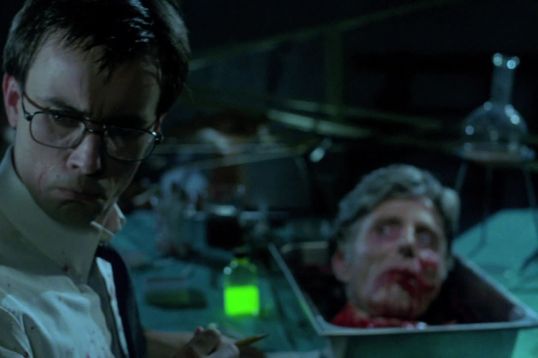
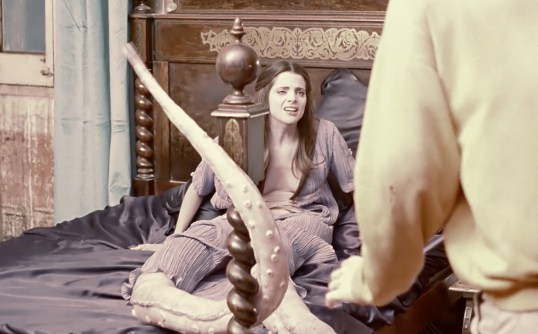
Re-Animator (1985, dir by Stuart Gordon)

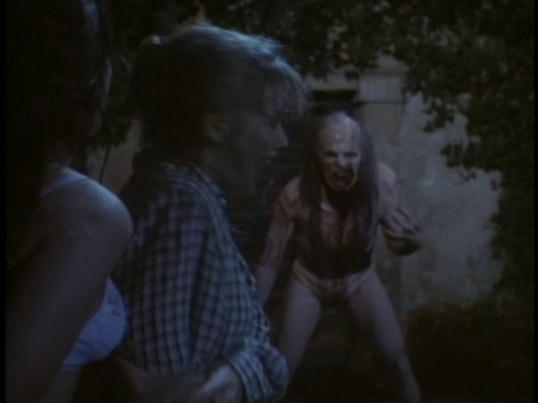
Castle Freak (1995, dir by Stuart Gordon)

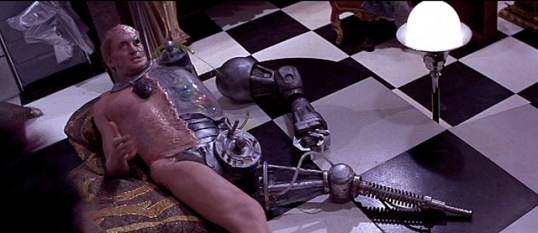
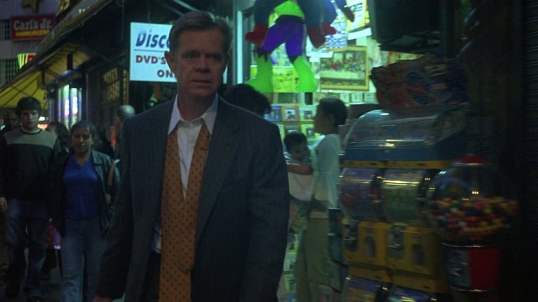
Space Truckers (1996, dir by Stuart Gordon)

Dagon (2001, dir by Stuart Gordon)

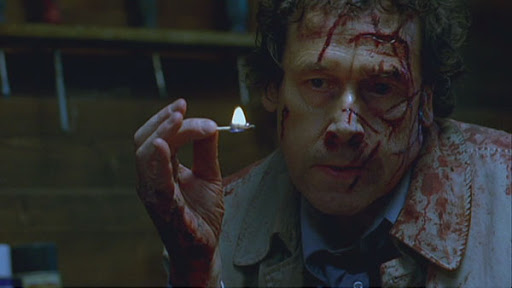
Edmond (2005, dir by Stuart Gordon)

Stuck (2007, dir by Stuart Gordon)

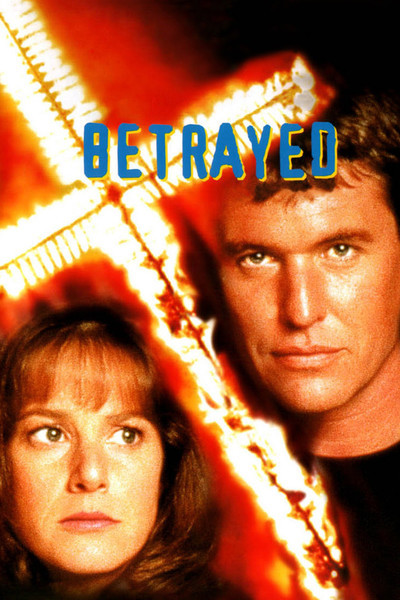
18 Days of Paranoia #11: Betrayed (dir by Costa-Gavras)


The 1988 film, Betrayed, starts out on a strong note but then quickly becomes annoying as Hell.

It opens with shots of a radio talk show host, an outspoken liberal named Sam Kraus (Richard Libertini).  Kraus berates his callers.  Kraus ridicules anyone who is to the left of Bernie Sanders.  When a man with a rural-accent calls in and attacks Karus for being Jewish, Kraus calls the man an idiot.  After he gets off the air, Kraus walks through a parking garage and stops in front of his car.  Another car pulls up beside Kraus and suddenly, a masked man with a gun opens fire on Kraus, killing him.  The gunman gets out of the car and spray paints, “ZOG” on Kraus’s car before then fleeing the garage.

(ZOG stands for Zionist Occupational Government.  It’s a term used by the type of anti-Semitic dipshits who thinks that the Protocols of Elder Zion are real.)

From this shockingly brutal opening, we cut to panoramic shots of beautiful farmland and crops being harvested in the American midwest, the heartland.  Gary Simmons (Tom Berenger) owns a farm.  He’s a Vietnam vet who nearly received the medal of honor.  He lives with his mother and he has two children.  (He’s divorced and his ex-wife died as the result of a mysterious hit-and-run in California.)  Almost everyone in his small hometown seems to worship Gary.  They’re certainly curious about his new girlfriend, Katie Phillips (Debra Winger).

And really, they probably should be.  Katie Phillips isn’t Katie Phillips at all.  She’s actually an FBI agent named Cathy Weaver and she’s been sent undercover to investigate whether or not Gary was involved in the murder of Kraus.  Cathy, who comes from a broken family and who we’re told has always been seeking some sort of deeper meaning in her life, is charmed by both Gary and his family.  In fact, she falls in love with Gary.  She tells her superior, Mike Carnes (John Heard), that there’s no way Gary is dangerous.  Mike doesn’t believe her but, of course, Mike has a personal stake in this because he and Cathy used to be romantically involved.

(That’s right, everyone.  Betrayed is so narratively lazy that it resorts to making Mike a scorned lover, even though the film’s plot would have worked just as well if he wasn’t.)

As I said, the first part of the movie works.  Debra Wingers gives a strong performance and Tom Berenger is a charming roughneck.  For the first half-hour or so, the film does a good job of showing why men like Gary and his friends are susceptible to conspiracy theories and why they feel that the entire world is stacked against them.  You can understand why Cathy is so troubled by her assignment because Gary’s friends are hardly master criminals.  For the most part, they’re farmers who feel like their entire way of life has been taken away from them.

Unfortunately, almost immediately after Mike refuses to allow her to end her investigation, Cathy returns to the farm and sleeps with Gary.  Not only is this a plot development a disservice to everything that has previously been established about Cathy as a character but it also marks the point where the movie entirely falls apart.  Immediately after sleeping with Cathy, Gary suddenly goes from being a complex but troubled character to being a cartoonish super villain.  And listen — we’ve all been there.  You meet a guy.  He’s handsome.  He says all the right things.  He seems like he’s sensitive.  He makes you feel safe.  You let down your defenses for one night and the next morning, he’s yelling at you for wearing a short skirt in public.  It happens.  Of course, in Gary’s case, it means that he’s not only criticizing the way that Cathy dresses but he’s also taking her on a hunt where the prey is terrified person of color who Gary and his friends have kidnapped.  It also means that Gary drags Cathy along on a bank robbery and then expects her to join him when he wants to assassinate a presidential candidate.  Even after all that, Cathy remains conflicted about what to do with Gary.  The problem is that it’s not like Gary’s a guy who needs sensitivity training or who spends too much time watching ESPN.  Gary is a guy who is carting around weapons and talking about how he wants to kill “mud people.”  That Cathy still has mixed emotions after all of that goes against everything that the film previously asked us to believe about her.  Gary becomes too cartoonish to be plausible and, as a result, he drags down Cathy’s character as well.

Unfortunately, as the film’s narrative falls apart, so do the majority of the performances.  While Debra Winger struggles to make her character’s motivations plausible, Tom Berenger is reduced to doing a lot of glaring.  (Poor John Heard spends most of the movie shouting and bugging his eyes.)  About the only actor who comes out Betrayed unscathed is John Mahoney, who plays Shorty.  Shorty is one of Gary’s friends.  He’s a friendly and personable guy who seems to sincerely care about everyone and who has a charmingly gentle smile.  He’s also a total racist and the contrast between Shorty’s amiable nature and his hateful thoughts provide the latter half of Betrayed with its only powerful moments.  Mahoney gets one big scene, where he talks to Cathy about how much he hates violence but, at the same time, he feels that the world has left him no other choice.  Mahoney does a great job with his small role.  It’s unfortunate that the rest of Betrayed couldn’t live up to his performance.

Other Entries In The 18 Days Of Paranoia:

  1. The Flight That Disappeared
  2. The Humanity Bureau
  3. The Private Files of J. Edgar Hoover
  4. The Falcon and the Snowman
  5. New World Order
  6. Scandal Sheet
  7. Cuban Rebel Girls
  8. The French Connection II
  9. Blunt: The Fourth Man 
  10. The Quiller Memorandum

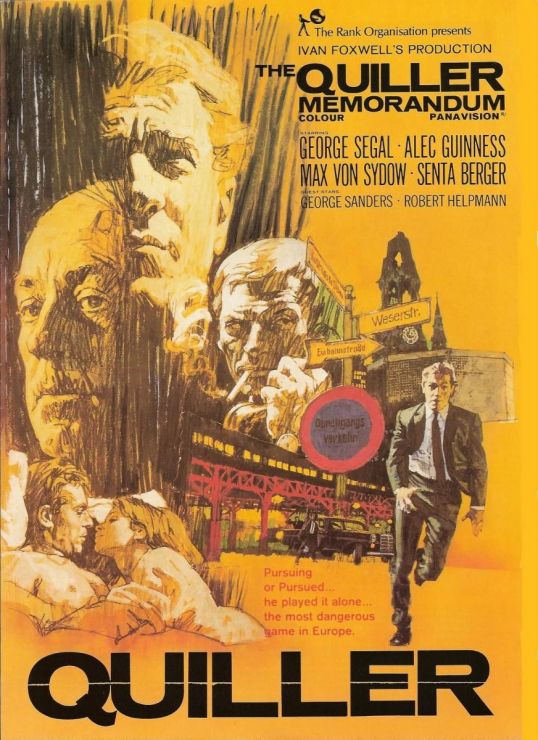
18 Days of Paranoia #10: The Quiller Memorandum (dir by Michael Anderson)


The 1966 film, The Quiller Memorandum, is a diabolically clever little spy thriller.

The film opens with a British secret agent getting gunned down while trying to make a call from a phone booth in Berlin.  While we never learn the exact name of the agency that the man was working for, we do discover that they don’t take kindly to their agents getting gunned down in phone booths.  They send in another agent, an American named Quiller (George Segal), to take his place.

In Berlin, Quiller’s boss is a man named Pol (Alec Guinness).  Pol explains that the man in the phone booth was actually the second of his agents to be assassinated in Berlin.  All of the agents were looking for information about a Neo-Nazi group called Phoenix.  Pol tells Quiller that it is vitally important they discover just where, in Berlin, Phoenix is headquartered.  Quiller is given a few items that were found on the dead man in the phone booth: a bowling alley ticket, a swimming pool ticket, and a newspaper article about a school where it was discovered that one of the teachers had Nazi sympathies.

Though The Quiller Memorandum was undoubtedly produced with the hopes of capitalizing on the popularity of the Bond films, Quiller is no James Bond.  We know that as soon as we see him.  It’s not just that Quiller’s an American while Bond was British.  It’s also that James Bond was played by the cool and calculating Sean Connery while Quiller is played by George Segal.  Whereas Connery’s Bond never loses his confidence, Segal’s Quiller comes across as being, at first, a bit cocky and, as a result, we worry about him.  Whereas Connery’s Bond rarely gave his actions a second thought, Segal brings a slightly neurotic edge to Quiller.  You take one look at Connery’s Bond and you know that he’s going to survive no matter what.  Quiller, however, you never get that feeling.  When he’s in danger, you worry about him because it’s easy to imagine him turning up like the man in the phone booth.

And, indeed, it doesn’t take long for Quiller to get captured by the members of Phoenix.  A man bumps him with a suitcase, injecting a drug into his system that makes Quiller become drowsy.  When Quiller awakens, he’s being interrogated by an erudite man named Oktober (Max von Sydow).  Oktober’s an aristocrat.  He speaks in a very calm tone, rarely showing any hint of anger.  The only thing that betrays his evil nature are his eyes, which are cold and soulless.

Even though Quiller survives the interrogation, it’s tempting to give up on him.  After all, Quiller got captured so easily and Oktober seems so clever that you kind of find yourself wondering if maybe the agency made a mistake when they gave this mission to Quiller.  That’s where The Quiller Memorandum surprises you, though.  Quiller turns out to be a lot more clever and resourceful than anyone gave him credit for being and, for that matter, the film itself turn out to have a few more twists and turns in store for the viewer.

It’s a clever and enjoyable spy film, featuring wonderful performances from Segal, Guinness, von Sydow, and Senta Berger as the teacher who may be in love with Quiller or who may have an agenda of her own.  The film may be a spy thriller but Michael Anderson directs it as if its a film noir, full of shadowy streets and morally ambiguous characters.  The script, by Harold Pinter, encourages us to trust no one and Anderson’s direction reminds us that we made the right decision.  On the dark streets of Cold War Berlin, no one is who they seem.

The Quiller Memorandum is a must-see for fans of 60 spy films.  Watch it with someone who you think you can trust.

Other Entries In The 18 Days Of Paranoia:

  1. The Flight That Disappeared
  2. The Humanity Bureau
  3. The Private Files of J. Edgar Hoover
  4. The Falcon and the Snowman
  5. New World Order
  6. Scandal Sheet
  7. Cuban Rebel Girls
  8. The French Connection II
  9. Blunt: The Fourth Man 

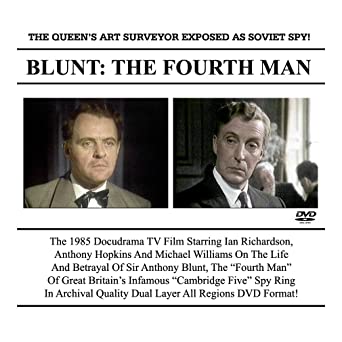
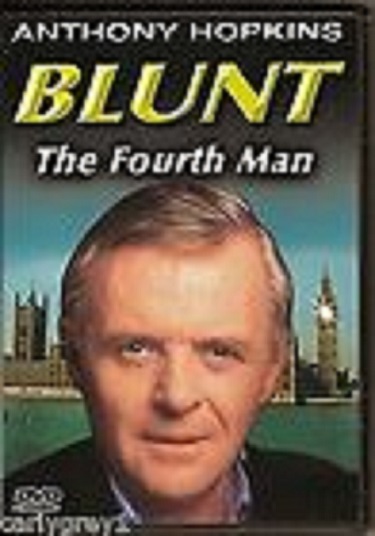
18 Days of Paranoia #9: Blunt, The Fourth Man (dir by John Glenister)


Based on a true story and taking place in 1951, the 1985 film, Blunt: The Fourth Man, tells the story of Anthony Blunt (played by Ian Richardson).

A graduate of Cambridge, Anthony Blunt appears to be a proud member of the British establishment.  He’s upper class with impeccable manners.  He’s the King’s art surveyor, which he says makes him literally a member of the Royal Family.  He belongs to all the right clubs and he expresses all of the right opinions and he has all of the right friends.

However, Anthony Blunt leads a secret life.  First off, he’s gay at a time when that was still illegal in the United Kingdom.  Unlike his flamboyant lover, Guy Burgess (Anthony Hopkins), Blunt is discreet and always keeping an eye out for the vice cops.  Blunt is also a socialist and has been one since his days at Cambridge.  However, he’s not just a socialist.  He’s also spying for the Russians.  It’s not that Anthony thinks much of Russia as much as it’s just that he thinks even less of the U.S. and the U.K.  He feels that the U.S. is pushing the world towards nuclear war.  When his driver says that the UK needs a Joe McCarthy of their own, Blunt can barely hide his distaste.

Even though it was Guy who originally recruited Anthony to spy for the Russians, Anthony now appears to be in charge of the so-called Cambridge Spy Ring.  He’s the one who regularly meets with the group’s Russian contact and he’s also the one who is put in charge of arranging for one of the spies to flee the UK.  The Russians don’t seem to have much faith in Guy Burgess, largely because Guy is an alcoholic and a drug addict.  (Upon returning to London from America, Guy declares that he’s no longer drinks whiskey and that he’s given up Benzedrine.  He then proceeds to get very drunk.)  In fact, the only person who seems to really care about Guy is Anthony but how much does Guy actually care about Anthony?

Almost everyone in Blunt, the Fourth Man is either a spy or a former spy.  And yet, we really don’t see anyone doing much spying.  Guy has a closet that’s full of undeveloped film, official files, and a picture of Lenin and that’s about it.  Throughout the film, Guy brags about how powerful he and his fellow spies are but we’re left to wonder whether Guy’s telling the truth or if he’s just drunk.  For his part, Anthony is more concerned with getting caught and losing his place in society.  He knows that one member of the group is on the verge of getting unmasked and has made arrangements for him to escape to Russia while visiting France.  The problem is that the plan involves Guy and Anthony is not sure if he can trust Guy to play his part.  If Guy’s willing to betray his country, why not his friends and lover?

For the most part, the entire film is Anthony and Guy having cryptic discussion with themselves and with others.  There’s a threatening subtext to almost every conversation in this film.  There’s also a pervasive atmosphere of regret.  Anthony, Guy, and their friends are no longer the idealists that they were back in Cambridge.  They’re now middle-aged men who know that they’ve devoted their lives to a lost cause.  Each deals with it in their own way.  Guy drinks.  Anthony insists that his spying has less to do with betraying a country and more with staying loyal to his friends.  What’s perhaps most interesting is that almost all of these upper class socialists are most worried about losing their place in society.

This is a very talky film.  Fortunately, it stars two great talkers, Ian Richardson and Anthony Hopkins.  The two of them play off each other very well and create two fascinating, if not necessarily likable, characters.  Admittedly, there are a few scenes where Hopkins comes dangerous close to going a bit overboard with Guy’s drunken ramblings but Ian Richardson’s performance is close to perfect.  Somehow, he makes Anthony both smug and vulnerable at the same time.

Obviously, this isn’t a film for everyone.  It requires a bit of patience.  But, for history nerds like me, it’s an interesting historical document, a recreation of one of biggest spy scandals of the previous century.

Other Entries In The 18 Days Of Paranoia:

  1. The Flight That Disappeared
  2. The Humanity Bureau
  3. The Private Files of J. Edgar Hoover
  4. The Falcon and the Snowman
  5. New World Order
  6. Scandal Sheet
  7. Cuban Rebel Girls
  8. The French Connection II


18 Days of Paranoia #8: The French Connection II (dir by John Frankenheimer)


The 1975 film, The French Connection II, opens up three years after the downbeat conclusion of the first French Connection.

Having escaped from the police at the end of the first film, the wealthy and suave Alain Charnier (Fernando Rey) is still smuggling drugs and living his best life.  He goes to parties with wealthy people.  He has lunch dates with important businessman.  Even though the French police are keeping an eye on him, Charnier seems to be virtually untouchable and he knows it.  If Charnier seemed impossibly smug in the first French Connection, he’s even worse in the second one.

Charnier may be enjoying himself in Marseille but what he doesn’t know is that there’s an American tourist in town.  He’s a very loud American, one who insists on trying to speak to everyone in English and is shocked to discover that most of the French natives don’t have the slightest clue as to what he’s talking about.  He’s shocked when he goes into a bar and fails to impress two young French women.  He also doesn’t seem to understand that even French people who speak English are not going to appreciate being called a “frogs.”  He wanders around town in loud shirts and with a fedora sitting rakishly on his balding head.

Yep, it’s Popeye Doyle (Gene Hackman).  The anti-hero from the first French Connection is still on the case and he’s now come all the way to France to help track down Charnier.  The last time we saw Doyle, he had just accidentally killed a cop and was running through a dark warehouse, firing his gun.  In fact, the first film ended with the suggestion that Doyle was such a loose cannon that his career as a narcotics detective was probably over.  Instead, in the sequel, we learn that Popeye is still working in narcotics and he’s still just as much of a loose cannon as he ever was.  If you thought people in New York found Popeye to be obnoxious, just you wait to see how the French react to him!

What Popeye doesn’t know is that his superiors in New York have only sent him to Marsielle so that he can be a target.  They know that Popeye will never be able to blend in.  Charnier will spot him and, hopefully, Charnier will panic and make some sort of mistake that will finally allow the police to capture him.  French detective Henri (Bernard Fresson) goes along with the plan, despite his own moral objections.  Henri can’t stand Popeye but he doesn’t want to see him killed either.

It doesn’t take long for Charnier to notice Popeye.  After Popeye is captured by Charnier’s man, they inject him with heroin until soon, Popeye is an addict.  Before Popeye can finally get his shot at Charnier, he’s going to have to overcome his own drug addiction….

The French Connection II starts out well, with Gene Hackman wandering around Marsielle and acting like a stereotypical ugly American.  Director John Frankenheimer does a good job of keeping the action moving at a steady pace during the first half of the film and there’s a lot of great scenes involving Popeye being followed around town by not just the police but also Charnier’s men.  The first half of the film does a great job of establishing an atmosphere of paranoia, which is not surprising when you consider that Frankenheimer’s other credits included The Manchurian Candidate, Seven Days In May, and Seconds.

Unfortunately, once Popeye is captured and gets hooked on heroin, the action not only comes to a halt but the normally reliable Gene Hackman starts to act up a storm.  When Popeye, while going through withdrawal, starts talking about how he used to play baseball and how he once has a try-out with the New York Yankees, the scene seems to go on forever and Hackman’s performance becomes so histrionic that you basically just end up feeling like you’re watching someone auditioning his heart out for a spot in the Actor’s Studio.  Gene Hackman was one of the world’s great actors and Popeye Doyle was a great role but, in The French Connection II, we’re reminded that even a great actor occasionally needs to have his performance reined in.

Eventually, after Hackman’s had his big Oscar moment, the action kicks back in and the film kind of regains its momentum.  There’s a big action scene towards the end of the film.  (Ironically, it’s the type of big, good guys vs. bad guys shoot out that the first film deliberately avoided.)  The film ends with a literal bang that’s abrupt yet undeniably effective.

As far as sequels go, The French Connection II is good.  It’s not great and, not surprisingly, it doesn’t come anywhere close to matching the power of the first film.  But it still has enough effective scenes to make it worth watching.  You just might want to hit fast forward whenever Popeye starts talking about baseball…..

Other Entries In The 18 Days Of Paranoia:

  1. The Flight That Disappeared
  2. The Humanity Bureau
  3. The Private Files of J. Edgar Hoover
  4. The Falcon and the Snowman
  5. New World Order
  6. Scandal Sheet
  7. Cuban Rebel Girls

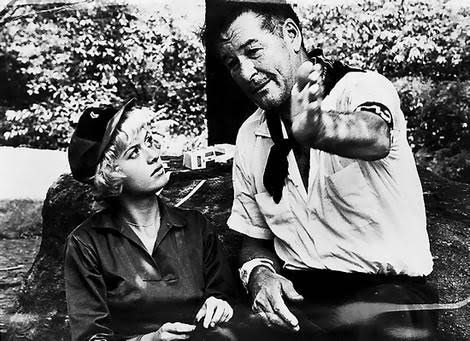
18 Days of Paranoia #7: Cuban Rebel Girls (dir by Barry Mahon)


In the 1959 film, Cuban Rebel Girls, Errol Flynn (playing himself) flies down to Cuba.  The time is shortly before the Cuban Revolution.  (From a cinematic point of view, Flynn is in Havana at the same time as Hyman Roth and Michael and Fredo Corleone in The Godfather, Part II.)  Flynn has been hired by the Hearst newspaper syndicate to go down to Cuba and do a report on Fidel Castro.  Flynn narrates the film and tells us that he was very sympathetic to Castro and his cause….

OH MY GOD, ERROL FLYNN WAS A COMMUNIST!

Well, maybe not.  If you actually go back and read contemporary reports about the Cuban Revolution, you’ll see that a lot of Americans had a romanticized view of Fidel Castro and his revolutionaries.  Everyone seemed to agree that the president of Cuba, Batista, was a dictator and he needed to be forced out of power.  Castro, himself, didn’t fully and openly declare himself to be a hardline communist until after he had already taken over Cuba.  In Cuban Rebel Girls, someone mentions that Fidel was “always looking out for the little guy” and that’s the attitude that this film takes.  At the time the film was made, it can legitimately be said that Flynn had no way of knowing that Fidel Castro would eventually reveal himself to be despotic dictator.  (For more infuriating, to me, are the people who have continued to defend the Castros up until this day.)

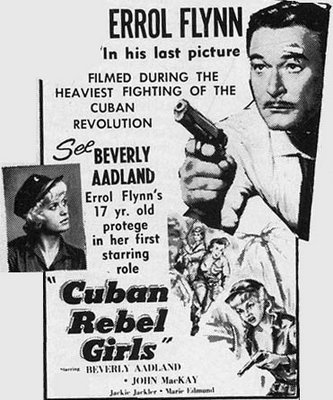
Fidel Castro, himself, doesn’t actually appear until the very end of Cuban Rebel Girls and, even then, it’s just newsreel footage of him riding a tank through Havana.  (Che Guevara does not show up at all.  He may have been busy shopping for berets, I don’t know.)  That said, the film was actually shot in Cuba and it does feature footage of Errol Flynn meeting actual Cuban rebels.  This was also Errol Flynn’s last film and, for the most part, he looks terrible.  Though the film’s poster may feature a suave-looking Errol Flynn holding a gun, the film actually features a noticeably overweight and often out-of-breath Errol Flynn who really doesn’t do much other than sit around and listen to other people talk.

(That said, Flynn’s voice over narration does have the occasional moment of charm.  When he meets one of the rebel girls of the title and he kisses her hand, he jokes that he was relieved to see that he hadn’t totally lost “the Flynn touch.”  Flynn delivers the line with just enough self-depreciation that it’s charming rather than creepy.)

The majority of the film doesn’t actually involve Flynn.  Instead, it involves two girls from New York — Beverly (Beverly Aadland) and Jacqueline Dominguez (Jackie Jackler) — who want to help out the revolution.  Jacqueline is from Cuba, went to high school with Fidel, and her brother is currently a part of the revolution.  Beverly, meanwhile, is convinced that she’ll find the man that she loves in jungles of Cuba.  Beverly explains that she doesn’t know much about Castro or Batista.  That’s for others to worry about!  Jacqueline assures her that, even in high school, “the big jerk” was always looking out for people.

Anyway, Beverly and Jacqueline raise some money from their friends and then decide to smuggle it into Cuba so that the guerrillas can use it to buy weapons.  What follows is a lot of intrigue and sneaking around as Beverly and Jackie try to avoid Batista’s secret police and help out the guerrillas.  And, of course, when I say “a lot,” what I actually mean is “next to none.”  For two people who don’t really come across as being particularly smart, Jacqueline and Beverly certainly don’t have much trouble sneaking around Cuba.

(That said, there are enough references to Batista’s secret police to justify reviewing the film as a part of the 18 Days of Paranoia.  Take my word for it.  Or watch the movie on YouTube, where it’s available under the name Assault of the Rebel Girls.)

Anyway, this is a weird movie, along with also being a really cheap movie.  Beverly Aadland was apparently Errol Flynn’s protegee.  She also wasn’t a very good actress.  (Jackie Jackler does a little bit better in the acting department, though not by much.)  That said, as a film partially shot in Cuba during the days leading up to the revolution, this is an interesting historical document.  And, for some people, just the fact that it’s a pro-Castro film from Errol Flynn (!) will be enough to justify sitting through it.

(Seriously, a celebrity defending a communist?  That’s like a major news outlet or a bunch of basketball players going out of their way to defend the Chinese government.  It just doesn’t make sense….)

Other Entries In The 18 Days Of Paranoia:

  1. The Flight That Disappeared
  2. The Humanity Bureau
  3. The Private Files of J. Edgar Hoover
  4. The Falcon and the Snowman
  5. New World Order
  6. Scandal Sheet

What Lisa Watched Last Night #209: Revenge For Daddy (dir by Tom Shell)


Last night, I watched the latest Lifetime premiere, Revenge for Daddy!

Why Was I Watching It?

Well, first off, you may not have heard but the entire world is kind of shut down right now so basically, watching TV is about as wild as my Thursday night is going to get….

Then again, I would have watched it even if we weren’t on lockdown.  It’s a new Lifetime movie and you know that I love those!  I especially love Lifetime movies that have words like “Fatal,” “Wrong,” or “Revenge” in the title.  Those are usually the best.

What Was It About?

It’s been a tough year for Lisa (Sarah Butler).  Her father died under mysterious circumstances.  Her boyfriend, Bobby (Charlie Gorilla), got drunk and slept with one her co-workers, Bethany (Eva Hamilton), leaving Lisa suddenly single.  Her mother (Joely Fisher) keeps pressuring her to start dating again.  Finally, just to keep her mom happy, Lisa photoshops herself into a picture with a handsome man on a dating site.  All she wants to do is send it to her mom so her mom will get off her back.  Instead, it leads to the man in the picture, Michael (Clayton James), tracking her down.  Soon, Lisa and Michael are dating for real!

But can Michael be trusted?  It turns out that Michael has a somewhat shady past which includes at least one mysterious death.  Michael says he’s innocent but when one of Lisa’s co-workers shows up dead (and, even worse, when it appears that someone is trying to frame Lisa for the murder), Lisa starts to have her doubts….

What Worked?

This one was fun.  I mean, let’s be honest.  When it comes to most Lifetime melodramas, you’re not exactly looking for a realistic examination of all the world’s troubles.  You’re looking for twists and turns and melodrama, preferably taking place in a nice house where everyone is either handsome or pretty and everyone wears nice clothes.  Revenge For Daddy delivered all of that with the style.

The cast was uniformly good and the film actually did a pretty good job of keeping you guessing as to whether or not Michael was who he said he was.  The film even managed to work in a few moments of intentional humor in the middle of all the drama and the mystery.  All in all, this was one an enjoyable and entertaining Lifetime film.

I really liked the office where Lisa and her friends worked.  It was nicely designed and, even more importantly, it didn’t seem like anyone really had to do much work.  It seems like it would be a fun place from which to collect a paycheck.

What Didn’t Work?

It all worked!  To repeat, this was an enjoyable and entertaining Lifetime film.

“Oh my God!  Just like me!” Moments

The main character was named Lisa!  You don’t get much more like me than that.

Lessons Learned

There were definitely lessons learned but I can’t really share them without spoiling the film’s ending.  So, you’ll have to watch and learn for yourself!