Film Review: Convoy (dir by Sam Peckinpah)


Well, it looks like we’ve got ourselves a Convoy!

The 1978 film Convoy opens with the image of a truck passing by some hills that have been covered with snow.  At a certain point, it actually looks like the truck is descending into a sea of white powder.  It’s an appropriate image because, to film lovers and cinematic historians, Convoy will always be associated with cocaine.

Convoy was meant to be a relatively small-scale B-movie, one that was meant to capitalize on the popularity of a novelty song, as well as the recent success of other car chase films.  Instead, it became a notoriously troubled production that went famously overbudget and overschedule as director Sam Peckinpah turned Convoy into a personal statement about modern cowboys and independence.  When the film was finally released, it was the biggest box office hit of Peckinpah’s storied career.  However, because so much money had been spent making the film, it still failed to make a profit and the film is regularly described as being one of the many flops of the late 70s that eventually led to the power in the film industry shifting away from the directors and over to the studio executives.  Many in Hollywood grumbled that it was Peckinpah’s well-known cocaine use that led to him having such trouble with what should have been a simple B-movie.  That’s probably a bit unfair to Peckinpah as it’s been written that just about everyone in Hollywood was using cocaine in 1978.

Add to that …. Convoy‘s not that bad.

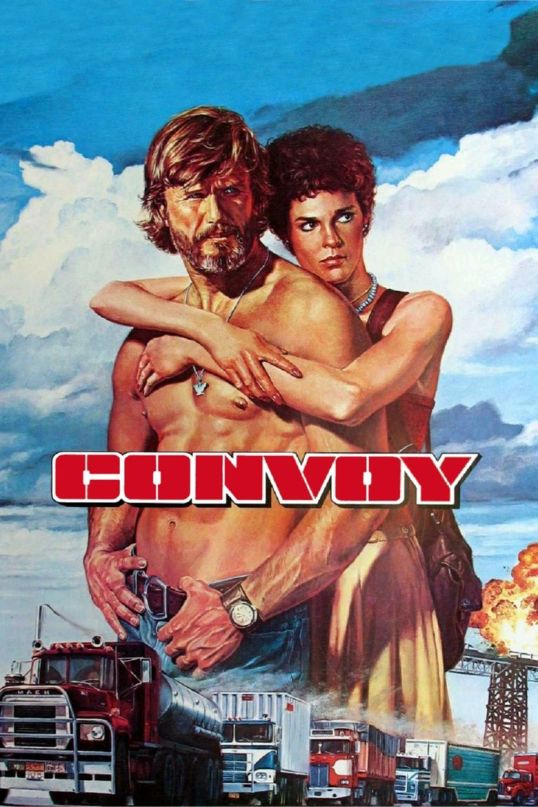
Convoy tells the story of Rubber Duck (Kris Kristofferson), a legendary trucker who has never joined the Teamsters.  He’s an independent.  Rubber Duck’s nemesis is Sheriff Dirty Lyle (Ernest Borgnine), who is also an independent.  He’s never joined the policeman’s union.  As Rubber Duck puts it, “There’s not many like us anymore.”

Anyway, for reasons that are only vaguely defined, Rubber Duck leads a convoy of trucks across the southwest while being pursued by the police.  It has something to do with protesting the law enforcement tactics of Dirty Lyle, despite the fact that Rubber Duck appears to kind of like Lyle.  Soon hundreds of other independent truckers are joining Rubber Duck’s convoy, all to protest law enforcement.  Among those in the convoy are Pig Pen (Burt Young), Widow Woman (Madge Sinclair), and Spider Mike (Franklyn Ajaye), who just wants to get home to his pregnant wife.  Traveling with Rubber Duck is Melissa (Ali MacGraw), who is supposed to be some sort of photojournalist.  Rubber Duck and Melissa fall in love but there’s only so much you can do with a love story when it centers around two of the least expressive stars of the 70s.  During the chase, Rubber Duck picks up some non-truckers supporters, including some religious fanatics in a microbus.  He and the truckers also drive through and destroy a lot of buildings, which kind of makes it look like the cops might have had a point.

What sets Convoy apart from other chase films of the 70s is just how seriously it takes itself.  There’s an undercurrent of melancholy that runs through the entire film.  Rubber Duck seems to know that America is changing and as people become more comfortable with the idea of sacrificing their freedoms, his days as an independent trucker are numbered.  Dirty Lyle also seems to be stuck in a permanent existential crisis, taking no joy in being a crook but still forced to do so by being a part of an inherently corrupt government system.  There’s a scene where a truckstop waitress offers herself up as a gift to Rubber Duck on his birthday and Peckinpah films it as if he’s making an Italian neorealist drama about Rome after the war.  When Spider Mike says that he has to get home to his wife, he says it with the pain of a man who knows that the system only cares about control and not happiness.  These aren’t just truckers.  These are men and women who are on the front lines battling a creeping culture of oppression.

Surprisingly enough, the film’s serious tone actually works to its advantage.  You may not fully understand why Rubber Duck is leading that convoy but you hope that it succeeds because you get the feeling that the world might end if it doesn’t.  When the film ends with Ernest Borgnine laughing like a maniac, it comes across less like a moment of amusement and more like an acknowledgment that the universe is a tragic farce.  Life is a riddle wrapped inside an engima and only Rubber Duck and Dirty Lyle seem to understand that fact.

Add to that, this is a film about independents refusing to allow themselves to be limited by the regulatory state.  In its way, it’s one of the most sincerely Libertarian films ever made and, with all of us currently living under “lockdowns” and hoping that our governors don’t join those who have already surrendered their better instincts to their inner tyrant (sorry, Michigan, Kentucky, and New Jersey), Convoy remains an important film.  Go, Rubber Duck, go!
 

Film Review: Frances (dir by Graeme Clifford)


Frances Farmer is one of the more tragic figures to come out of Hollywood’s Golden Age.

A talented and beautiful actress, Frances Farmer came out to Hollywood in the 30s and quickly developed a reputation for being difficult.  She was politically outspoken at a time when stars were expected to either be apolitical or unquestioningly patriotic.  She criticized scripts.  She argued with directors and studio heads.  She had a well-publicized affair with communist playwright Clifford Odets and she also had numerous run-ins with the police.  Some say that she was alcoholic.  Some say that she was bipolar.  Some say that she had a mental collapse as the result of the pressure that her mother put on her to succeed.  Frances Farmer ended up in mental institution, where she was subjected to shock therapy.  After she was released, her film career was basically over, though she did end up hosting a local television program.  She died in 1970, reportedly alone and struggling to make ends meet.  In a posthumously published autobiography called Will There Ever Be A Morning?, she wrote that she was beaten, sexually abused, and eventually given a lobotomy while she was institutionalized.  Over the years, there’s been a lot of doubt about whether or not Farmer was actually lobotomized but there is no doubt that Farmer was a woman who was ultimately punished for being ahead of her time.  Frances Farmer refused to conform to the safe manufactured image that Hollywood prepared for her and, for that, she was nearly destroyed.

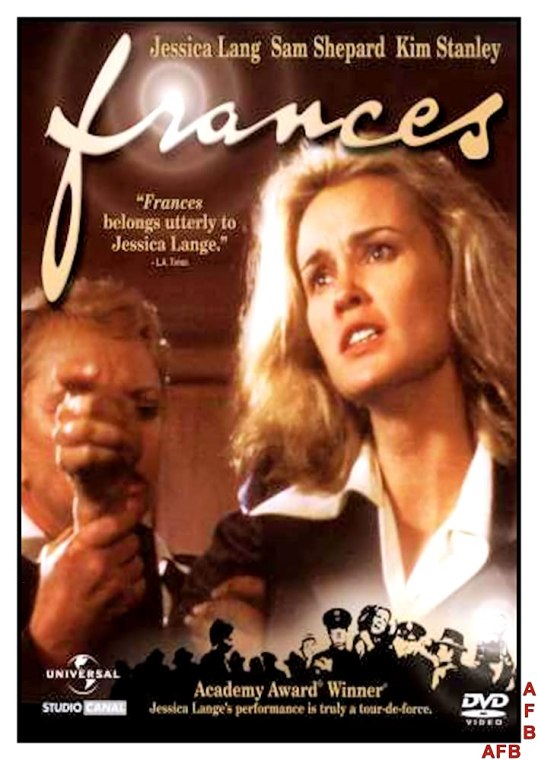
The 1983 film, Frances, is a biopic of Frances Farmer, starring Jessica Lange as Frances and Kim Stanley as her domineering mother.  It opens with Frances writing a school essay about why she’s an atheist and it ends with her smiling blankly at a television camera, her independent spirit broken by a lobotomy.  In between, we watch as Frances goes to Hollywood and has a self-destructive affair with Clifford Odets (played by Jeffrey DeMunn).  The infamous moment when Frances was dragged out of a courtroom while screaming at the judge is recreated and Frances’s time in the institution is depicted in Hellish detail.

We also learn about Frances’s relationship with a communist writer named Alvin York (Sam Shepard).  It seems like whenever Frances needs to be rescued or just needs someone to talk to, Alvin York pops up.  In fact, you could almost argue that York pops up too often.  Alvin York was a fictional character, one who was apparently created in order for audiences to have someone to relate to.  It’s unfortunate that the film felt that the audience would only be able to relate to Frances if it viewed her life through the eyes of a fictional character because York’s character is a bit of a distraction.  Sam Shepard does a good job of playing him and I certainly wasn’t shocked to learn that Sam Shepard and Jessica Lange were romantically involved during the filming of Frances (and for a long time afterwards) because Lange and Shepard do have a very real chemistry.  However, from a narrative point of view, Alvin York only works as a character if one accepts that he’s a figment of Frances’s imagination.  The film’s insistence that York is an actual person who just happens to show up at every important moment of Frances’s life just doesn’t work.

What does work is Jessica Lange’s performance.  Lange is amazing in the role of Frances, whether she’s playing Frances as a hopeful idealist, an out-of-control rebel, or, tragically, as a glass-eyed zombie who has been reduced to appearing on television and assuring audiences that her rebellious days are over.  Lange was nominated for Best Actress for Frances.  She lost to Meryl Streep for Sophie’s Choice.  I’ve seen Sophie’s Choice and Meryl was good but Jessica was better.

Frances was originally offered to David Lynch.  He turned the film down so he could work on Dune and instead, the film was directed by Graeme Clifford, who takes a far more straight-forward approach to the material than Lynch would have.  Still, Lynch’s interest in Frances Farmer would later lead to him working on stories that centered around a “woman in trouble.”  One of those stories became Twin Peaks.  Another would become Mulholland Drive.

Film Review: Slacker (dir by Richard Linklater)


“Wow,” I thought as I recently rewatched Richard Linklater’s first film, Slacker, “Austin hasn’t changed at all!”

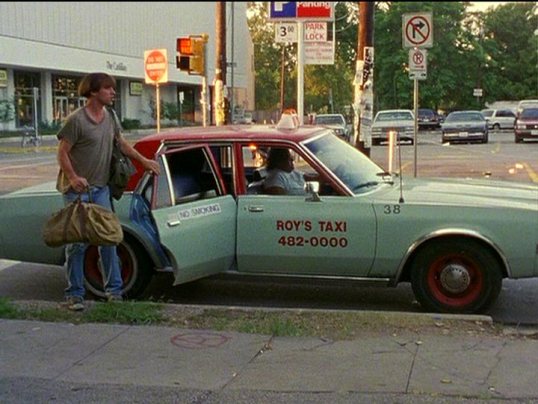
That, of course, isn’t true.  Slacker was filmed in 1990 and first released in 1991.  It’s 20 years old and the entire world — including Texas in general and Austin in specific — has changed quite a bit since then.  Slacker is a film about the people of Austin, following one person and then another as they walk down the streets of Austin and, in classic Linklater fashion, have conversations about everything from sex to pop culture to conspiracy theories.  It’s a film that was made before social media and no one carries a phone with them.  The majority of the people the we meet in Slacker would, today, probably be too busy posting 100-tweet threads to actually get outside and walk around the city.  (And, in the age of social distancing, the idea of walking up to a stranger on the street and having a conversation is not only unthinkable to a lot of people but illegal in some places up north.)  Slacker was also made long before SXSW turned Austin in a national hipster hotspot.  There are definitely hipsters in Slacker but they’re all of the Texas variety, as opposed to the Silicon Valley-on-vacation variety.

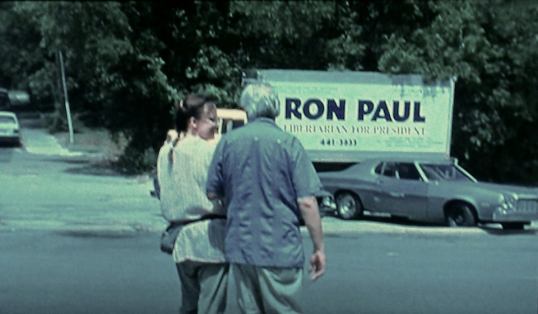
That said, Slacker does contain an essential truth about Austin that has never changed.  Austin has always been a town that has welcome the eccentrics, nonconformists, and self-styled intellectuals.  As both the capitol of the greatest state in the union and a college town, Austin has a unique style all of its own.  It’s a place where all of the contradictions of Texas — the fierce independence mixed with a strong belief in tradition — meet.  Some people refer to it as being “The People’s Republic of Austin” and the town is considerably more liberal than the rest of the state.  In general, though, Texas liberalism has never been quite as annoying or authoritarian-minded as the rest of America’s liberalism.  There’s a strong Libertarian streak that runs through even the most liberal parts of Texas and it seems somewhat appropriate that Ron Paul makes a cameo appearance of sorts in Slacker:

Slacker is one of those films that’s beloved by film students because it’s very easy to watch it and to think, “Wow, anyone could do that!”  Of course, the truth of the mater is that there is a very definite structure to Slacker.  Despite the way it may occasionally seem, the film is not just a bunch of random footage of people wandering by each other while discussing the Moon landing, the Kennedy assassination, and Madonna’s pap smear.  Instead, each conversation builds on the other until, eventually, Slacker presents a portrait of a community and a generation that has created a culture based on television, movies, and obscure historical references.  Slacker is a film that has been very carefully constructed to appear to be random but there’s a definite structure to it.  The film may look like it was made by someone who just turned on a camera and wandered around for day but Linklater definitely knew what he was doing and I’ve seen enough bad attempts to duplicate Slacker that I can definitely appreciate what Linkler accomplished.

The film, which had a largely nonprofessional cast, is full of interesting and, if you live in Texas, familiar characters.  The bitter hitchhiker, for instance, will be familiar to anyone who has ever had a conversation with an older inhabitant of a college town.  The conspiracy theorist who is writing his own book about the Kennedy assassination can be found in just about every independent bookstore in Texas.  I know people who actually took a class taught by the old man who (foolishly, in my opinion) idolized Leon Czolgosz.  As I said, the film is 20 years old but it captures the essence of Austin so perfectly that it remains timeless.

Slacker was Richard Linklater’s first film.  Appropriately, he’s also the first person to appear in the film and the first one to speak.  (He had a dream while on a bus.)  Linklater has gone on to become one of Texas’s greatest filmmakers.  At a time when cinematic and political conformity is too often celebrated, Linklater remains a unique and authentic voice.

And it all started with a film about Austin, a film called Slacker.

Scenes That I Love: Michael Gets Revenge on Sollozzo in The Godfather (Happy birthday, Al Pacino!)


Since today is Al Pacino’s birthday, it only seems right to share a classic scene from The Godfather.

In the scene below, which is perfectly directed by Francis Ford Coppola, Michael proves that he truly is a Corleone.  Am I the only one who yelled, “Don’t forget to drop the gun!,” the first time that I saw this scene?

Amazingly enough, Coppola had to fight to cast Al Pacino as Michael.  The studio wanted him to go with a big star and Pacino had only made two previous films.  (Pacino was also felt to be too short and, oddly, too “Italian-looking” to play the role.)  The studio wanted Coppola to cast Robert Redford, Ryan O’Neal, Jack Nicholson, James Caan, or maybe even Warren Beatty in the role.  Fortunately, both Coppola and Marlon Brando fought for Pacino.  As Brando explained it, any son of his was going to be a brooder and that description fit Pacino perfectly.

Happy birthday, Al Pacino!  Here’s to many happy returns!

4 Shots From 4 Films: Special Jack Nicholson Edition


4 Shots From 4 Films is just what it says it is, 4 shots from 4 of our favorite films. As opposed to the reviews and recaps that we usually post, 4 Shots From 4 Films lets the visuals do the talking!

Today is Jack Nicholson’s 83rd birthday!

It’s been ten years since Jack Nicholson last appeared in a movie, the forgettable How Do You Know.  Rumor has it that he’s basically retired from acting, though it’s said that Nicholson himself has denied it.  However, whether he’s working or not, he remains a screen icon with a filmography that is a cinema lover’s dream.  He’s worked with everyone from Roger Corman to Stanley Kubrick to Milos Forman to Martin Scorsese and, along the way, he’s become a symbol of a very American-type of rebel.  Though often associated with the counter-culture, his style has always been too aggressive and idiosyncratic for him to be a believable hippie.  Instead, he’s one of the last of the beats, an outsider searching for meaning in Americana.

Over the course of his career, Nicholson has won three Oscars and been nominated for a total of 12.  He’s the only actor to have been nominated in every decade from the 1960s to the 2000s.  If he ever writes his autobiography, you know that we’ll all run out and buy a copy.  When the day comes that Jack Nicholson is no longer with us, it will truly be the end of an era.

Happy birthday, Jack Nicholson.  May you have many happy returns!

4 Shots From 4 Films

Psych-Out (1968, dir by Richard Rush)

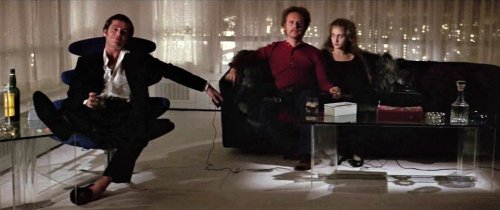
Carnal Knowledge (1971, dir by Mike Nichols)

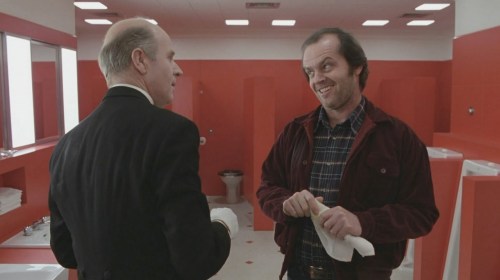
The Shining (1980, dir by Stanley Kubrick)

The Departed (2006, dir by Martin Scorsese)

4 Shots From 4 Films: Special Edie Sedgwick Edition


4 Shots From 4 Films is just what it says it is, 4 shots from 4 of our favorite films. As opposed to the reviews and recaps that we usually post, 4 Shots From 4 Films lets the visuals do the talking!

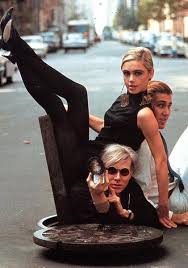
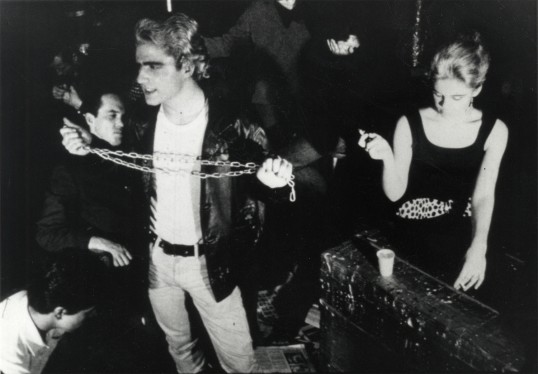
Today would have been Edie Sedgwick’s 77th birthday.  Unfortunately, she died under tragic circumstances in 1971, after having briefly found fame as a model, a “youthquaker” (as some in the media called her), an actress, and Andy Warhol’s muse.  Her tragic life is often held up as a cautionary tale and perhaps it is.  For all of her talent and her appeal (not to mention that sharp wit that made her an outsider in the 60 but which would have made her a fascinating interview subject in 2020), Edie was far too often exploited by those who should have been protecting her.  She was too beautiful not to be famous but, at the same time, too sensitive not be hurt by the experience.  She’s truly a tragic figure but, because she also epitomizes everything that the New York underground art scene in the 60s represents in the popular imagination, she’s also an inspiring one.  Edie lives forever as a symbol and a muse.  Personally, I’ve been fascinated by her life for as long as I can remember.

In honor of Edie’s birthday, here are:

Vinyl (1965, dir by Andy Warhol)

Beauty No. 2 (1965, dir by Andy Warhol)

Poor Little Rich Girl (1965, dir by Andy Warhol)

Lupe (1966, dir by Andy Warhol)

The Things You Find On Netflix: Sergio (dir by Greg Barker)


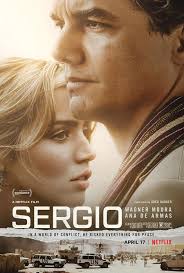
Sergio, which dropped on Netflix last Friday, is a biopic of the Brazilian diplomat, Sérgio Vieira de Mello.  Sergio spent 34 years as a diplomat with the United Nations, going to some of the most dangerous places in the world and trying to negotiate with people who were determined to kill one another.  Sergio was so respected within the UN that he was seen as a likely candidate for Secretary-General.  Instead, in 2003, Sergio was killed in a terrorist attack while he was in Baghdad, observing the American occupation of Iraq.

Starring Wagner Moura in the title role, Sergio opens with Sergio arriving in Baghdad.  For the majority of the film, he’s buried in the rubble of his blown-up office, thinking about his past life while an American soldier (played, with quiet authority, by Garret Dillahunt) tries to dig him and his assistant, Gil (Brian F. O’Byrne) out.  Through the use of flashbacks, we watch as Sergio negotiates peace in East Timor and argues against the occupation of the Iraq.  We also watch as he meets and falls in love with Carolina (Ana de Armas), pursuing a passionate affair with her despite being married.

Sergio is a rather staid biopic.  If you’re expecting to see an Adam McKay-style screed about international diplomacy and American war crimes, that is not what this film is and we should be happy for that because, seriously, have you tried to watch The Big Short or Vice lately?  Instead, Sergio is more like a Jay Roach film without the attempts at humor.  It’s a blandly liberal biopic that is conventionally structured and a bit too convinced that the audience is going to automatically agree with its points.  Indeed, one of the film’s most glaring flaws is that it assumes that we’re all as enamored with the UN as it is.  Instead of making a case for why the UN should be taken seriously, Sergio just assumes that it is.

The other big problem with the film is that it’s just boring.  There’s nothing interesting about the film’s structure and, as portrayed in the rather bland script, both Sergio and Carolina come across as being ciphers.  We’re constantly told that Sergio is charismatic and controversial but we really don’t see much evidence of it.  The film itself doesn’t seem to know what made Sergio tick but what’s even worse is that it doesn’t seem to be particularly interested in finding out.  There’s not much interest in digging into Sergio’s mind or his motives,  The film forgets that you can portray someone as a hero and celebrate their accomplishments without necessarily idealizing them.  With the exception of one or two scenes (and there is an effective moment where one of Sergio’s assistants does call him out for putting everyone’s life in danger by refusing to accept protection from the U.S. army), Sergio is portrayed in such an idealized that he comes across as being a bit dull.  Wagner Moura is an appealing actor but there’s no depth to his performance.  Meanwhile, Ana de Armas is reduced to playing the stock girlfriend with a social conscience role.

All that said, I almost feel guilty about not liking Sergio.  The film was made with good intentions but good intentions don’t necessarily translate to compelling storytelling.


Dear Guest: Movie Preview, Review, Poster, and Trailer


poster

Preview:

A couple checks into a vacation rental, only to find that the anonymous host likes to play games on its guests and you!

Ashley Bell (The Last Exorcism) and Noureen DeWulf (Good Girls) as a couple who soon regrets renting this picturesque home for their long awaited vacation.

Ab

Quote:

“Dear Guest, you are staying in my home now. You are locked in so don’t try to run.”

My Review:

Dear Guest is only about a 12 minute short horror movie. However, in those short 12 minutes Megan Freels Johnston (Director and writer) did everything she could to intrigue, scare, and horrify. After watching it several times I am still shaken. The music that plays in the background is just so enticing and enchanting…before you know it you are completely…Locked in….

Would I Recommend this movie?

Seriously, in less than 12 minutes ‘Dear Guest’ scared me, not only scared me, horrified me beyond most recent short books, movies, and novellas I have watched or read recently. So, for short story horror fans…. This!

I’m not sure how to explain it, but…. Enjoy Your Stay….

Here is the trailer:

Credits: Look At Me Films


The International Lens: Il Divo (dir by Paolo Sorrentino)


Earlier tonight, as I watched the 2008 Italian film, Il Divo, it occurred to me that political corruption really is an international language.

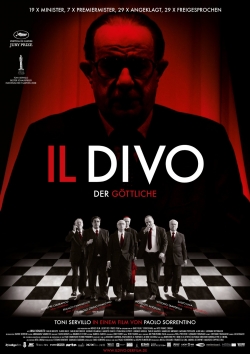
The film is heavily stylized biopic of Giulio Andreotti.  Andreotti (who died five years after the release of this film) is nearly unknown figure in the United States but, in Italy, he spent several decades as a member of the country’s political elite.  He was a controversial figure, a man who served several terms as prime minister and was later appointed senator for life but who was also accused of being politically corrupt and affiliated with some of the worst elements of the Mafia.  People who threatened to investigate Andreotti or who could have contributed to his downfall had a habit of ending up dead.  No sooner has Il Divo begun then we’re treated to a lengthy montage of Andreotti’s associates getting killed in various ways.  Some are gunned down.  One is found hanging underneath a bridge.  One is in an exploding car.  The film also opens with a title card that informs us that, over the course of Andreotti’s long career, he was rumored to be one of the leading members of the P2, a masonic lodge that counted among its members some of the most powerful men in Italy.  P2 is one of those organizations that conspiracy theorists love to obsess upon.

Directed by Paolo Sorrentino, Il Divo is an Italian film that deals with the life of a prominent Italian political figure and, needless to say, it was made for an Italian audience.  For an American viewer like me, it was often impossible not to get confused as I tried to keep up with who was working with who and who had just been killed.  In short, this film was made to be viewed by people who already know who Guilo Andreotti was and who are familiar with the details of his long career.  It was not made for someone like me who is still struggling to wrap her mind around the fact that Italy has both a prime minister and a president.

But, in the end, it really didn’t matter if I occasionally struggled to follow every twist and turn of Andreotti’s career.  Il Divo may technically by a biopic of Giulio Andreotti but, on a larger scale, it’s about how power corrupts and the banality of evil.  Those are universal themes and you certainly do not have to be any particular nationality to be familiar with the fact that people who dedicate their lives to accumulating political power often turn out to be, at the very least, willing to cut some ethical corners.  I may not have always understood every detail of Il Divo‘s story but I did understand exactly what the film was ultimately about.

As played by Toni Servillo, Andreotti does not come across as being  particularly charismatic politician.  With his hunched back and his bat-like ears, Andreotti almost seems like a caricature of a corrupt leader.  In the film, one immediately sees that Andreotti hasn’t held onto his power because he’s particularly loved by the people.  Instead, he’s held onto power by being smarter than those who would try to defeat him.  No matter how determined his enemies may be, Andreotti is always just a little bit more ruthless.  Andreotti succeeds because he’s willing to do what he has to do to succeed and he’s willing to ally himself with people who have a stake in his continued success.  While the film never comes out and says that Andreotti was personally responsible for ordering the deaths of any of his enemies, it does suggest that he purposefully surrounded himself with men who would do anything to keep Andreotti in power, if just to protect their own fiefdoms of corruption.

There’s an early scene in Il Divo where Andreotti’s allies all arrives for a meeting with the prime minister.  Most of them are politicians.  One of them is a cardinal.  Another is simply identified as being a “businessman.”  They pull up in their expensive cars and then we watch as they walk across the screen in slow motion, arrogantly confident in the fact that they’re above any and all legal or ethical considerations.  They’re all wealthy men and they all seem to understand the importance of keeping Andreotti happy.  Carlo Buccirosso plays Paolo Cirino Pomicino, who was one of Andreotti’s chief allies.  Buccirosso plays Pomincino as being glibly hyperactive, a cheerfully corrupt ball of energy who seems to be having all of the fun that Andreotti denies himself.  Because Andreotti denies himself an interest in anything other than wielding and holding power, he is invulnerable to attack and prosecution but sometimes it’s hard not to wonder if he would have rather have been Pomincino, dancing at parties and sliding across tiled floors.

Indeed, Andreotti begins and ends Il Divo as an enigma.  How deeply involved is he in the murders occurring around him?  Is he ordering them or is he just turning a blind eye?  What makes Andeotti tick?  By the end of the film, his main motivation seems to be bitterness.  Death may be inevitable but he’s not going to go until everyone else goes first.  That is a motivation that many politicians across the world probably share.  Corruption is universal.

Film Review: King of Kings (dir by Nicholas Ray)


The 1961 film, King of Kings, was the final biblical film that I watched on Easter.  Like The Greatest Story Ever Told, it tells the story of Jesus from the Nativity to the Ascension.  Like The Greatest Story Ever Told, it’s an epic film that was directed by a renowned director.  (In this case, Nicholas Ray.)  Like The Greatest Story Ever Told, King of Kings also has a huge cast and there’s a few familiar faces to be seen, though it doesn’t really take the all-star approach that George Stevens did with his telling of the story.

Probably the biggest star in King of Kings was Jeffrey Hunter, who played Jesus.  Hunter was in his 30s at the time but he still looked young enough that the film was nicknamed I Was A Teenage Jesus.  (Some of that also probably had to do with the fact that Nicholas Ray was best known for directing Rebel Without A Cause.)  But then again, for a man who had so many followers, Jesus was young.  He hadn’t even reached his 40th birthday before he was crucified.  As well, his followers were also young while his many opponents were representatives of the establishment and the old way of doing things.  It makes perfect sense that Jesus should be played by a young man and Hunter gives a good performance.  As opposed to so many of the other actors who have played Jesus in the movies, Jeffrey Hunter is credible as someone who could convince fishermen to throw down their nets and follow him.  He’s passionate without being fanatical and serious without being grim.  He’s a leader even before he performs his first miracle.

King of Kings is one of the better films that I’ve seen about the life of Jesus.  While remaining respectful of its subject, it also feels alive in the way that so many other biblical films don’t.  Perhaps not surprisingly, Nicholas Ray focuses on the idea of Jesus as a rebel against the establishment.  Ray emphasizes the casual cruelty of the Romans and their collaborators.  When John the Baptist (Robert Ryan) is arrested by Herod (Frank Thring), it’s not just so the filmmakers can have an excuse to work Salome (Brigid Bazlen) in the film.  It’s also to show what will happen to anyone who dares to challenge the establishment.  When Jesus visits John the Baptist in his cell, it’s a summit between two rebels who know that they’re both destined to die for the greater good.  When Pilate (Hurd Hatfield) makes his appearance, he’s smug and rather complacent in his power.  He’s not the quasi-sympathetic figure who appears in so many other biblical films.  Instead, he’s the epitome of establishment arrogance.

As a director, Nicholas Ray keeps things simple.  This isn’t Ben-Hur or The Ten Commandments.  The emphasis is not on grandeur.  Instead, the film is about common people trying to improve the world in which they’re living, while also preparing for the next.  Jeffrey Hunter gives an excellent performance as Jesus and, all in all, this is one of the better and more relatable biblical films out there.