An Offer You Can’t Refuse #19: Scarface (dir by Brian DePalma)


“Hello to my little friend!”

Hi, little friend….

BOOM!

The 1983 film, Scarface, is a misunderstood film.  As we all know, it’s the story of Tony Montana (Al Pacino), who comes to Miami from Cuba along with his friend, Manny (Steven Bauer).  In return for murdering a former member of Castro’s government, Tony is given a job working for Frank Lopez (Robert Loggia).  When it becomes obvious that Tony is becoming too ambitious and might become a threat to him, Frank attempts to have Tony killed.  However, the assassination attempt fails, Tony murders Frank, and then Tony becomes Miami’s richest and most powerful crime lord.  Soon, Tony is burying his face in a mountain of cocaine while making deals with a sleazy Bolivian drug lord named Alejandro Sosa (Paul Shenar).  Tony also marries Frank’s mistress, Elvira Hancock (Michelle Pfieffer), though it’s obvious from the start the the only person that Tony truly loves is his sister, Gina (Mary Elizabeth Mastrantonio).  Anyway, it all eventually leads to a lot of violence and a lot of death.  Even F. Murray Abraham ends up getting tossed out of a helicopter, which is unfortunate since his character was a lot of fun.

Scarface is a famous film, largely because of Oliver Stone’s quotable dialogue and the no holds barred direction of Brian DePalma.  However, I think that people get so caught up on the fact that this is a classic gangster film that they miss the fact that Scarface is also an extremely dark comedy.  It satirizes the excess of the 80s.  Once Tony reaches the top of the underworld, he becomes a parody of the nouveau riche.  He moves into a gigantic house and proceeds to decorate it in the most tasteless way possible and there’s something oddly charming about this crude, not particularly bright man getting excited over the fact that he can finally afford to buy a tiger.  Towards the end of the film, there’s a scene where Tony rants while lounging in an indoor hot tub while Elvira languidly snorts cocaine and complains about the crudeness of his language and, at that moment, Scarface becomes a bit of a domestic comedy.  Tony’s reached the top of his profession, just to discover that it takes more than a live-in tiger and a wardrobe of wide lapeled suits to achieve true happiness.  So, he ends up sitting glumly in his office with a mountain of cocaine rising up in front of him.  “The world is yours” may be Tony’s motto but it turns out that the world is extremely tacky.  For all of his attempts to recreate himself as a wealthy and sophisticated man, Tony is still just a barely literate criminal with a nasty scar and a sour disposition.  The only thing he’s gotten for all of his ruthless ambition is an order of ennui with a cocaine appetizer.

I’ve always found Brian DePalma to be an uneven director.  He has a very distinct style and sometimes that style is perfectly suited to the story that he’s telling (i.e., Carrie) and sometimes, all of that style just seems to get in the way (i.e. The Fury).  Scarface, however, is the ideal story for DePalma’s over-the-top aesthetic.  DePalma’s style may be excessive but Scarface is a film about excess so it’s a perfect fit.  For that matter, you could say the same thing about Oliver Stone’s screenplay.  Stone has since stated that he was using almost as much cocaine as Tony Montana while he wrote the script.  The end result of the combination of Stone’s script, DePalma’s hyperactive direction, Pacino’s overpowering lead performance, and Giorgio Moroder’s propulsive score is a film that feels as if every minute is fueled by cocaine.  It’s not just a film that’s about drugs.  It’s also a film that feels like a drug.

Scarface is a big movie.  It runs nearly three hours, following Tony from his arrival in the United States to his final moments in his mansion, taking hundreds of bullets while grandly announcing that he’s still standing.  (Even after all of the bad things that Tony has done — poor Manny! — it’s impossible not to admire his refusal to go down.)  It’s also a difficult movie to review, largely because almost everyone’s seen it and already has an opinion.  Personally, I think the film gets off to a strong start.  I think the scenes of Tony ruthlessly taking control of Frank’s empire are perfectly handled and I love the scenes where Pacino and Steven Bauer just bounce dialogue off of each other.  They’re like a comedy team who commits murder on the side.  I also loved the “Take it to the limit” montage, which belongs in the 80s Cinema Hall of Fame.  At the same time, I think the final third of the movie drags a bit and that Tony’s sudden crisis of conscience when he sees that a man that he’s supposed to murder has a family feels a bit forced.  It also bothers me that Elvira just vanishes from the film.  At the very least, the audience deserved more of an explanation as to where she disappeared to.

But no matter!  Flaws and all, Scarface is a violent satire that holds up surprisingly well.  Al Pacino’s unhinged performance as Tony Montana is rightly considered to be iconic.  Pacino’s gives such a powerhouse performance that it’s easy to forget that the rest of the cast is pretty impressive as well.  I particularly liked the wonderfully sleazy work of F. Murray Abraham and Paul Shenar.  That said, my favorite character in the film remains Elvira, if just because her clothes were to die for and she just seemed so incredibly bored with all of the violent men in her life.  She goes from being bored with Frank to being bored with Tony and how can you not admire someone who, even when surrounded by all Scarface’s excess, just refuse to care?

Scarface is an offer that you can’t refuse.

Previous Offers You Can’t (or Can) Refuse:

  1. The Public Enemy
  2. Scarface (1932)
  3. The Purple Gang
  4. The Gang That Could’t Shoot Straight
  5. The Happening
  6. King of the Roaring Twenties: The Story of Arnold Rothstein 
  7. The Roaring Twenties
  8. Force of Evil
  9. Rob the Mob
  10. Gambling House
  11. Race Street
  12. Racket Girls
  13. Hoffa
  14. Contraband
  15. Bugsy Malone
  16. Love Me or Leave Me
  17. Murder, Inc.
  18. The St. Valentine’s Day Massacre
The TSL’s Grindhouse: The Murder of Nicole Brown Simpson (dir by Daniel Farrands)


Last year, I was one of the few people willing to defend The Haunting of Sharon Tate, which I felt was an effective film despite its rather icky premise.  I thought that the film managed to maintain a compelling atmosphere of dread and I also thought that, though somewhat miscast, Hilary Duff gave a good performance in the lead role.  Finally, I felt that, despite the exploitative nature of the film, the film was firmly on the side of Sharon Tate and the other victims of the Manson Family.  Though the title may have been offensive, the film itself was better than it had any right to be.

I really can’t say the same for The Murder of Nicole Brown Simpson, which is from the same production team as The Haunting of Sharon Tate and which imagines the final days in the life of another famous homicide victim.  Mena Suvari stars as Nicole Brown Simpson, the ex-wife of football player OJ Simpson (played, in a hyperactive manner, by Gene Freeman).  The film follows Nicole as she deals not only with her abusive ex-husband but also with shady friends like Faye Resnick (Taryn Manning) and slightly less-disreputable friends like Kris Jenner (Agnes Bruckner).

In the film, Nicole also has a short-lived affair with a handsome but unstable drifter named Glen Rogers (Nick Stahl).  In real life, Glen Rogers is currently incarcerated in Florida, where he awaits execution for a series of murders.  Rogers has confessed to killing people all across the country, though there’s some doubt as to whether or not Rogers was being honest when he did so.  (Rogers later recanted the confession.)  Rogers’s brother has claimed that Glen confessed to murdering Nicole Simpson and Adam Goldman, saying that he was actually hired to do so by OJ Simpson.  (Technically, Glen Rogers said that Simpson hired him to steal some jewelry but also gave him permission to kill Nicole if he felt that it was necessary.)  The film presents Rogers’s story as being fact, complete with a scene of OJ meeting with Glen shortly before the murders occur.

Other than making the case that Glen Rogers murdered Nicole and Ron, the majority of the film is just Mena Suvari walking around Los Angeles and talking to her friends about how she has a feeling that something terrible is going to happen.  Whereas The Haunting of Sharon Tate was willing to challenge the audience’s expectations by, at least briefly, changing history and presenting an alternate version of what could have happened that day in 1969, The Murder of Nicole Brown Simpson is pretty much a grim march towards death, with each scene bringing the audience closer and close to the night of the actual murderers.  If the film actually presented Nicole as being a fully-realized character as opposed to just a doomed victim, the story’s fatalistic atmosphere would work on an existential level but since the film doesn’t seem to care about who Nicole was before she died, it all just feels very sleazy.

Towards the end of the film, there’s an odd scene where an unseen force suddenly starts to violently throw Nicole across her bedroom, sending her against the walls and, at one point, pinning her to the ceiling.  It’s a weird scene because it comes out of nowhere and it’s never explained whether it really happened or if Nicole was imagining being attacked.  It doesn’t belong in this film and yet, it’s also the only moment when this film feels in any way unpredictable.  Is the film trying to suggest that death, as a paranormal entity, was stalking her even before the night of her murder or was the scene just tossed in to liven up what is otherwise a rather slowly paced movie?  Who knows?  Again, if the film had really explored the issue of whether or not fate is predetermined and inevitable, it would have made for a far more interesting story than the rush job that this film appears to have been.

Mena Suvari and Nick Stahl are two actors who probably deserve better than this.  Stahl is especially effective as the creepy but handsome Glen Rogers.  Visually, the film is full of Hollywood glamour and ominous shadows.  It’s not a bad-looking film, at all.  Technically, The Murder of Nicole Brown Simpson is well-made but, at the same time, it’s all just so astoundingly pointless.  The memory of Nicole Simpson deserved better.


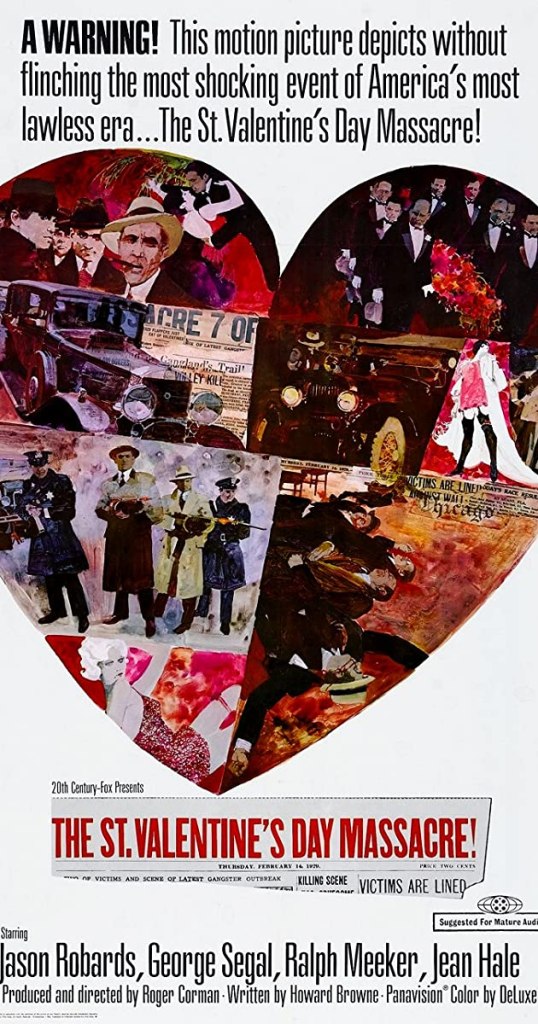
An Offer You Can’t Refuse #18: The St. Valentine’s Day Massacre (dir by Roger Corman)

On February 14th, 1929, seven men were murdered in a garage in Chicago, Illinois.  Five of the seven men were known to be associates of gangster George “Bugs” Moran.  The other two men were considered to be innocent bystanders, a mechanic and a dry cleaner who just happened to enjoy hanging out with gangsters.  Though no one was ever convicted of the crime, it was well-known that the murders were carried out on the orders of Al Capone.

In many ways, the St. Valentine’s Day Massacre was a turning point in America’s relationship with organized crime.  Before the massacre, Capone had become a bit of a folk hero.  He knew how to talk to the press and he was viewed as merely breaking a law (in this case, prohibition) that most people opposed in the first place.  However, after the murders, public opinion soured on Capone.

Some of it was the brutality of the crime.  It’s been said that over five hundred bullets were fired in that garage, all to kill seven defenseless men who were lined up against a wall.  Grisly pictures of the victims were released to the press.  Perhaps if the seven men had been carrying weapons and had been involved in a shootout with their murderers, the public’s reaction would have been different.  But this was a cold-blooded execution.

Personally, I think the fact that the killers disguised themselves as cops also played a role in the public’s outrage.  It was a very calculated move on the part of the killers and it highlighted just how much planning went into the St. Valentine’s Day Massacre.  As well, it undoubtedly made people paranoid.  If a bunch of killer could dress up like cops, who knew who else they could dress up as?

Finally, I think that Capone’s biggest mistake was carrying out the crime on Valentine’s Day.  You don’t murder people on a holiday.  Anyone should know that.  If Capone had waited until February 20th, he probably could have gotten away with it.

The 1967 film, The St. Valentine’s Day Massacre, details the rivalry between Capone and Moran, starting with them fighting for control over the Chicago rackets and ending with the title event.  Moran is played by Ralph Meeker while Jason Robards plays Capone.

Now I know what you’re probably thinking.  Perennial WASP Jason Robards as Al Capone?  That may sound like odd casting and, let’s just be honest here, it is.  However, it actually kind of works.  Robards may not be convincingly Italian but he is convincingly ruthless.  Add to that, one of the major subplots of the St. Valentine’s Day Massacre is that, even as the head of the Chicago Outfit, Capone still feels like an outsider in the world of organized crime because, while he is Italian, he isn’t Sicilian.  Capone feels as if Lucky Luciano and all of the major New York crime bosses look down on him and one reason why he’s so ruthless about taking over Chicago is that wants to show Luciano that he can be just as effective a crime lord as any Sicilian.  Capone feeling out of place in the Mafia is reflected by Robards initially seeming to be out of place in a gangster film.  By the end of the movie, of course, Capone has proven himself and so has Jason Robards.
Robards isn’t the only familiar face to be found in The St. Valentine’s Day Massacre.  Though this film was released by 20th Century Fox, it was directed by Roger Corman and Corman fills the production with members of his stock company.  Dick Miller, Jonathan Haze, and Jack Nicholson all have small roles as gunmen.  Bruce Dern plays the unlucky mechanic who enjoys hanging out with gangsters.  Buck Taylor, Leo Gordon, and Joe Turkel all have small roles.  John Agar plays Dion O’Bannon and is gunned down in his flower store.  Though not members of the Corman stock company, George Segal and David Canary plays brothers who work for Moran.  There’s a lot of characters wandering through this film but Corman makes sure that everyone gets a chance to make an impression.

It’s a good gangster film.  Though he was working with a larger budget than usual, Corman still brought his exploitation film aesthetic to the material and the end result is a violent, melodramatic gangster film that looks really impressive.  The film’s recreation of 1920s Chicago is a visual delight and looking at the well-dressed and stylish gangsters walking and driving down the vibrant city streets, you can understand why organized crime would have such a draw for some people.

The St. Valentine’s Day Massacre is a classic gangster film and a classic Corman film.  It’s an offer you can’t refuse.
Previous Offers You Can’t (or Can) Refuse:

  1. The Public Enemy
  2. Scarface
  3. The Purple Gang
  4. The Gang That Could’t Shoot Straight
  5. The Happening
  6. King of the Roaring Twenties: The Story of Arnold Rothstein 
  7. The Roaring Twenties
  8. Force of Evil
  9. Rob the Mob
  10. Gambling House
  11. Race Street
  12. Racket Girls
  13. Hoffa
  14. Contraband
  15. Bugsy Malone
  16. Love Me or Leave Me
  17. Murder, Inc.


4 Shots From 4 Films: Special Kevin Bacon Edition


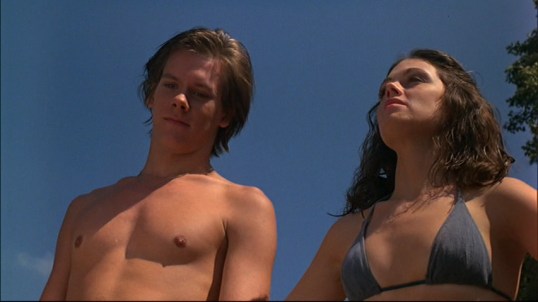
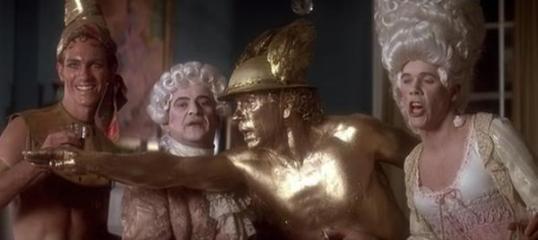
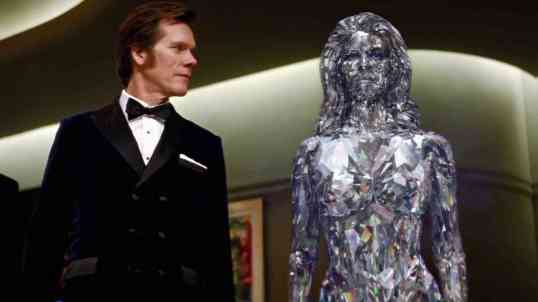
4 Shots From 4 Films is just what it says it is, 4 shots from 4 of our favorite films. As opposed to the reviews and recaps that we usually post, 4 Shots From 4 Films lets the visuals do the talking!

Today is the birthday of everyone’s favorite, hard-working character actor, Kevin Bacon!  And that means that it’s time for….

4 Shots From 4 Films

Friday the 13th (1980, dir by Sean S. Cunningham)

Quicksilver (1986, dir by Thomas Michael Donnelly)

JFK (1991, dir by Oliver Stone)

X-Men: First Class (2011, dir by Matthew Vaughn)


Song of the Day: Come Un Mardigale by Ennio Morricone


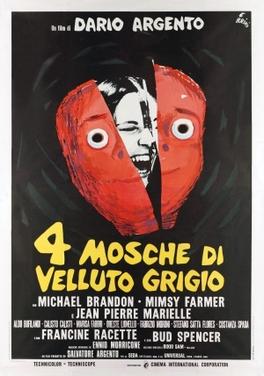
Today, we continue our tribute to Ennio Morricone with Come Un Madrigale, which he composed for Dario Arengto’s 1971 giallo, Four Flies on Grey Velvet!  Morricone scored Argento’s first three films and his atmospheric music was as important to their success as Goblin would be to the success of later Argento films like Suspiria and Deep Red.

Previous Entries In Our Tribute To Morricone:

  1. Deborah’s Theme (Once Upon A Time In America)
  2. Violaznioe Violenza (Hitch-Hike)

An Offer You Can’t Refuse #17: Murder, Inc. (dir by Stuart Rosenberg and Burt Balaban)


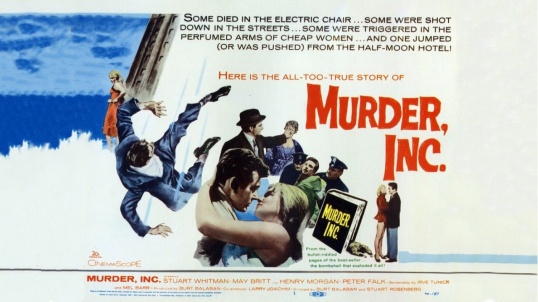
We all know the famous line from The Godfather.  “I’m going to make him an offer he can’t refuse.”  Of course, everyone also knows that “It’s not personal.  It’s strictly business.”  There’s another line that’s almost as famous: “One lawyer with his briefcase can steal more than a hundred men with guns.”  That line comes from Mario Puzo’s novel.  It’s never actually used in the film though it’s certainly present as a theme.

The idea of organized crime essentially being a huge corporation is hardly a new one.  In fact, it’s become a bit of a cliche.  Nearly every gangster film ever made has featured at least one scene where someone specifically compares their illegal activities to the day-to-day business of politicians and CEOs.  However, just because it’s a familiar analogy, that doesn’t make it any less important.  It’s hard not to think of organized crime as being big business when you consider that, in the 30s and the 40s, the mafia’s assassination squad was actually known as Murder, Inc.

Murder, Inc. was formed in Brooklyn, in the 30s.  It was founded and initially led by a man named Lepke Buchalter.  Lepke was a gangster but, because he was Jewish, he couldn’t actually become a made man.  However, he used that to his advantage when he created Murder, Inc.  The organization was largely made up of non-Italians who couldn’t actually become official members of the Mob.  The major mafia families would hire Murder, Inc. to carry out hits because they knew that, since none of the members were made men, they wouldn’t be able to implicate any of the families if they were caught by the police.

It was a good idea and Lepke and his band of killers made a lot of money.  Of course, eventually, the police did catch on.  A member of the organization by the name Abe Reles was eventually arrested and agreed to be a rat.  Lepke went to the electric chair.  Reles ended up falling out of a window.  Did he jump or was he thrown?  It depends on who you ask.

19 years after Reles plunged from that window and 16 years after Lepke was executed, their story was told in the 1960 film, Murder, Inc.  Lepke was played by David J. Stewart while Reles was played by Peter Falk.  The film is told in a documentary style, complete with a narrator who delivers his lines in a rat-a-tat-tat style.  We follow Reles as he goes to work with Lepke and as he harasses a singer (Stuart Whitman) and his wife (May Britt), forcing them help him carry out a murder and then allowing them to live in a luxury apartment on the condition that they also let Lepke hide out there.  (It’s probably not a surprise that a professional killer wouldn’t turn out to be the best houseguest.)  Eventually, a crusading DA (Henry Morgan) and an honest cop (Simon Oakland) take it upon themselves to take down Murder, Inc.

To be honest, there’s not a whole lot that’s surprising about this film but it’s still an entertaining B-movie.  The black-and-white cinematography and the on-location filming give the film an authentically gritty feel.  The action moves quickly and there’s enough tough talk and violent deaths to keep most gangster aficionados happy.  The best thing about the film is, without a doubt, Peter Falk’s portrayal of Abe Reles.  Falk is magnetically evil in the role, playing Reles as a man without a soul.  Even when Reles finally cooperates with the police, the film leaves no doubt that he’s only doing it to try to save himself.  Falk plays Reles like a tough guy who secretly knows that his days are numbered but who has convinced himself that, as long as he keeps sneering and threatening people, the rest of the world will never figure out that he’s been doomed all the time.  The more people he kills, the higher Reles moves up in the corporation and the more he tries to take on the look of a respectable member of society.  But, no mater how hard he tries, Reles always remains just another violent thug.  Falk was deservedly Oscar-nominated for his performance in this film, though he ultimately lost the award to Spartacus‘s Peter Ustinov.

Murder, Inc. may be a low-budget, B-movie but it’s also a classic of gangster cinema.  It’s an offer you can’t refuse.

Previous Offers You Can’t (or Can) Refuse:

  1. The Public Enemy
  2. Scarface
  3. The Purple Gang
  4. The Gang That Could’t Shoot Straight
  5. The Happening
  6. King of the Roaring Twenties: The Story of Arnold Rothstein 
  7. The Roaring Twenties
  8. Force of Evil
  9. Rob the Mob
  10. Gambling House
  11. Race Street
  12. Racket Girls
  13. Hoffa
  14. Contraband
  15. Bugsy Malone
  16. Love Me or Leave Me


4 Shots From 4 Films: Special Pete Walker Edition


4 Shots From 4 Films is just what it says it is, 4 shots from 4 of our favorite films. As opposed to the reviews and recaps that we usually post, 4 Shots From 4 Films lets the visuals do the talking!

Today, along with celebrating Independence Day, we are also celebrating the birthday of the great British director, Pete Walker!  Walker is 81 years old today and, if he’s not exactly a household name …. well, he definitely should be.  In fact, if there’s any director from the 70s and the early 80s who is deserves to rediscovered and reappraised, it’s Pete Walker!  He made exploitation films with wit and genuine suspense.  Frightmare is one of the scariest movies that I’ve ever seen.

In honor of Pete Walker’s birthday, here are….

4 Shots From 4 Films

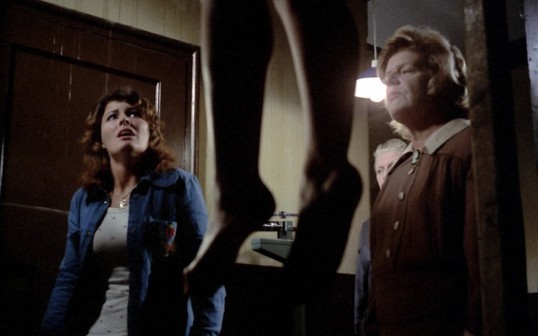
Die Screaming, Marianne (1971, dir by Pete Walker)

The Flesh and Blood Show (1972, dir by Pete Walker)

Frightmare (1974, dir by Pete Walker)

House of Whipcord (1975, dir by Pete Walker)

4 Shots From 4 Films: Special Michele Soavi Edition


4 Shots From 4 Films is just what it says it is, 4 shots from 4 of our favorite films. As opposed to the reviews and recaps that we usually post, 4 Shots From 4 Films lets the visuals do the talking!

Today, we wish a joyous 63rd birthday to Italian filmmaker Michele Soavi!

Soavi, of course, started his career as an actor.  You can find him in Lucio Fulci’s City of the Living Dead and Lamberto Bava’s A Blade In The Dark and Demons.  Reportedly, he came close to playing the role that was eventually played by Giovanni Lombardo Radice in The House On The Edge of the Park.  Soavi, however, eventually moved behind the camera.  He was an assistant director on both Dario Argento’s Tenebrae and Terry Gilliam’s The Adventures of Baron Munchausen and The Brothers Grimm.

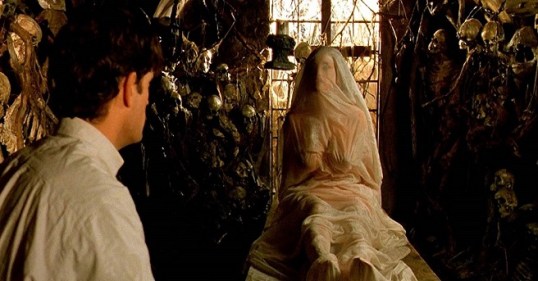
He also, of course, directed four of the greatest Italian horror films of all time, Stage Fright, The Church, The Sect, and Dellamorte Dellamore.  Though a family tragedy temporarily put his career as a director on hold, Soavi has since returned to directing.

In honor of Michele Soavi and his birthday, here are….

4 Shots From 4 Films

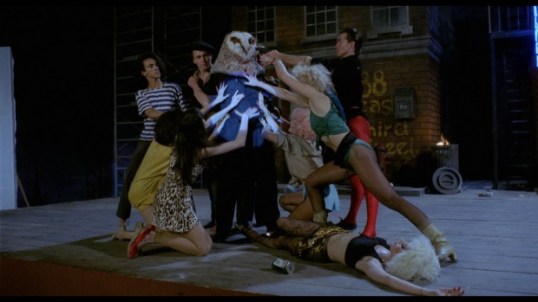
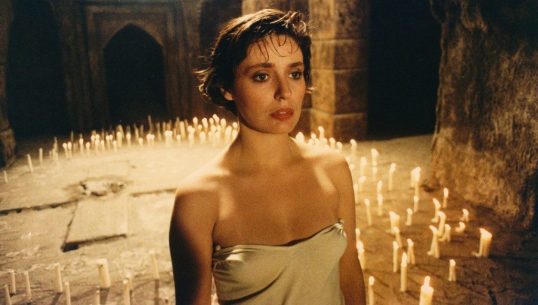
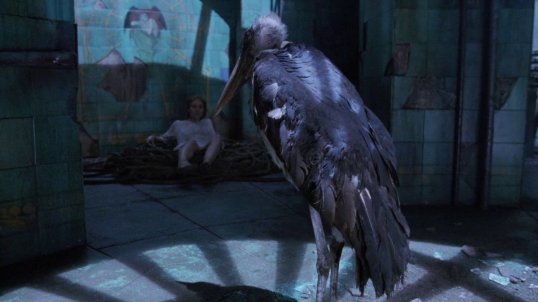
Stage Fright (1987, dir by Michele Soavi)

The Church (1989, dir by Michele Soavi)

The Sect (1991, dir by Michele Soavi)

Dellamorte Dellamore (1994, dir by Michele Soavi)

An Offer You Can’t Refuse #16: Love Me or Leave Me (dir by Charles Vidor)


The 1955 film, Love Me or Leave Me, is a biopic about singer Ruth Etting.

Don’t know who Ruth Etting is?  Well, don’t feel too bad.  I didn’t know who she was either, at least not until I watched this movie.  Judging from the trailer that I’ve embedded at the top of this review, she was apparently well-known enough in the 50s for a biopic about her to be a big deal.  Having now watched Love Me or Leave Me and having done some independent research, I know that Ruth Etting was a popular singer in the 20 and 30s and that she was, for a while, married to a gangster named Marty Snyder (played, in the film, by James Cagney).  I also know that, after her marriage to Snyder ended, she married a composer named Johnny Alderman (played by Cameron Mitchell).

I still couldn’t tell you just how closely Love Me or Leave Me actually sticks to the facts of Etting’s life.  I imagine that there was a quite a bit of liberty taken with the truth, if just because the film was made in 1955 and it’s one of those big, glossy productions where all of the sets are ornate and all of the clothes are to die for and all of the dialogue has an edge that’s somehow both tough and sentimental.  It feels less like real life and more like the way that you would imagine life to be.

The film begins in the roaring 20s, with Marty Snyder intervening when Ruth nearly gets fired for kicking an obnoxious admirer.  For Marty, it’s obsession at first sight and, even after Ruth refuses to spend a weekend in Miami with him, Marty continues to help her out in her career.  Marty uses his considerable clout (and the fact that everyone is scared to death of him and his temper) to get Ruth on the radio and then eventually a job with the Ziegfeld Follies.  Despite the fact that Ruth is in love with Johnny and Johnny is in love with her, she ends up marrying Marty because she feels that she owes her entire career to him.  Even after they get married, Marty continues to be obsessively jealous.  It all eventually leads to a shooting, an arrest, and a final song from Doris Day.

It’s very much a film of the 50s.  I imagine that audiences in 1955 thought it made perfect sense that Ruth would feel that she owed it to Marty to marry him despite the fact that she never really asked him to do anything for her.  Seen today, though, Marty comes across as being a stalker and you really want someone to sit Ruth down and have a conversation with her about it and maybe explain concepts like gaslighting and restraining orders to her.

My advise, though, would be to not think too much about it because seriously, the film’s sets are beautiful, the musical numbers are entertainingly excessive, and Doris Day gives a really good performance.  For those who only know her from the romantic comedies that she did with Rock Hudson, Love Me or Leave Me is a revelation.  She’s likable and she’s tough and she sings as if the world depended upon it and watching her in Love Me Or Leave Me, you not only understand why Ruth Etting became a star but also why Doris Day did as well.  James Cagney also gives a good performance as Marty Snyder, bringing all of his swaggering charisma to the role.  As a fan of exploitation films, the most interesting thing about Love Me or Leave Me to me was getting to see Cameron Mitchell play a nice guy for a change.  Mitchell does an okay job with the role, though Johnny is never as interesting a character as Marty.  In the end, it’s an entertaining film, an ornate visual feast that works as long as you don’t think about it too much.

Love Me or Leave Me is an offer that you can’t refuse.

Previous Offers You Can’t (or Can) Refuse:

  1. The Public Enemy
  2. Scarface
  3. The Purple Gang
  4. The Gang That Could’t Shoot Straight
  5. The Happening
  6. King of the Roaring Twenties: The Story of Arnold Rothstein 
  7. The Roaring Twenties
  8. Force of Evil
  9. Rob the Mob
  10. Gambling House
  11. Race Street
  12. Racket Girls
  13. Hoffa
  14. Contraband
  15. Bugsy Malone

4 Shots From 4 Films: Special Olivia De Havilland Edition


4 Shots From 4 Films is just what it says it is, 4 shots from 4 of our favorite films. As opposed to the reviews and recaps that we usually post, 4 Shots From 4 Films lets the visuals do the talking!

Today, I’m thrilled to wish a happy birthday to two of my favorite people!

First off, let’s all wish a happy birthday to Patrick Smith!  Along with being a contributor here on the Shattered Lens, Patrick is also a Snarkalec in good standing and one of the founders of the Late Night Movie Gang!  I’ve been happy to call Patrick a friend for several years now and I’m thankful to have him as part of a team here on the Shattered Lens!  Happy birthday, Pat!

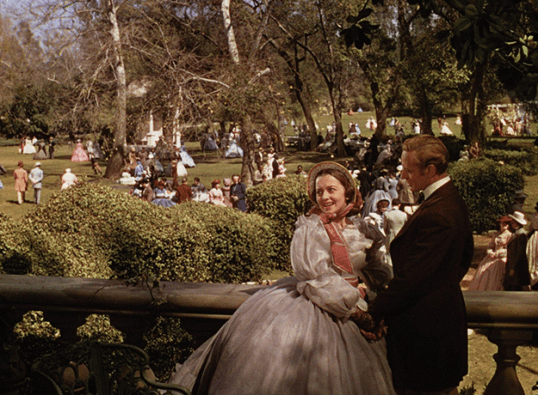
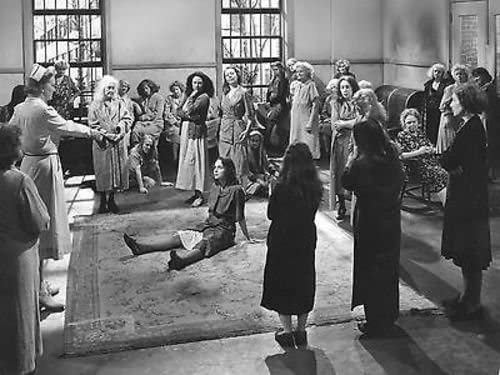
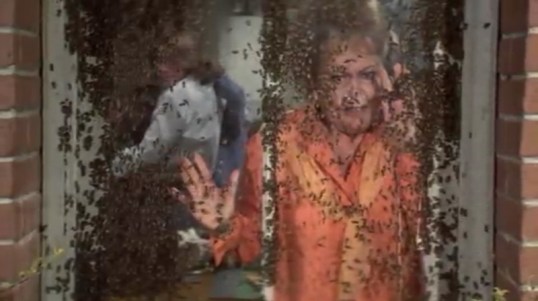
Also born on this day was the one and only Olivia de Havilland.  Olivia is 104 years old today, one of the last remaining stars of Hollywood’s golden age.  Olivia de Havilland, whose career spanned 53 years and who co-starred with everyone from Errol Flynn to James Stewart to Michael Caine, currently lives in Paris and I can’t wait to celebrate her 105th birthday next year.

In honor of a legendary career and life, here are….

4 Shots From 4 Films

The Adventures of Robin Hood (1938, dir by Michael Curtiz)

Gone With The Wind (1939, dir by Victor Fleming)

The Snake Pit (1948, dir by Anatole Litvak)

The Swarm (1978, dir by Irwin Allen)