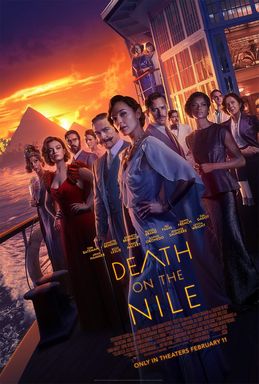
Film Review: Death on the Nile (dir by Kenneth Branagh)


The main mystery at the heart of Kenneth Branagh’s adaption of Agatha Christie’s Death on the Nile is not who committed the film’s murders but just how seriously we, the audience, are meant to take what we’re watching.

In this much-delayed (by COVID and a cast full of actors who could not escape personal scandal) follow-up to 2017’s Murder on the Orient Express, Kenneth Branagh again plays the eccentric detective Hercule Poirot.  Poirot is again in an exotic land, this time Egypt.  And again, circumstances have conspired to isolate him and a group of wealthy and glamorous suspects from the rest of the world.  In Murder on the Orient Express, everyone was stuck on a train.  Here, they are stuck on a boat.  Admittedly, the boat provides a nice view of the pyramids but, eventually, even those testaments to engineering seem to be mocking the people stuck on the boat.  The pyramids, after all, have survived for centuries.  The same cannot be said for the people who have come to see them.  Over the course of the film, there are several murders.  (Indeed, Death on the Nile is significantly bloodier than Murder on the Orient Express and, unlike what happened on the Orient Express, the majority of the victims have done nothing to deserve their grisly fate.)  Like Murder on the Orient Express, Death on the Nile is based on a novel by Agatha Christie.  Branagh changes a few details from Christie’s novel, which is understandable since it’s important to keep the audience guessing.  For instance, Bouc (Tom Bateman), who was Poirot’s assistant in Murder on the Orient Express, returns in Branagh’s film version and provides some continuity between the two films.  It also provides a nice side-mystery as the audience tries to figure out how Poirot and Bouc could just happen to run into each other in Egypt.  Fear not, the film offers up a solution.

As is to be expected, the victims and the suspects are brought to life by a cast of stars and familiar character actors, all of whom act up a storm.  Some, of course, do a better job of embracing the melodrama than others.  Armie Hammer and Gal Gadot play a glamorous couple and, regardless of how we feel about Hammer as a human being, it works because Gadot and Hammer both look they could have stepped out of a sophisticated, 1930s RKO comedy.  (Hammer’s stiff line readings, which are totally appropriate for his character, would actually be a highlight of the film if he wasn’t Armie Hammer.)  Russell Brand is oddly subdued as the doctor with the secret while Dawn French and Jennifer Saunders show up to keep all of the British comedy fanatics happy.  Sophie Okonedo plays a jazz singer and how you react to her character will depend on how much patience you have for anachronistic musical numbers.  (There’s a surprisingly large amount of them.)  Annettte Bening plays Bouc’s mother and there’s really not a subtle moment to be found in her performance but again, it works because Death on the Nile is not a particularly subtle film.  It’s a film that demands a certain amount of calculated overacting and Bening is enough of a veteran performer to deliver exactly what the film needs.

No, there’s nothing particularly subtle about Death on the Nile but then again, that’s always been a part of Kenneth Branagh’s appeal.  Branagh’s endless (and often justified) faith in his own abilities as a director and an actor means that Branagh is willing to do things that others would avoid, whether that means making a 4-hour version of Hamlet or a black-and-white film about growing up in Belfast or, for that matter, a gaudy Agatha Christie adaptation in which he plays the lead detective.  Death on the Nile is a celebration of melodrama, beautiful people, and nice clothes.  Even the fact that the Egyptian backdrops are obviously phony works to the film’s advantage, giving the proceedings a bit of a retro, Hollywood studio system feel.  At its best, Death on the Nile is an homage to old-fashioned camp..

And yet, there are hints that Branagh means for the film to be something more.  The films opens with a prologue, one that is not included in Christie’s book or in anything else that Christie wrote about Poirot.  The prologue, which is filmed in black-and-white, features Poirot getting terribly wounded during World War I and growing his famous mustache to cover his scars.  We also discover that the great love of Poirot’s life was a nurse who died during the war.  Later, while solving the murder, Poirot often talks about how he has shut himself away from the world, never wanting to risk falling in love again.  There’s even a hint that Poirot has fallen for one of the suspects.  Branagh’s a good actor and can obviously pull off Poirot’s inner turmoil but those little serious asides still feel out of place in a film that features Armie Hammer and Russell Brand as romantic rivals.  It’s hard not to wonder if Branagh is in on the joke or if he’s seriously attempting to use Poirot as a symbol for an alienated and traumatized society.

One could argue that Poirot uses his mustache to hide from the world in much the same way that many people have spent the past two years using their masks to hide from COVID.  Except, of course, Death on the Nile was actually filmed three years ago, before anyone had even heard of COVID-19.  The film was first delayed by the theaters shutting down.  It was delayed a second time by the scandals surrounded Armie Hammer.  (Indeed, this film will probably be the last major studio release to feature Armie Hammer.)  It was finally released in February of this year and, within a month, it was on Hulu and HBOMax.  It didn’t exactly kill at the box office but I think Death on the Nile will be rediscovered over the years.  It’s a minor entry in Branagh’s filmography but it’s still enjoyably silly, regardless of whether that was Branagh’s intention or not.
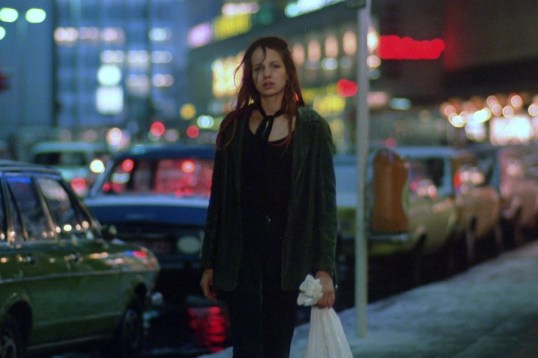
4 Shots From 4 Films: Special Uli Edel Edition


4 Or More Shots From 4 Or More Films is just what it says it is, 4 shots from 4 of our favorite films. As opposed to the reviews and recaps that we usually post, 4 Shots From 4 Films lets the visuals do the talking!

Today, the Shattered Lens wishes a happy 75th birthday to German director, Uli Edel!  It’s time for….

4 Shots from 4 Uli Edel Films

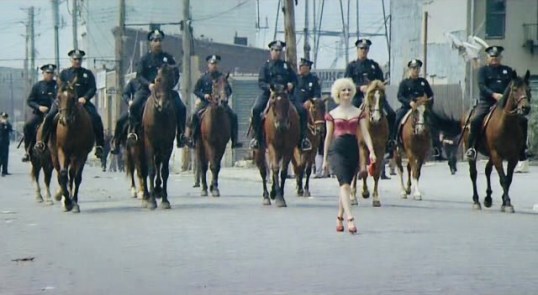
Christiane F. (1981, dir b Uli Edel, DP: Justus Pankau and Jürgen Jürges)

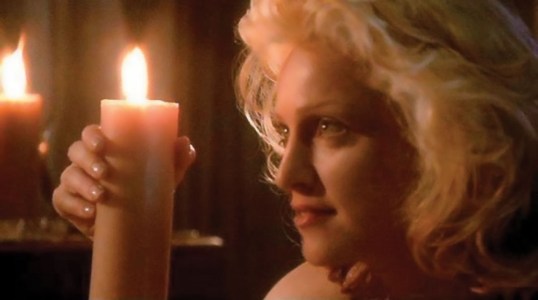
Last Exit to Brooklyn (1989, dir by Uli Edel, DP: Stefan Czapsky)

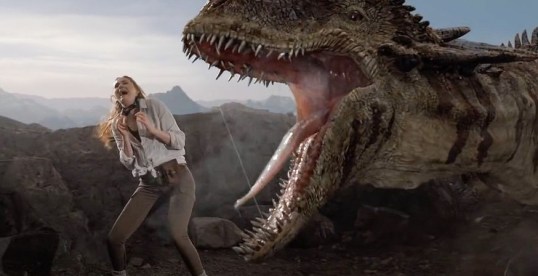
Body of Evidence (1993, dir by Uli Edel, DP: Douglas Milsome)

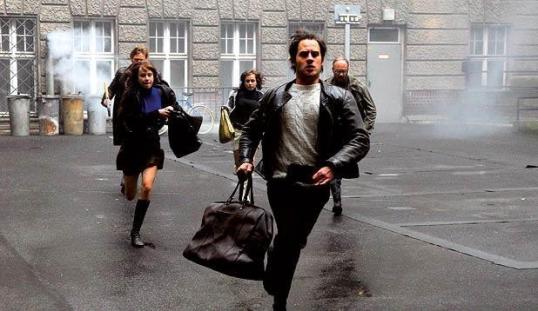
The Baader Meinhof Complex (2008, dir by Uli Edel, DP: Rainer Klausmann)

Scenes That I Love: “I Love The Smell of Napalm in the Morning” from Apocalypse Now (Happy birthday, John Milius!)


Today, the Shattered Lens celebrates the 78th birthday of the iconic screenwriter and director, John Milius!

While director Francis Ford Coppola definitely put his own stamp on 1979’s Apocalypse Now, the film started life as a script written by John Milius and the film itself is full of dialogue that could only have been written by Milius.  The most famous example is Robert Duvall’s monologue about the smell of napalm in the morning.  Actually, the entire helicopter attack feels like pure Milius.  Reportedly, Duvall’s character was originally named Colonel Kharnage but, by the time the movie was made, his name had become Kilgore.  It’s still not exactly a subtle name but it’s not quite as obvious as Kharnage.

(When James Caan read the script, he loved the role so much that he was offended to not be offered it and, as a result, he turned down offers to play not only Willard but also Kurtz.)

Happy birthday, John Milius!

Film Review: The Bubble (dir by Judd Apatow)


Meh.

The Bubble is the latest film from Judd Apatow.  Taking place during the first year of the COVID pandemic, it follows a small group of actors as they attempt to make the sixth installment of the Cliff Beasts franchise.  The spoiled, pampered, and pretentious actors find themselves isolated, not allowed to go anywhere other than the set or the hotel.  The film becomes a disaster as the actors are driven mad by all the rules and the inconvenience that comes along with trying to make a film in the middle of the global pandemic.  When the studio hires a security team to keep anyone from escaping, things get only dumber.

Even by the standards of what we’ve come to expect from Judd Apatow, The Bubble is a notably messy and self-indulgent film.  It’s a bit of a shame really because there’s much about the Pandemic that not only deserves to be satirized but also needs to be satirized.  For much of society, satire will be an important step on the road back to sanity.  Unfortunately, the humor in The Bubble often falls flat because Apatow doesn’t seem to really be sure what his main target is.  Is he targeting COVID hysteria?  Is he targeting the pampered rich people who treated the pandemic like a two-year vacation while people who actually lived paycheck-to-paycheck were risking their health just so they could pay their bills?  Is he targeting bad action movies or pretentious indie directors or actors who think that the world revolves around them?  When Maude Apatow shows up as a TikTok star who has been given a role because she has 2,000,000 followers, is Apatow aiming at the shallowness of social media or is he poking fun at the older generation that can’t understand the kids and their wild and wacky ways?  Apatow seems to be going after everything and everyone but, at the same time, he also expects us to care about these characters when they start demanding to be allowed to leave the set.

The film’s action doesn’t really follow any sort of real storyline.  Instead, it feels like a collection of skits, all piled on top of each other and all dragging on for a bit too long.  Though The Bubble is shorter than the average Apatow film, it’s still over two hours long.  After the first hour, the film suddenly becomes obsessed with random dance scenes.  Usually, I love random dance scenes but, in this case, there’s really no humor or point to them beyond saying, “Wow, these people suck at dancing.”  It’s funny the first time but, by the fourth time, it starts to feel a bit lazy.  The film is like the improv student who, instead of building on the situation and working with his scene partners, just shouts out whatever pops into his head and begs the audience for a laugh.  The film does end on what would be a clever touch if not for the fact that it’s all pretty much lifted from the final scenes of Tropic Thunder.

Lest anyone think that I’m totally trashing the film, I did chuckle a few times.  There’s a recurring bit with Kate McKinnon’s studio exec constantly being at either the beach or on safari.  That made me laugh.  And Keegan-Michael Key, as an actor who has written a spiritual guide, delivers the majority of his lines with just the right amount of self-importance.  For the most part, though, The Bubble falls flat.  This is not the Netflix film to watch this weekend.

Lisa Marie’s Way Too Early Oscar Predictions For March


Now that the awards for last year’s films have been given out and everyone has already started to forget who won, we can start to concentrate on the next batch of Oscar contenders….

Oh, stop yelling.  It’s not that early!

Well, actually, it is way too early.  I mean, we’re still not really sure what is even going to be released this year.  Due to all the COVID delays, we went into 2021 knowing which films we could look forward to, mostly because all of those films were originally supposed to be released in 2020.  Compared to 2021, we’re going into 2022 blind.  The majority of the films that we do know about don’t really sound like Oscar contenders, either.

So, really, the only solution to how to predict the Oscar nominees when you know nothing is to guess.  The films and actors listed below are not there because I have any inside information.  Instead, they are there as a result of some wishful thinking and some educated guesses.  Killers of the Flower Moon was directed by Martin Scorsese, so of course it’s there.  The Fabelmans is there because a lot of people feel that the Academy didn’t show Spielberg and West Side Story enough love this year and I think the fact that the film is autobiographical will make it irresistible to same voters who nominated BelfastNapoleon is there because there might be some lingering guilt over how both Ridley Scott and The Last Duel were utterly ignored this year.  Rustin is there because it’s an Obama production and Hollywood loves the Obamas.  Chris Rock is listed as a supporting actor nominee because it would be the perfect conclusion to the saga of the Oscar Slap.  David Lynch is listed because …. well, I like David Lynch.  Personally, it’s doubtful that Tom Hanks will be able to pull off two nominations in one year but if anyone could do it, it’s Tom!

In other words, don’t take any of these predictions too seriously.  As of now, there are no definite contenders.  These are just some guesses.

Be sure to check out my even more random predictions for February as well!

Best Picture

Babylon

The Fabelmans

Killers of the Flower Moon

Napoleon

Rustin

She Said

TAR

Thirteen Lives

Till

The Woman King

Best Director

Damien Chazelle for Babylon

Chinonye Chukwu for Till

Martin Scorsese for Killers of the Flower Moon

Ridley Scott for Napoleon

Steven Spielberg for The Fabelmans

Best Actor

Colman Domingo in Rustin

Brendan Fraser in The Whale

Tom Hanks in A Man Called Otto

Joaquin Phoenix in The Whale

Brad Pitt in Babylon

Best Actress

Naomi Ackie for I Wanna Dance With Somebody

Cate Blanchett in TAR

Viola Davis in The Woman King

Danielle Deadwyler in Till

Michelle Williams in The Fabelmans

Best Supporting Actor

John Boyega in The Woman King

Leonardo DiCaprio in Killers of the Flower Moon

Tom Hanks in Elvis

David Lynch in The Fabelmans

Chris Rock in Rustin

Best Supporting Actress

Laura Dern in The Son

Sally Field in Spoiler Alert

Greta Gerwig in White Noise

Lily Gladstone in Killers of the Flower Moon

Li Jun Li in Babylon

Film Review: Windfall (dir by Charlie McDowell)


I really hate home invasion movies.

Seriously, it’s always the same thing.  Some mysterious stranger breaks into an empty house and hangs out for a few days, trying on clothes and smoking cigars and drinking whatever’s available in the refrigerator.  Eventually, the couple who own the house comes home.  They get held hostage.  The stranger wastes a lot of time trying to be intimidating.  The husband always tries too hard to take control of the situation.  The wife tries to keep everyone calm.  The stranger is poor.  The husband is rich.  The stranger and the wife form a connection.  Secrets are revealed.  Blah blah blah.

Don’t get me wrong.  There have been a few good home invasion movies.  There are some directors who can pull it off and make a film compelling despite telling an overly familiar story.  Ruggero Deodato brought some life to the genre, with a little help from David Hess and Giovanni Lombardo Radice, in The House At The Edge of the Park.  For the most part, though, the home invasion genre has led to some of the stagiest and most dramatically inert films ever made.

Consider Windfall, which premiered on Netflix earlier this month.  Starring Jason Segel, Lily Collins, and Jesse Plemons, the film has a talented cast.  It’s directed by Charlie McDowell, who previously made a very intriguing  film called The One I Love.  Like Windfall, The One I Love was largely confined to one location but, unlike Windfall, McDowell still managed to use that location to craft an intelligent and compelling film that never felt stagey.  The house in which Windfall takes place is lovely to look at.  The film has many of the ingredients to be a success but it doesn’t have a particularly clever or even interesting script and, as such, it falls flat.

Segel, Collins, and Plemons play three characters who aren’t actually given names.  Segel plays the home invader, who is credited as being “Nobody.”  Plemons is the CEO, a billionaire who is responsible for putting people out of work and who makes his employee signs NDAs.  Collins in the Wife, who is secretly taking birth control pills.  Segel may be a criminal but he’s not a very good criminal, as becomes clear as he continually finds himself being manipulated by his hostages.  Plemons is selfish and never stop talking down to Segel, even when the latter is pointing a gun at him.  Collins claims that she works very hard at running a charity that her husband set up but it’s obvious that she and and her husband have a strained relationship, even before Segel shows up.  There’s a few heavy-handed attempts at social relevance, with Segel and Plemons debating whether or not Plemons deserves to be a billionaire.  The film ends with a twist that Godard or Bunuel could have pulled off but here, it just falls flat.  The action is just too predictable and dramatically inert for Windfall to be anything more than a movie about three talented performers acting up a storm while trying to bring three boring characters to life.

Windfall is a very much a film of its time, both in its focus on inequality and it’s minimalist style.  Like Malcolm and Marie, it’s the type of one-location, small crew film production that was popular at the height of the COVID pandemic and the CEO and his wife heading to their vacation home to hide out from the world will undoubtedly remind some viewers of the wealthy people who were able to isolate themselves during the early part of the pandemic.  So, the film has some historical value if not much dramatic value.  In the end, Windfall serves as a reminder that, when combined with Malcolm and Marie, Netflix has pretty much cornered the market on pretentious, one-location films.

A Few Random Thoughts On The Oscars


Let’s just be honest about this.

No matter what else you or I might have to say about the Academy Awards, the only thing that anyone is going to remember about this year’s ceremony is Will Smith walking up on stage and slapping Chris Rock.  That’s it.  That’s what these awards are going to be known for.  Whenever this ceremony is written about in the future, the accompanying picture won’t be of the cast and crew of CODA.  Instead, it’ll be Will Smith slapping Chris Rock.

The Slap, itself, was unpleasant to watch.  Will Smith sitting back down in his chair and continuing to shout at Chris Rock was unpleasant to watch.  It left me feeling awkward and uncomfortable and I was just watching it on TV.  I can only guess what it was like the celebrities sitting in the auditorium.  You know that they were probably terrified that something unexpected would happen with the vote for Best Actor.  At that moment, there was probably a lot of worry about what would happen if Andrew Garfield pulled off an upset.

Will Smith, however, did win Best Actor.  After making a few “fierce protector” excuses, he did, eventually, get around to apologizing to the Academy and “my fellow nominees.”  He also did a lot of God talk and I’m not sure if it’s a good idea to mention God twenty minutes after slapping someone on national TV.  He mentioned that Denzel Washington had apparently taken him aside and warned him that the Devil would come for him at the height of his success.  Which …. I mean, okay.  The thing is, Will Smith is 53 years old and he’s been a star longer than I’ve been alive.  By this point, the Devil should have moved on to someone else.

A few notes on the rest of the show:

It was good to see the show taking place in a theater, as opposed to a train station.  Just by using an actual theater, this year’s Oscar ceremony was a significant improvement over the previous year’s.

The hosts were pretty boring.  There was nothing gained by having three of them.  Amy Schumer needs to fire whoever picked out her first outfit.  If Schumer picked it out herself, she needs to hire someone to pick out her outfits.  Regina Hall looked lost.  Wanda Sykes was okay but that museum segment bogged down the whole show.

CODA is a likable film and it’s obvious that the audience appreciated its heartwarming approach more than the emotionally detached style of The Power of the Dog.  The fact that this tiny little indie film managed to defeat the expensive Netflix slate was gratifying in a David vs. Goliath sort of way.  CODA, if we’re going to be honest, really does feel more like a made-for-TV movie than a feature film but I think that, emotionally and mentally, people were just ready for a positive movie that wouldn’t leave them feeling disturbed or depressed.  After two years straight of pandemic panic, voters were perhaps not inclined to honor a film that ends with its main character dying on anthrax poisoning.

Dune swept the technical awards and ended the night with the most Oscars.  Dune II is probably going to win Best Picture.

Troy Kostur’s acceptance speech was definitely the most moving part of the night.  It’s a bit of a shame that it’s going to be forever overshadowed by The Slap.

Politically, it was pretty much a typical Oscar ceremony.  At this point, I think anyone who cares enough to be offended by Hollywood’s liberalism has probably already stopped watching the Oscars.

As the Academy promised, the cut categories (i.e., the Oscars there were awarded before the start of the live show) were edited into and shown during the show.  They were awkwardly inserted, so that we would see the people in the auditorium reacting to a speech that was given two hours earlier.  It just came across as weird and fake and, whenever the hosts did anything, I found myself thinking, “They cut categories for this.”  Even a brilliant hosting trio would have suffered as a result.  In this case, you had Amy Schumer dressed like Spider-Man on live TV while the winner for Best Film Editing had to make due with edited highlights of his speech.

What’s hilarious is that, even with all of ABC’s new measures, this year’s Oscar run longer than the previous two years.  The total show clocked in at nearly 220 minutes.  For comparison, that’s 20 minutes longer than The Godfather, Part II.  Will Smith’s acceptance speech alone ran for seven minutes.  Of course, would you want to be the person tasked to tell Will Smith to wrap it up?

It was hard to tell but I guess Army of the Dead won the Twitter Poll and Zack Snyder’s Justice League won the Oscar Cheer Moment thing.  Even from just watching on TV, it was obvious how annoyed everyone in the auditorium was with them.  Personally, I have to respect the ability of the Snyder fandom to game the system.

The interpretive dance that went along with the In Memoriam segment was distracting and annoying.  If I’m ever included in a memoriam segment, I’m hoping there will be no gospel music and no interpretive dancing.

The Godfather tribute was nice but I wish they had gotten Sofia Coppola to do the introduction instead of Sean “Whatever” Combs.

In the end, the Oscars weren’t as much of a train wreck as I thought they would be but it was still a fairly unfortunate ceremony.  The category cutting didn’t sit well and I doubt I’ll ever be comfortable with that.  (It’s something that I hope will be abandoned in the future.)  This ceremony will always be known for The Slap and probably not much else.  I would say that I would hope the Academy and ABC would learn from this but the only thing they care about is ratings.  If the ratings are good, ABC will take the credit.  If the rating are bad, the Academy will get the blame.  Who knows what next year will bring?

Speaking of next year, that’s what I am now concentrating on!  There’s a lot of good movies coming out over the next few months and a whole new Oscar race to prepare for!  Let’s get to it!

Here Are The Oscar Winners


Best Picture — CODA

Best Director — Jane Campion, The Power of the Dog

Best Actor — Will Smith, King Richard

Best Actress — Jessica Chastain, The Eyes of Tammy Faye

Best Supporting Actor — Troy Kostur, CODA

Best Supporting Actress — Ariana DeBose, West Side Story

Best Adapted Screenplay — CODA

Best Original Screenplay — Belfast

Best International Film — Drive My Car

Best Documentary Feature — Summer of Soul

Best Animated Film — Encanto

Best Cinematography — Dune

Best Costume Design — Cruella

Best Film Editing — Dune

Best Makeup and Hairstyling — Eyes of Tammy Faye

Best Production Design — Dune

Best Sound — Dune

Best Visual Effects — Dune

Best Original Score — Dune

Best Original Song — No Time To Die

Best Animated Short Film — The Windshield Wiper

Best Live Action Short Film — The Long Goodbye

Best Documentary Short Film — The Queen of Basketball

6 Directors Who I Hope Win An Oscar In The Next Ten Years: 2022 Edition


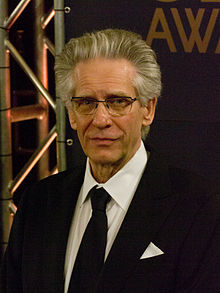
David Cronenberg

The master of the Canadian independent film, David Cronenberg, has never been nominated for an Oscar.  He’s been honored by the Canadian equivalent of the Oscars but the Academy itself has never seen fit to nominate him.

Some of that is because Cronenberg’s early films were all of the horror genre and that’s usually the kiss of death when it comes to the Oscars.  (Though that has started  to change in recent years….)  But, even as Cronenberg moved more into the “mainstream,” the Academy still seemed hesitant to embrace him.  After Map of the Stars, it was rumored that Cronenberg had retired from filmmaking and it seemed like the Academy’s only hope would be to eventually give him an honorary award, as they did for David Lynch last year.

Well, it turns out that the rumors of Cronenberg’s retirement were premature.  He’s got a film coming out later this year.  Now, I realize that David Cronenberg is about 80 years old and, in another ten years, he’ll be at an age when most people are very much retired.  That said, I hope he does have a few more films in him and I would love to see David Cronenberg win his first Oscar between now and 2032!  Seriously, I think his acceptance speech would be killer.  If nothing else, he deserves it for being such a good spot about appearing in Jason X.

Here are five other directors that I would like to see win their first Oscar within the next ten years:

2. Wes Anderson

He was previously nominated for Grand Budapest Hotel.  That this year’s French Dispatch was both praised and criticized as being “the most Wes Anderson film that Wes Anderson has ever made” is a sign of why he sometimes struggles with the Academy.  Anderson is one of those directors who people either love or hate.  You either respond to his trademark quirkiness or you sit there with a permanent frown on your face.  My hope is that enough people will love him that he’ll pick up his first directing Oscar in the next ten years.

3. Fran Kranz

Mass was one of the best and, in its low-key way, bravest films of 2021 and I can’t wait to see what Kranz is going to do next.  Somehow, it seems appropriate that the stoner from The Cabin In The Woods just might be our next great director.

4. Emma Seligman

Shiva Baby was one of the best films of 2021, with director Emma Seligman deftly mixing comedy, horror, drama, and even a little romance with the surest of hands.  Much as with Fran Kranz, I can’t wait to see what she does next.

5. David Lowery

Like Wes Anderson and Richard Linklater, David Lowery is a Texas filmmaker who has emerged as one of the best independent voices working today.  A Ghost Story and The Green Knight both deserved a bit more Oscar consideration than they were given.

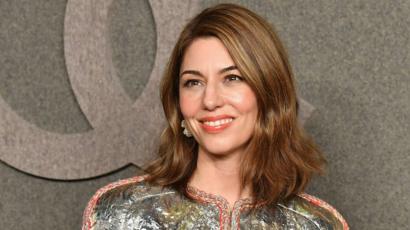
6. Sofia Coppola

Get with it, Academy!