HOOSIERS is based on the true story of a small high school winning the Indiana state basketball championship in 1954. Gene Hackman plays Coach Norman Dale, the once successful college coach who gets a second chance when he’s hired to coach high school basketball in the tiny town of Hickory, Indiana. It takes some time for Coach Dale to whip the talented, but undisciplined young men into a team, and it also takes a little time for local legend Jimmy Chitwood to decide that he will play basketball again. Chitwood had stopped playing prior to the arrival of Coach Dale, but after watching the way the coach goes about his business, he decides he’ll give it another go. After a rough start, the team starts playing good basketball and starts piling up wins as they make their way towards a potential state championship.
HOOSIERS was released when I was 13 years old, and it has been one of my favorite movies for almost 40 years. Why, you might ask? I’ll start by giving you a little Bradley Crain family history. First, basketball was my life growing up. My dad was a teacher and high school basketball coach. From the earliest days I can remember, my dad was teaching me how to play basketball. He taught me the proper techniques for shooting, and through lots of practice I became very good at it. I’m one of those people who could be referred to as a “gym rat.” The only things I wanted to do growing up were play basketball and go fishing. I have a brother who is one year and 5 days older than me, and he loved basketball too. The competition between the two of us made it difficult at times at home, but it also pushed us to get better. Second, I grew up in a small rural community in Arkansas known as Toad Suck, and I went to school in the small town of Bigelow, Arkansas. Bigelow was classified as a “Class B” school for sports purposes. This was the smallest classification that you could be in, and my class consisted of approximately 40 students. Finally, when HOOSIERS came out I was in junior high and my dream was to win a high school state basketball championship. Our teams were good, and I was still young and naïve enough to believe anything was possible. We even won the district championship my 9th grade year, which was the year after HOOSIERS was released. Alas, the chips didn’t fall our way, and even though we won a lot of basketball games over the next few years, there were no state championships. Now back to the movie!
One of my favorite things about HOOSIERS is the cast of young men hired to play the members of the team. So often in movies, the actors that are supposed to be good at basketball are clearly not. That’s not the case in HOOSIERS. These guys can act and are talented basketball players as well. And what can I say about the cast that includes a marvelous Gene Hackman as the coach, and Dennis Hopper as the friendly, but alcoholic dad of one of the players who “knows everything there is to know about the greatest game ever invented.” Hopper is phenomenal, and his work was recognized with an Oscar nomination. Finally, as the team is making its way towards the championship, each player is given a moment to shine and do their part to help the team. I liked that. It all makes for an exciting and heartwarming true story that pretty much anyone can enjoy. I still love the movie now just thinking about it!
4 (or more) Shots From 4 (or more) Films is just what it says it is, 4 (or more) shots from 4 (or more) of our favorite films. As opposed to the reviews and recaps that we usually post, 4 (or more) Shots From 4 (or more) Films lets the visuals do the talking.
88 years ago, Dennis Hopper was born in Dodge City, Kansas.
It seems rather appropriate that one of America’s greatest cinematic outlaws was born in a town that will be forever associated with the old west. Dennis Hopper was a rebel, back when there were actual consequences for being one. He started out acting in the 50s, appearing in films like Rebel Without A Cause and Giant and developing a reputation for being a disciple of James Dean. He also developed a reputation for eccentricity and for being difficult on set and he probably would have gotten completely kicked out of Hollywood if not for a somewhat improbable friendship with John Wayne. (Wayne thought Hopper was a communist but he liked him anyways. Interestingly enough, Hopper later became a Republican.) Somehow, Hopper managed to survive both a raging drug addiction and an obsession with guns and, after a mid-80s trip to rehab, he eventually became an almost universally beloved and busy character actor.
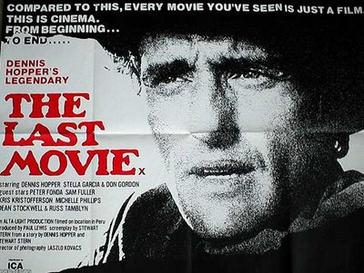
Hopper, however, always wanted to direct. He made his directorial debut with 1969’s Easy Rider, a film that became a huge success despite being an infamously chaotic shoot. The success of Easy Rider led to the Hollywood studios briefly trying to produce counter-culture films of their own. Hopper was given several million dollars and sent to Peru to make one of them, the somewhat dangerously titled The Last Movie. Unfortunately, The Last Movie, was such a bomb that it not only temporarily derailed Hopper’s career but it also turned Hollywood off of financing counter culture films. Hopper spent a decade in the Hollywood wilderness, giving acclaimed performances in independent films like Tracks and The American Friend, even while continuing to increase his reputation for drug-fueled instability. Hopper would eventually return to directing with his masterpiece, 1980’s Out of the Blue. (Out of the Blue was so controversial that, when it played at Cannes, Canada refused to acknowledge that it was a Canadian production. It played as a film without a country. Out of the Blue, however, is a film that has stood the test of time.) Unfortunately, even after a newly cleaned-up Hopper was re-embraced by the mainstream, his directorial career never really took off. He directed 7 films, of which only Easy Rider and Colors were financially successful. Contemporary critics often didn’t seem to know what to make of Dennis Hopper as a director. In recent years, however, Hopper’s directorial efforts have been reevaluated. Even The Last Movie has won over some new fans.
Today, on his birthday, we honor Dennis Hopper’s directorial career with….
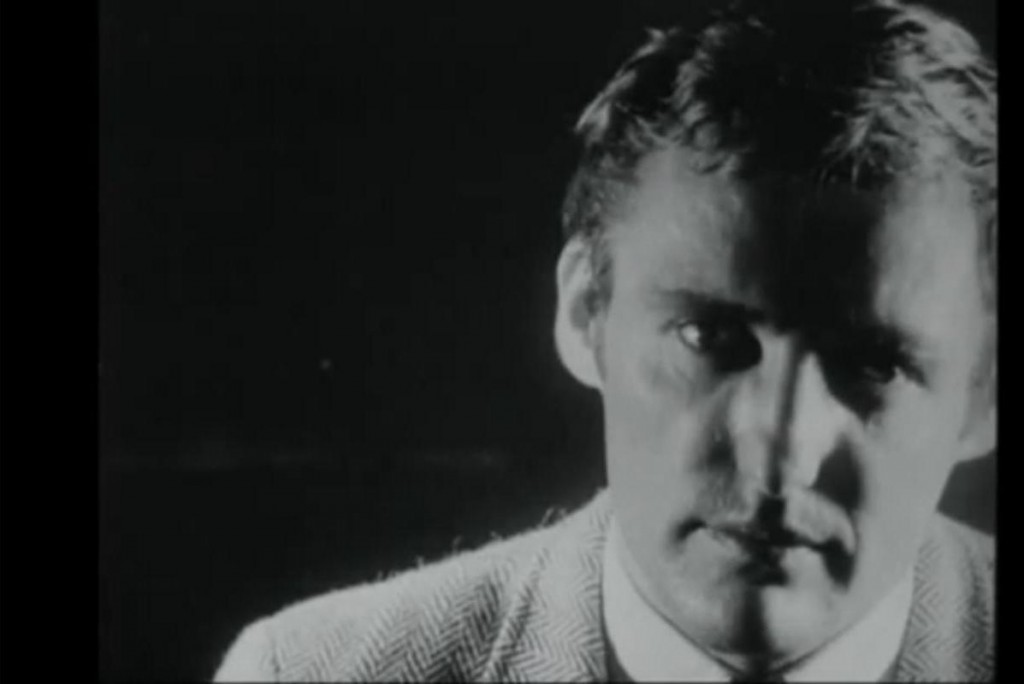
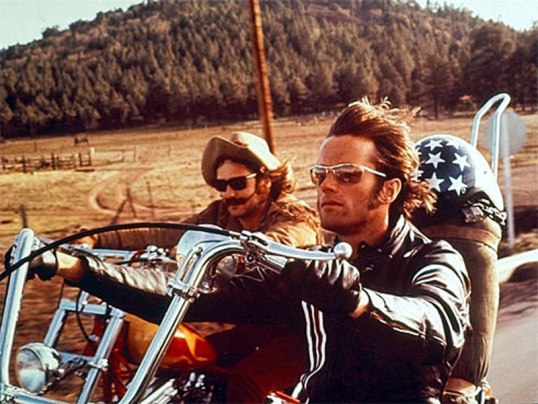
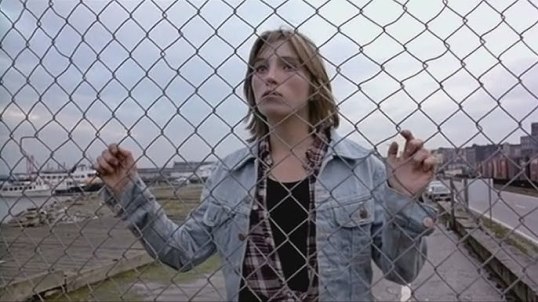
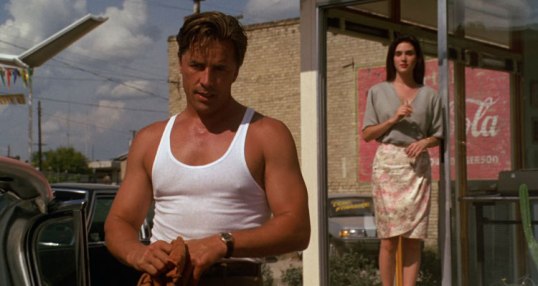
4 Shots From 4 Dennis Hopper Films
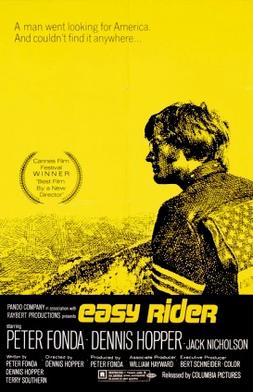
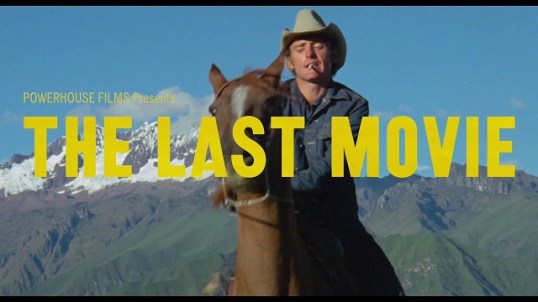
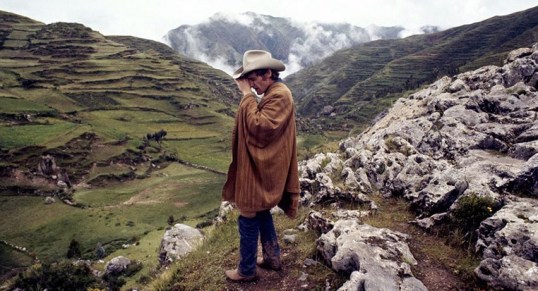
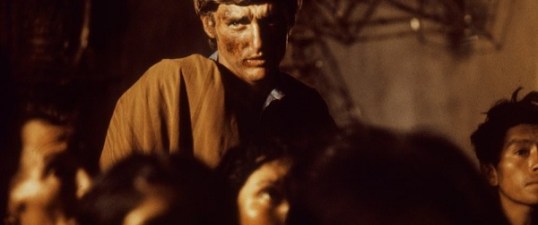
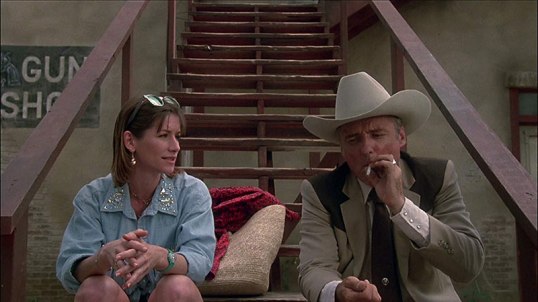
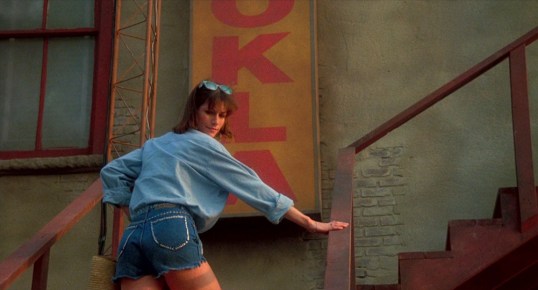
Easy Rider (1969, dir by Dennis Hopper, DP: Laszlo Kovacs)The Last Movie (1971, dir by Dennis Hopper, DP: Laszlo Kovacs)Out of the Blue (1980, dir by Dennis Hopper, DP: Marc Champion)The Hot Spot (1990, dir by Dennis Hopper, DP: Ueli Steiger)
If you can’t get down to New Orleans today (because maybe you have a sprained ankle like me), fear not! Mardi Gras has been immortalized in a number of films. In fact, some have theorized that the whole reason 1969’s Easy Rider was filmed was because Dennis Hopper wanted to go to New Orleans.
The Mardi Gras sequence occurs towards the end of Easy Rider. After a long and eventful journey, Wyatt (Peter Fonda) and Billy (Dennis Hopper) reach New Orleans and experience Mardi Gras with two women that they met at a brothel (Karen Black and Toni Basil). However, the Mardi Gras scenes were actually amongst the first to be shot and Hopper actually filmed several hours of documentary footage of New Orleans’s most famous party. If you watch the footage, you can see bystanders looking directly at the camera. They were not extras hired for the film. They were people on the street who became a part of one of the most important indie films in the history of American cinema. These scenes were shot guerilla style, without permits or, by most reports, any advanced planning.
Hopper also filmed Fonda having an actual bad acid trip. For obvious reasons, Fonda was not happy about being filmed in that condition but he did say, in later interviews, that Hopper made the right decision to include the footage in the film.
For the record, I relate to Toni Basil in this film. She’s having fun and dancing no matter what.
Sometimes, you see a film that is just so weird and incoherent that you can’t help but love it.
Of course, it also helps if the film has a once-in-a-lifetime cast of actors who you would never expect to see acting opposite each other.
For me, that’s certainly the case with 1990’s Backtrack. Directed by Dennis Hopper, Backtrack is a film about an artist (Jodie Foster, channeling Jenny Holzer) who witnesses a mob murder committed by Joe Pesci, Dean Stockwell, Tony Sirico, and John Turturro. An FBI agent played by Fred Ward suggests that the artist should go into the witness protection program but she doesn’t want to give up her life as a New York sophisticate who creates challenging LED displays and who can eat Sno Balls whenever she gets the craving for one. (Yes, this is a plot point.) Turturro and Sirico break into the artist’s apartment and kill her boyfriend, who is played by a wide-eyed Charlie Sheen. The artist puts on a blonde wig and goes on the run, eventually getting a job in advertising.
Realizing that his men can’t get the job done, mob boss Vincent Price decides to hire a legendary hitman played by Dennis Hopper (who also directed this film) to track down the artist. However, the hitman becomes fascinating with the artist’s work, finds pictures of her posing in black lingerie, and immediately falls in love with her. Not only does he wants to save her life but he wants her to wear the same lingerie exclusively for him. (Yes, this is a pretty big plot point.) At first, the artist refuses and views the hitman as being some sort of pathetic perv. But then she discovers that he’s covered her bed with Sno Balls….
Meanwhile, a young Catherine Keener shows up as the girlfriend of a trucker who briefly considers giving the artist a ride to Canada.
And then Bob Dylan shows up, handling a chainsaw.
And there’s Helena Kallianiotes, the outspoken hitch-hiker from Five Easy Pieces, yelling at Joe Pesci!
And there’s Dennis Hopper’s The Last Movie co-star, Julie Adams! And there’s Toni Basil! And there’s director Alex Cox!
Dennis Hopper not only starred in Backtrack but he also directed and it’s obvious that he placed a call into just about everyone he knew. In fact, one could argue that the only thing more shocking than Vincent Price showing up as a mob boss is that Peter Fonda, Karen Black, Elliott Gould, Robert Walker Jr., and Kris Kristofferson are nowhere to be found in the film. Hopper’s first cut of Backtrack was reportedly 3 hours long but the studio cut it down to 90 minutes, renamed it Catchfire, and Hopper insisted on being credited as Alan Smithee. Later, Hopper released a two-hour version with the Backtrack title and his directorial credit restored.
Regardless of which version you see, Backtrack is an odd film. It’s hardly the first film to be made about a hit man falling for his target. What distinguishes this film is just how bizarre a performance Dennis Hopper gives in the role of the hitman. It’s as if Hopper gave into every method instinct that he had and the end result was a mix of Blue Velvet‘s Frank Booth and the crazed photojournalist from ApocalypseNow. Jodie Foster’s cool intelligence makes her the ideal choice for a conceptual artist but it also makes it hard to believe that she would fall for a jittery hitman and, in her romantic scenes with Hopper, Foster often seems to be struggling to resist the temptation to roll her eyes. Somehow, their total lack of romantic chemistry becomes rather fascinating to work. They are two talented performers but each appears to be acting in a different movie. What’s interesting is that I think a movie just about Hopper’s spacey hitman would be interesting (and, if you’ve ever seen The American Friend, it’s hard not to feel that such a movie already exists) but I think a movie about just about Foster’s artist and her life in New York would be just as fascinating. Taken as individuals, the artist and the hitman are both compelling characters. Taken as a couple, they don’t belong anywhere near each other.
But let’s be honest. This is a film that most people will watch for the parade of character actors delivering quirky dialogue. Even if one takes Hopper and Foster out of this mix, this is an amazingly talented cast. One need only consider that John Turturro did Do The Right Thing before appearing in this film while Joe Pesci and Tony Sirico did Goodfellas immediately afterwards. This film features a once-in-a-lifetime cast, made up of actors who were apparently told to do whatever they felt like doing. Turturro plays up the comedy. Sirico plays his role with cool menace. Stockwell barely speaks above a whisper. Fred Ward plays the one sane man in a world of lunatics. Vincent Price delivers his line as if he’s appearing in one of Roger Corman’s Poe films and somehow, it makes sense that, in the world of Backfire, an Italian gangster would have a snarky, mid-Atlantic accent.
It’s an odd little film, an example of 80s filmmaking with a 70s sensibility. While it’s not touched with the lunatic genius that distinguished Hopper’s The Last Movie, Backtrack is still something that should be experienced at least once.
As some of our regular readers undoubtedly know, I am involved in a few weekly live tweets on Twitter and Mastodon. I host #FridayNightFlix every Friday, I co-host #ScarySocial on Saturday, and I am one of the five hosts of #MondayActionMovie! Every week, we get together. We watch a movie. We tweet our way through it.
Tonight, at 10 pm et, #FridayNightFlix has got 1990’s Backtrack, an enigmatic thriller starring Jodie Foster, Dean Stockwell, Joe Pesci, John Turturro, Vincent Price, Fred Ward, Charlie Sheen, Tony Sirico, Bob Dylan, and Dennis Hopper (who also directed).
If you want to join us this Friday, just hop onto twitter, start the movie at 10 pm et, and use the #FridayNightFlix hashtag! It’s a friendly group and welcoming of newcomers so don’t be shy.
Backtrack is available on Prime and Tubi! See you there!
The story behind the making of 1971’s The Last Movie is legendary. It’s also a bit of a cautionary tale.
In 1969, Hollywood was stunned by the box office success of an independent, low-budget counter-culture film called Easy Rider. Easy Rider not only made a star out of Jack Nicholson but it was also the film that finally convinced the studios that the way to be relevant was not to continue to crank out big budget musical extravaganzas like Doctor Doolittle and Hello, Dolly! Instead, it was decided that the smart thing to do would be to hire young (or, at the very least, youngish) directors and basically just let them shoot whatever they wanted. The resulting films might not make much sense to the executives but, presumably, the kids would dig them and as long as the kids were paying money to see them, everyone would continue to get rich. Because Dennis Hopper had directed Easy Rider, he suddenly found himself very much in demand as a director.
Of course, almost everyone in Hollywood knew Dennis Hopper. Long before he became an icon of the counter-culture, Dennis Hopper had been a part of the studio system. John Wayne even referred to Hopper as being his “favorite communist.” Everyone knew that Dennis could be a bit arrogant. Everyone knew that Dennis was very much into drugs and that, as a result, he had a reputation for being a bit unstable. Everyone knew that Dennis Hopper deliberately cultivated an image of being a bit of a wild man and a revolutionary artist. But Dennis Hopper had just directed Easy Rider and Universal was willing to give Hopper some money to go down to Peru and direct his follow-up.
The Last Movie was a film that Hopper had been planning on making for a while. The film’s original script told the story of an aging and broken-down stuntman named Kansas who retires to Mexico and searches for a gold mine with a friend of his. Hopper first tried to get the film going in 1965, with Montgomery Clift in the lead role. After Clift died, Hopper tried to interest John Wayne in the starring role but, though Wayne enjoyed having Hopper in his films so that he could threaten to shoot him whenever Abbie Hoffman said something shocking, he had no interest in being directed by him. When Universal finally agreed to put up the money for the film, Hopper offered the lead role to Jack Nicholson. Nicholson turned it down and told Hopper that it was obvious that Dennis wanted to play the role himself. Dennis decided that he agreed with Nicholson and he cast himself as Kansas. Dennis also made the fateful decision to not only change the story’s setting to Peru but to also film on location.
Dennis and a group of friends flew down to Peru, which, at that time, was the cocaine capitol of the world. Drug use was rampant on the set, with Dennis reportedly being one of the main offenders. The cast and crew filmed during the day and partied at night and no one was particularly sure what the film was supposed to be about. Amazingly, Hopper finished filming on schedule and within budget but, much as he did with Easy Rider, he also overfilmed and ended up with 40 hours of footage. Not wanting to be bothered by the studios, Hopper edited the footage in his compound in Taos, New Mexico. Working slowly and continuing to consume a large amount of drugs and alcohol, Hopper still managed to put together a film that had a straightforward storyline. When Hopper showed his initial cut to filmmaker Alejandro Jodorowsky, the director of El Topo accused Hopper of being too conventional in his approach, which led to Hopper chopping up the film and reassembling it. Finally, after spending over a year working with the footage, Hopper turned in his final edit.
Universal had no idea what to make of the film that Hopper delivered to them. Still, they released it with the hope that the same crowd that loved Easy Rider would embrace The Last Movie. While the film did win an award at the Venice Film Festival, critics hated it and, even worse, audiences stayed away. The film’s reception was so overwhelmingly negative that Hopper found himself largely exiled from Hollywood, with only a few directors (like Francis Ford Coppola) willing to take the chance of working with him. It wasn’t until the 80s, when he finally got clean and sober, that Dennis Hopper was able to reestablish himself as a character actor and, ultimately, a beloved cultural institution.
But what about The Last Movie? Was is it really as bad as the critics claimed? Or was it, as some more recent reviewers have suggested, an unacknowledged masterpiece that was ahead of its time? I recently watched The Last Movie to find out for myself.
Despite its reputation, The Last Movie gets off to a pretty strong start. Samuel Fuller (playing himself) is directing a hilariously over-the-top and violent western in the mountains of Peru. Kansas (Dennis Hopper) is working as a stuntman. He’s fallen in love with a local sex worker named Maria (Stella Garcia). Kansas is meant to be an aging Hollywood veteran, someone who has broken a lot of bones and who carries a lot of aches as a result of his line of work. (One can see why Hopper initially imagined an actor like John Wayne in the role.) He knows that this is going to be his last job and, as we see over the first 25 minutes of the film, he feels alienated from the rest of the cast and crew. Admittedly, Hopper does appear to be a bit too young for the role. The ideal Kansas would have been someone like Ben Johnson, L.Q. Jones, or perhaps Warren Oates. But, still, Hopper does a good job of capturing Kansas’s mixed feelings about the western that’s being filmed around him.
A lot of familiar faces pop up in the film’s fictional western. Dean Stockwell plays an outlaw. Jim Mitchum, Russ Tamblyn and Kris Kristofferson plays his associates. Peter Fonda is the youthful sheriff. Michelle Phillips is the daughter of the town’s banker and apparently, she’s also the girlfriend of one of the outlaws. We watch as the actors pretend to shoot guns and kill each other while the cameras are rolling, just to get up off the ground once “Cut” is yelled. When a local Indian who has been cast as an extra grows upset at the violence, an assistant director explains to him that no one really dies while the cameras are rolling. When shooting wraps, the film company goes home but Kansas stays behind with Maria. One day, the local priest (Tomas Milian) warns Kansas that the local indigenous people have moved into the abandoned film set and are trying to shoot their own movie. Kansas discovers that they have built wooden cameras and wooden boom mics and that their chief is giving orders in the style of Sam Fuller. They’re also firing the guns that the Americans left behind.
The first part of the film works quite well. Hopper’s camera captures the beautiful and isolated Peruvian landscape. The violent western is a pitch perfect and affectionate parody of a generic studio film. Though Hopper is a bit too young for the role, he still does a good job of capturing Kansas’s alienation from his fellow Americans. Even more importantly, the first part of the film seems to have an identifiable theme. The American film crew invaded an isolated part of Peru and changed the culture of the natives without even realizing it. Now, they’ve left but the natives are still dealing with the after effects of the American “invasion.” It’s easy to see, within that part of the story, a critique of both American culture and American foreign policy.
The second part of the film is where things start to fall apart. Kansas meets an old friend named Neville (Don Gordon). Neville has discovered a gold mine in the Peruvian mountains. With Kansas as his partner, he tries to get a businessman named Harry Anderson (Roy Engel) to invest in it. Kansas and Neville try to impress Harry and his wife (Julie Adams, best-known for being stalked by The Creature From The Black Lagoon). Kansas and Neville take the Andersons to a brothel and, in the process, Kansas offends Maria. Kansas then paws Mrs. Anderson’s fur coat and mentions that human beings are covered in hair. For all of their efforts, Harry will not invest, no matter how desperately Neville begs him to reconsider.
The second part of the film drags, with many of the scenes being obviously improvised between Hopper, Gordon, Garcia, Engel, and Adams. Unfortunately, the improved conversations aren’t particularly interesting and they tend to go on forever. Usually a reliable character actor, Don Gordon ferociously chews the scenery as Neville and it doesn’t take long before one grows tired of listening to him yell. (Gordon was far more impressive in Hopper’s Out of the Blue.) With the use of improvisation and overlapping dialogue, the second half of the film tries to feel naturalistic but instead, it’s a migraine-inducing method exercise gone wrong. It’s also during the second part of the film that a “scene missing” title card flashes on the screen, an indication that the discipline that Hopper showed as a director during the beginning of the film is about to be abandoned.
Finally, the third part of the film — well, who knows? The final 25 minutes of the film is collection of random scenes, some of which may be connected and some of which may not. The natives have decided that the only way to properly end their “film” is to kill Kansas. Kansas is shot several times and rides away on his horse. Suddenly, Kansas is back at his home and Maria is taunting him for getting shot. Then, Kansas is riding his horse again. Then suddenly, Dennis Hopper and Tomas Milian are laughing at the camera. A script supervisor tries to get Dennis to look at the shooting schedule while Dennis drinks. This happens:
Milian points out that the blood on Hopper’s shirt is dry. Hopper looks at his shoulder, where Kansas was previously shot, and says that someone needs to add his scar before he can shoot the scene. Ah! So, now we’re acknowledging that it’s all just a movie. Thanks, Dennis! Suddenly, Dennis is Kansas again and he’s collapsing over and over again in the dust. He appears to be dead but no, now he’s Dennis again and he’s standing up and smiling at the camera. And now, he’s singing Hooray for Hollywood. And now, suddenly, Kansas and Neville are talking about The Treasure of the Sierra Madre and then….
Well, let’s just say that it goes on and on before finally ending with a scrawled title card.
It’s a disjointed mess and it’s all the more frustrating because the first 30 minutes of the film is actually pretty good. But then, Dennis apparently remembered that he was supposed to be the voice of the counter-culture and he gave into his most pretentious impulses. Of course, just because a film is a mess, that doesn’t mean that it can’t be entertaining. And again, the first part of the film is entertaining and third part of the film is weird enough that it’ll hold most people’s attention for at least a few minutes. But the middle section of the film is so slow and pointless that it pretty much brings down the entire film.
In the end, what is The Last Movie about? In The American Dreamer(a documentary that was filmed while Hopper was editing The Last Movie in New Mexico), Hopper spends a lot of time talking about revolution and taking over Hollywood but The Last Movie is hardly a revolutionary film. The film is at its most alive when it is focused on the shooting of its fictional western. For all the satirical pokes that The Last Movie takes at the studio system, it’s obvious that Hopper had a lot of affection for Old Hollywood and for directors like Sam Fuller. Kansas may say “Far out,” but he’s hardly a hippie. Even the film’s jumbled finale seems to be saying, “It’s all Hollywood magic!” In the end, the film’s call for a new style of cinema is defeated by its love for the old style of cinema.
Instead, I think The Last Movie works best when viewed as a portrait of paranoia. Hopper himself admitted that he was naturally paranoid and the heavy amount of drugs that he was doing in the 70s didn’t help. One reason why Hopper filmed in Peru and edited in New Mexico was so the studios couldn’t keep track of him and, while directing, he worried about being arrested by the Peruvian secret police. As an actor, Hopper plays Kansas as being someone who views the world with caution and untrusting eyes. He doesn’t trust the other members of the film crew. He loves Maria but he’s still convinced that she’s going to betray him. Even the natives ultimately try to destroy him and the script supervisor tries to get him to stick to the shooting schedule. The film works best as a disjoined portrait of one man’s paranoid and fatalistic world view.
The Last Movie pretty much ended the studio’s attempts to harness the counter-culture by giving money to self-described revolutionaries. The new wave of directors — like Spielberg and Lucas — may have shared Hopper’s then-politics but they weren’t looking to burn down the system. (Hopper himself later became a Republican.) The Last Movie may not have been the literal last movie but it was, for a while at least, the last of its kind.
Ah, the 80s! Ronald Reagan was president. America was strong. Russia was weak. The economy was booming. The music was wonderful. Many great movies were released, though most of them were not nominated for any Oscars. This is the decade that tends to drive most Oscar fanatics batty. So many good films that went unnominated. So many good performers that were overlooked. Let’s dive on in!
1980: The Shining Is Totally Ignored
Admittedly, The Shining was not immediately embraced by critics when it was first released. Stephen King is still whining about the movie and once he went as far as to joke about being happy that he outlived Stanley Kubrick. (Not cool, Steve.) Well, none of that matters. The Shining should have been nominated across the board. “Come and play with us, Danny …. AT THE OSCARS!”
1981: Harrison Ford Is Not Nominated For Best Actor For Raiders of the Lost Ark
Raiders received a lot of nominations. Steven Spielberg was nominated for Best Director. The film itself was nominated for Best Picture. (It lost to Chariots of Fire.) But the man who helped to hold the film together, Harrison Ford, was not nominated for his performance as Indiana Jones. Despite totally changing the way that people looked at archeologists and also making glasses sexy, Harrison Ford was overlooked. I think this was yet another case of the Academy taking a reliable actor for granted.
1982: Brian Dennehy Is Not Nominated For Best Supporting Actor For First Blood
First Blood didn’t receive any Oscar nominations, not even in the technical categories. Personally, I think you could argue that the film, which was much more than just an action film, deserved to be considered for everything from Best Actor to Best Director to Best Picture. But, in the end, if anyone was truly snubbed, it was Brian Dennehy. Dennehy turned Will Teasle into a classic villain. Wisely, neither the film nor Dennehy made the mistake of portraying Sheriff Teasle as being evil. Instead, he was just a very stubborn man who couldn’t admit that he made a mistake in the way he treated John Rambo. Dennehy gave an excellent performance that elevated the entire film.
1984: Once Upon A Time In America Is Totally Ignored
It’s not a huge shock that Once Upon A Time In America didn’t receive any Oscar nominations. Warner Bros. took Sergio Leone’s gangster epic and recut it before giving it a wide release in America. Among other things, scenes were rearranged so that they played out in chronological order, the studio took 90 minutes off of the run time, and the film’s surrealistic and challenging ending was altered. Leone disowned the Warner Bros. edit of the film. Unfortunately, in 1984, most people only saw the edited version of Once Upon A Time In America and Leone was so disillusioned by the experience that he would never direct another film. (That said, even the edited version featured Ennio Morricone’s haunting score, which certainly deserved not just a nomination but also the Oscar.) The original cut of Once Upon A Time In America is one of the greatest gangster films ever made, though one gets the feeling that it might have still been too violent, thematically dark, and narratively complex for the tastes of the Academy in 1984. At a time when the Academy was going out of its way to honor good-for-you films like Gandhi, it’s probable that a film featuring Robert De Niro floating through time in an Opium-induced haze might have been a bridge too far.
1985: The Breakfast Club Is Totally Ignored
Not even a nomination for Best Screenplay! It’s a shame. I’m going to guess that the Academy assumed that The Breakfast Club was just another teen flick. Personally, if nothing else, I would have given the film the Oscar for Best Original Song. Seriously, don’t you forget about me.
1986: Blue Velvet Is Not Nominated For Best Picture
Considering the type of films that the Academy typically nominated in the 80s, it’s something of a shock that David Lynch even managed to get a Best Director nomination for a film as surreal and subversive as Blue Velvet. Unfortunately, that was the only recognition that the Academy was willing to give to the film. It can also be argued that Kyle MacLachlan, Laura Dern, Isabella Rossellini, and Dean Stockwell were overlooked by the Academy. Dennis Hopper did receive a Supporting Actor nomination in 1986, though it was for Hoosiers and not Blue Velvet.
1987: R. Lee Ermey Is Not Nominated For Best Supporting Actor For Full Metal Jacket
One of the biggest misconceptions about Full Metal Jacket is that R. Lee Ermey was just playing himself. While Ermey was a former drill instructor and he did improvise the majority of his lines (which made him unique among actors who have appeared in Kubrick films), Ermey specifically set out to play Sgt. Hartmann as being a bad drill instructor, one who pushed his recruits too hard, forgot the importance of building them back up, and was so busy being a bully that he failed to notice that Pvt. Pyle had gone off the deep end. Because Ermey was, by most accounts, a good drill instructor, he knew how to portray a bad one and the end result was an award-worthy performance.
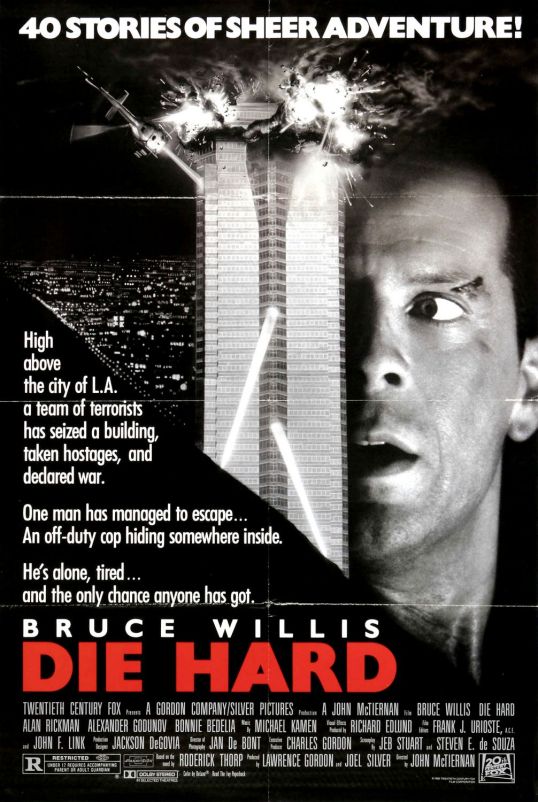
1988: Die Hard Is Not Nominated For Best Picture, Actor, Supporting Actor, or Director
Die Hard did receive some technical nominations but, when you consider how influential the film would go on to be, it’s hard not to feel that it deserved more. Almost every action movie villain owes a debt to Alan Rickman’s performance as Hans Gruber. And Bruce Willis …. well, all I can say is that people really took Bruce for granted.
1989: Do The Right Thing Is Not Nominated For Best Picture
Indeed, it would take another 30 years for a film directed by Spike Lee to finally be nominated for Best Picture.
Agree? Disagree? Do you have an Oscar snub that you think is even worse than the 10 listed here? Let us know in the comments!
Queen of Blood (1966, dir by Curtis Harrington, DP: Vilis Lapenieks)
Here’s a question: what happens when Roger Corman buys the rights to two Russian science fiction films, decides to jettison basically everything but the special effects footage, and then hires experimental filmmaker Curtis Harrington to shoot an entirely new film around that footage?
You end up with the 1966 film, Queen of Blood!
Not that that’s a bad thing, mind you. Queen of Blood is actually pretty good and director Harrington manages to smoothly integrate the Russian footage with the new footage. Basically, it works out so that you’ll see a Russian shot of the spaceship taking off or landing and then you’ll see a shot of John Saxon, Dennis Hopper, or Basil Rathbone sitting on a set and pretending like they’re in space.
The film opens with Dr. Faraday (Basil Rathbone) discovering that aliens have been transmitting a message to Earth. They’re sending an ambassador to meet with the Earthlings but the aliens’ spaceship ends up crash landing on Mars! Faraday arranges for an Earth spaceship, the Oceano, to go to Mars and rescue the ambassador.
Aboard the Oceano is a cast made up of a few familiar faces. John Saxon plays Allan, who is the de facto leader of the expedition and also engaged to marry Dr. Faraday’s assistant, Laura (Judi Meredith). A young-looking Dennis Hopper is Paul Grant, an astronaut. Don’t get too excited about Hopper being in the cast. Queen of Blood was made when Hopper was still trying to pursue mainstream film stardom so he gives a rather bland performance here. There’s a few scenes where you can tells that Hopper is on the verge of smirking at some of his dialogue but, for the most part, he plays the role extremely straight. Rounding out the crew is Anders (Robert Boon) and Tony (Don Eitner), neither one of whom would go on to star in Easy Rider, Blue Velvet, or Nightmare on Elm Street.
It’s a difficult journey. The Oceano keeps running into Russian-filmed turbulence on the way to Mars. When they do land, they discover that the ambassador (Florence Marly) is waiting for them to rescue her. She doesn’t talk much nor does she have any interest in eating Earth food. She does seem to like every member of the crew except for Laura. Of course, the ambassador’s defining trait is that she likes to drink blood….
All things considered, Queen of Blood works pretty well. While none of the performances are particularly memorable (though Basil Rathbone does bring some old school class to what is essentially a cameo role), Curtis Harrington does a great job creating and maintaining a properly ominous atmosphere. It takes a while for the crew to finally find the Queen of Blood but, when they do, Harrington gets every bit of creepiness that he can out of the character. The film even ends on an appropriately dark note, suggesting that the human race may be just too stupid to survive.
Queen of Blood is an entertaining B-movie. Watch it the next time you’re in the mood for some intergalactic blood-sucking fun!
Long before he became Hollywood’s favorite quirky character actor, Dennis Hopper was a young performer who was known for his devotion to the method and for being more than a little difficult. In fact, directors like Henry Hathaway had gotten so frustrated with Hopper and his refusal to “compromise his art,” that, by the time the 1960s rolled around, Hopper had gone from being a promising young star to being virtually blacklisted. He had gone from scene-stealing turns in Rebel Without a Cause and Giant to struggling to get anyone at the major studios to even admit to knowing who he was.
Unable to get a job on a mainstream film, Hopper teamed up with another unconventional talent, director Curtis Harrington. A film critic-turned-experimental filmmaker, Harrington was talented but, like Hopper, he had a reputation for being an eccentric. An openly gay artist who was living and working a time when that was still a crime in some states, Harrington gravitated to other outsiders so it was perhaps inevitable that he and Dennis Hopper would become early collaborators and make a film together.
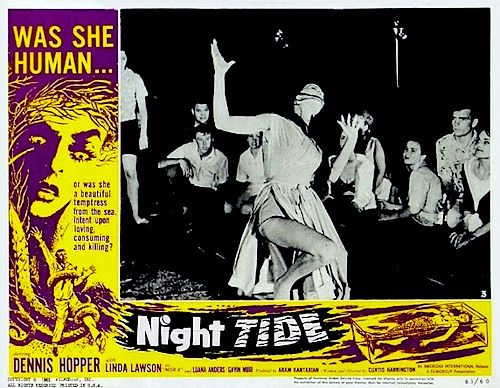
That film was 1961’s Night Tide. Harrington directed while Hopper played Johnny, a naïve young sailor who, while in on leave in Santa Monica, meets a mysterious woman named Mora (Linda Lawson). Mora works as a mermaid at a sideshow. Her boss is the overly possessive and somewhat brutish Captain Samuel Murdock (Gavin Muir). Captain Murdock makes it clear that he doesn’t want Johnny to have anything to do with Mora. Is it because he’s worried about losing Mora or is there another, more supernatural reason?
Johnny hears rumors that the men who fall in love with Mora tend to disappear. Mora, herself, explains that she’s a Siren. Her destiny is to lead sailors to their doom. Johnny tells her that’s ridiculous but what if she’s right?
It’s a strange film, one that moves at its own slow and rather deliberate pace. As Mora, Linda Lawson delivers her lines hesitantly, as one might expect from someone who is having to pretend to be a human being. Meanwhile, Dennis Hopper gives a compelling but nervous performance as Johnny. As written, Johnny is a pretty bland character but Hopper plays up Johnny’s sense of isolation. He’s far from home, he doesn’t know many people in town, and the woman he loves just explained that she’s a sea monster. One can understand why Johnny is a bit jumpy. There’s a few scenes where Hopper’s devotion to the method works against him. He’s convincing when he’s at the center of the scene but a bit too fidgety in the scenes where he just has to listen to other people speak. But, ultimately, Hopper’s performance works. He plays Johnny with a mix of fresh-faced innocence and hints of instability.
As I said, it’s not a conventional film. It moves at its own dream-like pace. The film was shot in black-and-white and that’s the version to see. Avoid the colorized version, in which the colors are so garish that they ruin the film’s surreal atmosphere. Night Tide is an experiment that won’t be for everyone but, when taken on its terms, it’s definitely intriguing.
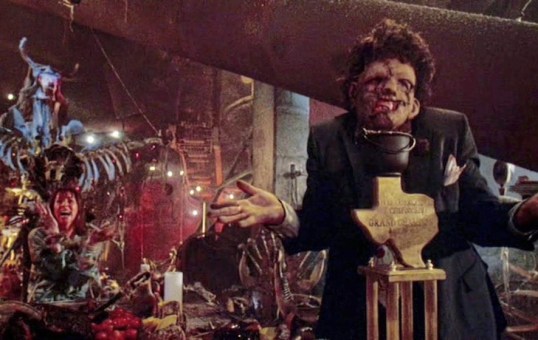
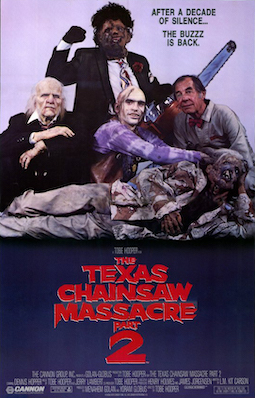
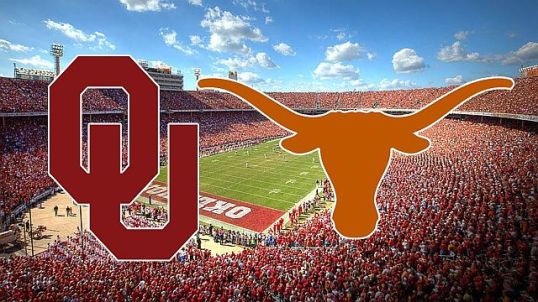
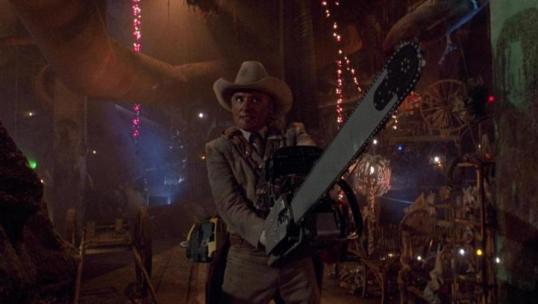
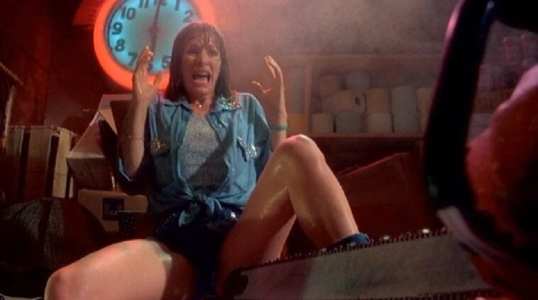
First released in 1986, The Texas Chainsaw Massacre Part 2 opens with two idiots driving down an isolated highway in Texas. They’re heading down to Dallas for the Red River Showdown, the annual football game between Oklahoma U. and the University of Texas at Austin. They’re drunk, of course. And, being rich kids in the mid-80s, they’ve got a car phone. They place a call to a local radio DJ named Stretch (Caroline Williams, giving a great performance) and they force her to listen as they harass the driver of a passing truck. Of course, when a chainsaw-wielding Leatherface (Bill Johnson) emerges from the truck and kills both of them, Stretch hears that as well.
Yes, Leatherface and the entire family are back. When last seen at the end of 1974’s The Texas Chainsaw Massacre, Leatherface was dancing with his chainsaw while the morning sun shined down on the Texas countryside. Now, he and the family have moved to North Texas and the eldest brother, Drayton Sawyer (Jim Siedow), has become a bit of a local celebrity due to his chili. (Everyone loves Drayton’s chili but that’s mostly because they don’t know who the main ingredient is.) Though one of the brothers was killed at the end of the original film, he’s been replaced by the manic Chop-Top (Bill Moseley), who has a metal plate in his head. Of course, Grandpa (Ken Evert) is still alive. He’s well over a hundred years old but he still enjoys trying to wield a hammer.
The family is being pursued by Lefty Enright (Dennis Hopper), a crazed Texas ranger who is also the uncle of Sally and Franklin Hardesty, who were both victimized in the first film. (Sally, we’re told, is in a mental institution. As for Franklin, a skeleton in a wheelchair does make an appearance at one point.) Lefty approaches Stretch to get a copy of the tape of the two drunk idiots being killed by Leatherface. Unfortunately, the family also discovers that Stretch has the tape and they soon come after her as well….
The Texas Chainsaw Massacre Part 2 is not as universally beloved as the first film but I like it. It helps, of course, to know something about Texas-OU weekend. Imagine Mardi Gras without the nudity or the beads but with a lot more beer and a lot more frat boys and you have a pretty good idea of what Texas-OU weekend is like in Dallas. The entire city goes crazy as it’s invaded by football fans from Oklahoma and Austin. Why are they playing football in Dallas as opposed to their own cities? Dallas is considered to be neutral ground and the fact that they need neutral ground to play a football game should tell you just how invested people get in that one game. Texas-OU weekend is all about excess and the same could be said about The Texas Chainsaw Massacre Part 2.
With the original film, Tobe Hooper fooled audiences into thinking that they were seeing more gore than they actually were. The first Texas Chainsaw Massacre is nearly bloodless. Hooper takes the opposite approach to the sequel, filling the screen with blood and viscera. For that reason, Part 2 is still controversial among fans of the original Texas Chainsaw Massacre films but I think Hooper made the right decision. Attempting to duplicate the original’s atmosphere would have been impossible. Instead of just remaking the original film, Hooper did something different. As well, as opposed to the more subtle social satire of the first Texas Chainsaw Massacre, the humor in Texas Chainsaw Massacre Part 2 is far broader and a bit more hit-and-miss. But again, it all links back to Texas-OU weekend. There may not be much that’s subtle about The Texas Chainsaw Massacre Part 2 but the same can be said of the Red River showdown and Texas-OU Weekend. For that matter, the same can be said for much of Texas in general and Dallas in specific. Like me, Tobe Hopper was a Texan. True Texans know what makes our state great but we also know what makes our state totally batshit insane. Tobe Hooper got Texas in a way that all the filmmakers from up North never will.
That’s not to say that The Texas Chainsaw Massacre Part 2 is a perfect film, of course. The film’s second half, which takes place almost entirely in the underground caverns in which the Sawyers have made their home, is considerably less compelling than the first. The scene where the Sawyers attempt to get Grandpa to bludgeon Stretch with a hammer goes on forever and it’s far less effective than when they tried to get Grandpa to do the same thing to Sally in the first film. As well, it’s hard not to be disappointed with Drayton’s transformation from being ambiguously friendly in the first film to being a flat-out villain in the second. The first film showed that Jim Siedow was a far better actor than one might guess from the sequel.
But here’s what does work. Bill Moseley’s performance as Chop Top is completely manic and over-the-top and, at times, a little bit annoying. But he’s also so completely unhinged and Moseley is so uninhibited in the role that it’s impossible to look away whenever he’s onscreen. Dennis Hopper, who was just starting to make his Hollywood comeback when he appeared in this film, plays Lefty as being so obsessive that sometimes, he seems like he might be just as dangerous as the people that he’s pursuing. Hopper makes the character sympathetic, though. There’s a gleam of madness in his eyes but the viewer never doubts his love for his family. It takes a special actor to pull off the scene where Lefty discovers Franklin’s remains and Hopper was exactly that actor. And finally, there’s Caroline Williams, giving a strong and inspiring performance as Stretch and never allowing the character to become a helpless victim. Stretch may scream (because who wouldn’t in that situation) but she never stop fighting. The scene where she “charms” Leatherface is the epitome of The Texas Chainsaw Massacre Part 2. It’s over the top, excessive, borderline offensive, sickly funny, and yet somehow very effective. If nothing else, The Texas Chainsaw Massacre Part 2 is one of the few of the 80 slasher films to acknowledge what’s really going on with those boys and their chainsaws, machetes, and knives.
Though it may not be as good as the original, The Texas Chainsaw Massacre Part 2 holds up well on its own. It’s an effective mix of satire and horror, featuring a strong heroine and a great performance from Caroline Williams. Hell, I think I’m going to be Stretch for Halloween this year!