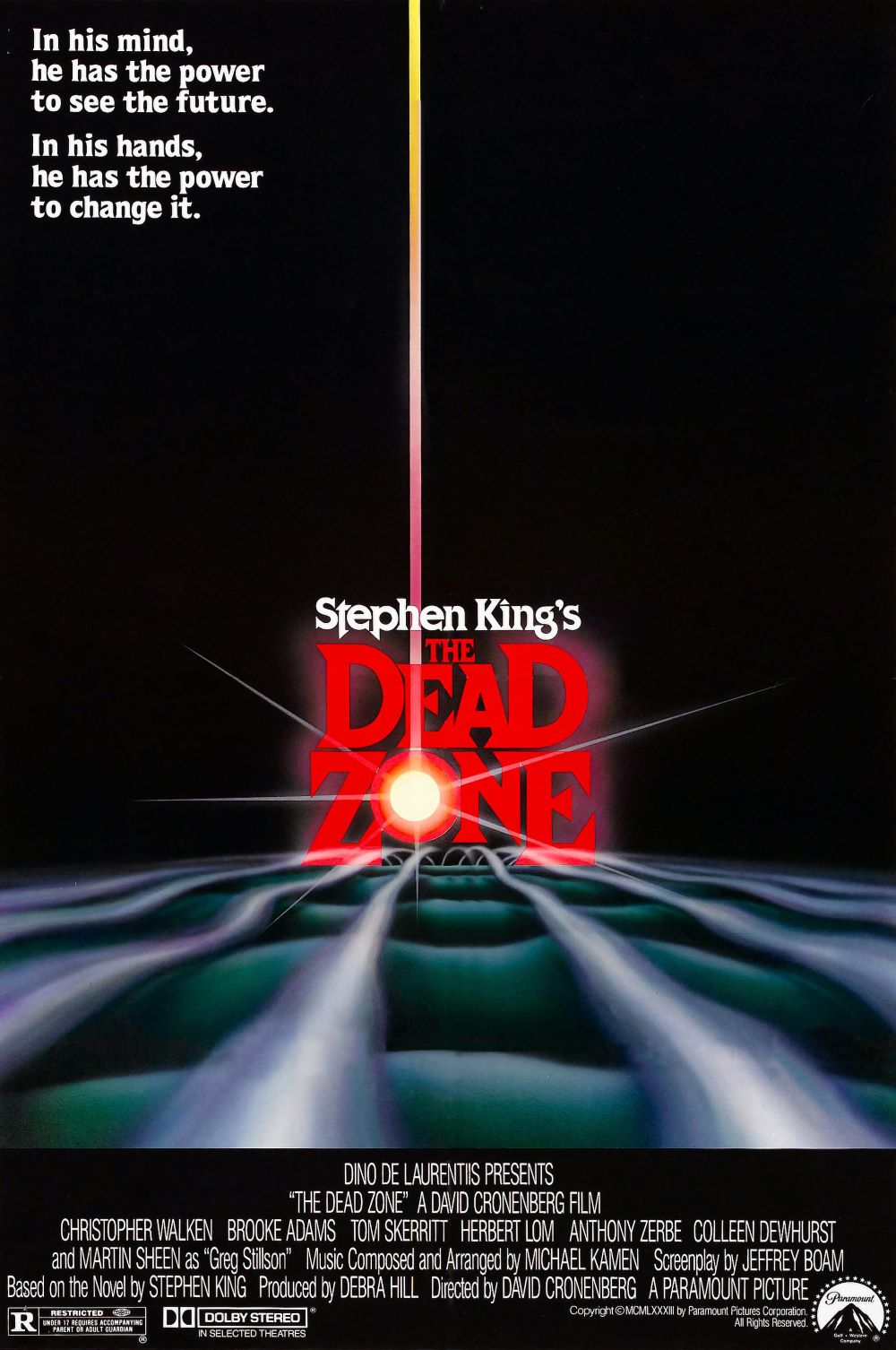
Horror Review: The Dead Zone (dir. by David Cronenberg)


“Bless me, Father, for I have sinned. I had the power… and I tried to prevent what I saw.”Johnny Smith

In 1983, David Cronenberg adapted Stephen King’s The Dead Zone with a distinctive emphasis on mood, morality, and psychological depth rather than traditional horror spectacle. The film follows Johnny Smith (Christopher Walken), a small-town schoolteacher whose life transforms irrevocably after a traumatic car accident leaves him in a five-year coma. Upon awakening, Johnny discovers he possesses psychic abilities that allow him to see the past and future by touch. Rather than a gift, this power becomes a heavy burden, isolating him and forcing him into wrenching moral choices.

Cronenberg’s direction is meticulous and deliberately restrained. The film’s muted color palette and stark winter landscapes visually echo Johnny’s emotional isolation and the fragility of human existence. His careful, often gliding camera movements create a mounting sense of quiet dread, while minimalistic sound design underscores moments of revelation with haunting subtlety. This subdued style elevates the film’s psychological impact, transforming it into a thoughtful and melancholy meditation on the cost of harrowing knowledge.

Significantly, The Dead Zone marks a departure from Cronenberg’s signature body horror. Instead of the grotesque physical transformations and visceral mutations that characterize much of his other work, here Cronenberg turns inward. The real horror lies in the malleability of the mind and the elusive nature of perception—how reality, memory, and the future are unstable constructs that can shift and fracture under psychic strain. This thematic focus on the impermanence and distortion of mental reality touches on some of Cronenberg’s deepest artistic fascinations.

The restrained treatment of body horror in The Dead Zone previews the director’s later, more psychologically driven films such as A History of ViolenceEastern Promises, and A Dangerous Method, where character studies and narrative depth take precedence over startling visuals. In this early pivot, Cronenberg demonstrates that his mastery lies not only in visual spectacle but in probing the profound emotional and moral dilemmas faced by his characters. The vision-focused horror here is cerebral and grounded, rooting supernatural phenomena in human frailty and ethical complexity.

Christopher Walken’s nuanced portrayal is the emotional heart of the film. He captures Johnny’s vulnerability, weariness, and profound solitude, portraying a man burdened by a cursed knowledge that isolates him from the world. Martin Sheen plays Greg Stillson, the ambitious and morally bankrupt politician whose rise Johnny must foretell and who embodies the film’s central threat. The supporting cast, including Brooke Adams as Johnny’s lost love Sarah and Tom Skerritt as Sheriff Bannerman, delivers compelling and authentic performances that humanize the film’s intimate, small-town environment.

Several changes from King’s novel sharpen the film’s thematic focus. The novel’s sprawling plot, including a serial killer subplot and a brain tumor storyline symbolizing Johnny’s mortality, is pared down or omitted. Despite this trimming, the serial killer element retained in the film remains chilling and effective. It highlights the darker repercussions of Johnny’s psychic gift and injects a tangible sense of dread, reinforcing the psychological weight Johnny carries. This subplot grounds the supernatural within a disturbing reality, illustrating the violent and tragic circumstances Johnny must grapple with as part of his burden.

The concept of the “dead zone” itself shifts in meaning. Originally, the term referred to parts of Johnny’s brain damaged by the accident, blocking certain visions. Cronenberg reinterprets it as a metaphor for the unknown and unknowable parts of the future—the gaps in psychic clarity that allow for free will and change. This subtle shift reshapes the narrative toward a more ambiguous, hopeful meditation on destiny and human agency.

Compared to King’s novel, Cronenberg’s Johnny is more grounded and isolated. The novel frames Johnny’s struggle within a broader spiritual and fatalistic context, highlighted by the looming presence of a brain tumor and a nuanced exploration of hope versus resignation. The film, by contrast, focuses on the emotional and moral fatigue induced by Johnny’s psychic gift, emphasizing his loneliness and reluctant responsibility rather than supernatural destiny.

Walken’s restrained, haunting performance strips away mythic grandeur to reveal a deeply human character. The film’s narrowed narrative tightens focus on Johnny’s internal anguish and his difficult ethical choices, making his plight intimate and richly relatable.

On a thematic level, The Dead Zone contemplates fate, free will, and sacrifice. Johnny’s psychic abilities act as a draining, almost chthonic force, transforming him into a reluctant prophet who is tasked with intervening in grim futures at great personal cost. The film’s bleak winter setting visually reflects Johnny’s alienation, while its deliberate pacing highlights the exhaustion and heartbreak that comes with such knowledge.

Ultimately, Cronenberg’s The Dead Zone goes beyond supernatural thriller conventions. It is a profound meditation on empathy, sacrifice, and the human condition—where the greatest horrors are internal, and the cost of knowledge is both psychic and emotional. Johnny Smith emerges as a tragic, flawed figure wrestling with unbearable burdens.

Cronenberg’s direction and the impeccable performances make The Dead Zone a standout in King adaptations. The film’s enduring impact lies in its rich thematic texture, its moral ambiguity, and its unflinching exploration of human frailty, all conveyed through a director shifting skillfully from physical body horror to psychological and existential terror. The film remains as haunting and resonant now as it was upon release, a testament to the synergy of Cronenberg and King’s extraordinary talents.
Late Night Retro Television Review: Monsters 2.19 “Far Below”


Welcome to Late Night Retro Television Reviews, a feature where we review some of our favorite and least favorite shows of the past! On Wednesdays, I will be reviewing Monsters, which aired in syndication from 1988 to 1991. The entire series is streaming on YouTube.

This week, there’s something in subways!

Episode 2.19 “Far Below”

(Dir by Debra Hill, originally aired on February 25th, 1990)

Alex Kritz (John Scott Clough) is a city bureaucrat who has been sent to do an audit and discover why one subway maintenance crew is getting paid so much despite the high rate of turnover on the crew.  The head of the crew, Dr. Vernon Rathmore (Barry Nelson), not only overpays his workers but he also offers them full insurance and a pension.  Kritz not only wants to understand why Dr. Rathmore is spending so much money but also how he has been able to get away with it for so long.

Dr. Rathmore invites Kritz to watch a monitor so he can observe two of his workers gunning down what appears to be a Yeti with glowing white fur.  Kritz is outraged, accusing Rathmore of killing a homeless man.  Rathmore explains that his section of the subway is full of prehistoric, ape-liked monsters who feast on human flesh.  Rathmore has taken it upon himself to keep the population under control.

When Kritz again accuses Rathmore of genocide, Rathmore reveals that he actually has two of the monsters locked away in the office.  And one of them is his wife!  It turns out that she has quite the appetite for nosey bureaucrats….

This was a simple but entertaining episode of Monsters, one that was well-acted by Nelson and Clough and which made great use of two sets, Rathmore’s office and the atmospheric and dark subway tunnels where Rathmore’s men work.  The escalating tension between Rathmore and Kritz was well-handled, with Rathmore growing more and more annoyed with Kritz’s questions.  Based on all of the urban legends that have sprung up over the years about monsters living in the subways and the sewers (check out Raw Meat for another example), this was an effective episode that managed to tell a complete and interesting story in only 20 minutes.  Monsters was a frequently uneven show, as is true of most anthology series.  Fortunately, for every couple of bad episodes that the viewer got, the viewer would also occasionally get a masterpiece like Far Below.

Far Below was directed by Debra Hill, who is probably best-known for co-producing several of John Carpenter’s early films, including the original Halloween. This episode was Hill’s directorial debut and it was one of only two things she directed.  (The other was an episode of a 90s sitcom called Dream On.)  She did an excellent job with this episode and it’s a shame that she didn’t direct more.

Finally, this was the final performance of actor Barry Nelson.  Nelson was the first actor to ever play James Bond, playing an Americanized version of the character in a 1950s television adaptation of Casino Royale.  (Nelson technically played “Jimmy Bond.”)  Modern horror fans know Nelson best for his wonderful performance as the blandly professional Mr. Ullman in The Shining.  The scene where Nelson (as Ullman) cheerfully talks about what happened to the last caretaker and his family is one of my favorite bits of acting of all time.  Nelson retired after this episode of Monsters and it’s nice to able to say that he went out on a high note.

Halloween Kills (dir. by David Gordon Green)


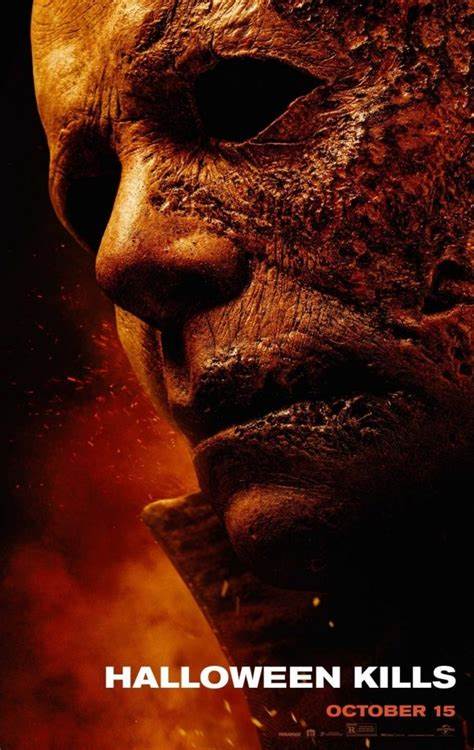
You have to appreciate a movie that does what it’s poster claims.

Halloween Kills might not be the best film in a 40 year old franchise that branched off into 3 separate storylines, a remake (with a sequel) and an Anthology entry in the middle. Still, it’s so much better than 1995’s Halloween 6: The Curse of Michael Myers and Halloween: Resurrection. It brings the carnage in quick, and despite some missteps, it tries to do some good. However, there’s only so much you can bring to the table with a story that’s gone on for this long. I didn’t outright hate it, but I didn’t see myself returning to it in the way I did with Malignant or Dune, even though it’s available to watch on NBC/Universal’s Peacock streaming service.

Much like 1981’s Halloween II, Halloween Kills takes place just a few minutes right after 2018’s Halloween, with the Strode house burning and Michael believed to be stuck in the basement. Laurie Strode (Jamie Lee Curtis) is injured and on her way to the hospital with her daughter Karen (Judy Greer) and granddaughter (Andi Matichak). The town of Haddonfield is attempting to recover from yet another Myers incident. You’d think that after 40 years of all this, they’d have an entire Myers Assault Force or something, but we’re not quite there yet. After all, in this continuity change, Haddonfield only has Michael’s childhood incident and the 1978 one. Despite this, the town has finally had enough of Michael’s antics and band together (with Tommy in the lead) to finish him. To quote Laurie, “Evil Dies Tonight!”

They’re so doomed.

Mind you, this isn’t the first time that Haddonfield’s tried to turn the tables on Myers, though it is a first for this particular universe. They tried back in Halloween 4, but it didn’t quite work out. Halloween Kills poses a quiet question of who is worse: The single killer on the loose, or the angry mob that’s after him?

I’ll admit that I enjoyed the return of some familiar faces in Pamela Susan Shoop (the nurse who was with Loomis when Michael stole their station wagon) and Kyle Richards (Lindsay, the little girl who Laurie was babysitting). Tommy Doyle is there as well, but the adult version of him is played by Anthony Michael Hall (The Dark Knight). They even managed to bring back Charles Cyphers as the former Haddonfield Sheriff. I’ll give this version kudos for delivering some fan service with those cameos. By far, the best addition to the cast was a cameo by The Wolf of Snow Hollow‘s Jim Cummings as one of the Haddonfield Police. Having played a cop in both of his previous films, it was a perfect fit here.The film also weaves a bit of Saw-like magic by expanding on the 1978 Halloween Night. While it’s not a perfect fit to the original events, it adds a somewhat fresh coat of paint to the new storyline that’s in effect here. It’s one of the places where the movie actually shines. They can weave a whole new backstory for Michael, and I’m here for it.

The gore levels in Halloween are your typical fare, as this version of Michael is much more vicious than his earlier counterparts. We can chalk that up to the changing times, I imagine. Like every Halloween, there are a few unnecessary kills – random families that are taken out just to up the body count while you may wonder what these individuals have to do with anything. If you don’t have any problems with that, then the film’s definitely worth a watch. At least in Halloween & Halloween II, the murders were connections to Laurie (her friends) or obstacles in Michael’s way (the Hospital Staff). With Halloween Kills, Michael just executes anyone who’s in his vicinity, which was the same problem I had with the film before it.

The other issue is that Laurie sits this fight out for most the film. With her injuries being pretty extensive, she instead takes on the role of harbinger, reminding her children and her Sheriff friend (played by Will Patton) that Michael is coming and has to be stopped. She’s the new Loomis, for the most part. Anyone walking into this film expecting a face off between Laurie and Michael will probably want to hold out for the next installment.

The Carpenters (Cody and his dad, John) do a good job, musically. There’s no complaints there. I also have to admit that the sound quality is also pretty good in this film. Overall, Halloween Kills is a fun film if you’re not expecting too much and you need something to close your night with. With a runtime of about an hour and 50 minutes, it doesn’t lag too much, though it stumbles a little through the town revenge plot. It’s definitely worth it to get to the last 15 minutes or so.

Escape From New York (dir. by John Carpenter)


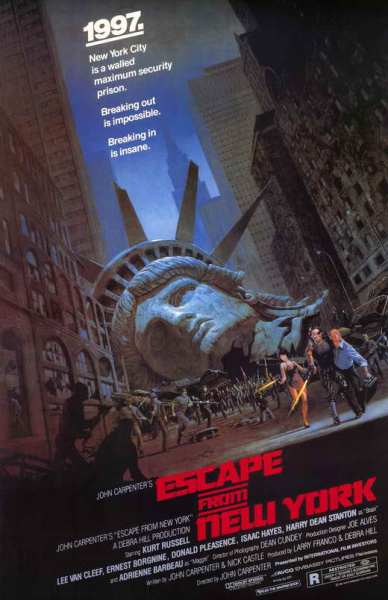
escape-from-new-york-movie-poster-1981-1020189511Before you start, note that Escape From New York was recently showcased in Jeff’s 4 Shots from 4 Films post to celebrate Kurt Russell’s birthday. For another take on the film, check out Jeff’s review. Please check that out, and then double back here, if you want. 
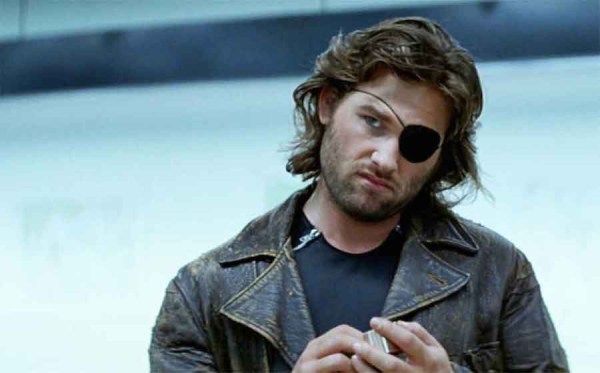
When I was little, my Aunt would sometimes take my older brother and I with her into Manhattan. In a little movie theatre near 82nd Street, she’d get us a set of tickets for a film, help us get seated with snacks and then either stay for the movie or leave to perform housekeeping duties for someone nearby if she had work and we weren’t allowed to hang out on site. John Carpenter’s Escape From New York wasn’t a film she stayed for (she loved Raiders of the Lost Ark), but it was okay. I was introduced to Snake Plissken, who ended up being cooler than Han Solo to my six year old eyes. Instead of being the hero, here was a criminal being asked to a mission. It showed me that even the bad guys could be heroes, now and then (or better yet, not every hero is cookie cutter clean). The film became an instant favorite for me. As I also do with Jaws and The Fog, I try not to let a year go by without watching Escape From New York at least once. It was my first Carpenter film.

The cultural impact of Escape From New York is pretty grand, in my opinion. It had a major influence on Hideo Kojima’s Metal Gear video games and also spawned a few comics with Plissken, complete with Jack Burton crossovers with Carpenter’s Big Trouble in Little China.

Carpenter brought in most of the same crew he worked with in his previous movies. The film was the third collaboration between Carpenter and Debra Hill, who previously worked with him in 1978’s Halloween and 1980’s The Fog. Though Hill didn’t write this one, she was still the producer, along with Larry Franco. There’s also a bit of speculation on whether Hill performed the opening vocals describing New York or Jamie Lee Curtis handled that. Cinematographer Dean Cundey (who worked on most of Carpenter’s early films) returned to help give the movie it’s gritty look, which is helpful considering how much of it takes place either at night or in darkened rooms. Another interesting part of the production is James Cameron, who was the Director of Photography when it came to the effects and matte work. One of the best effects shots in the film has Plissken gliding over Manhattan, which was designed by Effects member John C. Wash. The shot on his plane’s dashboard of the city was made from miniature mock up with reflective tape that made it appear as if it were digital, which was pretty cool given that they weren’t on an Industrial Light and Magic budget. There’s a fantastic article on We Are The Mutants and on the Escape From New York/LA Fan Page that focus on Wash’s technical contributions to the film.

For Carpenter’s career, Escape From New York marked the start of a great working relationship with Alan Howarth. Howarth, who also worked on the sound in the film, assisted Carpenter with the soundtrack. I’ve always felt this brought a new level to Carpenter’s music overall. You can easily hear the difference when Howarth was involved. Where Carpenter excelled at general synth sound, Howarth’s touch added some bass and depth. Together, they’d work on Christine, Big Trouble in Little China, Halloween III: Season of the Witch, Prince of Darkness and They Live together. On his own, Howarth was also responsible for both Halloween 2, 4 and 5.

For the writing, Carpenter worked with Nick Castle, who played Michael Myers for him in the original Halloween. Escape From New York’s story is simple. In 1988, the crime rate for the United States rises 400 percent. As a result, someone had the notion to turn Manhattan into a prison for an entire country, setting up walls around the borough and mines in the waterways. When Airforce One crashes in the borough nearly a decade later, the recently arrested war hero / fugitive Snake Plissken (Kurt Russell) is given a mission. Go in, rescue the President and/or the tape he’s carrying in 22 hours, and Plissken receives a pardon for all his crimes. To ensure that he follows through, he’s injected with nano-explosives that will kill him when the deadline hits. What seems like a simple mission becomes a little complicated when Snake discovers the President was captured by The Duke of New York, played by Issac Hayes (I’m Gonna Git You Sucka). Given that I’ve commuted to Manhattan more times than I can count, the film holds a special place in my heart.  The concept of the entire borough being a prison was mind blowing as a kid. The concept still holds up for me as an adult.

For a film about New York, there were only two days of filming actually spent on location there, according to Carpenter’s commentary. Most of that was used for the opening shot at the Statue of Liberty. The bulk of the film was made in Los Angeles, Atlanta and St. Louis. At the time, there was a major fire in St. Louis. The damage made for a great backdrop for both the crash site and the city at night. The film does take some liberties with locations, though. For example, as far as I know, we don’t have a 69th Street Bridge in Manhattan, but as a kid, it didn’t matter much. From an action standpoint, it might not feel as intense as other films. Even when compared to other films in 1981 – like Raiders of the Lost Ark (released a month earlier) – Escape From New York doesn’t have a whole lot, though I still enjoy what it does provide.

escape_from_new_york

Snake Plissken (Kurt Russell) has 22 hours to save the President in John Carpenter’s Escape from New York.

Casting seemed to come easy for the film. Hill, Castle and Carpenter reached out to some friends.  Kurt Russell and Carpenter worked together on Elvis, that was easy enough. Russell’s work with Carpenter would continue on in The Thing, Big Trouble in Little China and Escape from L.A.  From Halloween, Donald Pleasance was brought on to play the President, along with Charles Cyphers and Nancy Stephens as one pissed off flight attendant. From The Fog, we have Tom Atkins as Nick and Adrienne Barbeau as Maggie, who happened to be married to Carpenter at the time. According to Carpenter on the film’s commentary track, the sequence for Maggie’s exit needed to be reshot and extended. The scene with her body on the ground was filmed in Carpenter’s garage and added to the film.

Ernest Borgnine’s (The Poseidon Adventure) Cabbie was a favorite character of mine. Like most cabbies, he knew the city well. He even prepared for some of its challenges with molotov cocktails. Harry Dean Stanton (Alien, Christine) played Brain, the smartest individual in the room and the supplier for gas for the Duke. If you look close, you’ll also catch Assault on Precinct 13’s Frank Doubleday as Romero, which his crazy looking teeth. To round it all out, Lee Van Cleef (The Good, The Bad & The Ugly) plays Hauk, who puts Snake on his mission. And of course, it wouldn’t be a Carpenter film without a George ‘Buck’ Flower cameo. Buck was kind of Carpenter’s lucky charm in the way Dick Miller was for Joe Dante’s films. Good Ol’ Buck plays an inmate who sings Hail to the Chief.

Overall, Escape From New York is a classic Carpenter film that’s worth the watch. Whether you do so while wearing an eyepatch or not, that’s on you. We all have our preferences.


Quick Horror Review: John Carpenter’s The Fog


I have something of a tradition with John Carpenter’s The Fog. Every year, I try to watch the film on the date and time where the story starts – April 20th, at around 11:55pm. It’s not the scariest of stories, but it does have a spooky atmosphere that lends itself well to Halloween – or any late quiet night. I love this movie.

The Fog marked the first film that John Carpenter worked on after Halloween, collaborating with the late Debra Hill, who also produced the movie. She’d go on to also produce both Escape From New York and Escape from L.A for Carpenter. While it didn’t really have the impact of Halloween, it held up until Escape from New York came out the following year.

Here’s the story:

In the town of Antonio Bay, an old captain (John Houseman) explains to some children about the ill-fated Elizabeth Dane (what a beautiful name, I might add), a ship that belonged a rich of crew of lepers led by someone named Blake. The heads of the town conspired to steal the gold by setting up the ship to crash against the docks. It works out for the Conspirators, as they are “aided by a unearthy fog” that blinds the Leper ship’s navigators. and the gold they collect helps to form the great town the kids play in to this day.

What they don’t realize is that vengeance is coming in the form of that very same fog, as the ghost of the Lepers have come to claim the lives of the six conspirators…or their direct descendants.

As a kid, I had a problem with that. You mean because my great great grandparents messed up somewhere ages ago, I have to get killed for it? I remember thinking that it really wasn’t fair, but I’m kind of diverging from the topic here. The story gives you four points of view. You have Nick (Tom Atkins, sans his signature mustache) and a hitchhiker he picks up played by then scream queen Jamie Lee Curtis. You have Curtis mother, Janet Leigh, who’s character is working on the anniversary party for the town and her assistant, Sandy, played by Nancy Loomis (who appeared in the first three Halloween films). The third comes from Adrienne Barbeau’s character, Stevie Wayne, who works for the local radio station. Her character acts as the warning voice for the town and she starts to notice that something’s going on when her son gives her a piece of Driftwood that later echoes Blake’s warning. The final viewpoint comes from Father Malone (Hal Holbrook), who discovers Blake’s diary and learns the truth about what happened 100 years ago. His character helps to piece the mystery together, somewhat.

Carpenter and Hill gathered many of their friends, who went on to work on other films for this. Tommy Lee Wallace went on to direct Halloween III: Season of the Witch (and coincidentally did the voice of the Silver Shamrock ad-man in the commercial) and Vampires: Los Muertos. Wallace’s name was given to Carpenter fan favorite Buck Flower. Nick Castle’s name was given to Tom Atkins character. Makeup Wizard Rob Bottin (who also played Blake in the film) went on to do some of the effects in The Thing.

The makeup effects in this film were okay. The lighting and fog did more to obscure than to actually help one see what was doing the attacking, but it really worked for some of the shadowing in the film. If the movie has any drawbacks, it’s that there’s a really low body count to the film. In essence, there are only 6 people the ghosts are after, so these are only the ones they actually get. It would have been interesting if there were a few random deaths, or more individuals in danger, but I supposed it worked out well for the time period.

The Fog is a nice film to catch late at night. You won’t find it at the upper rankings of top horror films, but it’s one to try, at least. Don’t even bother with the Remake for this one. It’s not even work talking about.