October True Crime: In Broad Daylight (dir by James Steven Sadwith)


On July 10th, 1981, Kenneth Rex McElroy was gunned down in Skidmore, Oklahoma.  He was shot while sitting in his truck.  Over 40 bullets were fired into the truck but only two actually hit McElroy.  His fourth wife, Trena (who Kenneth first met when she was 12 and he was 35), was sitting beside him at the time but was not hit by any bullets.  McElroy was 47 years old when he was gunned down in broad daylight.  There were reportedly 46 witnesses who saw the shooting occurred.  When interrogated by the police, not a single one said that they saw anything.  Quite a few did mention that Ken McElroy had gotten exactly what he deserved.

Ken McElroy was a high dropout, a barely literate career criminal who rustled cattle, burned down houses, raped his fourth wife when she was just 12, and then killed her family’s dogs in order to intimidate them into not pressing charges against him.  He was known as the town bully, a surly man who had 17 children with 6 different women and who would shoot anyone who disagreed with him.  Whenever he was charged with a crime, he would intimidate the witnesses into not testifying against him.  In 1980. he got angry at a store owner after one of his kids was accused of shoplifting candy.  McElroy shot the man and was put on trial for attempted murder.  For once, he was convicted but he was freed on bail while awaiting appeal.  When it become apparent that McElroy would not be going to prison for a while, the citizens of Skidmore….

Well, I should probably chose my words carefully.  The truth of the matter is that no one has even been charged with or convicted of killing Ken McElroy.  It is known that several citizens did have a meeting a few night before McElroy’s death and that they discussed what they could best do to keep McElroy from hurting anyone else.  It’s also knoqn that, a week before he was shot, McElroy walked into the local bar with his rifle and dared anyone who wanted him dead to come get him.  Does that mean that a group of concerned citizens took it upon themselves to dispense vigilante justice?  That’s what Trena always claimed but again, no one was every charged, indicted, or convicted.  The death of Ken McElroy remains officially unsolved.

Perhaps that’s why the names were changed for the 1991 made-for-television movie In Broad Daylight.  Brian Denney may be playing a character named Len Rowan but, for anyone familiar with the case, it’s obvious that he’s playing Ken McElroy just as Marcia Gay Harden is obviously playing Tena McElroy, even if her character is called Adina.  The film doesn’t change the name of the town and it doesn’t change the circumstances that led to McElroy’s death.  W watch as McElroy intimidates the owners of a grocery store (played by Cloris Leachman and John Anderson) and even attempts to bully the local police (represented here by Chris Cooper).  The film features a gun-toting crowd surrounding Len Rowan’s vehicle but it’s shot in such a way that their faces are blurry.

In Broad Daylight was filmed in Texas and it definitely captures both the beauty and the potential danger that comes with living in a rural community.  Everyone in town knows everyone else.  There’s a strong sense of community but, because the community is so small and isolated, it’s easy for a man like Len Rowan to bully the entire town.  Some of the actors lean a bit too hard into their country accents.  (Lord protect us from Yankees trying to sound Southern.)  But the main members of the supporting cast  — Cloris Leachman, John Anderson, Chris Cooper, Marcia Gay Harden — all give convincing performances.  As for Brian Dennehy, he’s absolutely horrifying as the astoundingly cruel Len Rowan.  Dennehy plays Len as being a man who might not exactly intelligent (the real Ken McElroy dropped out of school early) but who is positively brilliant at intimidating people.  Dennehy plays Rowan as if he has a death wish.  All of his threats and his speeches make it clear that he’s just daring someone to shoot him.  Even when he realizes he’s about to get shot while sitting in his truck, he sit there and accepts the inevitable.  Perhaps even he was getting sick of dealing with himself.

After watching In Broad Daylight, it’s easy to understand why no one came forward as a witness.  By his own actions, Ken McErloy was destined to die violently.  A few people just decided to speed things up a little.  Who knows who?

Retro Television Review: Miami Vice 4.22 “Mirror Image”


Welcome to Retro Television Reviews, a feature where we review some of our favorite and least favorite shows of the past!  On Mondays, I will be reviewing Miami Vice, which ran on NBC from 1984 to 1989.  The entire show can be purchased on Prime!

This week, season 4 comes to a close.

Episode 4.22 “Mirror Image”

(Dir by Richard Compton, originally aired on May 6th, 1988)

Trying to recover from the assassination of his wife, Sonny Crockett throws himself back into his Sonny Burnett persona.  As this episode starts, Sonny has managed to get close to a ruthless drug dealer named Gutierrez (Antonio Fargas).  When Guiterrez blows up a boat that is full of rival drug dealers, the Vice Squad assumes that Gutierrez died in the explosion.  They also assume that Sonny was lost as well.

They are incorrect.  Gutierrez got off the boat before the bomb went off and somehow, Sonny was able to survive being blown up without suffering any sort of physical injuries.  However, mentally, he wakes up with amnesia.  When Gutierrez’s doctor tells Sonny that he’s a drug dealer and this his last name is “Burnett,” Sonny believes him.

In Ft. Lauderdale, Sonny quickly moves up in the organization of drug lord Miguel Manolo (Tony Azito).  Now believing himself to be a criminal, Sonny has no hesitation about murdering anyone who he views as being a threat.  He kills Gutierrez in cold blood about halfway through the episode.  At the end of the episode, he shoots a corrupt detective (Chris Cooper) in cold blood.  Tubbs, who has been investigating Manolo, witnesses that final murder.  “SONNY!” he yells as Sonny escapes in a speedboat and season 4 comes to an end.

Season 4 was truly uneven, featuring some terrible episodes and also some episodes that were good but not particularly memorable.  Before I started this season, I read that it was considered to be the worst of Miami Vice‘s five seasons and, having now watched every episode, I can see why.  Sonny marrying Caitlin never made any sense.  Most of the villains were either generic or ludicrous.  Most of the episodes just didn’t have the style that made the first three seasons so memorable.  Even worse than the boring episodes were the ones that tried too hard to be quirky.  Trudy going into space was definitely not a great idea.  With all that in mind, this final episode was great.  The action was stylish, Don Johnson actually seemed invested in the story for once, and Phillip Michael Thomas got to show off his own skills as an actor.  If only the entire season had been this good!

As well, I should mention that, along with Chris Cooper as a bad cop, this episode also featured Julia Roberts as Manolo’s girlfriend.  Roberts didn’t really get to do much but, even in a small role, her screen presence was obvious.  It’s not a surprise she became a star.

Next week …. we’ll start the final season of Miami Vice!

RIP, George Wendt: Guilty By Suspicion (1991, directed by Irwin Winkler)


George Wendt passed away in his sleep earlier today.  He was 76 years old.

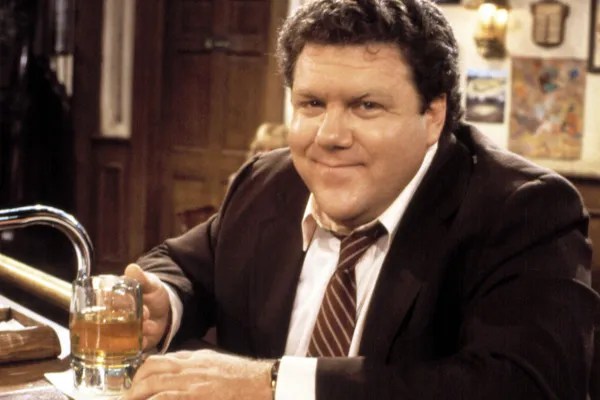
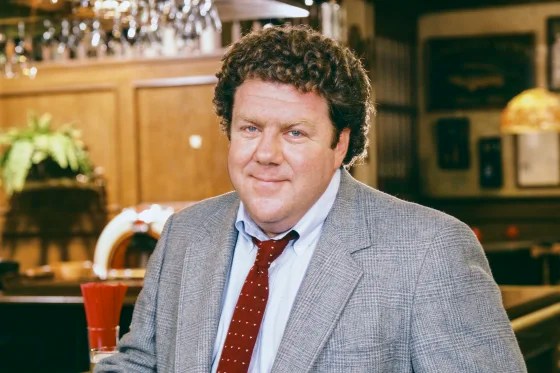
If you’re old enough to have watched Cheers when it originally aired or to have caught it in reruns, George Wendt will always be Norm Peterson, the beer-drinking accountant who spent all of his time at the show’s titular bar.  One of the show’s trademarks was that, whenever he entered the bar, everyone greeted him by shouting, “Norm!”  “How’s the world treating you?” a bartender would ask.  “It’s a dog eat world and I’m wearing milkbone underwear,” Norm once replied.

(One of my favorite joke from the series was when Norm went into a steakhouse and everyone inside was heard to yell, “Norm!” as the door closed behind him.)

If we’re going to be really honest, Norm was probably a high-functioning alcoholic and terrible husband.  (Wife Vera was often-mentioned but never seen.)  Wendt was so likable in the role and was so good at delivering those one-liners that it didn’t matter.  Watching the show, you never wondered why Norm was in the bar.  You were just glad he was.

George Wendt was also an accomplished stage actor.  (I saw him on stage when he was co-starring with Richard Thomas in 12 Angry Men.)  He appeared in several movies, usually playing the comedic sidekick or the hero’s best friend.  His film roles often didn’t ask him to do much other than be likable but one exception was his performance in 1991’s Guilty By Suspicion.

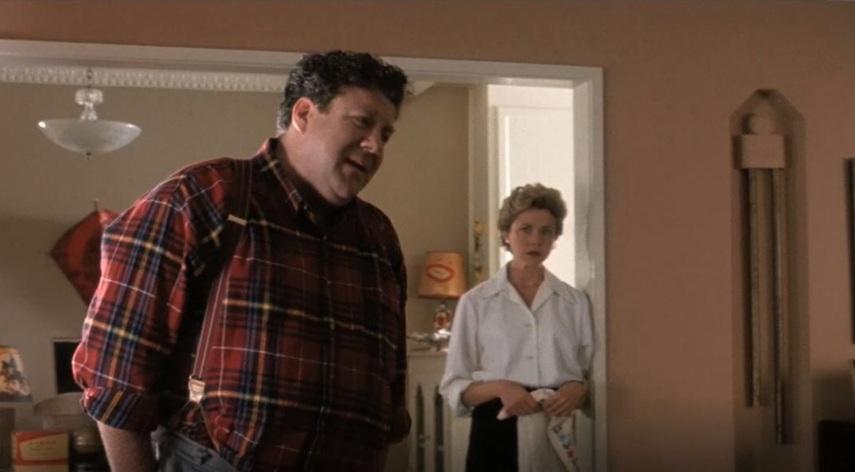
Guilty By Suspicion is a film about the McCarthy era, starring Robert De Niro as film director David Merrill, who is threatened with being blacklisted unless he names four of his colleagues as being communists.  George Wendt plays screenwriter Bunny Baxter, a childhood friend of David’s who attended a few communist rallies when he was younger, failed to mention it to the FBI, and who is now being investigated as a subversive.  The studio argues that David should name Baxter because his name is already out there.  When David refuses, he finds himself blacklisted and unable to make a living.  Bunny Baxter, meanwhile, is offered a similar deal.  Baxter can save his own career but only if he names David as a communist.  Unlike David, Baxter considers betraying his friend because it’s the only way that he can ever hope to work again.  “Your dead anyway,” Baxter says to David.

Guilty By Suspicion suffers from Irwin Winkler’s plodding direction but De Niro gives a good performance, as does Martin Scorsese who is cast as a director based on Joseph Losey.  The film is full of actors who would later become better-known, like Chris Cooper, Tom Sizemore, and Annette Bening.  Wendt, however, gives the film’s best performance as the screenwriter who is torn between protecting his career and maintaining his integrity.  The scene where he asks permission to name Merrill as a communist is powerful and it shows how good an actor George Wendt could be.  Bunny Baxter is asking his best friend to allow himself to be stabbed in the back.  Baxter is that desperate.  That he’s played by George Wendt, an actor who was everyone’s favorite likable barfly in the 80s, makes the scene all the more powerful.

George Wendt, RIP.  Thanks for the memories.

Film Review: Boston Strangler (dir by Matt Ruskin)


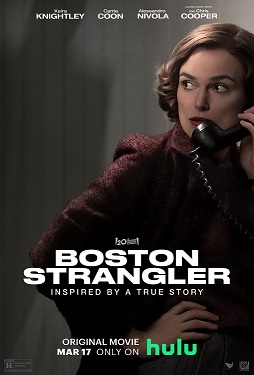
In the Boston of the early 1960s, Loretta McLaughlin (Keira Knightley) is a reporter for the Boston Record American.  Loretta is frustrated with a newsroom that is dominated by a boys club of aging, overweight, sexist old timers.  When she thinks that she’s discovered that there is a murderer targeting and strangling elderly women in Boston, she goes to her editor, Jack Maclaine (Chris Cooper), and asks to be allowed to write up a story about her suspicions.  Jack would prefer that Loretta write a story about the new toaster that’s been released by Sunbeam.

So, Loretta does some investigating on her own and she discovers that the police suspect that all of the recent murders are being committed by one man.  The story that she writes ends up on the front page and it even leads to her sharing a sip of whatever alcohol Jack has in his flask.  The Boston police initially deny Loretta’s story and it looks like Loretta is going to spend the rest of her career reviewing kitchen appliances.  But then the police just as suddenly confirm Loretta’s story and Loretta is back on the Strangler beat.  She’s partnered with a veteran reporter named Jean Cole (Carrie Coon).

Together, Loretta and Jean battle sexism while investigating not just the Strangler but also the police department’s incompetence.  Their reporting makes them local celebrities, with many people coming to them with the leads that the police couldn’t be bothered to follow up on.  Despite Jean’s warnings about getting too involved with the case, Loretta obsesses over the Strangler’s crimes.  Could the murderer be Daniel Marsh (Ryan Winkles), the boyfriend of one of the victim’s?  Could it be George Nassar (Greg Vrostros), a criminal who reportedly has a genius IQ?  Or could it be Albert DeSalvo (David Dastmalchian), the man who confesses to the crimes under the condition that his confession cannot be used in court and the belief that his family will be sent the reward money that would otherwise go to someone who helped the police to catch the Boston Strangler?  DeSalvo, who was given a life sentence for a series of rapes that he committed before and after the murders began, is never convicted of any of the murders but, with his confession, the murders are declared to be solved.  But are they?  Loretta is not so sure.

Boston Strangler is not the first film to be made about the murders but I think that it might be the first to seriously explore the theory that DeSalvo was lying when he confessed to the majority of the murders.  (As the film points out, DeSalvo’s cellmate just happened to be the same George Nassar who was also a suspect in the murders.)  1968’s The Boston Strangler, for instance, explained away the inconsistencies in DeSalvo’s confessions by suggesting the DeSalvo suffered from dissociative identity disorder and that DeSalvo himself didn’t understand what he was doing.  This latest version of the story, however, presents DeSalvo as being a streetwise, lifelong criminal who confessed because his lawyer, F. Lee Bailey, convinced him that he would get a book deal and that he would be sent to a mental hospital as opposed to a prison.  A title card at the end of the film informs us that DNA testing has confirmed that DeSalvo committed one of the 13 murders to which he confessed but that the other 12 murders remain unsolved.  While one might wonder why anyone would confess to a murder that they didn’t actually commit, it’s actually something that has happened on more than a few occasions.  Typically, the false confession will come from someone who, like DeSalvo, is already looking at a life sentence and who has nothing to lose by helping the police close the book on some unsolved crimes.  The confessor gets a little extra notoriety and maybe some special treatment and the cops get to increase their clearance rate.  In Boston Strangler, it’s suggested that DeSalvo’s confession was accepted because everyone wanted the crimes and the fear that went with them to just magically go away.

It’s an intriguing theory and one that has more evidence to back it up than the majority of conspiracy theories that one comes across online.  Unfortunately, Boston Strangler really doesn’t do the story much justice because it focuses on the least interesting part of it.  We don’t learn much about the investigation, DeSalvo, or the lives of the Strangler’s victims.  Instead, the film gets bogged down with newsroom politics, as Loretta demands to be taken seriously and Jean offers advice on how to play the political game.  Every journalism cliché is present, from the crotchety old editor to the afterwork bar to the publisher who doesn’t want to upset the city’s power brokers.  Admittedly, when it comes to journalists, there’s probably a good deal of truth to be found in all of those clichés but the film still leans a bit too heavily into them.  Every time we see Chris Cooper looking at the front page and taking a sip from his flask, we’re reminded that we’ve seen the exact same scene in a hundred other movies about newspapers.

As directed by Matt Ruskin, Boston Strangler has the washed-out, shadowy look that David Fincher used to good effect in Zodiac. The difference is that, in Zodiac, the shadows created a feeling of an all-enveloping evil slowly consuming the world.  Zodiac’s visual style felt as if it was showing the viewer a true picture of the heart of darkness.  In Boston Strangler, the visual style just leads the viewer to suspect that the director watched Zodiac before filming.  The film’s visuals are so washed-out that it actually becomes a bit boring to look at.  This is the rare film that makes Boston seem bland.  Interestingly, when the action briefly moves to Michigan, the visuals suddenly become much more colorful and interesting.  Perhaps by design, there’s a vibrancy to the Michigan scenes that is missing from the rest of the film.  Unfortunately, those Michigan scenes are very brief.

The cast is full of talent but the majority of the performers are let down by a script that doesn’t allow anyone to have more than one or two personality traits.  Keira Knightley speaks with a convincing Boston accent and has a few good scenes in which she shows that Loretta is coming to understand the true horror of the story she’s covering but the script itself doesn’t allow Loretta to have much of a personality beyond being outraged.  Carrie Coon, cast as potentially the most interesting character in the film, also feels underused.  As for Chris Cooper, he glowers with the best of them but the film can’t figure out much to do with him beyond having him drink from his flask.

There’s an interesting moment in the film in which it is suggested that DeSalvo built a false confession out of the details that he came across in Loretta and Jean’s stories about the crimes.  It’s a moment that suggests that the media itself has some culpability when it comes to the crimes of men like Albert DeSalvo and whoever else may or may not have been strangling women in 1960s Boston.  It’s perhaps the most honest moment of the film but it’s also a moment that’s not followed up on.  That’s a shame because it suggests the movie that Boston Strangler could have been if it hadn’t gotten so bogged down with all the journalism film clichés.  (Again, I would mention Zodiac as the prime example of how to do this type of film effectively.)  Boston Strangler hints at the bigger story but it never really goes far beneath the surface.

Film Review: Live By Night (dir by Ben Affleck)


Remember Live By Night?

Released in December of 2016, Live By Night was one of those highly anticipated films that ended up bombing at the box office and leaving critics cold.  The anticipation was due to the fact that Live By Night was the first film that Ben Affleck had directed since Argo won best picture.  It was seen as Affleck’s next prestige picture, the one that would remind everyone that he was more than just the latest actor to be cast as Batman.  Live By Night was expected to be a huge Oscar contender.  As for why it bombed at the box office, that may have had something to do with the fact that Live By Night is not a very good film.

It’s a gangster film, one that takes place during prohibition.  Joe Coughlin (Ben Affleck) is the most boring gangster in Boston.  Or, at least, he is until he falls for the wrong woman and he ends up having to flee down to Tampa.  Once down there, Joe sets himself up as the most boring gangster in Florida.  There’s all sorts of themes running through Live By Night — racial themes, economic themes, even some heavy-handed religious themes — but ultimately, the main impression that one gets from the film’s story is that Joe Coughlin was a very boring gangster.

Anyway, Joe gets involved in all sorts of corruption and violence.  He brings down his friend, Dion (Chris Messina), to help him out.  Whereas Joe is rational and dull, Dion is violent and dull.  You spend the entire movie waiting for the moment when Dion will turn on Joe but it never happens.  I guess that’s a good thing since Joe and Dion are busy battling the Klan.  Joe may be a 1920s gangster but he’s got the political and cultural outlook of a 21st century movie star.

Joe knows that prohibition is going to end someday, so he hopes to make money through opening up a casino.  Standing in the way of the casino is a prostitute-turned-evangelist named Loretta (Elle Fanning).  Loretta is the daughter of the local police chief (Chris Cooper), with whom Joe has an uneasy friendship.  You keep expecting this plot to go somewhere but it really doesn’t.  Loretta’s just kinda there.  That said, we do get a hilarious shot of a tearful Chris Cooper repeating the word repent over and over again so there is that.

Zoe Saldana is also just kind of there, playing Joe’s Cuban wife.  Again, you expect a lot to happen with Saldana’s character but, for the most part, she’s mostly just a plot device who exists solely so that Joe can have some sort of motivation beyond simply wanting to get rich.

It’s a big, sprawling film that never quite feels like an epic.  A huge part of the problem is that Ben Affleck the director is let down by Ben Affleck the actor.  Regardless of what’s happening in the scene, Affleck always has the same grim look on his face.  At times, it seems as if he’s literally been chiseled out of a marble and you find yourself wondering if he’s actually capable of any facial expression beyond glum annoyance.  A gangster film like this need a bigger-than-life protagonist but, as played by Affleck, Joe always seems to be in danger of vanishing into the scenery.

I think part of the problem is that Affleck’s previous films all dealt with places and subjects that Affleck felt comfortable with, perhaps because he could relate their stories to his own personal experiences.  Gone, Baby, Gone and The Town both took place exclusively in Boston.  Argo dealt with the film industry.  Live By Night is a period piece set in the South and Affleck is obviously lost from the minute Joe arrives in Florida.

Live By Night, I think, could have been a good movie if it had been directed by someone like Paul Thomas Anderson and maybe if an actor like Colin Farrell played the role of Joe.  But, as it is, it’s just a rather stolid and uninspiring gangster film.

Lisa Reviews An Oscar Nominee: Capote (dir by Bennett Miller)


capote_poster

The first time I ever saw the 2005’s Capote, I thought it was a great film.

I guess that shouldn’t be a surprise.  I love movies about writers and I love biopics and, as the title indicates, Capote was both.  I’m also fascinated by true crime and Capote told the story of how Truman Capote came to write the first true crime book, In Cold Blood.  Add to that, I was (and am) a Philip Seymour Hoffman fan and Capote provided Hoffman with not only a rare starring role but it also won him an overdue Academy Award.  Finally, to top it all off, Capote also dealt with Truman’s friendship with Harper Lee (Catherine Keener), the author of To Kill A Mockingbird.  Seriously, a film that dealt with the writing of both In Cold Blood and To Kill A Mockingbird!?  How couldn’t I love that?  While everyone else was outraged that Crash beat Brokeback Mountain, I was upset that it beat Capote.

Needless to say, I was really looking forward to rewatching Capote for this review.  But when I actually did sit down and watched it, I was shocked to discover that Capote wasn’t actually the masterpiece that I remembered it being.

Oh, don’t get me wrong.  It’s still a good film.  At times, it’s even a great film.  I still think it would have been a more worthy Best Picture winner than Crash.  But still, there seemed to be something missing.  Much as with director Bennett Miller’s most recent film, Foxcatcher, there’s a coldness at the heart of Capote.  One can’t deny its success on a technical level but, at the same time, it keeps the audience at a distance.  In the end, we remains detached observers, admiring the skill of the film without ever getting emotionally invested in it.

Interestingly, the film suggests that the exact opposite happened to Truman Capote while he wrote In Cold Blood.  The film suggests that Capote got so invested in one of the killers at the center of In Cold Blood that the process of writing the book nearly destroyed him.  When we first see Capote, he’s at some social event in New York and he’s amusing his rich friends with charmingly risqué anecdotes about his other rich and famous friends.  As played by Hoffman, Capote is someone who is almost always performing.  It only with his friend Harper Lee and his partner Jack Dunphy (Bruce Greenwood) that he ever lets down his guard long enough to reveal who he actually is, a gay man from the deep South who was fortunate enough to escape.

That’s one reason why Capote grows close to Perry Smith (Clifton Collin, Jr.).  The subjects of In Cold Blood, Smith and Dick Hickcock (Mark Pellegrino) killed the Clutter family in Holcomb, Kansas.  Capote, who followed the case from their arrest to their eventual execution, becomes obsessed with Smith precisely because he sees Smith, with his dysfunctional background and his overly sensitive nature, as being who Capote could have been if things had gone just a little bit differently in his life.  Miller further makes this point by skillfully juxtaposing scenes of Truman dropping names and telling jokes at New York parties with the grim reality of life and death in Kansas.

Truman finds himself serving as a mentor to Perry.  (Hickcock is neglected by both Capote and the film.)  Of course, Truman’s also a writer and he knows that he needs an ending for his story.  As his editor (played by Bob Balaban, who seems to be destined to play everyone’s editor at some point or another) points out, Smith and Hickcock have to be executed if the book is ever to be completed.  Truman also has to get Perry to finally talk about what happened in the Clutter family farm.  As much as Capote seems to care about Perry, he’s ruthless when it comes to getting material for his book.  The film suggests that Truman Capote got his greatest success at the cost of his soul.

It’s a rather dark movie, which might explain why I was initially so impressed with it.  (I went through a period of time where I thought any movie with a sad ending was a masterpiece.)  Rewatching it, I saw that the film’s triumph was mostly one of casting.  Miller gets some seriously brilliant performances from the cast of Capote.  Yes, Hoffman is great in Capote but so is the entire cast.  Keener and Greenwood are well-cast as the only two people who have the guts to call Truman on his bullshit.  Chris Cooper gives a very Chris Cooperish performance as Alvin Dewey, the no-nonsense lawman who views Capote with a mix of amusement and distrust.  Clifton Collins, Jr. and Mark Pellegrino are both excellent as Smith and Hickcock.  In fact, Pellegrino makes such an impression that you regret the both Capote and the film didn’t spend more time with his character.

As previously stated, Hoffman won Best Actor but Capote lost best picture to Crash.  How Crash beat not just Brokeback Mountain but Capote as well is a mystery that Oscar historians are still trying to unravel.

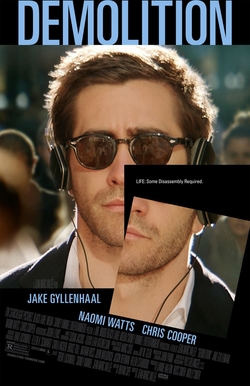
Playing Catch Up With The Films of 2016: Demolition (dir by Jean-Marc Vallee)


demolition_poster

Jake Gyllenhaal is owed an Oscar.  We all know that.  He should have been nominated for Nightcrawler and, even more importantly, he should have won.  However, for whatever reason, the Academy snubbed him.  Ever since then, we — and by “we,” I mean “me” but “we” sounds better — have been waiting for him to get another nomination.

Last year, for instance, we thought he would be nominated for Southpaw.  Then the movie came out and it turned out to be not that good.

This year, we thought it would be for Demolition.  Then Demolition came out and it turned out to be worse than Southpaw

And really, it shouldn’t have been.  Demolition was directed by Jean-Marc Vallee, who was rightly acclaimed for his work on Wild and Dallas Buyers Club.  Not only did it star Jake Gyllenhaal but it also featured Naomi Watts and Chris Cooper!  I mean, how could you go wrong with all that talent?

But the thing is, Jean-Marc Vallee may have directed Wild and Dallas Buyers Club but also directed the wildly uneven The Young Victoria.  Naomi Watts is a great actress but it’s rare that she gets truly great parts.  Chris Cooper can be great but he’s usually at his least subtle whenever he’s playing a suit-wearing authority figure.  As far Jake Gyllenhaal, he is an actor who was born to play eccentric outsiders.  Whenever he has to play someone who is “conventional,” he can seem miscast.

Now admittedly, Davis Mitchell is only “normal” for a few minutes in Demolition but, for the film to work, you have to believe that he was once a successful investment banker who made a lot of money, lived in the suburbs, and never questioned anything.  Since you never believe that Jake Gyllenhaal could ever not be eccentric, it’s hard to be shocked when Davis starts destroying houses and dancing in public.  Everyone else in the movie is so shocked to discover that Davis had an eccentric side but we’re not because he’s played by Jake Gyllenhaal.

The reason why Davis is acting so strange is because his wife has just died in a horrific auto accident.  Now that she’s gone, Davis finds himself wondering if he ever loved her and questioning his entire life.  What little joy he gets comes from helping to tear down houses and corresponding with Karen (Naomi Watts).  Karen works for a vending machine company.  When the hospital vending machine didn’t give Davis the candy that he paid for, he wrote a long letter to the company and explained that his wife has just died and…

*sigh*

See, this is one of those films that is so relentlessly quirky and full of scenes that are supposed to be profound and thought-provoking that it’s kind of a drag to actually try to describe the film’s plot.  I mean, it actually kind of ticks me off to think about all of the contortions that Demolition goes through in its attempt to convince us that it actually has something important to say.  (I was shocked to discover that it wasn’t based on a Nicholas Sparks novel.)  It’s one of those films that obviously has the best of intentions but it’s so overwritten and overdirected and overly portentous that anyone who has ever had to deal with depression will get annoyed with the simplified and shallow way that Demolition deals with it.

Demolition was supposed to be an Oscar contender last year but it’s release date got moved back and I can understand why.  The movie’s a mess.

Here’s hoping that Jake Gyllenhaal gets a great role next year!

Insomnia File No. 19: Great Expectations (dir by Alfonso Cuaron)


What’s an Insomnia File? You know how some times you just can’t get any sleep and, at about three in the morning, you’ll find yourself watching whatever you can find on cable? This feature is all about those insomnia-inspired discoveries!

If you were awake at 2 in the morning last night, you could have turned over to Starz and watched the 1998 film, Great Expectations.

Great Expectations is an adaptation of the famous novel by Charles Dickens, the one about the orphan who helps a fugitive, is mentored by a bitter rich woman who lives in a decaying mansion, falls in love with the beautiful but cold-hearted Estella, and then later is helped out by a mysterious benefactor.  The thing that sets this adaptation apart from other version of the novel is that the 1998 Great Expectations is set in modern-day America, as opposed to Victorian-era Great Britain.

Actually, beyond retaining certain aspects of the plot, it’s interesting how little this version of Great Expectations has to do with the original novel.  That’s not necessarily a bad thing.  While Charles Dickens deserves to be remembered as one of the fathers of modern literature, he could also be a terribly pedantic writer.  This adaptation only touches on the novel’s overriding concerns about class and wealth in the most simplistic of ways.  It also abandons most of the novel’s subplots and instead concentrates on the love story between Estella (Gwynneth Paltrow) and Finn (Ethan Hawke).

Oh yeah, did I mention that?  The hero of this version of Great Expectations is not named Phillip Pirrip and we never have to listen to him explain that, as a child, he was nicknamed Pip because he apparently could not speak.  Instead, Pip has been renamed Finn, short for Finnegan.  If you believe the trivia section of the imdb, Finn was apparently the name of Ethan Hawke’s dog.  And again, that’s not necessarily a bad thing.  One of the main reasons why so many readers automatically dislike the narrator of Great Expectations is that he is named Pip.

Anyway, in this version, Pip Finn grows up in Florida, an orphan who is raised by his blue-collar brother-in-law, Joe Gargery (Chris Cooper, giving a very Chris Cooperish performance).  The escaped convict is played by Robert De Niro and, towards the end of the film, there’s a hilarious scene where Finn and the convict meet for a second time and Finn somehow does not recognize him, despite the fact that he still pretty much looks the same and still acts exactly like Robert De Niro.  The eccentric woman who mentors the young Finn, Mrs. Havisham Dinsmoor, is played by Anne Bancroft and Bancroft, made up to look like Bette Davis in What Ever Happened To Baby Jane?, gives a performance of almost transcendent weirdness.  And, of course, Estella — who has been raised to seduce and then destroy men — is played by Gwynneth Paltrow and, as usual, Paltrow is a lot more believable when Estella is remote and self-centered than when she has to soften up towards the end of the film.

It’s an odd film, to be honest.  This is one of those films that you watch and you try to be cynical but it’s all so lushly shot and deliriously (and manipulatively) romantic that you can’t help but occasionally get wrapped up in its spell.  Hawke and Paltrow, both of whom are incredibly young in this movie, may not have much chemistry but they’re both so achingly beautiful that it almost doesn’t matter.

Great Expectations was the second film to be directed by Alfonso Cuaron and it’s just as visually stylish as his later films.  It’s a frequently shallow and somewhat silly film but oh my God, is it ever pretty to look at.

Great_expectations_poster

Previous Insomnia Files:

  1. Story of Mankind
  2. Stag
  3. Love Is A Gun
  4. Nina Takes A Lover
  5. Black Ice
  6. Frogs For Snakes
  7. Fair Game
  8. From The Hip
  9. Born Killers
  10. Eye For An Eye
  11. Summer Catch
  12. Beyond the Law
  13. Spring Broke
  14. Promise
  15. George Wallace
  16. Kill The Messenger
  17. The Suburbans
  18. Only The Strong

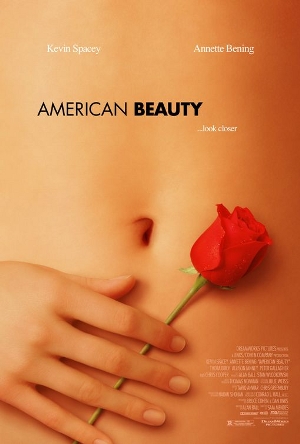
Embracing the Melodrama Part II #98: American Beauty (dir by Sam Mendes)


American_Beauty_posterWhat crap!

I know, I know.  “American Beauty is an incisive satire that looks at the stifling conformity of American suburbia with Kevin Spacey giving the definitive portrait of the male midlife crisis and blah blah blah blah blah blah.”  Listen, American Beauty is a terrible film.  I don’t care if it won a lot of Oscars, including the 1999 award for best picture.  American Beauty is a shallow film that, at its worst, is deeply misogynistic.

American Beauty tells the story of two people.  They’re married.  They live in the suburbs.  They have a teenage daughter who is a cheerleader.  They pretend to have the perfect life but actually, everyone’s extremely unhappy.

WOW!  OH MY GOD!  PEOPLE ARE SECRETLY UNHAPPY IN THE SUBURBS!?  MY MIND IS BLOWN!  WOW, NO ONE’S EVER HAD THAT THOUGHT BEFORE!  OH.  MY.  GOD!

Anyway, the husband is named Lester (Kevin Spacey).  Lester’s a loser.  He narrates the film and he’s played by Kevin Spacey so you’re supposed to think that he’s really this great guy who deserves better but honestly, Lester’s a whiny little jerk.  He’s upset because, now that he’s an adult, he misses being a teenager.  Life hasn’t turned out the way that he wanted it to.  Boo hoo.  As I said, Lester is kind of whiny but the film treats him like he’s an enlightened truth seeker.  In order to keep the audience from realizing that Lester is a loser, the film surrounds him with one-dimensional stereotypes.

And really, Lester is the ultimate male fantasy.  Everything that he says and thinks is wise.  His every thought and feeling matters.  To its discredit, the world has failed to recognize that Lester’s vapid thoughts are worthwhile.  Lester quits his job and finds employment working in fast food.  Lester fantasizes about fucking his daughter’s best friend (Mena Suvari).  Lester starts to smoke weed with his teenage neighbor (Wes Bentley).  In real life, Lester would just be another pathetic guy having a midlife crisis but, in the world of American Beauty, he’s a seeker of truth,

Anyway, eventually, Lester gets shot in the back of the head and dies but that doesn’t keep him from still narrating the film.  You just can’t shut him up.

Meanwhile, Lester’s wife is Carolyn (Annette Bening) and wow, is she evil!  Get this — she actually tries to keep the house clean, is obsessive about her job, and wants her family to eat dinner together.  Oh my God, so evil!  She ends up having an affair with Buddy Kane (Peter Gallagher) and, when they have sex, we’re supposed to laugh at them because they’re so cartoonishly loud.  And when Lester catches them, the audience is expected to applaud and say, “Way to go, Lester!”  The film ridicules Carolyn’s affair but it idealizes Lester’s sexual fantasies.  Lester’s determination to be independent and do what he wants is presented as being heroic.  Carolyn’s determination to have a life that does not revolve around her pathetic husband is presented as being villainous.

And why is that?

Basically, it comes down to the fact that Lester has a penis whereas Carolyn has a vagina.

American Beauty is probably one of the most misogynistic films that I have ever seen, one in which men are exclusively victims of all those unreasonable and untrustworthy women.  Whiny loser Lester is presented as being a hero.  Ricky, the next door neighbor played by Wes Bentley, spends his time going on and on about the beauty of an empty bag and we’re supposed to see some sort of higher truth in his pretentious blathering.  Meanwhile, Carolyn is portrayed as being a shrew.  Lester’s teenager daughter (Thora Birch) is a spoiled brat.  Lester’s sexual obsession, the cheerleader played by Mena Suvari, is presented as being a suburban seductress but, in the film’s eyes, she’s partially redeemed when she suddenly admits to being a virgin.

(The film seems to think that the revelation that teenagers lie about sex is truly shocking.  This is one of those films that makes you wonder if the filmmakers have ever hung out with anyone outside of their own small circle of friends.)

One huge subplot deals with Ricky’s father, a military guy played by Chris Cooper, mistakenly believing that Lester is gay.  And, honestly, American Beauty would have been a better film if Lester had been a gay man and if, instead of buying a new car and getting a crappy job, Lester had dealt with his identity crisis by coming out of the closet.  Certainly, a lot of Lester’s anger would have made a lot more sense if he was a man struggling to come to terms with his sexuality as opposed to being a man who just doesn’t like his job and is upset that his wife no longer has the body of a 17 year-old.

(We are, of course, supposed to be shocked when Cooper suddenly reveals that he himself is gay.  But, honestly, the film’s plans for Cooper are obvious from the minute he first appears on-screen and dramatically squints his eyes in disgust at the sight of two men jogging together.  Cooper is a good actor but he’s terrible in American Beauty.)

It would have taken guts to make Lester gay and, at heart, American Beauty is a very cowardly film.  It attacks easy targets and it resolutely refuses to play fair.  So desperate is it to make Lester into a conventional hero that it refuses to let anyone around him be human.  As a result, a talented cast is stuck playing a collection of one-note stereotypes.  No wonder a lot of people love this film — it makes you feel smart without requiring that you actually think.

American Beauty was written by Alan Ball and directed by Sam Mendes.  Both Ball and Mendes have subsequently done far better work, which is good because American Beauty is a terrible movie.  The script is a pretentious mess and Mendes never seems to be quite sure what exactly he’s trying to say from scene-to-scene.

American Beauty did win best picture but who cares?

It’s a crappy film.