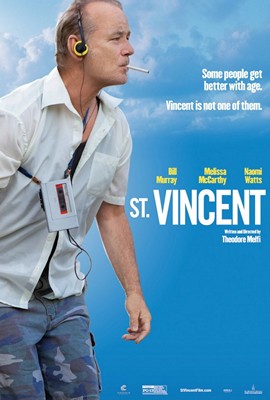
Film Review: St. Vincent (dir by Theodore Melfi)


St_Vincent_poster

It’s the craziest thing.

Every year, we get another Black List.  Despite the name, the Black List is not the annual list of actors and directors who need to be run out of America because of their political beliefs.  Instead, the Black List is a survey of the “most liked” unproduced scripts that are currently floating around Hollywood.

Now, of course, to a large extent, the Black List is basically just another marketing gimmick.  A lot of the scripts that have appeared on the Black List were already in development at the time that they appeared and, undoubtedly, there are clever studio execs who think to themselves, “Juno might be a difficult sell so let’s make sure it gets on the Black List!”

However, every year, there are a few films that are put into production directly as a result of the script appearing on the Black List.  What’s interesting is just how many of these films turn out to be, if not quite terrible, at least rather forgettable.  Transcendence, for instance, was on the Black List.  Cedar Rapids was on the Black List.  Broken City was on the freaking  Black List. Consider this: The Beaver would never have been made except for the fact that it was on The Black List!

What’s particularly interesting is that the script was often the worst thing about these films.  These were films with overly complicated scripts that often tried too hard to be both crowd pleasing and quirky.  If nothing else, the Black List proves that being the “most liked” doesn’t mean that a script is good, interesting, or intelligent.  It just means that it covered all the bases.

Case in point: the new film St. Vincent.  St. Vincent sat on top of the Black List and was apparently so “well-liked” that screenwriter Theodore Melfi not only saw his script produced but he also got to direct it.  And wouldn’t you know it — the two biggest failings of St. Vincent are the script and the direction.

It’s easy to point out why the direction is bad so I’ll start there.  St. Vincent essentially looks like the pilot for one of those sitcoms that would be described as being edgy just because it was about a cranky old man.  There is no visual flair to the film.  The images just sit there flat on the screen.

As for the script, it would be likable if it didn’t try so hard.  St. Vincent is about a guy named Vincent, a war hero who is now a cantankerous old alcoholic and a pathological gambler.  His best friend is a pregnant Russian stripper.  He owes money to a violent bookie.  Every weekend, he visits his wife in a nursing home and he pretends to be a doctor.  His wife no longer recognizes him.  When the recently divorced Maggie and her awkward son Oliver move in next door, Vincent agrees to babysit after school.  At first, Vincent just does it for the money but, as the movie progresses, he teaches Oliver how to stand up for himself and Oliver makes Vincent a little less grumpy.  Eventually, Oliver has to do a report for a school about someone in his life that he considers to be a real-life saint and guess who he picks?

St. Vincent tells the type of story that would usually bring me to tears and I’ll admit that there were a few times when I did get teary-eyed.  But, ultimately, the script was too heavy-handed for me to maintain those tears.  I love crying at movies but, at the same time, I resent it when a movie demands that I cry just because it happens to be mashing down on all of the right buttons.  This is one of those movies that doesn’t trust the audience.  Instead of letting us react to the characters, it just keeps piling on development after development.  It’s not enough that Maggie is a single mother who feels guilty about not being able to pick her son up from school.  Instead, Maggie’s ex-husband has to suddenly sue for custody.  It’s not enough that Vincent is struggling to pay the bills.  Instead, he has to have a bookie who shows up at random and threatens to kill him.  There’s more to an effective dramedy than just having half of your cast act as if they’re in a sitcom while the other half acts as if they’re appearing in an old episode of Law & Order.

And yet, despite the script and despite Melfi’s direction, St. Vincent does work and it really works only for one reason.  Melfi has managed to assemble a truly outstanding cast.  In the role Maggie, Melissa McCarthy proves that she deserves better than having to spend her career making movies like Identity Thief.  Jaeden Lieberhrer is likable and sympathetic as Oliver.  Playing the pregnant Russian stripper, Naomi Watts does the best that anyone probably could do with that poorly written character.

But, ultimately, the film is totally about Bill Murray.  Bill Murray plays Vincent and he saves the entire film.  Whether he’s being funny or being serious, Bill Murray gives the type of great performance that justifies his reputation for being a national treasure.  When those tears did come to my eyes, it was all due to Murray’s performance.

St. Vincent is a deeply flawed film but it’s worth seeing for Bill Murray.

Back to School #54: Rushmore (dir by Wes Anderson)


rushmore-play

It’s an understatement to say that Wes Anderson’s films tend to divide viewers.  It seems like critics either love his excessively stylized and quirky vision or else they dismiss him as being a pretentious, overrated, and overly concerned with the problems of the rich and the suburban.  Even among the writers here at the Shattered Lens, there are conflicting opinions.  Leon the Duke gave Moonrise Kingdom a rave review.  On the other hand, I know that Ryan The Trashfilm Guru is not particularly a fan of Anderson’s films.

Myself, I always find it usually takes me a while to warm up to an Anderson film.  With the exception of The Fantastic Mr. Fox, I always seem to find myself somehow both impressed and slightly disappointed after seeing an Anderson film for the first time.  Perhaps it’s because Anderson is such a highly praised director with such a recognizable style that I always tend to go into his film with my expectations set way too high.  And so, I often times end up watching the latest Anderson film and thinking about how much I loved the film’s production design and some of the performances but often times feeling that, narratively, there was something missing.  On first viewing, Anderson’s trademark quirkiness can be overwhelming.  Usually it’s not until a second or third viewing that I really start to appreciate an Anderson film for something more than just the way it looks.  Eventually, I came to love Moonrise Kingdom and The Grand Budapest Hotel but it took me a while.

However, there is an exception to every rule.  And, as far as my reaction to Wes Anderson’s films are concerned, 1998’s Rushmore is that exception.  Rushmore is a film that I have unquestionably loved since the very first time I saw it.  Maybe it’s because, while Rushmore is undeniably quirky, that quirkiness doesn’t overwhelm the human aspect of the film’s story.  Maybe it’s because Rushmore — along with Bottle Rocket — is the most identifiably Texan of all of Anderson’s films.  Or maybe it’s just because Bill Murray gives such a great performance.

Seriously, Bill Murray makes any movie better.

02-rushmore-max-and-mr-blume

Rushmore is named after Rushmore Academy, a private school in Houston.  (Rushmore is quite obviously based on St. Mark’s, which is perhaps the most exclusive private school down here in Dallas.  Owen Wilson, who collaborated on Rushmore‘s script with Anderson, was expelled from St. Mark’s in the 10th Grade.)  15 year-old Max Fischer (Jason Schwartzman, who gives a sympathetic performance as a potentially off-putting character) loves attending Rushmore.  He’s involved in a countless number of extracurricular activities and has written and directed several plays, the majority of which are based on films from the 70s.  (We see his stage version of Serpico and it’s hilarious.)

tumblr_mcasy9Qj4S1r5l2jyo1_400

Unfortunately, Max has a few problems.  For one thing, unlike most of his peers, he’s not rich.  He tells everyone that his father (Seymour Cassel) is a neurosurgeon but actually, he’s a barber.  Even more seriously, Max spends so much of his time starting clubs and writing plays that he doesn’t ever bother to study.  Max is on the verge of flunking out and, despite numerous warnings from Dr. Guggenheim (Brian Cox), he refuses to do anything to improve his grades.

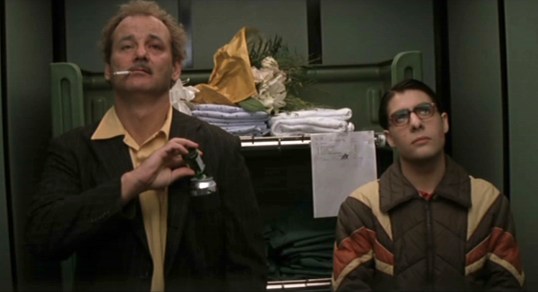
Instead, Max is more interested in pursuing a crush he has on an older teacher, the widowed Rosemary Cross (Olivia Williams).  What Max doesn’t realize is that his mentor, industrialist Herman Blume (Bill Murray), also has a crush on Ms. Cross.

rushmore02

While Max may be the film’s main character, Herman Blume is, without a doubt, the film’s heart.  Blume is a Viet Nam vet (“You were in the shit?” Max asks.  “Yes, I was in the shit,” Blume replies) who has literally gone from rags to riches.  And now that he is rich, he finds himself living an empty life with a wife who doesn’t respect him and two sons who are total idiots.  When Blume starts to mentor Max and pursue Ms. Cross, he starts to care about living once again.

rm61

Meanwhile, Max attempts to impress Ms. Cross by building an aquarium on the school’s baseball field.  This leads to Max getting expelled and having to enroll in a public school.  (Max continues to wear a suit and tie, even after being expelled.)  However, Max then discovers that Blume has been seeing Ms. Cross and soon, the mentor and the student become rivals…

And a lot of other stuff happens but you know what?  I’m not going to tell you what because if you haven’t seen Rushmore, you need to see it and discover all of this for yourself.  You won’t be sorry!

It may be named after the school but Rushmore is ultimately about how love and our dreams make life worth living.  For Max, Rushmore is his fantasy ideal, a world that he loves because it provides him a sanctuary from the harshness of the real world.  When Mr. Blume says, about Ms. Cross, “She’s my Rushmore,” we understand exactly what he means.  But, and this is what distinguishes Rushmore from so many other films about quirky love triangles, is that Ms. Cross is just as independent and important a character as Max and Mr. Blume.  Blessed with excellent performances from Seymour Cassel, Brian Cox, Jason Schwartzman, Olivia Williams, and especially Bill Murray, Rushmore is one of Wes Anderson’s best films.

rushmore-1999-movie-poster1

Embracing the Melodrama #46: Wild Things (dir by John McNaughton)


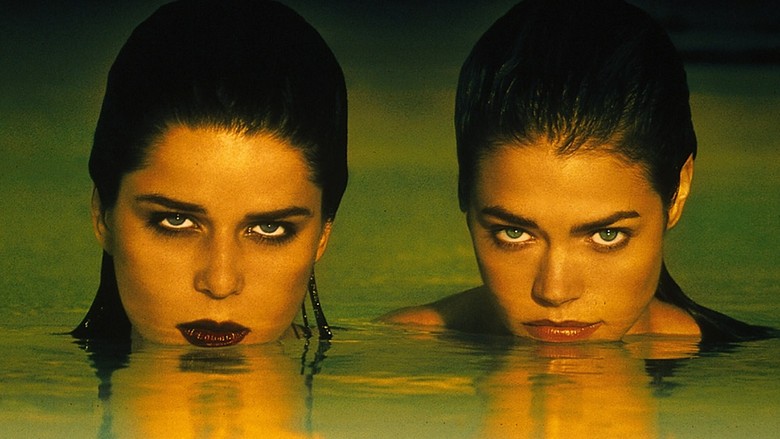
The 1998 film Wild Things starts out like a standard B-movie.  It take place in Florida so, of course, we get a lot of shots of the sun setting on the bayous and crocodiles staring at the camera as if to ask, “What are you looking for?”  Boats skim the water.  High school guidance counselor Sam Lombardo (Matt Dillon) walks across campus while all of the toned and tanned students stop to admire him.  Local rich girl Kelly Von Ryan (Denise Richards) smirks and says something snarky.  Detective Ray Duquette (Kevin Bacon) shows up in the background and stares at the world from behind dark glasses and a serious expression.  Meanwhile, local poor girl Suzie (Neve Campbell) goes back to her home, which happens to be located right behind an alligator farm.

Judging from the first few minutes, Wild Things could just as easily be an episode of CSI Miami.

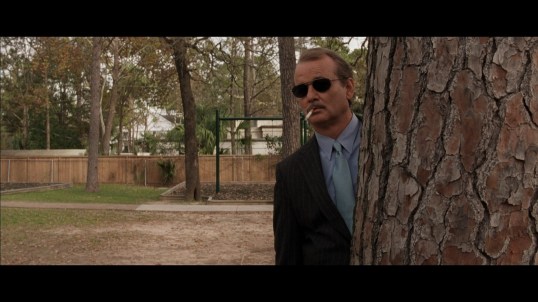
But then Bill Murray shows up as Kenneth Bowden, a hilariously sleazy attorney who spends most of the movie wearing a neck brace, just in case the insurance company is watching him.

And then Theresa Russell shows up Kelly’s mother, standing on a balcony in a gold bikini and hitting on every passing man like the world’s most hyperactive cougar.

And then Carrie Snodgress shows up as Suzie’s mother, complete with an over-the-top white trash accent.

By the time that Robert Wagner shows up and literally growls at Matt Dillon: “You’re finished, Lombardo!  Finished!,” you realize that Wild Things is probably the most self-aware B-movie ever made and it’s all the better for it.

As for the plot — well, let’s see if I can keep track.  Suzie and Kelly both accuse Sam of rape.  Sam claims to be innocent but nobody in town believes him.  Sam is forced to hire the disreputable Kenneth Bowden to defend him.  During the trial, Kenneth is able to prove that Kelly blamed Sam for the suicide of her father while Suzie is angry that Sam once refused to bail her out of jail on a drug charge.  To get revenge, Kelly and Suzie decided to frame Sam.  Sam is acquitted and, again with Bowden’s help, is able to negotiate an 8 million dollar settlement for defamation.  True, Sam does lose his job but at least he’s a rich man now…

But wait a minute.

The movie still has a little over an hour to go.

Could it be that there’s more to this story?

Well, of course, there is.  It turns out that Sam, Kelly, and Suzie have been working together all the time.  The accusations, the trial, the defamation suit — it was all a part of a grand scheme to get the money.  Sam, Kelly, and Suzie celebrate their success with champagne and a threesome.

While everyone else in town seems to be ready to move on from the entire scandal, Detective Ray Duquette is telling anyone who will listen that he thinks that Sam, Kelly, and Suzie were all in on it together.  Even when Ray is ordered by his superiors to back off, Ray continues to investigate the case.

And why?

Because Ray Duquette is a cop who gets results!

Well, maybe.

Actually, it doesn’t take long to realize that there’s something off about Ray.  For one thing, his obsession with Sam really does seem to be a personal thing.  On top of that, Ray has a past connection with Suzie…

Wild Things has everything that you could hope for from a good exploitation film: a script that is full of double and triple crosses, unapologetically pulpy dialogue, over-the-top performances, and lots of sex.  Yesterday, I reviewed Normal Life and praised John McNaughton’s decision to play up the banality of the film’s characters and locations.  With Wild Things, McNaughton takes the exact opposite approach, playing up every sordid and tawdry detail to such an extent that the film itself eventually transcends such mundane concepts as good and bad.

Wild Things is a lot of fun and it’s also one of the best films of the 1990s.

Wild Things

Scenes I Love: 86th Academy Awards Show


bill murray oscars reuters

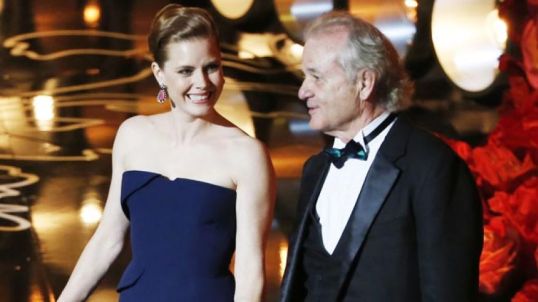
Always known to be the quirky, eccentric personality, during last night’s broadcast of the 86th Academy Awards, Bill Murray provided a fitting, spontaneous tribute to his long-time friends and collaborator Harold Ramis.

Harold Ramis passed away last week at the age of 69 and Murray’s on-stage tribute to his friend must’ve brought not just smiles and applause from the crowd but some tears as well.

Whatever one thinks of last night’s show this was one moment that made it all worth watching.

Film Review: The Monuments Men (dir by George Clooney)


Remember when The Monuments Men was everyone’s pick for the best film of 2013?

It may be hard to remember now, especially now that the film has actually been released and dismissed by most critics.  But, during the summer of 2013, all of the people at Goldderby and AwardsDaily were convinced that The Monuments Men would be a major player at the Oscars.  Sure, the thinking went — 12 Years A Slave and August: Osage County would be major contenders but the surest bet for a win was The Monuments Men.

With the benefit of hindsight, it’s easy to laugh but, at the time, the logic behind this assumption seemed sound.

After all, The Monuments Men not only tells a true story but it also takes place during the only good war, World War II.  It’s directed by George Clooney, who is the epitome of a star..  The film features supporting performances from Matt Damon, Cate Blanchett, Bill Murray, Jean Dujardin, Bob Balaban, Hugh Bonneville, and John Goodman.  The film also has a valuable message about the importance of culture and how tyrants always try to control and suppress the imagination.

So, who can really blame all the usual suspects for deciding, without having actually seen the movie, that The Monuments Men would be great?  Even when the film’s release date was moved from December of 2013 to February of 2014, it was assumed that it was only being moved because 12 Years A Slave was such a great film that no movie — not even The Monuments Men — could hope to compete with it for the title of best film of 2013.

The Monuments Men?” they all said, “It’ll be the best film of 2014…”

And then, finally, The Monuments Men was released and we all got a chance to see it and…

Well, it turns out The Monuments Men was not quite what everyone was expecting.  It’s not quite bad but, at the same time, it’s also not quite good.  Instead, it simply is.

To its credit, The Monuments Men attempts to tells a worthy story.  During the final days of World War II, Frank Stokes (played by George Clooney) leads a seven-man team of art historians who are tasked with both recovering art stolen by the Nazis and keeping allied soldiers from accidentally destroying Europe’s culture while trying to save it.  Stokes and his team find themselves forced to deal with both soldiers who resent being told what they can and can not blow up and with a competing team of Russians who are eager to take as much art as they can back to Moscow.

The film makes a very relevent point about both the importance of art and why it must be preserved and protected for future generations.  As the proud recipient of a degree in art history, I really wanted to like The Monuments Men.  Especially considering what our President recently had to say about those of us who majored in art history, this is a film that I wanted to see succeed.

Unfortunately, The Monuments Men does not succeed.  It’s an almost painfully old-fashioned film, one that features every single wartime film cliché imaginable and which never manages to be as interesting as the story its trying to tell.  We like the monuments men because they’re played by actors like Bill Murray and John Goodman but we never get to know any of them as individuals and, as a result, their story falls flat.

A lot of the blame has to rest with the director.  As I watched The Monuments Men, I found myself thinking about the other films that George Clooney has directed.  Confessions of A Dangerous Mind is memorable largely for Sam Rockwell’s lead performance but, otherwise, the film tries way too hard to be wacky.  Good Night and Good Luck is sincere but rather simplistic.  Leatherheads is a comedy that’s not that funny.  And finally, there’s The Ides of March, a film which thinks it’s a lot smarter than it actually is.  I think, when it comes to George Clooney, there’s a tendency to be so blinded by his charisma that we tend to assume that he can do anything, including direct.  However, if one can manage to ignore Clooney the star while considering Clooney the filmmaker, it becomes obvious that he’s actually a rather unimaginative director whose good intentions often times disguise the fact that he’s not much of a story teller.

That, ultimately, is the main problem with The Monuments Men.  The film is full of effective scenes and charismatic actors but they never quite gel to form a compelling narrative.  At one point in the film, Bill Murray and Bob Balaban are sent to one part of Europe while Goodman and Dujardin are sent to another.  We get a handful scenes featuring each team.  Murray and Balaban bond with a scared German.  Dujardin and Goodman deal with a teenage sniper.  Suddenly, in the next scene, Clooney drives up to an army camp in a jeep and there’s Murray, Balaban, Goodman, and Dujardin all standing outside a tent, waiting for him.  How did they all get back together?  Where is the camp located?  Did either team accomplish what they were sent out to do?  The film never tells us.

(Meanwhile, the less said about a lengthy subplot featuring a lot of awkward interaction between Matt Damon and Cate Blanchett the better.)

As I said before, it’s not that The Monuments Men is a bad film.  It’s just such a disappointing one.

Trailer: The Monuments Men (Official)


The Monuments Men

The race for Awards Season film releases has begun to heat up with trailers for American Hustle and The Butler already showing some major front-runners for the major awards at the end of the year.

We now have another trailer release for a film that looks to join in on all the end of the year awards scramble. It’s the latest film from George Clooney (doing a trifect as writer, director and actor) which sports an impressive ensemble cast that includes Matt Damon, Cate Blanchett, John Goodman, Bill Murray, Jean Dujardin and Bob Balaban.

The Monuments Men is based on the true story of archivers, museum directors, art restorers turned soldiers tasked with saving the cultural and fine arts treasures stolen by Hitler’s Nazi forces during World War II. As the war begins to turn again the Nazi’s this group of unconventional soldiers must prevent these treasures from being destroyed as part of Hitler’s “scorched earth” policy when it comes to the cultures he has deemed unworthy.

The film itself is adapted from the book The Monuments Men: Allied Heroes, Nazi Thieves and the Greatest Treasure Hunt in History by Robert M. Edsel. There’s a camp out there who doesn’t look at Clooney’s work as anything but OScar-bait whenever they come around every other year, but there’s no denying that the man can direct and act. The question now is whether The Monuments Men will finally give Clooney that final push into getting his first Best Director Oscar.

The Monuments Men is set for a December 18, 2013 release date.

I Got Your Golden Globes Right Here…


We’re halfway through Oscar season and that means that it’s time for the Golden Globes to weigh in.  To be honest, I think the Golden Globes are somewhat overrated as an Oscar precursor.  For the most part, the Golden Globes usually honors the films that are on everyone’s radar and then they come up with one or two nominations that nobody was expecting.  However, those surprise nominations rarely seem to translate into anything once it comes to time to announce the Oscar nominations.

So, while Salmon Fishing In The Yemen did receive a few surprise nominations (and those nominations were deserved, by the way), I doubt that we’ll see the movie mentioned on January 10th when the Oscar nominations are announced.

From the reaction that I’ve seen on the usual awards sites,  a lot of the usual suspects are upset that Beasts of the Southern Wild was completely snubbed.  Actually, they’re not just upset.  They’re about as outraged about this as they were when The Social Network lost best picture to King’s Speech.  The way they’re carrying on, you would think that someone had just informed them that David Fincher’s version of The Girl With The Dragon Tattoo was a thoroughly unneccessary rehash of an already brilliant film.  Seriously, the facade of Stone has fallen and tears are being shed.

Myself, I’m more annoyed that neither The Cabin In The Woods nor Anna Karenina are getting the love that they deserve.

Anyway, with all that in mind, here are the Golden Globe nominations!

BEST DRAMA
“Argo”
“Django Unchained”
“Life of Pi”
“Lincoln”
“Zero Dark Thirty”

BEST DRAMA ACTOR
Daniel Day-Lewis, “Lincoln”
Richard Gere, “Arbitrage”
John Hawkes, “The Sessions”
Joaquin Phoenix, “The Master”
Denzel Washington, “Flight”

BEST DRAMA ACTRESS
Marion Cotillard, “Rust and Bone”
Jessica Chastain, “Zero Dark Thirty”
Helen Mirren, “Hitchcock”
Naomi Watts, “The Impossible”
Rachel Weisz, “The Deep Blue Sea”

BEST COMEDY/MUSICAL PICTURE
“The Best Exotic Marigold Hotel”
“Les Miserables”
“Moonrise Kingdom”
“Silver Linings Playbook”
“Salmon Fishing in the Yemen”

BEST COMEDY/MUSICAL ACTOR
Jack Black, “Bernie”
Bradley Cooper, “Silver Linings Playbook,”
Hugh Jackman, “Les Miserables”
Ewan McGregor, “Salmon Fishing in the Yemen”
Bill Murray, “Hyde Park on Hudson”

BEST COMEDY/MUSICAL ACTRESS
Emily Blunt, “Salmon Fishing in the Yemen”
Jennifer Lawrence, “Silver Linings Playbook”
Judi Dench, “Best Exotic Marigold Hotel”
Maggie Smith, “Quartet”
Meryl Streep, “Hope Springs”


BEST SUPPORTING ACTOR 
Alan Arkin, “Argo”
Philip Seymour Hoffman, “The Master”
Christoph Waltz, “Django Unchained”
Leonardo DiCaprio, “Django Unchained”
Tommy Lee Jones, “Lincoln”

BEST SUPPORTING ACTRESS
Anne Hathaway, “Les Miserables”
Helen Hunt, “The Sessions”
Amy Adams, “The Master”
Sally Field, “Lincoln”
Nicole Kidman, “The Paperboy”

BEST DIRECTOR
Ben Affleck, “Argo”
Ang Lee, “Life of Pi”
Steven Spielberg, “Lincoln”
Quentin Tarantino, “Django Unchained”
Kathryn Bigelow, “Zero Dark Thirty”

BEST SCREENPLAY
“Silver Linings Playbook”
“Argo”
“Django Unchained”
“Zero Dark Thirty”
“Lincoln”

BEST ORIGINAL SCORE
“Anna Karenina”
“Life of Pi”
“Argo”
“Lincoln”
“Cloud Atlas”

BEST ORIGINAL SONG
“For You” from “Act of Valor”
Music by: Monty Powell, Keith Urban Lyrics by: Monty Powell, Keith Urban

“Not Running Anymore” from “Stand Up Guys”
Music by: Jon Bon Jovi Lyrics by: Jon Bon Jovi

“Safe and Sound” from “The Hunger Games”
Music by: Taylor Swift, John Paul White, Joy Williams, T Bone Burnett Lyrics by: Taylor Swift, John Paul White, Joy Williams, T Bone Burnett

“Skyfall” form “Skyfall”
Music by: Adele, Paul Epworth Lyrics by: Adele, Paul Epworth

“Suddenly” from “Les Miserables”
Music by: Claude-Michel Schonberg Lyrics by: Alain Boublil, Claude-Michel Schonberg

BEST ANIMATED FILM 
“Brave”
“Frankenweenie”
“Wreck-it Ralph”
“Rise of the Guardians”
“Hotel Transylvania”

BEST FOREIGN LANGUAGE FILM 
“The Intouchables”
“Amour”
“A Royal Affair”
“Rust and Bone”
“Kon-Tiki”